
Judge, 1921-04-02 · page 17 of 32
Judge — April 2, 1921 — page 17: what you’re looking at
What you’re looking at
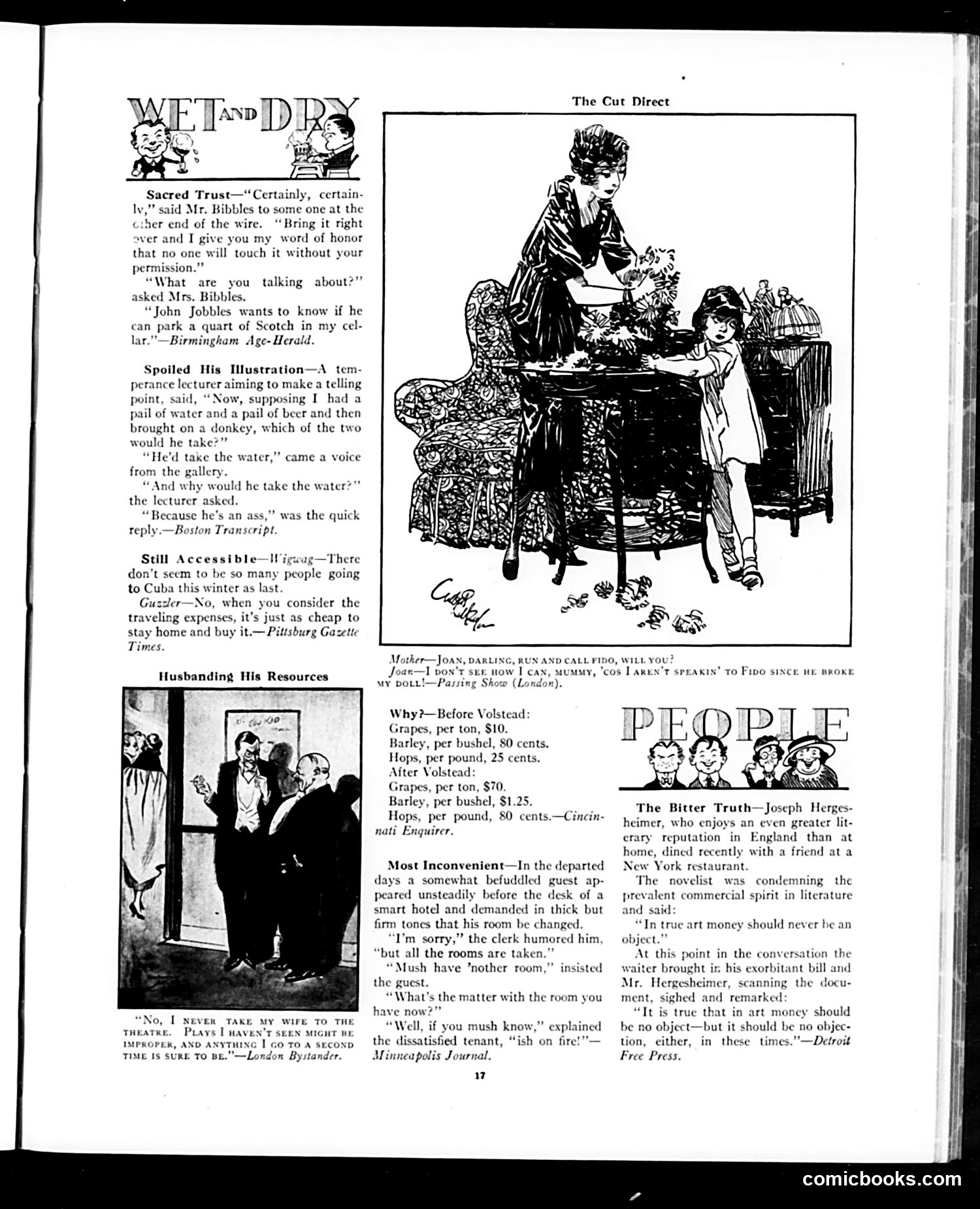
This page from Judge magazine collects brief humorous anecdotes reflecting early-20th-century American social concerns. **Key satires:** 1. **Prohibition era jokes**: Multiple items reference alcohol smuggling and price inflation after Volstead Act passage. "Sacred Trust" depicts a man hiding Scotch whiskey in his cellar; "Why?" compares commodity prices before/after Prohibition (grapes jump from $10 to $70 per ton), and "Most Inconvenient" jokes about a drunk guest claiming his hotel room is "on fire." 2. **"The Bitter Truth" cartoon** features novelist Joseph Hergersheimer (a real literary figure) dining out. The satire mocks artists' claims that "money should never be an object" in art—then undercuts this pretense when presented an expensive restaurant bill. It's social commentary on commercial hypocrisy among intellectuals. 3. **Various short jokes** target marital dynamics, theater etiquette, and class anxiety about travel expenses. The overall tone reflects Judge's satirical stance on Prohibition's economic effects and upper-class pretension.
📄 Transcribed text from this page (OCR, searchable)
Machine-transcribed from the original scan — historical spelling and the odd misread are preserved.
Sacred Trust—“Certainly, certain- lv,” said Mr. Bibbles to some one at the her end of the wire. ‘Bring it right ser and I give you my word of honor that no one will touch it without your permission.” “What are you asked Mrs. Bibbles. “John Jobbles ts to know if he can park a quart of Scotch in my cel- lar.”—Birmingham Age- Herald. talking about?’ Spoiled His [lustration—A_ tem- perance lecturer aiming to make a telling point, said, “Now, supposing I had a pail of water and a pail of beer and then brought on a donkey, which of the two would he take?” “He'd take the water,” came a voice from the gallery. “And why would he take the water?” the lecturer asked. “Because he’s an ass,” was the quick reply.—Boston Transcript. Still Accessible—W igwag—There don’t seem to be so many people going to Cuba this winter as last Guzcler— you consider the traveling expenses, it’s just as cheap to stay home and buy Pittsburg Gazette Times. Husbanding His Resources “No, [ NEVER TAKE MY WIFE TO THE THEATRE. PLAYS I HAVEN'T SEEN MIGHT BE IMPROPER, AND ANYTHING I Go TO A SECOND TIME IS SURE TO BE.” —London Bystander. Mother—JOAN, DARLING, RUN AND CALL FIDO, WILL YoU? HOW I CAN, MUMMY, 'COS I AREN'T SPEAKIN’ TO FiDo SINCE HE BROKE Joan—I don’t s wy vowt!—Passing Show (L Why?—Before Volstead: Grapes, per ton, $10. Barley, per bushel, 80 cents. Hops, per pound, 25 cents. After Volstead: Grapes, per ton, $70. Barley, per bushel, $1.25. Hops, per pound, 80 cents.—Cincin- nati Enquirer. Most Inconvenient—In the departed days a somewhat befuddled guest ap- peared unsteadily before the desk of a smart hotel and demanded in thick but firm tones that his room be changed. “I’m sorry,” the clerk humored him, “but all the rooms are taken.” “Mush have ’nother room,” the guest. “What's the matter with the room you have now?” “Well, if you mush know,” explained the dissatisfied tenant, “ish on fire!”"— Minneapolis Journal. wz insisted The Cut Direct The Bitter Truth—Joseph Herges- heimer, who enjoys an even greater lit- crary reputation in England than at home, dined recently with a friend at a New York restaurant. The novelist condemning the prevalent commercial spirit in literature and said: “Tn true art money should never be an object.” At this point in the conversation the waiter brought ir. his exorbitant bill and Mr. Hergesheimer, scanning the docu- ment, sighed and remarked “It is true that in art me should be no object—but it should be no objec- tion, either, in these times.”—Detroit Free Press. was comicbooks.com