
Judge, 1920-08-14 · page 8 of 36
Judge — August 14, 1920 — page 8: what you’re looking at
What you’re looking at
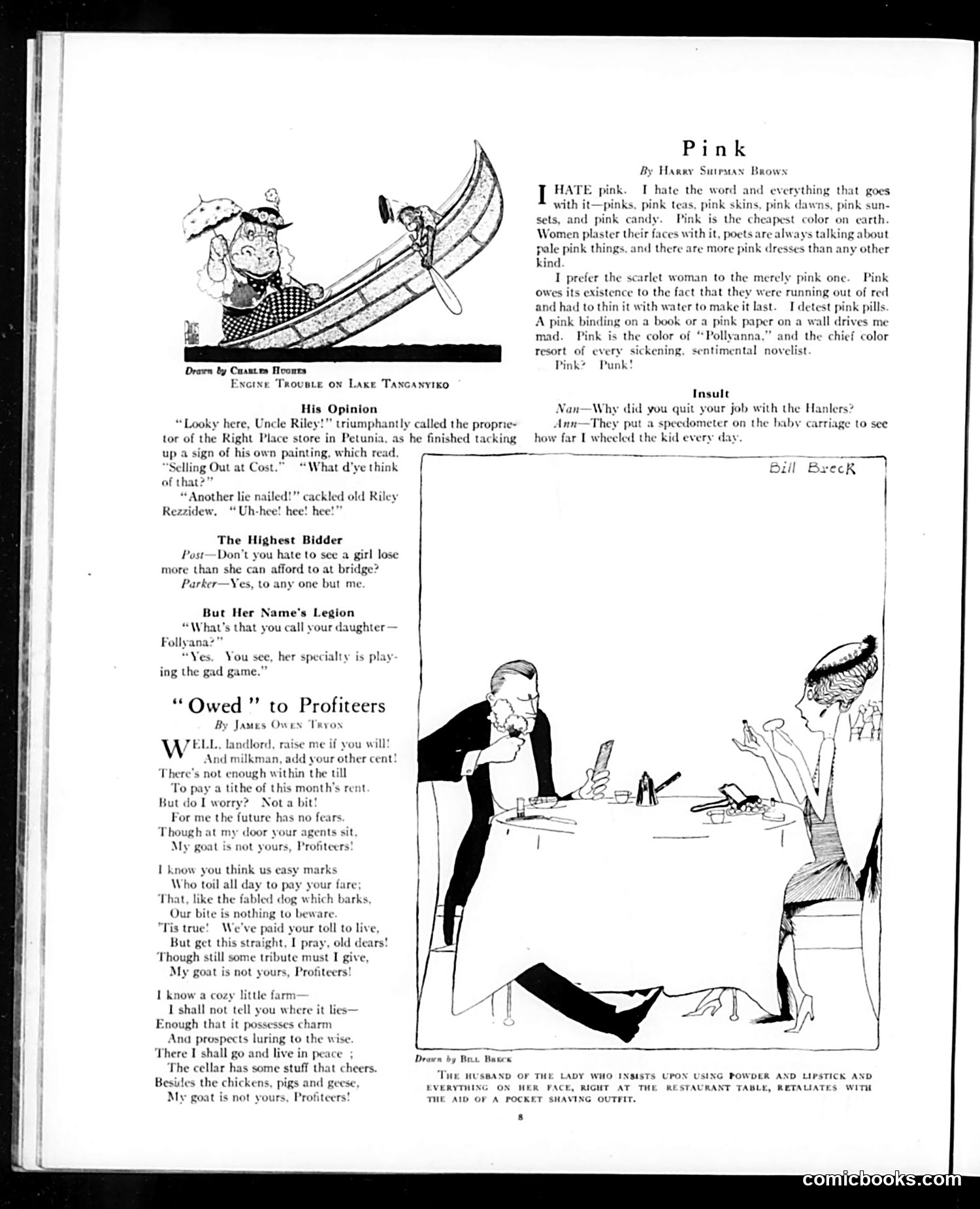
This page contains three satirical pieces reflecting post-WWI American anxieties: **"Owed to Profiteers"** (poem by James Owen): A working-class narrator defies landlords, milkmen, and other creditors demanding payment during apparent inflation/economic hardship. He asserts independence through hidden assets (a secret farm, preserved food) and refuses to let profiteers break his spirit—a jab at businesses exploiting ordinary people during economic strain. **"Pink"** (essay by Harvey Sutsman Brown): A curmudgeonly rant against the color pink and its cultural associations with sentimentality, cheapness, and weak femininity. References "Pollyanna" (the saccharine optimistic heroine). This reflects early 20th-century masculine anxiety about perceived cultural "softness." **The cartoon** (by Bill Breck): Depicts a husband using a pocket shaving kit at a restaurant table while his wife applies makeup—satirizing the hypocrisy of public grooming standards. The caption notes the husband "retaliates," suggesting gendered double standards about public appearance maintenance. The page reflects working-class economic frustration and gender-role anxieties of the era.
📄 Transcribed text from this page (OCR, searchable)
Machine-transcribed from the original scan — historical spelling and the odd misread are preserved.
Drawn by Cuantes Hoonrs Exctxe Trouste on Laxe TaNncanyixo His Opinion “Looky here, Uncle Riley!” triumphantly called the propnie- tor of the Right Place store in Petunia, as he finished tacking up a sign of his own painting. which read. “Selling Out at Cost.” “What d’ye think of that?” “Another lie nailed!” cackled old Riley Rezzidew. “Uh-hee! hee! hee!” The Highest Bidder Post—Don't you hate to see a girl lose more than she can afford to at bridge? Parker—Yes, to any one but me But Her Name's Legion “What's that you call your daughter — Follyana?” “Ves. You see, her specialty is play ing the gad game.” “Owed ” to Profiteers By James Owen WELL landlord, raise me if you will! And milkman, add your other cent! There's not enough within the till To pay a tithe of this month’s rer But do | worry? Nota bit! For me the future has no fears. Though at my door your agents sit My goat is not yours, Profiteers! Tryon I know you think us easy marks Who toil all day to pay your fare: That, like the fabled dog which barks. Our bite is nothing to beware. Tis true! We've paid your toll to live, But get this straight, I pray, old dears! Though still some tribute must I give, My goat is not yours, Profiteers! I know a cozy little farm I shall not tell you whe Enough that it possesses c } Ana prospects luring to the wise. There I shall go and live in peace The cellar has some stuff that cheers. Besistes the chickens, pigs and geese, sveurincn oe My goat is not yours, Profiteers! THE AID OF eit lies— arm 7 : Bill BrecR | Drown by Bu Buece ‘The HUSBAND OF THE HER A POCKET SHAVING OUTFIT. Pink By Harney Sutrsax Brows T hate the word and everything that goes with it—pinks. pink teas, pink skins, pink dawns, pink sun- ets, and pink candy. Pink is the cheapest color on carth. Women plaster their faces with it, poets are always talking about pale pink things, and there are more pink dresses than any other kind I prefer the scarlet woman to the merely pink one. Pink owes its existence to the fact that they were running out of red and had to thin it with water to make it last. I detest pink pills A pink binding on a book or a pink paper on a wall drives me mad. Pink is the color of “Pollyanna,” and the chief color resort of every sickening, sentimental novelist Pink? Punk! HATE pink. Insult Nan—Why did you quit your job with the Hanlers? Ann—They put a speedometer on the baby carti how far I wheeled the kid every day. LADY WHO INSISTS UPON USING POWDER AND LIPSTICK AND AT THE RESTAURANT TABLE, RETALIATES WITH PACE, RIGUT