
Judge, 1917-10-13 · page 13 of 28
Judge — October 13, 1917 — page 13: what you’re looking at
What you’re looking at
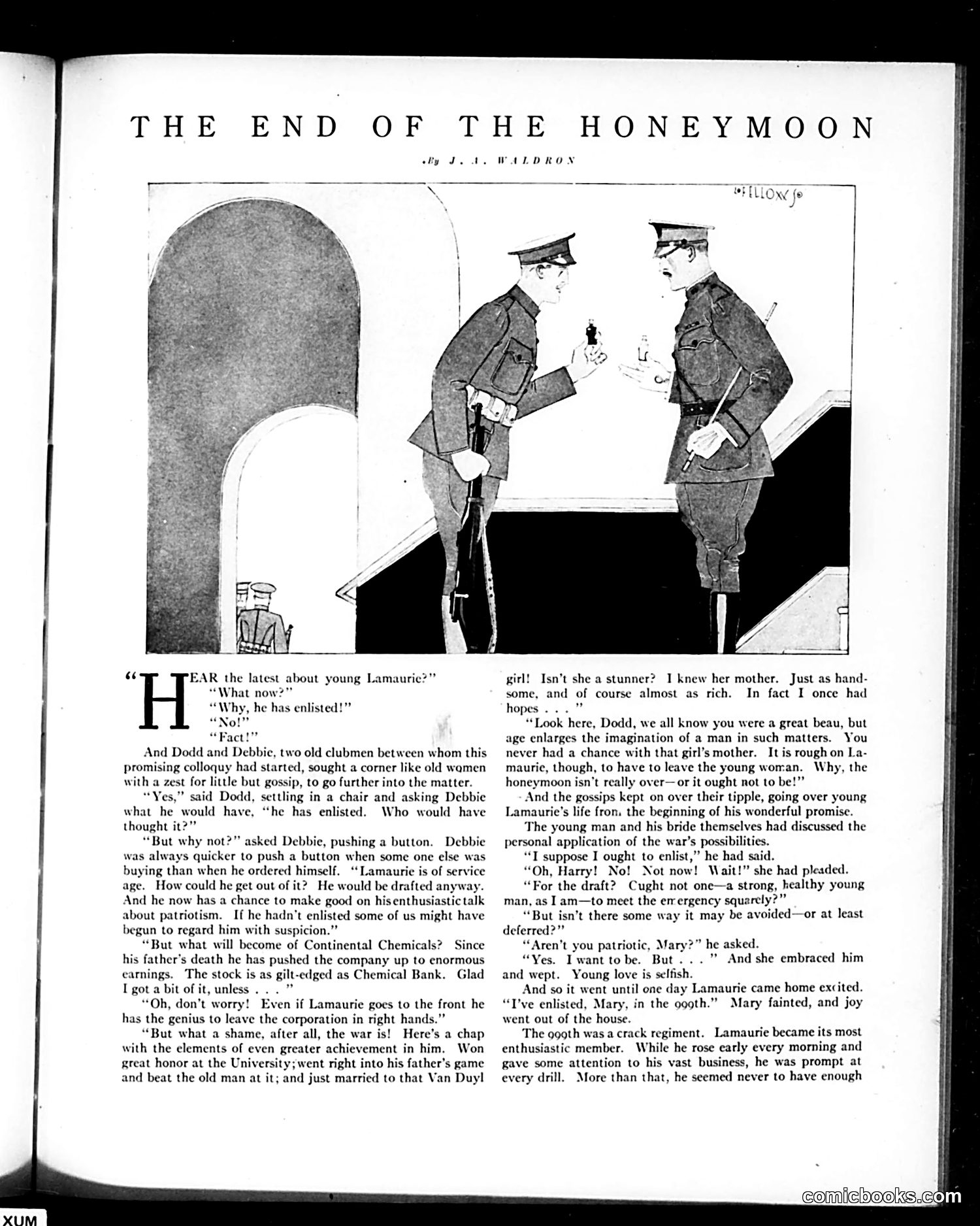
This story satirizes the tension between patriotic duty and personal selfishness during wartime (likely WWI, given the draft reference). Young Lamaurie, a successful businessman who inherited and expanded his father's chemical company, enlists in the military despite being eligible for the draft anyway. The satire operates on two levels: Club gossips praise his patriotism while lamenting the loss of his business talents and recent marriage. Meanwhile, Lamaurie's wife Mary initially pleads with him to avoid service, wanting to prolong their honeymoon—representing selfish romantic desires conflicting with national need. The title's irony is sharp: the "honeymoon ends" not through natural marital wear, but through Lamaurie's voluntary patriotic sacrifice. His wife's initial resistance and subsequent despair underscore how individual happiness must yield to collective duty. The story presents Lamaurie's ultimate enthusiasm for military service as moral redemption from the couple's initial self-centeredness.
📄 Transcribed text from this page (OCR, searchable)
Machine-transcribed from the original scan — historical spelling and the odd misread are preserved.
THE END OF THE HONEYMOON ly Jo de WALDRON =~ EAR the latest about young Lamauric?” “What now?” “Why, he has enlisted!” “No! “Fact And Dodd and Debbie, two old clubmen between whom this promising colloquy had started, sought a corner like old wamen with a zest for litle but gossip, to go further into the matter. “Yes,” said Dodd, settling in a chair and asking Debbie what he would have, “he has enlisted. Who would have thought it?” “But why not?” asked Debbie, pushing a button. Debbie was always quicker to push a button when some one else was buying than when he ordered himself.“ Lamaurie is of service age. How could he get out of it? He would be drafted anyway. And he now has a chance to make good on hisenthusiastic talk about patriotism. If he hadn't enlisted some of us might have begun to regard him with suspicion.” “But what will become of Continental Chemicals? Since his father’s death he has pushed the company up to enormous earnings. The stock is as gilt-edged as Chemical Bank. Glad I got a bit of it, unless . . “Oh, don’t worry! Even if Lamaurie goes to the front he has the genius to leave the corporation in right hands.” “But what a shame, after all, the war is! Here’s a chap with the elements of even greater achievement in him. Won great honor at the University; went right into his father’s game and beat the old man at it; and just married to that Van Duyl TON fe girl! Isn’t she a stunner? 1 knew her mother. Just as hand- some, and of course almost as rich. In fact I once had hopes...” “Look here, Dodd, we all know you were a great beau, but age enlarges the imagination of a man in such matters. You never had a chance with that girl’s mother. It is rough on La- maurie, though, to have to leave the young woman. Why, the honeymoon isn’t really over—or it ought not to be!” And the gossips kept on over their tipple, going over young Lamaurie’s life fron, the beginning of his wonderful promise. The young man and his bride themselves had discussed the personal application of the war’s possibilities. “I suppose I ought to enlist,” he had said. “Oh, Harry! No! Not now! Wait!” she had pleaded. “For the draft? Cught not one—a strong, healthy young man, as I am—to meet the emergency squarely?” “But isn’t there some way it may be avoided—or at least deferred?” “Aren't you patriotic, Mary? “Yes. Iwant tobe. But... and wept. Young love is selfish. And so it went until one day Lamaurie came home excited. “T’ve enlisted, Mary, in the ogoth.” Mary fainted, and joy went out of the house. The ogoth was a crack regiment. Lamaurie became its most enthusiastic member. While he rose early every morning and gave some attention to his vast business, he was prompt at every drill. More than that, he seemed never to have enough he asked. ” And she embraced him comichooks.