
Judge, 1917-09-29 · page 11 of 28
Judge — September 29, 1917 — page 11: what you’re looking at
What you’re looking at
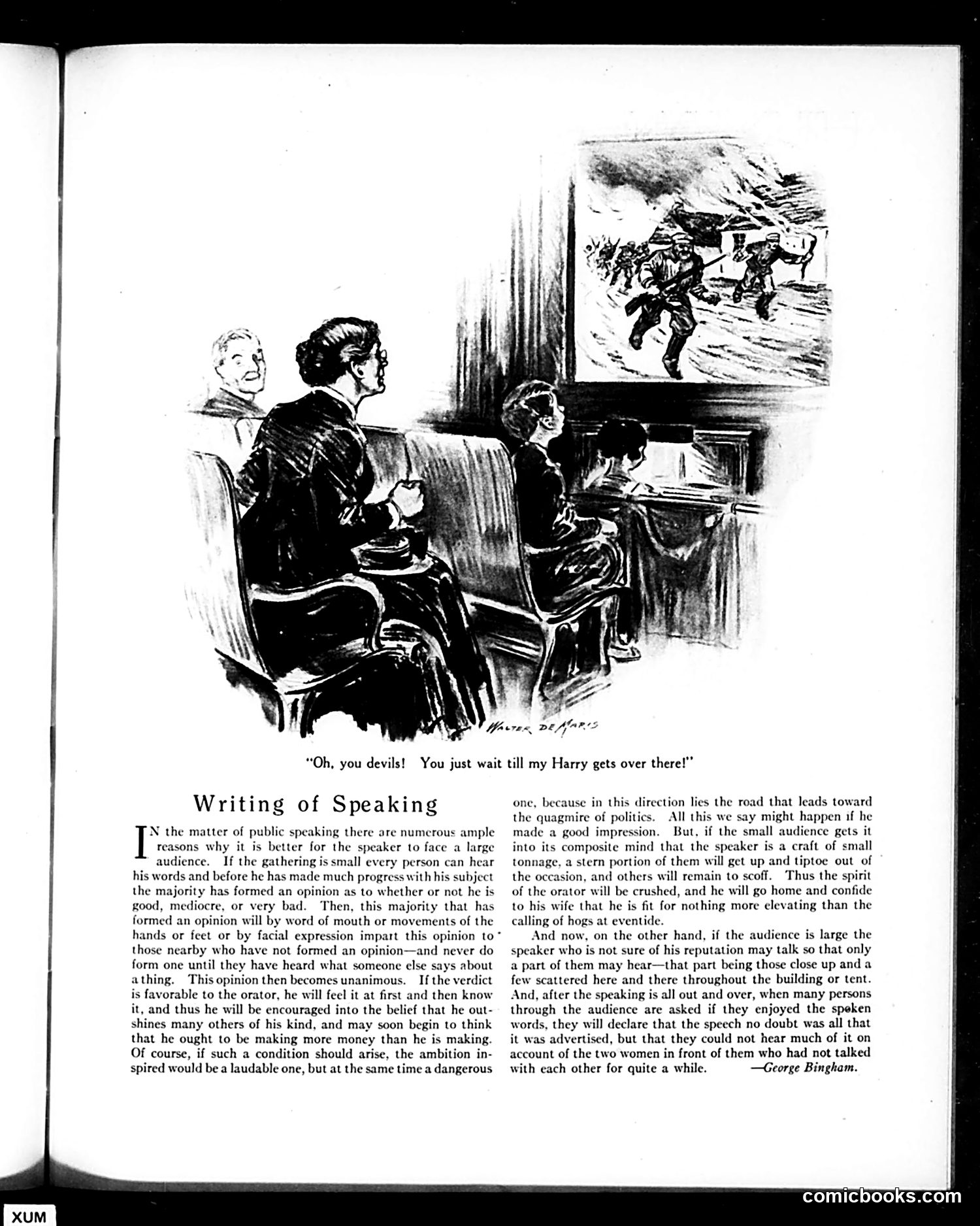
The cartoon depicts a domestic scene where a woman watches what appears to be a war film or newsreel (visible in the framed image showing soldiers in combat), while sitting with her husband. Her exclamation—"Oh, you devils! You just wait till my Harry gets over there!"—suggests she's viewing footage of military action, likely World War I combat. The accompanying essay by George Bingham humorously discusses public speaking, contrasting small versus large audiences. The cartoon's joke appears to satirize how audiences—particularly distracted or inattentive ones (the two women mentioned at essay's end who "had not talked with each other for quite a while")—miss important messages entirely, even when presented dramatically. The broader point: wartime propaganda and public messaging can fail when audiences are preoccupied or simply not listening carefully, undermining efforts to communicate urgent civic matters or military updates to the home front.
📄 Transcribed text from this page (OCR, searchable)
Machine-transcribed from the original scan — historical spelling and the odd misread are preserved.
we: “Oh, you devils! Writing of Speaking N the matter of public speaking there are numerous ample reasons why it is better for the speaker to face a large audience. If the gathering is small every person can hear his words and before he has made much progress with his subject the majority has formed an opinion as to whether or not he is good, mediocre, or very bad. Then, this majority that has formed an opinion will by word of mouth or movements of the hands or feet or by facia those nearby who have not formed an opinion—and never do form one until they have heard what someone else says about athing. This opinion then becomes unanimous. If the verdict is favorable to the orator, he will feel it at first and then know it, and thus he will be encouraged into the belief that he out- shines many others of his kind, and may soon begin to think that he ought to be making more money than he is making. Of course, if such a condition should arise, the ambition in- spired would be a laudable one, but at the same time a dangerous expression impart this opinion to* You just wait till my Harry gets over there!” one, because in this direction lies the road that leads toward the quagmire of politics. All this we say might happen if he made a good impression. But, if the small audience gets it into its composite mind that the speaker is a craft of small tonnage, a stern portion of them will get up and tiptoe out of the occasion, and others will remain to scoff. Thus the spirit of the orator will be crushed, and he will go home and confide to his wife that he is fit for nothing more elevating than the calling of hogs at eventide. And now, on the other hand, if the audience is large the speaker who is not sure of his reputation may talk so that only a part of them may hear—that part being those close up and a few scattered here and there throughout the building or tent. And, after the speaking is all out and over, when many persons through the audience are asked if they enjoyed the speken words, they will declare that the speech no doubt was all that it was advertised, but that they could not hear much of it on account of the two women in front of them who had not talked with each other for quite a while. —George Bingham. comicbooks.com