
Judge, 1916-10-14 · page 6 of 28
Judge — October 14, 1916 — page 6: what you’re looking at
A restored page from Judge, 1916-10-14. Page through the whole issue in the reader above.
📄 Transcribed text from this page (OCR, searchable)
Machine-transcribed from the original scan — historical spelling and the odd misread are preserved.
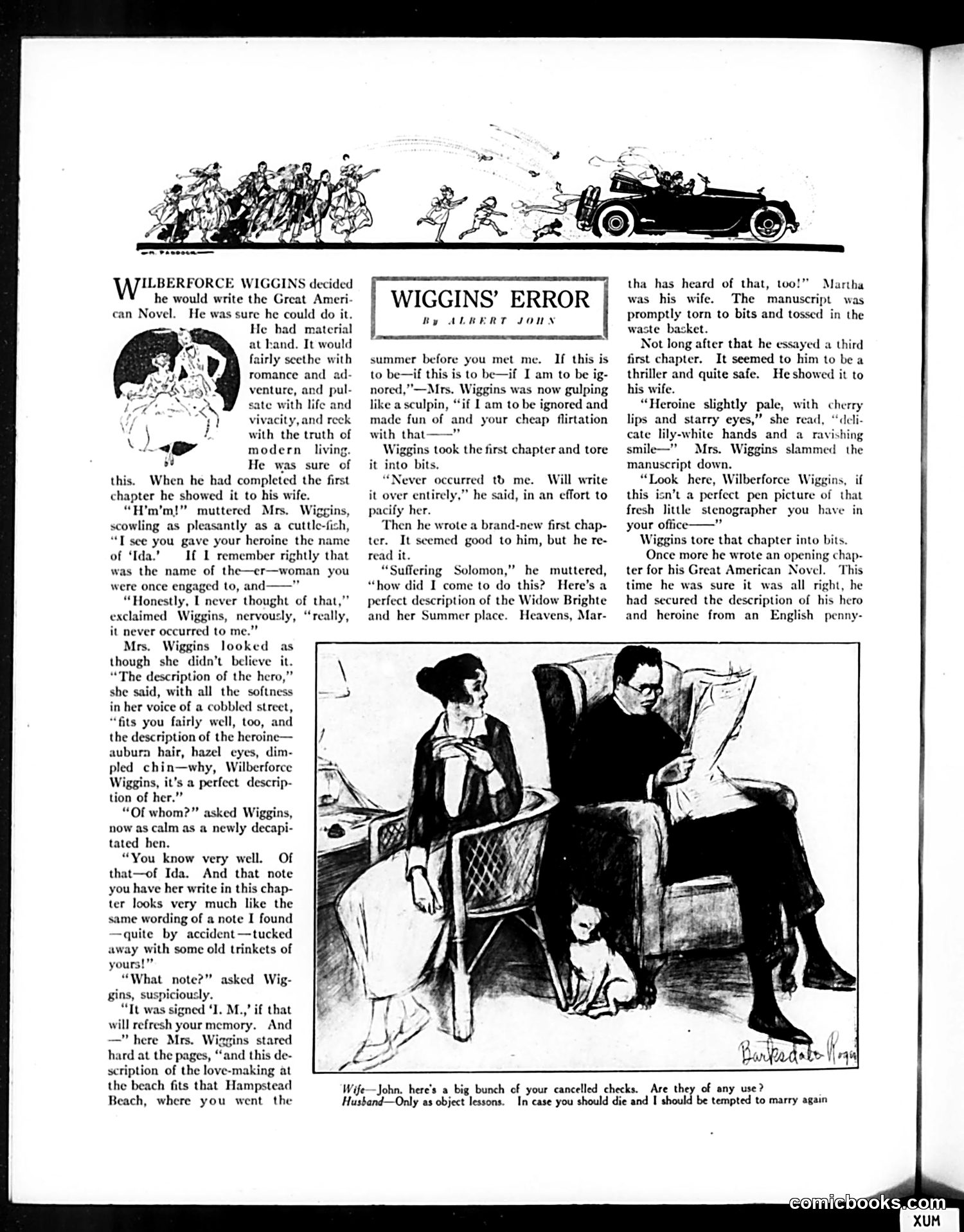
ILBERFORCE WIGGINS decided he would write the Great Am can Novel. He was sure he could do it. He had material at hand. It would fairly seethe with romance and ad- venture, and pul- sate with life and vivacity, and reck with the truth of modern living. He was sure of this. When he had completed the first chapter he showed it to his wife. “H'm'm!” muttered Mrs. Wi scowling as pleasantly as a cuttle “I see you gave your heroine the name of ‘Ida.’ If L remember rightly that was the name of the—er—woman you were once engaged to, and. _ “Honestly, L never thought of that,” exclaimed Wiggins, nervously, “really, it never occurred to me.” Mrs. Wiggins looked as though she didn’t believe it. “The description of the hero,” she said, with all the softness in her voice of a cobbled street, “fits you fairly well, too, and the description of the heroine— auburn hair, hazel eyes, dim- pled chin—why, Wilberforce Wiggins, it’s a perfect descrip- tion of her.” “Of whom?” asked Wiggins, now as calm as a newly decapi- tated hen. “You know very well. Of that—of Ida. And that note you have her write in this chap- ter looks very much like the same wording of a note I found —quite by accident —tucked away with some old trinkets of yours!” “What note?” asked Wig- gins, suspiciously. “Tt was signed ‘1. M.,’ if that will refresh your memory. And —"here Mrs. Wiggins stared hard at the pages, “and this de- scription of the love-making at the beach fits that Hampstead Beach, where you went the WIGGINS’ ERROR By ALBERT JOUN summer before you met me. If this is to be—if this is to be—if I am to be ig- nored,”’—Mrs. Wiggins was now gulping like a sculpin, “if I am to be ignored and le fun of and your cheap flirtation with that——” Wiggins took the first chapter and tore it into bits. “Never occurred tb me. Will write it over entirely,” he said, in an effort to pacify her. Then he wrote a brand-new first chap- ter. It seemed good to him, but he re- read it. “Suffering Solomon,” he muttered, “how did I come to do this? Here’s a perfect description of the Widow Brighte and her Summer place. Heavens, Mar- Wife—John. here's a big bunch cf your cancelled checks. Husband—Only as object lessons. In case you should die and I shoul: tha has heard of that, too!” Martha was his wife. The manuscript was promptly torn to bits and tossed in the waste basket. Not long after that he essayed a third first chapter. It seemed to him to be a thriller and quite safe. He showed it to his wife. “Heroine slightly pale, with cherry lips and starry eyes,” she leli- cate lily-white hands and a ravishing smile—” Mrs. Wiggins slammed the manuscript down. “Look here, Wilberforce Wiggins, if this isn’t a perfect pen picture of that fresh little stenographer you have in your office e Wiggins tore that chapter into bits. Once more he wrote an opening chap- ter for his Great American Novel. This time he was sure it was all right, he had secured the description of his hero and heroine from an English penny- Are they of any use? be tempted to marry again