
Judge, 1916-08-26 · page 5 of 28
Judge — August 26, 1916 — page 5: what you’re looking at
What you’re looking at
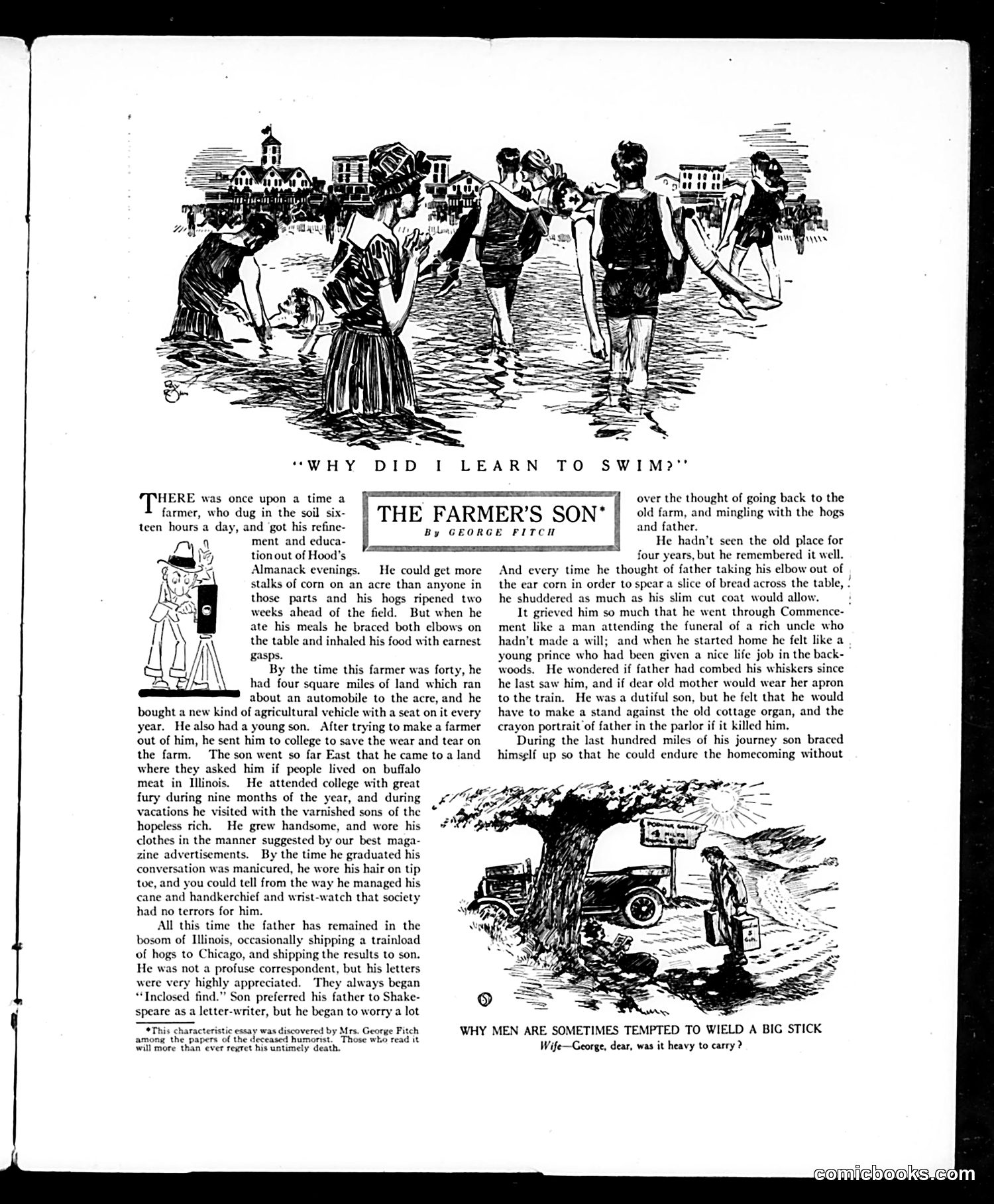
This story by George Pitch satirizes the tensions between rural and urban American life in the early 20th century. The farmer's son, educated away from home and exposed to urban sophistication, becomes embarrassed by his rural origins. He's ashamed of his father's farming life and manual labor—so much so that he literally hides when returning home. The bottom cartoon jokes about masculine pride: a wife asks her husband if a large stick is "heavy to carry," implying he's wielding it to prove his manhood rather than for practical purpose. The satire targets class anxiety and the perceived pretentiousness of educated youth who reject their humble backgrounds for cosmopolitan affectations.
📄 Transcribed text from this page (OCR, searchable)
Machine-transcribed from the original scan — historical spelling and the odd misread are preserved.
“WHY DID I HERE was once upon a time a farmer, who dug in the soil six- teen hours a day, and got his refine- ment and educa- tion out of Hood’s Almanack evenings. He could get more stalks of corn on an acre than anyone in those parts and his hogs ripened two weeks ahead of the field. But when he ate his meals he braced both elbows on the table and inhaled his food with earnest gasps. By the time this farmer was forty, he had four square miles of land which ran about an automobile to the acre, and he bought a new kind of agricultural vehicle with a seat on it every year. Healso hada young son. After trying to make a farmer out of him, he sent him to college to save the wear and tear on the farm. The son went so far East that he came to a land where they asked him if people lived on buffalo meat in Illinois. He attended college with great fury during nine months of the year, and during vacations he visited with the varnished sons of the hopeless rich. He grew handsome, and wore his clothes in the manner suggested by our best maga- zine advertisements. By the time he graduated his conversation was manicured, he wore his hair on tip toe, and you could tell from the way he managed his cane and handkerchief and wrist-watch that society had no terrors for him. All this time the father has remained in the bosom of Illinois, occasionally shipping a trainload of hogs to Chicago, and shipping the results to son. He was not a profuse correspondent, but his letters were very highly appreciated. They always began “‘Inclosed find.”’ Son preferred his father to Shake- speare as a letter-writer, but he began to worry a lot ar 1g the papers of the deceased humorist will more than ever regret his untimely death. haracteristic essay was discovered by Mrs. George Fitch Those who read it THE FARMER'S SON’ By GEORGE FITCH sy bSo.d 72) RE IRS Ka \ LEARN TO SWIM?" over the thought of going back to the old farm, and mingling with the hogs and father. He hadn’t seen the old place for four years, but he remembered it well. And every time he thought of father taking his elbow out of the ear corn in order to spear a slice of bread across the table, ¢ he shuddered as much as his slim cut coat would allow. ‘ It grieved him so much that he went through Commence- ment like a man attending the funeral of a rich uncle who hadn’t made a will; and when he started home he felt like a young prince who had been given a nice life job in the back- woods. He wondered if father had combed his whiskers since he last saw him, and if dear old mother would wear her apron to the train. He was a dutiful son, but he felt that he would have to make a stand against the old cottage organ, and the crayon portrait of father in the parlor if it killed him. During the last hundred miles of his journey son braced himself up so that he could endure the homecoming without WHY MEN ARE SOMETIMES TEMPTED TO WIELD A BIG STICK Wife—George, dear, was it heavy to carry?