
Judge, 1915-12-25 · page 5 of 29
Judge — December 25, 1915 — page 5: what you’re looking at
What you’re looking at
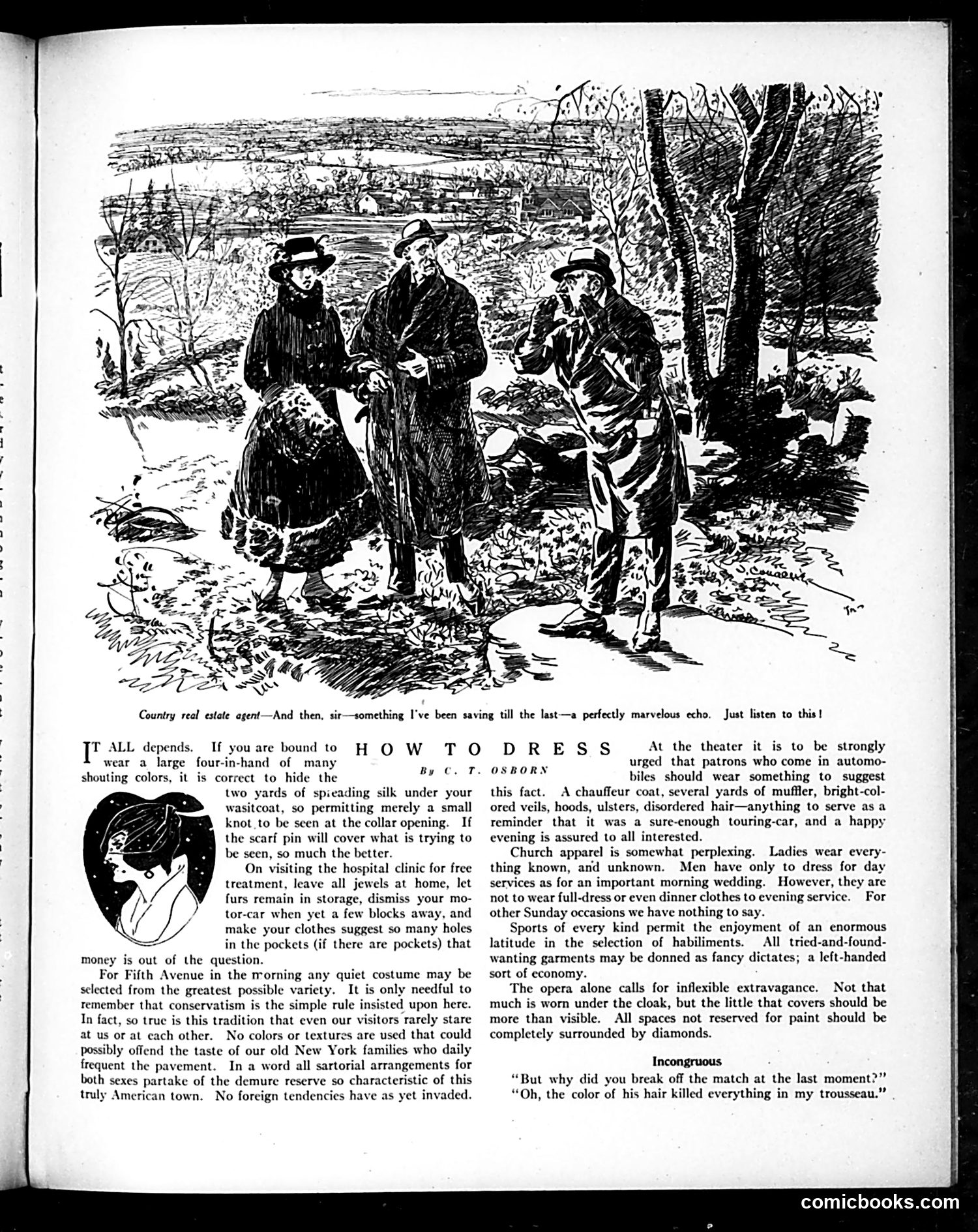
This page contains a fashion/etiquette article titled "How to Dress" by C.T. Osborn, rather than political satire. The main illustration shows four figures in conversation at a country estate, establishing the setting for dress code advice. The article satirizes social pretension by mocking overly formal dress expectations. It advises against excessive ornamentation (four-in-hand scarves, spreads of silk) and recommends conservative American taste over "foreign tendencies." The humor targets wealthy elites who obsess over clothing rules—suggesting that choosing appropriate dress for different venues (theater, church, sports) requires navigating confusing, often contradictory social conventions. The satirical approach criticizes class-conscious Americans who police appearance while claiming democratic values.
📄 Transcribed text from this page (OCR, searchable)
Machine-transcribed from the original scan — historical spelling and the odd misread are preserved.
Country real estate agent—And then, sir—something I've been saving till the last—a perfectly marvelous echo. HOW TO DRESS T ALL depends. If you are bound to wear a large four-in-hand of many shouting colors, it is correct to hide the two yards of spieading silk under your wasitcoat, so permitting merely a small knot. to be at the collar opening. If the scarf pin will cover what is trying to be seen, so much the better. On visiting the hospital clinic for free treatment, leave all jewels at home, let furs remain in storage, dismiss your mo- tor-car when yet a few blocks away, and make your clothes suggest so many holes in the pockets (if there are pockets) that money is out of the question. For Fifth Avenue in the morning any quiet costume may be selected from the greatest possible variety. It is only needful to remember that conservatism is the simple rule insisted upon here. In fact, so true is this tradition that even our visitors rarely stare at us or at cach other. No colors or textures are used that could possibly offend the taste of our old New York families who daily frequent the pavement. In a word all sartorial arrangements for both sexes partake of the demure reserve so characteristic of this truly American town. No foreign tendencies have as yet invaded. By C. T. Just listen to this! At the theater it is to be strongly urged that patrons who come in automo- biles should wear something to suggest this fact. A chauffeur coat, several yards of muffler, bright-col- ored veils, hoods, ulsters, disordered hair—anything to serve as a reminder that it was a sure-enough touring-car, and a happy evening is assured to all interested. Church apparel is somewhat perplexing. Ladies wear every- thing known, and unknown. Men have only to dress for day services as for an important morning wedding. However, they are not to wear full-dress or even dinner clothes to evening service. For other Sunday occasions we have nothing to say. Sports of every kind permit the enjoyment of an enormous latitude in the selection of habiliments. All tried-and-found- wanting garments may be donned as fancy dictates; a left-handed sort of economy. The opera alone calls for inflexible extravagance. Not that much is worn under the cloak, but the little that covers should be more than visible. All spaces not reserved for paint should be completely surrounded by diamonds. OSBORN Incongruous “But why did you break off the match at the last moment?” “Oh, the color of his hair killed everything in my trousseau.” comicbooks.com