
Judge, 1915-11-06 · page 11 of 28
Judge — November 6, 1915 — page 11: what you’re looking at
What you’re looking at
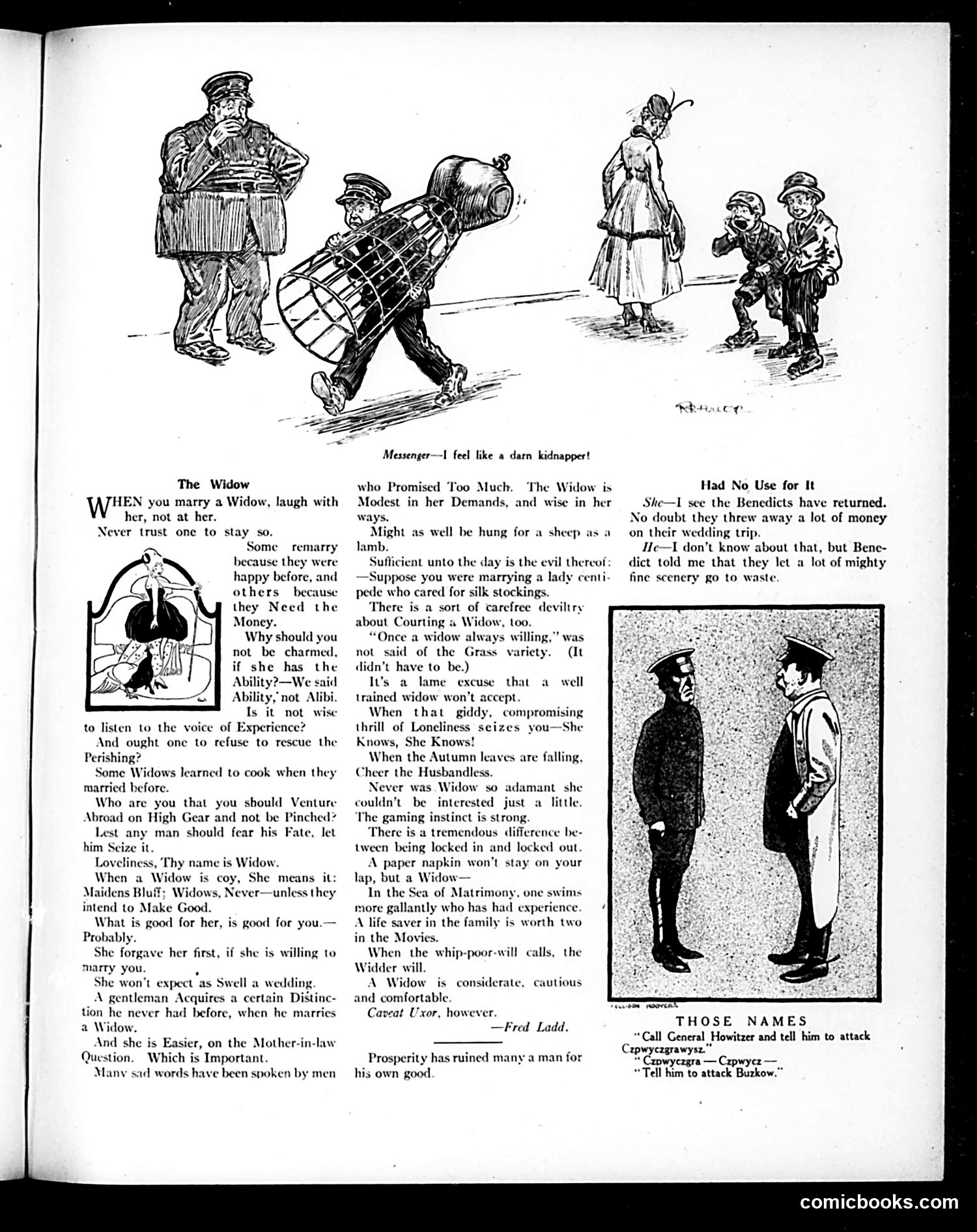
This *Judge* magazine page contains satirical commentary on widows as marriage prospects. The main article humorously lists contradictory "advice" about marrying widows—suggesting they're desirable (experienced, practical, less demanding) while undermining each point with cynical observations (they remarry for money, aren't truly coy, etc.). The tone mocks both widows and men foolish enough to pursue them. The top cartoon depicts a messenger literally "kidnapping" a woman, visual wordplay on the anxiety men felt about commitment to widows, who were viewed with simultaneous attraction and suspicion. The bottom section, "Those Names," appears to mock Eastern European or Russian names as unpronounceable—a common ethnic stereotype of the era, likely commenting on immigration tensions. The "Had No Use for It" anecdote is a light domestic joke about newlyweds wasting money on honeymoons. Overall, the page reflects early 20th-century attitudes toward widows as marriage material and casual xenophobia.
📄 Transcribed text from this page (OCR, searchable)
Machine-transcribed from the original scan — historical spelling and the odd misread are preserved.
The Widow HEN you marry a Widow, laugh with her, not at her. ver trust one to stay so. Some remarry because they were happy before, and others because they Need the Money. Why should you not be charmed, if she has the Ability2—We said Ability, not Ali Is it not wise to listen to the voice of Experience? And ought one to refuse to rescue the Perishing? Some Widows learned to cook when they married before. Who are you that you should Venture Abroad on High Gear and not be Pinched? Lest any man should fear his Fate, let him Seize it. Loveliness, Thy name is Widow. When a Widow is coy, She means it: Maidens Bluff; Widows, Never—unless they intend to Make Good. What is good for her, is good for you.— Probably. She forgave her first, if she is willing to marry you. ‘ She won't expect as Swell a wedding. A gentleman Acquires a certain Distine- tion he never had before, when he marries a Widow. And she is Easier, on the Mother-in-law Question. Which is Important. Many sad words have been spoken by men Messenger—I feel like a darn kidnapper! who Promised ‘Too Much. Might as well be hung for a sheep as a Jamb. uflicient unto the day is the evil thereof: —Suppose you were marrying a lady centi- pede who cared for silk stockings. There is a sort of carefree deviltry about Courting « Widow, too. “Once a widow always willing,” was not said of the Grass variety. (It didn’t have to be.) It’s a lame excuse that a well trained widow won’t accept. When that giddy, compromising thrill of Loneliness seizes you—She Knows, She Knows! When the Autumn leav Cheer the Husbandless. Never was Widow so adamant she couldn’t be interested just a little. The gaming instinct is strong. There is a tremendous difference be- tween being locked in and locked out. A paper napkin won't stay on your lap, but a Widow— In the Sea of Matrimony, one swims more gallantly who has had experience. A life saver in the family is worth two in the Movies. When the w Widder will. A Widow is considerate. cautious and comfortable. Caveat Uxor, however. —Fred Ladd. sare falling, p-poor-will calls, the Prosperity has ruined many a man for his own good The Widow is in her Demands, and wise in her Had No Use for It She—I sce the Benedicts have returned. No doubt they threw away a lot of money on their wedding trip. He—I don’t know about that, but Bene- dict told me that they let a lot of mighty fine scenery go to waste. rere THOSE NAMES “Call General Howitzer and tell him to attack Czpwyczgrawysz.”” é “ Czpwyczgra — Czpwyez — “Tell him to attack Buzkow.” comicbooks.com