
Judge, 1914-05-02 · page 14 of 41
Judge — May 2, 1914 — page 14: what you’re looking at
What you’re looking at
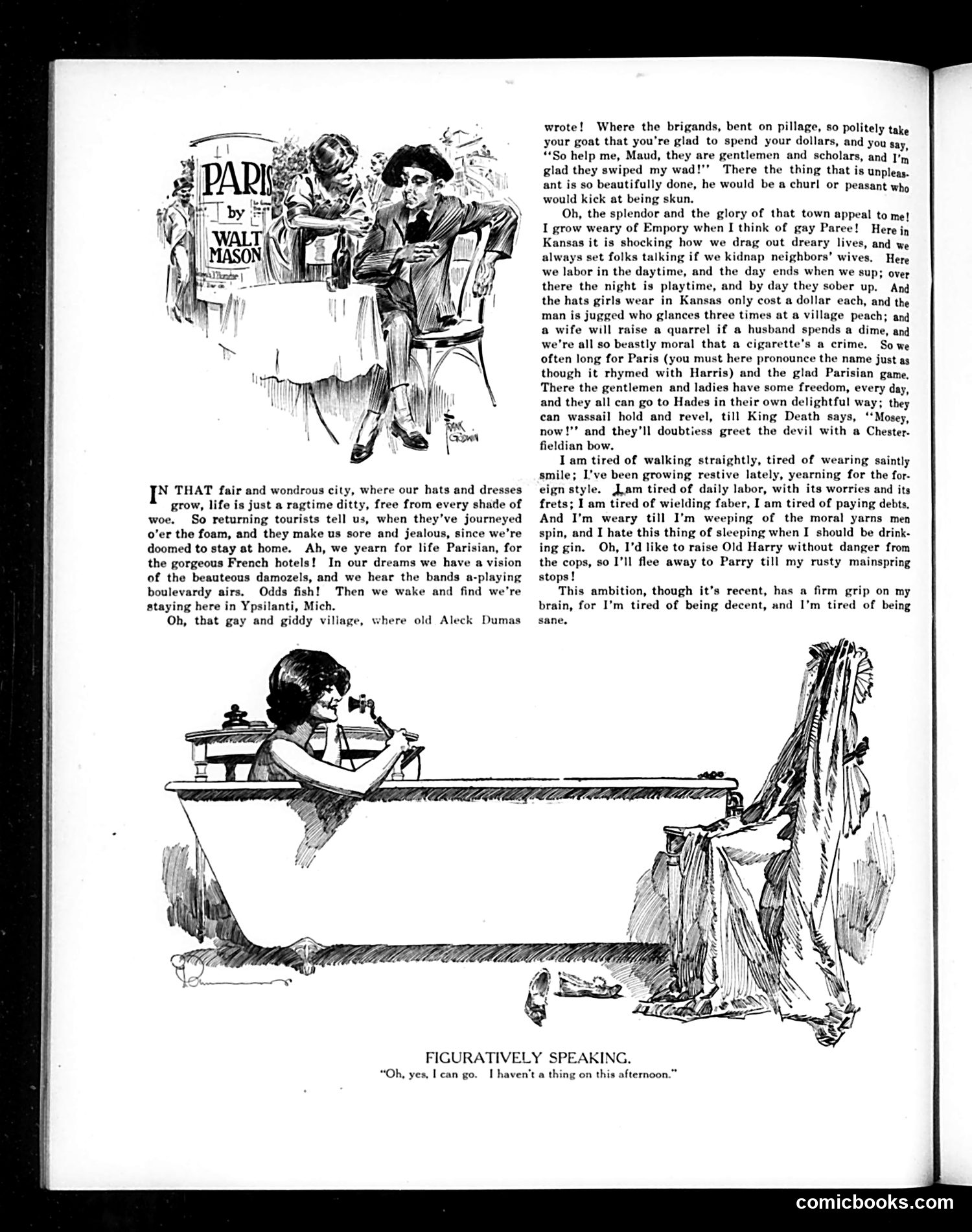
This satirical piece mocks American small-town morality and the romantic fantasy of Paris. The narrator, stuck in provincial Michigan or Kansas, contrasts dreary American life—where moral codes are rigid, divorce gossip spreads instantly, and even cigarettes are scandalous—with an idealized Paris where people enjoy freedom, pleasure, and vice without judgment. The satire cuts two ways: it ridicules Americans' puritanical hypocrisy and their naïve yearning for European decadence. The accompanying cartoon ("Figuratively Speaking") shows a woman making excuses to escape her domestic routine, reinforcing the theme of small-town constraint. Mason suggests that respectable Americans secretly crave the liberation they associate with Paris, even as their society condemns such desires.
📄 Transcribed text from this page (OCR, searchable)
Machine-transcribed from the original scan — historical spelling and the odd misread are preserved.
N THAT fair and wondrous city, where our hats and dresses grow, life is just a ragtime ditty, free from every shade of woe. So returning tourists tell us, when they’ve journeyed o’er the foam, and they make us sore and jealous, since we're doomed to stay at home. Ah, we yearn for life Parisian, for the gorgeous French hotels! In our dreams we have a vision of the beauteous damozels, and we hear the bands a-playing boulevardy airs. Odds fish! Then we wake and find we're staying here in Ypsilanti, Mich. Oh, that gay and giddy village, where old Aleck Dumas wrote! Where the brigands, bent on pillage, so politely take your goat that you're glad to spend your dollars, and you Say, “So help me, Maud, they are gentlemen and scholars, and I'm glad they swiped my wad!'’ There the thing that is unpleas. ant is so beautifully done, he would be a churl or peasant who would kick at being skun. Oh, the splendor and the glory of that town appeal to me! I grow weary of Empory when I think of gay Paree! Here jn Kansas it is shocking how we drag out dreary lives, and we always set folks talking if we kidnap neighbors’ wives. Here we labor in the daytime, and the day ends when we sup; over there the night is playtime, and by day they sober up. And the hats girls wear in Kansas only cost a dollar each, and the man is jugged who glances three times at a village peach; and a wife will raise a quarrel if a husband spends a dime, and we're all so beastly moral that a cigarette’s a crime. So we often long for Paris (you must here pronounce the name just as though it rhymed with Harris) and the glad Parisian game, There the gentlemen and ladies have some freedom, every day, and they all can go to Hades in their own delightful way; they can wassail hold and revel, till King Death says, ‘*Mosey, 3 greet the devil with a Chester. now!’’ and they’ll doubti fieldian bow. lam tired of walking straightly, tired of wearing saintly smile; I’ve been growing restive lately, yearning for the for- eign style. Jam tired of daily labor, with its worries and its frets; I am tired of wielding faber, I am tired of paying debts, And I'm weary till I’m weeping of the moral yarns men spin, and I hate this thing of sleeping when I should be drink- ing gin. Oh, I’d like to raise Old Harry without danger from the cops, so I’ll flee away to Parry till my rusty mainspring stops! This ambition, though it’s recent, has a firm grip on my brain, for I’m tired of being decent, and I'm tired of being sane. FIGURATIVELY SPEAKING. “Oh, yes, I can go. I haven't a thing on this afternoon.” comicbooks.com