
Judge, 1914-04-11 · page 6 of 24
Judge — April 11, 1914 — page 6: what you’re looking at
What you’re looking at
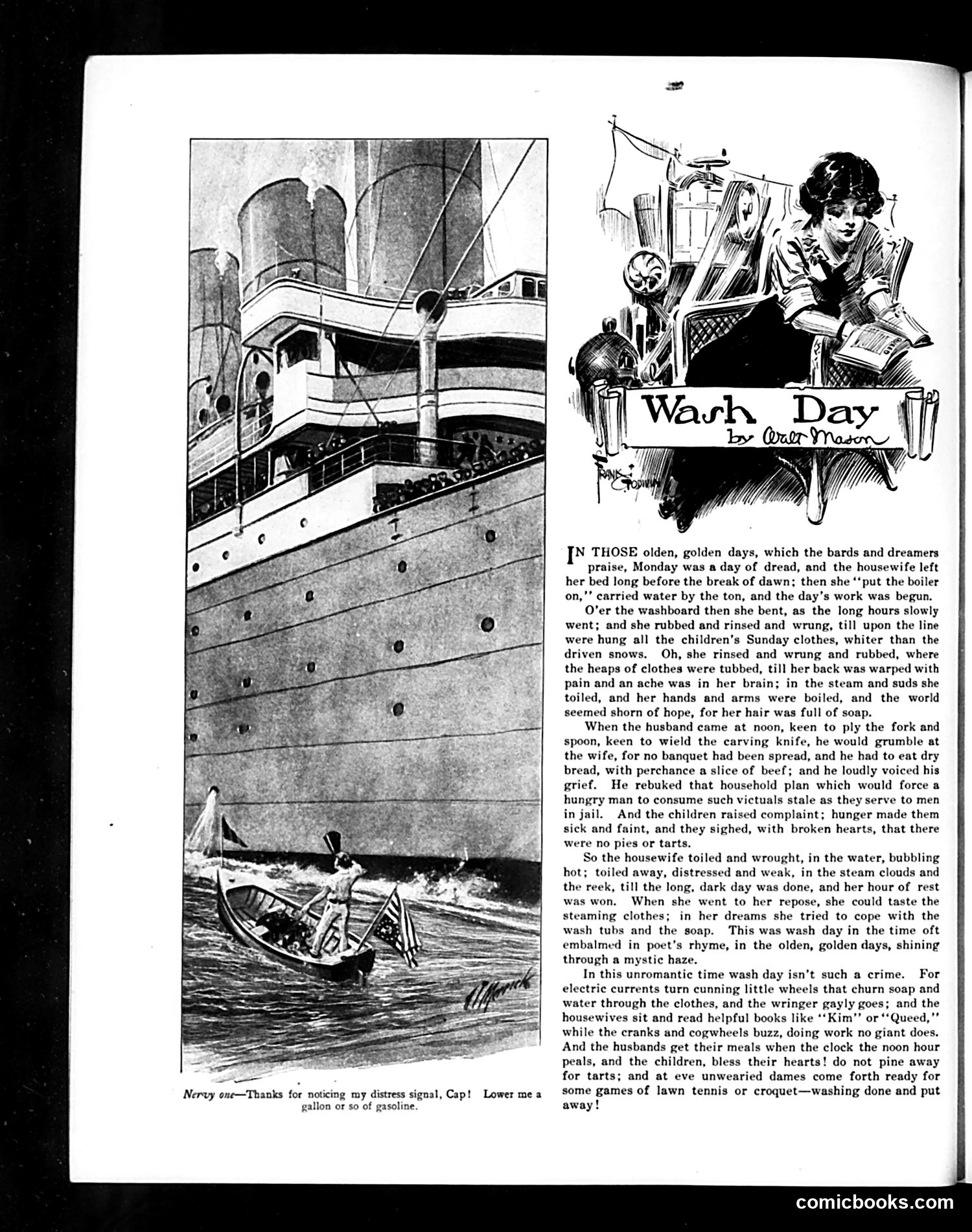
This satirical piece contrasts the grueling hardship of laundry day in "the olden, golden days" with modern convenience. The narrative nostalgically praises the past while actually describing brutal conditions: women rising before dawn, laboring for hours over washboards and boiling water, enduring physical pain, while husbands and children ungratefully demand meals and complain about food. The satire inverts romanticization of "the good old days." By the 1910s-1920s (when Judge published this), modern washing machines and electric-powered equipment had transformed housework. The piece mocks sentimental nostalgia by showing the old system was actually oppressive drudgery. The accompanying illustration depicts a luxury steamship, contrasting leisure travel with women's domestic toil. The final section celebrates modern technology: electric washers, wringers, and freed time for reading and recreation instead of endless labor. The broader point: progress and technology genuinely improved women's lives, despite any mythologizing of "simpler times."
📄 Transcribed text from this page (OCR, searchable)
Machine-transcribed from the original scan — historical spelling and the odd misread are preserved.
= Nervy one—Thanks for noticing my distress signal, Cap! Lower me a gallon or so of gasoline. N THOSE olden, golden days, which the bards and dreamers praise, Monday was a day of dread, and the housewife left her bed long before the break of dawn; then she “‘put the boiler on,” carried water by the ton, and the day’s work was begun. O’er the washboard then she bent, as the long hours slowly went; and she rubbed and rinsed and wrung, till upon the line were hung all the children’s Sunday clothes, whiter than the driven snows. Oh, she rinsed and wrung and rubbed, where the heaps of clothes were tubbed, till her back was warped with pain and an ache was in her brain; in the steam and suds she toiled, and her hands and arms were boiled, and the world seemed shorn of hope, for her hair was full of soap. When the husband came at noon, keen to ply the fork and spoon, keen to wield the carving knife, he would grumble at the wife, for no banquet had been spread, and he had to eat dry bread, with perchance a slice of beef; and he loudly voiced his grief. He rebuked that household plan which would force a hungry man to consume such victuals stale as they serve to men in jail. And the children raised complaint; hunger made them sick and faint, and they sighed, with broken hearts, that there were no pies or tarts. So the housewife toiled and wrought, in the water, bubbling hot; toiled away, distressed and weak, in the steam clouds and the reek, till the long, dark day was done, and her hour of rest was won. When she went to her repose, she could taste the steaming clothes; in her dreams she tried to cope with the wash tubs and the soap. This was wash day in the time oft embalmed in poet’s rhyme, in the olden, golden days, shining through a mystic haze. In this unromantic time wash day isn’t such a crime. For electric currents turn cunning little wheels that churn soap and water through the clothes, and the wringer gayly goes; and the housewives sit and read helpful books like ‘‘Kim’’ or ‘‘Queed,"”” while the cranks and cogwheels buzz, doing work no giant does. And the husbands get their meals when the clock the noon hour peals, and the children, bless their hearts! do not pine away for tarts; and at eve unwearied dames come forth ready for some games of lawn tennis or croquet—washing done and put away! comicbooks.com