
Judge, 1912-11-30 · page 14 of 26
Judge — November 30, 1912 — page 14: what you’re looking at
What you’re looking at
This is the opening of a serialized comic story by Roy L. McCardell satirizing early 1900s American wealth obsession and the automobile craze. **The Setup:** Gypsies camped near Mount Vernon, New York trade used automobiles. Vashti, the "gypsy queen," consults stock tips and real estate guides (Bradstreet's financial records) instead of seeking romance—mocking how wealth-chasing has replaced traditional values. The joke "How can you own a Panhard when you are down to hard pan?" plays on the Panhard automobile brand while punning on financial ruin. **The Satire:** The story ridicules nouveau-riche Americans desperately pursuing wealth and status symbols (cars, stocks, real estate). Mercedes Van Wheeler—named after a luxury automobile brand—is a society belle constantly violating speed laws, embodying reckless wealthy excess. **Context:** This reflects 1910s-era anxieties about materialism, automobiles as status symbols, and the tension between "proper" society and those climbing its ranks.
📄 Transcribed text from this page (OCR, searchable)
Machine-transcribed from the original scan — historical spelling and the odd misread are preserved.
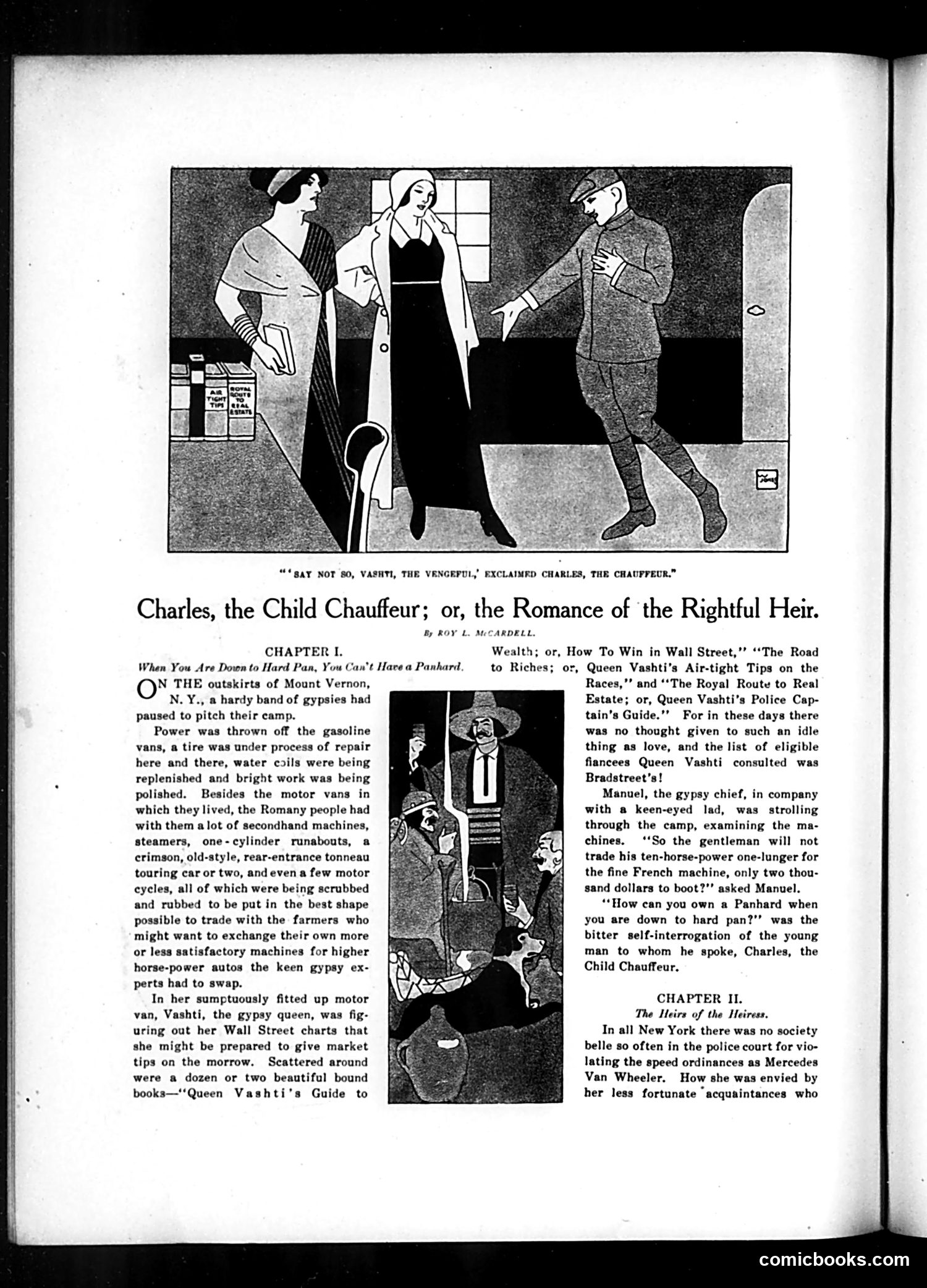
“Say NOT 80, VASHTI, THE VENGRPUL,’ RXCLAIMRD CHARLES, THE CHAUPPEUR.” Charles, the Child Chauffeur; or, the Romance of ‘the Rightful Heir. By ROY L. McCARDELL. CHAPTER I. Wealth; or, How To Win in Wall Street,’’ ‘‘The Road When You Are Down to Hard Pan, You Can't Have a Panhard. to Riches; or, Queen Vashti’s Air-tight Tips on the N THE outskirts of Mount Vernon, N. Y., a hardy band of gypsies had paused to pitch their camp. Power was thrown off the gasoline vans, a tire was under process of repair here and there, water coils were being replenished and bright work was being polished. Besides the motor vans in which they lived, the Romany people had with them alot of secondhand machines, steamers, one-cylinder runabouts, a crimson, old-style, rear-entrance tonneau touring car or two, and even a few motor cycles, all of which were being scrubbed and rubbed to be put in the best shape possible to trade with the farmers who might want to exchange their own more or less s: factory machines for higher horse-power autos the keen gypsy ex- perts had to swap. In her sumptuously fitted up motor van, Vashti, the gypsy queen, was fig- uring out her Wall Street charts that she might be prepared to give market tips on the morrow. Scattered around were a dozen or two beautiful bound books—‘Queen Vashti’s Guide to Races,’’ and ‘‘The Royal Route to Real Estate; or, Queen Vashti’s Police Cap- tain’s Guide.’ For in these days there was no thought given to such an idle thing as love, and the list of eligible fiancees Queen Vashti consulted was Bradstreet’s! Manuel, the gypsy chief, in company with a keen-eyed lad, was strolling through the camp, examining the ma- chines. ‘‘So the gentleman will not trade his ten-horse-power one-lunger for the fine French machine, only two thou- sand dollars to boot?’ asked Manuel. “*How can you own a Panhard when you are down to hard pan?’’ was the bitter self-interrogation of the young man to whom he spoke, Charles, the Child Chauffeur. CHAPTER II. The Heirs of the Heiress. In all New York there was no society belle so often in the police court for vio- lating the speed ordinances as Mercedes Van Wheeler. How she was envied by her less fortunate “acquaintances who comicbooks.com