
Judge, 1912-11-30 · page 13 of 26
Judge — November 30, 1912 — page 13: what you’re looking at
What you’re looking at
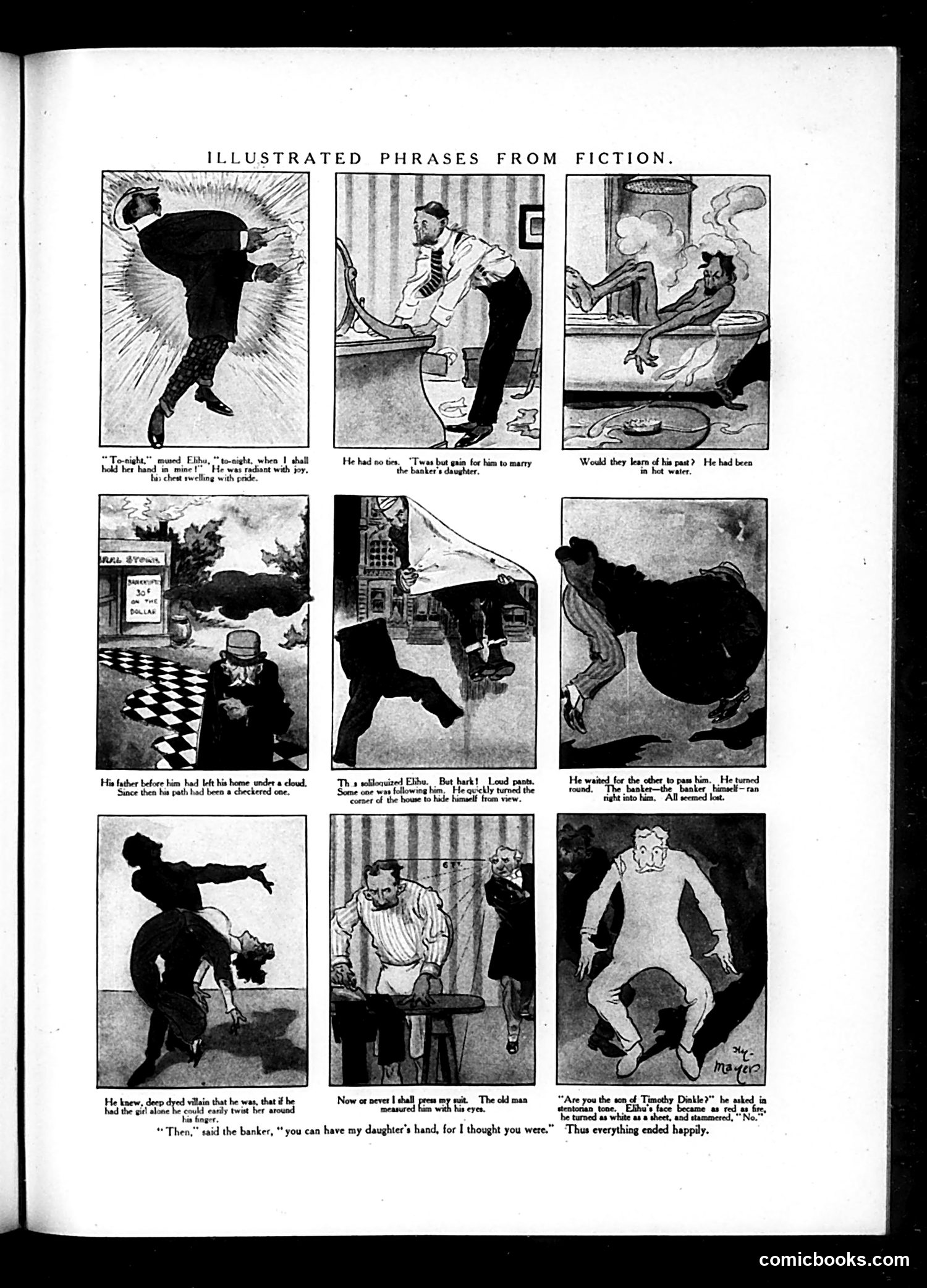
This page presents nine sequential comic panels illustrating melodramatic literary scenarios, likely from popular serialized fiction of the era. The scenes depict exaggerated emotional moments: a man's proud declaration of love, a baker's daughter, someone hiding from view, dramatic confrontations, and a banker offering his daughter's hand in marriage. The satire mocks the overwrought, clichéd tropes of contemporary romantic fiction—the breathless declarations, implausible plot twists, convenient revelations, and tidy "happily ever after" endings. By visually depicting these stock scenarios side-by-side, the cartoonist ridicules the formulaic, predictable nature of popular serial stories that readers consumed voraciously. The humor lies in the recognition that such saccharine narratives were absurdly common and repetitive.
📄 Transcribed text from this page (OCR, searchable)
Machine-transcribed from the original scan — historical spelling and the odd misread are preserved.
ILLUSTRATED PHRASES FROM FICTION. * To-night,” yused Elihu, “to-night, when | shall “T ‘ould they iis past? He had bee: held hes head ie mine!" He wes radiant wih Joy, w len deme? Lae has chest swelling with pride. cSlonuized Elihu. But hark! Loud pacts Seer eee wing him, He quchly turmed the Mesocr of dhe house to hide hanocll from view. He knew, {iets ca in that he was, that if he Ror corel eel meee The old man Ait zon the oon of Timely Pinkie?” be sobed in ttentocan tose. Elthu's eda fe, had the gi lone is tarsed ar white ana thece aad anand "Na «Thea madd the banker, “you can have my daughter’ hand, for I thought you were.” ‘Thus everything ended happily. could early twist her arouad comicbooks.com