
Judge, 1911-10-14 · page 17 of 23
Judge — October 14, 1911 — page 17: what you’re looking at
What you’re looking at
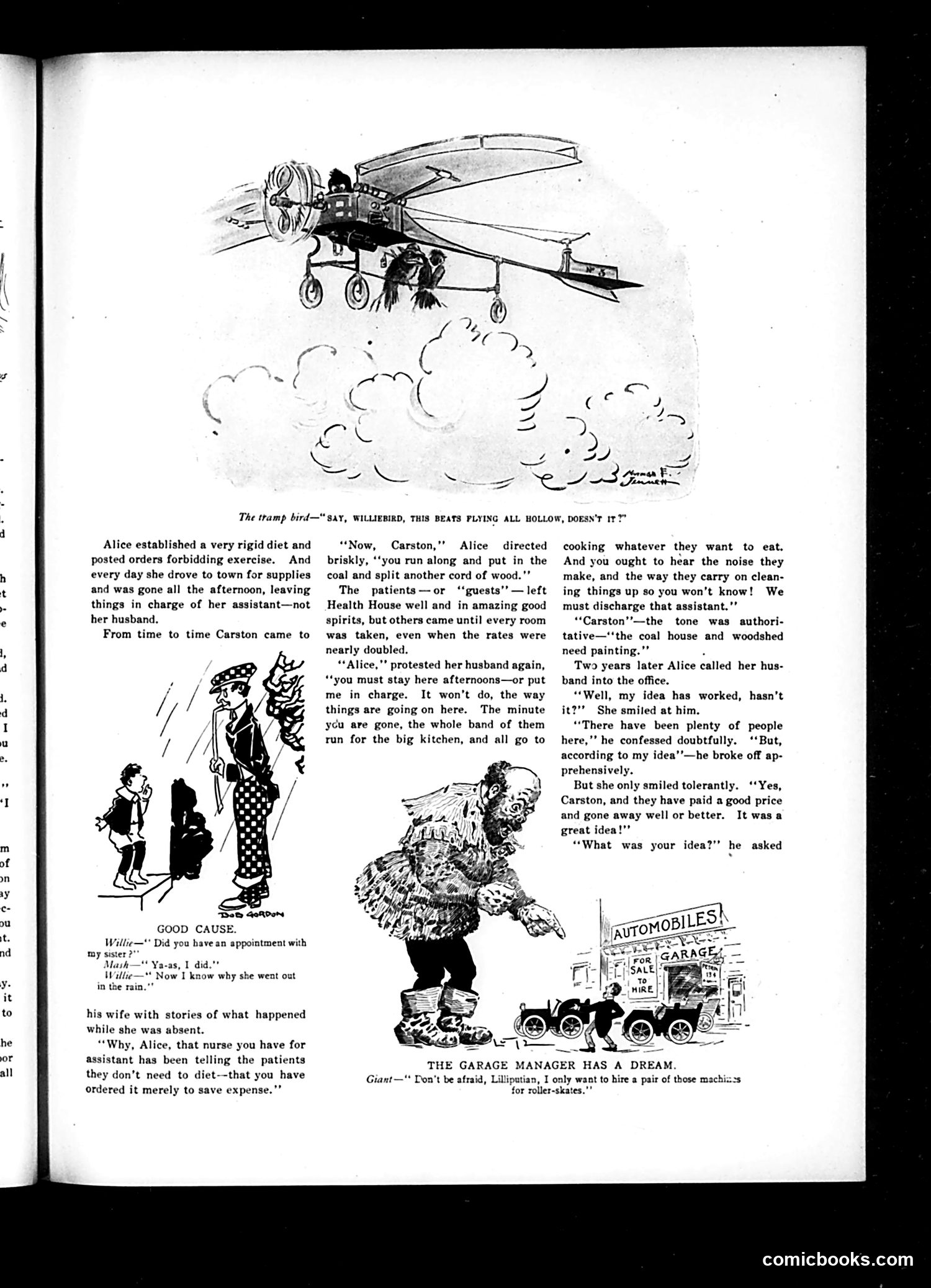
This page from *Judge* contains two satirical narratives about gender dynamics and business management in the early 20th century. The main story mocks a husband named Carston who objects to his wife Alice's management of a health sanitarium. While he complains about disorder and rules being broken, Alice—by ignoring his concerns and keeping him occupied with manual labor ("run along and put in the coal")—actually succeeds financially. The satire targets ineffectual husbands and suggests women are better business managers, inverting contemporary gender expectations. The secondary cartoon at bottom depicts a giant wanting to rent mechanical machines for roller-skates from a tiny garage manager—a absurdist joke about scale and impractical desires that lacks clear political meaning beyond simple humor. The "Good Cause" vignette similarly shows a woman outwitting male authority through indirect methods. The overall message mocks male incompetence in domestic/business spheres while celebrating female resourcefulness, typical of early-20th-century satirical magazine humor.
📄 Transcribed text from this page (OCR, searchable)
Machine-transcribed from the original scan — historical spelling and the odd misread are preserved.
2 Fo aoa The tramp bird—“ SAY, WILLIEBIRD, THIS BEATS PLYING ALL HOLLOW, DOESN'T IT?” Alice established a very rigid diet and posted orders forbidding exercise. And every day she drove to town for supplies and was gone all the afternoon, leaving things in charge of her assistant—not her husband, From time to time Carston came to Det GeRDon GOOD CAUSE. Willie— Did you have an appointment with my sister 2° Now I know why she went out in the rain."" his wife with stories of what happened while she was absent. “Why, Alice, that nurse you have for assistant has been telling the patients they don’t need to diet--that you have ordered it merely to save expense."” “Now, Carston,’’ Alice directed briskly, “you run along and put in the coal and split another cord of wood."” The patients—or ‘‘guests’’ —left Health House well and in amazing good spirits, but others came until every room was taken, even when the rates were nearly doubled. “Alice,” protested her husband again, “you must stay here afternoons—or put me in charge. It won’t do, the way things are going on here. The minute yeu are gone, the whole band of them run for the big kitchen, and all go to cooking whatever they want to eat. And you ought to hear the noise they make, and the way they carry on clean- ing things up so you won’t know! We must discharge that assistant."’ “‘Carston’’—the tone was authori- tative—‘‘the coal house and woodshed need painting.” ‘ Two years later Alice called her hus- band into the office. “Well, my idea has worked, hasn’t it?” She smiled at him. “There have been plenty of people here,”’ he confessed doubtfully. ‘‘But, according to my idea’’—he broke off ap- prehensively. But she only smiled tolerantly. ‘Yes, Carston, and they have paid a good price and gone away well or better. It was a great idea!” “‘What was your idea?’’ he asked THE GARAGE MANAGER HAS A DREAM. Giant—"* Don’t be afraid, Lilliputian, I only want to hire a pair of those machic:ss for roller-skates. comicbooks.com