
Judge, 1904-04-30 · page 3 of 16
Judge — April 30, 1904 — page 3: what you’re looking at
What you’re looking at
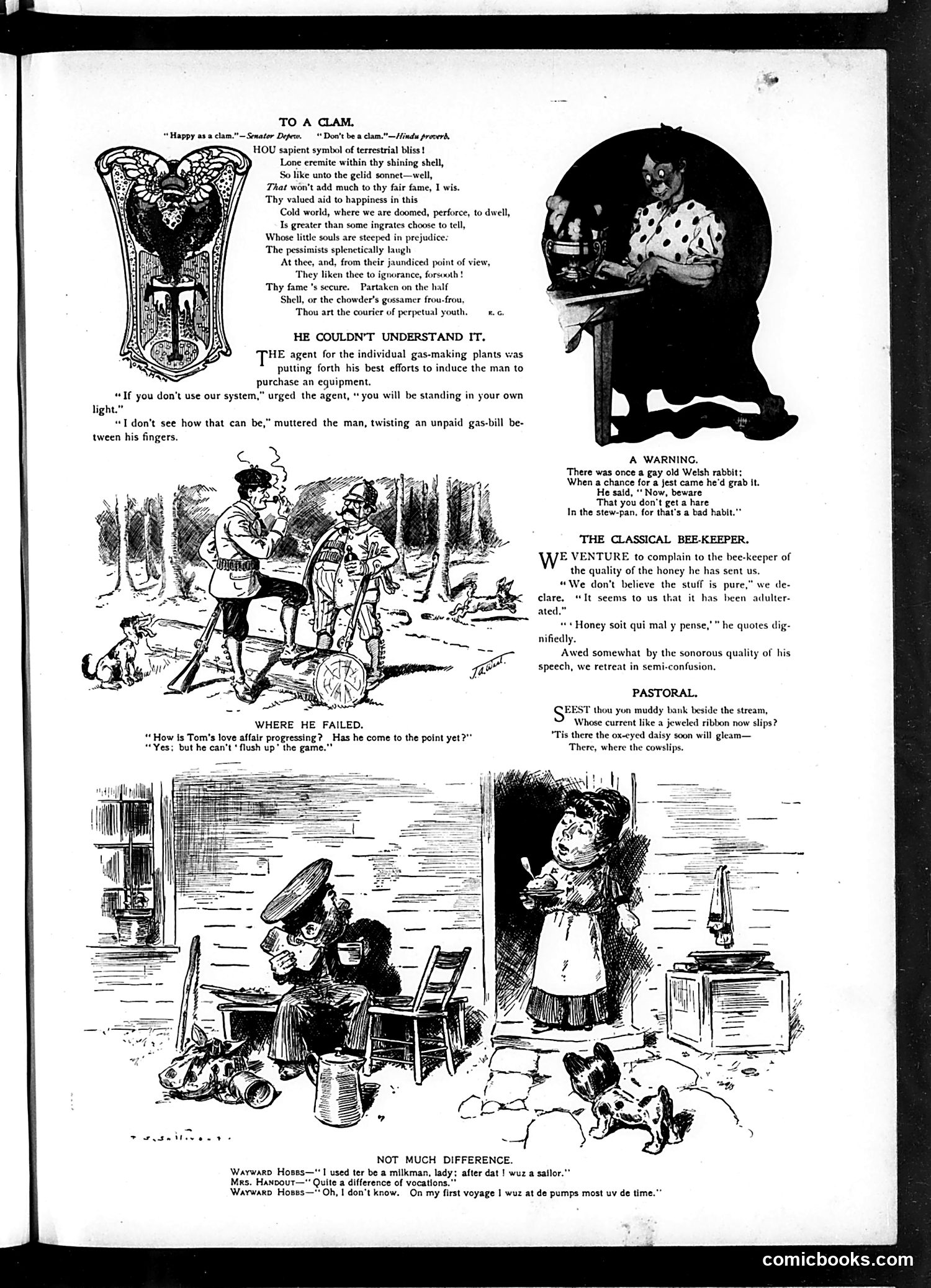
This page contains several satirical pieces and illustrations typical of early 20th-century Judge magazine humor: **"To a Clam"** presents a poem mocking clams as symbols of contentment in a harsh world—social commentary on acceptance of poor conditions. **"He Couldn't Understand It"** depicts a gas company agent trying to sell equipment to a skeptical customer, satirizing aggressive salesmanship and consumer resistance to new utilities. **"The Classical Bee-Keeper"** and **"Pastoral"** appear to be lighter humorous pieces about rural life. **"Not Much Difference"** shows a dialogue between a Wayward Horse and Mrs. Handout about the difference between being a milkman versus a sailor—likely joking about social class distinctions and occupational similarities. The illustrations use period-typical caricature style common to satirical magazines of this era.
📄 Transcribed text from this page (OCR, searchable)
Machine-transcribed from the original scan — historical spelling and the odd misread are preserved.
TO A CLAM. “Happy asa clam.”—Senator Depew. — “* Don't be a clam.” —HHindu proverb, HOU sapient symbol of terrestrial bliss! Lone eremite within thy shining shell, So like unto the gelid sonnet—well, That won't add much to thy fair fame, I wis. Thy valued aid to happiness in this Cold world, where we are doomed, perforce, to dwell, Is greater than some ingrates choose to tell, Whose little souls are steeped in prejudice: The pessimists splenetically laugh At thee, and, from their jaundiced point of view, ‘They liken thee to ignorance, forsooth ! Thy fame''s secure. Partaken on the half Shell, or the chowder’s gossamer frou-frou, Thou art the courier of perpetual youth. HE COULDN’T UNDERSTAND IT. HE agent for the individual gas-making plants was putting forth his best efforts to induce the man to purchase an equipment. “If you don’t use our system,” urged the agent, “you will be standing in your own “I don’t see how that can be,” muttered the man, twisting an unpaid gas-bill be- tween his fingers. A WARNING. ‘There was once a gay old Welsh rabbit; When a chance for a jest came he'd grab it. He said, ‘Now, beware ‘That you don't get a hare In the stew-pan, for that’s a bad habit.”* ‘THE CLASSICAL BEE-KEEPER. E VENTURE to complain to the bee-keeper of the quality of the honey he has sent us. “We don't believe the stuff is pure,” we de- clare. “It seems to us that it has been adulter- ated.” “+ Honey soit qui mal y pense," he quotes dig- nifiedly. Awed somewhat by the sonorous quality of his speech, we retreat in semi-confusion. PASTORAL. S T thou yon muddy bank beside the stream, WHERE HE FAILED. Whose current like a jeweled ribbon now slips? “ How is Tom's love affair progressing? Has he come to the point yet?" "Tis there the ox-cyed daisy soon will gleam— “Yes; but he can’t ‘flush up’ the game." There, where the cowslips. NOT MUCH DIFFERENCE. Warwaro Hosss—'| used ter be a milkman, lady: after dat ! wuz a sailor."” Mrs. Hanpout—"‘ Quite a difference of vocations.”" Warwaro Hosss—"Oh, I don't know. On my first voyage | wuz at de pumps most uv de time.” comicbooks.com