
Judge, 1904-03-05 · page 3 of 16
Judge — March 5, 1904 — page 3: what you’re looking at
What you’re looking at
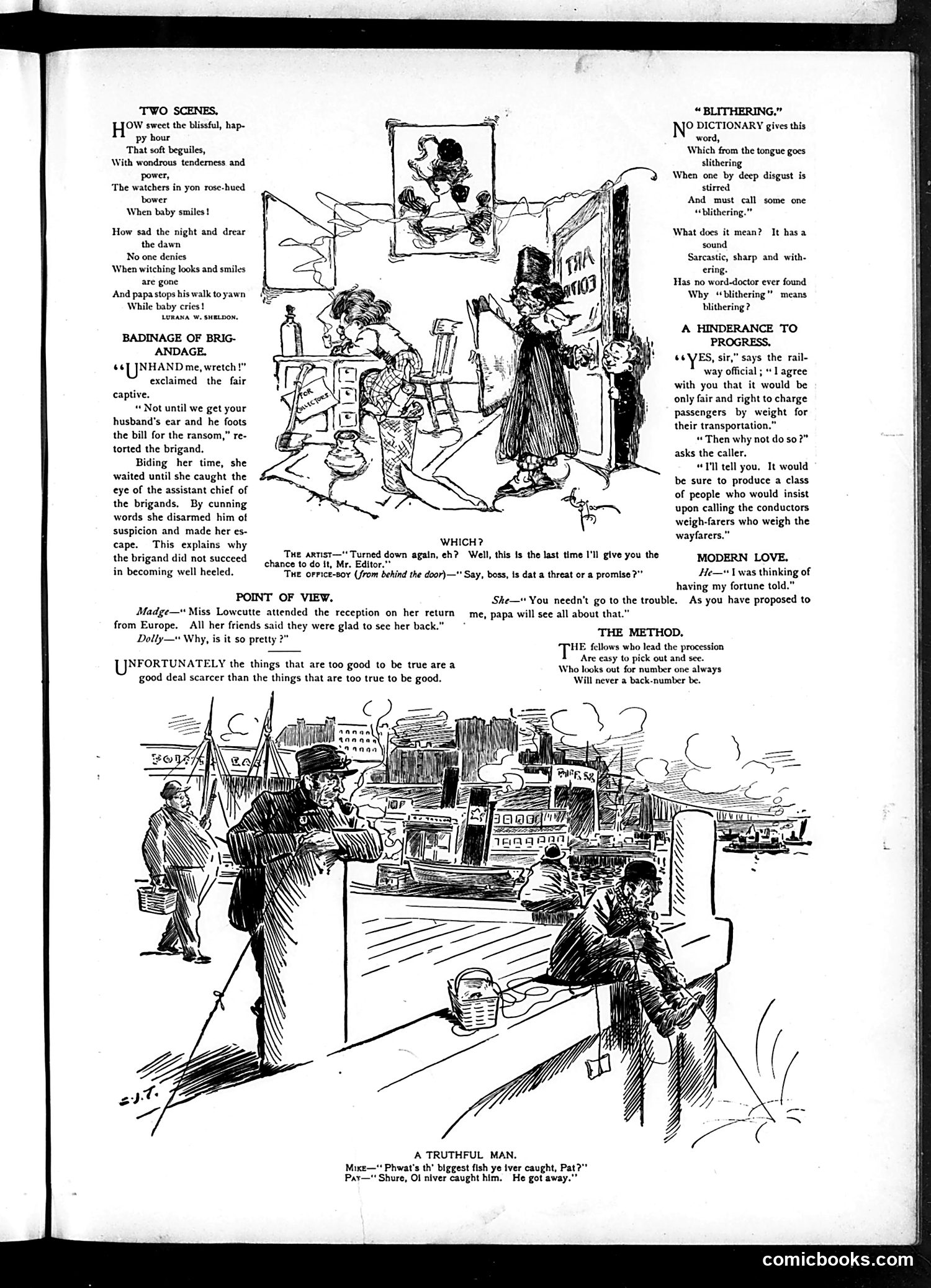
This page contains several satirical pieces typical of Judge magazine's humor: **"Two Scenes"** and **"Blithering"** are poetic commentaries on domestic life and language, likely mocking pretentious vocabulary. **"Badinage of Brigadage"** appears to satirize military bureaucracy, depicting soldiers complaining about an officer's orders regarding transportation charges. **"Point of View"** uses dialogue to mock social pretension, contrasting perspectives on travel and society. **"The Method"** and **"A Hindrance to Progress"** critique railway administration and the treatment of conductors/weighers—suggesting satirical commentary on early 20th-century transportation systems and labor practices. **"A Truthful Man"** (bottom cartoon) is a visual joke about fishing and honesty, showing workers at a dock or harbor. The cartoons employ working-class characters and mundane situations to satirize bureaucracy, social affectation, and labor relations.
📄 Transcribed text from this page (OCR, searchable)
Machine-transcribed from the original scan — historical spelling and the odd misread are preserved.
TWO SCENES. HOW sreet the bussful, hap- py hour That soft beguiles, With wondrous tenderness and power, ‘The watchers in yon rose-hued bower When baby smiles! How sad the night and drear the dawn No one denies When witching looks and smiles are gone And papa stops his walk to yawn While baby cries! LURAKA W, SHELDON, BADINAGE OF BRIG- ANDAGE. $6 JNHAND me, wretch!" exclaimed the fair captive. “Not until we get your husband's ear and he foots the bill for the ransom,” re- torted the brigand. Biding her time, she waited until she caught the eye of the assistant chief of the brigands. By cunning words she disarmed him of suspicion and made her es- cape. This explains why the brigand did not succeed in becoming well heeled. ‘Tue aRtist—" Turned down again, eh? Well, this Is the last time I'll give you the chance to do it, Mr. Editor." Tue orrice-soy (from behind the door)—"* Say, boss, is dat a threat or a promise?" POINT OF VIEW. WHICH? “ BLITHERING.” © DICTIONARY gives this word, Which from the tongue goes slithering When one by deep disgust is stirred And must call some one ““blithering."” What does it mean? It hasa sound Sarcastic, sharp and with- ering. Has no word-doctor ever found Why “blithering” means Dlithering? A HINDERANCE TO PROGRESS, 66VES, sir,” says the rail- way official ; I agree with you that it would be only fair and right to charge passengers by weight for their transportation.” “Then why not do so?” asks the caller. “T'll tell you. It would be sure to produce a class of people who would insist upon calling the conductors weigh-farers who weigh the wayfarers.” MODERN LOVE. He—"\was thinking of having my fortune told.” She—" You needn't go to the trouble. As you have proposed to Madge—“ Miss Lowcutte attended the reception on her return me, papa will see all about that." from Europe. All her friends said they were glad to see her back.’ THE METHOD. Dolly—" Why, is it so pretty ?' HE. fellows who lead the procession Are easy to pick out and see. Who looks out for number one always Will never a back-number be. UNFORTUNATELY the things that are too good to be true area good deal scarcer than the things that are too true to be good. A TRUTHFUL MAN. Mixe—‘' Phwat's th’ biggest fish ye iver caught, Pat?”’ Pay—"' Shure, Oi niver caught him. He got away."” comicbooks.com