
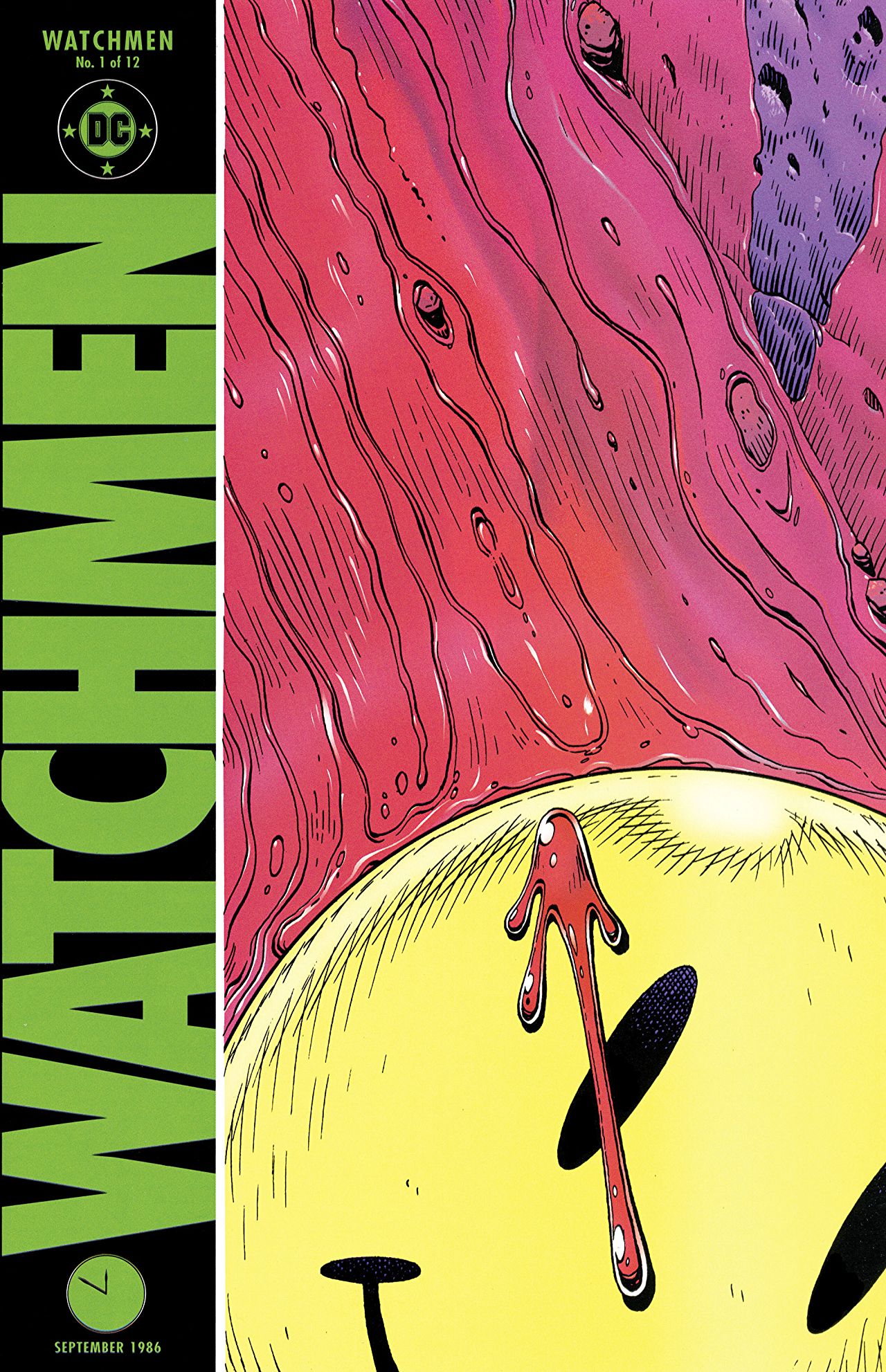
Watchmen #1
☆ Be the first to review + Add to your collection — Join freeWatchmen #1 marks the debut of an entirely new cast of morally complex, psychologically scarred heroes — Rorschach, Doctor Manhattan, Ozymandias, Nite Owl II, Silk Spectre II, and the Comedian — all introduced within a single issue that launched one of the most consequential maxiseries in the medium's history. Alan Moore and Dave Gibbons designed the series explicitly to push comics into territory no other medium could occupy, and from its very first chapter their ambitions are visible: a rigorous nine-panel grid, dense visual symbolism, a Cold War alternate-history setting, and supplemental in-world prose that treats the comic as a literary artifact rather than a disposable pamphlet. The series went on to win a Hugo Award for Other Forms in 1988 and remains the only graphic novel to appear on Time magazine's list of the 100 best English-language novels since 1923 — distinctions whose foundations were laid in the storytelling infrastructure of this opening issue. Along with Frank Miller's The Dark Knight Returns, Watchmen #1 helped establish the graphic novel as a commercial and critical format taken seriously by mainstream bookstores and libraries.
ComicBooks.com Value
Show all 17 grades ▾
This exact issue on ebay
CGC 9.8 ▾ $520–$6,000 3 listings
CGC 9.6 ▾ $205–$275 5 listings
CGC ▾ $680–$1,000 2 listings
Raw — VF/NM ▾ $49.99–$59.99 3 listings
Raw / ungraded ▾ $31.99–$182 3 listings
More listings for this title
Read it digitally
Sell my copy
Have this issue — or a whole collection? Get a fair offer from us, skip the marketplace fees and the hassle.
We Buy Collections ▸History
The series originated when Alan Moore submitted an unsolicited pitch to DC managing editor Dick Giordano built around DC's recently acquired Charlton Comics characters — Captain Atom, Blue Beetle, The Question, and others — for a murder-mystery story that would have left those characters permanently damaged or dead. Giordano admired the pitch but recognized that DC planned to integrate those properties into its main universe, so he persuaded Moore to invent original analogues instead; the result was a cast that mapped loosely onto Charlton archetypes (Rorschach from The Question, Doctor Manhattan from Captain Atom, Nite Owl from Blue Beetle) but quickly grew into something far more independent. Dave Gibbons, who had previously collaborated with Moore on a celebrated Superman story, heard about the project through industry channels and rang Moore directly to join; Gibbons then brought colorist John Higgins onto the team. Editor Len Wein oversaw the series with Dick Giordano as executive editor, and a single preview page appeared in DC Spotlight's 1985 50th-anniversary special before the first issue shipped in September 1986 — though production delays would plague the back half of the run, with Moore still writing issue nine while issue five was on stands.
Trivia · 7 facts
- First appearance of Rorschach (Walter Kovacs), Doctor Manhattan (Jonathan Osterman), Ozymandias (Adrian Veidt), Nite Owl II (Daniel Dreiberg), Silk Spectre II (Laurie Juspeczyk), the Comedian (Edward Blake), and Hollis Mason (the original Nite Owl) — the full core cast of the series.
- First appearance, in flashback via a Minutemen photograph, of the 1940s team members Captain Metropolis (Nelson Gardner), Hooded Justice, Mothman (Byron Lewis), Silhouette (Ursula Zandt), Dollar Bill (William Brady), and the original Silk Spectre (Sally Jupiter/Juspeczyk).
- The issue's story is titled 'At Midnight, All the Agents…', a line drawn from Bob Dylan's 'Desolation Row,' which is quoted at the issue's close — establishing the literary-reference scaffolding Moore would use throughout the series.
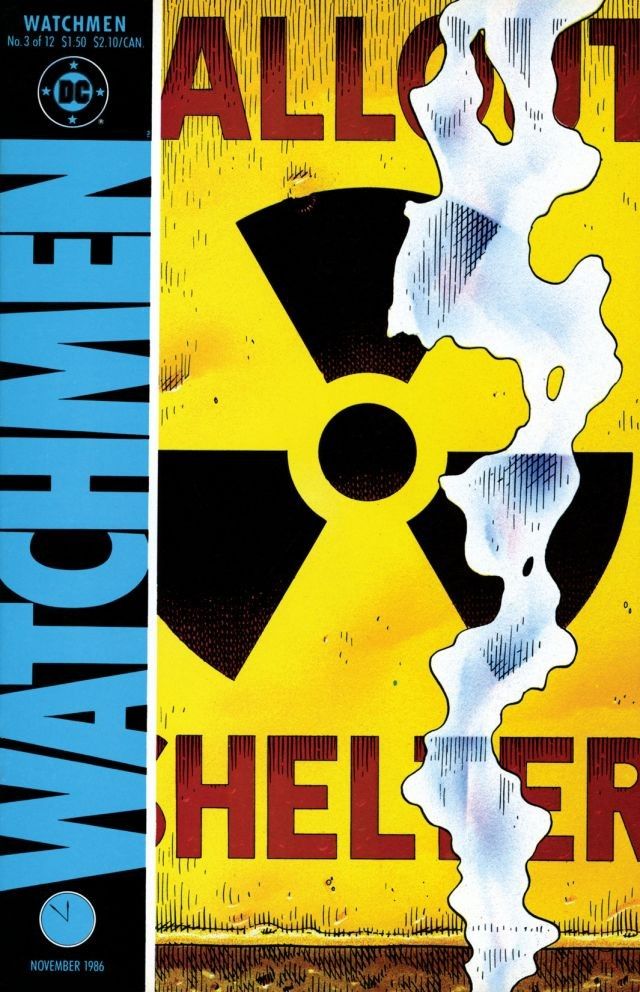
- The issue establishes the series' alternate history: Richard Nixon has served multiple presidential terms, Vietnam became the 51st U.S. state, and the Doomsday Clock (shown on both covers) sits at twelve minutes to midnight.
- Each issue, beginning with #1, concludes with supplemental in-world prose documents; the first issue includes the opening chapters of Hollis Mason's fictional autobiography Under the Hood, which provides backstory on the Minutemen and establishes characters who barely appear in the main narrative.
- Dave Gibbons penciled, inked, and lettered the issue while John Higgins provided colors; Gibbons employed a strict nine-panel grid throughout the series, a structural choice that shapes the entire reading experience from page one.
- The series was later collected as a trade paperback (1987), issued in a slipcased Graphitti Design hardcover with 48 pages of bonus material (1988), and released as Absolute Watchmen with restored and recolored art supervised by Gibbons (2005); the issue itself was reprinted as a Millennium Edition in 2000 and in the Dollar Comics line in 2019.
Cast · 20 characters
Full credits
Reprints
Reprinted in Watchmen #[nn] (1987), Watchmen #[nn] (1987), Watchmen #1 (1987), Vektere #1 (1987), Watchmen - Les Gardiens #1 (1987), Watchmen #1 (1987), Watchmen #[nn] (1987), Watchmen #[nn] (1987), Watchmen #[nn] (1988), Corto Maltese #9 [60] (1988), Corto Maltese #10 [61] (1988), Corto Maltese #11 [62] (1988), Watchmen #[nn] (1989), Watchmen - Die Wächter #1 (1989), Watchmen #[1990] (1990), Watchmen #[nn] (1991), Magnum #13/1994 (1994), Magnum #1/1995 (1995), Watchmen #[nn] (1998), Millennium Edition: Watchmen #1 #[nn] (2000), Strażnicy #1 (2003), Absolute Watchmen #[nn] (2005), Watchmen #[nn] (2006), Watchmen [Alle Tiders Superhelter] #[nn] (2007) + 25 more
Key issues in Watchmen
Reviews
Reader reviews
No reader reviews yet.