
Captain Billy's Whiz Bang, June 1922 · page 34 of 68
Captain Billy's Whiz Bang #34 — page 34: what you’re looking at
What you’re looking at
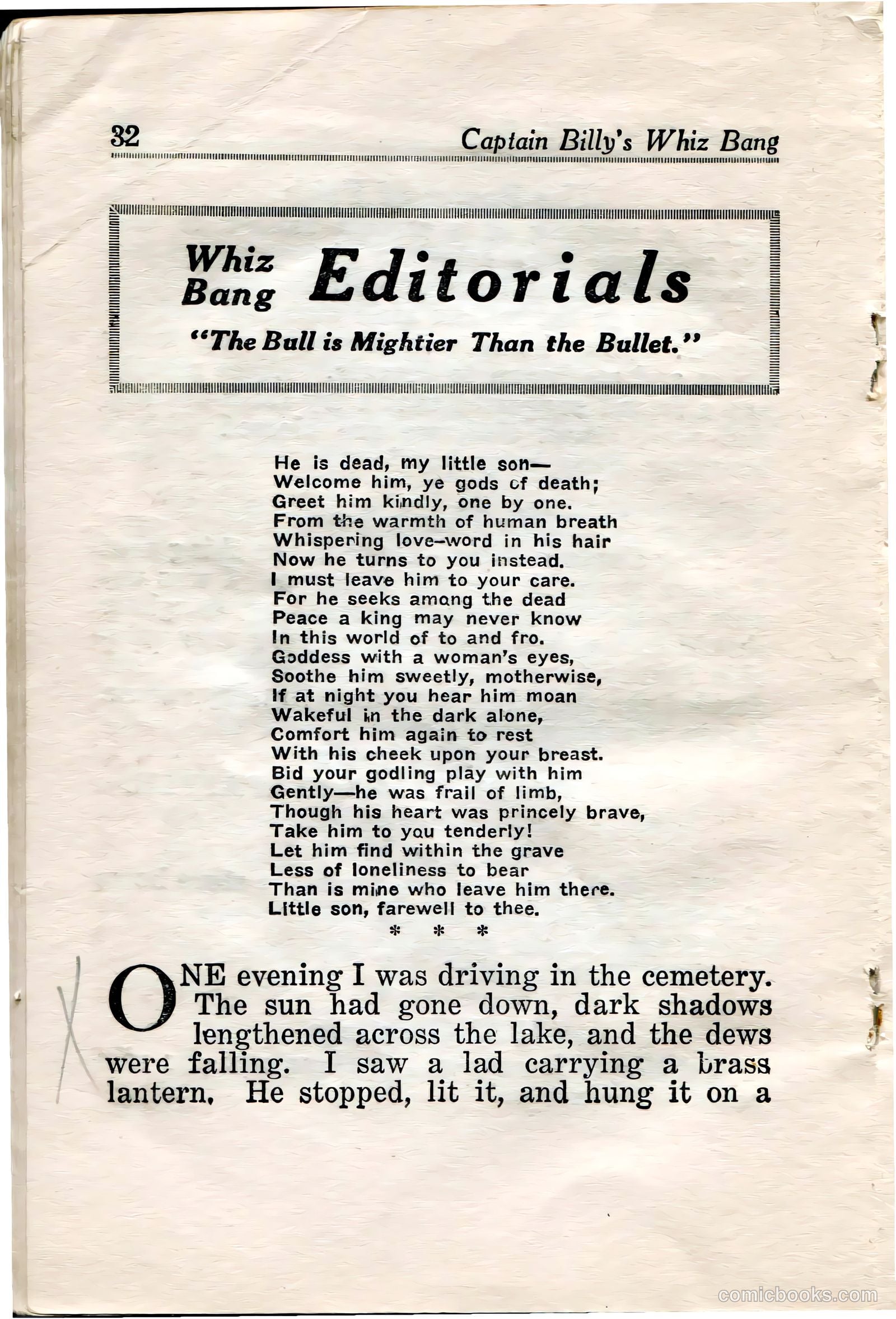
This page from *Captain Billy's Whiz Bang* (a 1920s satirical magazine) presents an editorial mixing poetry and prose about grief and loss, likely referencing World War I casualties. The poem is a mother's farewell to her dead son, asking the gods of death to comfort him in the grave. It emphasizes his youth ("frail of limb") and bravery, contrasting his peaceful death with the mother's ongoing suffering. The editorial's title—"The Bull is Mightier Than the Bullet"—appears to argue that spiritual or moral strength transcends military violence. The prose fragment beginning below describes a cemetery scene at dusk, where a youth places a memorial lantern on a grave, reinforcing themes of mourning and remembrance. This is sentimental, anti-war commentary typical of post-WWI American publications processing national trauma through domestic loss.
📄 Transcribed text from this page (OCR, searchable)
Machine-transcribed from the original scan — historical spelling and the odd misread are preserved.
32 Captain Billy's Whiz Bang Whiz Bang Editorials “The Bull is Mightier Than the Bullet.” He is dead, my little son— Welcome him, ye gods of death; Greet him kindly, one by one. From the warmth of human breath Whispering love-word in his hair Now he turns to you instead. I must leave him to your care. For he seeks among the dead Peace a king may never know In this world of to and fro. Goddess with a woman's eyes, Soothe him sweetly, motherwise, If at night you hear him moan Wakeful in the dark alone, Comfort him again to rest With his cheek upon your breast. Bid your godling play with him Gently—he was frail of limb, Though his heart was princely brave, Take him to you tenderly! Let him find within the grave Less of loneliness to bear Than is mine who leave him there. Little son, farewell to thee. * * * ONE evening I was driving in the cemetery. The sun had gone down, dark shadows lengthened across the lake, and the dews were falling. I saw a lad carrying a brass lantern. He stopped, lit it, and hung it on a