
Captain Billy's Whiz Bang, September 1921 · page 47 of 68
Captain Billy's Whiz Bang #27 — page 47: what you’re looking at
What you’re looking at
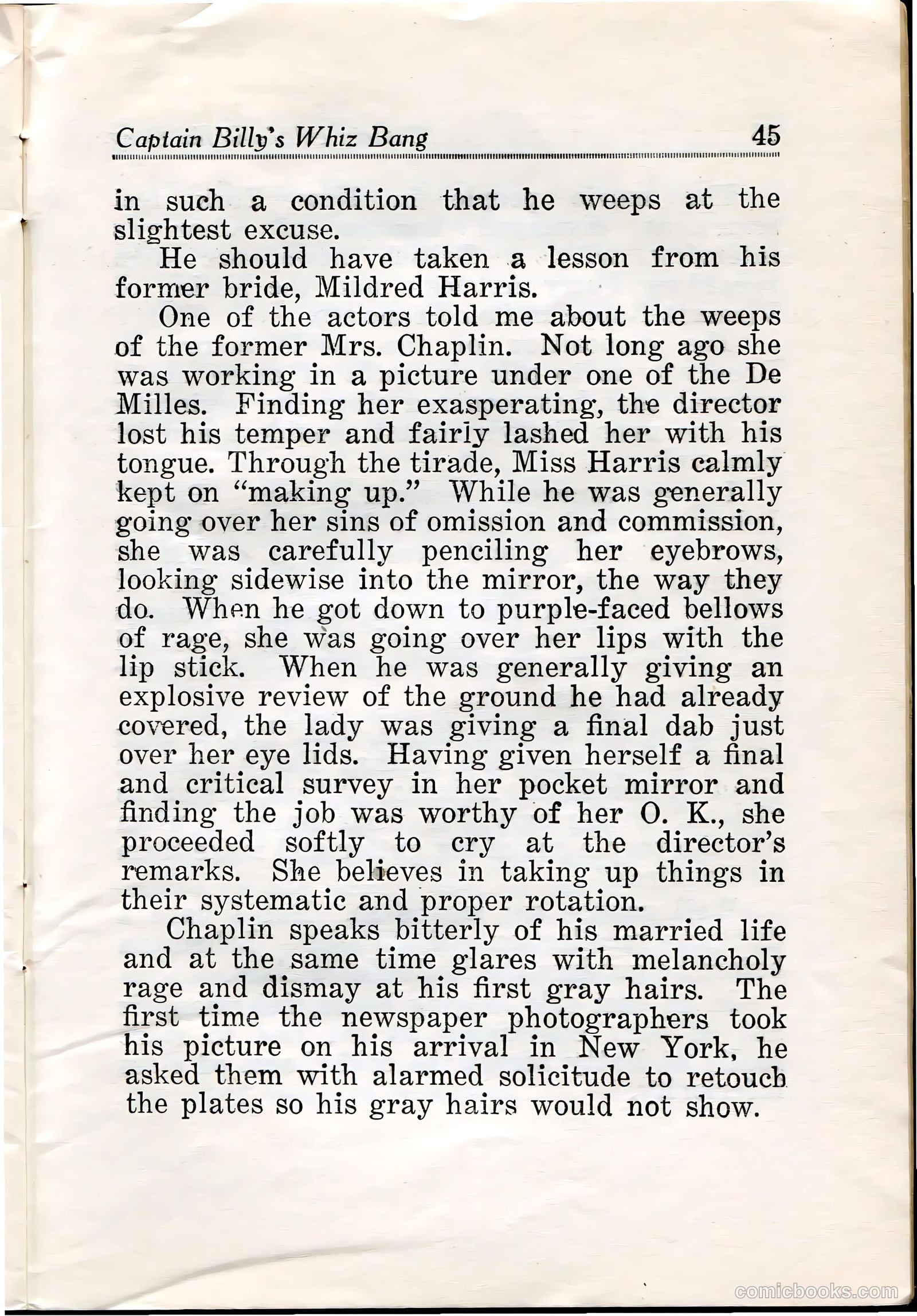
This gossip column satirizes **Charlie Chaplin's emotional sensitivity** by contrasting him with his ex-wife **Mildred Harris**. The piece mocks Chaplin for weeping at minor slights while praising Harris's composure during a director's tongue-lashing on a De Mille film set. Harris remained unmoved, methodically applying makeup throughout the tirade—a comedic inversion of expected feminine emotionality. The satire's punchline: Harris cries *after* finishing her makeup, on her own schedule, treating emotional response as just another task requiring "systematic and proper rotation." The second paragraph amplifies the joke: Chaplin simultaneously complains about marriage while obsessing over his gray hair, even demanding photographers retouch pictures to hide aging. The satire equates his vanity and emotional fragility, portraying him as hypocritical and vain—the opposite of the tough pragmatism he should learn from Harris.
📄 Transcribed text from this page (OCR, searchable)
Machine-transcribed from the original scan — historical spelling and the odd misread are preserved.
Captain Billy's Whiz Bang 45 in such a condition that he weeps at the slightest excuse. He should have taken a lesson from his former bride, Mildred Harris. One of the actors told me about the weeps of the former Mrs. Chaplin. Not long ago she was working in a picture under one of the De Milles. Finding her exasperating, the director lost his temper and fairly lashed her with his tongue. Through the tirade, Miss Harris calmly kept on “making up.” While he was generally going over her sins of omission and commission, she was carefully penciling her eyebrows, looking sidewise into the mirror, the way they do. When he got down to purple-faced bellows of rage, she was going over her lips with the lip stick. When he was generally giving an explosive review of the ground he had already covered, the lady was giving a final dab just over her eye lids. Having given herself a final and critical survey in her pocket mirror and finding the job was worthy of her O. K., she proceeded softly to cry at the director’s remarks. She believes in taking up things in their systematic and proper rotation. Chaplin speaks bitterly of his married life and at the same time glares with melancholy rage and dismay at his first gray hairs. The first time the newspaper photographers took his picture on his arrival in New York, he asked them with alarmed solicitude to retouch the plates so his gray hairs would not show.