
Captain Billy's Whiz Bang, July 1921 · page 34 of 68
Captain Billy's Whiz Bang #22 — page 34: what you’re looking at
What you’re looking at
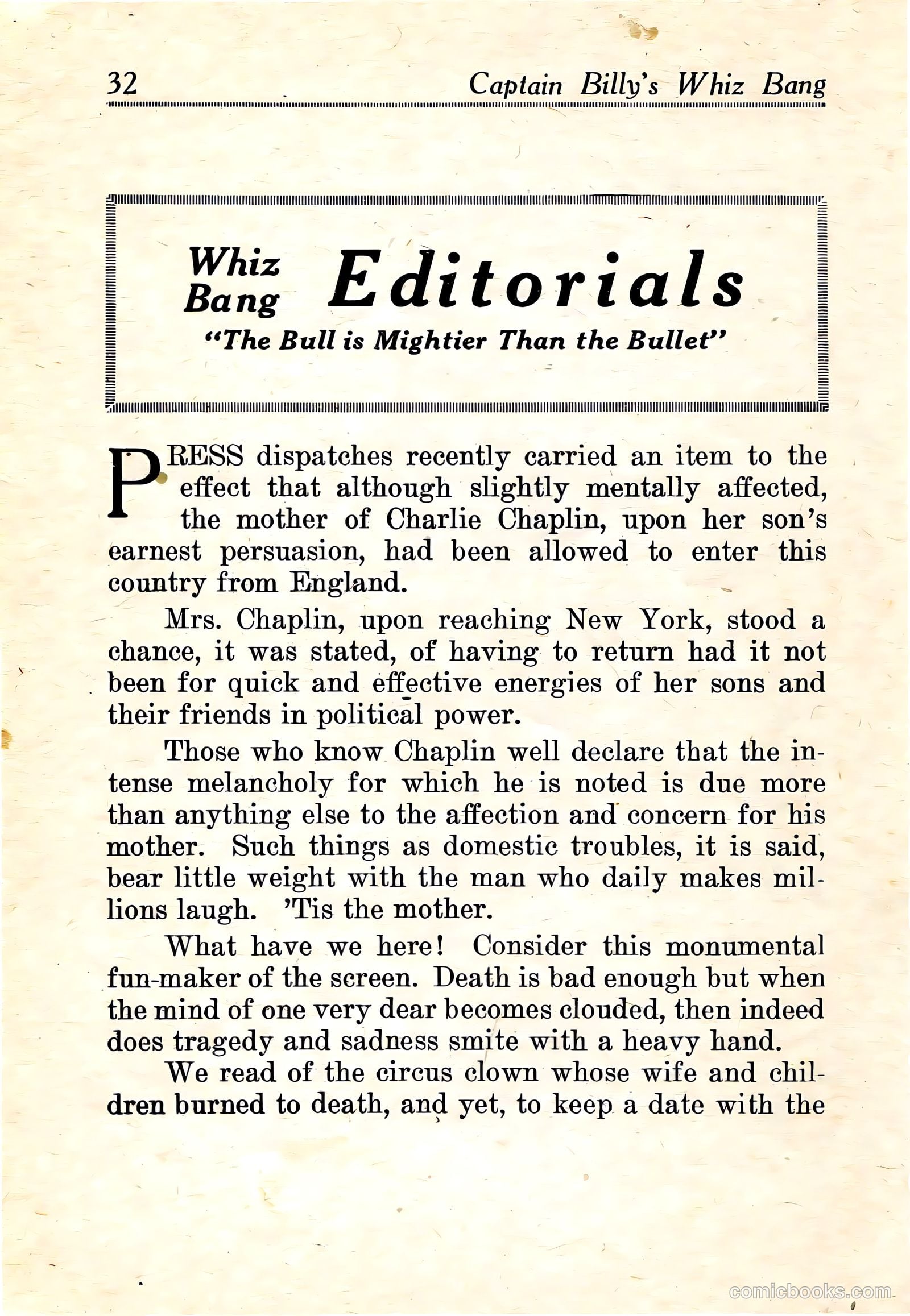
This is an editorial (not a cartoon) from *Captain Billy's Whiz Bang*, a satirical magazine. It discusses Charlie Chaplin's efforts to bring his mother from England into the United States despite her mental health issues. The piece notes that without Chaplin's influence with politically connected friends, she would have been denied entry. The editorial's point is sympathetic: it argues that Chaplin's famous on-screen melancholy stems from genuine concern for his mother, not mere artistic affectation. The writer uses this to reflect on how tragedy—particularly mental decline of loved ones—affects even those who professionally entertain millions. The comparison to "the circus clown" suggests that comedians' ability to make others laugh contrasts sharply with their private suffering. The tagline "The Bull is Mightier Than the Bullet" remains unclear from this excerpt alone.
📄 Transcribed text from this page (OCR, searchable)
Machine-transcribed from the original scan — historical spelling and the odd misread are preserved.
32 Captain Billy’s Whiz Bang Whiz Bang Editorials “The Bull is Mightier Than the Bullet” PRESS dispatches recently carried an item to the effect that although slightly mentally affected, the mother of Charlie Chaplin, upon her son’s earnest persuasion, had been allowed to enter this country from England. Mrs. Chaplin, upon reaching New York, stood a chance, it was stated, of having to return had it not been for quick and effective energies of her sons and their friends in political power. Those who know Chaplin well declare that the in- tense melancholy for which he is noted is due more than anything else to the affection and concern for his mother. Such things as domestic troubles, it is said, bear little weight with the man who daily makes mil- lions laugh. ’Tis the mother. What have we here! Consider this monumental fun-maker of the screen. Death is bad enough but when the mind of one very dear becomes clouded, then indeed does tragedy and sadness smite with a heavy hand. We read of the circus clown whose wife and chil- dren burned to death, and yet, to keep a date with the