
Captain Billy's Whiz Bang, June 1921 · page 36 of 67
Captain Billy's Whiz Bang #21 — page 36: what you’re looking at
What you’re looking at
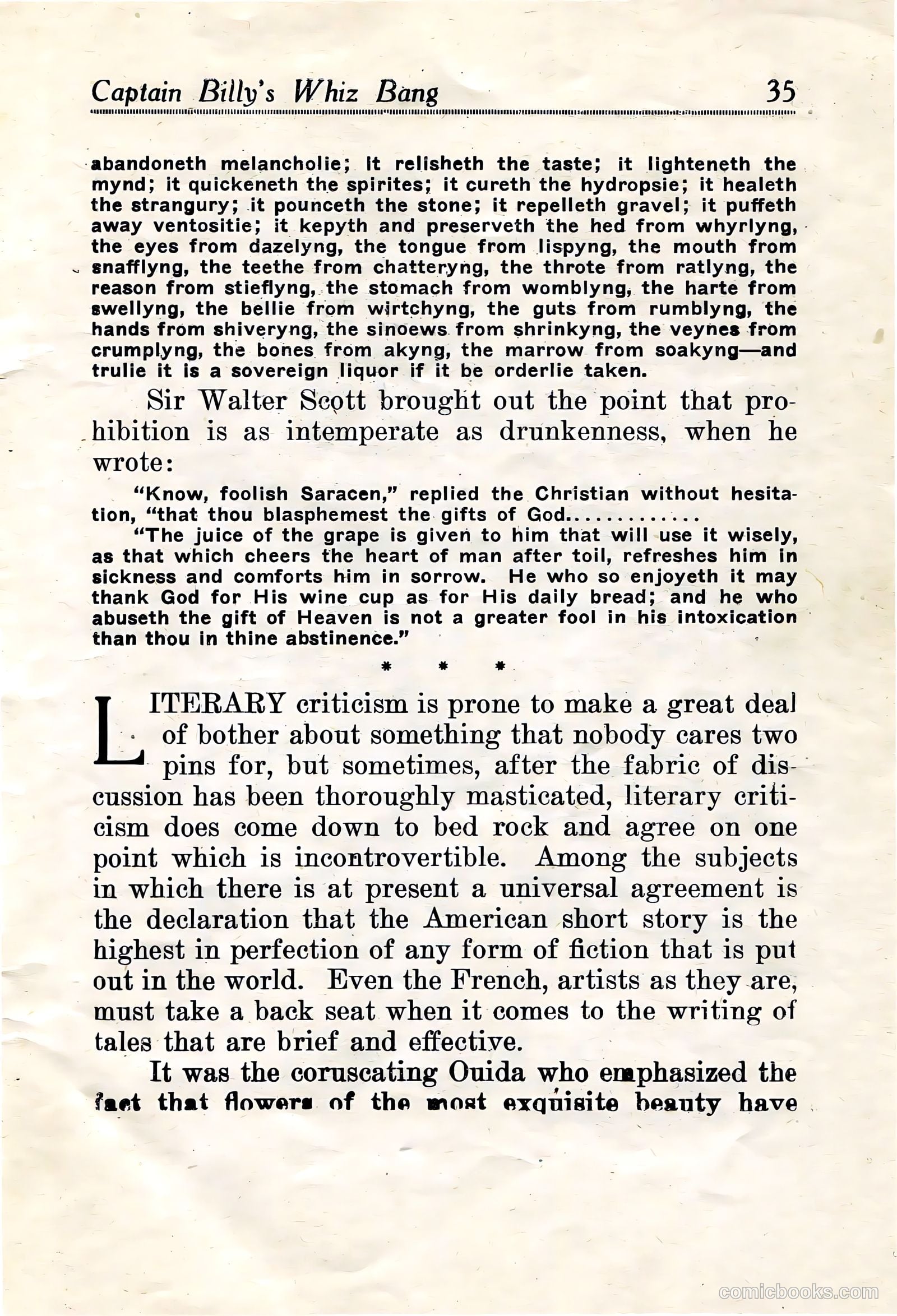
This page from *Captain Billy's Whiz Bang* (a 1920s satirical magazine) tackles **Prohibition-era politics**. The opening text—a mock-archaic medical endorsement of alcohol—humorously lists supposed health benefits of drinking, using deliberately old-fashioned language ("kepyth," "relisheth") to satirize outdated thinking. The page then quotes **Sir Walter Scott** to argue that **prohibition is as extreme as drunkenness itself**. Scott's fictional dialogue presents moderate alcohol use as a "gift of God" and suggests that abstaining is foolish—inverting temperance arguments by calling strict prohibition a form of intoxication or moral excess. The secondary section on American short stories appears unrelated but may serve as filler content. **Context**: This represents anti-Prohibition sentiment common in satirical publications during the 1920s, mocking temperance advocates by suggesting their zealotry was itself a form of extremism, while defending moderate drinking as reasonable and even religious.
📄 Transcribed text from this page (OCR, searchable)
Machine-transcribed from the original scan — historical spelling and the odd misread are preserved.
Captain Billy's Whiz Bang 35 abandoneth melancholie; It relisheth the taste; it lighteneth the mynd; it quickeneth the spirites; it cureth the hydropsie; it healeth the strangury; it pounceth the stone; it repelleth gravel; it puffeth away ventositie; it kepyth and preserveth the hed from whyrlyng, the eyes from dazelyng, the tongue from lispyng, the mouth from snafflyng, the teeths from chatteryng, the throte from ratlyng, the reason from stieflyng, the stomach from womblyng, the harte from swellyng, the bellie from wirtchyng, the guts from rumblyng, the hands from shiveryng, the sinoews from shrinkyng, the veynes from crumplyng, the bones from akyng, the marrow from soakyng—and trulie it is a sovereign liquor if it be orderlie taken. Sir Walter Scott brought out the point that pro- hibition is as intemperate as drunkenness, when he wrote: “Know, foolish Saracen,” replied the Christian without hesita- tion, “that thou blasphemest the gifts of God......... “The juice of the grape is given to him that will use it wisely, as that which cheers the heart of man after toil, refreshes him in sickness and comforts him in sorrow. He who so enjoyeth it may thank God for His wine cup as for His daily bread; and he who abuseth the gift of Heaven is not a greater fool in his intoxication than thou in thine abstinence.” *** LITERARY criticism is prone to make a great deal of bother about something that nobody cares two pins for, but sometimes, after the fabric of dis- cussion has been thoroughly masticated, literary criti- cism does come down to bed rock and agree on one point which is incontrovertible. Among the subjects in which there is at present a universal agreement is the declaration that the American short story is the highest in perfection of any form of fiction that is put out in the world. Even the French, artists as they are, must take a back seat when it comes to the writing of tales that are brief and effective. It was the coruscating Ouida who emphasized the fact that flowers of the most exquisite beauty have