
The Wasp, 1913 · page 98 of 364
The Wasp — 1913 — page 98: what you’re looking at
What you’re looking at
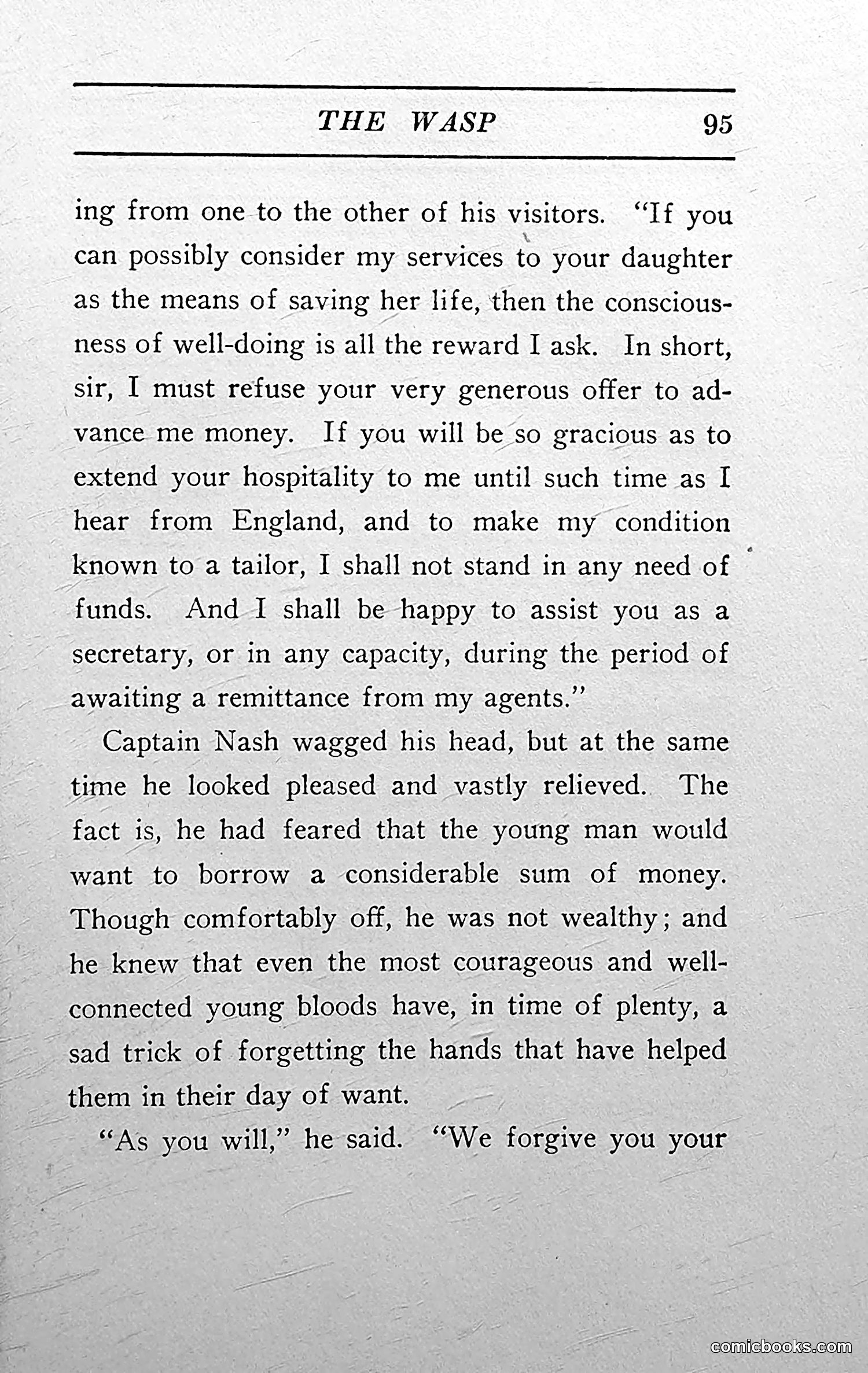
This page contains dialogue from what appears to be a serialized story rather than a cartoon. It depicts a conversation between a young man and Captain Nash, seemingly the father of a daughter the young man helped save. The satire targets **upper-class male entitlement and hypocrisy**. The young man performs elaborate self-righteousness—refusing money while strategically requesting hospitality, a tailor's services, and employment. His speech is ornate and self-congratulatory ("consciousness of well-doing is all the reward"). Captain Nash's internal monologue reveals the real joke: he's **relieved the young man didn't demand cash outright**, despite knowing wealthy young men routinely forget their benefactors. The phrase "we forgive you your" (incomplete) suggests Nash views even the *refusal* as a calculated performance. The satire mocks the performative morality of the privileged class—how they disguise self-interest as virtue while remaining cynical about others' motives.
📄 Transcribed text from this page (OCR, searchable)
Machine-transcribed from the original scan — historical spelling and the odd misread are preserved.
PC ES aN SN eR RO CS THE WASP 95 ing from one to the other of his visitors. “If you can possibly consider my services to your daughter as the means of saving her life, then the conscious- ness of well-doing is all the reward I ask. In short, sir, I must refuse your very generous offer to ad- vance me money. If you will be so gracious as to extend your hospitality to me until such time as I hear from England, and to make my condition known to a tailor, I shall not stand in any need of funds. And I shall be happy to assist you as a secretary, or in any capacity, during the period of awaiting a remittance from my agents.” Captain Nash wagged his head, but at the same time he looked pleased and vastly relieved. The fact is, he had feared that the young man would want to borrow a considerable sum of money. Though comfortably off, he was not wealthy; and he knew that even the most courageous and well- connected young bloods have, in time of plenty, a sad trick of forgetting the hands that have helped them in their day of want. “As you will,’ he said. “We forgive you your Comicooks.com