
The Wasp, 1913 · page 97 of 364
The Wasp — 1913 — page 97: what you’re looking at
What you’re looking at
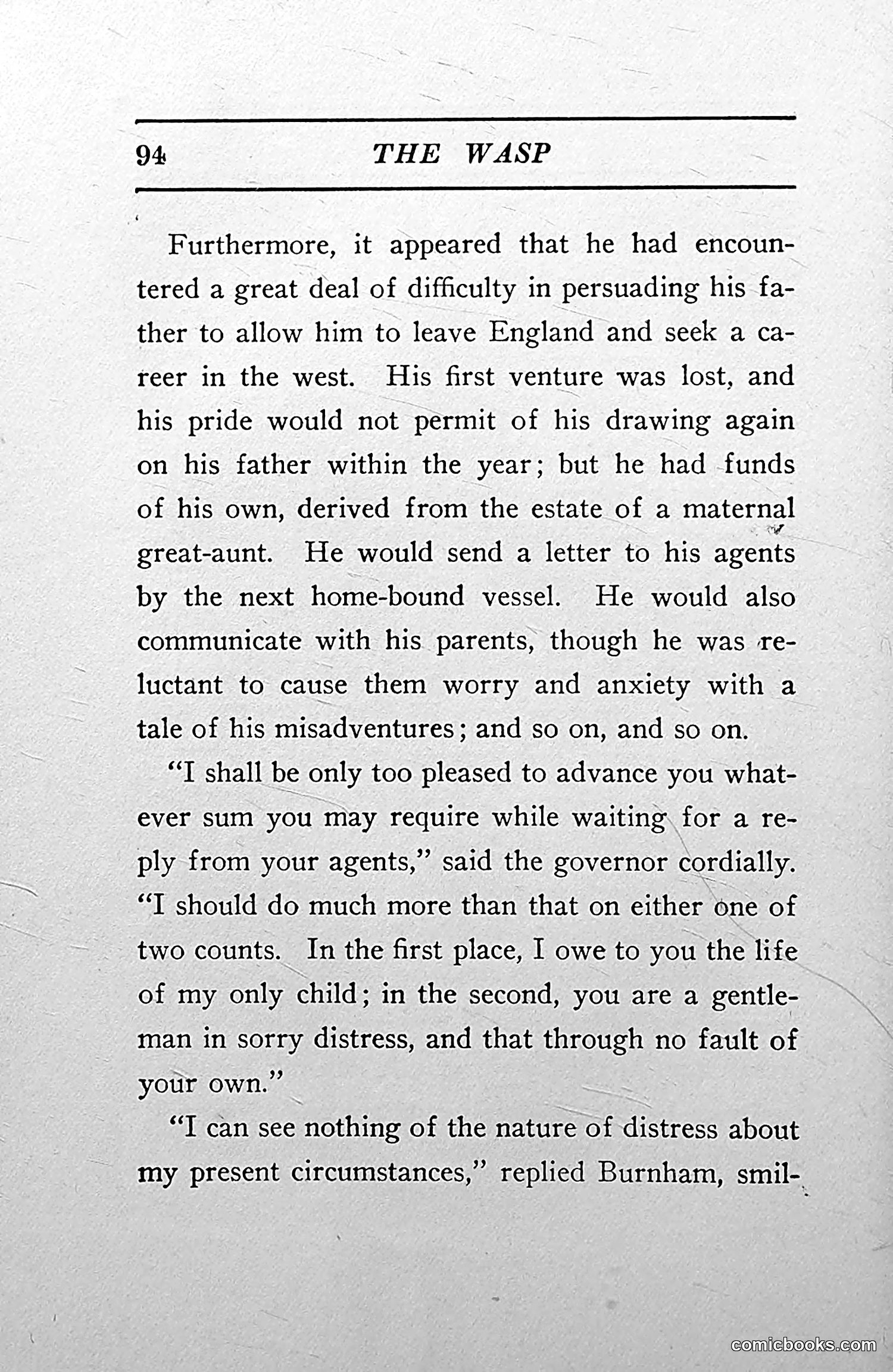
This page appears to be narrative prose rather than a cartoon—it's dialogue from a story in *The Wasp* magazine. The text depicts a conversation between a governor and a man named Burnham, an Englishman who has come west seeking his fortune. **The setup:** Burnham arrived in distress after a failed venture. The governor, feeling obligated (he apparently saved the governor's child's life), offers financial assistance. Burnham has funds from a maternal great-aunt's estate and plans to contact his agents back in England. **The satirical point:** The humor lies in Burnham's prideful denial of distress while clearly being in financial straits—he won't draw on his father, must wait for agent replies, yet accepts the governor's help. The governor's two-part justification (owing Burnham his child's life, plus general charity) undercuts Burnham's attempted dignity. **Without seeing illustrations**, the satire targets English pride and the awkwardness of accepting help while maintaining social pretense—a common *Wasp* theme mocking Victorian gentility.
📄 Transcribed text from this page (OCR, searchable)
Machine-transcribed from the original scan — historical spelling and the odd misread are preserved.
94 THE WASP Furthermore, it appeared that he had encoun- tered a great deal of difficulty in persuading his fa- ther to allow him to leave England and seek a ca- reer in the west. His first venture was lost, and his pride would not permit of his drawing again on his father within the year; but he had funds of his own, derived from the estate of a maternal great-aunt. He would send a letter to his apente by the next home-bound vessel. He would also communicate with his parents, though he was re- luctant to cause them worry and anxiety with a tale of his misadventures; and so on, and so on. “TI shall be only too pleased to advance you what- ever sum you may require while waiting for a re- ply from your agents,” said the governor cordially. “T should do much more than that on either one of two counts. In the first place, I owe to you the life of my only child; in the second, you are a gentle- man in sorry distress, and that through no fault of your own.” — “T can see nothing of the nature of distress about b my present circumstances,” replied Burnham, smil- Comichooks.com