
The Wasp, 1913 · page 31 of 364
The Wasp — 1913 — page 31: what you’re looking at
What you’re looking at
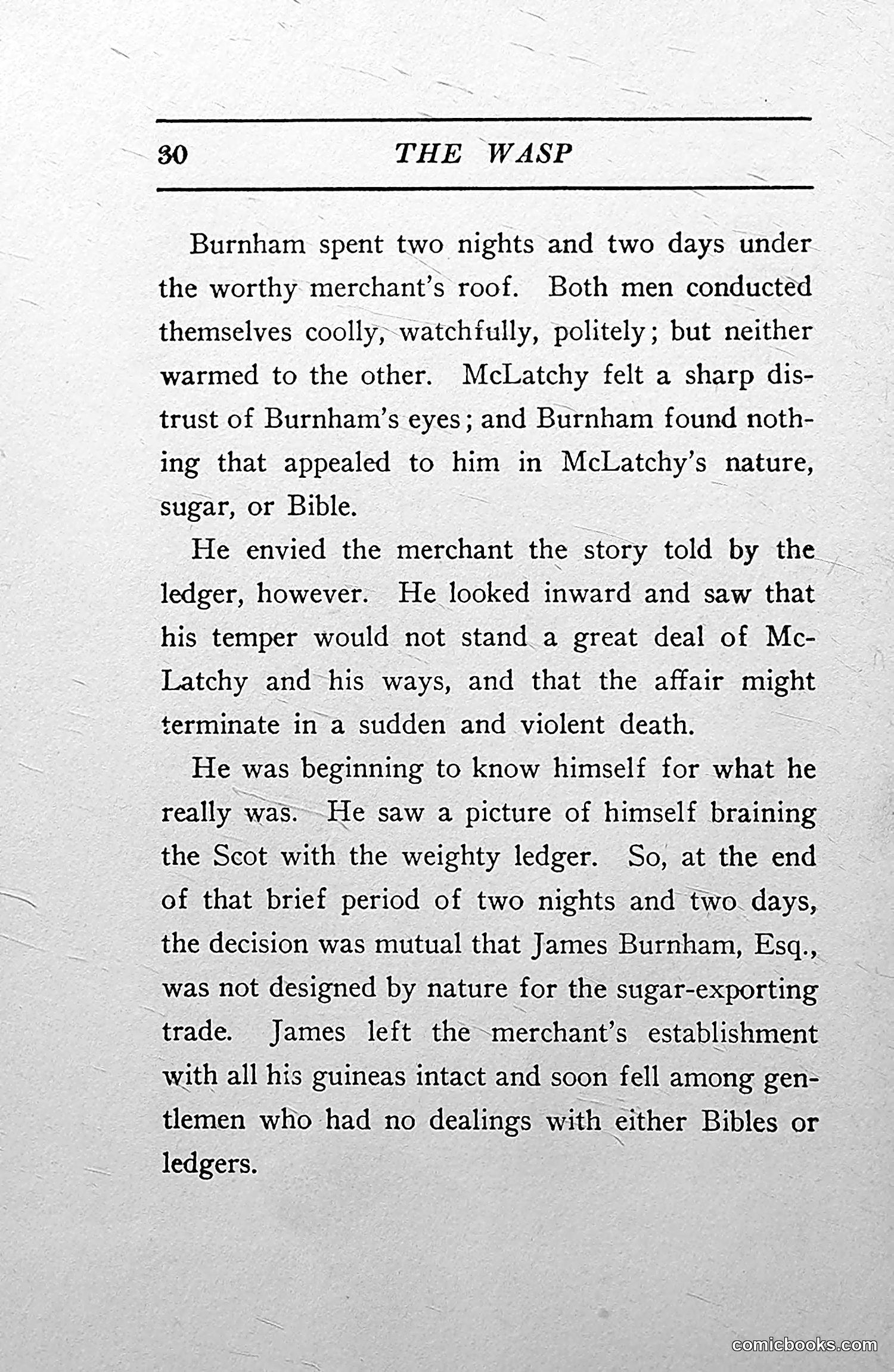
This page appears to be a narrative excerpt rather than a cartoon. It describes a conflict between James Burnham, Esq., and a Scottish merchant named McLatchy over a two-day visit. The satire targets Burnham's unsuitability for respectable commercial life. He's portrayed as temperamentally violent and unstable—imagining himself brutally attacking McLatchy with a ledger. The irony is that despite his murderous impulses, Burnham leaves peacefully with his money intact, then immediately "fell among gentlemen who had no dealings with either Bibles or ledgers"—suggesting he gravitates toward dissolute or criminal companions. The joke mocks a certain class of British gentleman: financially independent but morally and temperamentally unfit for legitimate business. McLatchy represents Victorian commercial virtue (Bibles, ledgers, respectability), which Burnham finds intolerable. The satire suggests some men are simply *constitutionally* unsuited to honest work, preferring disreputable company. The target and specific historical context remain unclear without additional context about *The Wasp* magazine's publication date and focus.
📄 Transcribed text from this page (OCR, searchable)
Machine-transcribed from the original scan — historical spelling and the odd misread are preserved.
30 THE WASP Burnham spent two nights and two days under the worthy merchant’s roof. Both men conducted themselves coolly,-watchiully, politely; but neither warmed to the other. McLatchy felt a sharp dis- trust of Burnham’s eyes; and Burnham found noth- ing that appealed to him in McLatchy’s nature, sugar, or Bible. He envied the merchant the story told by the ledger, however. He looked inward and saw that his temper would not stand.a great deal of Mc- Latchy and his ways, and that the affair might terminate in a sudden and violent death. He was beginning to know himself for what he really was. He saw a picture of himself braining the Scot with the weighty ledger. So, at the end of that brief period of two nights and two. days, the decision was mutual that James Burnham, Esq., was not designed by nature for the sugar-exporting trade. James left the merchant’s establishment with all his guineas intact and soon fell among gen- tlemen who had no dealings with either Bibles or ledgers. : Comichooks.com