
The Wasp, 1913 · page 150 of 364
The Wasp — 1913 — page 150: what you’re looking at
What you’re looking at
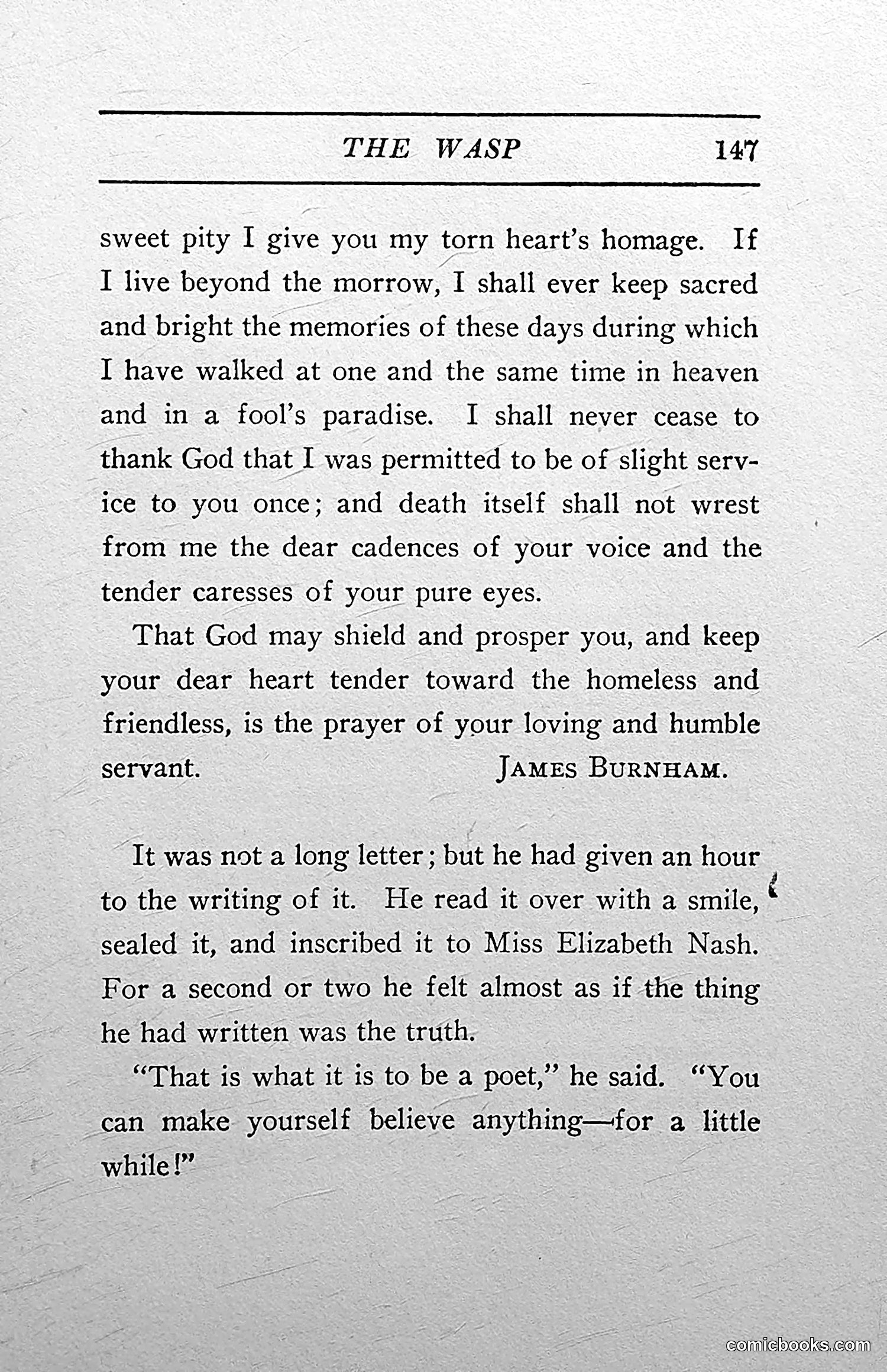
This page contains no cartoon—it's prose fiction, likely from a serialized story in *The Wasp*. The passage depicts a character (James Burnham) writing an elaborately romantic, flowery love letter to Miss Elizabeth Nash. The satire lies in the revelation that follows: after sealing this passionate missive, Burnham reflects that he almost believes his own overwrought sentiments, then cynically concludes this is "what it is to be a poet"—the ability to manufacture convincing emotional falsehoods temporarily. The joke mocks both romantic literary pretension and male insincerity: the "poet" has crafted a letter he doesn't genuinely feel, demonstrating how artistic language can deceive both recipient and writer. It's satire on sentimental Victorian romance writing and the dishonesty lurking beneath poetic flourish.
📄 Transcribed text from this page (OCR, searchable)
Machine-transcribed from the original scan — historical spelling and the odd misread are preserved.
THE WASP 147 sweet pity I give you my torn heart’s homage. If I live beyond the morrow, I shall ever keep sacred and bright the memories of these days during which I have walked at one and the same time in heaven and in a fool’s paradise. I shall never cease to thank God that I was permitted to be of slight serv- ice to you once; and death itself shall not wrest from me the dear cadences of your voice and the tender caresses of your pure eyes. That God may shield and prosper you, and keep your dear heart tender toward the homeless and friendless, is the prayer of your loving and humble servant. JAMES BuURNHAM. ‘It was not a long letter; but he had given an hour to the writing of it. He read it over with a smile, sealed it, and inscribed it to Miss Elizabeth Nash. For a second or two he felt almost as if the thing he had written was the truth. “That is what it is to be a poet,” he said. “You can make yourself believe anything—for a little while!” Comicnooks.com