
The Wasp, 1913 · page 149 of 364
The Wasp — 1913 — page 149: what you’re looking at
What you’re looking at
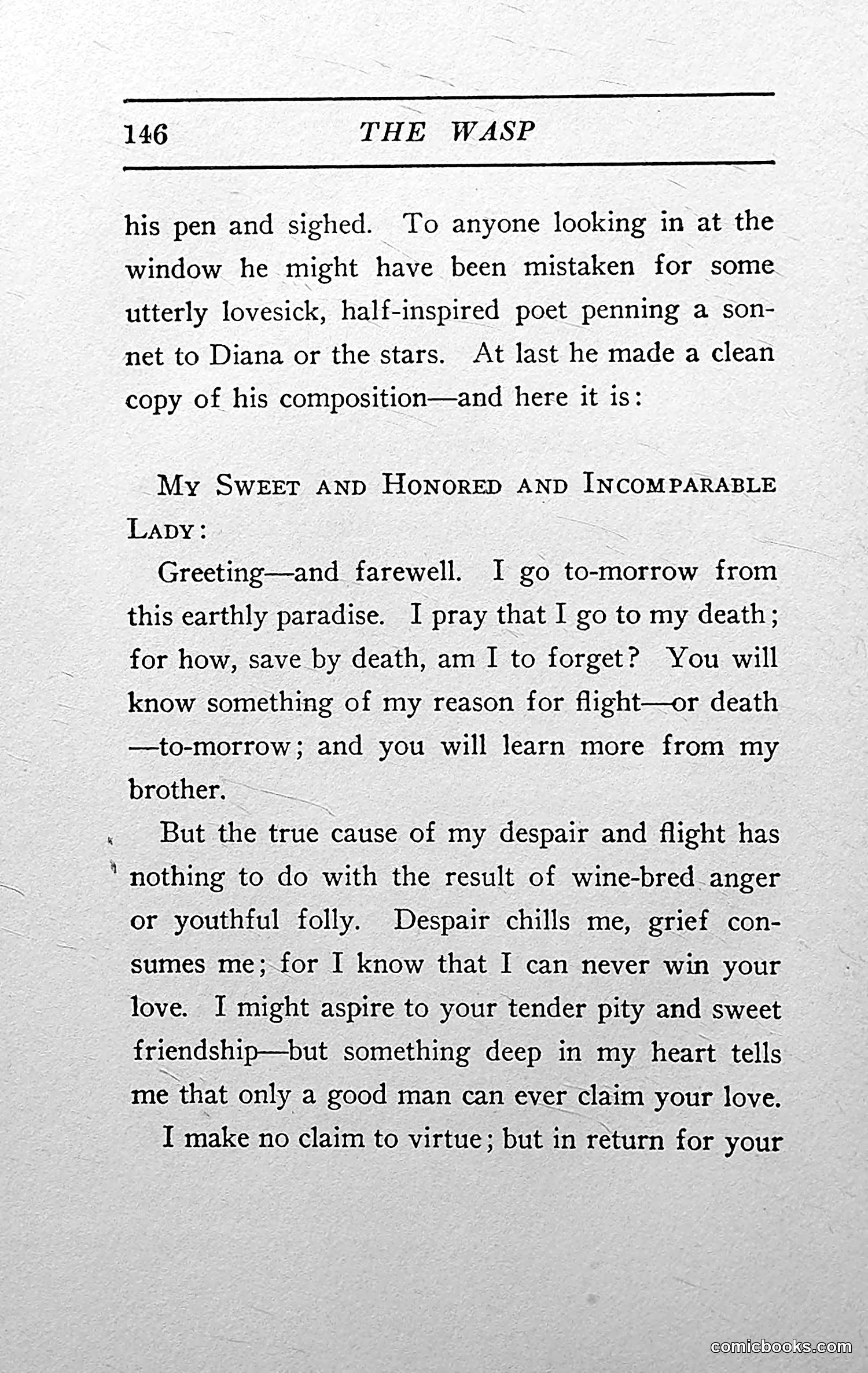
This page presents a dramatic love letter rather than a political cartoon. The narrative describes a man composing an emotional farewell letter to a woman, seemingly contemplating suicide or departure due to unrequited love. The satire likely targets **sentimental romantic conventions** of the era—the overwrought melodrama of lovesick declarations. The framing description mocks the writer as a "half-inspired poet" and "utterly lovesick" figure, suggesting *The Wasp* is ridiculing excessive romantic sentimentality and self-pitying male behavior. The letter's pseudo-noble rhetoric—claiming he's unworthy because he lacks "virtue" and only "a good man" deserves her love—reads as insincere posturing. The satire appears to be **exposing the hypocrisy of male romantic pretense**: a man claiming self-sacrifice while actually indulging in dramatic self-pity. Without seeing the accompanying illustration (if present), the full satirical impact is unclear, but the text mocks romantic melodrama itself.
📄 Transcribed text from this page (OCR, searchable)
Machine-transcribed from the original scan — historical spelling and the odd misread are preserved.
-, EB aD CN OR REN TO oe ee 146 THE WASP SI Leal BLE cd ay DOT ee his pen and sighed. To anyone looking in at the window he might have been mistaken for some utterly lovesick, half-inspired poet penning a son- net to Diana or the stars. At last he made a clean copy of his composition—and here it is: My Sweet anp Honorep AND INCOMPARABLE Lapy: Greeting—and farewell. I go to-morrow from this earthly paradise. I pray that I go to my death; for how, save by death, am I to forget? You will know something of my reason for flight—or death —to-morrow; and you will learn more from my brother. But the true cause of my despair and flight has nothing to do with the result of wine-bred anger or youthful folly. Despair chills me, grief con- sumes me; for I know that I can never win your love. I might aspire to your tender pity and sweet friendship—but something deep in my heart tells me that only a good man can ever claim your love. I make no claim to virtue; but in return for your Comichooks.com