
The Dreamers
When the funny pages dreamed in full color, and a boy named Nemo taught the comic to fly.
The Sunday Page Becomes a Canvas
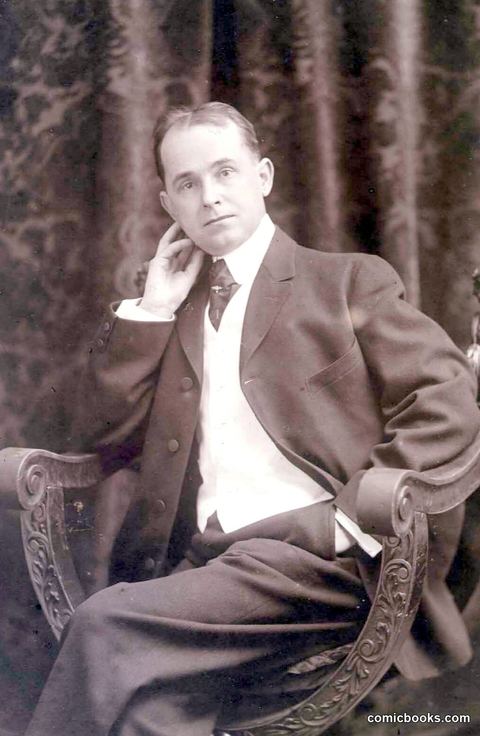
For a brief, luminous decade at the turn of the twentieth century, the American newspaper comic stopped being a mere novelty and reached for the condition of art. At the center of that transformation stands Winsor McCay, a draftsman of extraordinary discipline whose imagination seemed to have no floor and no ceiling. Trained partly in the visual grammar of posters, dime museums, and vaudeville, McCay brought to the flimsy, disposable Sunday supplement a level of craft usually reserved for the gallery wall.
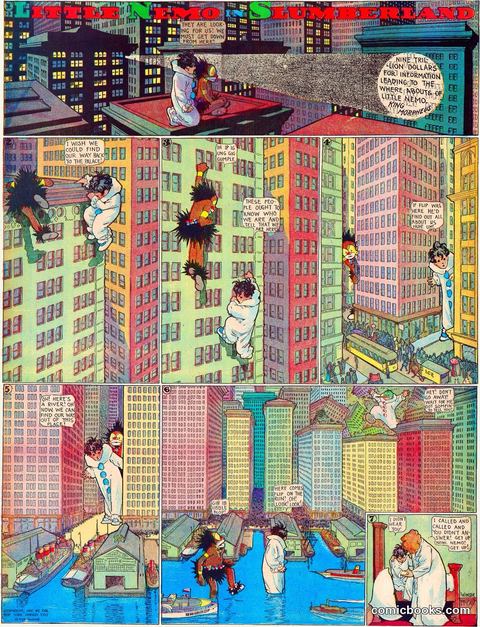
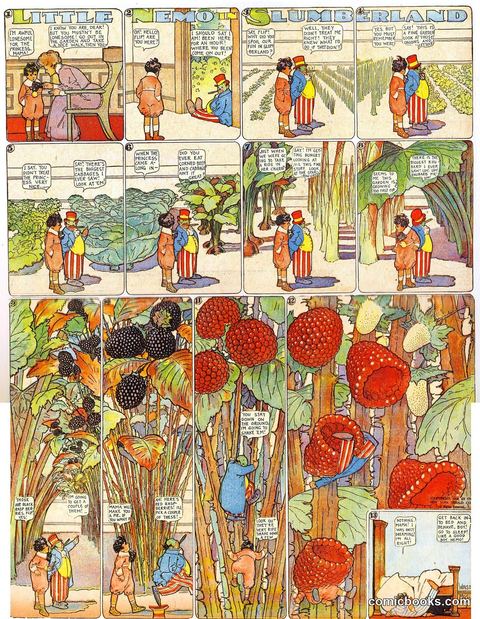
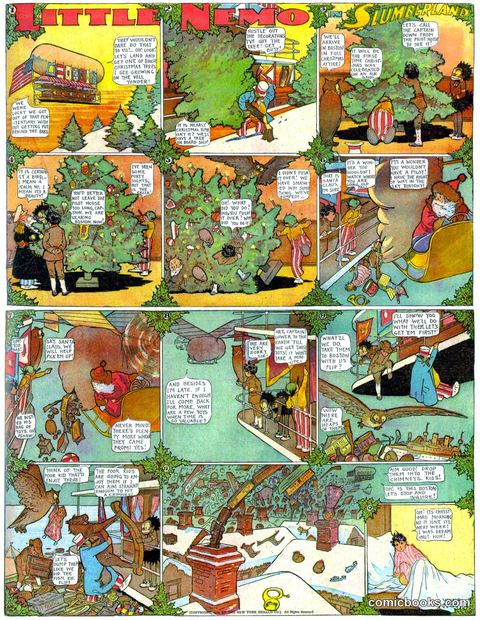
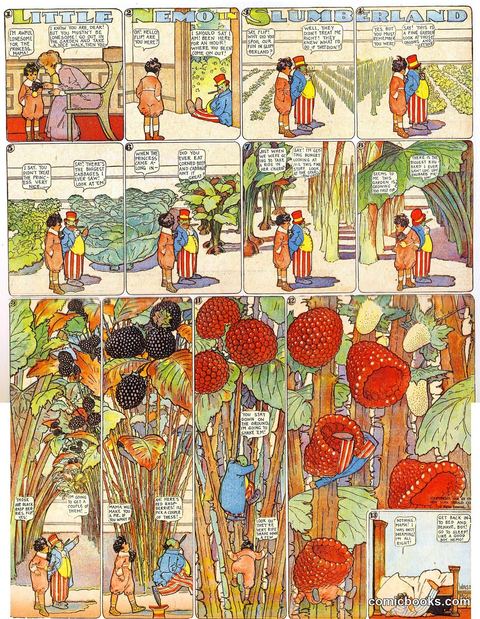
His masterpiece, Little Nemo in Slumberland, debuted in the New York Herald in 1905 and ran through the end of the decade. Each installment followed a small boy through a dream that dissolved, without fail, in the last panel as he tumbled out of bed. Within that simple frame McCay built worlds of impossible architecture, marching beds, growing and shrinking figures, and palaces of pure color.
Panel as Architecture
What makes these pages revolutionary is how McCay treated the whole sheet as a single composition. Rather than filling a fixed grid, he let the panels themselves swell, stretch, and shatter in sympathy with the dream: a staircase might elongate the panels beneath it; a collapsing city might crush the borders. Design and story became one gesture. This is the panel not as a container but as architecture—expressive, structural, alive.
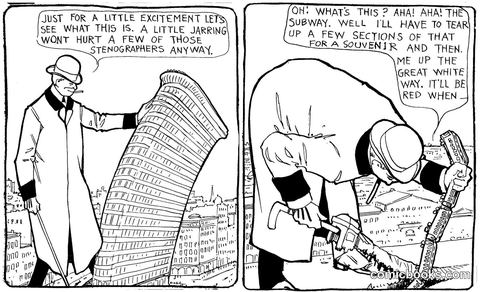
McCay's peers and successors learned from this daring. He proved that a comic could sustain breathtaking draftsmanship, sophisticated color, and formal experimentation without losing its popular audience. He raised the medium's artistic ceiling so high that later cartoonists spent decades reaching for it. And McCay did not stop at the printed page: he became one of the pioneers of animation, setting drawings into motion in ways that anticipate the gallery to come. These works are dispatches from a moment when the comic first dared to dream in earnest.
All works shown are in the public domain, digitally restored by ComicBooks.com.