
A complete issue · 16 pages · 1893
Life — January 12, 1893
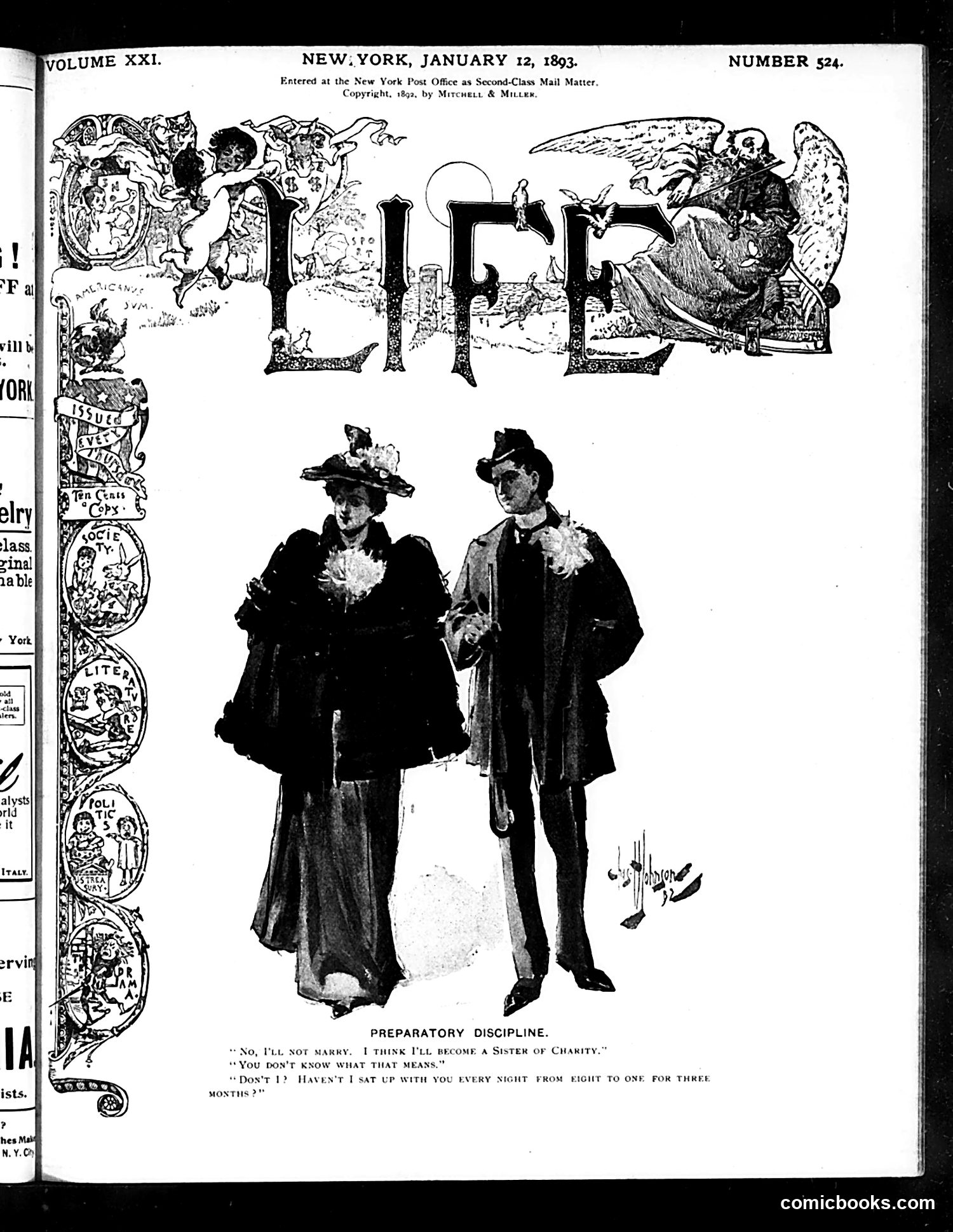
This page features a satirical cartoon titled "Preparatory Discipline" depicting two figures in Victorian-era clothing having a conversation. The dialogue suggests a courtship scenario where a young man tells a woman he won't marry because he plans to become a "Sister of Charity" (a nun). He claims she "doesn't know what that means" and that he hasn't slept properly in months due to sitting up with her nightly for three months. The satire appears to mock both courtship customs of the 1890s and religious devotion. The man's excuse—that intimate courtship activities are preventing him from pursuing religious life—is presented as absurd humor. The ornate "Life" masthead above and decorative border typical of this publication frame the social commentary on Victorian dating practices and gender relations.
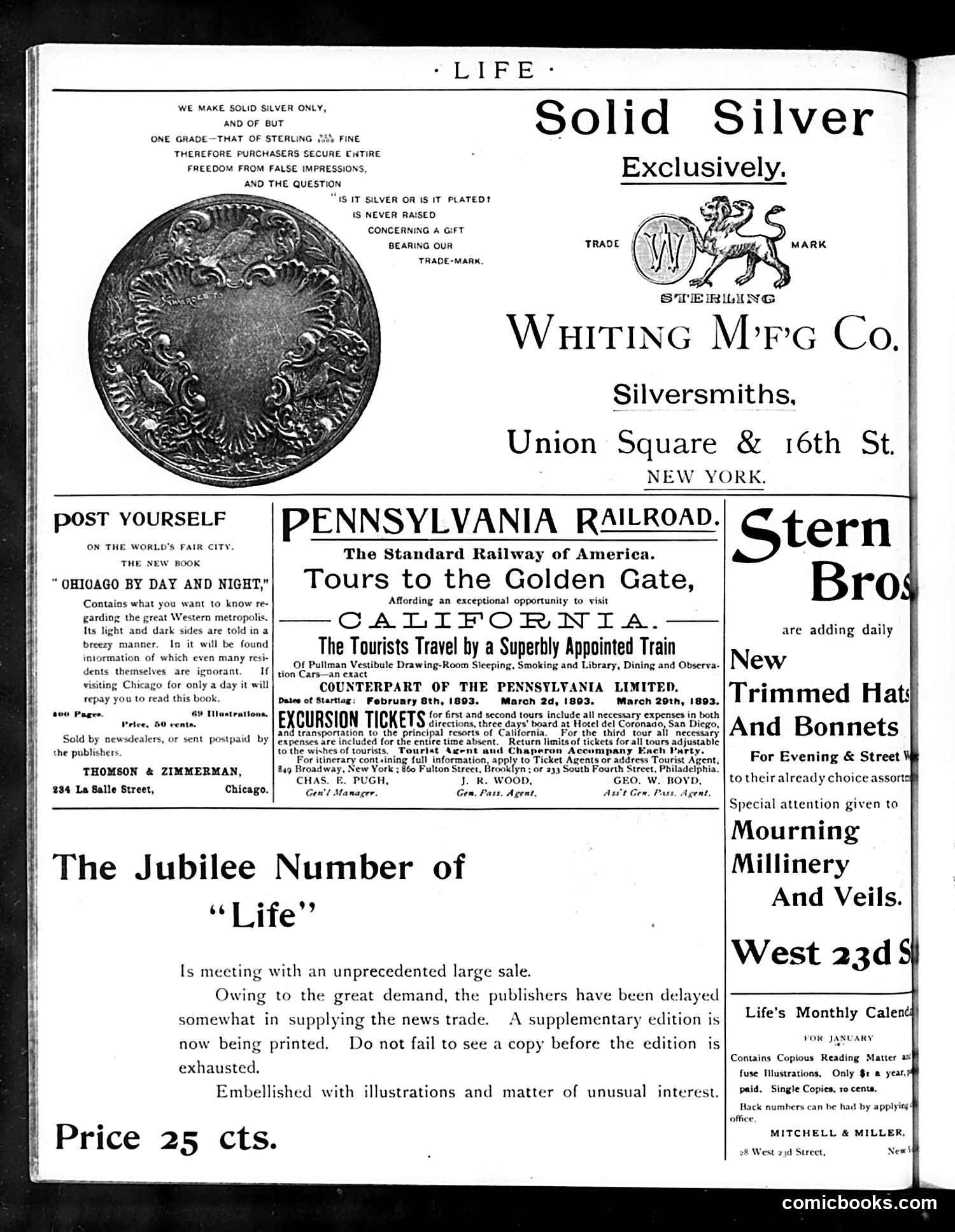
This page is **primarily advertisements** rather than editorial content or cartoons. The main visual element is a decorative circular medallion or seal on the left, likely the Whiting Mfg Co.'s sterling silver trademark, accompanying their ad for solid silver goods. The page contains no political cartoon or satirical content to analyze. Instead, it features period advertisements for: - Sterling silver from Whiting Mfg Co. (silversmiths in New York) - Pennsylvania Railroad tours to California - Stern Bros. millinery shop - Life magazine's "Jubilee Number" promotion There is no identifiable political figure, caricature, or satirical message present on this page. It represents typical late-19th-century magazine advertising layout and content.
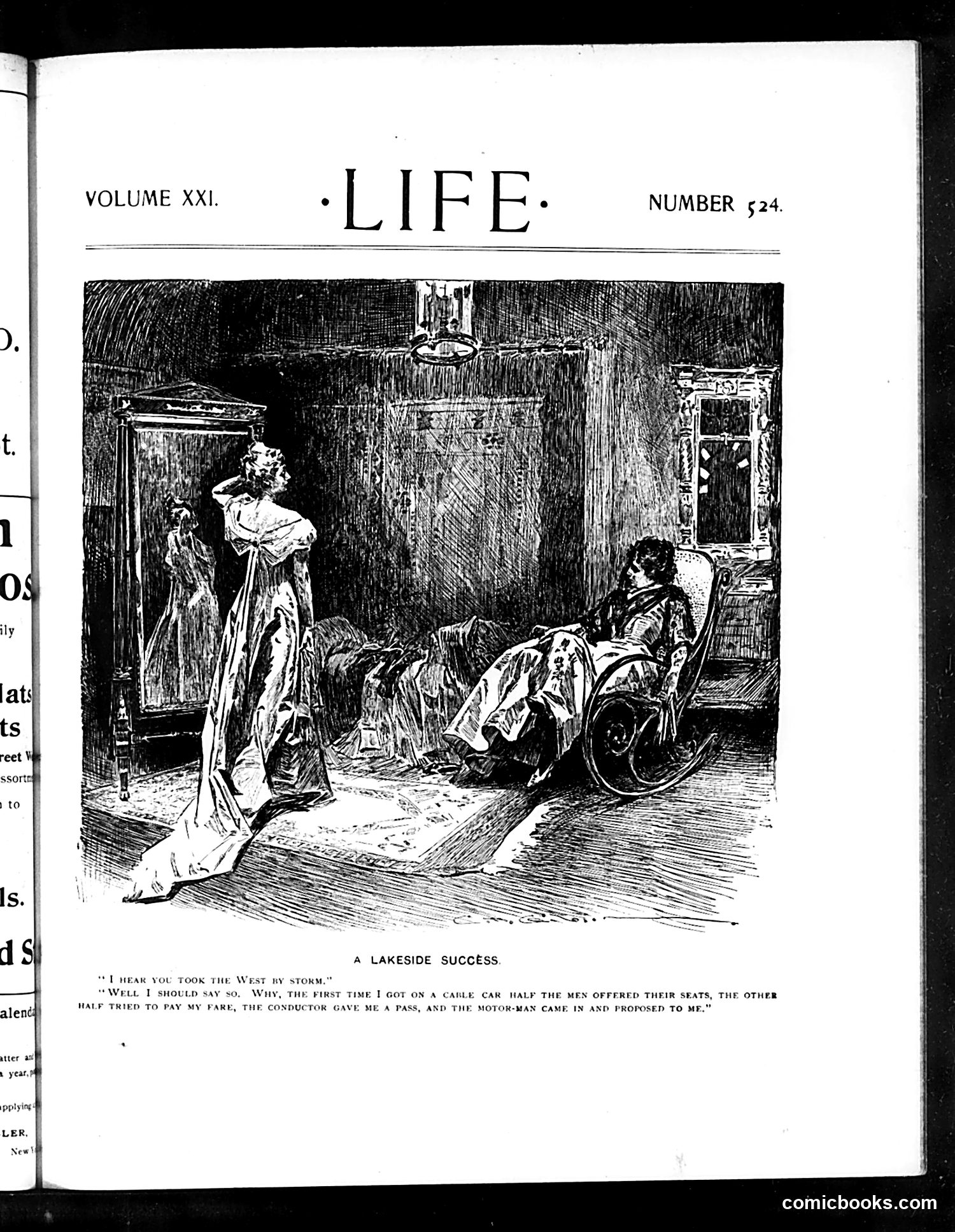
This cartoon satirizes early automotive technology and social courtship customs. A woman in elegant dress stands in what appears to be a lakeside cabin, recounting her recent travel experience to a male companion. The caption reveals the joke: she took a cable car during a storm, where passengers initially offered their seats. However, when a conductor provided her a pass and the motorman proposed marriage, she accepted the proposal. The satire targets two subjects: the novelty and unreliability of early transportation (cable cars breaking down during bad weather), and the desperation of men in service industries who would propose to any woman as a solution to loneliness or social advancement. The cartoon mocks both primitive transit technology and overeager male suitors of the era.
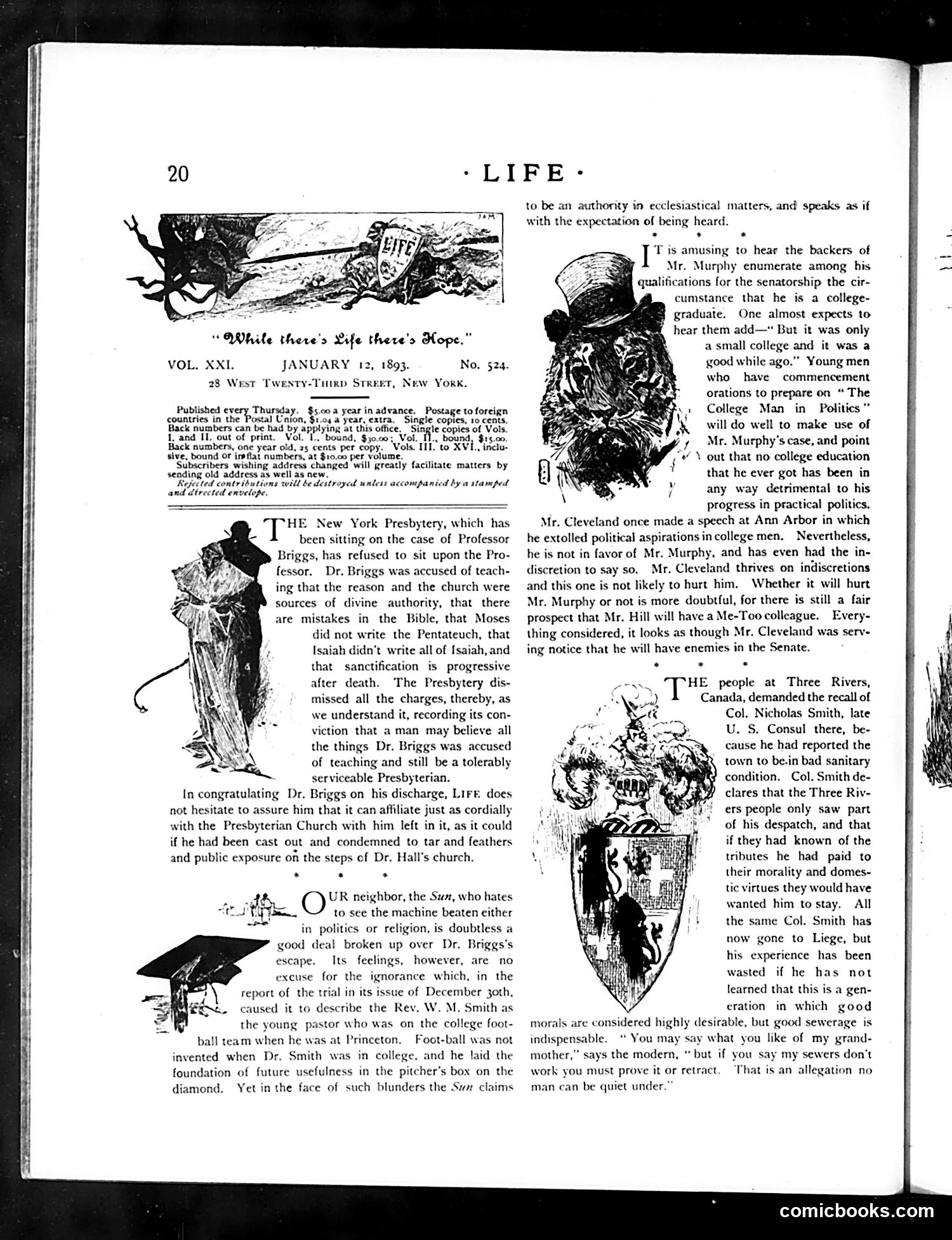
This page contains three satirical pieces on contemporary figures and events: 1. **Dr. Briggs case**: The New York Presbytery dismissed charges against Professor Briggs, accused of teaching that reason and scripture were compatible authorities. Life congratulates this outcome, sarcastically suggesting the Presbytery could "affiliate just as cordially" with a cat cut and condemned to tar and feathers. 2. **Mr. Murphy's senatorial qualifications**: Life mocks backers promoting Murphy for senator, noting his only credential is college attendance—hardly sufficient for practical politics. 3. **Col. Nicholas Smith/Three Rivers**: Life criticizes the U.S. Consul's reported claim that Three Rivers, Canada needed better sanitation, suggesting Smith wasted his posting without accomplishing good works. The page uses humor to critique institutional hypocrisy, political unqualification, and diplomatic incompetence.
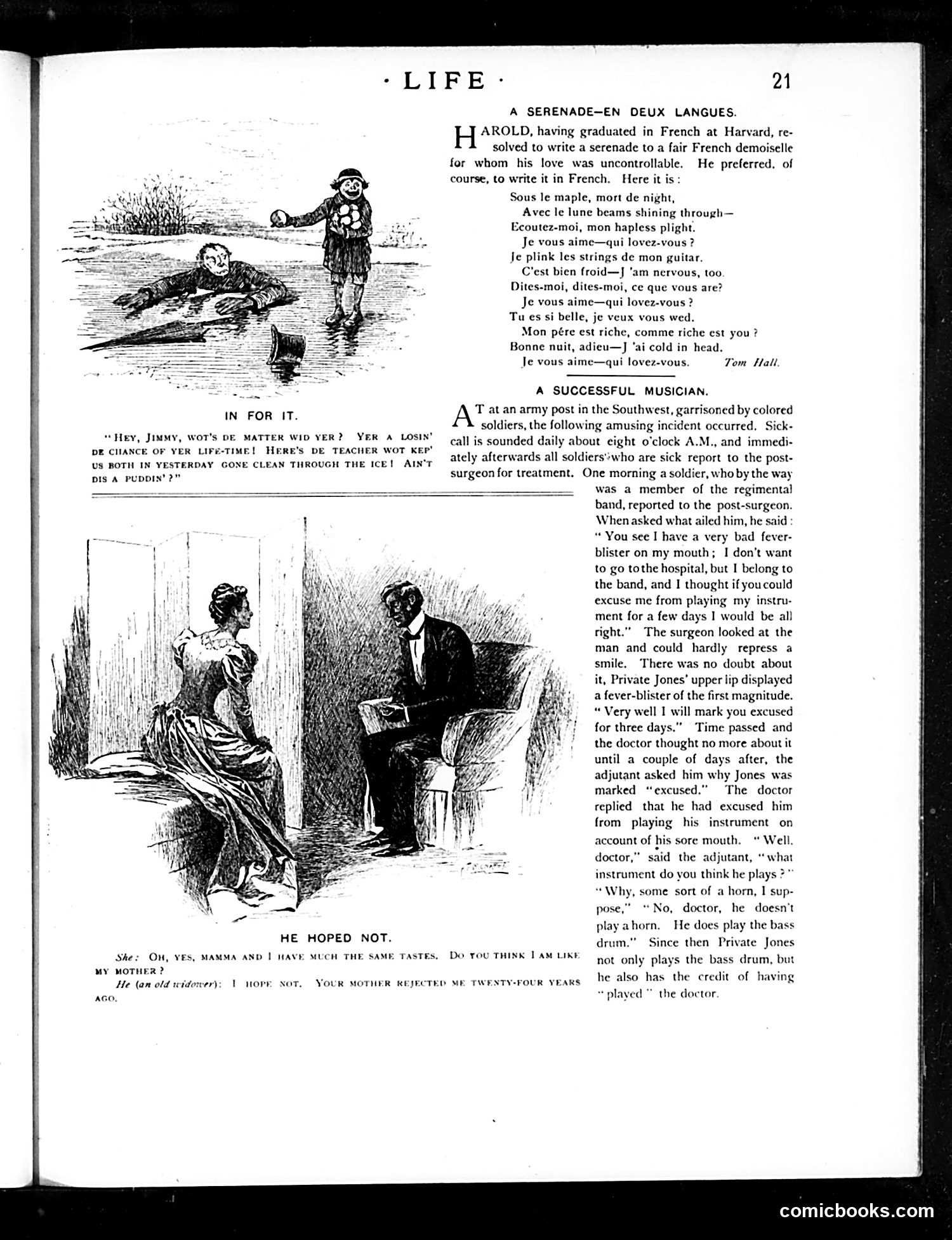
This page contains three separate humorous pieces: 1. **"A Serenade—En Deux Langues"**: A French serenade written by someone named Harold (a Harvard graduate). The joke involves the contrast between romantic French verses and Harold's preference to write it in French rather than English for a French woman. 2. **"He Hoped Not"**: A domestic dialogue joke where a woman asks a man if he thinks they share similar tastes, given that his mother rejected him 24 years ago. The humor relies on implied insult. 3. **"A Successful Musician"**: An anecdote about a soldier in the Southwest who reports sick but refuses hospitalization because he plays bass drum in the regimental band. The surgeon eventually excuses him from duty rather than lose the musician. The page exemplifies early 20th-century Life magazine's blend of satirical humor, romantic comedy, and observational military anecdotes.
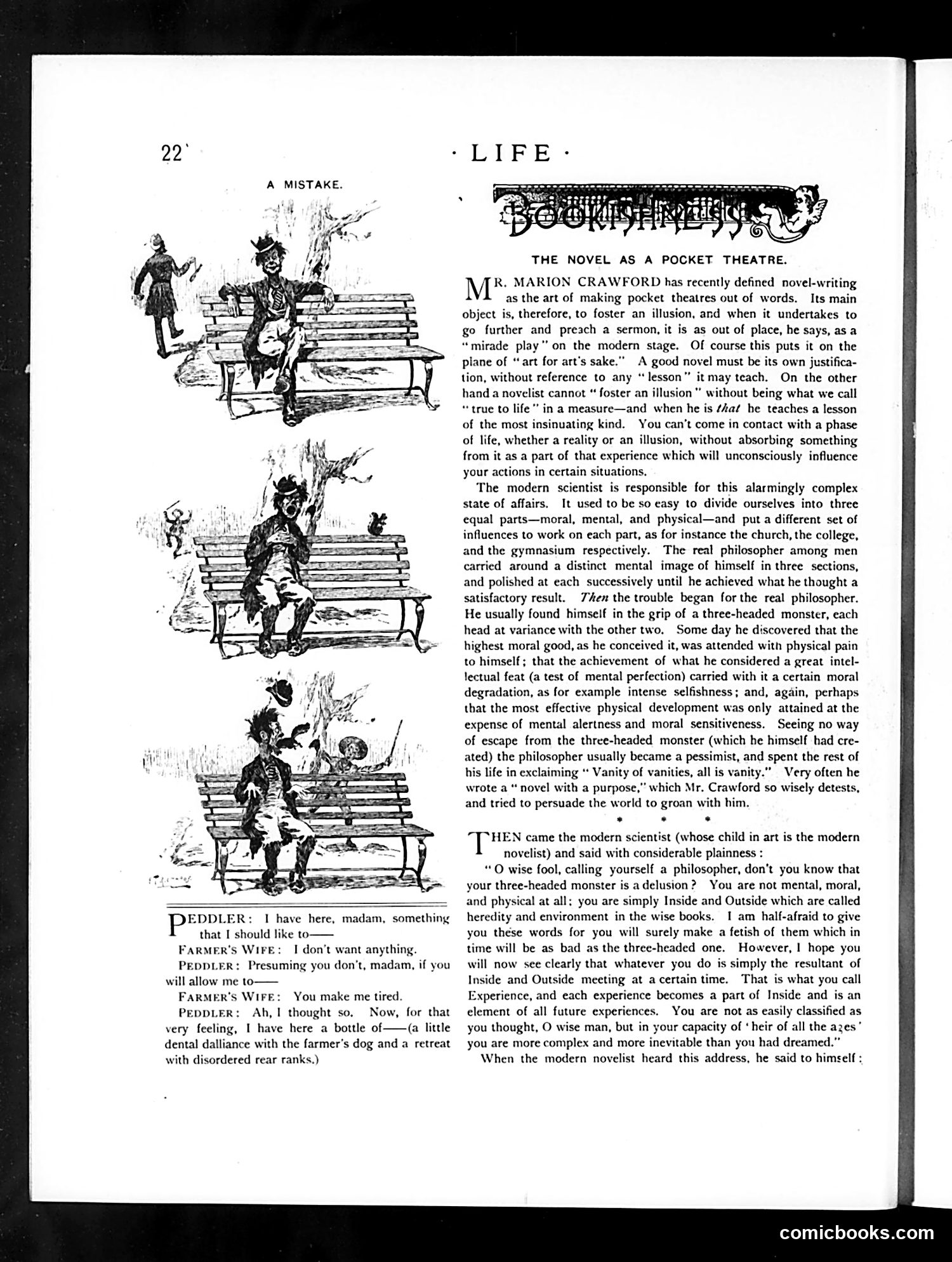
The left side shows a three-panel cartoon titled "A Mistake." A man repeatedly attempts to sit on a park bench, but each time a woman rises and departs—suggesting he's somehow driving her away through his presence or behavior, though his actions appear innocent. The humor lies in his confusion about why she keeps leaving. The right side discusses Marion Crawford's concept of the novel as "pocket theatre"—intimate psychological narratives that shape readers unconsciously. The text critiques modern science's fragmentation of human experience into separate moral, mental, and physical categories, arguing novelists must portray humans holistically. The dialogue at bottom satirizes philosophers who oversimplify human nature, depicting them as foolishly rigid compared to the novelist's nuanced understanding. The satire defends literary art against reductive philosophical thinking.
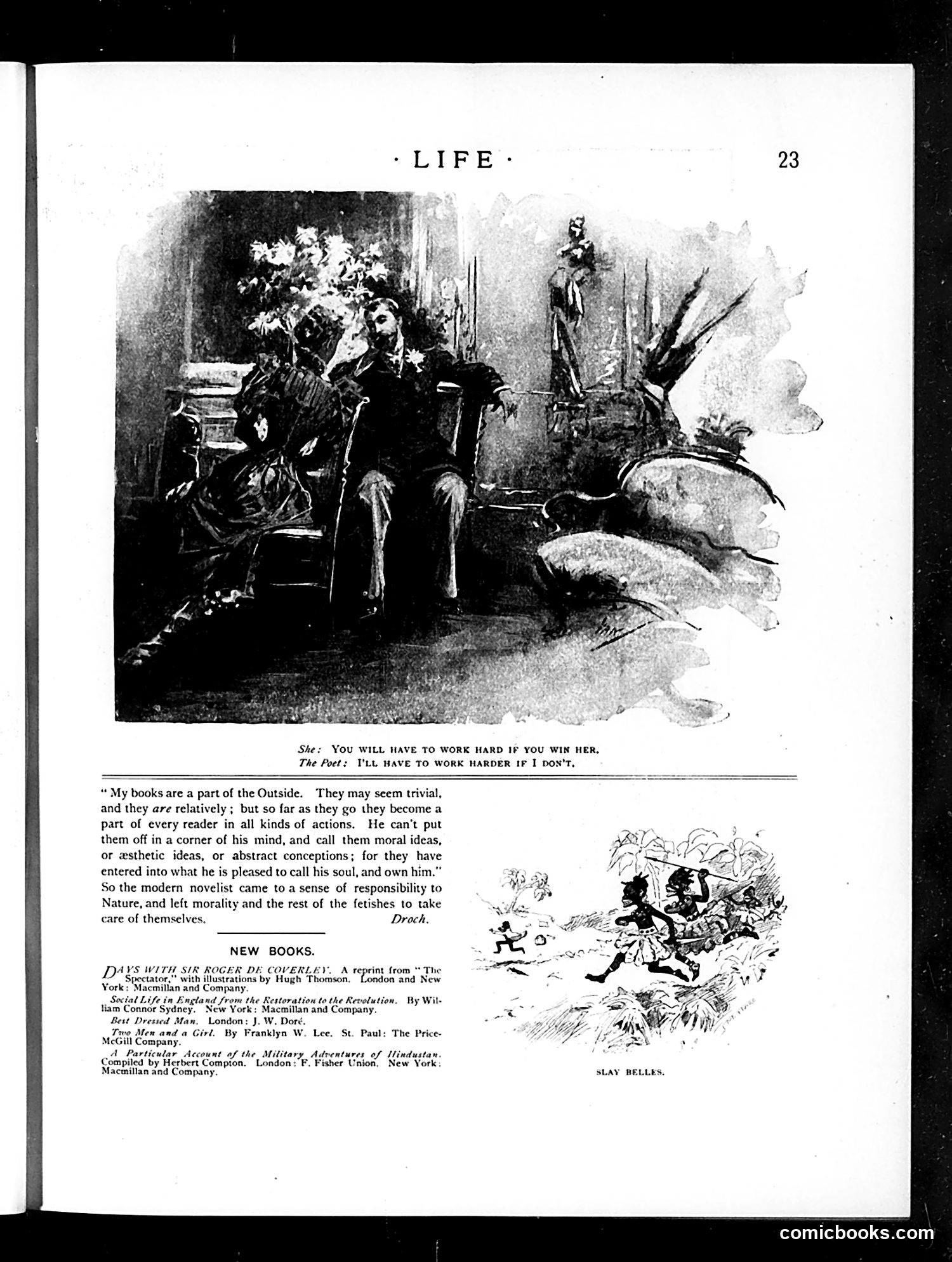
The top illustration appears to depict a domestic scene with two figures in Victorian-era clothing, accompanied by dialogue: "She: You will have to work hard if you win her. The Poet: I'll have to work harder if I don't." This is a romantic comedy cartoon satirizing the struggles of courtship and marriage. The "Poet" character suggests that winning a woman through marriage requires hard work, but remaining unmarried (and presumably bachelorhood) demands even greater effort—likely referencing financial hardship or social stigma of unmarried men during this period. The lower illustration labeled "Slay Belles" shows figures in what appears to be a comedic outdoor scene, though its specific satirical target is unclear from the image alone. The page also includes book reviews and advertisements for new publications from major publishers like Macmillan.
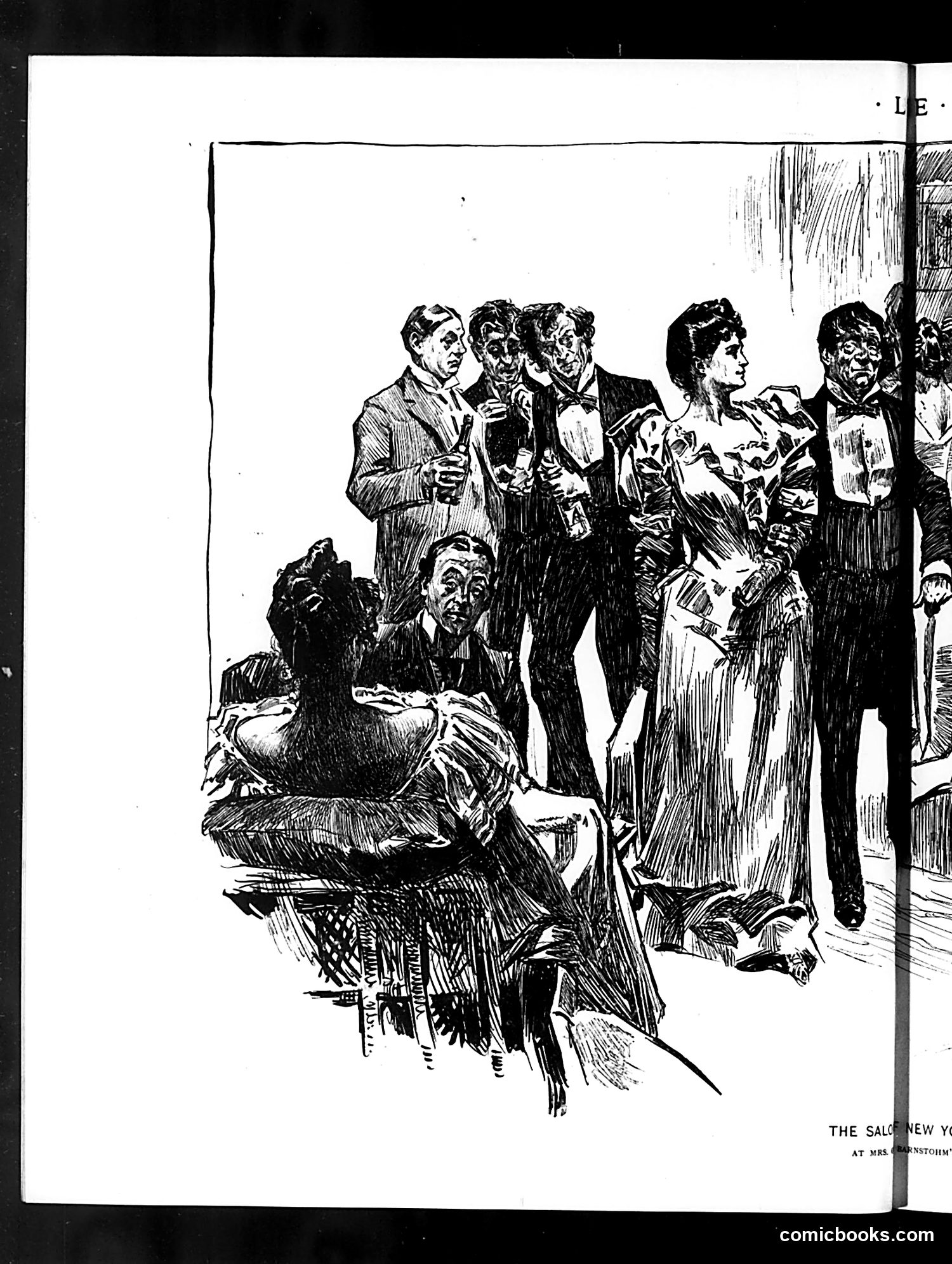
The partial caption reads "THE SALON NEW YO[RK]... AT MRS. [CORNSTORM?]" (text is cut off). This appears to be a satirical sketch of a high-society salon gathering, likely from the late 19th or early 20th century based on the artistic style and clothing depicted. The drawing shows well-dressed men in formal attire (suits and bow ties) standing around a seated woman in elaborate dress, suggesting a social gathering among the wealthy elite. The satire likely mocks the pretensions and social posturing of New York's upper-class salon culture—the artificial conversations, affected manners, and status-conscious behavior of wealthy patrons gathering for cultural events. However, without the complete caption identifying the specific hostess or event being referenced, I cannot determine which particular salon or figure is being targeted.
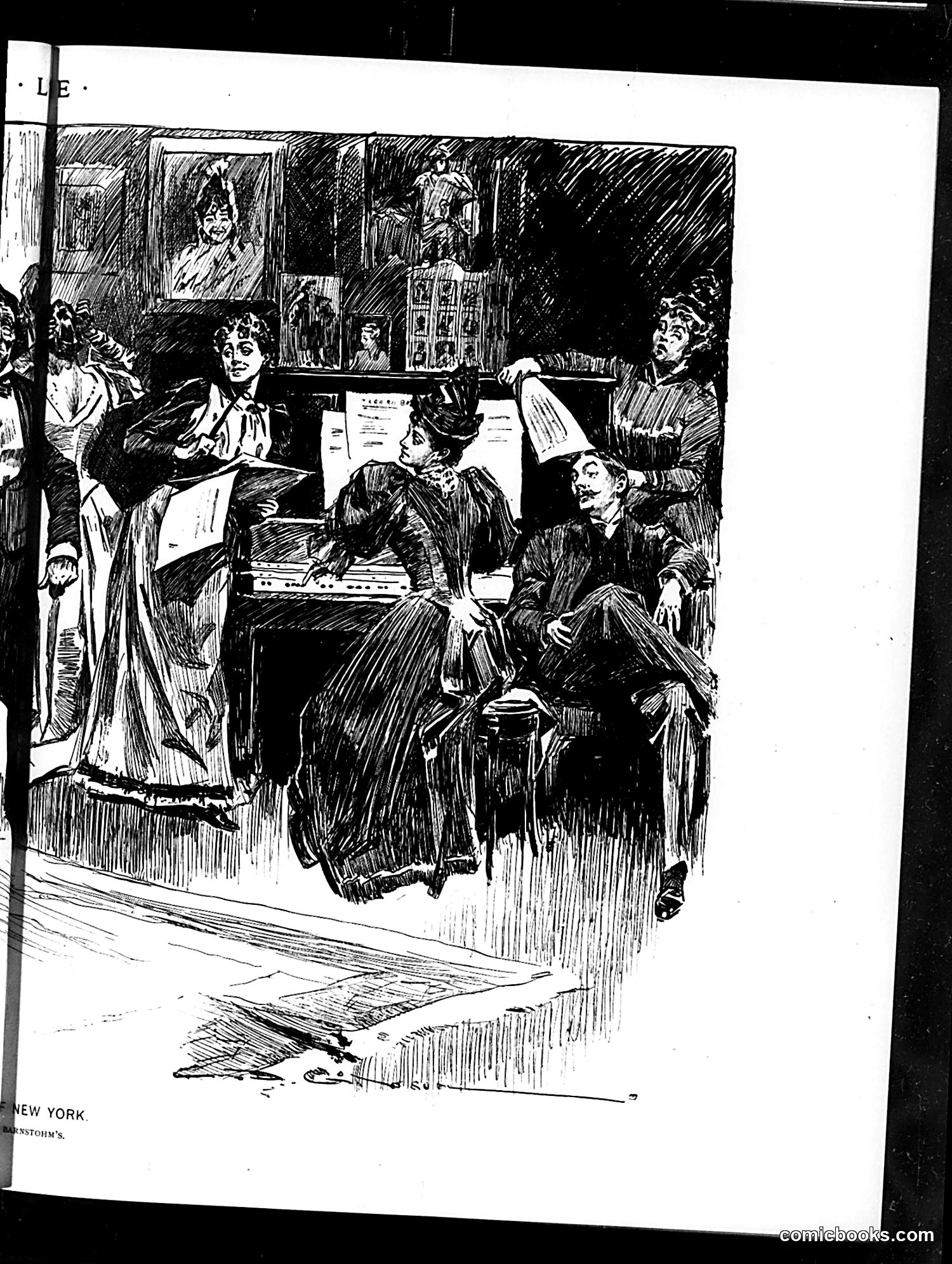
This is a pen-and-ink illustration depicting what appears to be a theatrical or opera performance scene. The drawing shows an audience viewing a stage with multiple figures in period costume visible in the background windows or set pieces. In the foreground, several well-dressed spectators are seated, including women in elaborate clothing and men in formal attire, all appearing to watch the performance with interest. The style and setting suggest this is satirizing high-society theater attendance or opera-going culture in New York (as indicated by the credit line). The exaggerated expressions and careful rendering of the audience members' reactions likely comment on the pretensions or affectations of wealthy theater patrons of the era, though without additional context or caption text visible, the specific satirical point remains unclear.
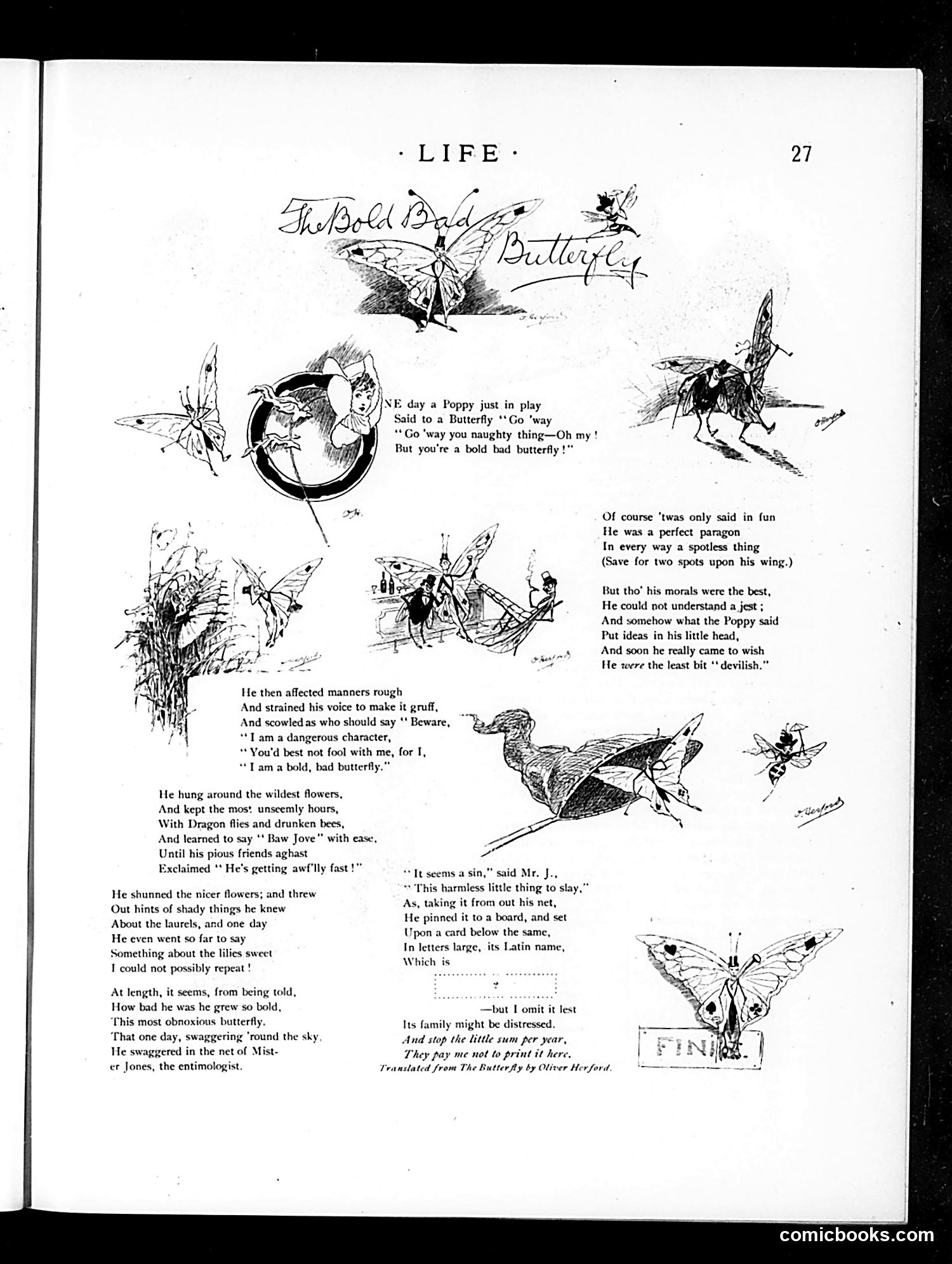
This is an illustrated moral fable about a butterfly who adopts deliberately bad behavior. A Poppy accuses the butterfly of being "naughty" and "bold bad," which the butterfly then embraces as an identity, affecting rough manners and claiming to be "a dangerous character." The satire targets affected badness and moral posturing. The butterfly becomes increasingly wild—frequenting "wildest flowers," consorting with "Dragon flies and drunken bees"—until he's finally caught and pinned to a board by an entomologist (Mr. J.), his dandy behavior literally catalogued and displayed. The joke appears to mock fashionable affectation of wickedness among the young or socially ambitious, suggesting such performative rebellion ends in humiliation and classification rather than genuine rebellion.
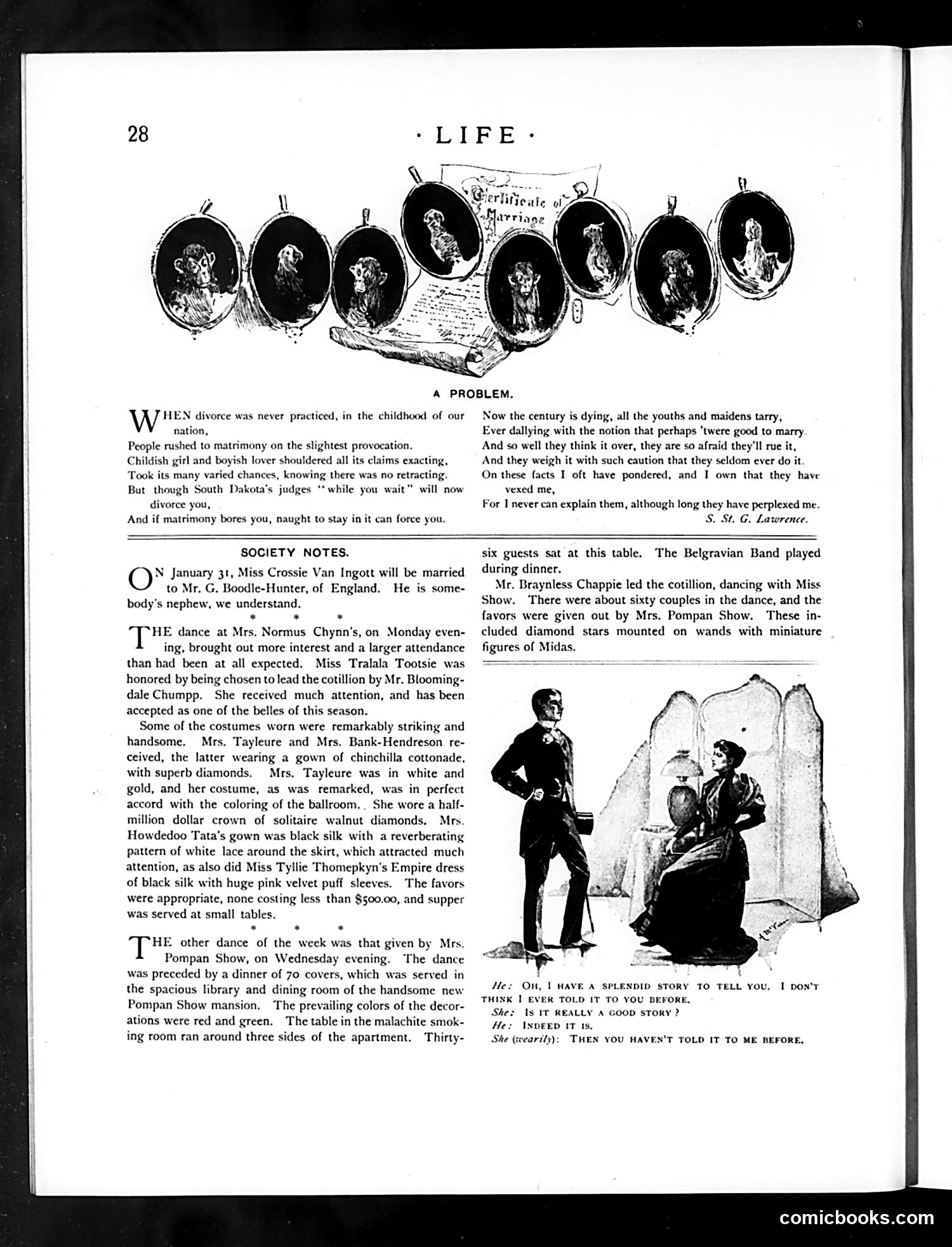
This page satirizes early 1900s American attitudes toward marriage and divorce. The main poem "A Problem" by S. St. G. Lawrence ironically contrasts past generations—who married impulsively with no escape—with the current era. South Dakota's lenient divorce laws ("while you wait") have paradoxically made young people *hesitant* to marry, as they now obsess over potential regret rather than rushing forward. The "Society Notes" mock upper-class pretension through absurdly named characters (Miss Tralala Tootsie, Mr. Bloomindale Chumpp) and comical excess—"half-million dollar crowns of solitaire walnut diamonds," favors costing $500 each. The dialogue cartoon below jokes that a woman's weary response reveals her husband has already told her his "splendid story" before, undermining his claim of novelty. The overall satire targets both marital indecision and nouveau-riche ostentation.
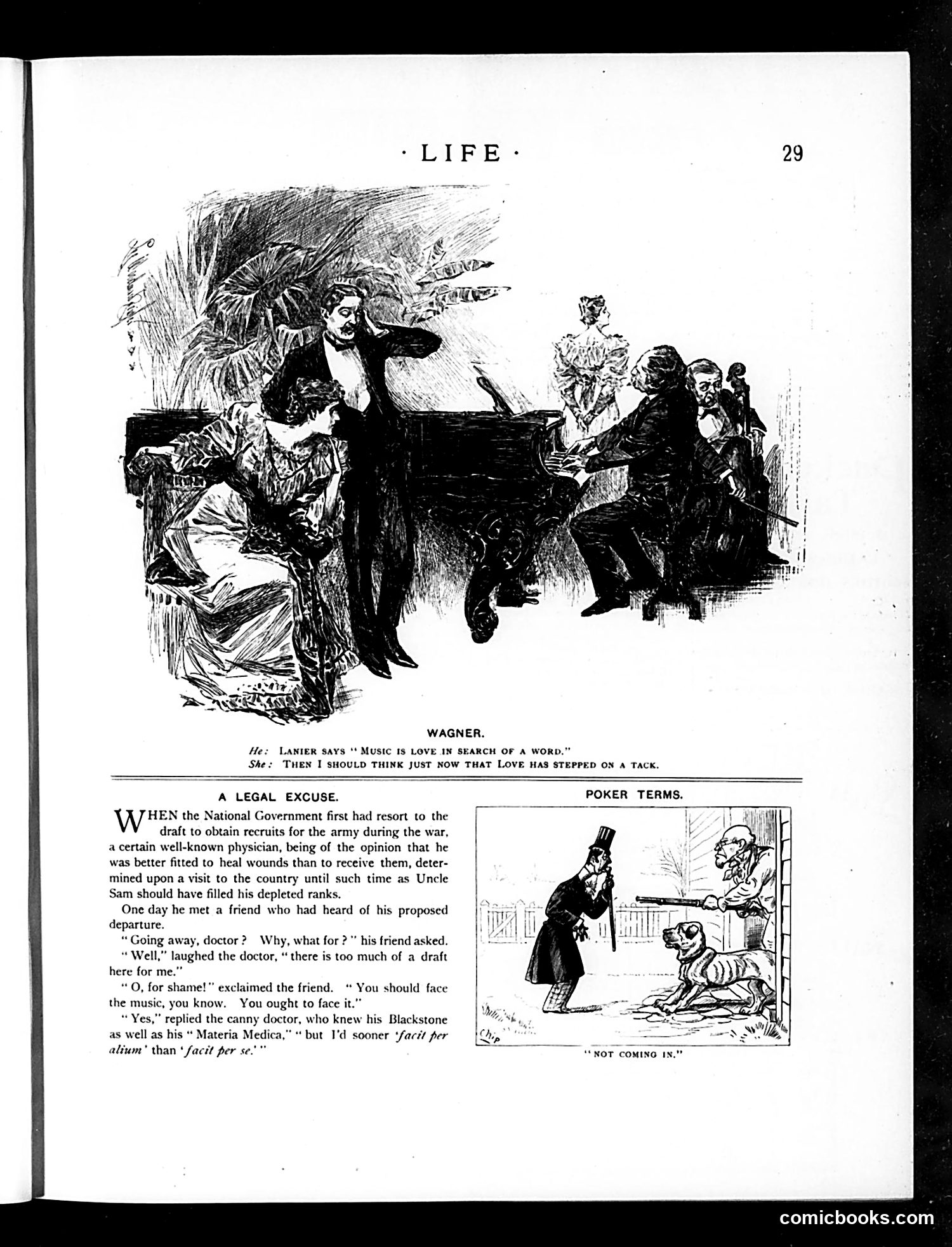
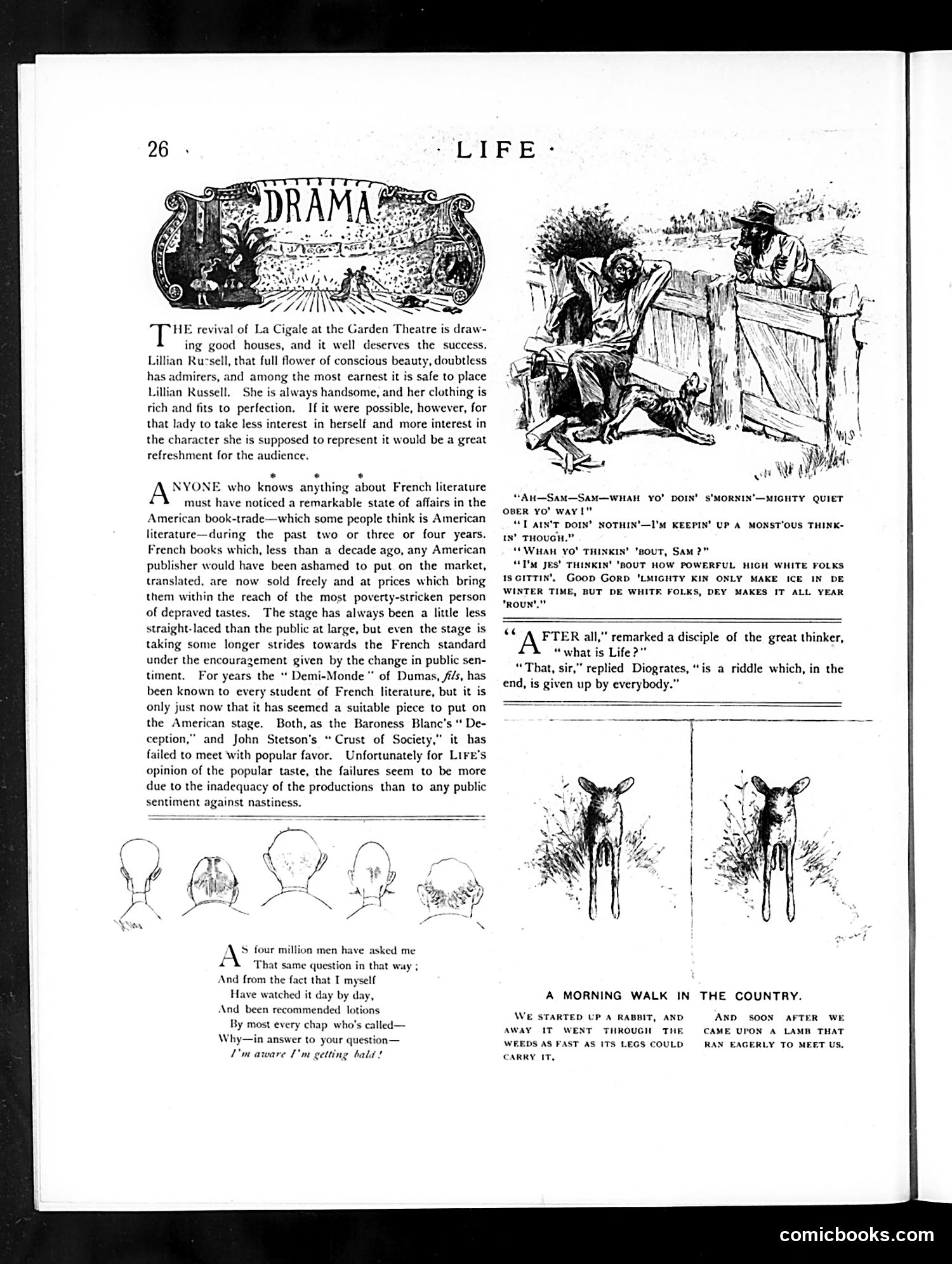
**Top Cartoon (Wagner):** A couple listens to music. The woman complains that Wagner's music sounds discordant—like "love has stepped on a tack"—mocking the romantic ideal that "music is love in search of a word." This satirizes both Wagner's experimental compositions and the pretentious aestheticism of his admirers. **"A Legal Excuse":** A physician avoids the WWI draft by claiming there's "too much of a draft here for me"—a pun on military conscription. When challenged to "face the music," he responds with Latin legal phrases (*facit per alium* vs. *facit per se*), meaning he'd rather have someone else face the consequences than do so himself. The joke ridicules both the doctor's cowardice and his attempt to use legal jargon to justify draft-dodging. **"Poker Terms":** A small cartoon (caption: "Not Coming In") depicts someone refusing to participate—likely another draft-avoidance reference. The page broadly satirizes wartime shirking and intellectual pretension.
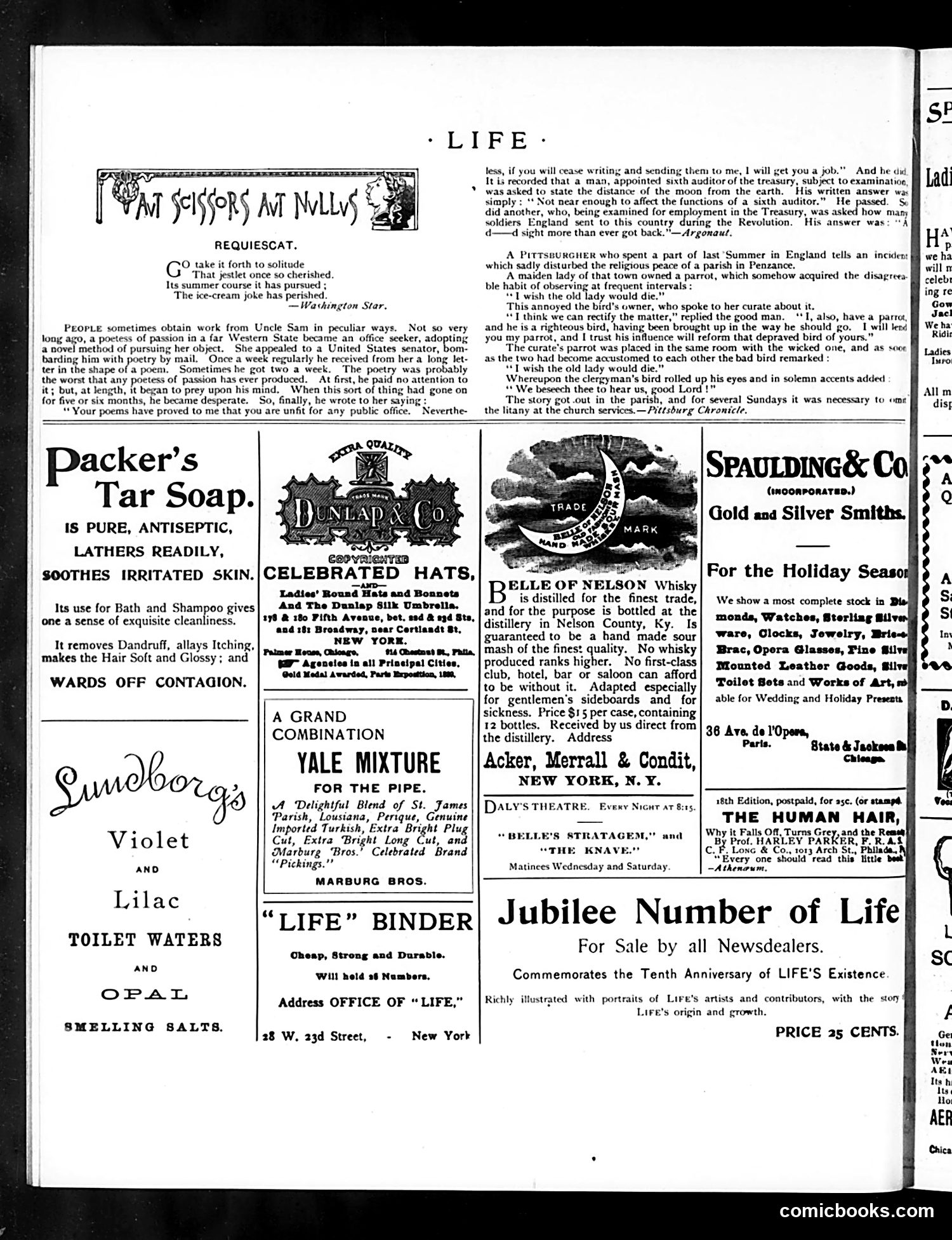
This page from *Life* magazine contains three brief humorous anecdotes satirizing American bureaucracy and social pretension: 1. **The Poetess and Senator**: A Western woman bombards a U.S. senator with terrible poetry to secure a government job. Exasperated, he finally agrees—but only if she stops writing. The satire targets both nepotism in civil service and the absurdity of using harassment as a job-application strategy. 2. **The Sixth Auditor**: A Treasury Department applicant, asked to estimate the moon's distance, claims it's "the d—d sight more than ever got back" (referring to soldiers sent to England during the Revolution). The joke mocks both vague political rhetoric and incompetent government hiring. 3. **The Parrot Moral Reform**: A clergyman's "pious" parrot, placed with a profane parrot to reform it, instead learns to pray—creating unintended comedy when the reformed bird's religious utterances disrupt church services. This satirizes sanctimonious moral instruction and its comical failures. The page is primarily advertising, with these stories occupying modest space among product advertisements.
This page is primarily **advertising** with minimal satirical content. The dominant features are commercial advertisements for various products: Krakauer's tailoring services, Liebig's beef extract, Aerated Oxygen treatments, Kodaks cameras, Cudahy's beef extract, Mephisto perfume, and Veloutine powder. The small editorial content includes brief **humorous anecdotes** rather than political cartoons: - A joke about a poet (name beginning with "T") offering patronage to Alexander Smith, who replies that criticism doesn't discourage him—gentle satire on artistic pretense. - A story about entertainer Leech crediting champagne, ice, and aerated water for his entertaining abilities, humorously attributing success to ingredients rather than talent. These are mild, society-page humor pieces typical of Life magazine's genteel satirical approach, not substantive political commentary. The page reflects turn-of-the-century advertising practices and upper-class social humor rather than serious satire.
This is primarily an **advertising page** with no discernible political cartoons or satire requiring historical context. The page contains commercial advertisements for consumer goods typical of the late 19th century: typewriters (Caligraph), bicycles (Victor, Overman Wheel), carpets (Lowell), shoes (W.L. Douglas), soaps (Pears', Carmel), whiskey, wine, and printing ink. The largest ad features **W.L. Douglas shoes** with a portrait of the manufacturer—a common marketing practice of the era. The text emphasizes durability and affordability ("best $3 shoe in the world"). The only notable editorial content is an announcement for **Life's Jubilee Number** (10th anniversary issue), sold for 25 cents, featuring portraits of the magazine's artists and contributors. The page reflects late-Victorian consumer culture and advertising conventions—no political satire or historical figures requiring interpretation.