
A complete issue · 16 pages · 1892
Life — September 1, 1892
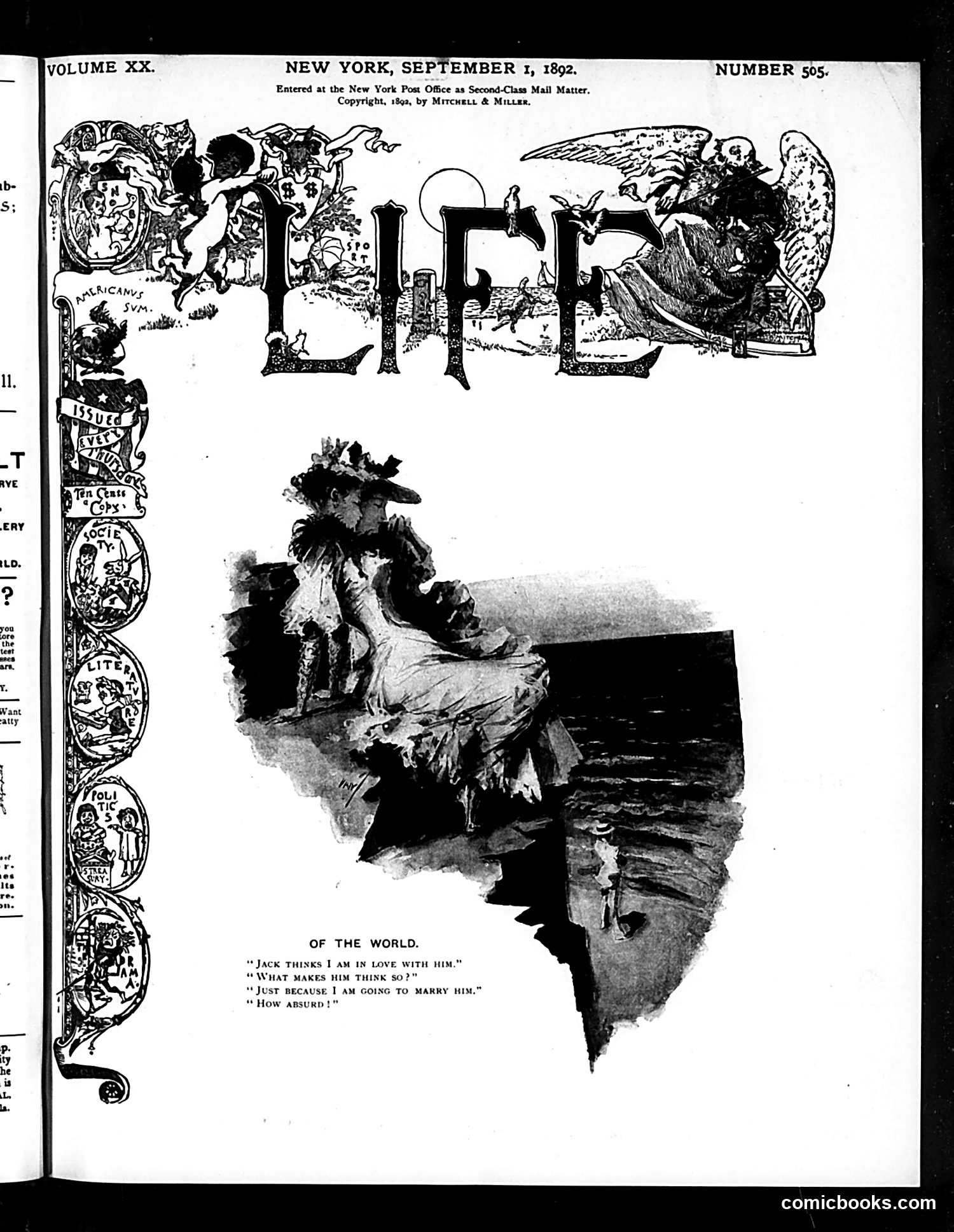
This page features "Life of the World," a satirical section with an illustration of a woman in an elaborate hat and dress. The dialogue beneath reads: "Jack thinks I am in love with him." / "What makes him think so?" / "Just because I am going to marry him." / "How absurd!" The satire targets late-Victorian courtship conventions and gender relations. The humor depends on the woman's claim that marrying someone doesn't necessarily mean she loves them—a sardonic commentary on marriages of convenience or practical necessity rather than romantic attachment. Her elaborate, fashionable attire emphasizes the superficiality sometimes associated with upper-class matrimonial arrangements of the Gilded Age. The joke mocks both the absurdity of such marriages and perhaps male presumption about women's feelings.
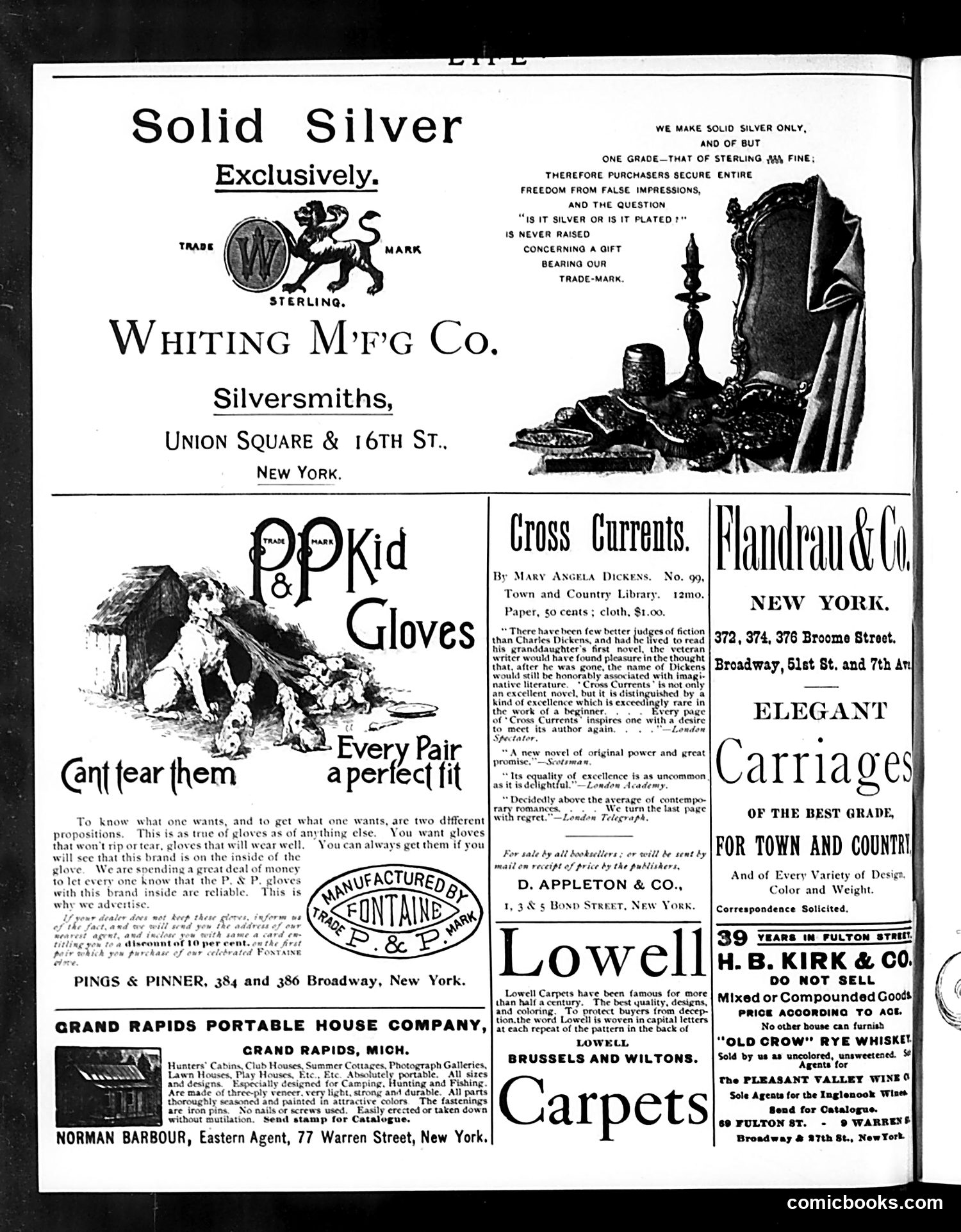
This page is primarily **advertising**, not editorial or satirical content. It contains multiple commercial advertisements for products and services typical of the era: - Whiting Mfg Co. (solid silver goods) - P&P Kid Gloves (with an illustration of children) - Flandrau & Co. (carriages) - H.B. Kirk & Co. (mixed goods) - Lowell Carpets and Brussels/Wilton Carpets - Grand Rapids Portable House Company The P&P Kid Gloves ad includes the phrase "Can't tear them / Every Pair a perfect fit," suggesting durability claims for children's gloves. There is one brief book review of *Cross Currents* by Mary Angela Dickens (No. 92, Town and Country Library), but this occupies minimal space. **No political cartoons or satirical content is present on this page.**
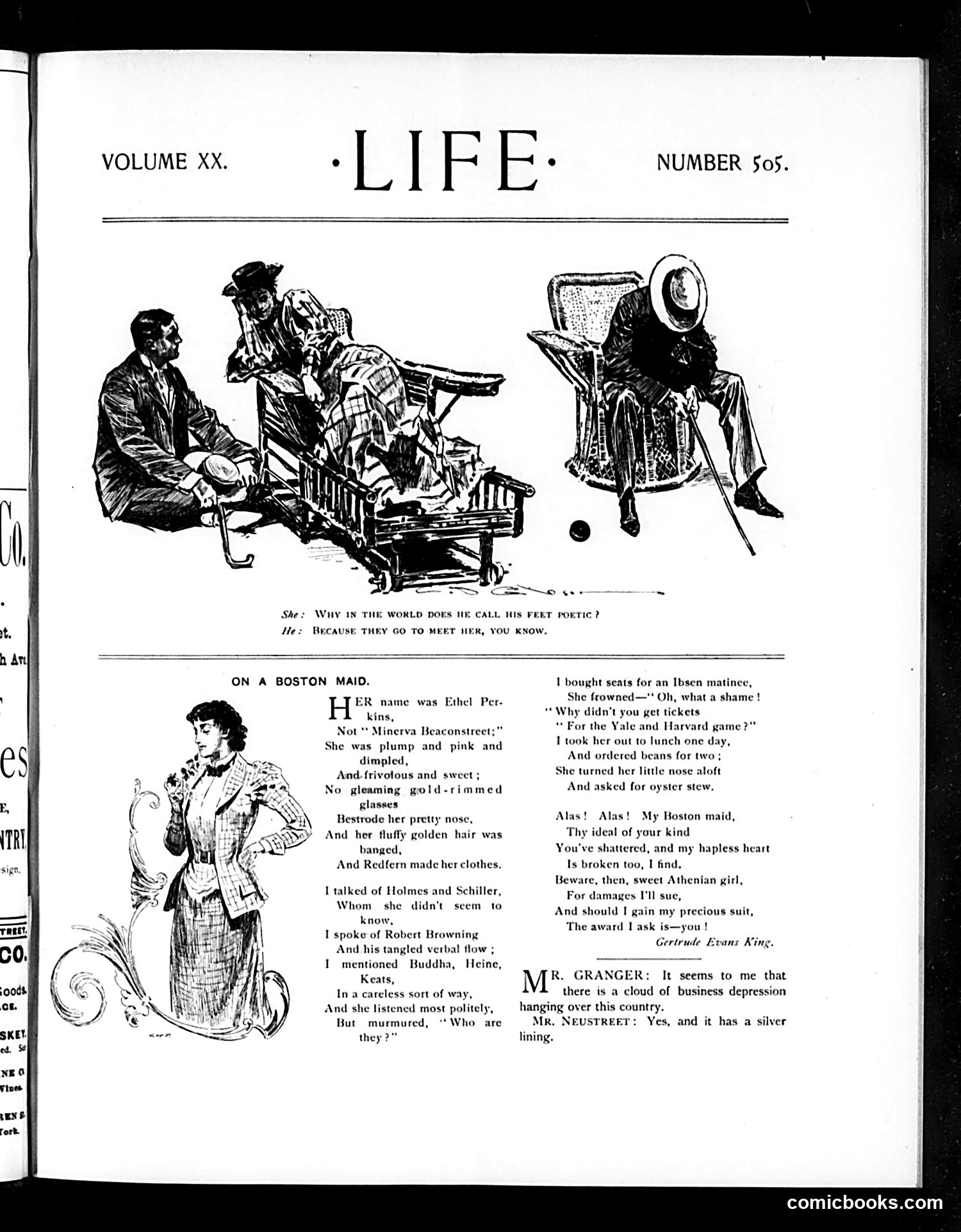
**Top Cartoon**: A joke about a man's "poetic feet"—the punchline reveals they "go to meet her," a play on words mocking romantic pretension. **"On a Boston Maid"**: A poem and accompanying illustration satirize a young woman named Ethel Perkins from Minerva Beaconstreet. The humor mocks her pretensions: she attended an Ibsen matinee, discussed literary figures (Holmes, Browning, Buddha, Keats), and took her date to a baseball game instead of theater—then demanded oyster stew as compensation for a "shattered" heart. The satire targets upper-class affectation and the contradiction between intellectual posturing and mercenary behavior. The final exchange between Granger and Neustreet about "business depression" with a "silver lining" appears unrelated political commentary.
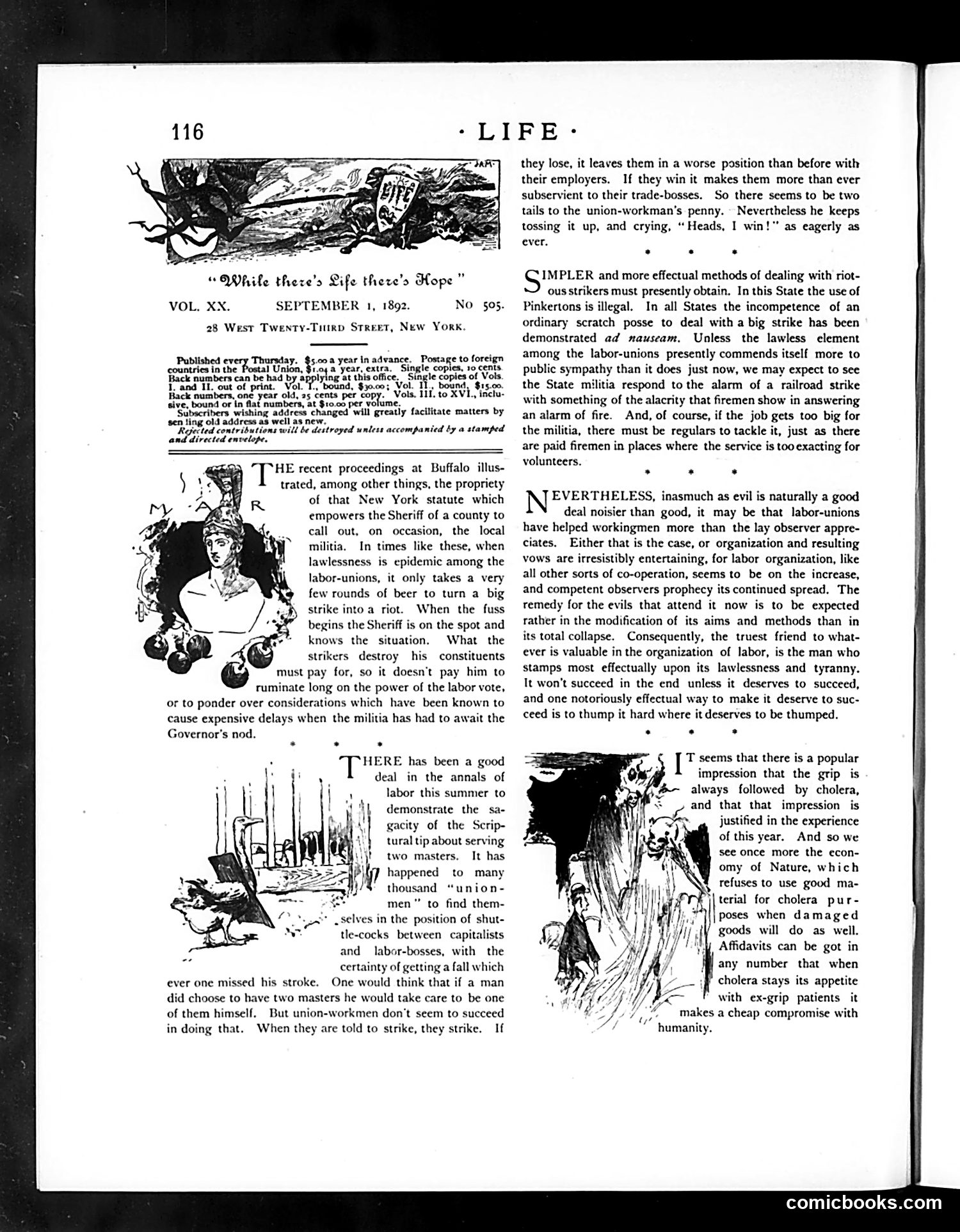
This page contains editorial commentary on labor strikes and union organization. The text discusses the use of militia to suppress strikers and criticizes both violent labor tactics and state responses. The illustrations appear to be decorative vignettes typical of Life's style—one shows a woman's head emerging from foliage (top left), another depicts figures in an industrial or dock setting (bottom left), and a third shows what appears to be a dramatic scene (right side). The central argument warns that unless labor unions moderate their methods and aims, they risk losing public sympathy and triggering harsher state crackdowns. The author argues that effective labor reform requires abandoning destructive tactics in favor of legitimate advocacy. The piece reflects 1892's turbulent labor disputes and anxieties about strikes, militia response, and cholera—which the text suggests spreads during labor unrest due to unsanitary conditions.
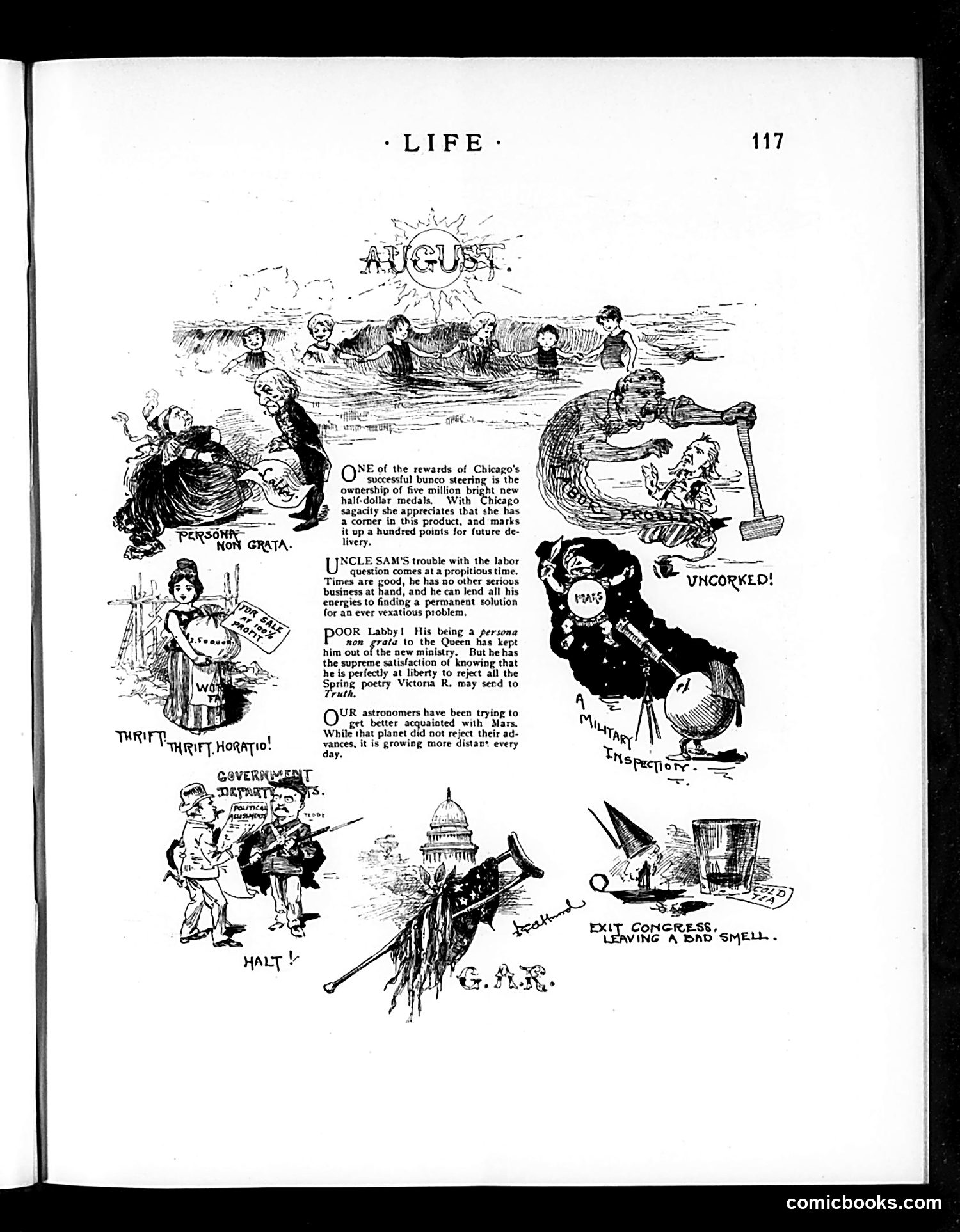
This page satirizes various August topics through political cartoons: **"Persona Non Grata"**: Mocks a wealthy woman's summer social standing—likely commenting on nouveau riche or scandal affecting high society. **"Thrift Horatio!"**: References frugality, possibly satirizing economic concerns or a character's pretense of thriftiness. **"Uncle Sam's troubles"**: Depicts Uncle Sam juggling multiple serious issues simultaneously, suggesting the government faces overwhelming problems without clear solutions. **"Poor Lobby"**: Appears critical of Congressional lobbying power, questioning whether political pressure groups control policy. **"Government Distrait"**: Shows officials apparently distracted or negligent in their duties. **"Exit Congress, Leaving a Bad Smell"**: Directly mocks Congress's performance or reputation. The "Uncorked" and swimming scene reference summer leisure activities and possibly prohibition-era alcohol concerns.
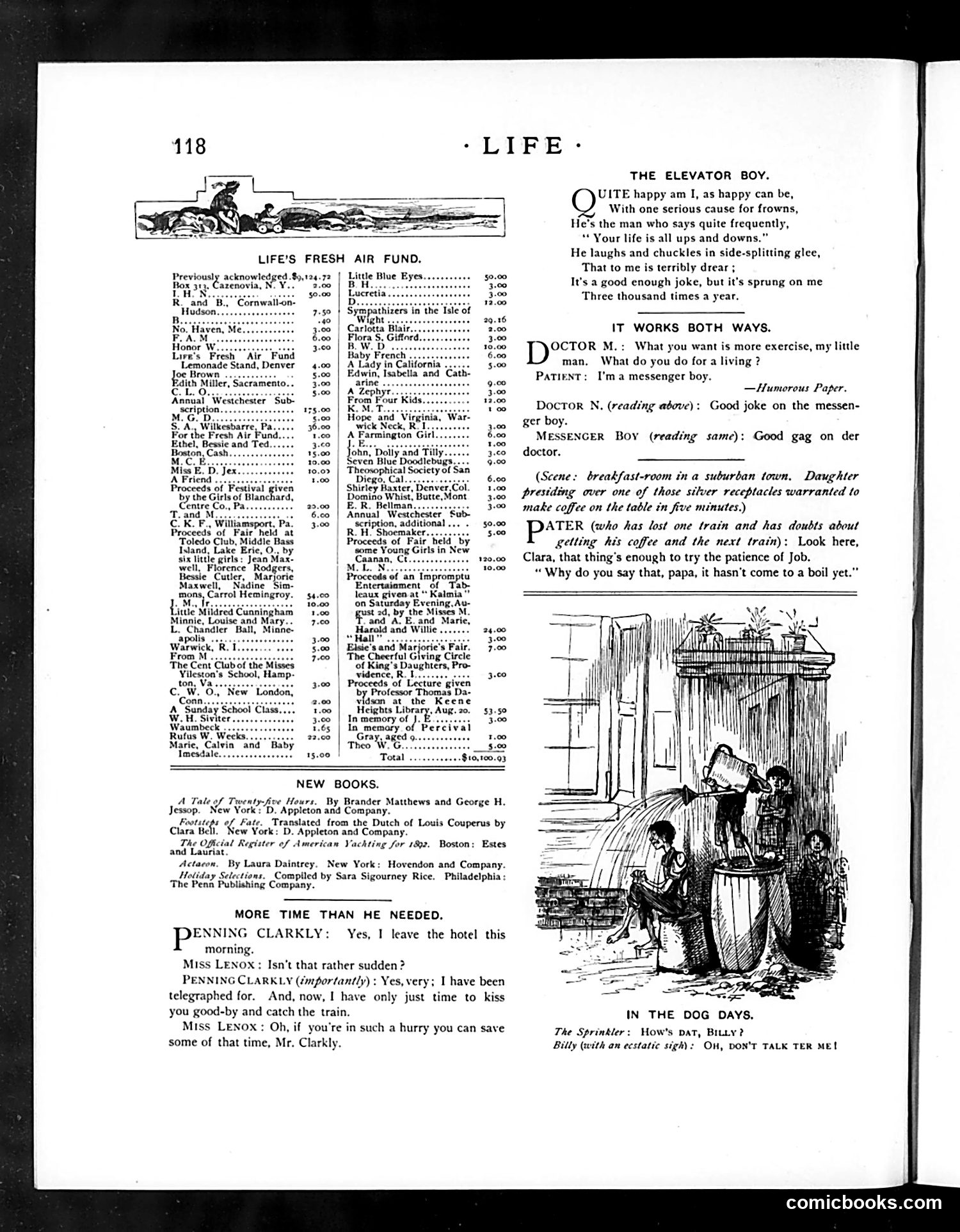
This page contains **humor pieces rather than political cartoons**. The main content includes: 1. **"The Elevator Boy"** - A poem mocking an optimistic young elevator operator who repeatedly jokes that life is "all ups and downs," annoying the narrator. 2. **"It Works Both Ways"** - A comedic dialogue between a doctor and messenger boy, playing on the double meaning of "exercise" and "messenger" work. 3. **"More Time Than He Needed"** - A brief comic scene about a man rushing to leave a hotel and catch a train, with a woman pointing out he has plenty of time. 4. **"In the Dog Days"** - A caption joke about a dog's irritability in summer heat. The page also includes **"Life's Fresh Air Fund,"** listing charitable donations—primarily satire about wealthy donors' contributions. The humor targets everyday social types and modern anxieties rather than specific political events.
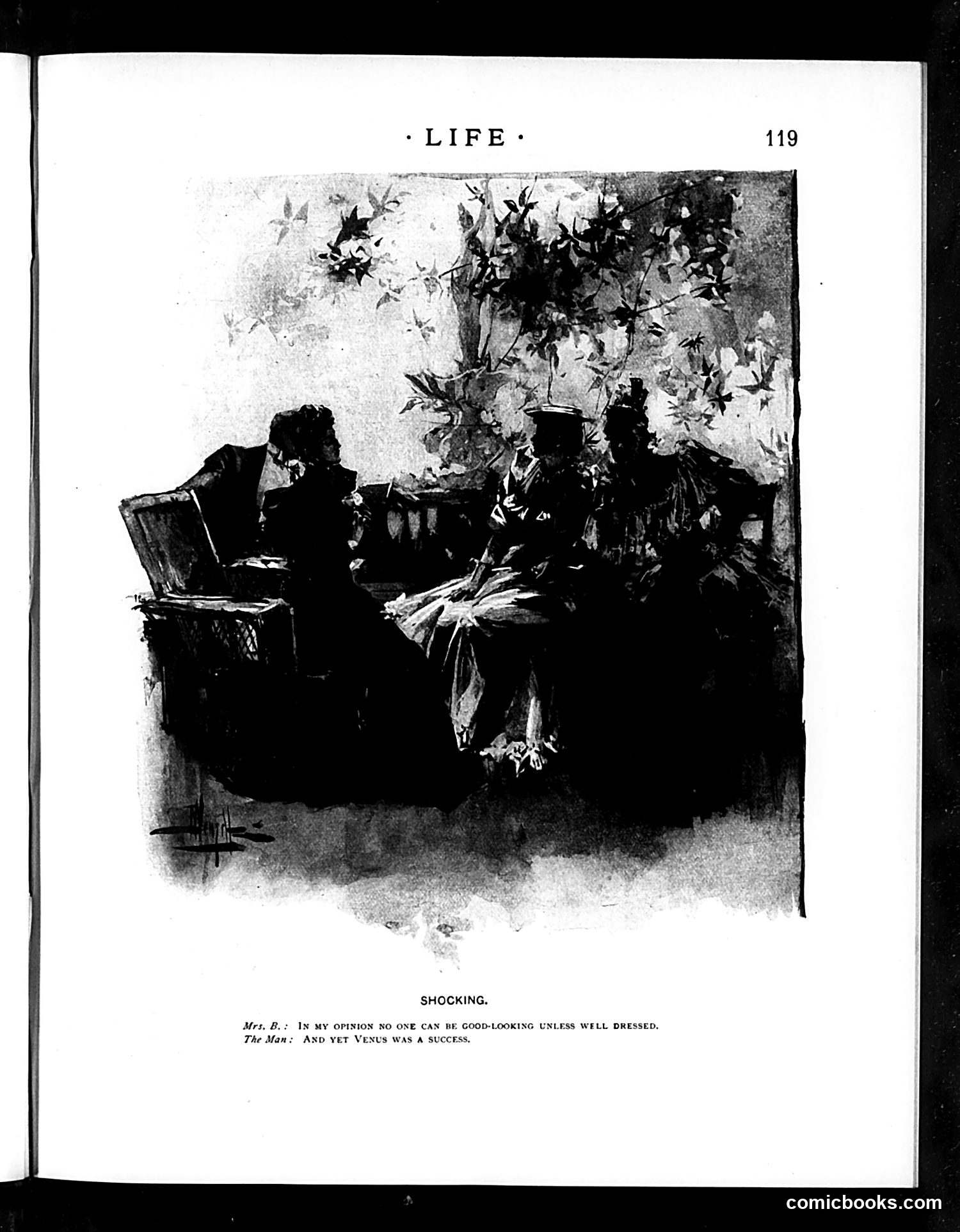
This cartoon, titled "Shocking," satirizes contemporary attitudes about appearance and social worth. The dialogue presents a contradiction: Mrs. B. asserts that "no one can be good-looking unless well dressed," while The Man counters with "and yet Venus was a success." The joke references Venus, the Roman goddess of love and beauty, who in classical art is typically depicted nude. By invoking this mythological figure, the cartoon mocks Mrs. B.'s superficial fashion-obsessed philosophy, suggesting that true beauty and success transcend clothing and material presentation. This reflects early 20th-century tensions between traditional values (natural beauty) and emerging consumer culture (fashion-driven aesthetics). The satire targets snobbish social attitudes about appearance and class.
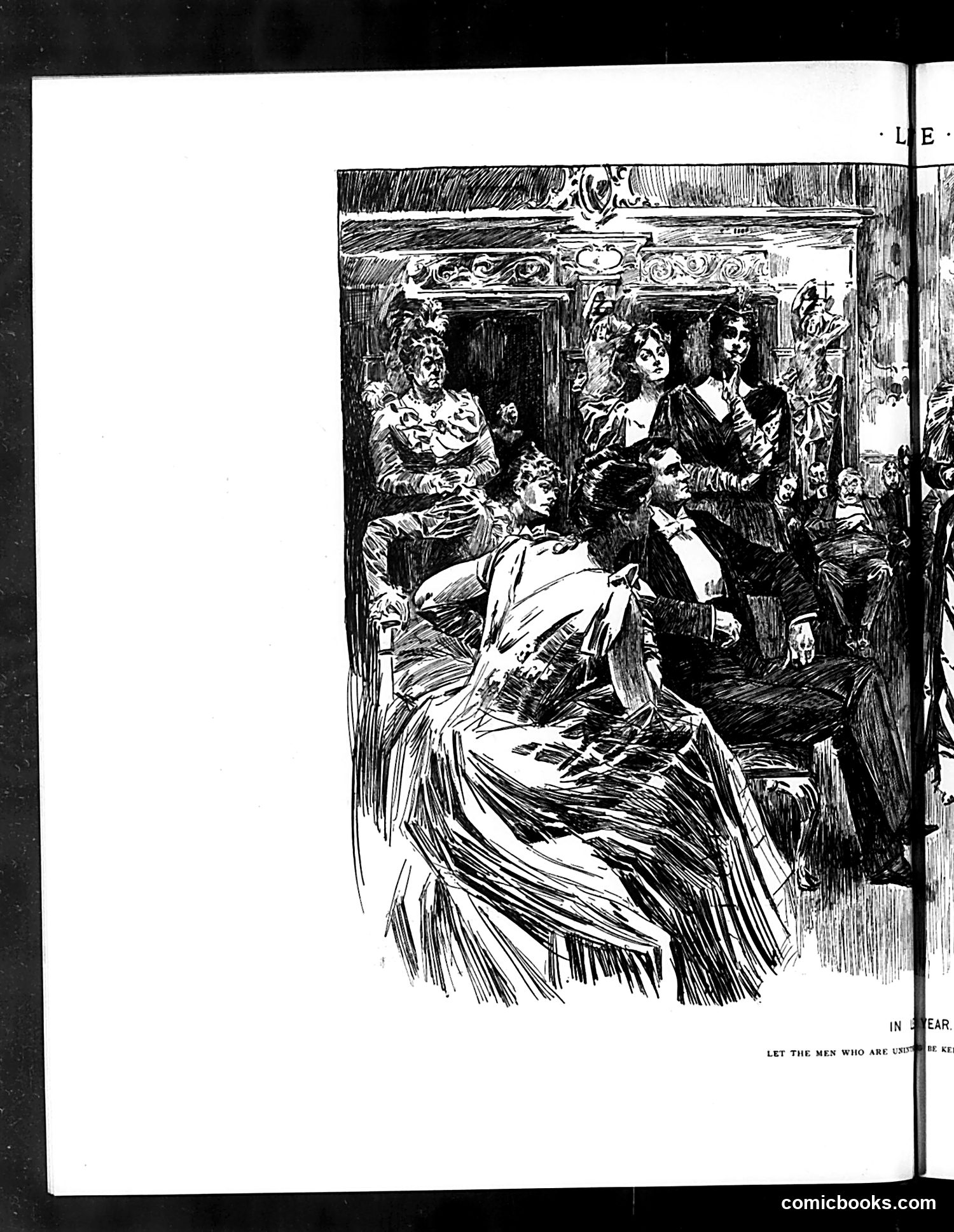
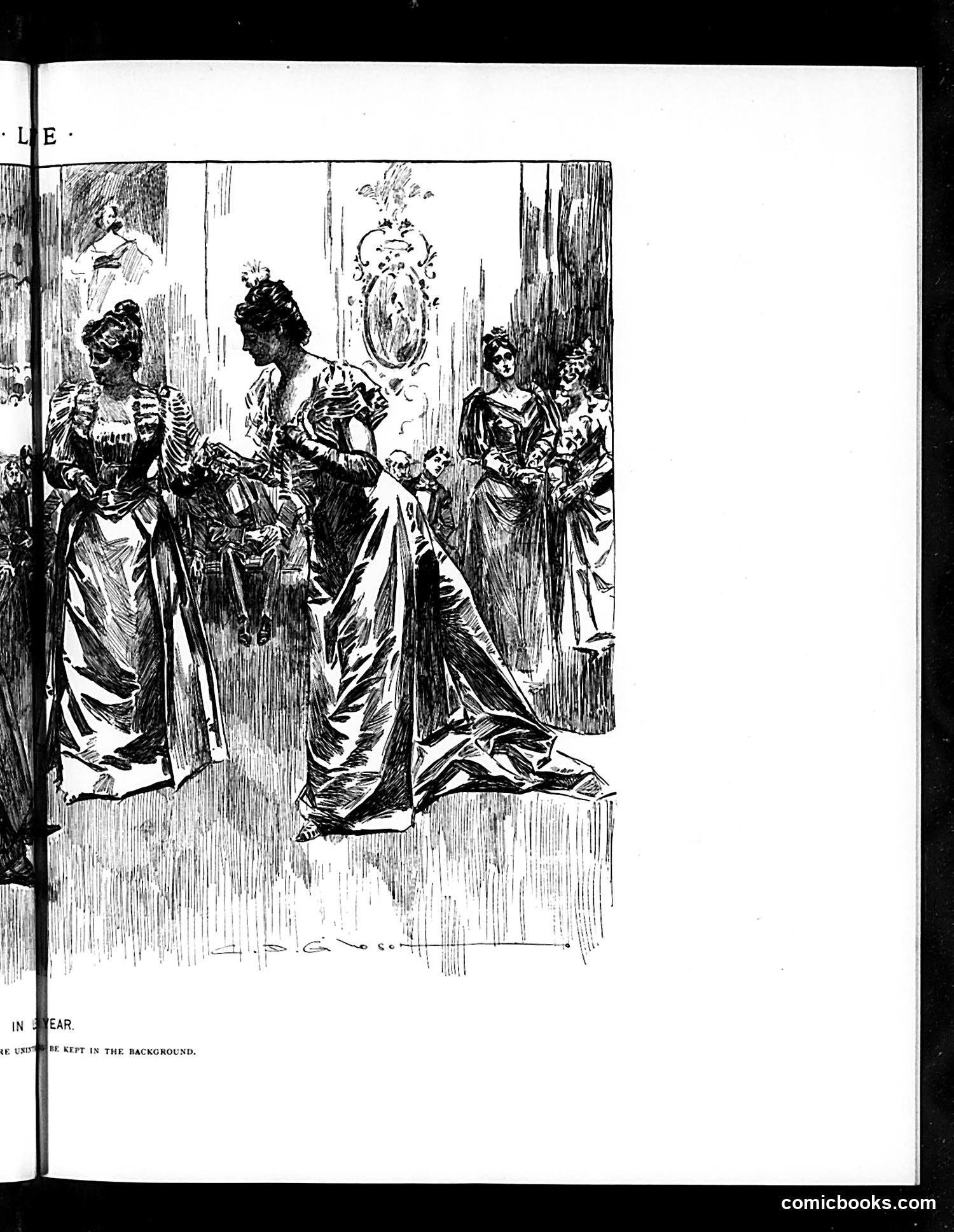
This appears to be a social satire illustration from *Life* magazine depicting an indoor scene at what looks like an elegant salon or drawing room. The central figure is a woman in an elaborate white gown with dramatic drapery, positioned prominently in the foreground. She's surrounded by well-dressed men and women in formal attire, observing her. The partially visible text at bottom reads "LET THE MEN WHO ARE UNI..." (cut off), suggesting commentary on gender dynamics or social behavior. The detailed cross-hatching and ink work style is characteristic of late 19th-century satirical illustration. The composition emphasizes the woman's theatrical pose and elaborate dress, likely satirizing Victorian social conventions, courtship rituals, or perhaps women's fashion and the performative aspects of high society. Without the complete caption, the specific satirical target remains unclear.
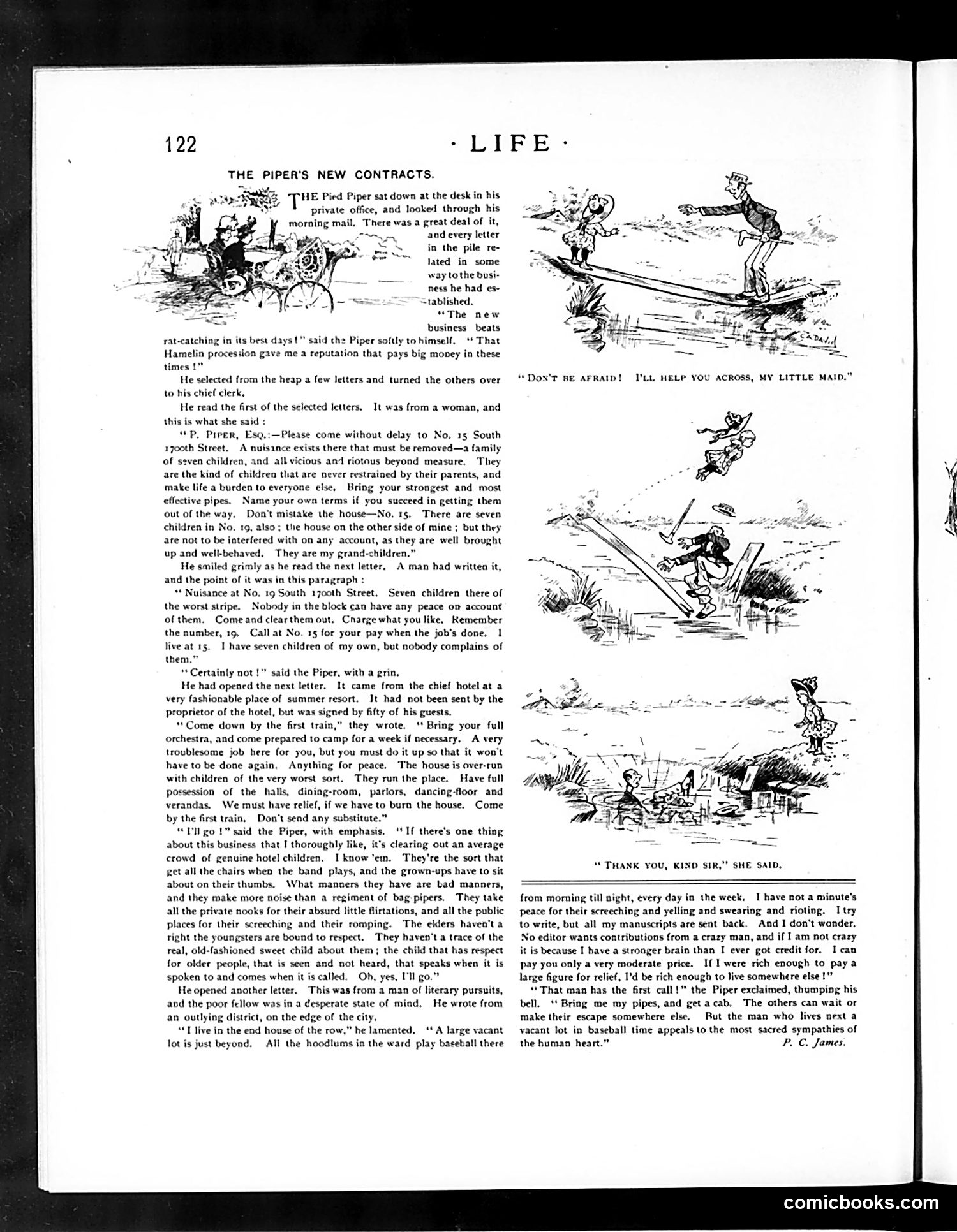
This page from *Life* magazine presents a satirical story about "The Pied Piper" taking on modern business contracts to remove nuisances—specifically unruly children from households and hotels. The accompanying illustrations show the Piper using various methods (appearing to lead children across water, playing pipes) to "clear out" problematic situations. The satire targets: 1. **Problem children** in wealthy households and resorts 2. **Service industry complaints** about noisy, disruptive young people 3. **The Piper's entrepreneurial approach**—treating child-removal as a profitable business venture The humor relies on readers recognizing the classic fairy tale being repurposed for contemporary social complaints about children's behavior and their disruption of leisure activities, particularly at fashionable summer hotels. It satirizes both parental frustration and upper-class expectations for peace and quiet.
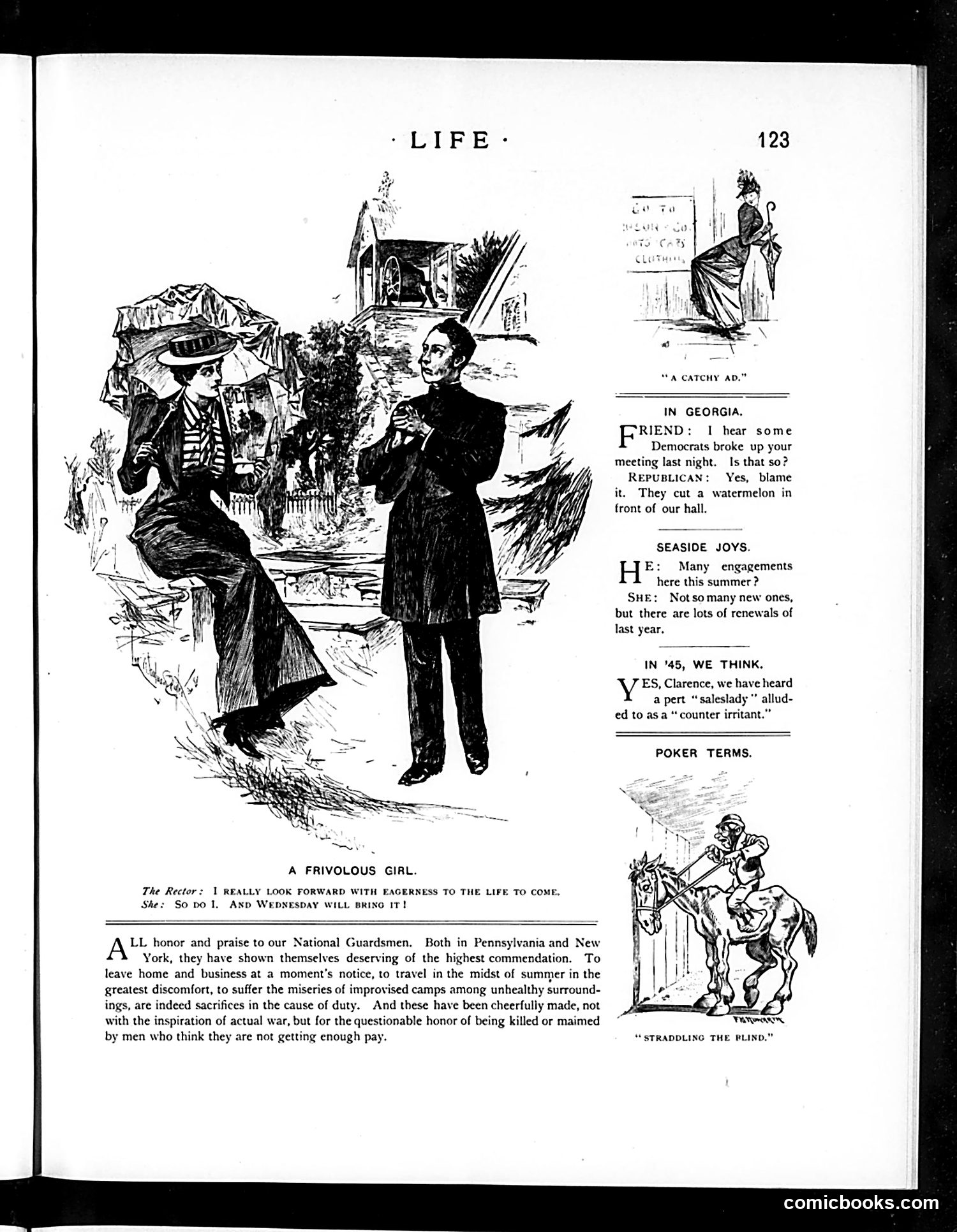
This page contains several short satirical pieces typical of Life's humor format: **"A Frivolous Girl"** (main illustration): Shows a man and woman in conversation, with the woman expressing eagerness for Wednesday's arrival. The caption reveals she anticipates romantic excitement ("life to come"), while the man responds she'll get it then. The satire targets frivolous women preoccupied with social engagements. **"In Georgia"**: Political humor about Democrats disrupting a Republican meeting by cutting a watermelon in front of their hall—likely referencing post-Civil War regional tensions and racial politics. **"Seaside Joys"** and **"In '45, We Think"**: Brief conversational gags about engagements and slang terminology. **"Poker Terms"**: An illustration with the caption "Straddling the Blind," using card-game terminology humorously. The page reflects early 20th-century satirical commentary on romance, politics, and social behavior.
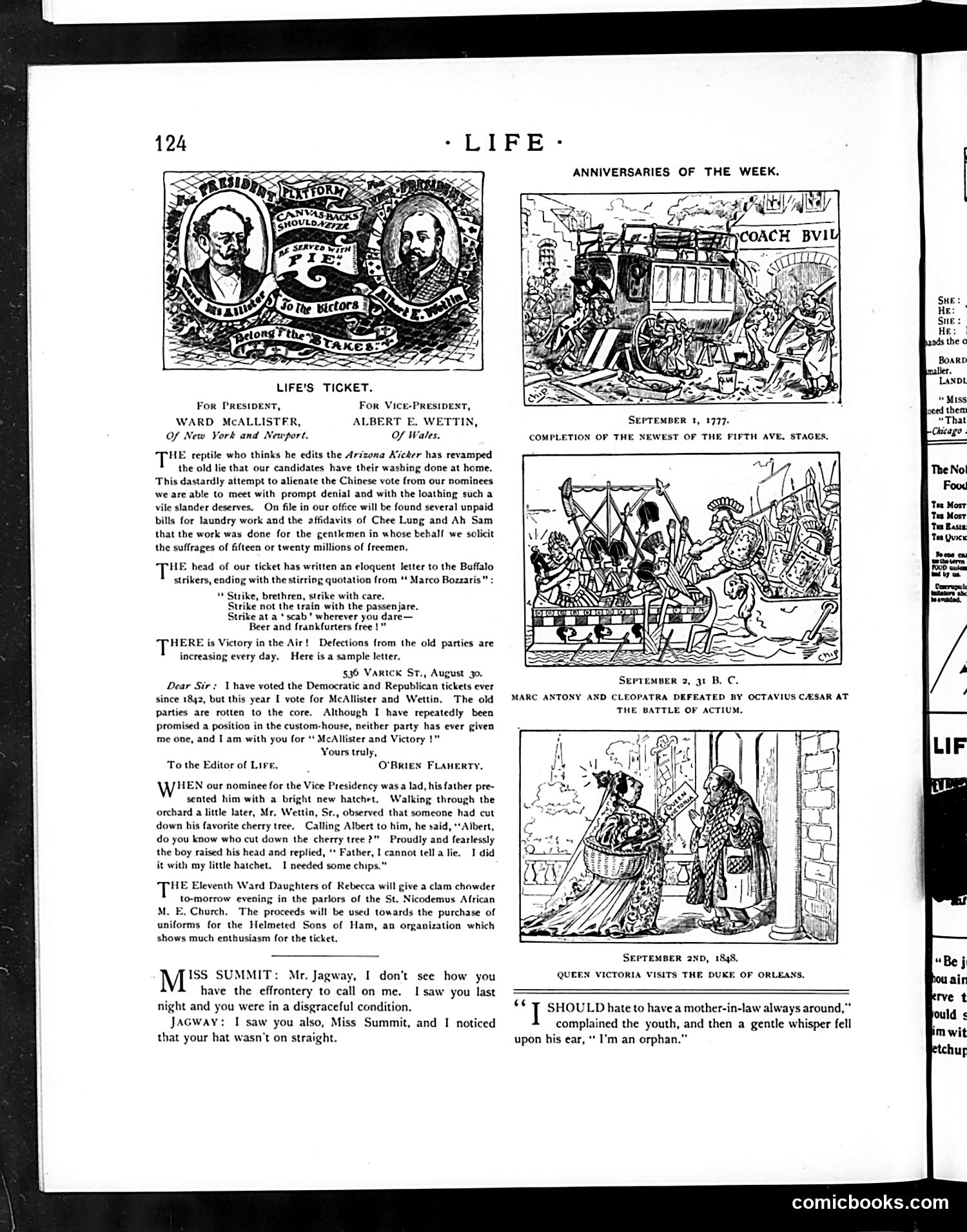
This 1880s page satirizes the 1884 U.S. presidential election. Life's editors propose a mock ticket of **Ward McAllister** (a wealthy New York socialite) for president and **Albert E. Wettin** (apparently Prince Albert of Wales) for vice president—mocking the actual candidates through absurdity. The satire targets: - **Chinese labor disputes**: A fabricated scandal about the candidates' laundry, playing on anti-Chinese sentiment and labor tensions - **Political corruption**: The fictional voter letter mocks promises of patronage positions that never materialize - **Class pretension**: McAllister was famous for high-society snobbery; pairing him with royalty ridicules aristocratic posturing - **Historical ironies**: The "Anniversaries" section juxtaposes 1777, 31 B.C., and 1848—seemingly random dates that undercut the candidates' importance The humor relies on readers recognizing McAllister's real notoriety and understanding that electing European nobility would be absurd—a critique of wealthy elites disconnected from working Americans.
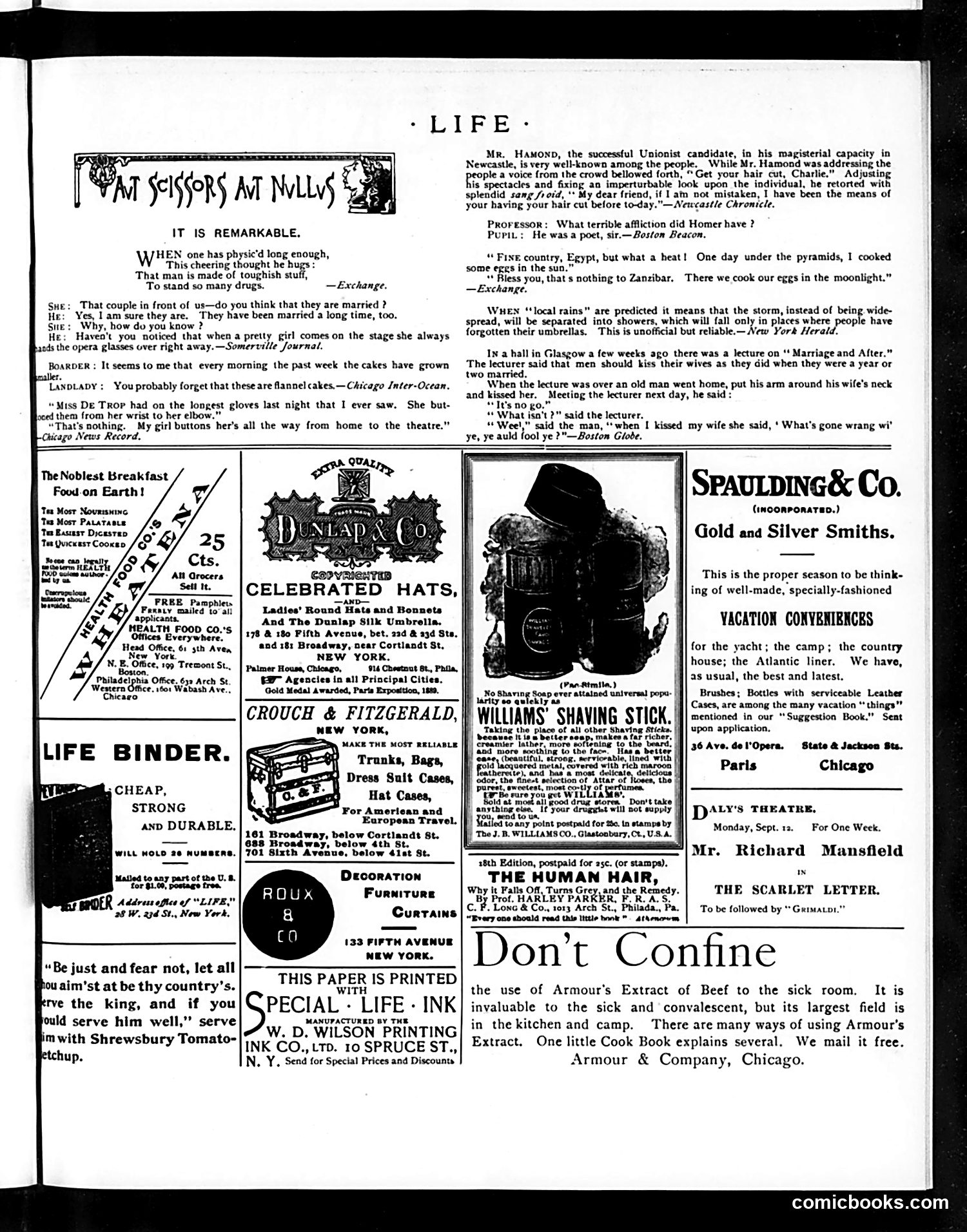
This page consists primarily of short humorous anecdotes in the "Life" section, alongside period advertisements. The cartoons and jokes target everyday social absurdities: **"Scissors at Nulls"** and the dialogue snippets mock common pretenses—a man reasoning that humans must be hardy because they survive many medicines; a couple observed at the opera debated as to marital status based on opera-glass etiquette; a landlady denying her pancakes have shrunk. **Social commentary** includes a Scottish anecdote where an elderly man, inspired by a marriage lecture advising husbands to kiss wives as they did when newly married, attempts this—only to be rebuffed by his bewildered wife. A Professor joke plays on Homer's blindness. The advertisements (Dunlap hats, Crouch & Fitzgerald luggage, Health Food Company) occupy equal space, typical of Life's mixed content model. The satire is gentle, focused on domestic life, vanity, and misunderstandings rather than political critique.
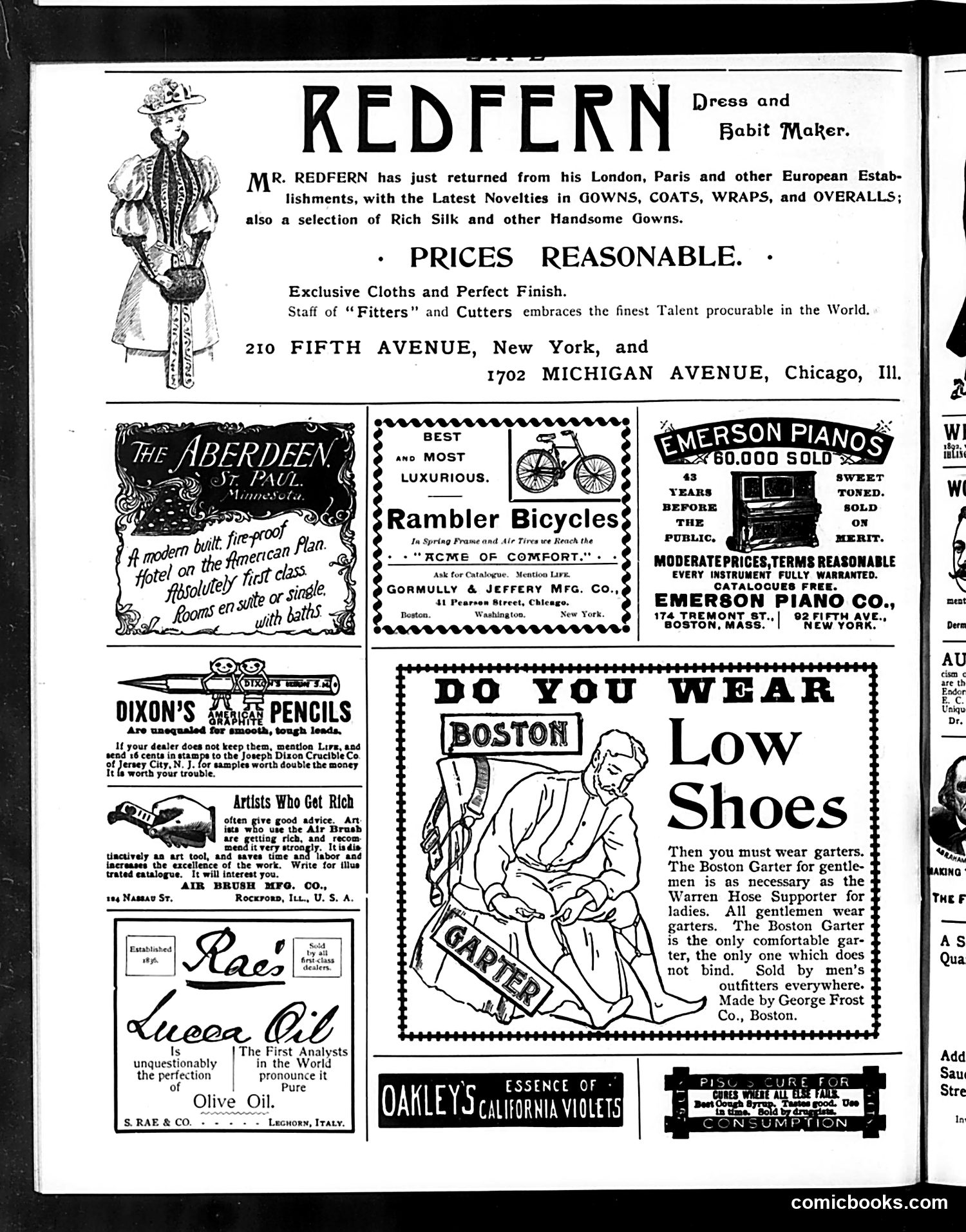
This is primarily a **commercial advertisement page** from Life magazine, not a political cartoon. It contains no satirical content or social commentary. The page showcases **turn-of-the-century consumer goods and services**: Redfern (a high-end dress and coat maker with locations in New York and Chicago), Rambler bicycles, Emerson pianos, Dixon's pencils, Boston low shoes and garters, Oakley's California Violet essence, and Lucca olive oil. The illustration at top shows a fashionably dressed woman in Edwardian-era clothing—representative of Redfern's target market of affluent customers seeking European fashions. The Boston Garter ad includes a humorous illustration of a man adjusting his garter, playing on the practical need for such items when wearing the low-cut shoes of the period. This reflects early 1900s consumer culture and advertising strategy: luxury goods marketed to middle and upper-class readers through prestigious publications.
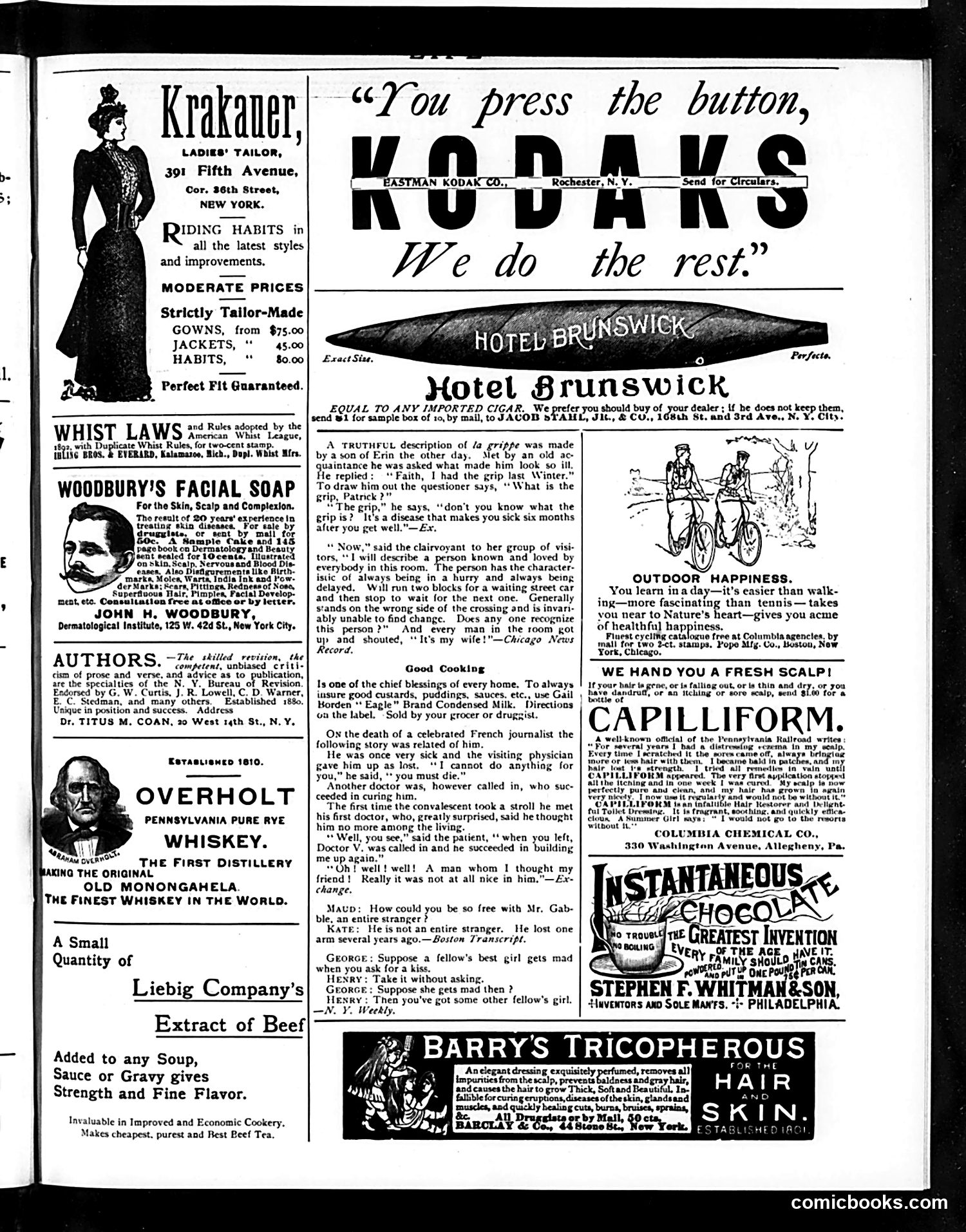
This is primarily an **advertising page** from Life magazine, circa early 1900s, featuring product ads (Kodak cameras, whiskey, facial soap, beef extract) alongside brief humorous anecdotes. The notable content includes a **joke about "la grippe"** (influenza), a then-common illness—an Irishman describes it as a disease that "makes you sick six months after you get well," satirizing the lingering exhaustion from flu. A second anecdote mocks a **clairvoyant** who describes someone "always in a hurry and always delayed," unable to find change—every man recognizes his wife, a gentle jab at married life. A third joke contrasts two doctors: one gives up on a patient, another saves him—dark humor about medical competence. The **Kodak ad** uses the famous slogan "You press the button, we do the rest," promoting camera ease for consumers. Otherwise, the page is dominated by product advertisements targeting turn-of-the-century readers—typical for Life's format blending humor with commercial content.
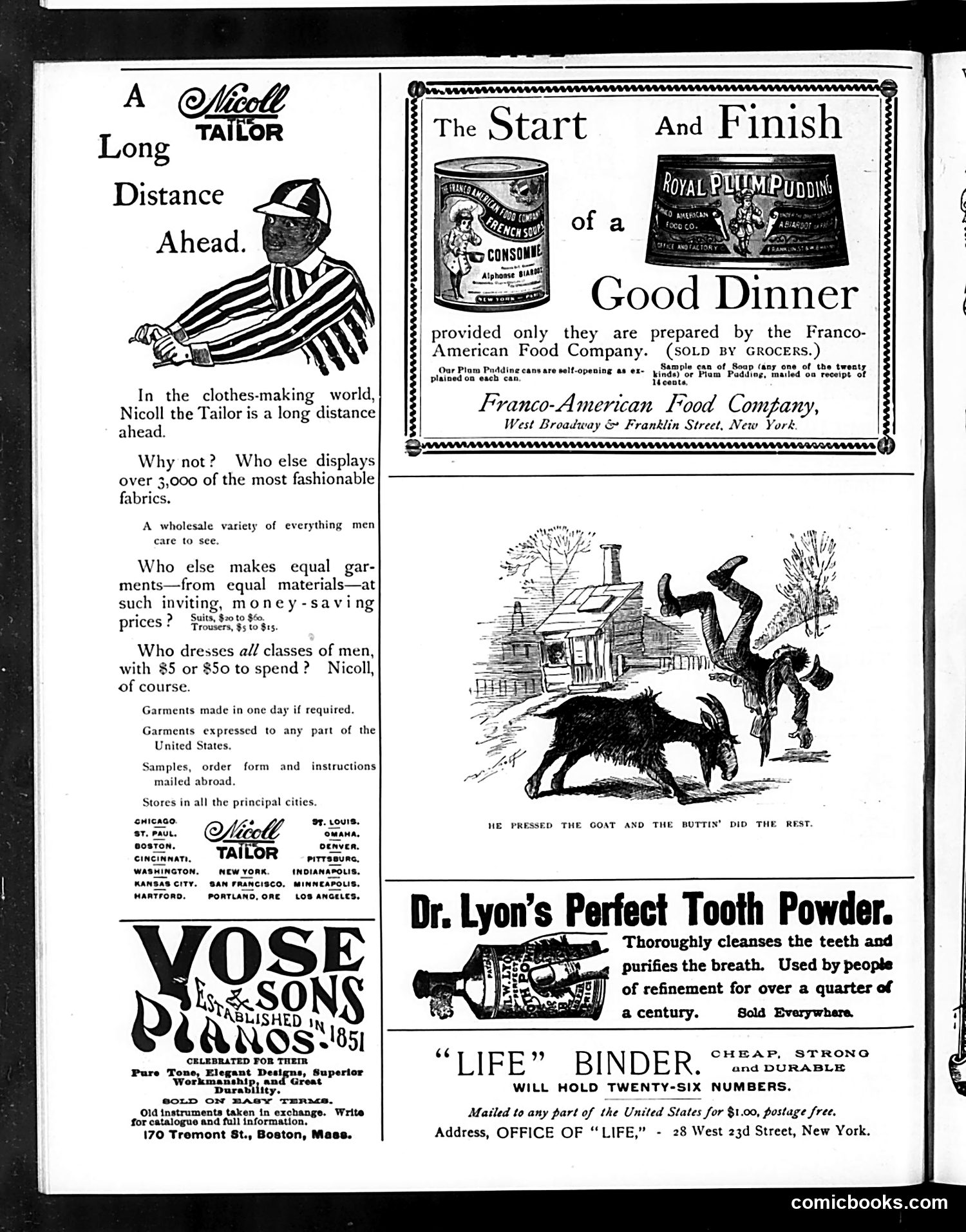
This page is primarily **advertisements** interspersed with one small cartoon. The main cartoon shows a man pressing a goat while another man is "buttin'" (playing on the animal's horns). The caption reads: "HE PRESSED THE GOAT AND THE BUTTIN' DID THE REST." This is a simple visual pun exploiting the double meaning of "butt/butting." The advertisements promote various products: Nicoll Tailors (emphasizing affordability and variety for all classes), Franco-American Food Company (canned soup and pudding), Vose & Sons Pianos, Dr. Lyon's Tooth Powder, and a "Life" magazine binder subscription. The tailor ad is notable for suggesting accessibility across economic classes—garments for those spending $5 to $50—reflecting early 20th-century consumer culture. The overall page reflects typical satirical magazine content: modest humor mixed with commercial endorsements.