
A complete issue · 14 pages · 1891
Life — September 10, 1891
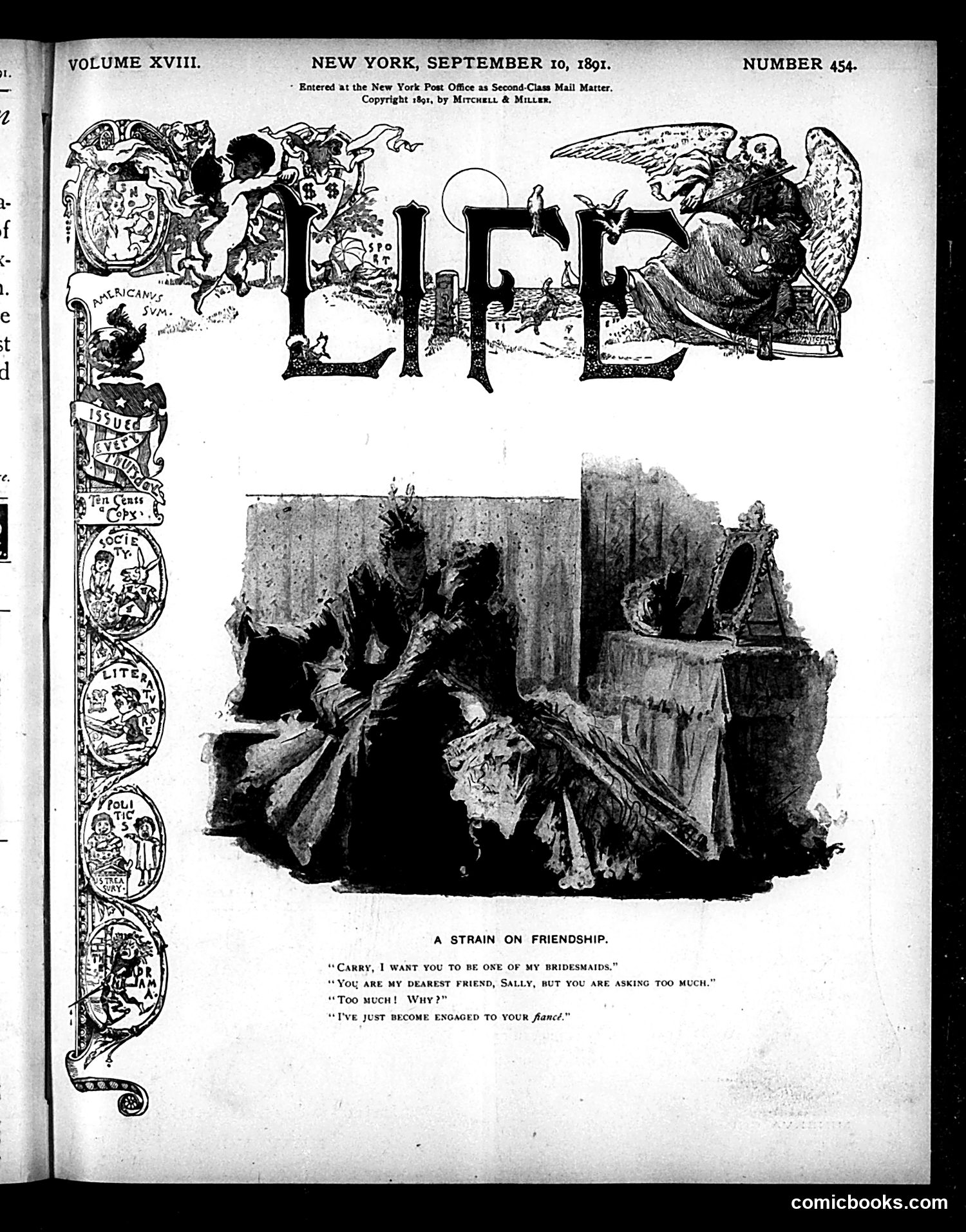
This satirical cartoon illustrates a social comedy about conflicting loyalties among female friends. The dialogue shows Carry asking Sally to be a bridesmaid, but Sally declines because she's "just become engaged to your fiancé" — meaning she's marrying Carry's intended husband. The humor derives from the awkward social situation: Sally claims she cannot be a bridesmaid because she's now engaged to the groom-to-be. Her excuse that this is "too much" to ask reveals the absurdity of the request while simultaneously delivering devastating news. The illustration shows women in period dress (1891) having this tense conversation, likely in a parlor. The joke satirizes both the brittleness of Victorian female friendships and the triangular romantic entanglements that could destroy them, presented through deliberately understated, polite dialogue that masks the social catastrophe.
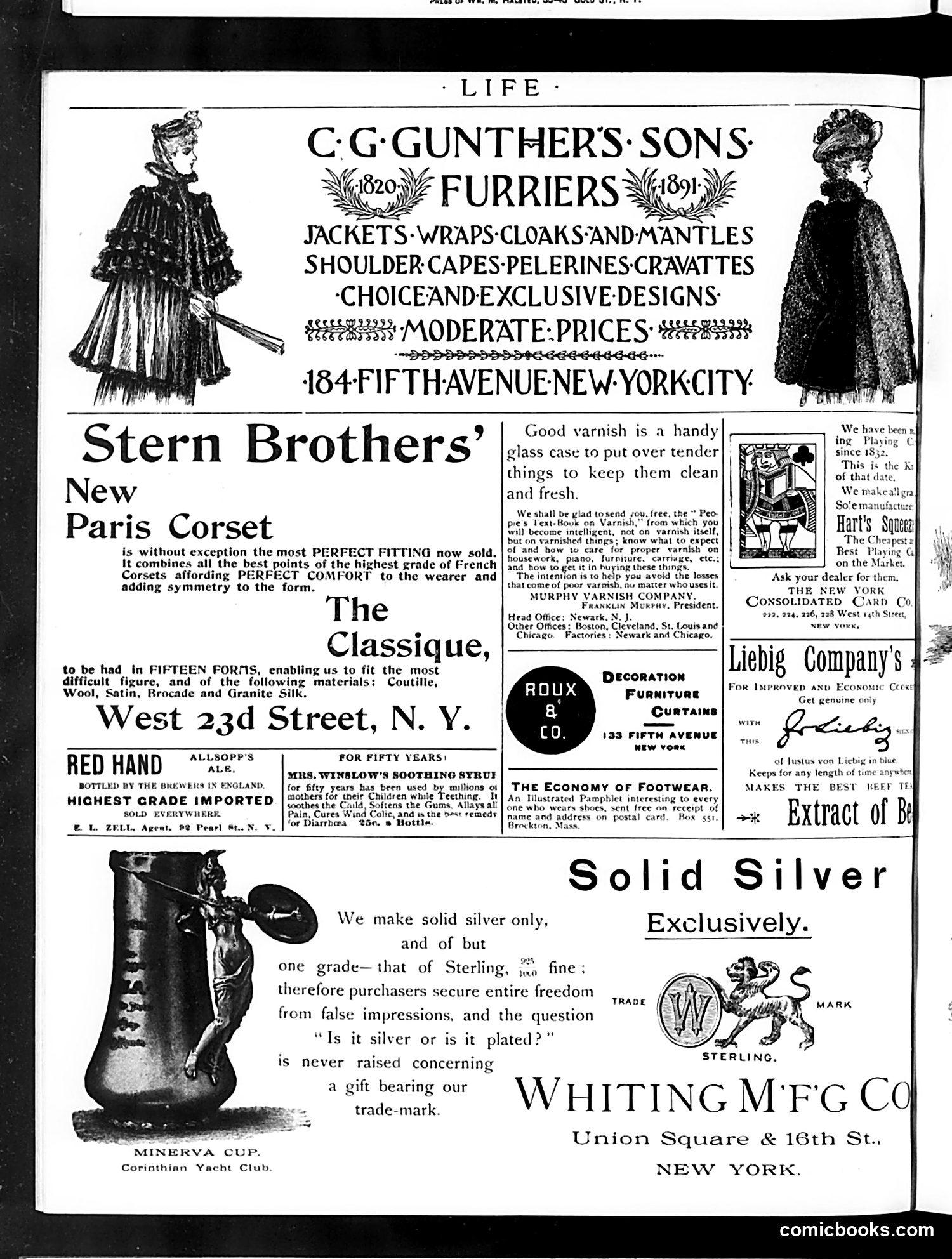
This is primarily an **advertising page**, not satirical content. It contains multiple commercial advertisements from late 19th-century New York businesses: - **C.G. Gunthers Sons** (furriers) and **Stern Brothers** (corsets) advertise women's fashion items with illustrated figures in period dress - **Roux & Co.** sells decorative furniture and curtains - **Liebig Company** advertises beef extract - **Whiting MFG Co.** promotes sterling silver goods, emphasizing authenticity The page includes a "Minerva Cup" image (a Corinthian Yacht Club trophy) and various notices about product quality and availability. **No political satire or cartoon commentary is present.** This is a straightforward commercial publication reflecting 1890s consumer goods and New York retail culture.
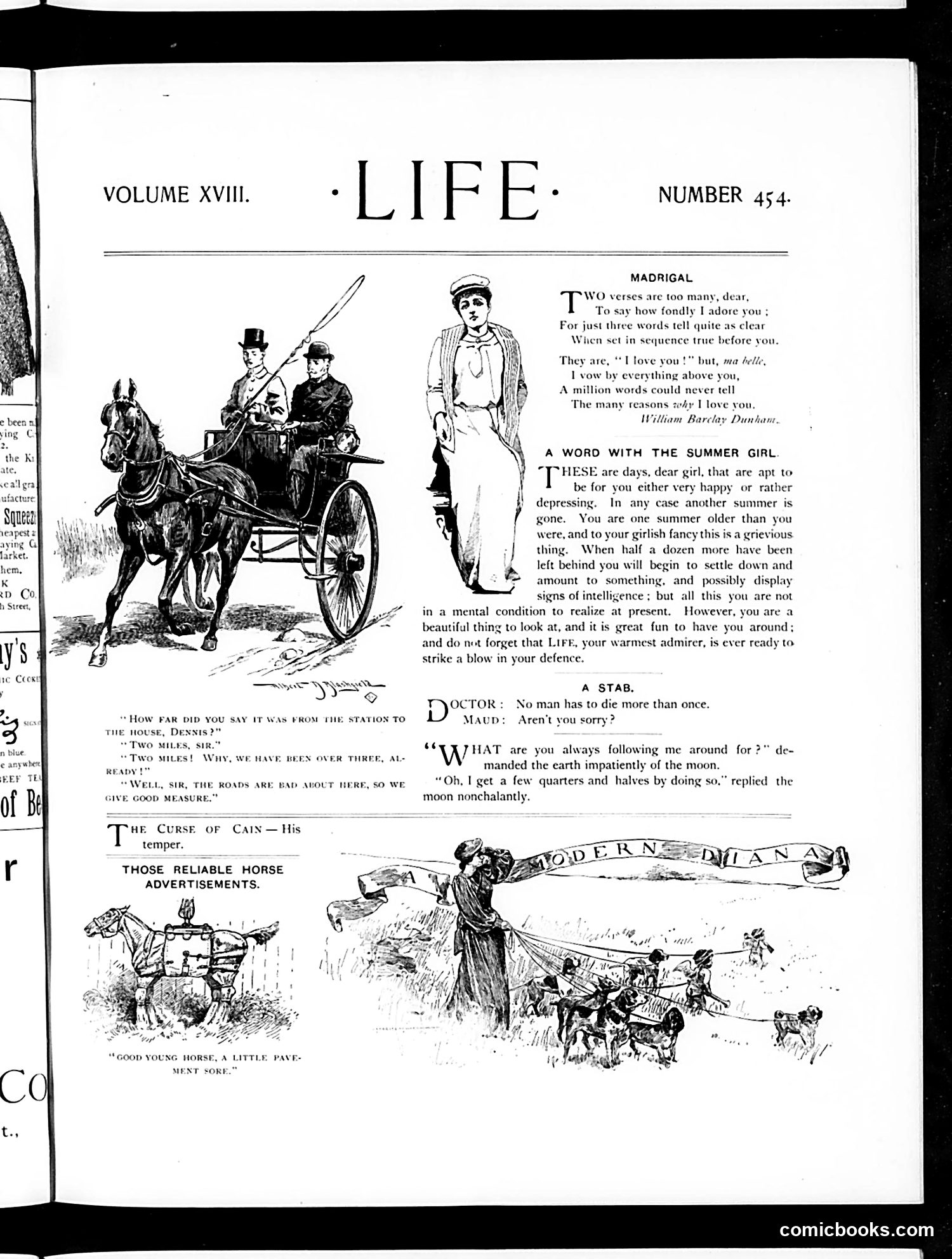
This page from *Life* magazine (Volume XVIII, Number 454) contains several distinct pieces: **Upper cartoon**: Shows two well-dressed men in a carriage with horses, with dialogue about traveling from a station. The joke appears to be about rural road conditions ("the roads are bad about here"). **Literary content**: Includes a madrigal poem and romantic pieces titled "A Word with the Summer Girl" and "A Stab" (a brief comedic dialogue between a doctor and patient about mortality). **Lower cartoon**: Depicts "The Curse of Cain—His Temper," showing an angry man with a banner reading "Modern Man" commanding others. This likely satirizes contemporary masculine behavior or temperament. The page represents *Life*'s typical mix of light satire, poetry, and social commentary, without clear reference to specific political events or identifiable public figures.
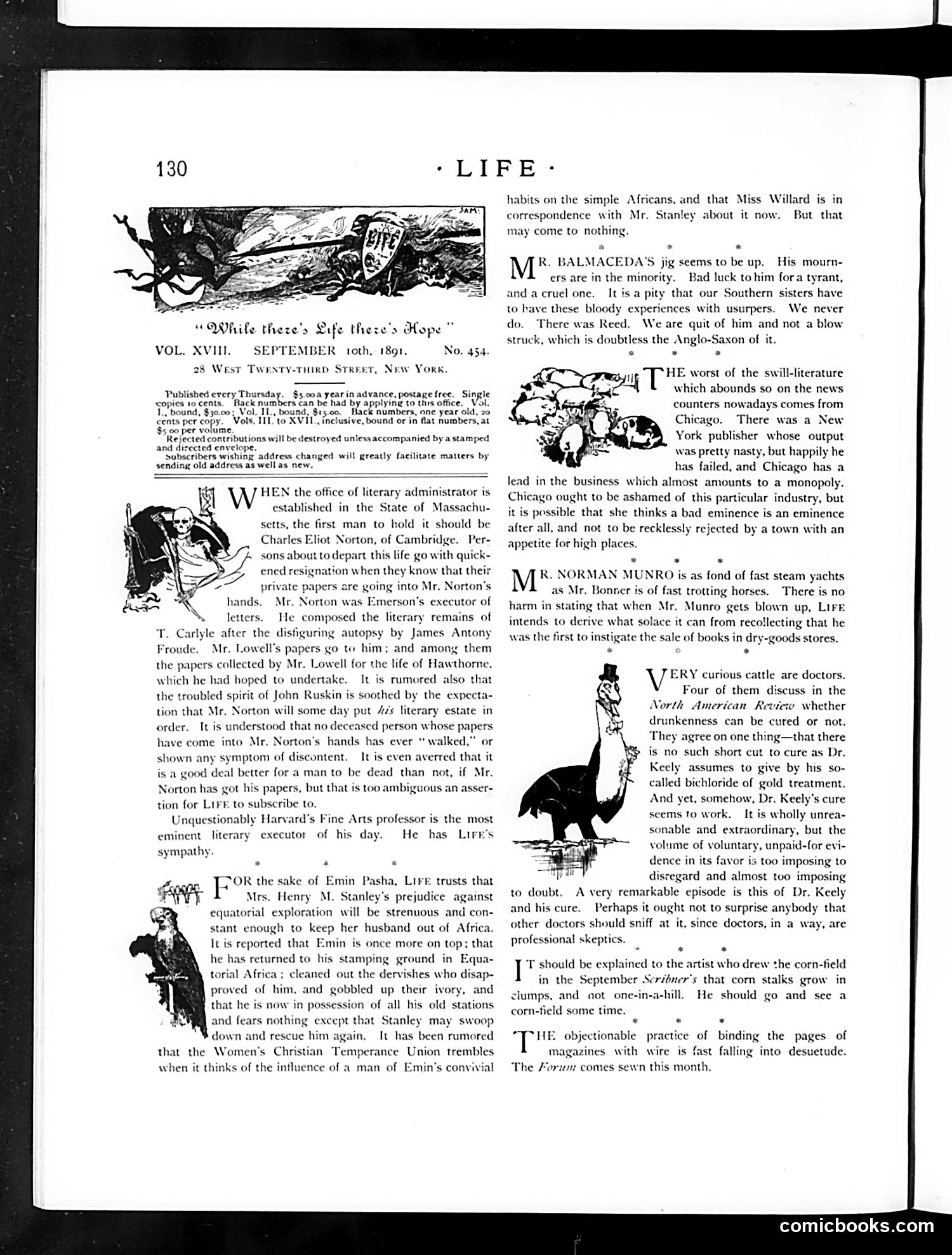
This page contains editorial commentary rather than political cartoons. The text discusses several contemporary figures and issues: **Charles Eliot Norton** is mentioned regarding his reluctance to have his private papers reviewed by executor James Antony Froude—a concern about biographical privacy. **Emin Pasha** is referenced regarding his African expeditions and Henry Stanley's wife's prejudice against him, suggesting tensions over the famous explorer's personal relationships. **Mr. Balmaceda** appears to face political misfortune (likely referring to the Chilean president's recent death in 1891). The page also critiques Chicago's literary culture and discusses fast steam yachts and cattle breeding. Decorative woodcut illustrations accompany the text but don't depict specific identifiable individuals—they're generic satirical vignettes typical of the era's magazine style.
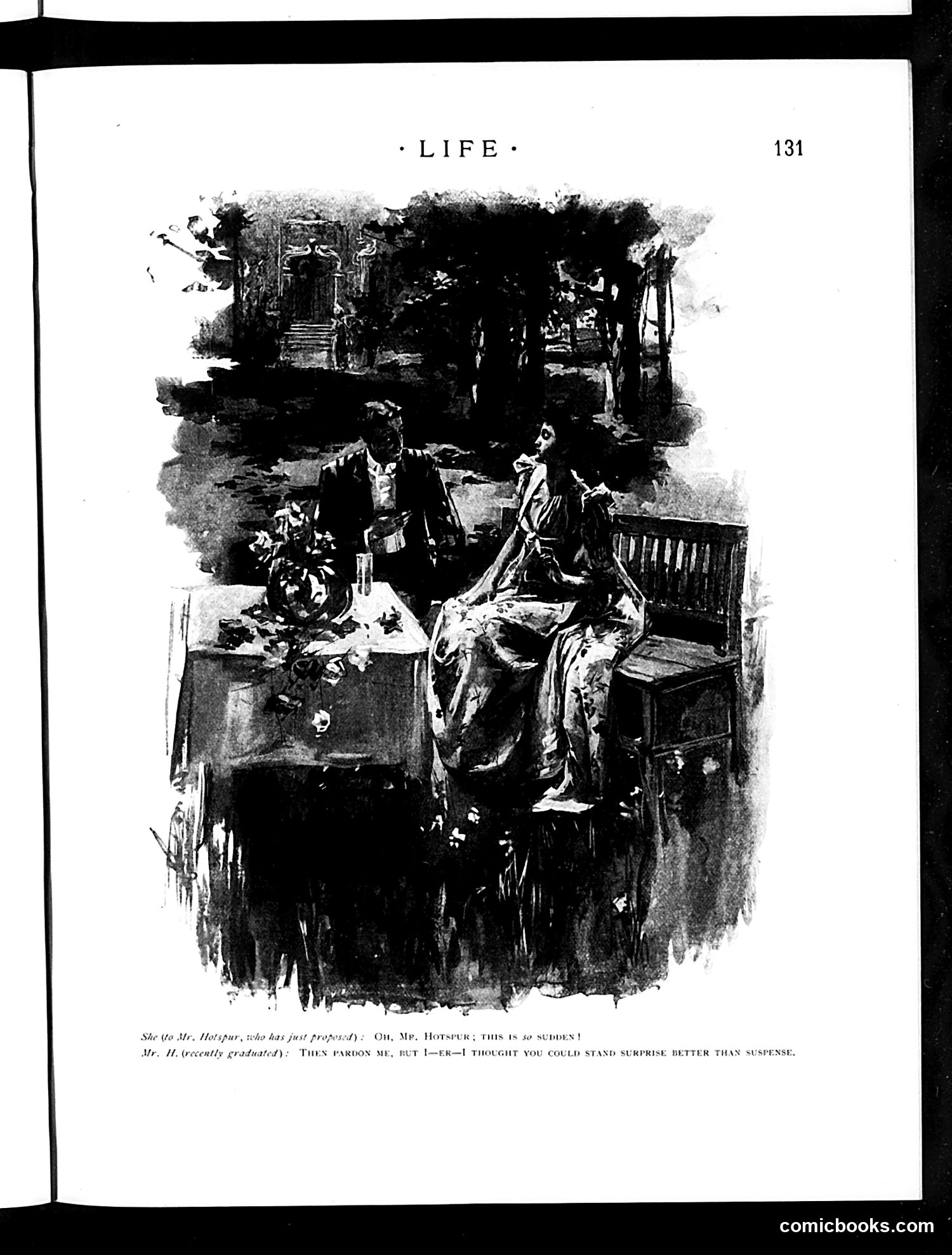
This illustration depicts a domestic scene with two figures in what appears to be a garden setting. Based on the caption dialogue, one character (Mr. Hotspur) has just proposed to someone, and the other character expresses surprise at this sudden development, suggesting they thought "you could stand surprise better than suspense." The satire appears to target attitudes about marriage proposals and romantic expectations—specifically mocking either the abruptness of the proposal or societal conventions around courtship. The figure's dramatic reaction and the caption's wordplay suggest the joke involves the contrast between enduring suspense versus handling a sudden, startling proposal. Without additional context about the specific issue date or contemporary events, the precise satirical target remains unclear, though it appears to comment on courtship customs of early 20th-century America.
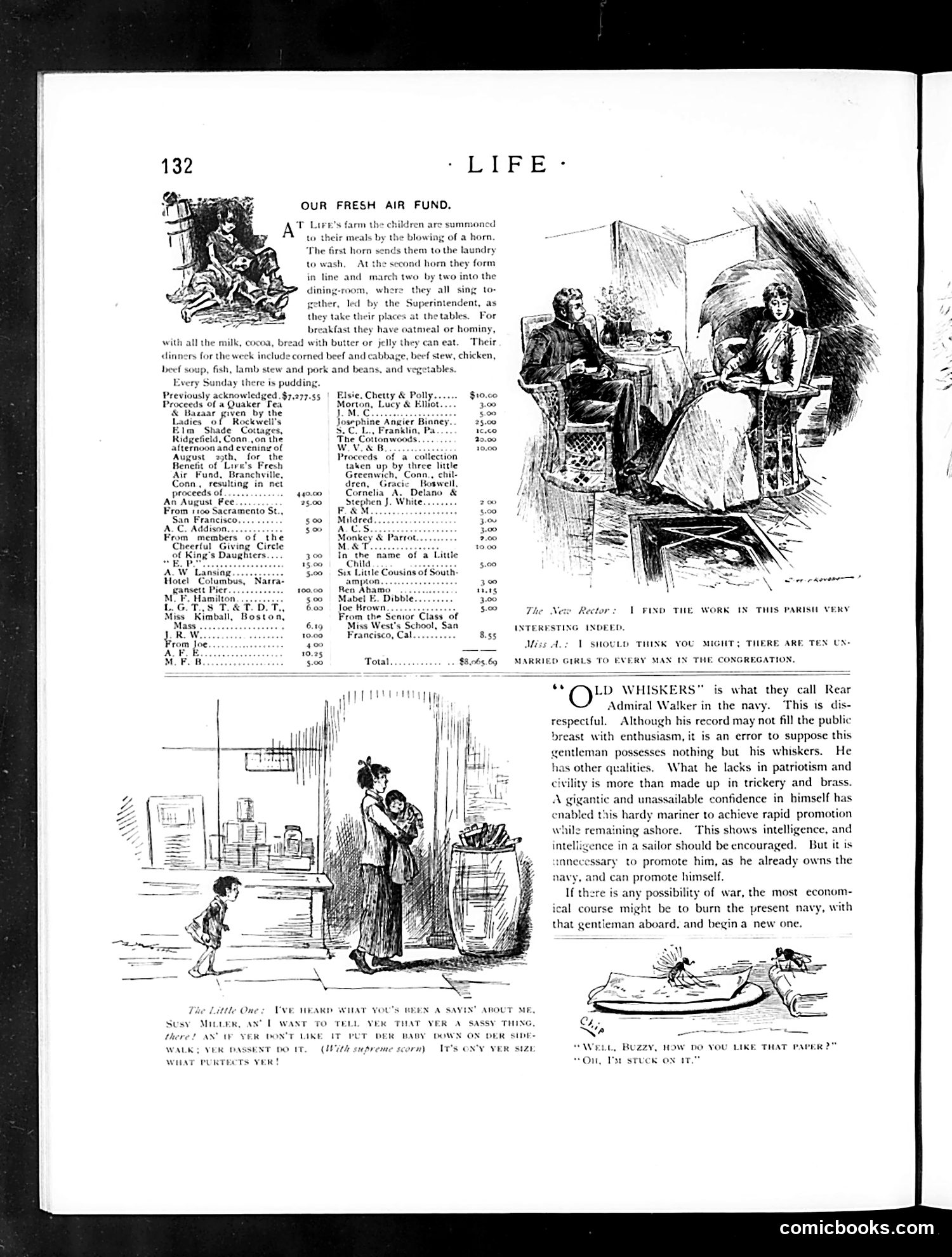
This page contains two distinct elements: **"Our Fresh Air Fund"** (top left): A fundraising list for a children's charity program that provides meals and outdoor experiences for underprivileged children at a farm. The detailed donation list shows contributions from various individuals and organizations, totaling $4,264.65. **"Old Whiskers" (main article)**: A critical piece about Rear Admiral Walker in the Navy. The text satirizes him as relying on "trickery and brass" rather than genuine patriotism and civility. It questions whether he merits his rank, suggesting the Navy would be better served by promoting capable officers rather than those who achieve advancement through manipulation. **Bottom cartoon**: A domestic humor sketch showing a child and mother with dialogue about the child's misbehavior—unrelated to the Admiral piece. The satirical target appears to be naval leadership and promotion practices of the era.
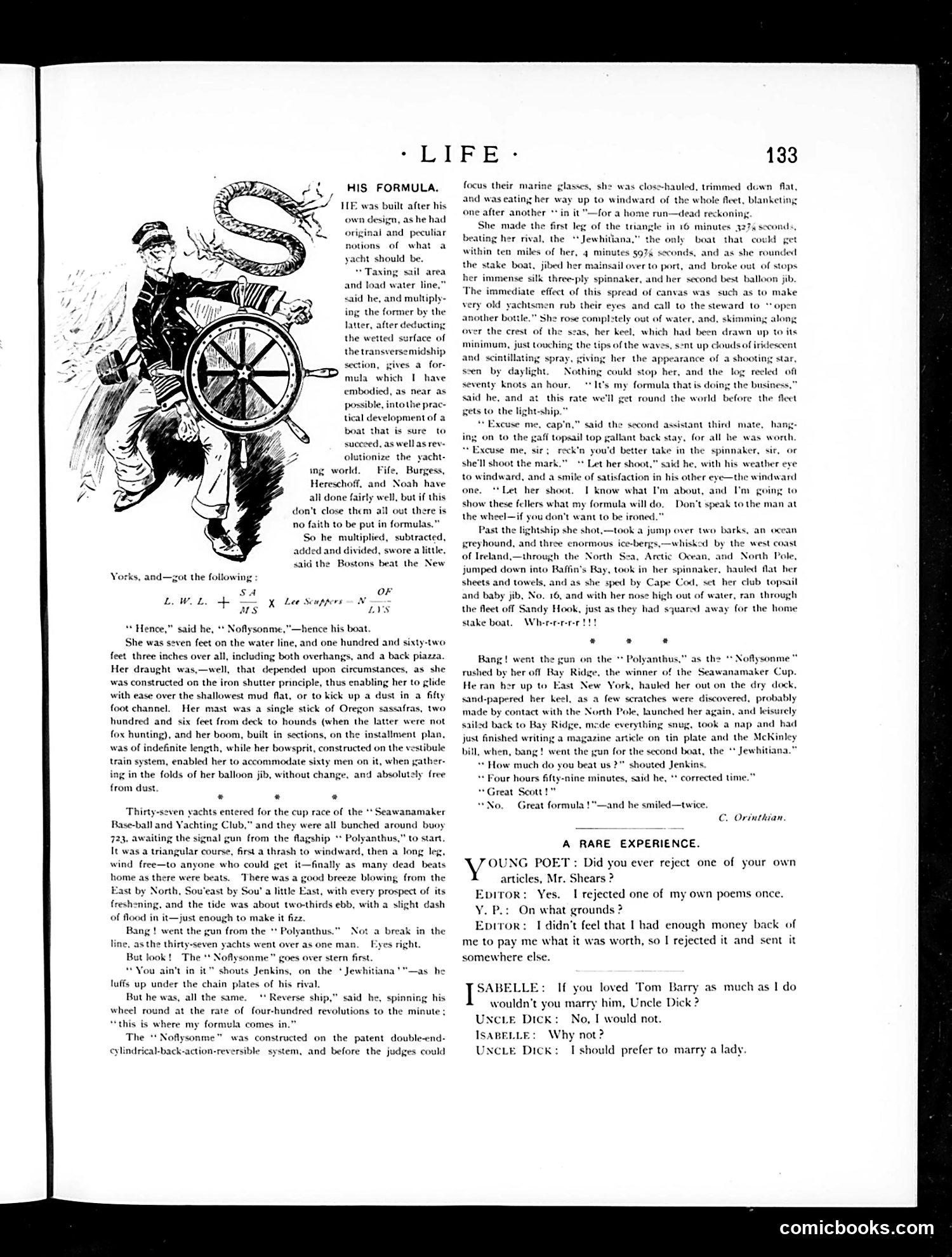
This cartoon satirizes yacht racing design and competitive boasting. The illustration shows a figure at a ship's wheel alongside a mathematical formula, mocking the pseudoscientific claims made by yacht designers. The accompanying text references actual yacht races—the "Seawanamaker Cup" and mentions of vessels like the "Nodhysome" and "Polyanthus." The satire targets designers who claim their formulas guarantee superior performance. The dialogue emphasizes how builders use complex-sounding technical jargon to justify their designs, while results often disappoint. The humor lies in exposing the gap between grandiose mathematical claims and actual racing outcomes—a timeless critique of how specialized terminology obscures uncertain results in competitive sports and engineering.
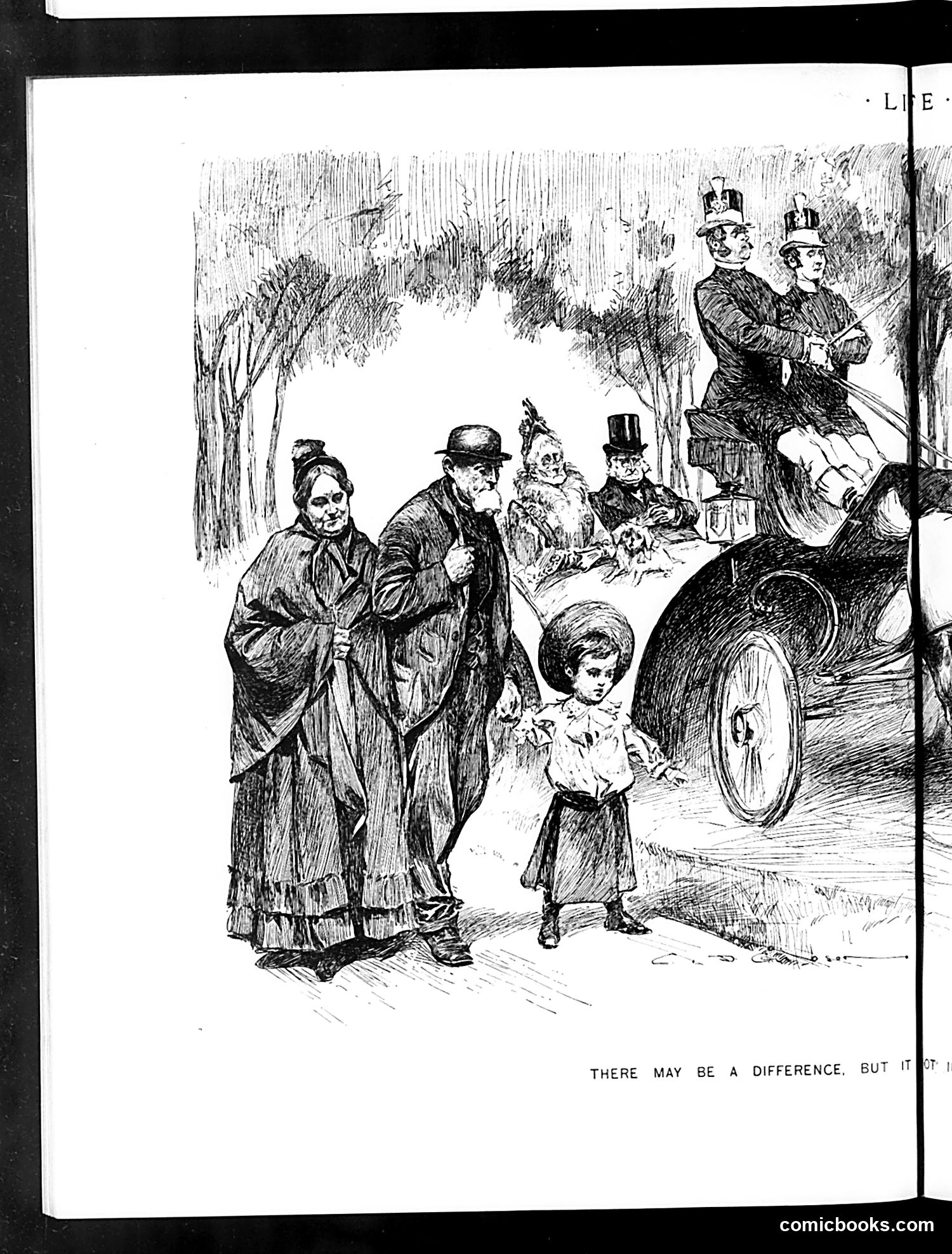
This is a satirical cartoon from *Life* magazine depicting a scene of social inequality. On the left, a poor woman and child in tattered clothing stand in the street. On the right, wealthy figures in top hats sit comfortably in a carriage, with additional well-dressed gentlemen observing from behind trees. The caption reads: "THERE MAY BE A DIFFERENCE, BUT IT [cut off]" The incomplete caption suggests the satire concerns class disparity—likely arguing that despite surface differences in wealth and status, fundamental human equality exists, or conversely, mocking society's pretense of equality while tolerating such stark poverty. The visual contrast between the destitute family and the affluent observers emphasizes the cartoon's commentary on economic inequality and indifference from the wealthy toward the poor's plight.
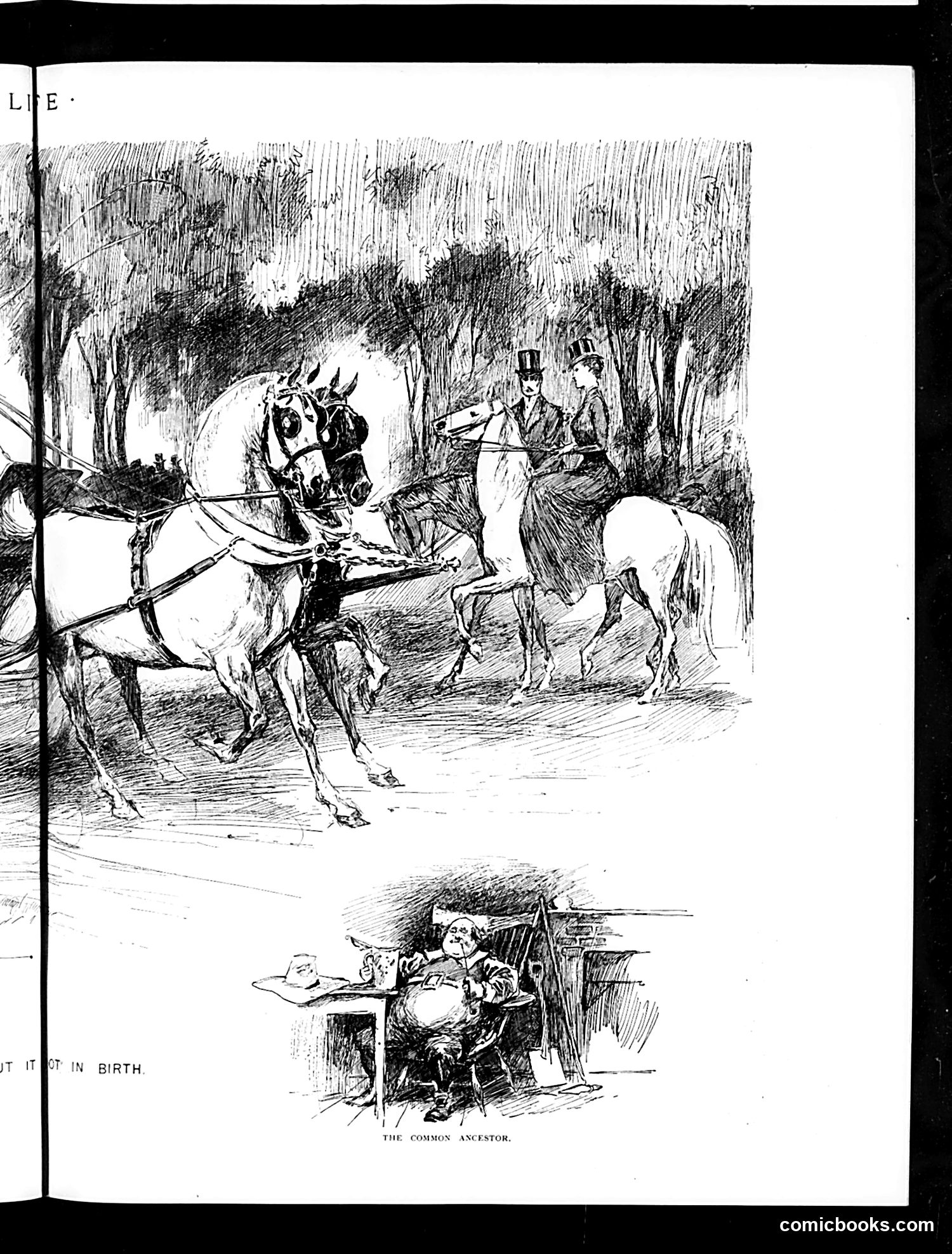
This page contains two satirical illustrations from Life magazine. The upper cartoon depicts well-dressed figures in a carriage or vehicle drawn by horses, traveling through a wooded area—apparently depicting leisure activity or social outings of the wealthy classes. The lower illustration, captioned "THE COMMON ANCESTOR," shows a figure in simpler dress seated indoors, appearing to represent working-class or lower-class origins. The juxtaposition suggests social satire about class distinctions and ancestry—likely mocking the pretensions of wealthy people who claim distinguished heritage while ultimately sharing common ancestors with ordinary laborers. This was a recurring theme in Gilded Age satirical magazines, critiquing both class stratification and the hubris of the wealthy. The specific identities of the figures remain unclear from the image alone.
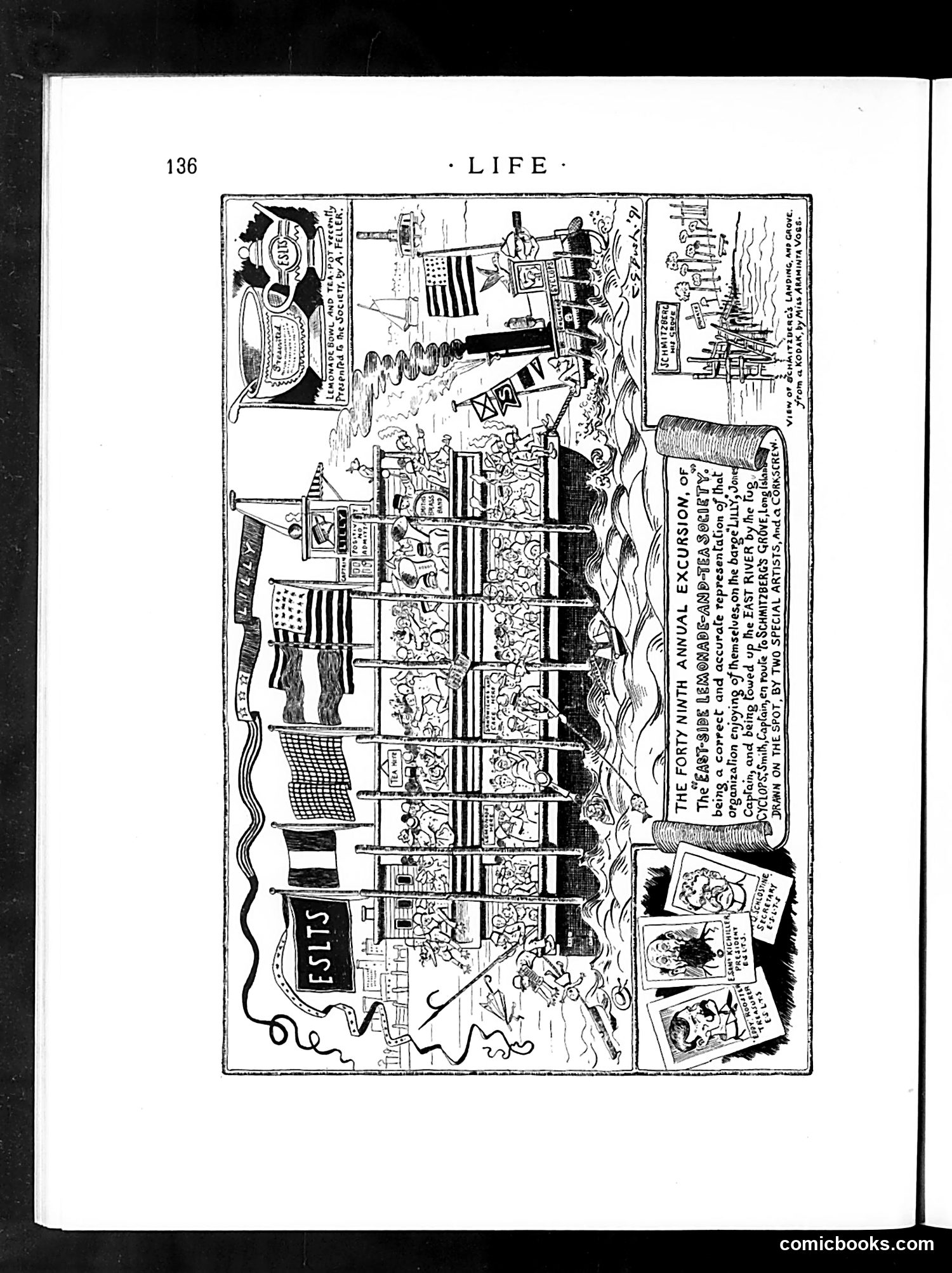
This is a satirical cartoon titled "THE FORTY-NINTH ANNUAL EXCURSION OF" (remainder unclear from image). The illustration depicts what appears to be a large multi-story building or structure filled with numerous people, rendered in a busy, chaotic style typical of early-to-mid 20th century Life magazine satire. The cartoon seems to mock some kind of organized group event or gathering—possibly a corporate outing, social club excursion, or political convention. The densely-packed crowds and detailed architectural rendering suggest satire about mass participation or bureaucratic organization. Without clearer text visibility, the specific organization or event being mocked is uncertain. The style and composition indicate this is political or social commentary on American institutional life, but the precise target requires clearer OCR data.
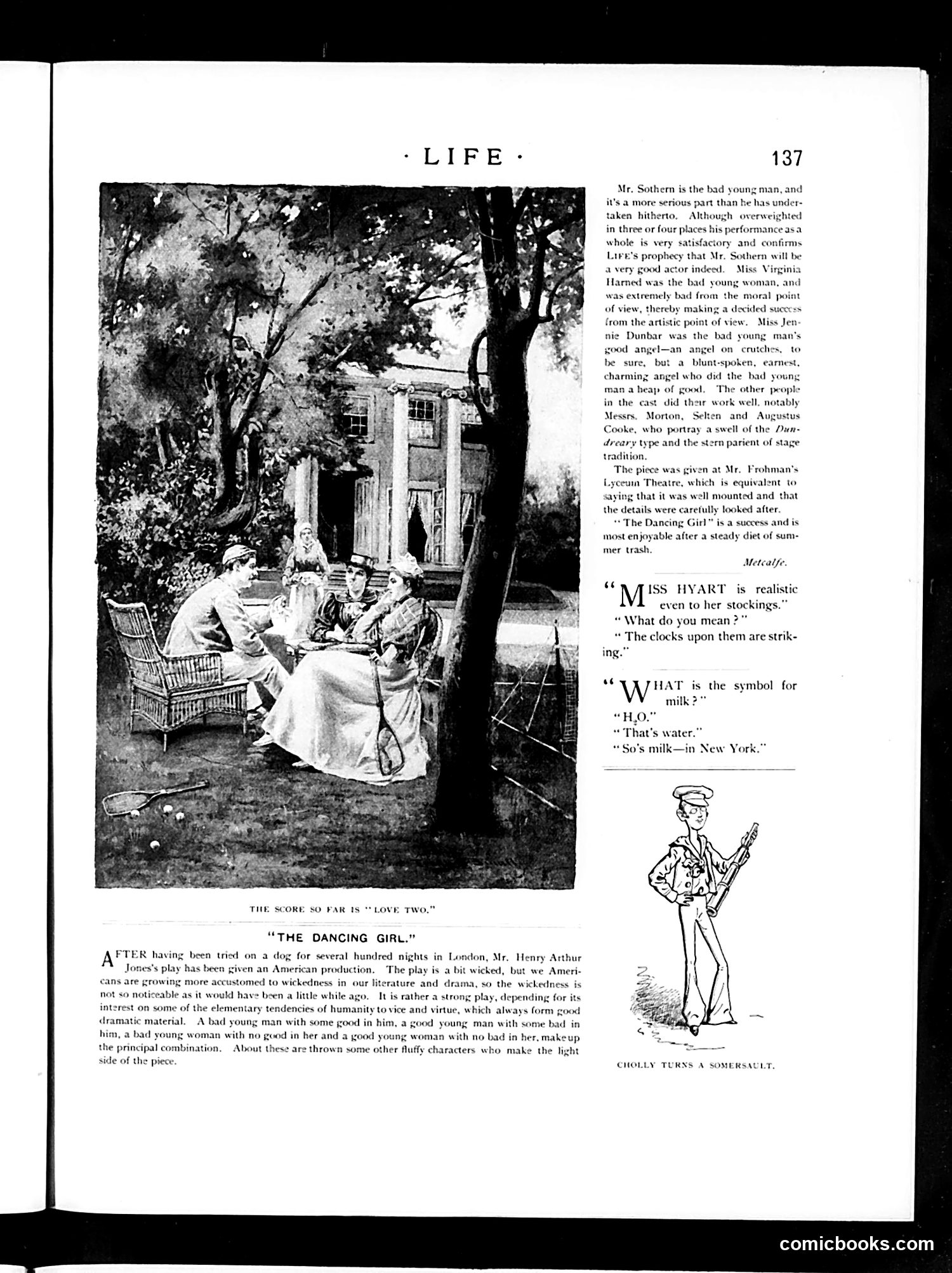
This page reviews a theatrical production called "The Dancing Girl," which the reviewer describes as a "wicked" but worthwhile play that had been tested in London before coming to American production. The main photograph shows two women seated outdoors beneath trees, apparently a scene from the play. The review discusses the cast's performances, praising actors like Mr. Sothern and critiquing Miss Virginia Harned as the "bad young woman." The page includes humorous quoted dialogue from the play and a small cartoon at bottom right showing a soldier performing a somersault, captioned "Cholly Turns a Somersault." The content reflects early 20th-century theater criticism and entertainment journalism, focusing on moral character assessments of characters and conventional dramatic conventions of the era.
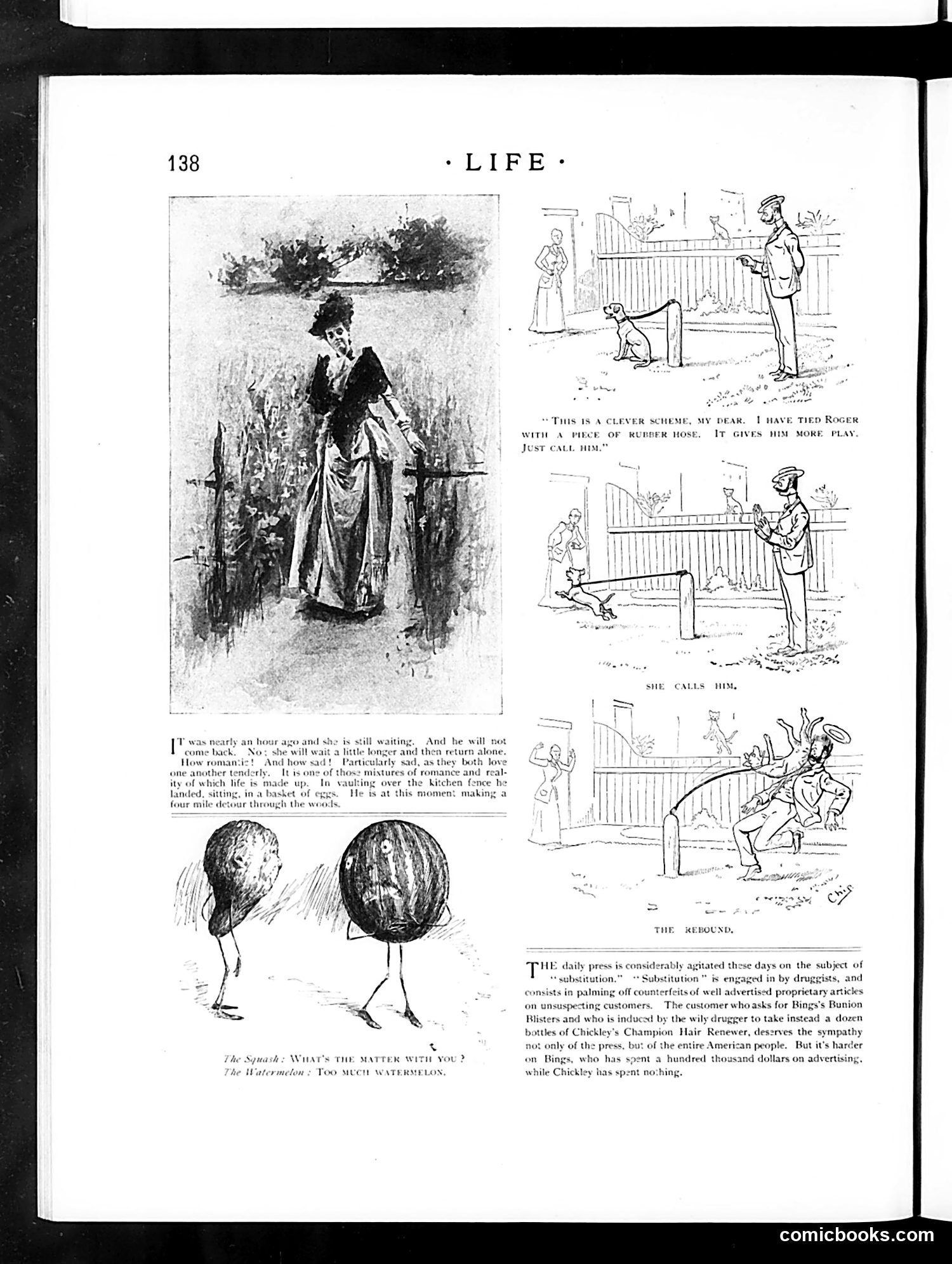
This LIFE magazine page contains two distinct satirical elements: **The Comic Strip** (right side): A humorous domestic scene about a woman training her dog "Roger" with a rubber hose leash, giving him "more play." The joke is visual slapstick—the man misinterprets the scheme as romantic, thinking it's about his own relationship. **The Editorial Commentary** (bottom): A critique of pharmaceutical fraud and deceptive advertising. The text attacks "substitution"—drugstore owners palming off cheap, unadvertised medicines (like "Chickley's Champion Hair Renewer") when customers ask for well-known brand names (like "Bings's Bunion Blisters"). The accompanying vegetable caricatures (squash and watermelon with legs) appear to illustrate the point with anthropomorphized produce, though the exact satirical meaning of this visual metaphor is unclear. The satire targets both unethical druggists and the advertising industry's spending practices, suggesting that brand-name medicines succeed through marketing rather than merit.
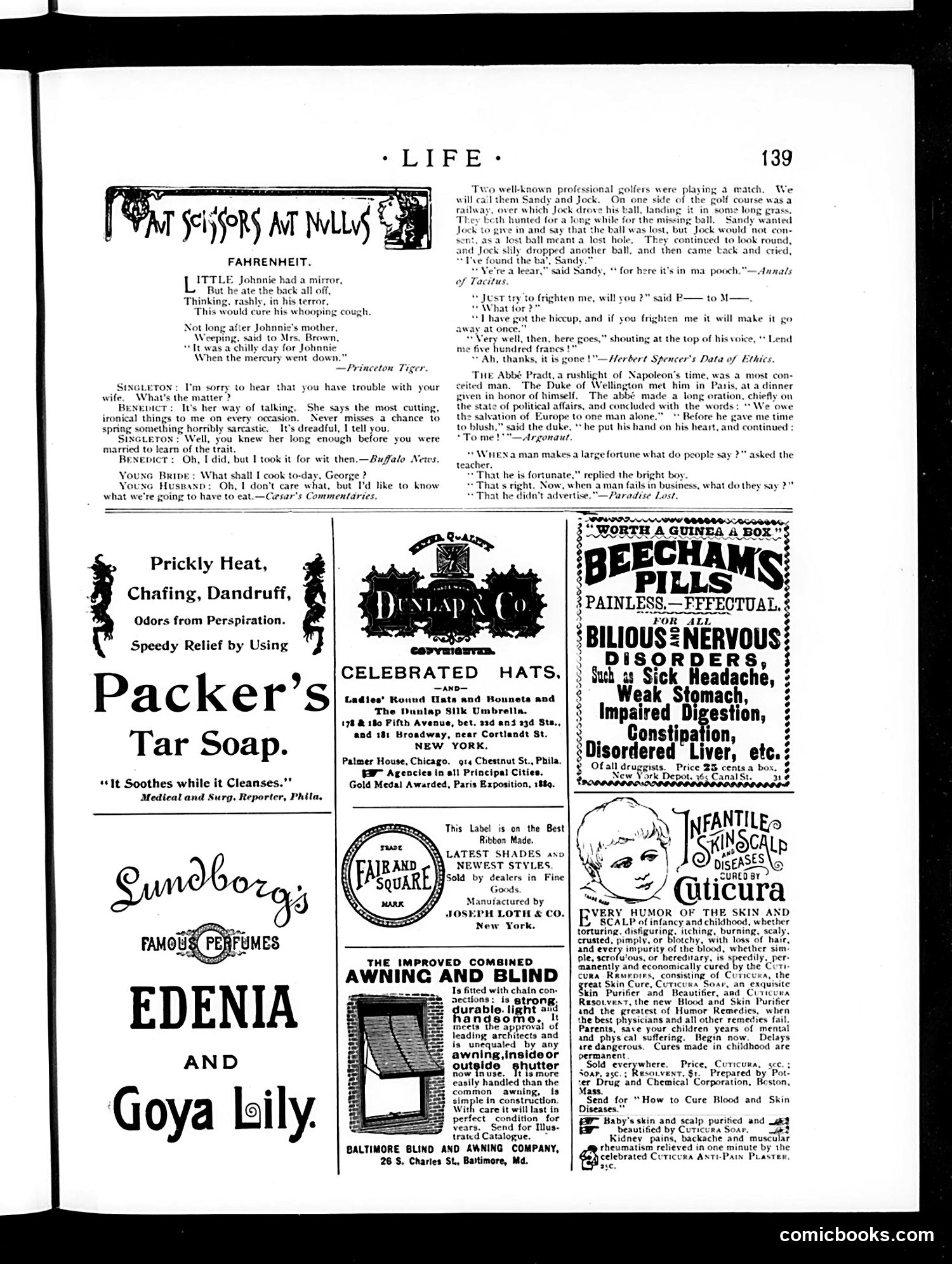
This page is primarily **advertising mixed with humor pieces**. The cartoons and jokes here are brief, scattered items rather than a unified editorial message. The content includes: **Humor pieces**: Short jokes reprinted from other publications (Princeton Tiger, Buffalo News, etc.) about marital relations, communication, and social situations. One extended anecdote involves two golfers named Sandy and Jock searching for a lost ball. Another recounts the Abbé Pradt's self-aggrandizing speech to Napoleon, ending with the duke's dry wit. **Advertisements**: The page is dominated by patent medicines (Beecham's Pills for digestive complaints, Cuticura for skin conditions), personal care products (Packer's Tar Soap), and housewares (awnings, blinds). These reflect late 19th-century commercial priorities and medical practices. **No single political cartoon** is apparent. The page represents typical Life magazine content: light entertainment humor and commercial advertising appealing to middle-class readers' vanity and health concerns.
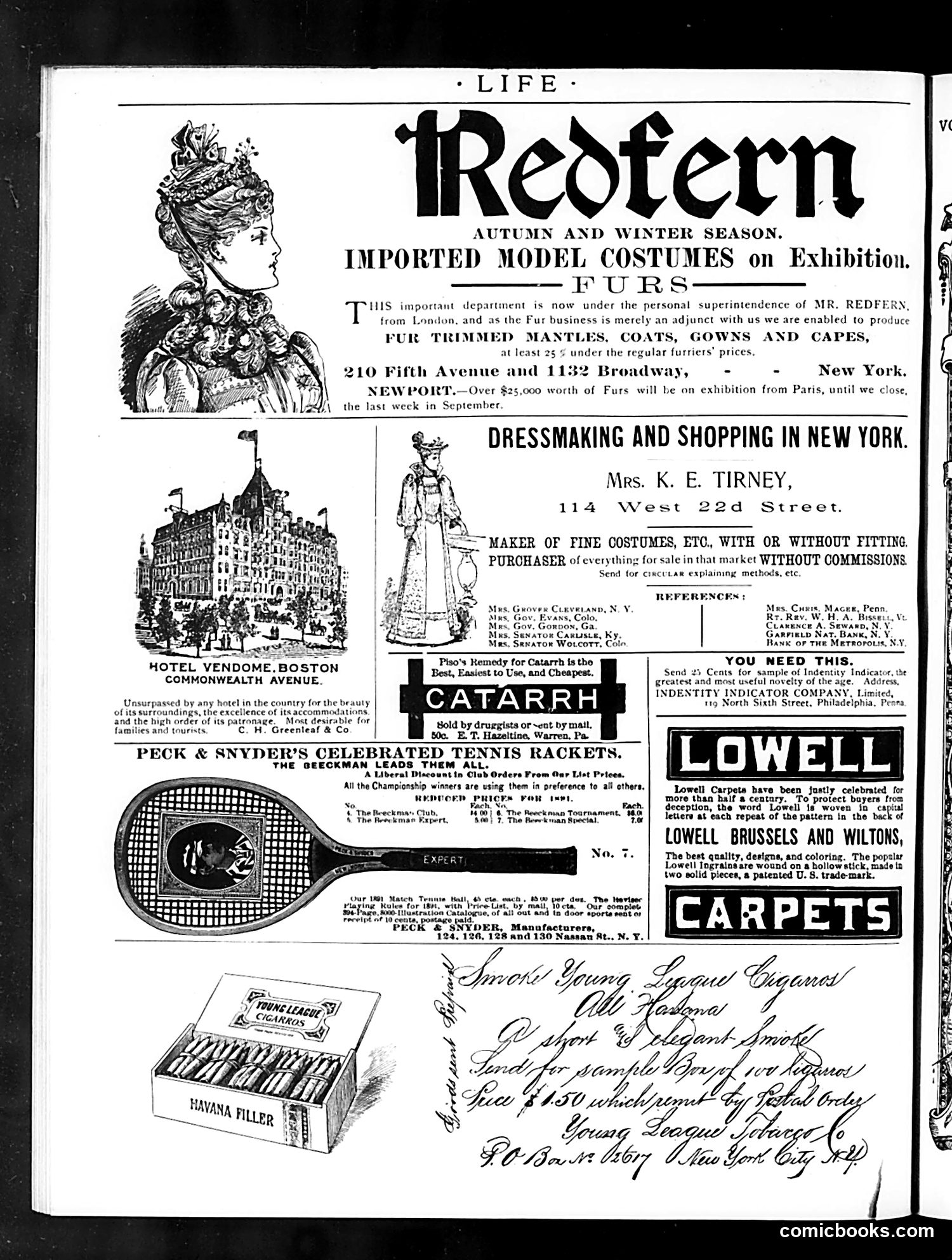
This is primarily an **advertising page**, not a satirical cartoon. It features luxury goods and services aimed at wealthy late-19th-century Americans, particularly women. The major advertisements include: - **Redfern** (top): A high-end London furrier offering imported fur-trimmed clothing at prices undercutting traditional furriers - **Mrs. K. E. Tirney**: Dressmaking services for elite clientele (references to senators' wives and prominent families) - **Hotel Vendome, Boston**: Luxury accommodations - **Peck & Snyder**: Tennis rackets, marketed as used by championship winners - **Lowell Carpets**: Premium carpet manufacturer - Various patent remedies and novelty items The page reflects Gilded Age consumer culture and conspicuous consumption, targeting society women planning their autumn wardrobes. The social references (senators' wives, Newport exhibitions) emphasize exclusivity and status. There is no discernible political satire—this appears to be standard commercial content from *Life*'s advertising section.