
A complete issue · 14 pages · 1891
Life — July 30, 1891
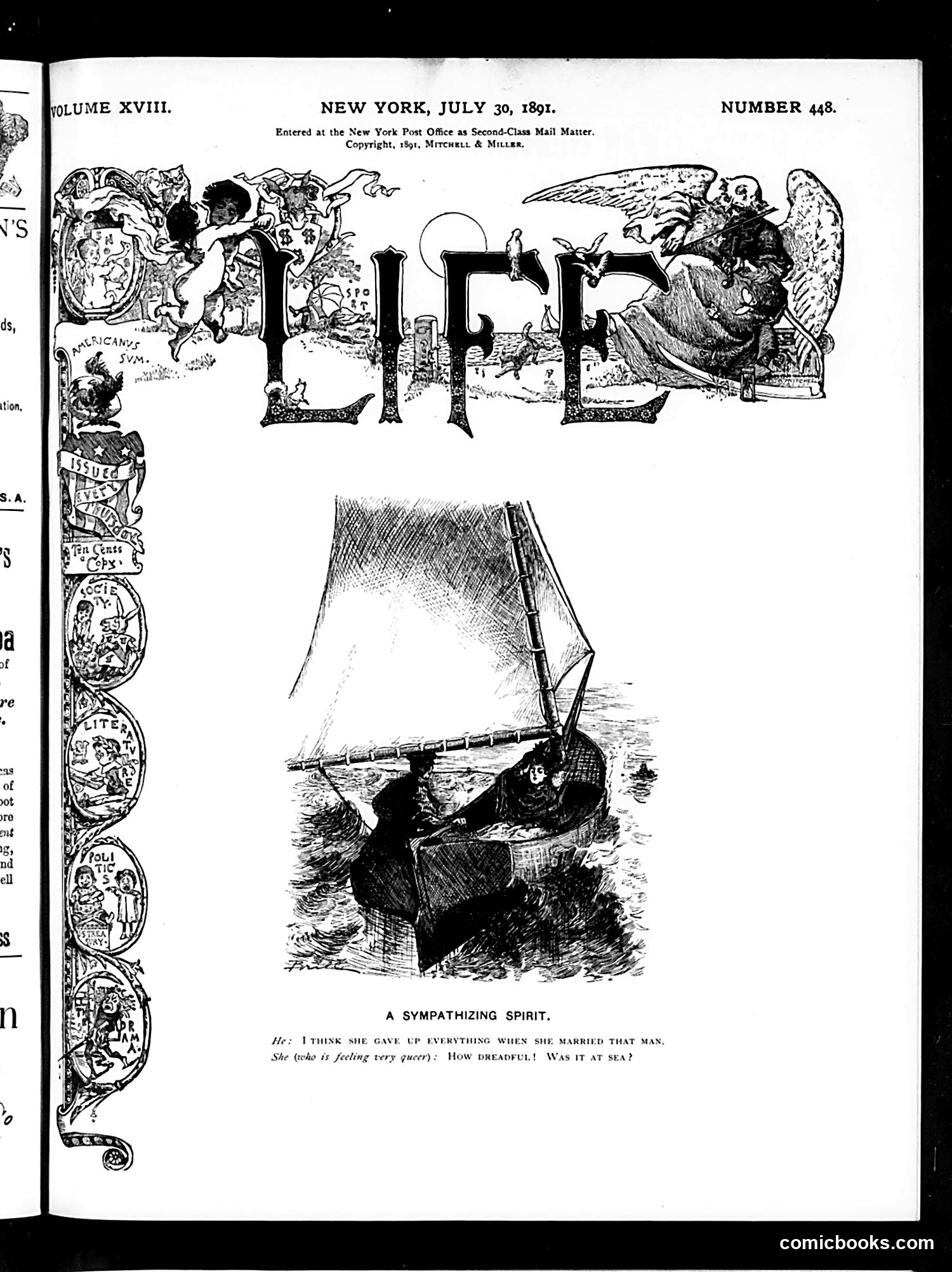
This cartoon depicts a woman in a small sailboat at sea, appearing distressed or seasick. The caption presents a domestic dialogue: the husband suggests the wife "gave up everything" when she married him, and asks if she finds being at sea "dreadful." The joke satirizes the social expectations placed on married women of the 1890s—specifically the idea that wives must sacrifice their own preferences and comfort for their husbands' activities and interests. The "sympathizing spirit" of the title appears ironic: rather than genuinely sympathizing with his wife's obvious discomfort at sea, the husband seems to expect her cheerful compliance. The cartoon comments on the limited agency and autonomy of married women during this period.
This page is predominantly **advertisements** rather than satirical content. The visible ads include: - **Guticura** (skincare for infants) - **Van Houten's Cocoa** - **Beecham Pills** (patent medicine) - **Photographic equipment** from E. & H.T. Anthony & Co. - **Red Hand Ale** - Various other period products The only substantial editorial content is "**The Daylight Lamp**" article, which discusses lamp design and safety—explaining how a particular burner design keeps oil cooler and reduces explosive gas. This appears to be a straightforward product explanation rather than satire. The page also advertises **Life's Calendar for August** and a **"Life" Binder** for collecting issues. There are no identifiable political cartoons or satirical commentary visible on this page.
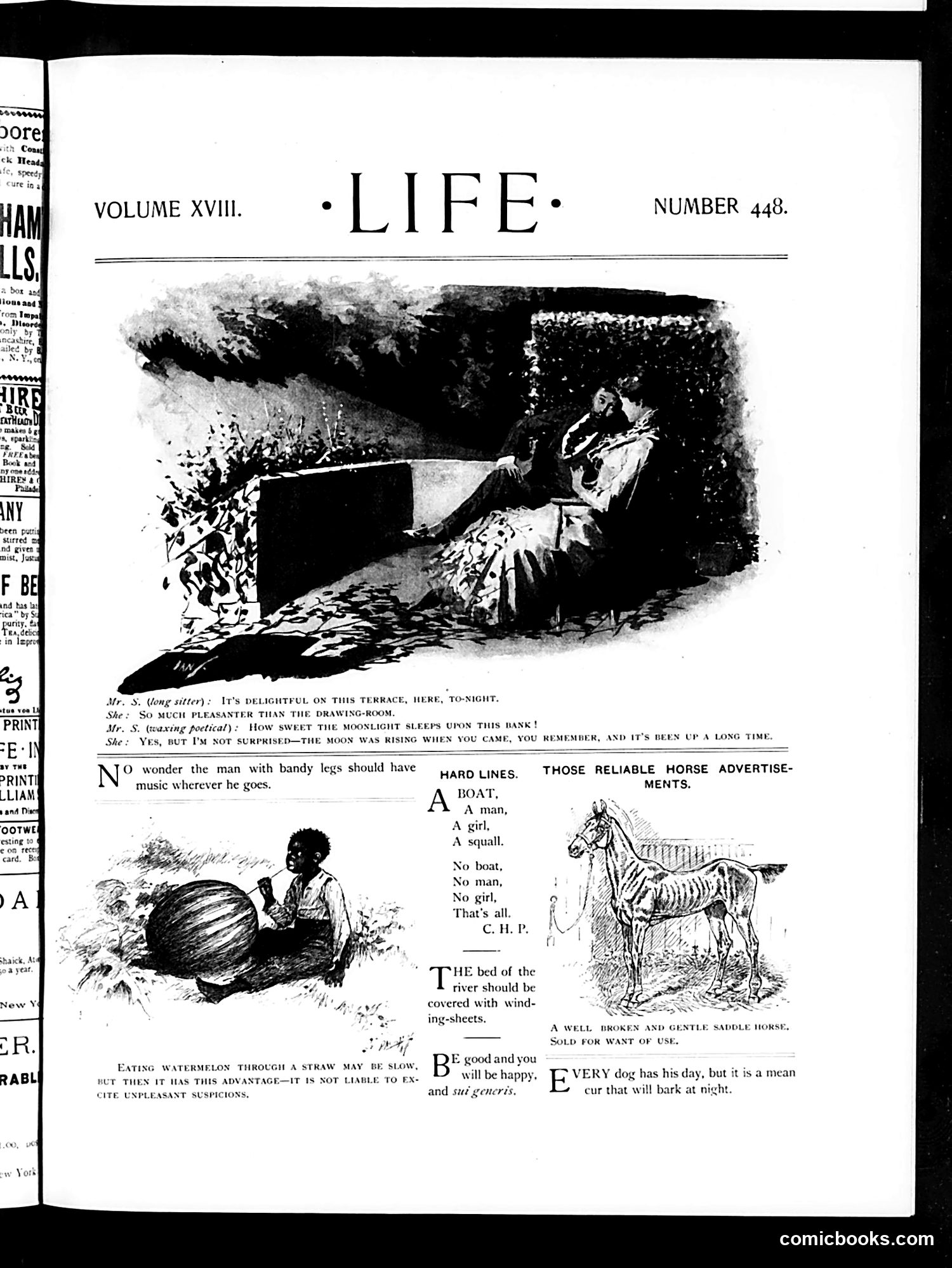
The main cartoon depicts a couple on a moonlit terrace—a romantic scene with dialogue indicating the man is quoting poetry ("How sweet the moonlight sleeps upon this bank") while the woman finds the setting pleasant. The joke appears to be about the man's pretentiousness: he's reciting Shakespeare to impress her, yet she's simply enjoying the natural beauty without need for literary flourishes. Below are humorous short verses and quips, including one about a man with "bandy legs" needing music, and advertisements (a horse for sale, advice about watermelon consumption). The content reflects turn-of-the-century genteel humor and domestic satire typical of Life magazine's approach.
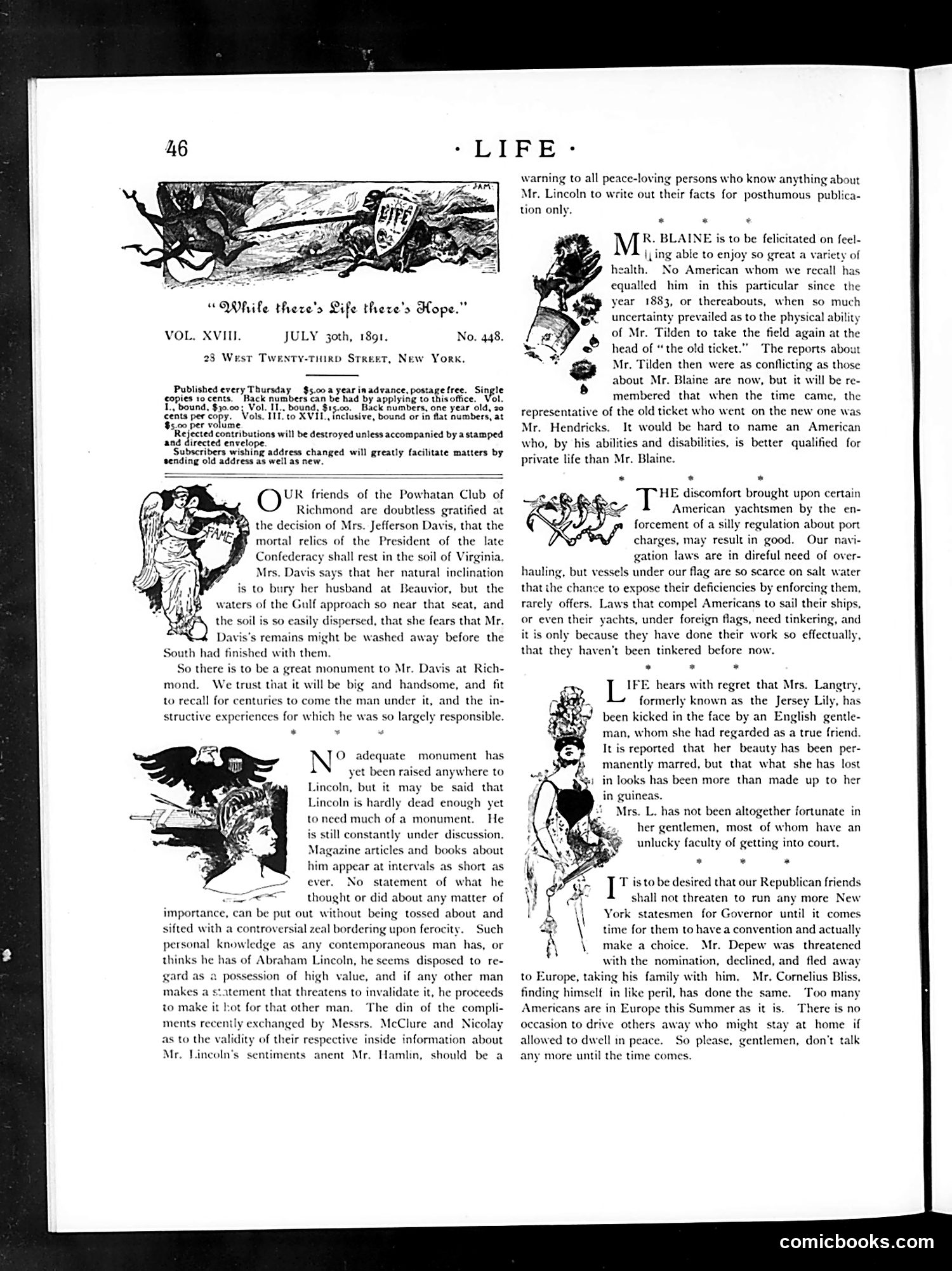
The page contains several brief satirical commentaries rather than a single unified cartoon. Key topics include: 1. **Jefferson Davis's remains**: A note mocking debate over where to bury the late Confederate president, suggesting the South fears his grave might be disturbed. 2. **Mr. Blaine's health**: Congratulations on the politician's good health, noting earlier concerns about his fitness for office. 3. **American yachtsmen**: Criticism of new regulations affecting U.S. vessels in competition, suggesting Americans need "tinkering" to compete fairly. 4. **Mrs. Langtry**: A gossipy item about the actress (the "Jersey Lily"), remarking on her marriage and appearance. 5. **Republican politics**: Commentary warning Republicans against pushing a New York gubernatorial candidate, mentioning Cornelius Bliss and European political tensions. The illustrations are decorative vignettes typical of the era's satirical press.
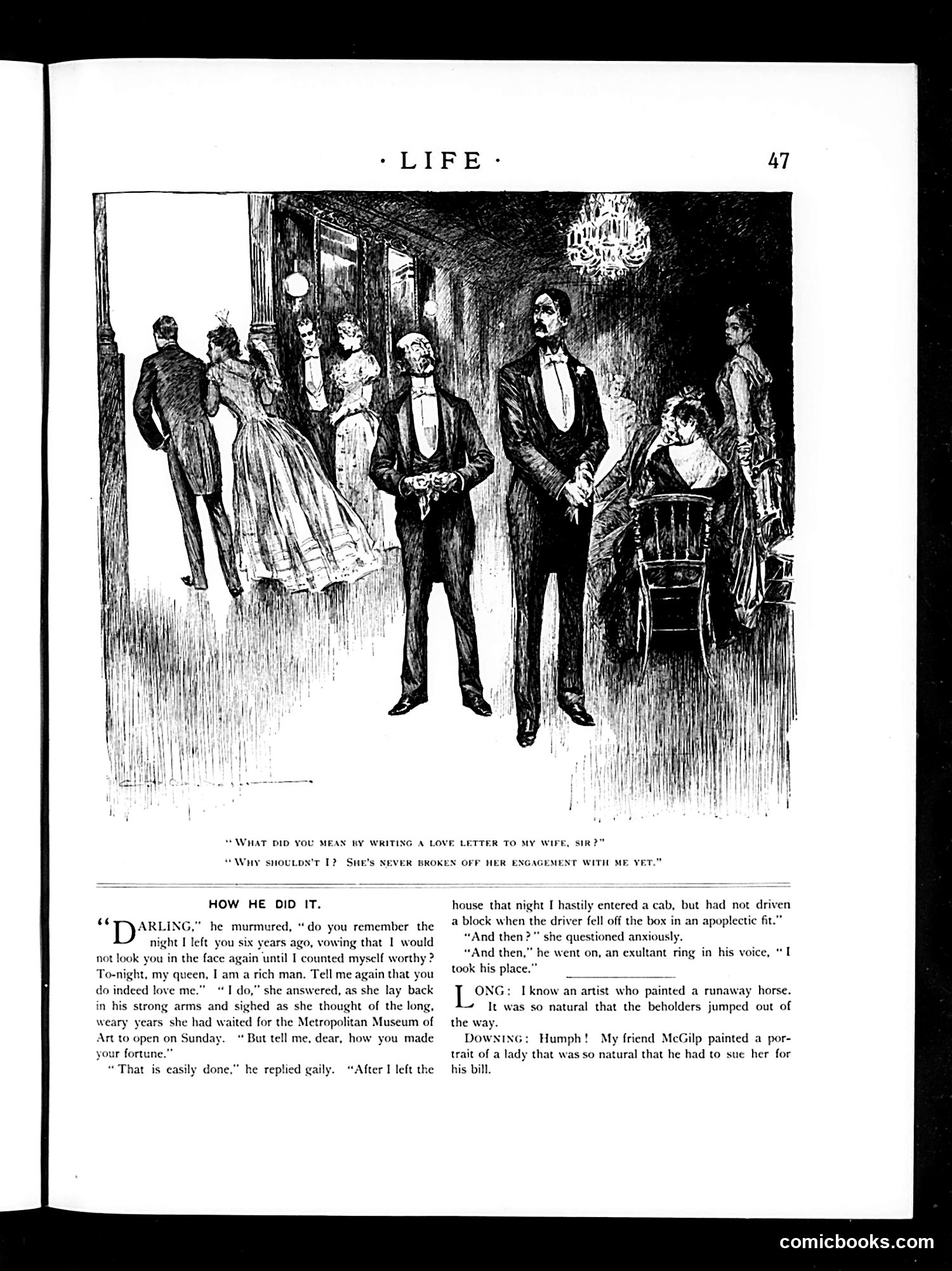
**The Cartoon:** The illustration depicts a formal social gathering where a well-dressed man stands confronted by his wife and her companions. The caption reads: "What did you mean by writing a love letter to my wife, sir?" with his response: "Why shouldn't I? She's never broken off her engagement with me yet." **The Satire:** This is a social comedy about marital infidelity and broken engagement promises. The joke plays on the absurdity of the man's defense—he claims the woman was still technically engaged to him despite being married. It satirizes both romantic scandal and the formal etiquette violations of the era, where writing love letters to another man's wife represented a serious breach of social propriety. The gathered onlookers suggest public embarrassment of this private transgression.
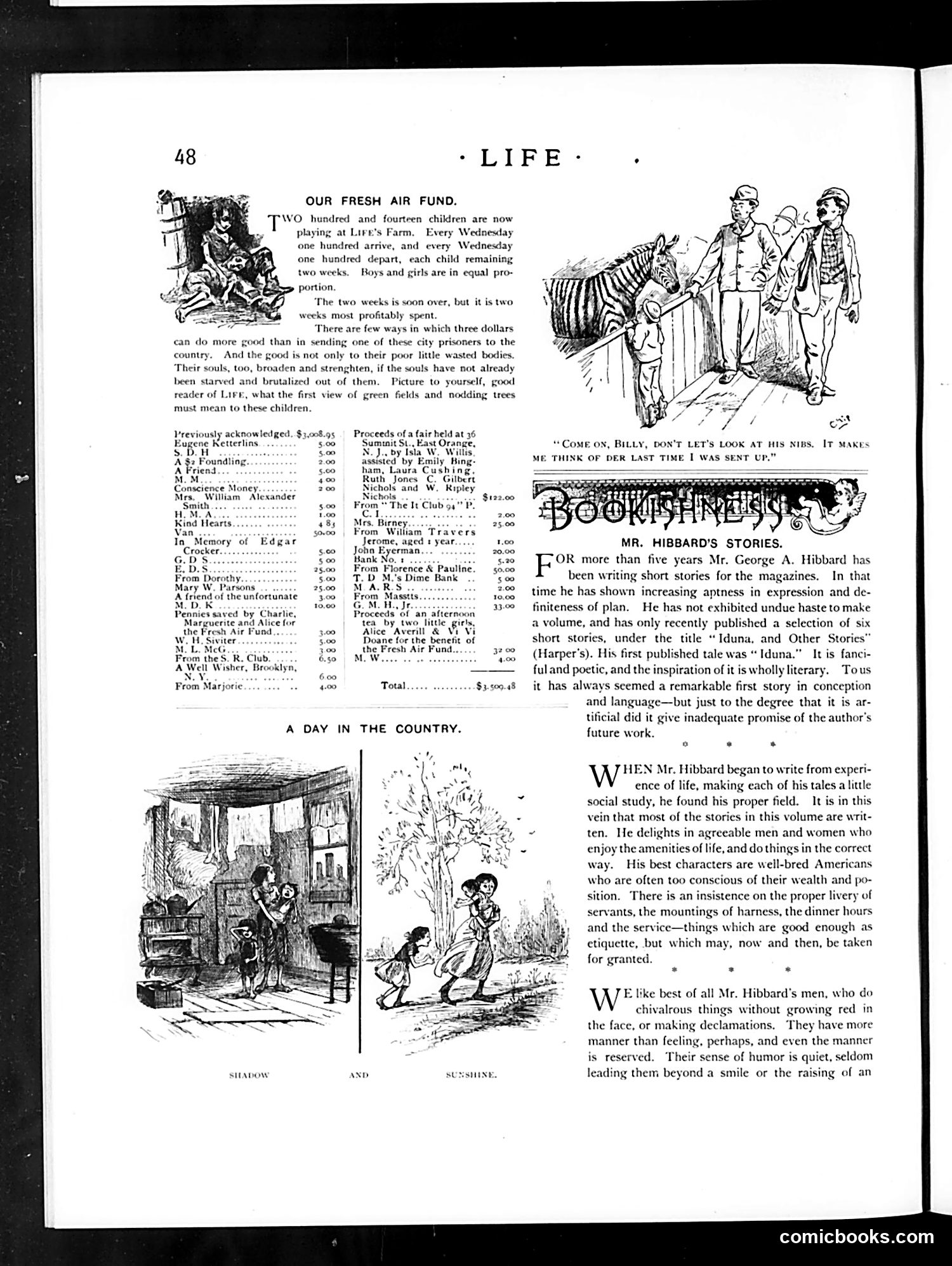
This page combines three distinct elements: **"Our Fresh Air Fund"** (left): A charitable appeal describing a program sending poor urban children to "Litt's Farm" for summer respite. The text argues this is worthwhile philanthropy—three dollars can benefit city children more than sending prisoners to the countryside. **"A Day in the Country"** (bottom): Two sketch illustrations titled "Shadow" and "Sunshine" showing rural domestic scenes, likely complementing the Fresh Air Fund message about nature's benefits for children. **"Bookshelf" and "Mr. Hibbard's Stories"** (right): A literary review of author George A. Hibbard's short story collection *"Homo and Other Stories."* The critic praises Hibbard's increasingly refined writing style and his focus on well-developed American characters and social etiquette. The page reflects Progressive Era values emphasizing social welfare and cultural refinement.
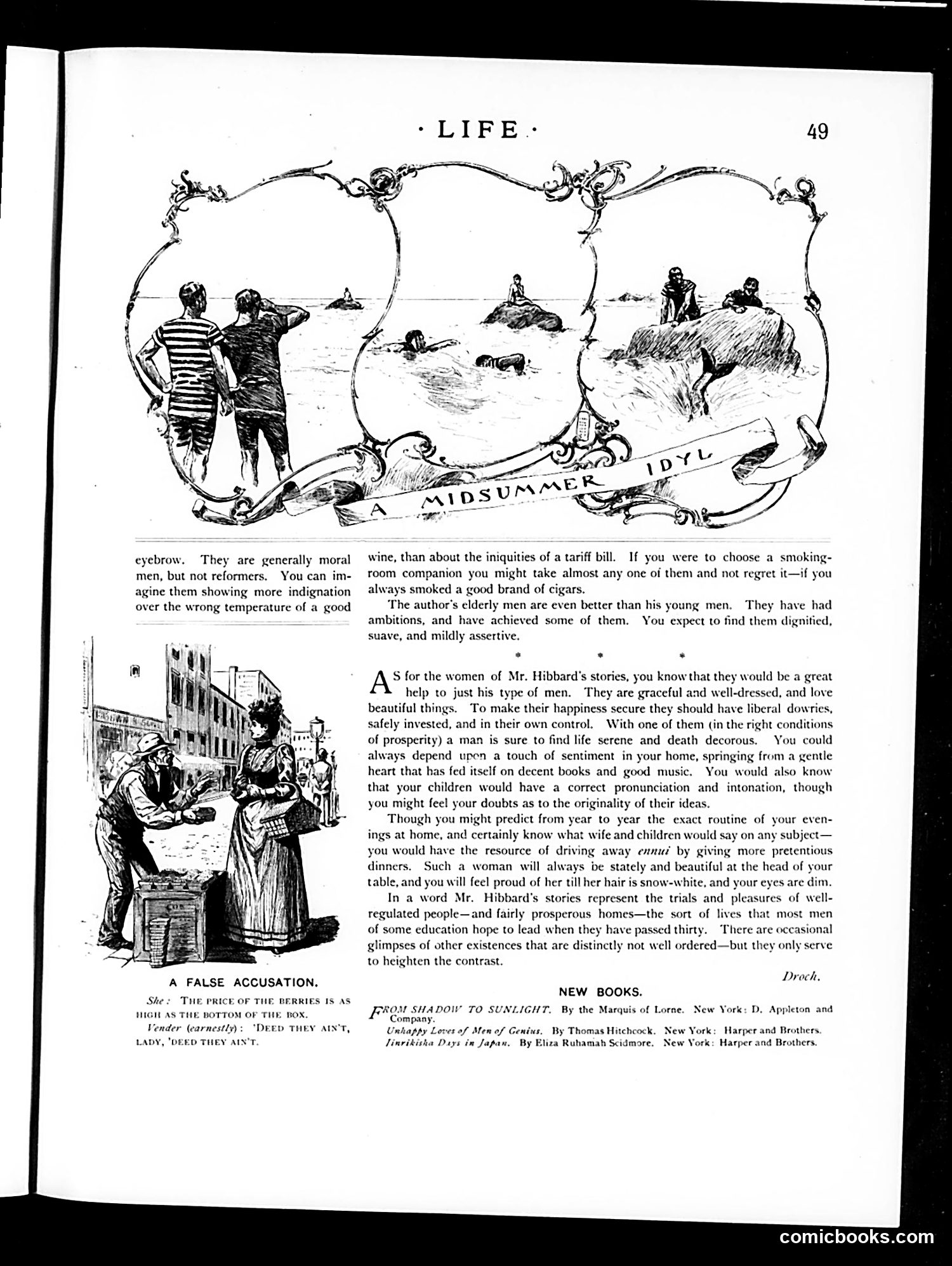
The page contains two distinct elements: **Top illustration ("A Midsummer Idyl"):** A decorative border frames a beach scene showing people relaxing and swimming. This appears to be a nostalgic summer leisure image with no apparent satirical intent. **Bottom illustration ("A False Accusation"):** Shows a street vendor and a woman, with a caption about berry prices being "as high as the bottom of the box" and a joke about vendors deceiving customers ("Deed they ain't, Lady, 'Deed they ain't"). This satirizes common marketplace fraud—specifically the deceptive practice of filling the bottom of produce boxes with inferior goods while displaying good fruit on top, a widespread consumer complaint of the era. The text discusses Mr. Hibbard's literary stories about domestic life and morality, unrelated to the illustrations.
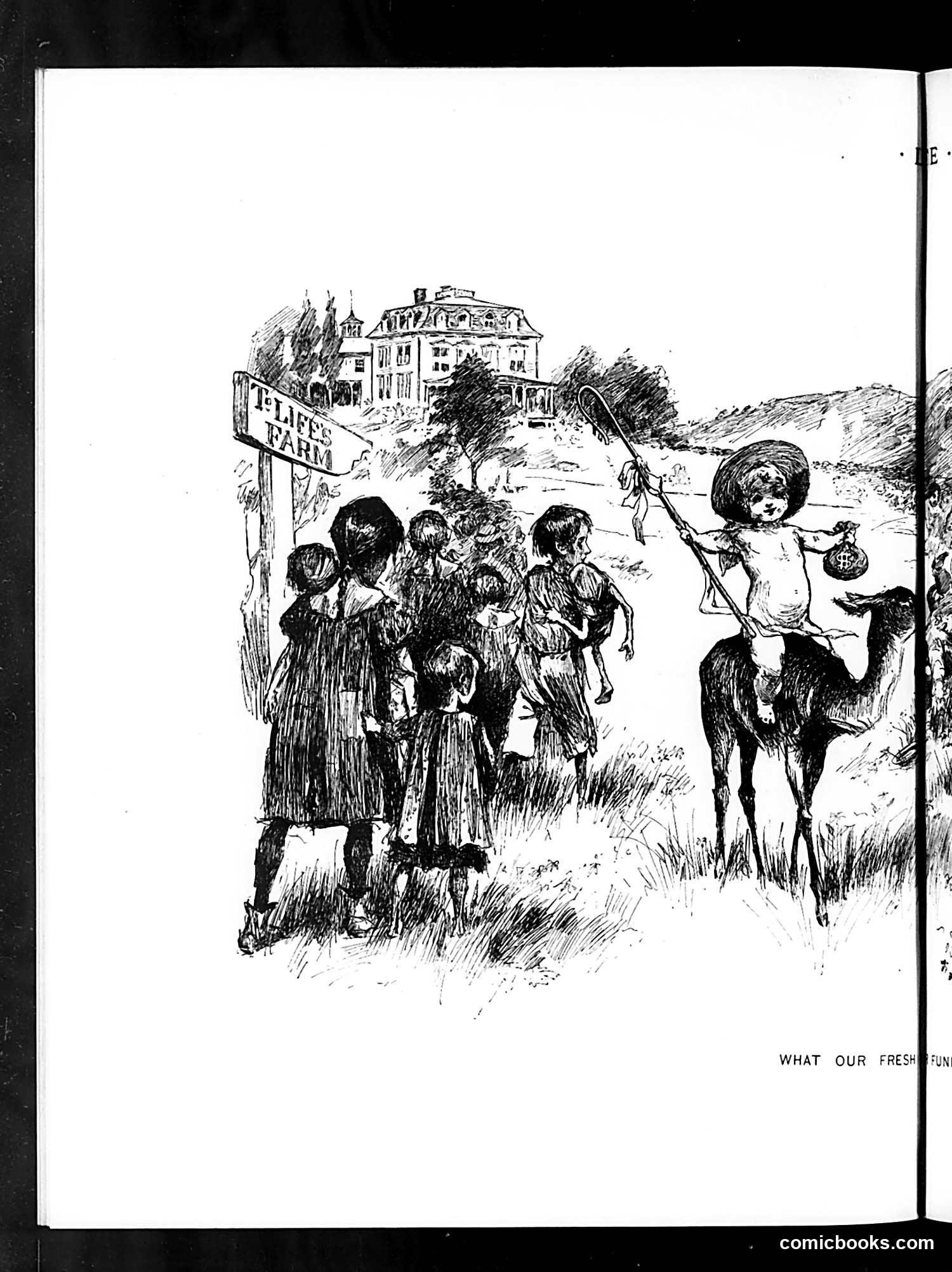
This page shows a pen-and-ink illustration depicting a group of children approaching a sign reading "TAFFS FARM" while a child on a goat waves a basket. A large mansion sits on a hill in the background. The partial caption at bottom reads "WHAT OUR FRESH FUN..." (text is cut off). Without the complete caption or date, the specific satirical target remains unclear. However, the scene appears to reference a children's outing or excursion to a farm. "Taffs" likely refers to someone contemporary to the magazine's publication, possibly a political or social figure. The illustration may satirize child welfare initiatives, farm visits, or educational programs of the era. The mansion suggests class commentary—possibly about wealth disparity or charitable institutions. The incomplete text prevents definitive interpretation of the intended joke or criticism.
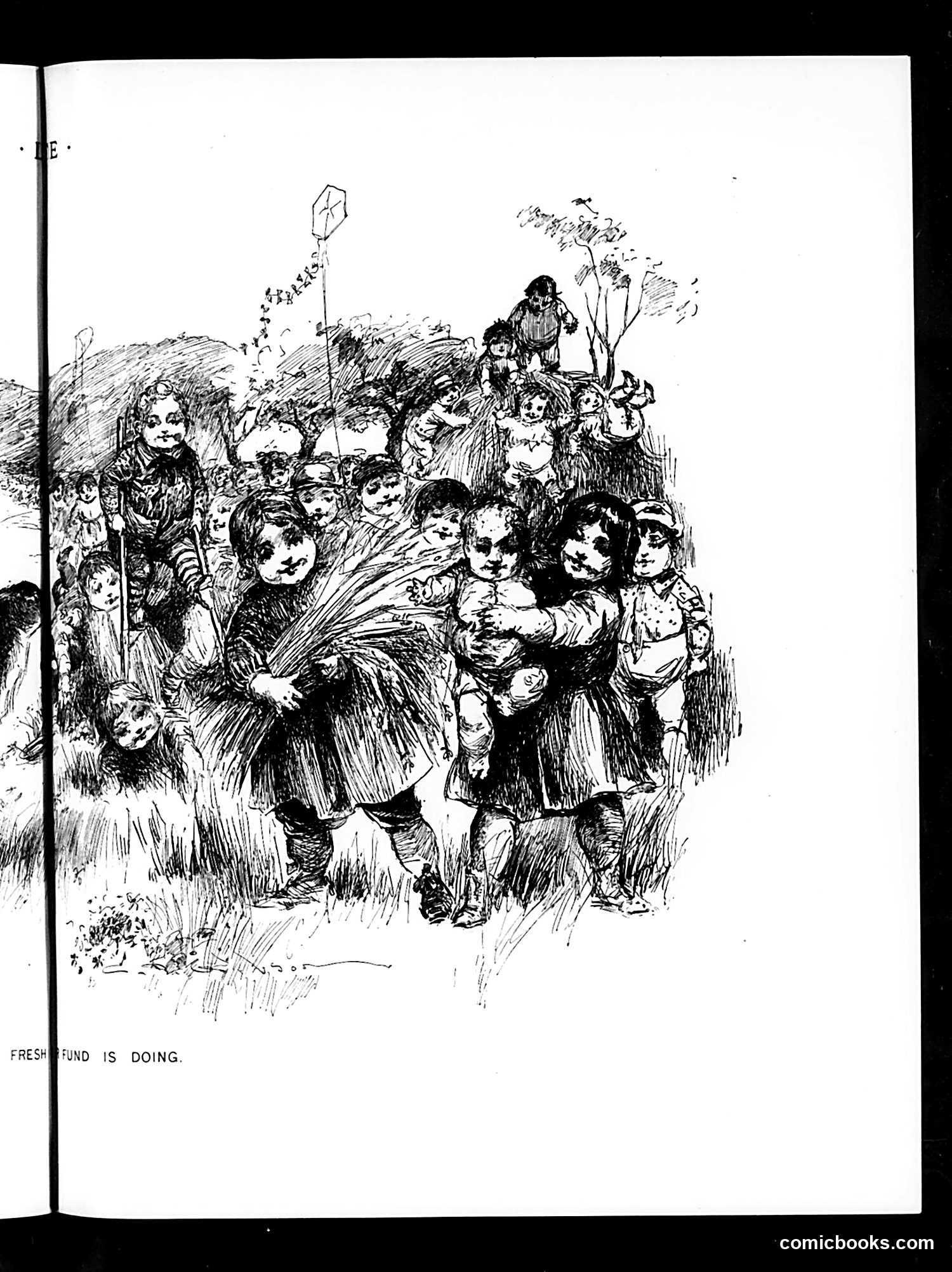
This is a sketch showing a large group of children outdoors, apparently enjoying fresh air and nature—trees, grass, and open space are visible. The caption reads "FRESH FUND IS DOING," suggesting this illustrates the positive effects of a "Fresh Air Fund." The Fresh Air Fund was a real charitable organization (still operating today) that provided poor urban children, primarily from New York City, with outdoor experiences in the countryside during summer months. This appears to be satirical commentary—likely praising the fund's work, or possibly critiquing how such charitable efforts are promoted and funded. The sketch's style and Life magazine's satirical nature suggest it may be commenting on Progressive Era social reform efforts or the visibility/publicity surrounding charitable work for underprivileged children.
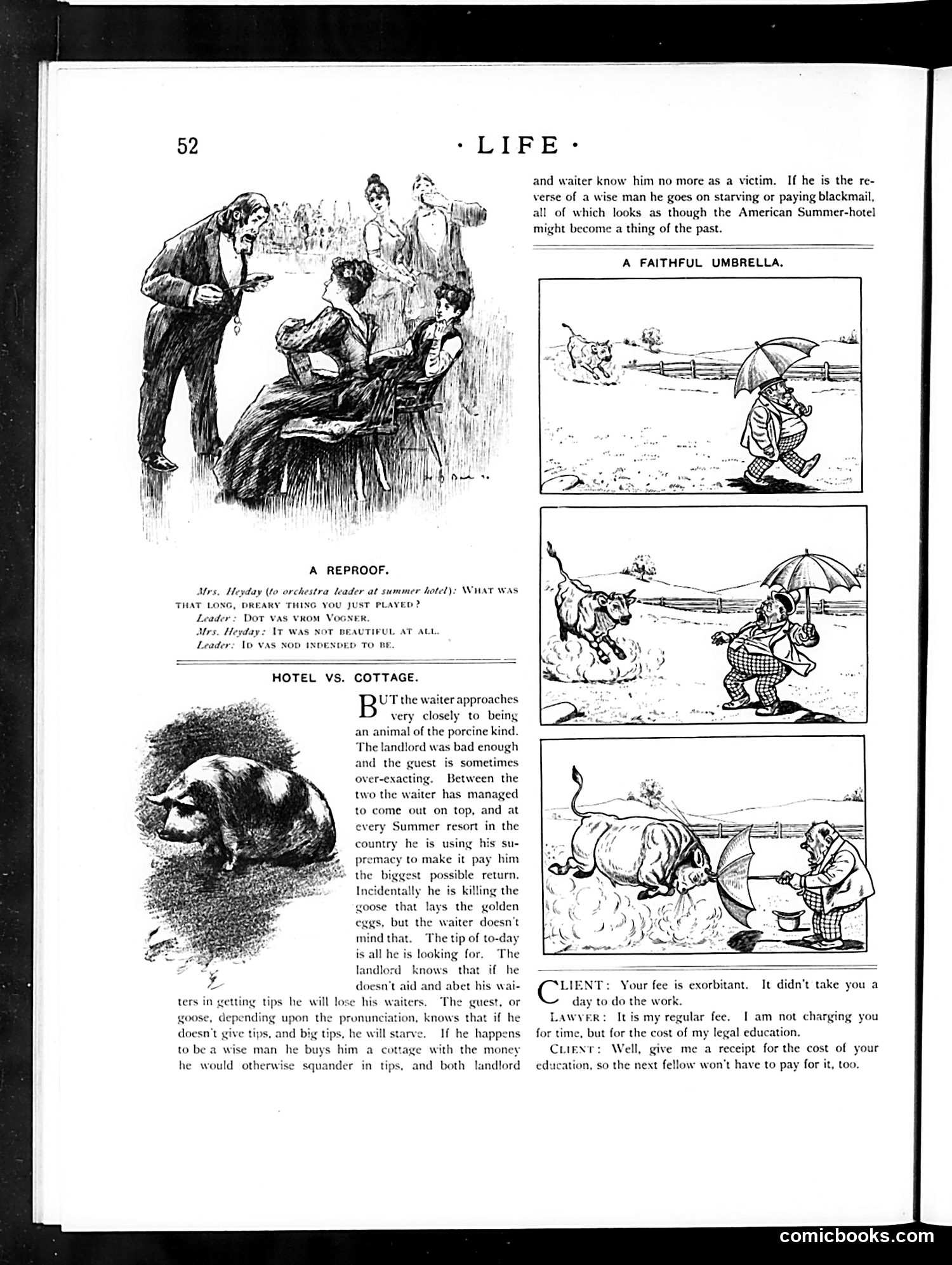
This page contains three distinct satirical pieces: 1. **"A Reproof"**: A dialogue between Mrs. Hexter (orchestra leader at a summer hotel) and a Leader, mocking pretentious summer resort culture. The humor targets pompous social hierarchies. 2. **"Hotel vs. Cottage"**: A comic about a pig, satirizing the relationship between landlords and waiters. The satire suggests waiters exploit guests (especially at summer resorts) to maximize tips, manipulating wealthy visitors through false deference—essentially "killing the goose that lays the golden eggs" by overcharging. 3. **"A Faithful Umbrella"**: A three-panel comic strip showing a child's umbrella repeatedly failing in windstorms, ironically titled for its complete unreliability—gentle humor about defective merchandise. Overall, the page satirizes summer resort pretension and economic exploitation between service workers and guests.
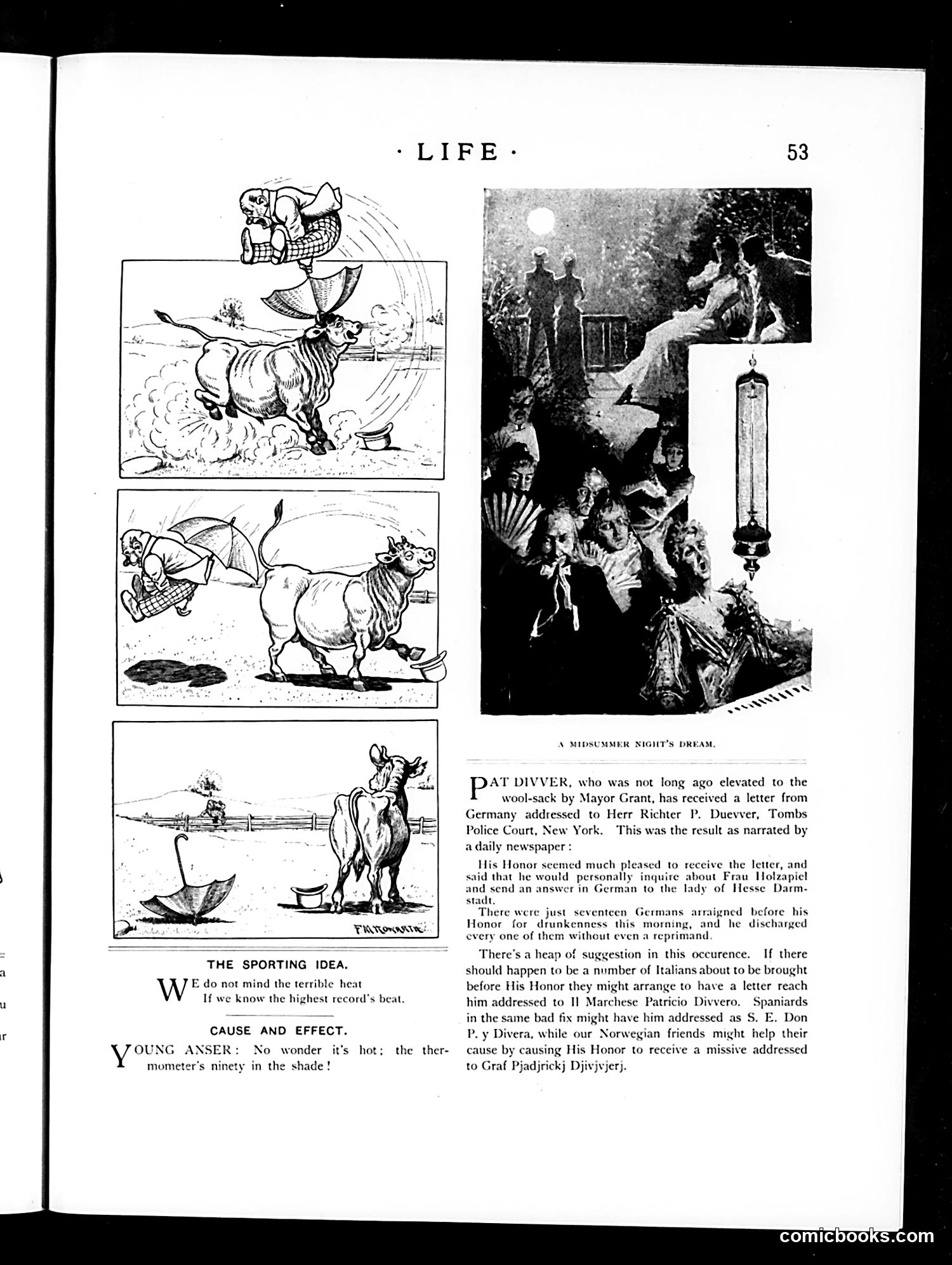
This page contains two distinct pieces: **"The Sporting Idea"** (left): A three-panel comic strip showing an overweight person repeatedly being knocked down or affected by a goat. The joke plays on heat and thermometers—the caption explains that young people wonder why temperatures are high in summer, with one character noting the thermometer reads ninety degrees in the shade. **"A Midsummer Night's Dream"** (right): A photograph showing what appears to be a theatrical or operatic scene with multiple costumed figures. The accompanying article discusses Pat Divver, apparently someone elevated by Mayor Grant, who received a letter from Germany about inquiries regarding "Frau Holzapiel." The text suggests confusion or intrigue involving German correspondence and various individuals' names. The content reflects early-20th-century American satirical humor and social commentary.
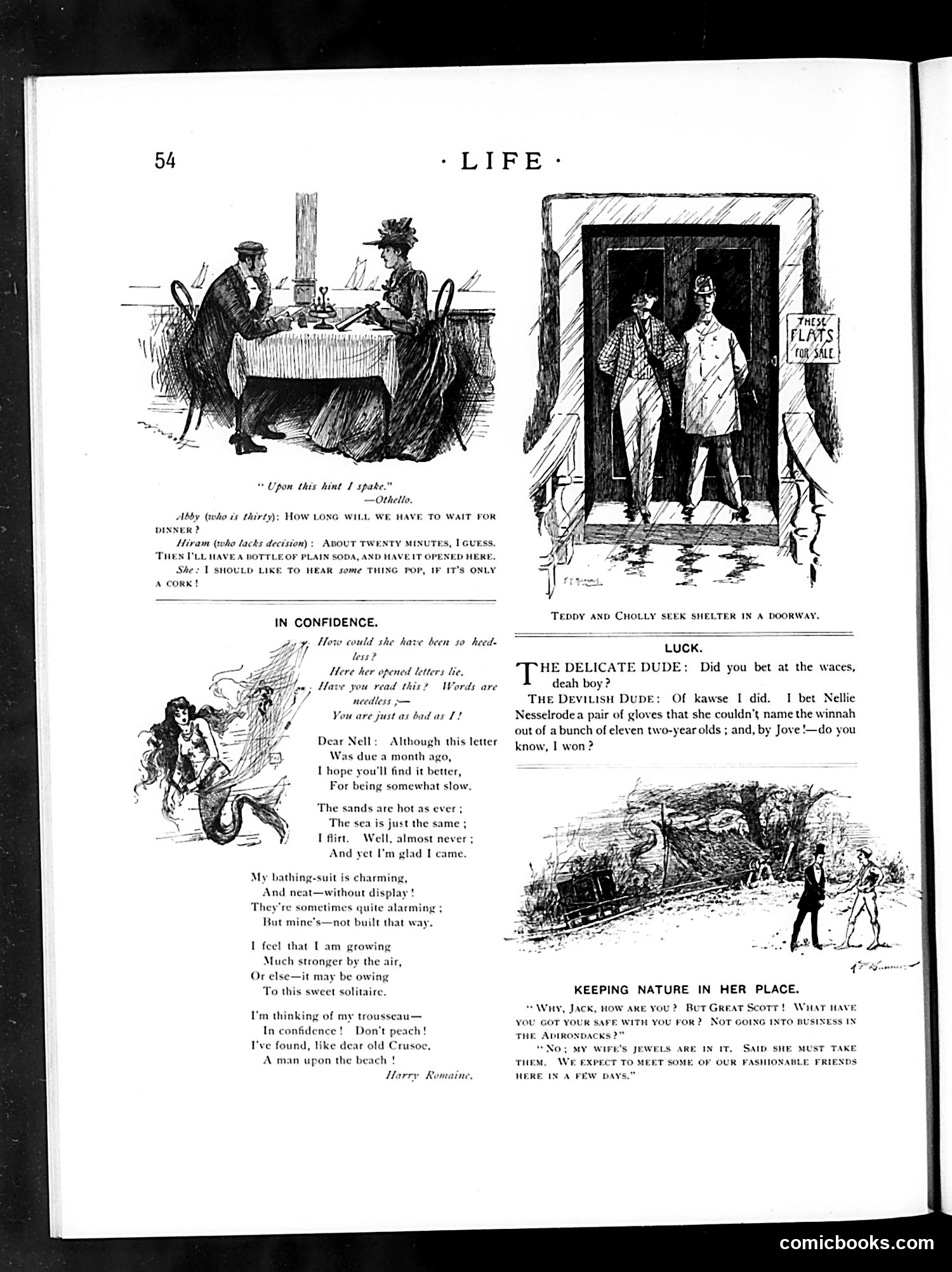
This page contains three separate humorous sketches satirizing upper-class behavior and gender dynamics of the era: **"Upon This Hint I Spake"** mocks indecisive husbands. Abby asks about dinner timing; her husband Hiram hedges vaguely. She then complains she wants to hear *something* pop—clearly suggesting he should open champagne rather than serve plain soda. **"In Confidence"** presents a letter from Harry Romaine to Nell describing a seaside vacation, coyly mentioning discovering "a man upon the beach" while planning her trousseau. The framing suggests scandalous romantic intrigue. **"Keeping Nature in Her Place"** satirizes wealthy wives' materialism. A man brings his wife's jewels in a safe to a country visit because she insists on bringing them despite expecting to socialize casually with friends. The joke mocks women's obsession with displaying wealth and jewelry. The overall page ridicules marriage dynamics, female materialism, and the pretensions of leisure-class society.
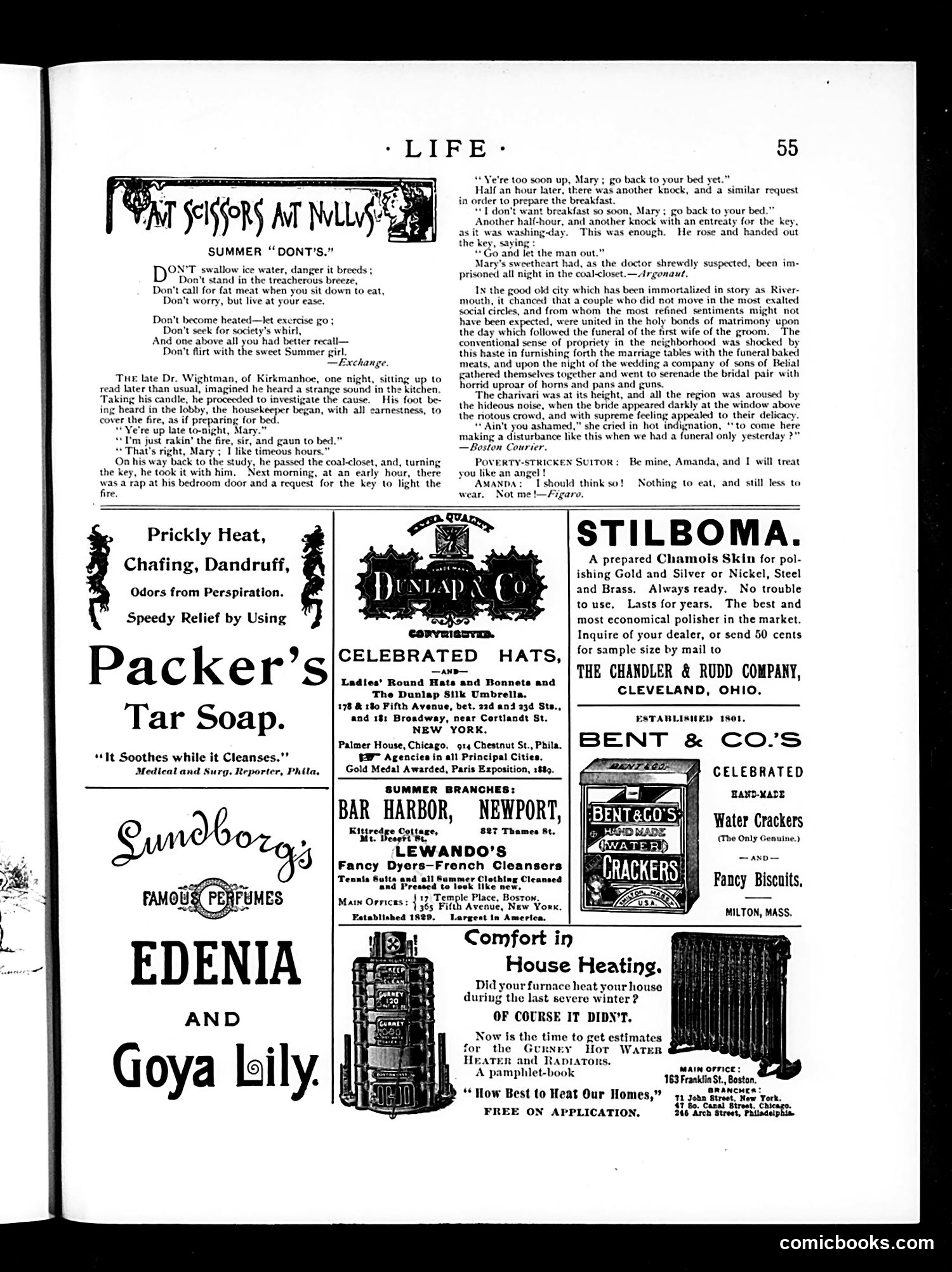
This page contains three humorous anecdotes plus period advertisements—no political cartoons. **The three jokes:** 1. **"Don'ts"**: Summer safety advice (avoid ice water, drafts, heavy foods) with a final warning against flirting with summer girls—typical Victorian-era cautionary humor. 2. **Dr. Wightman story**: A Scottish anecdote about a doctor who discovers his housekeeper's suitor locked in the coal closet overnight. The humor relies on the servant girl's deception and the doctor's sardonic response ("Go and let the man out"). 3. **The Charivari**: References a post-funeral wedding that shocked propriety. Neighbors held a "charivari" (noisy mock serenade) in protest, but the bride shames them by noting they're disturbing mourning for the groom's *first* wife—dark comedy about social hypocrisy and hasty remarriage. **The advertisements** (Packer's Tar Soap, Dunlap Hats, Bent & Co.'s crackers, etc.) are period products with no satirical content.
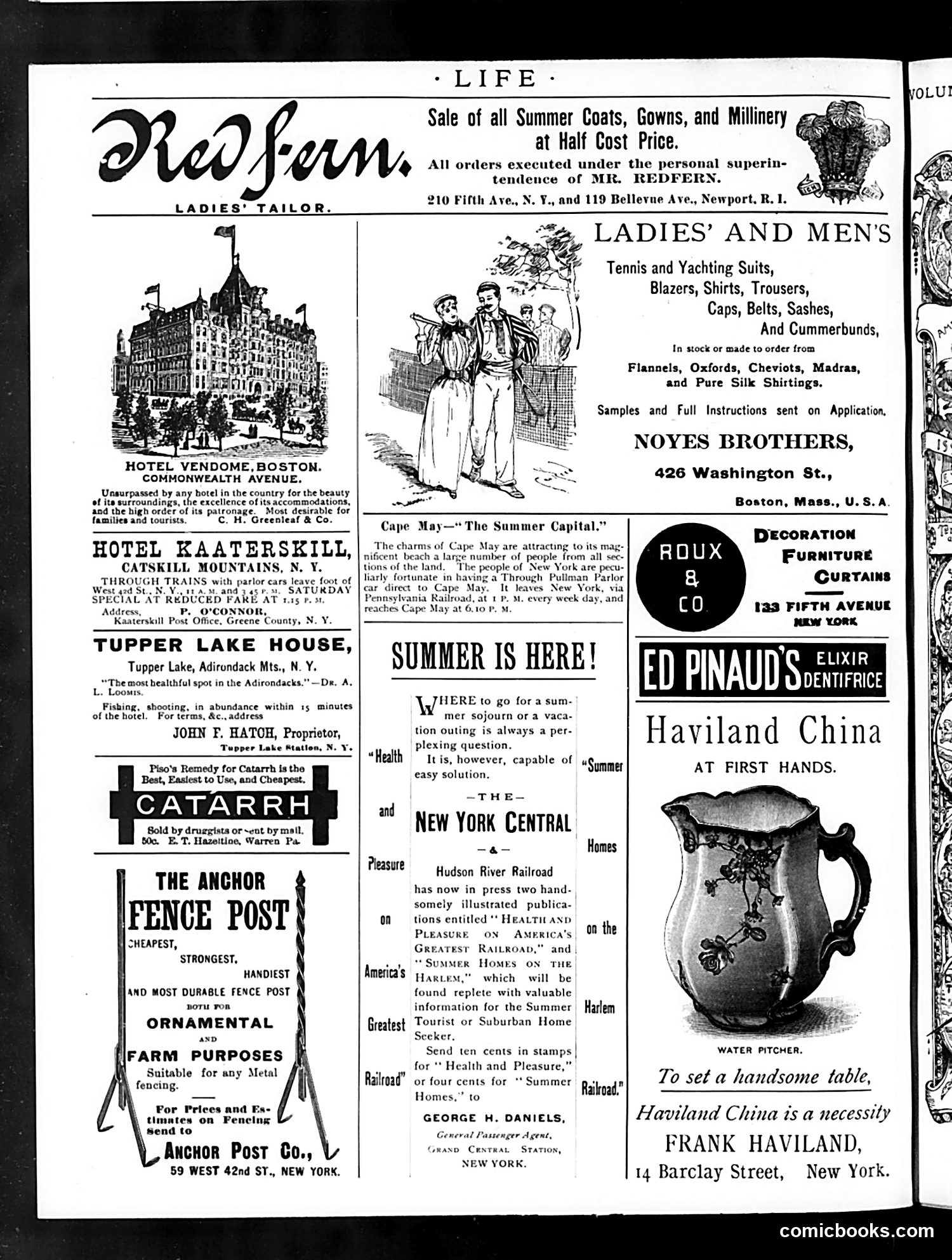
This is primarily an **advertising page** from Life magazine, not a political cartoon or satirical content page. The page features various commercial advertisements typical of the era: hotels (Hotel Vendome in Boston, Hotel Kaaterskill in the Catskills, Tupper Lake House), clothing retailers (Red Fern ladies' tailor, Noyes Brothers), home furnishings (Haviland China, Roux decoration and curtains), and patent medicines (Piso's Remedy for Catarrh, Ed Pinaud's Elixir Dentifrice). The only editorial content is a brief piece titled **"Summer Is Here!"** promoting the New York Central and Hudson River Railroad's travel guides for summer vacation destinations. It emphasizes the railroad's convenient Pullman service to Cape May and offers illustrated publications about "Health and Pleasure" to potential tourists. The page reflects late-19th-century consumer culture, targeting affluent readers interested in summer travel, fashionable clothing, and refined home décor—with no satirical commentary visible.