
A complete issue · 14 pages · 1891
Life — July 23, 1891
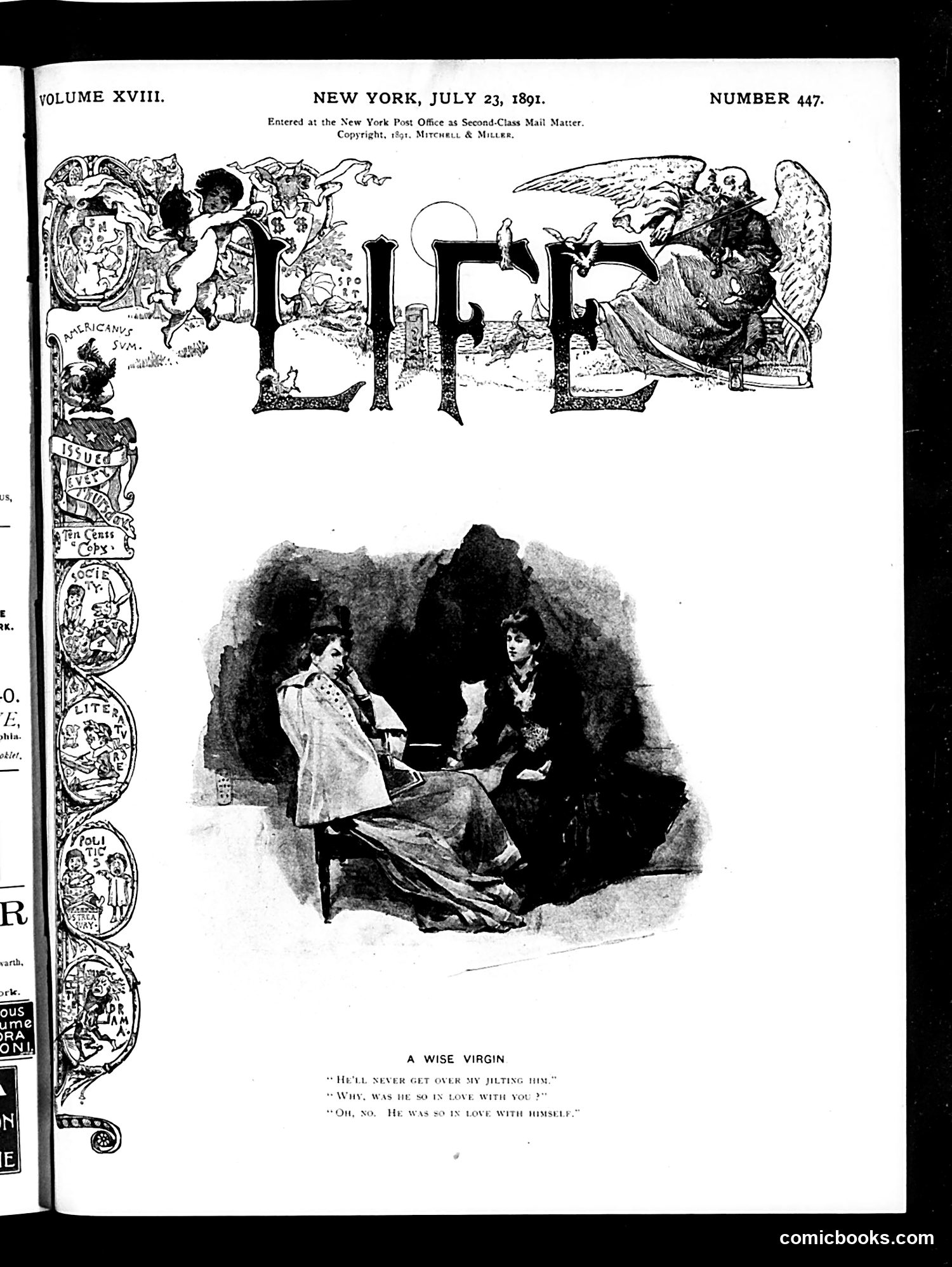
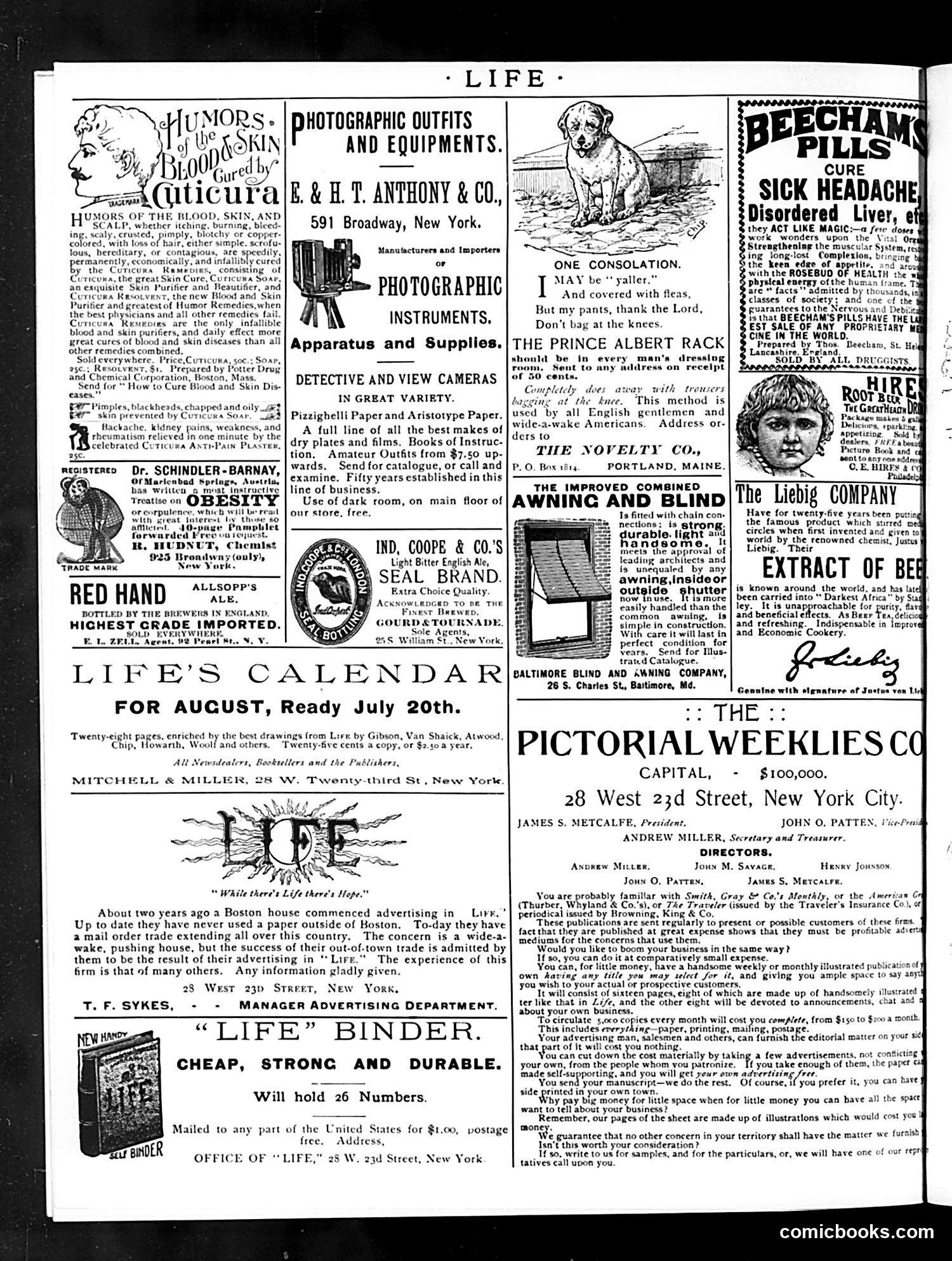
This page is primarily **advertising and business content** rather than political cartoons or satire. The dominant features are: 1. **Product advertisements**: Beecham's Pills, Liebig's Extract of Beef, photographic equipment, awnings, and other consumer goods typical of late 19th/early 20th-century publications. 2. **Magazine promotion**: Life's Calendar for August and the Pictorial Weeklies Company announcement occupy significant space. 3. **One editorial piece**: "The Prince Albert Rack" appears to be a humorous short piece, though its specific content is unclear from this reproduction. The page reflects Life magazine's business model—mixing light editorial content with substantial advertising revenue. There are no identifiable political cartoons or clear satirical commentary visible on this particular page.
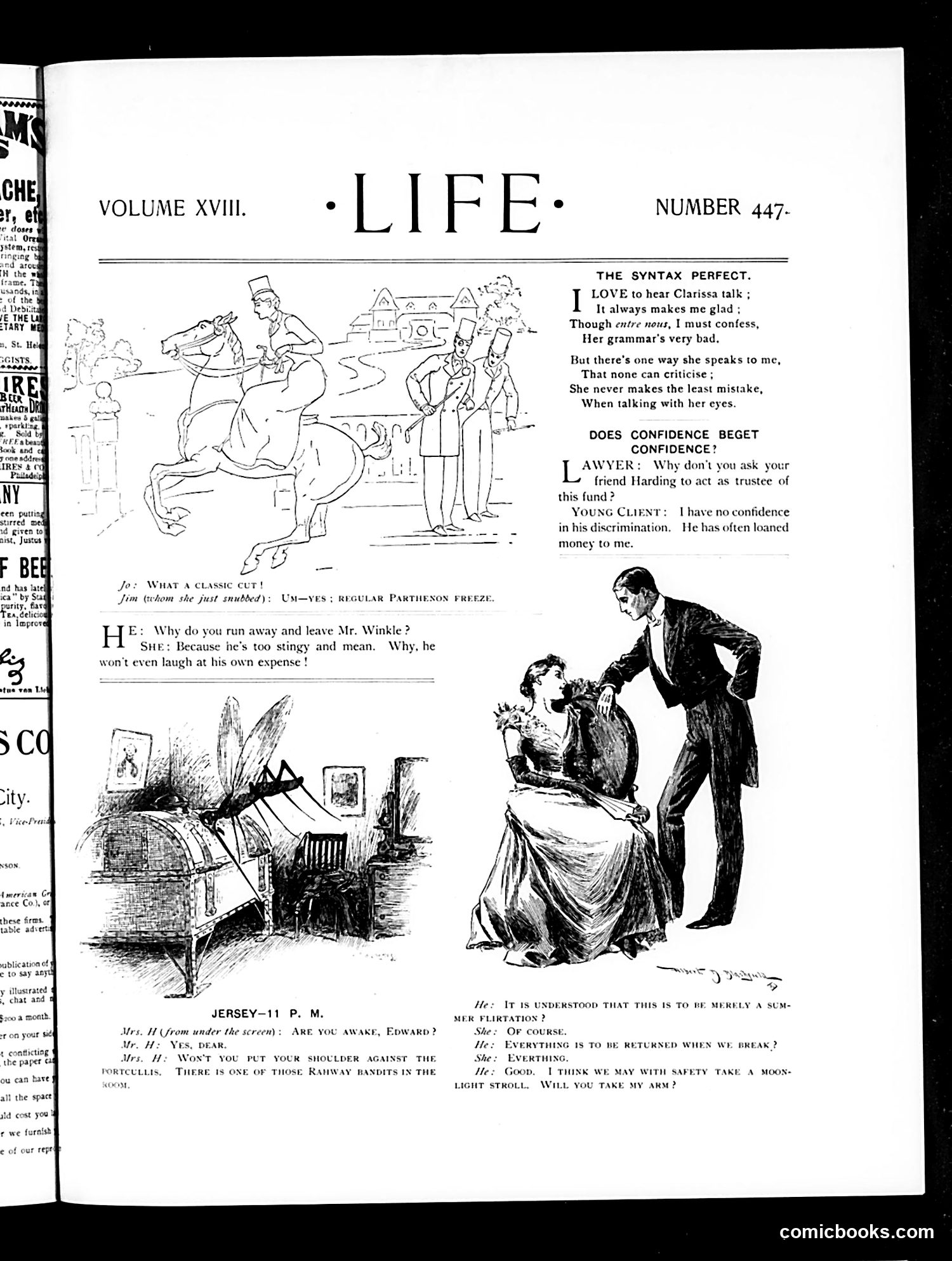
This page contains humorous sketches and dialogues typical of early 20th-century satirical magazines. **"The Syntax Perfect"** mocks a woman named Clarissa whose grammatically correct but pedantic speech annoys others—satire on overly proper language use. **"Does Confidence Beget Confidence?"** shows a legal exchange where a young client refuses to trust his lawyer friend Harding with funds, citing past money losses—humor about misplaced confidence in professional relationships. **"Jersey—11 P.M."** depicts a domestic dispute where a husband (Mr. H) refuses to let his wife put her shoulder against railway bandits in a railway carriage, claiming "there is one of those railway bandits in the room"—absurdist humor playing on marital dynamics and exaggerated safety concerns. The final sketch appears to involve flirtation and romantic misunderstandings, typical comedic fare for the era.
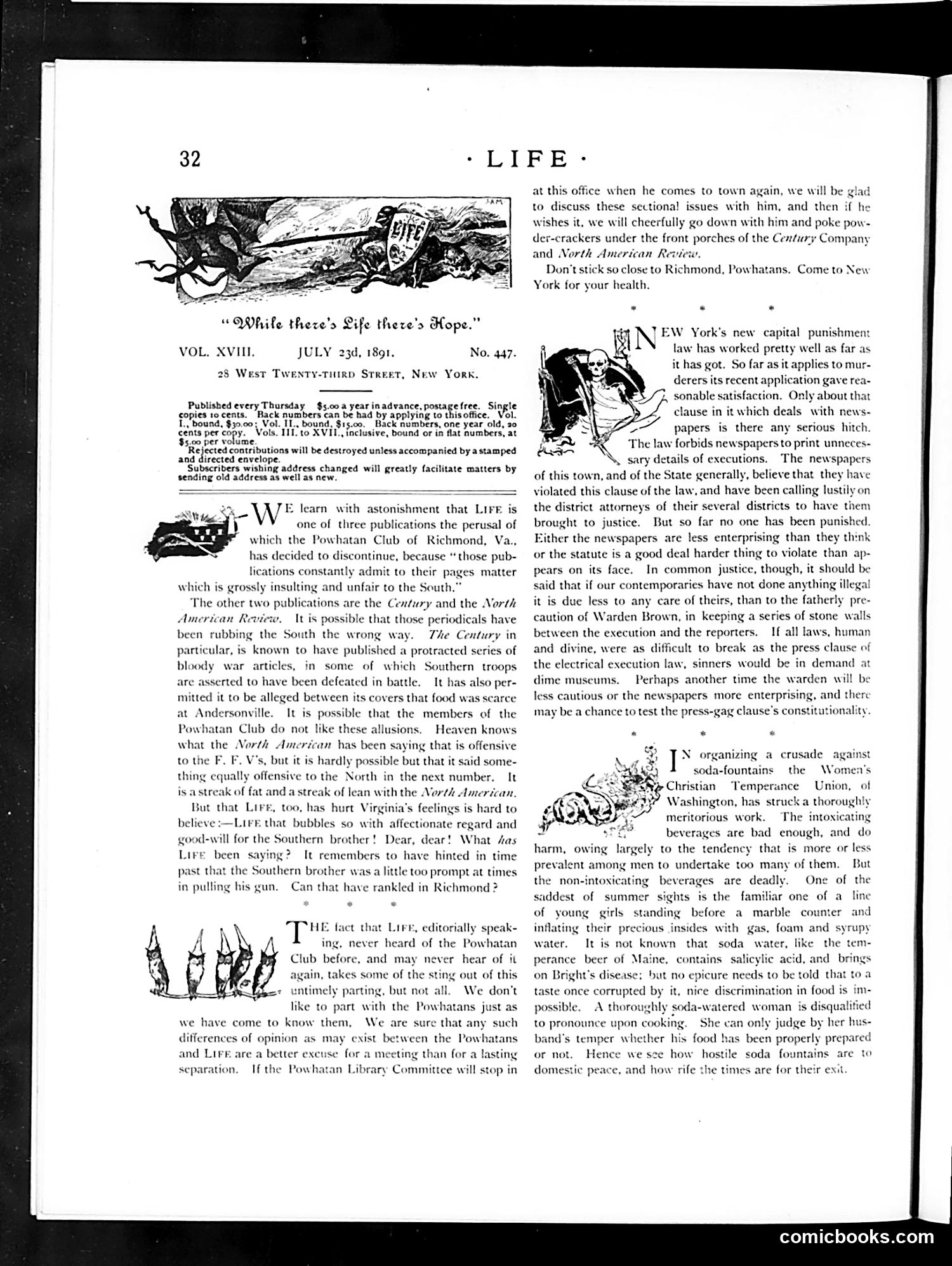
This editorial page addresses the **Powhatan Club of Richmond, Virginia**, which discontinued publishing Life due to objections about unflattering Southern portrayals. Life's editors defend their right to print critical content about the South, noting the Club's complaint seems hypocritical given other publications like the *Century* and *North American Review* publish similar material. The page also discusses **capital punishment law reform**, noting recent executions generated public concern about newspapers printing execution details. Life critiques both newspapers and legal authorities for the issue. A final section satirizes the **Women's Christian Temperance Union's crusade against soda fountains**, mocking the presumption that soda-watered women cannot cook properly and therefore threaten domestic peace—a sexist jab at temperance activism.
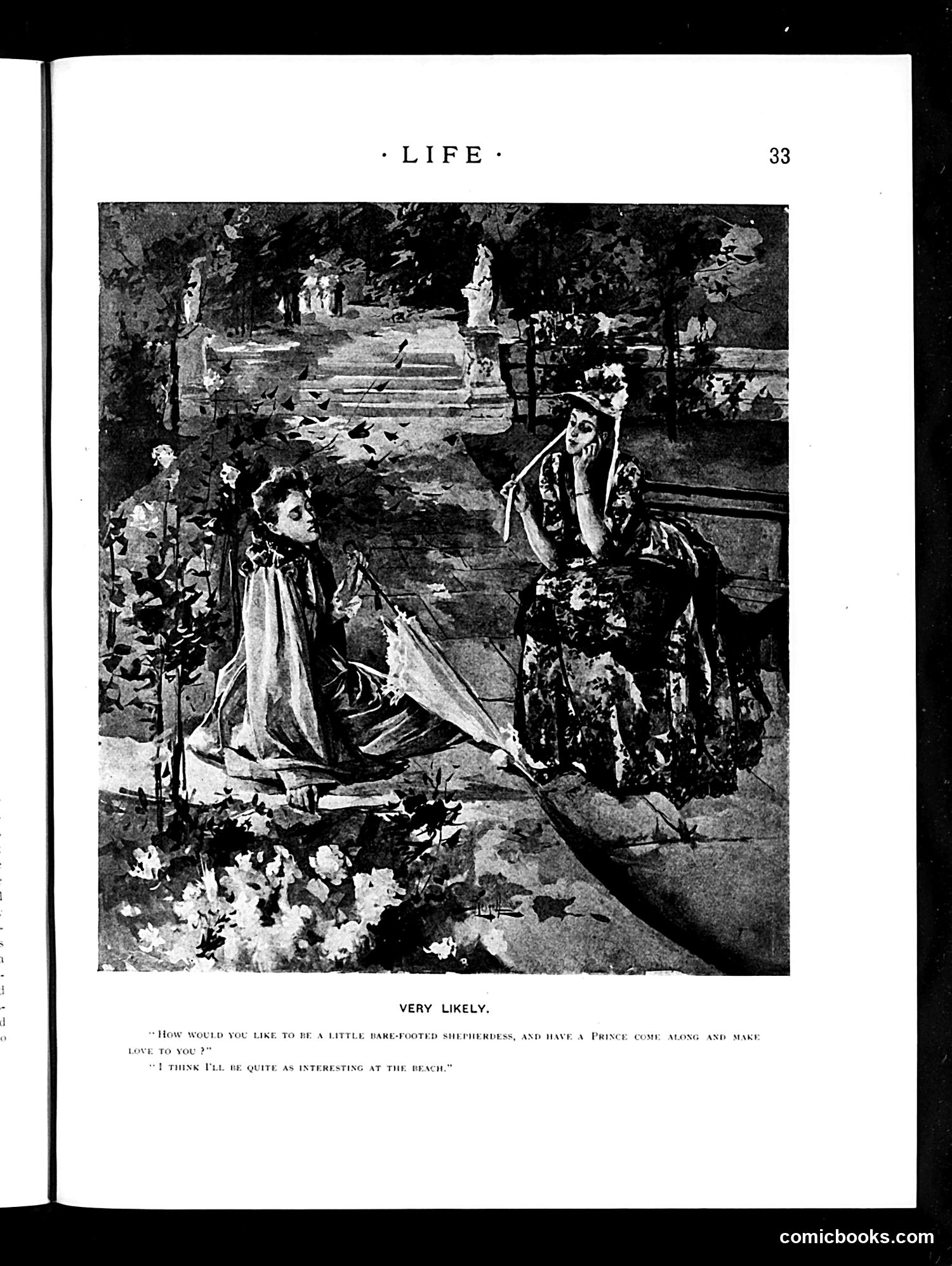
This satirical cartoon depicts a romantic garden scene with two figures in elaborate period costume. The caption presents a flirtatious exchange: a woman asks a man how he'd like being "a little bare-footed shepherdess" with a prince making love to her, and he responds he'd find that "quite as interesting at the beach." The humor relies on contrasting romantic fantasy with mundane reality—the elaborate, idealized garden setting and period costumes versus the casual, modern suggestion of the beach. The satire appears to mock sentimental romantic notions popular in literature and theater of the era, suggesting that genuine human attraction transcends such theatrical pretense. The specific figures are unclear without additional context, though they appear to represent stock romantic characters.
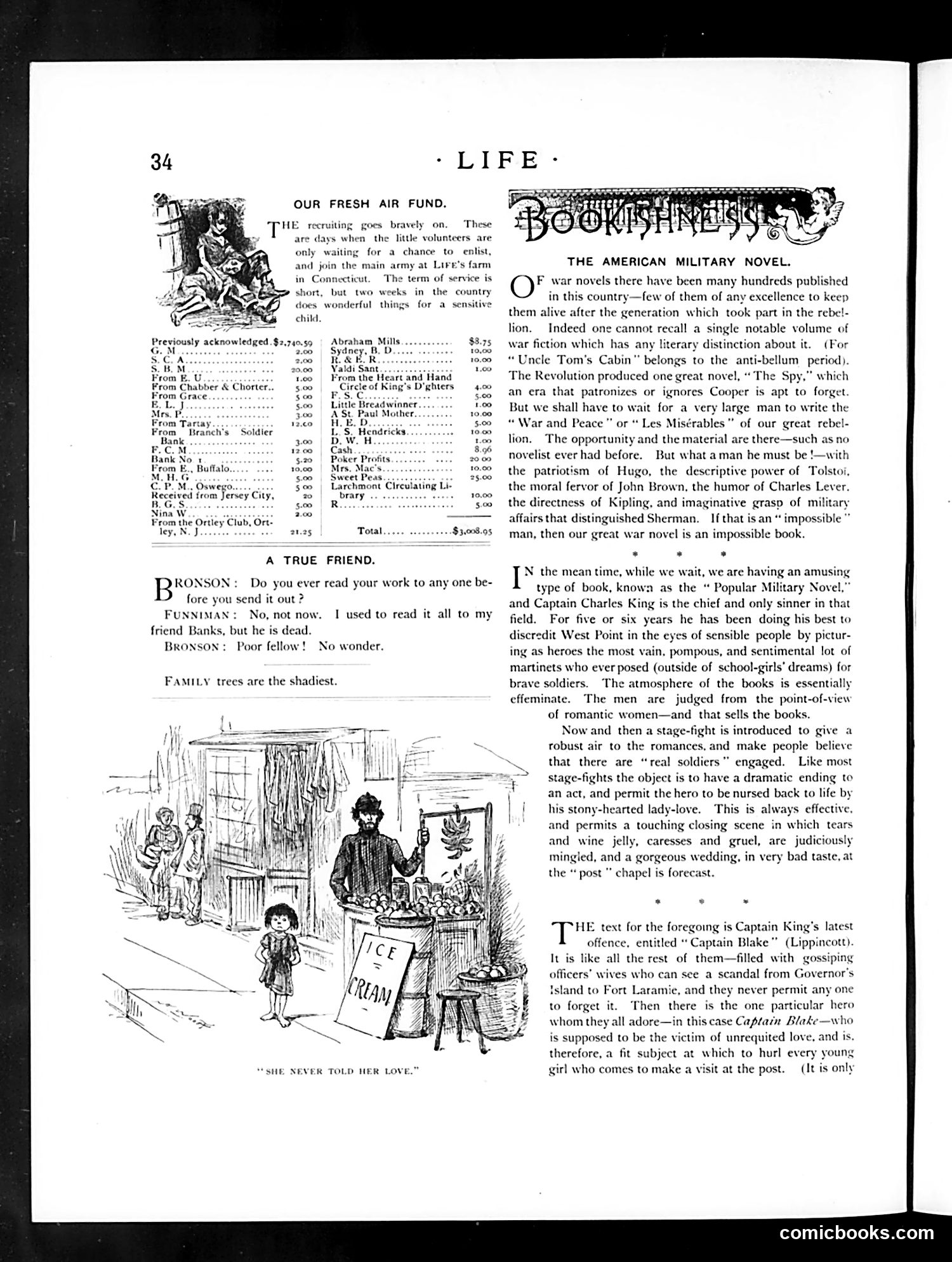
This page contains two distinct sections: **"Our Fresh Air Fund"** (top left): A fundraising list for a charitable program providing outdoor relief to urban children. The accompanying illustration shows a poor child at an ice cream vendor's cart, captioned "SHE NEVER TOLD HER LOVE"—a sentimental reference suggesting the child's unspoken gratitude or longing. **"Bookishness: The American Military Novel"** (right): A critical essay mocking popular military fiction, particularly novels by Captain Charles King. The author ridicules these books for romanticizing soldiers through melodramatic plots featuring "stony-hearted lady-loves," stage-fight heroics, and implausible scenarios. The satire targets how these novels misrepresent military life through sentimentality and poor literary quality, contrasting them unfavorably with serious war literature like *Uncle Tom's Cabin* or *War and Peace*. Both pieces reflect Life magazine's satirical voice on social conditions and cultural tastes.
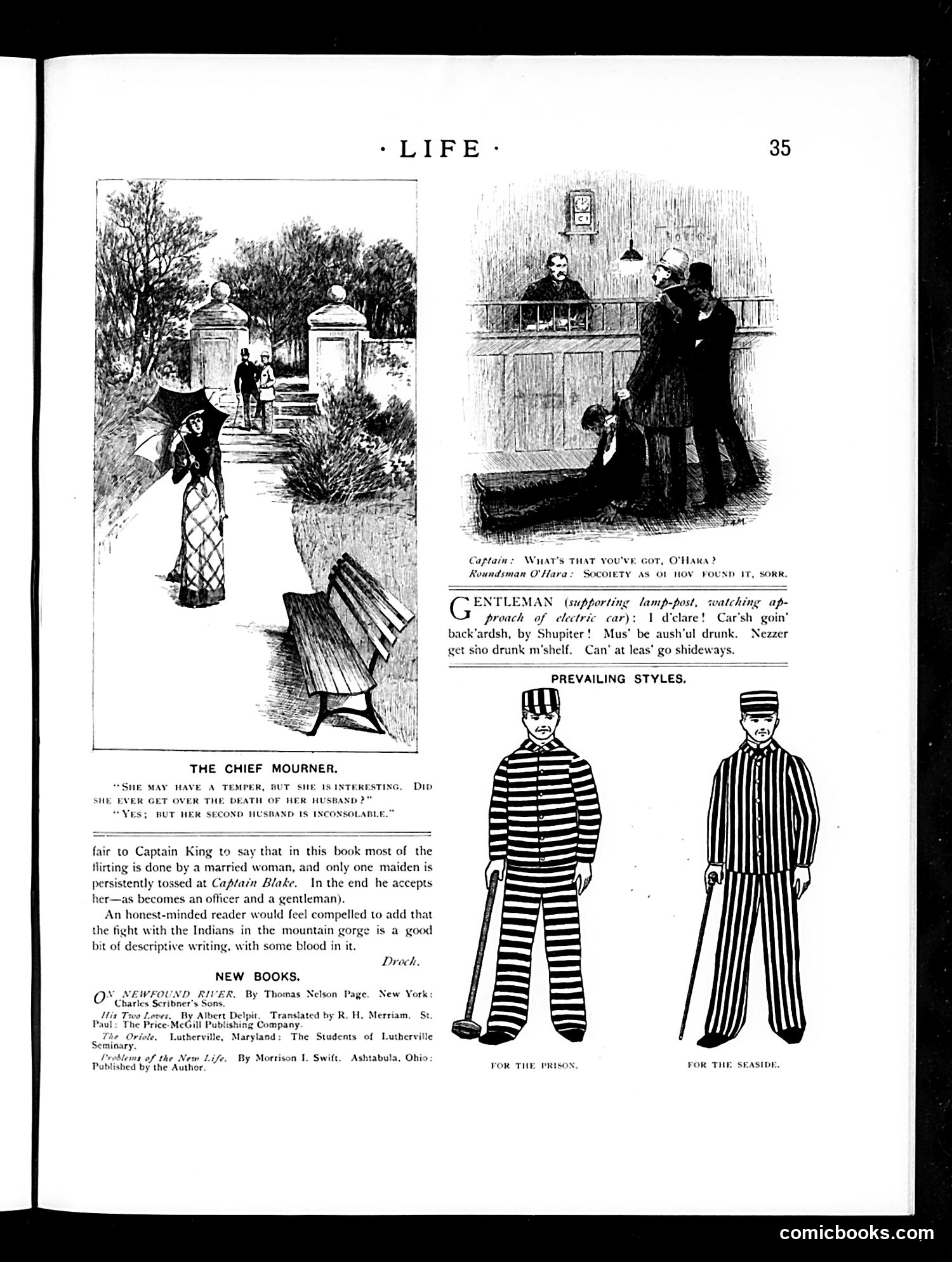
This page from *Life* magazine contains two distinct sections: **Left side:** A satirical cartoon titled "The Chief Mourner" depicting a woman in Victorian dress at a cemetery. The caption suggests she's interesting despite her temper, and quotes her saying her second husband is "inconsolable"—implying she's a widow (possibly multiple times). This appears to satirize wealthy women's remarriages and social mourning conventions. **Right side:** A humorous scene showing a gentleman claiming drunkenness as an excuse for public misbehavior, with onlookers on a balcony. The satire targets both male drinking culture and social hypocrisy about intoxication. **Bottom:** Fashion illustrations labeled "Prevailing Styles"—prison and seaside striped outfits—likely satirizing contemporary women's fashion trends as prison-like or absurdly restrictive. The overall tone mocks Victorian social conventions and gender roles.
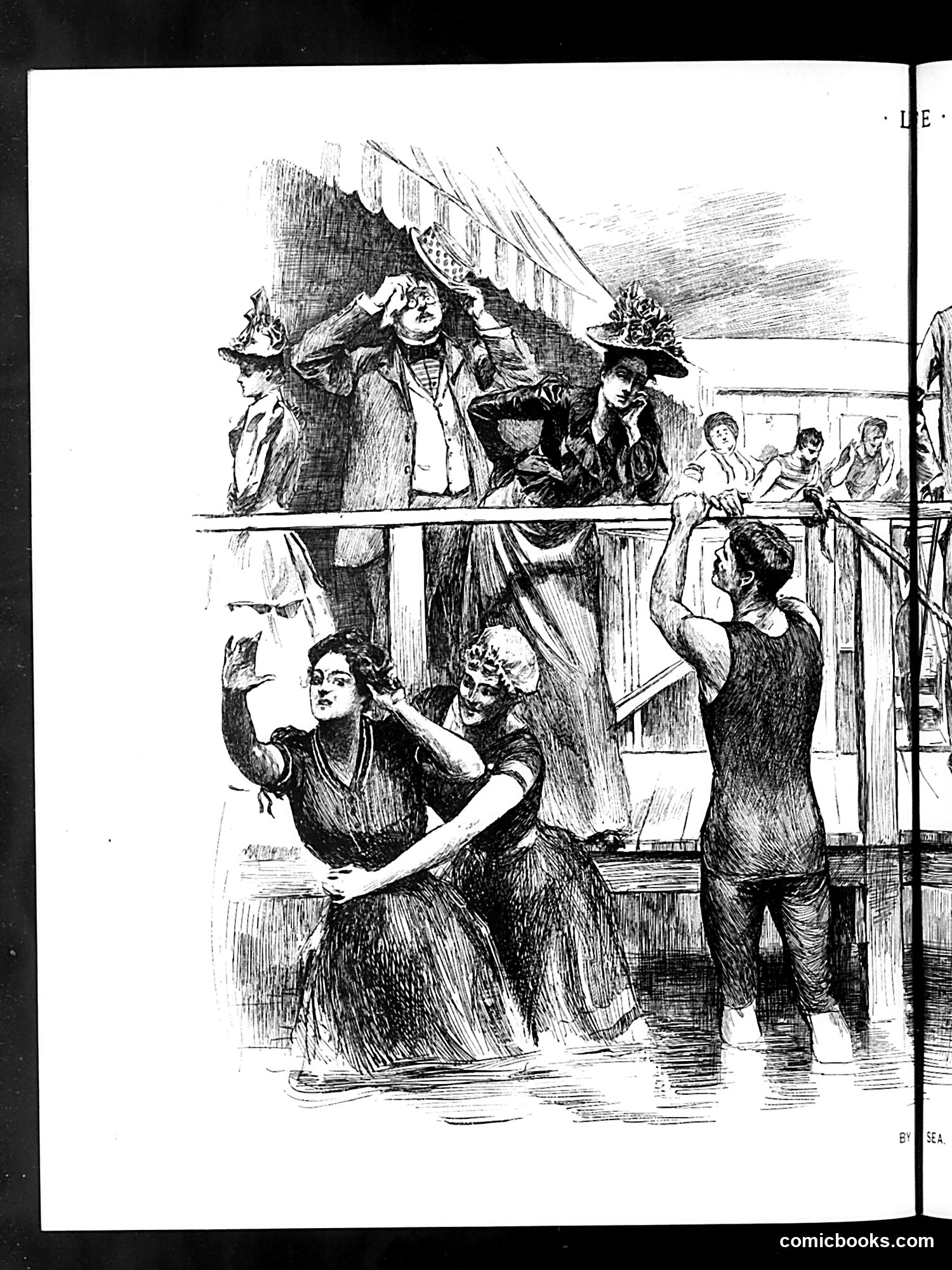
This appears to be a satirical illustration from *Life* magazine depicting a seaside or bathing scene. The image shows women in Victorian-era bathing costumes interacting with what appear to be male attendants or workers at what looks like a bathing establishment or beach house. The satire likely targets Victorian social conventions around bathing, gender interaction, or the emerging "New Woman" of the late 19th century—a figure challenging traditional female roles. The exaggerated postures and expressions suggest mockery of either the women's behavior, the awkwardness of mixed-gender bathing facilities, or social pretension around seaside leisure activities. Without clearer text or identifying details visible, the specific satirical target remains somewhat unclear, though the scene's comedic intent is evident in its caricatured style.
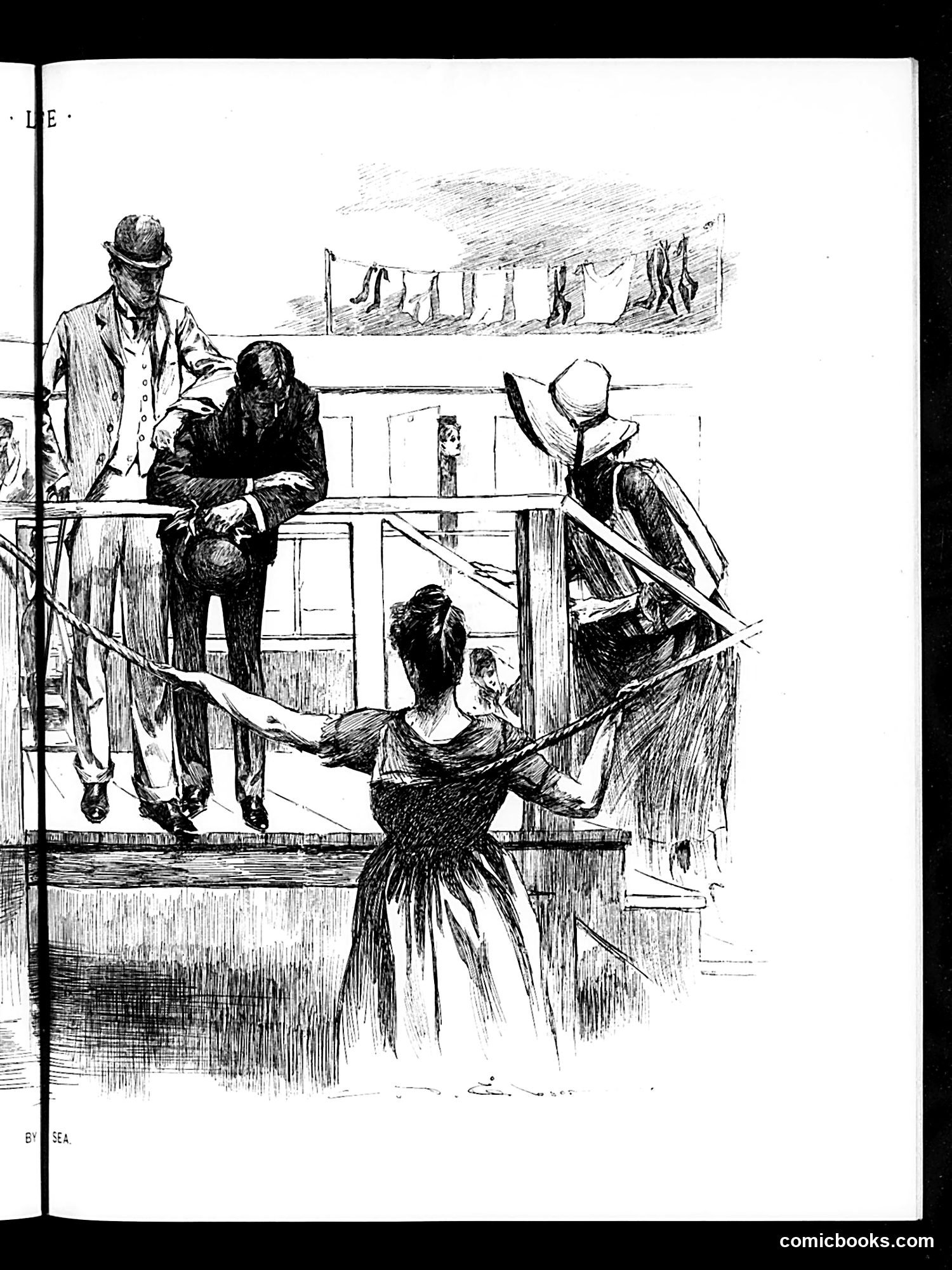
This pen-and-ink illustration depicts a scene at what appears to be a seaside location (note "BY SEA" at bottom). A woman in a dark dress stands at a railing, gesturing expressively with outstretched arms toward three men—one in a bowler hat and coat standing elevated, another seated, and a third in a wide-brimmed hat on the right. Clotheslines with laundry hang in the background. The cartoon likely satirizes working-class or immigrant life, possibly commentary on labor conditions, domestic situations, or social interactions. The woman's animated pose and the men's varied reactions suggest dramatic confrontation or argument. Without additional context or caption text visible, the specific political or social target remains unclear, though the seaside setting and casual dress suggest commentary on ordinary life rather than high society.
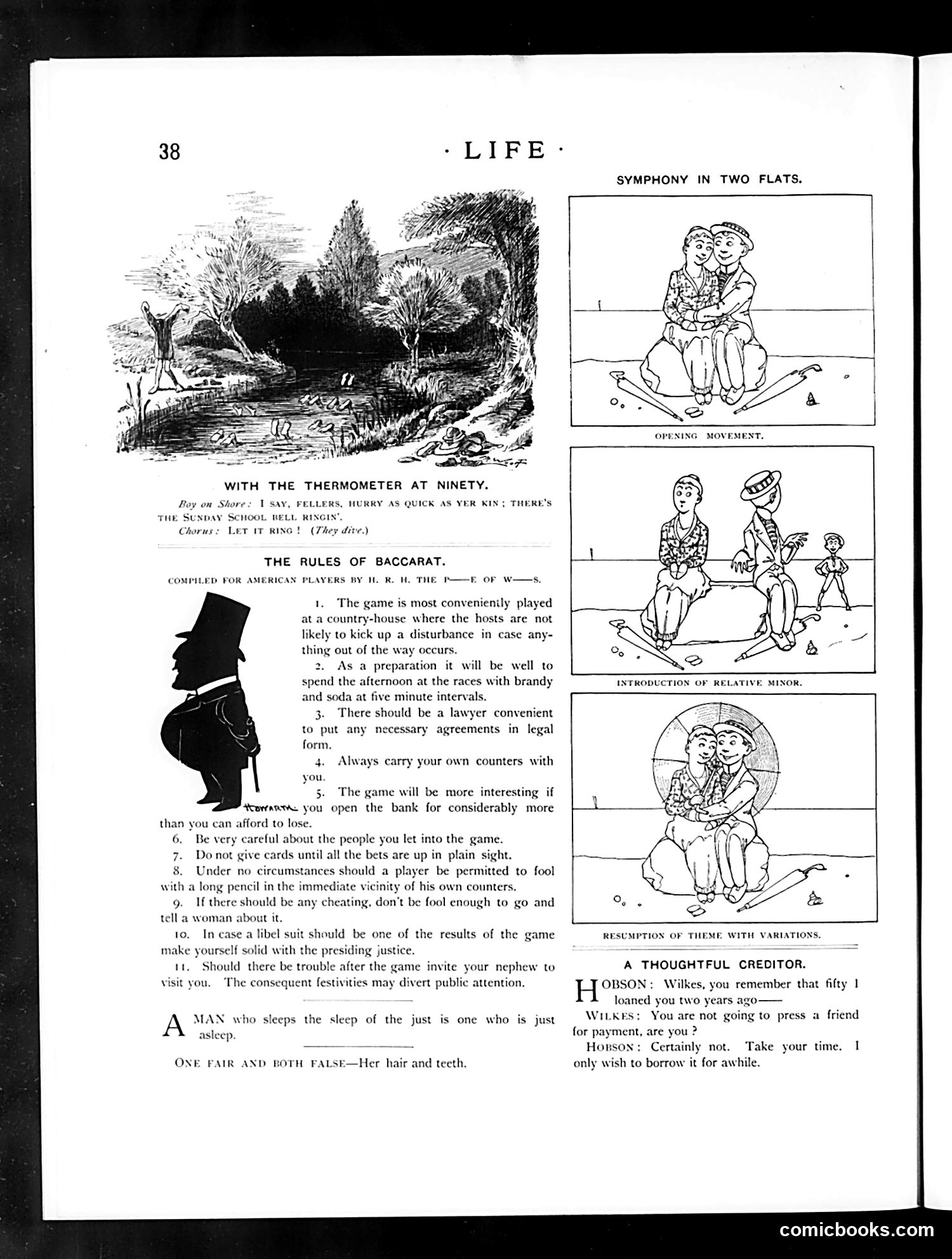
This page contains three distinct sections: 1. **"With the Thermometer at Ninety"** - A landscape sketch with verse about summer leisure at a country house, addressing heat and recreation. 2. **"The Rules of Baccarat"** - Practical gaming instructions compiled for American players, with a silhouetted figure in formal dress (top hat and evening wear) serving as decorative element. The rules address etiquette, cheating prevention, and dispute resolution for this card game. 3. **"A Thoughtful Creditor"** - A comedic dialogue between Hobson and Wilkes about a £50 loan from two years prior. Hobson pressures for repayment while Wilkes deflects, claiming he only wishes to "borrow it for awhile"—satirizing the awkwardness of pursuing unpaid debts between acquaintances. 4. **"Symphony in Two Flats"** - A three-panel comic strip showing children's domestic scenes.
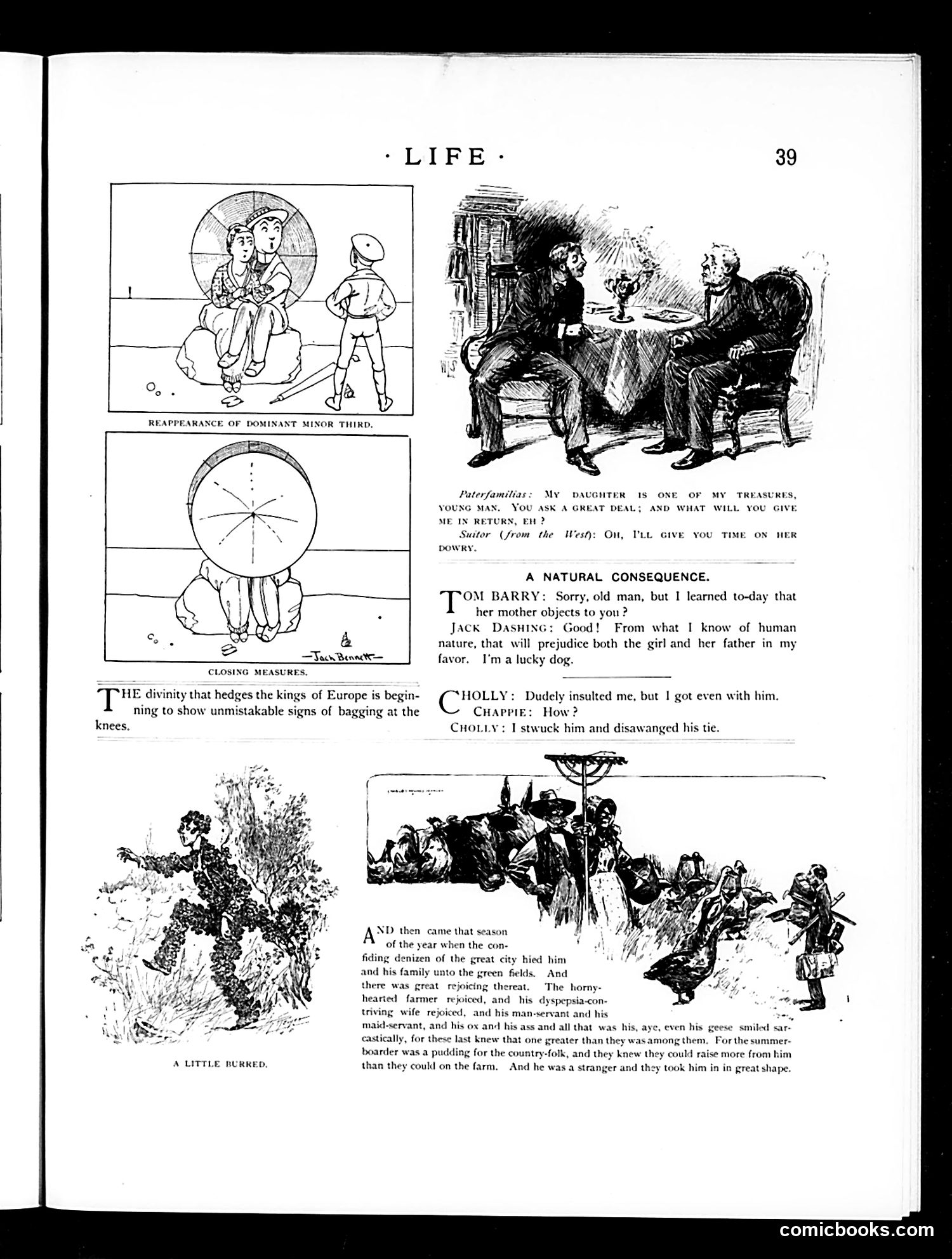
This page contains three unrelated satirical pieces: **Top cartoons**: Two diagrams labeled "Reappearance of Dominant Minor Third" and "Closing Measures" appear to be musical jokes, showing figures interacting with circular diagrams in absurdist ways. The specific musical reference is unclear without more context. **Middle section**: A conversation between a Paterfamilias (father), Sailor, Tom Barry, Jack Dashing, Holly, and Chappie about a daughter. The joke—titled "A Natural Consequence"—satirizes how men's behavior toward an attractive woman creates social complications for her and her father. **Bottom illustration**: "A Little Burned" shows a rural scene with narrative text about a city man visiting farm country. The humor likely involves urban-rural culture clash and misadventure. All pieces employ early 20th-century satirical conventions targeting social pretension and class differences.
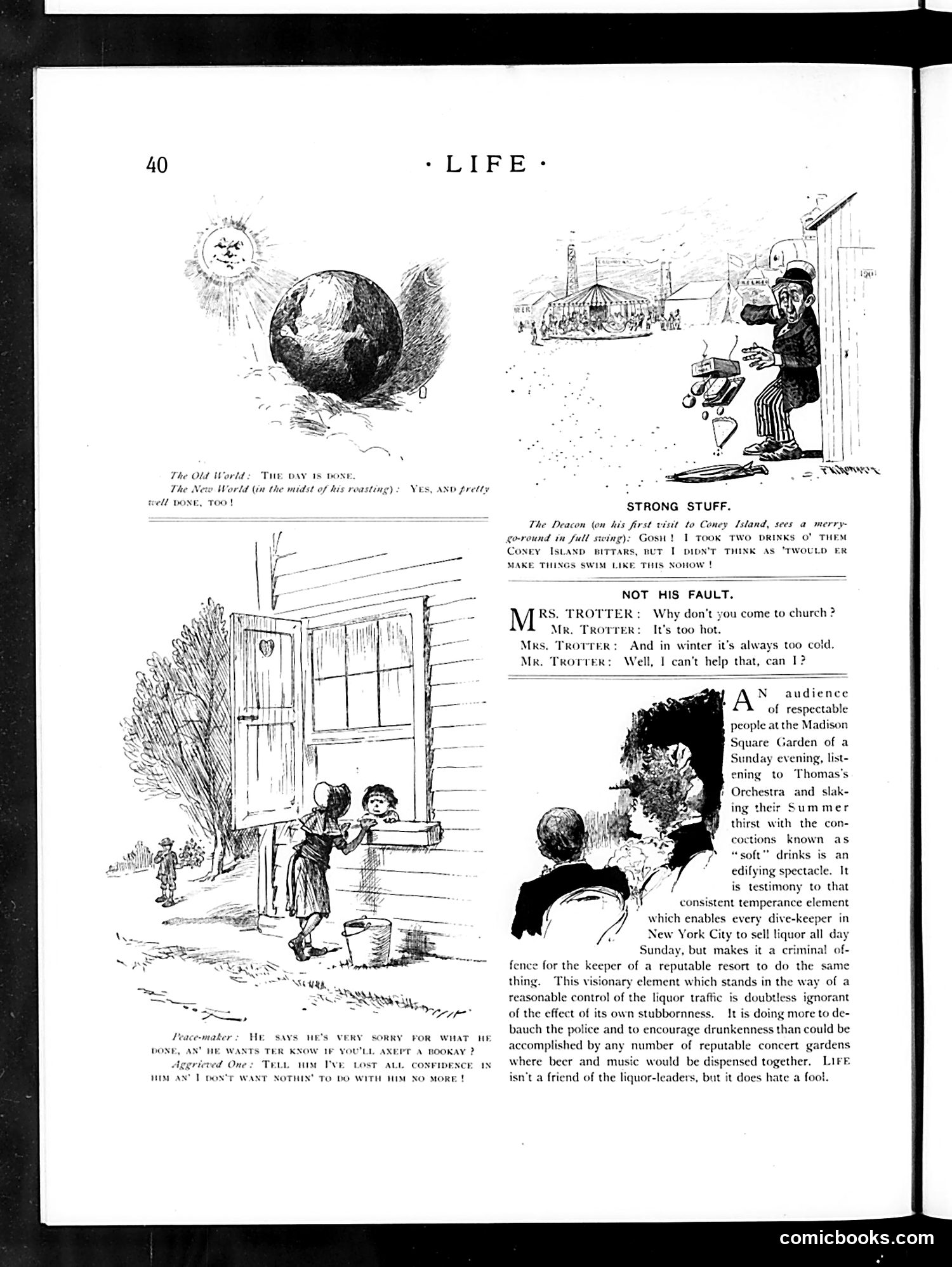
This page contains several satirical cartoons and commentary typical of Life magazine's social critique: **"The Old World/New World"** contrasts exhausted Europe with an energetic America, both claiming to be "done" but with different meanings—Old World exhausted, New World satisfied. **"Strong Stuff"** mocks a rural deacon visiting Coney Island's merry-go-round, who attributes the spinning sensation to strong drinks rather than recognizing the amusement ride. **"Not His Fault"** presents a dialogue where a man avoids church year-round (too hot in summer, too cold in winter), satirizing selective religiosity. **The main article critiques hypocrisy** regarding Sunday alcohol sales: respectable establishments serving "soft drinks" at concert gardens are legally permitted, while dive-keepers sell liquor all day—yet the same temperance advocates block beer service at legitimate venues. Life argues this inconsistent regulation actually *encourages* drunkenness and police corruption rather than preventing it. The satire targets moral inconsistency and ineffective prohibition-era policies rather than opposing temperance itself.
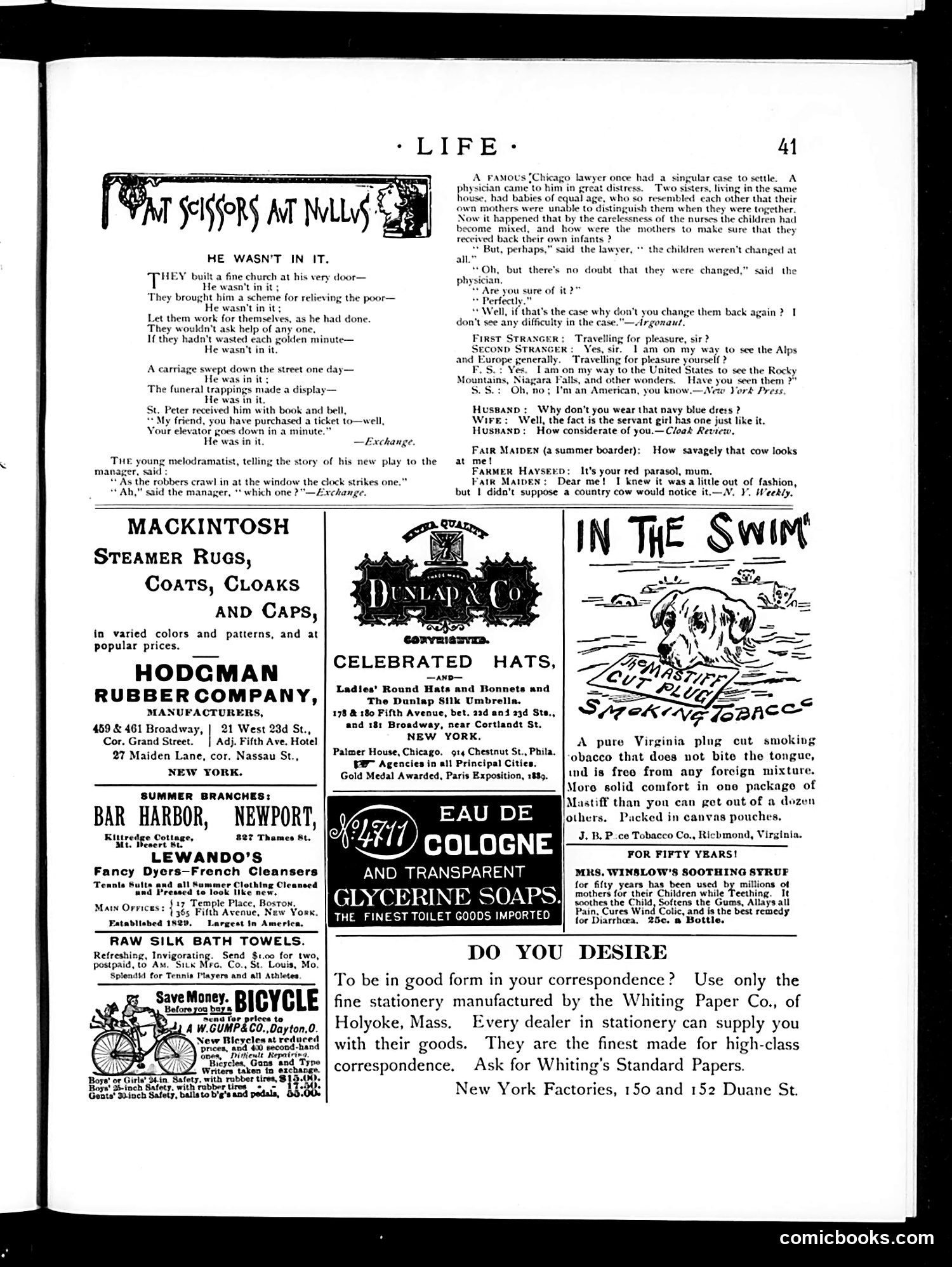
This page consists primarily of **advertisements and humorous anecdotes**, not political cartoons. The main content includes: **"He Wasn't In It"** — A poem about a man who avoids involvement in community efforts (church, poor relief schemes) but ironically participates only in his own funeral procession. It's social satire about selective morality and self-interest. **Short joke pieces** featuring: - A lawyer's paradox about switched infants (unsolvable logic puzzle) - Tourists comparing travel experiences (Americans boasting about seeing their own natural wonders) - Gender/class humor (servant girl copying employer's fashion; cow frightened by fashionable parasol) **Numerous product advertisements** for clothing, hats, soaps, bicycles, tobacco, and patent medicines—typical of *Life* magazine's revenue model. The humor is gentle, domestic, and observational rather than sharp political satire. The page reflects late 19th-century American values: self-reliance, social climbing, fashion anxiety, and class consciousness.
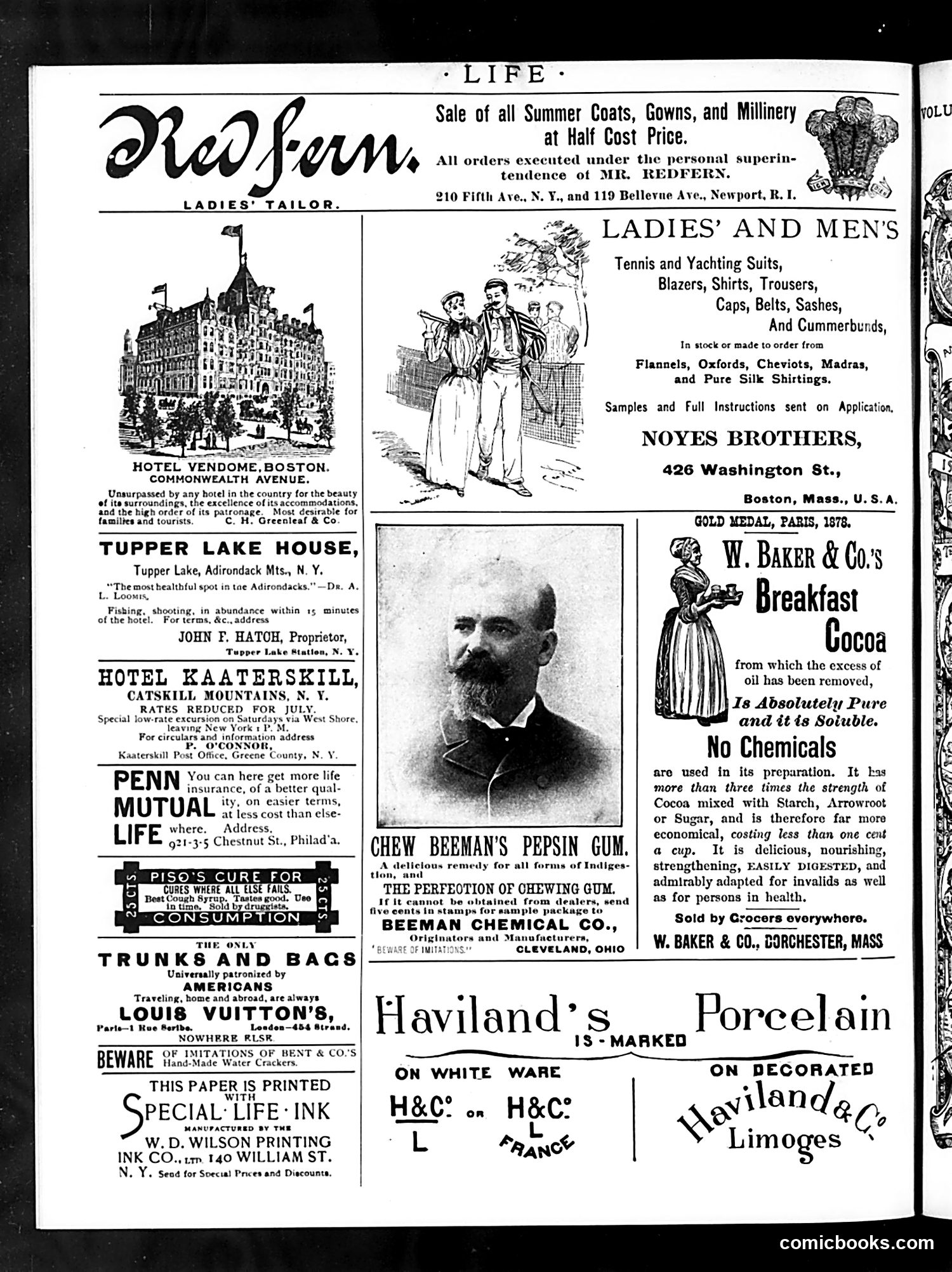
This is primarily an **advertising page** from Life magazine, not a satirical cartoon. The page features commercial advertisements for late 19th-century goods and services, including: **Notable ads:** - Red Fern Ladies' Tailor (Fifth Avenue, NYC) - Hotels (Vendome Boston, Tupper Lake House, Hotel Kaaterskill) - Noyes Brothers (sporting attire) - W. Baker & Co.'s Breakfast Cocoa (emphasizing purity and no chemicals) - Chew Beeman's Pepsin Gum - Penn Mutual Life Insurance - Louis Vuitton trunks and bags - Haviland Porcelain (marked as French) The page includes one **portrait photograph** of a man (identified only as relevant to Beeman's Pepsin Gum advertising), though his specific identity isn't stated. There's minimal satirical content—this appears to be a standard **advertising revenue page** typical of magazines from this era. The advertisements target upper-class consumers (luxury hotels, fine fabrics, imported goods), reflecting Life's affluent readership.