
A complete issue · 14 pages · 1891
Life — April 30, 1891
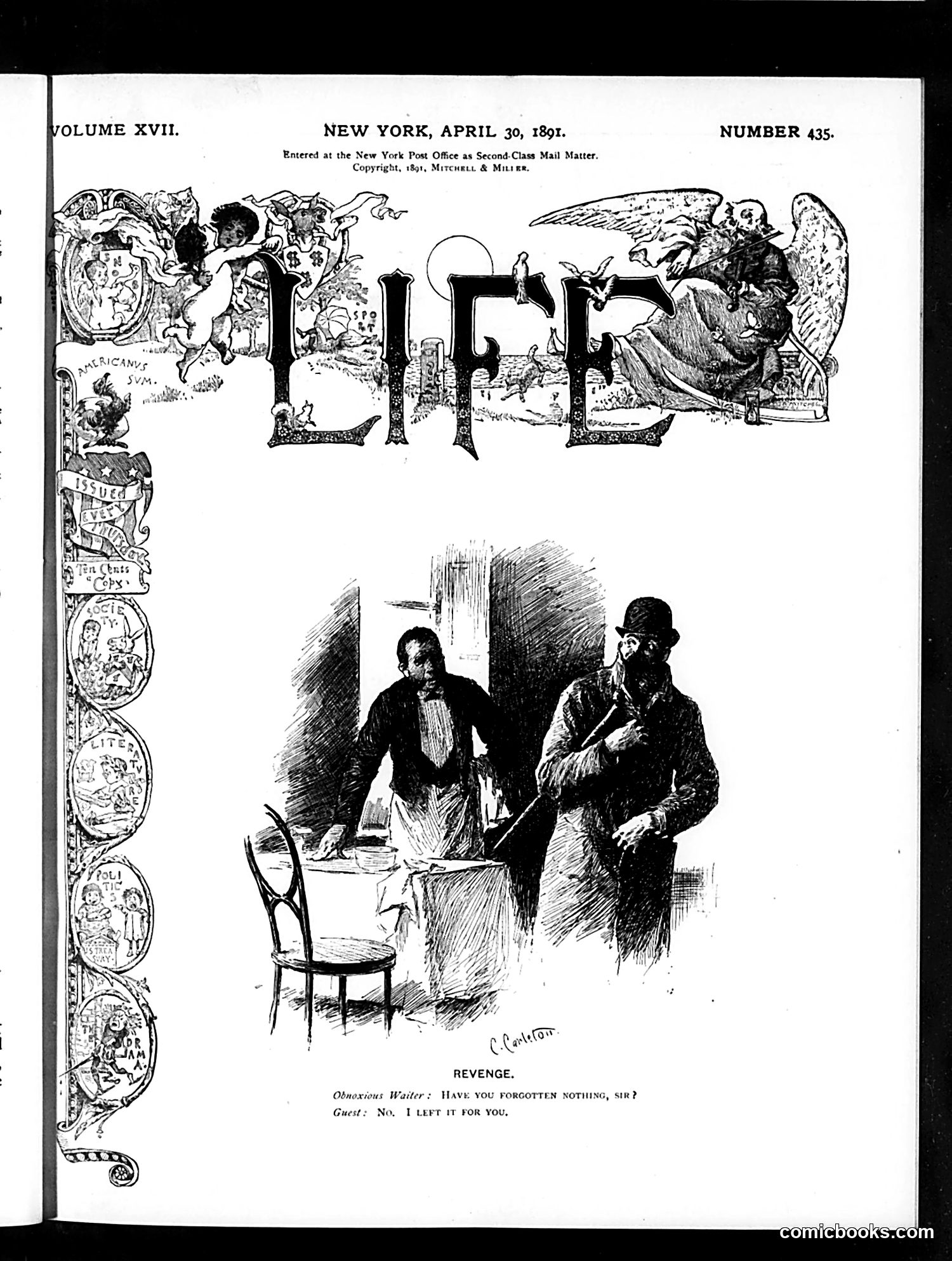
This single-panel cartoon titled "Revenge" depicts two men in what appears to be an office or study. One seated man (the "Obsequious Waiter") addresses a standing guest, saying "Have you forgotten nothing, sir?" The guest replies, "No. I left it for you." The cartoon's precise satirical target is unclear without additional historical context. It appears to be a commentary on social dynamics between service workers and their patrons—possibly mocking either the servility of waiters/servants or, conversely, the rudeness of guests who deliberately leave behind unwanted items as a form of petty revenge or insult. The ornate decorative border containing classical scenes is typical of Life magazine's design aesthetic from this era.
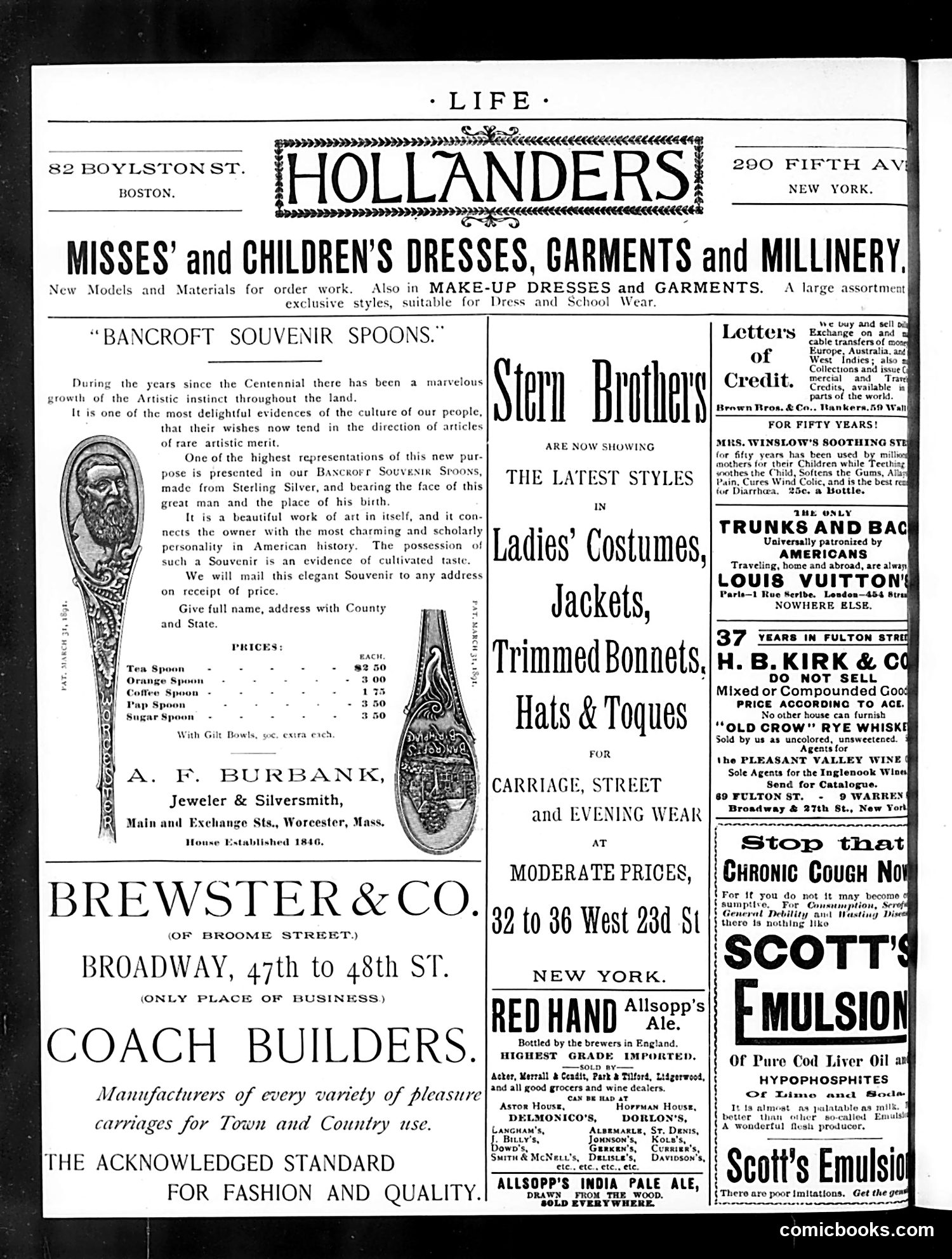
This page is **primarily advertising**, not satirical content. It features commercial advertisements for various late 19th-century businesses: - **Hollanders**: A dress and millinery shop in Boston and New York - **Stern Brothers**: Ladies' clothing and accessories retailer - **Burbank**: A Worcester, Massachusetts jeweler selling souvenir spoons (a popular collectible of the Centennial era) - **Brewster & Co.**: Coach builders on Broadway - **Scott's Emulsion**: A patent medicine (cod liver oil) advertisement The only potential visual element is a decorative spoon handle illustration advertising Bancroft souvenir spoons. There are no political cartoons or satire visible. The page reflects turn-of-the-century consumer culture and advertising practices in Life magazine.
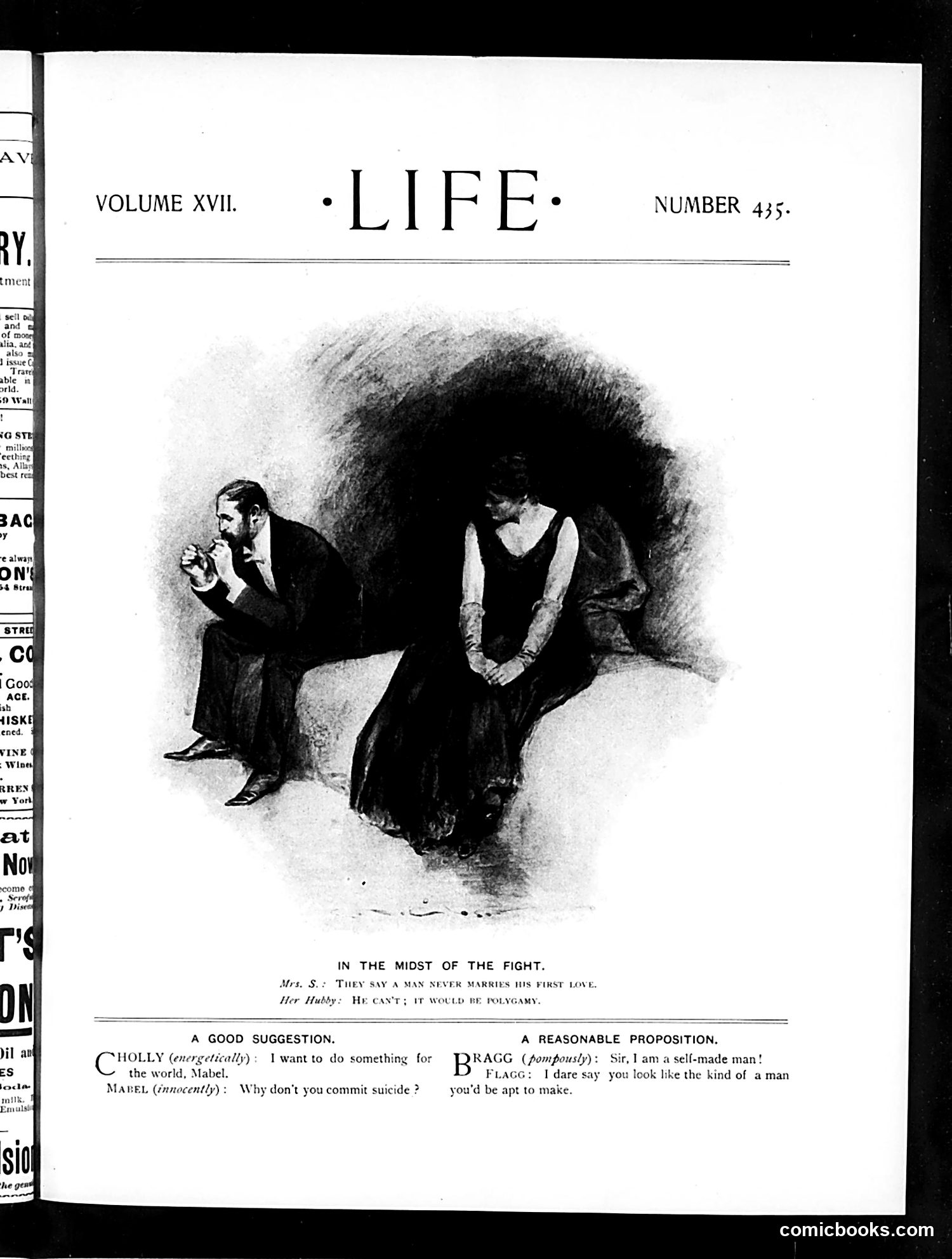
This page presents two brief satirical dialogues. The main illustration, titled "In the Midst of the Fight," depicts a couple in what appears to be a domestic argument, with the caption quoting: "They say a man never marries his first love" / "He can't, it would be incestuary." Below are two comic exchanges: **"A Good Suggestion"**: Cholly suggests Mabel do something meaningful for the world; Mabel innocently responds by suggesting suicide. **"A Reasonable Proposition"**: Bragg claims to be a self-made man; Flagg retorts that Bragg looks like the kind of man he'd make—implying poor craftsmanship. These are gentle domestic and social satires typical of early 20th-century Life magazine humor, relying on wordplay and observational wit about courtship, ambition, and masculine pretension.
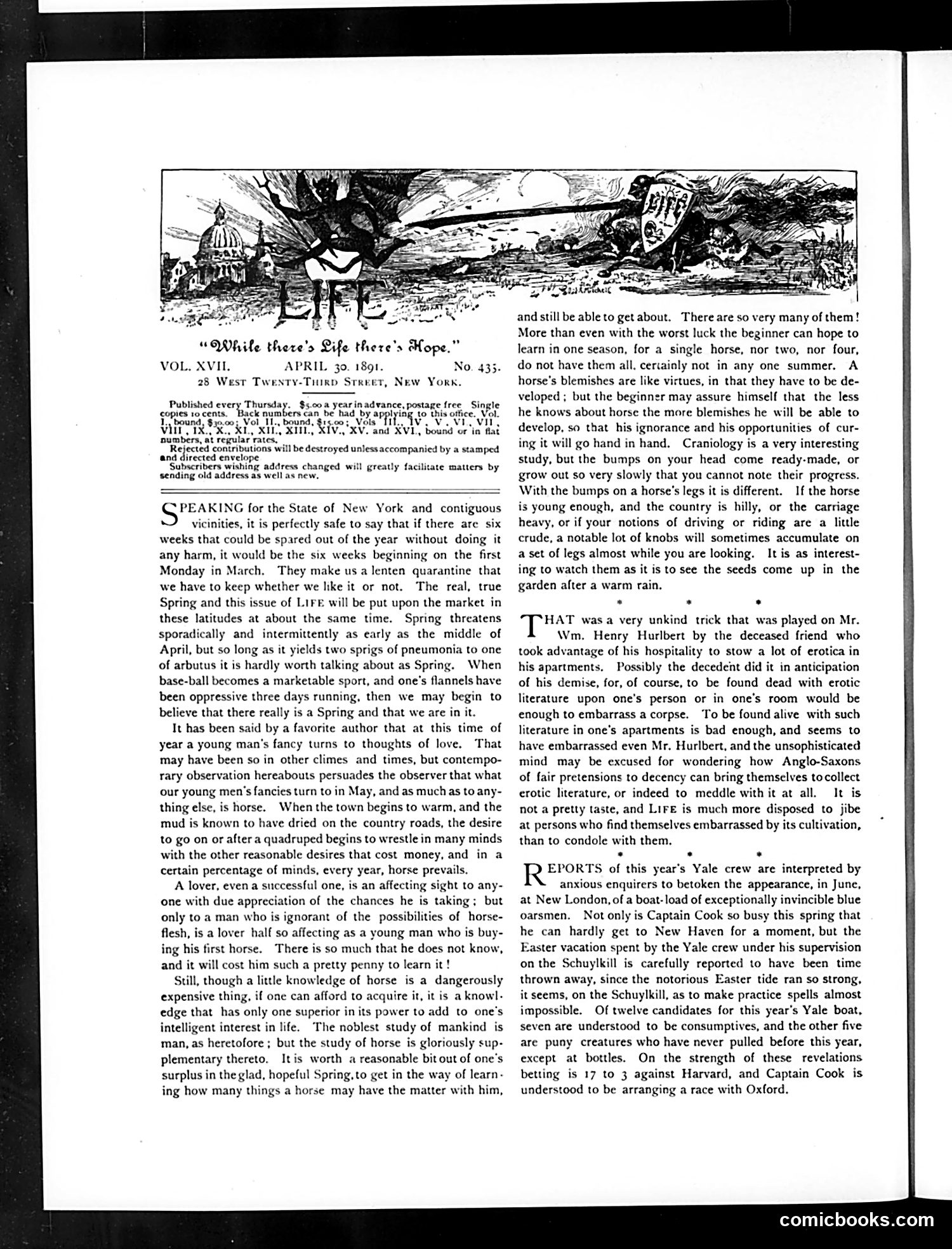
The masthead cartoon depicts a skeletal Death figure wielding a scythe over a landscape labeled "LIFE," with a banner reading "While there's Life there's Hope." This appears to be the magazine's standard header rather than commentary on a specific event. The article discusses spring horse-trading season in New York—a practical topic about purchasing horses. It humorously notes that beginners often overestimate their knowledge, acquiring horses with various physical defects (blemishes, bumps, sores) that develop slowly enough to hide from inexperienced buyers. The piece gently mocks spring's arrival as triggering widespread horse-purchasing fever despite the season's risks. A secondary anecdote describes a prank involving erotic literature planted in a guest's apartment—social satire about Victorian propriety and embarrassment.
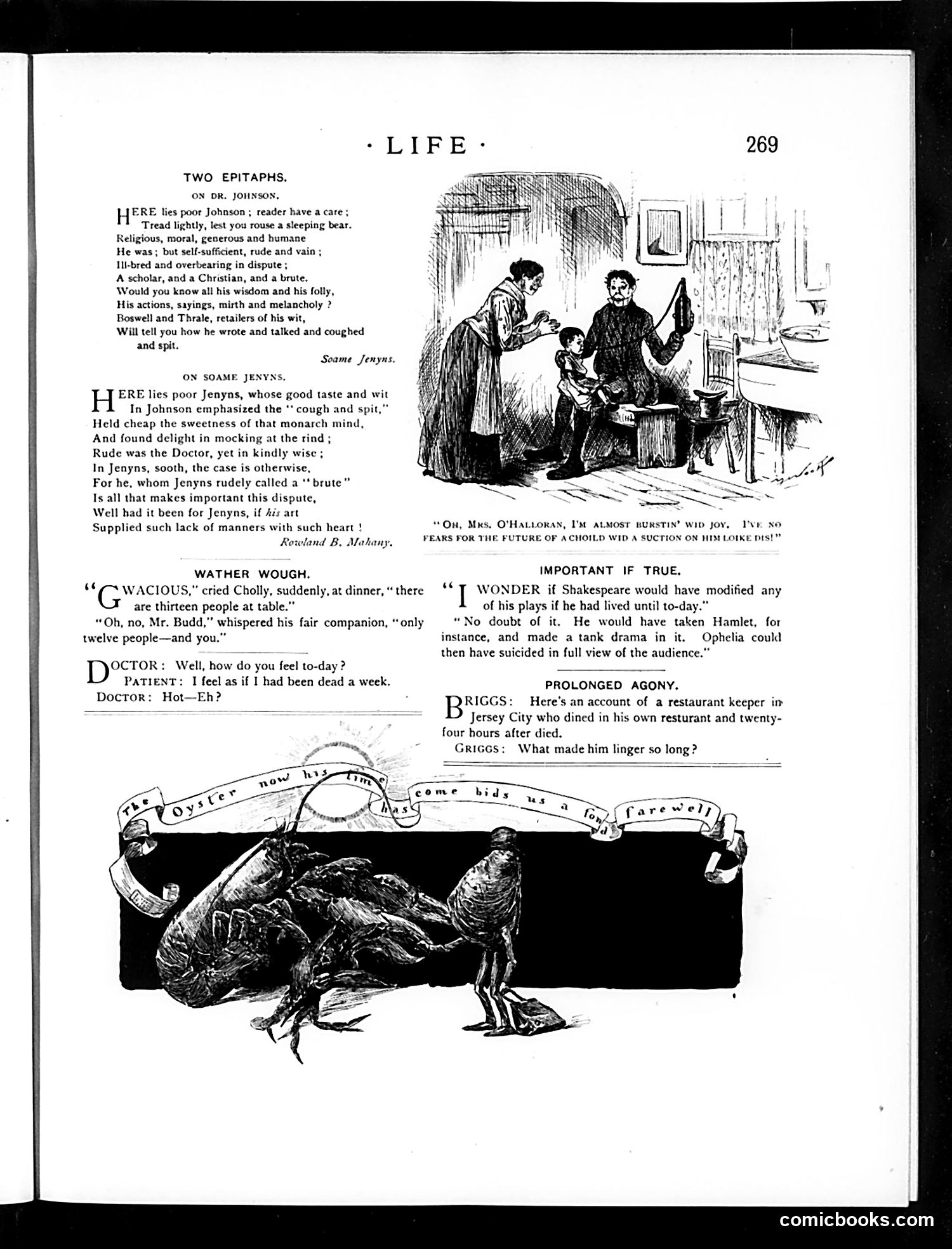
This page contains literary humor rather than political cartoons. The main content includes: **"Two Epitaphs"** - Mock epitaphs for Dr. Johnson and Jenyns, apparently mocking their character flaws through sardonic verse. **"Wather Wough"** - A brief dialogue joke about dinner guests, playing on the name "Budd." **"Important If True"** - A humorous speculation about whether Shakespeare would have revised his plays if he'd lived longer, suggesting he might have made Hamlet less tragic. **"Prolonged Agony"** - A joke about a restaurant keeper in Jersey City who lingered for twenty-four hours after dying. The illustration shows oysters with a decorative banner reading "come birds in a long farewell." This appears to accompany the dinner-related humor on the page. The overall tone is genteel Victorian-era satire focused on wordplay and literary wit rather than social commentary.
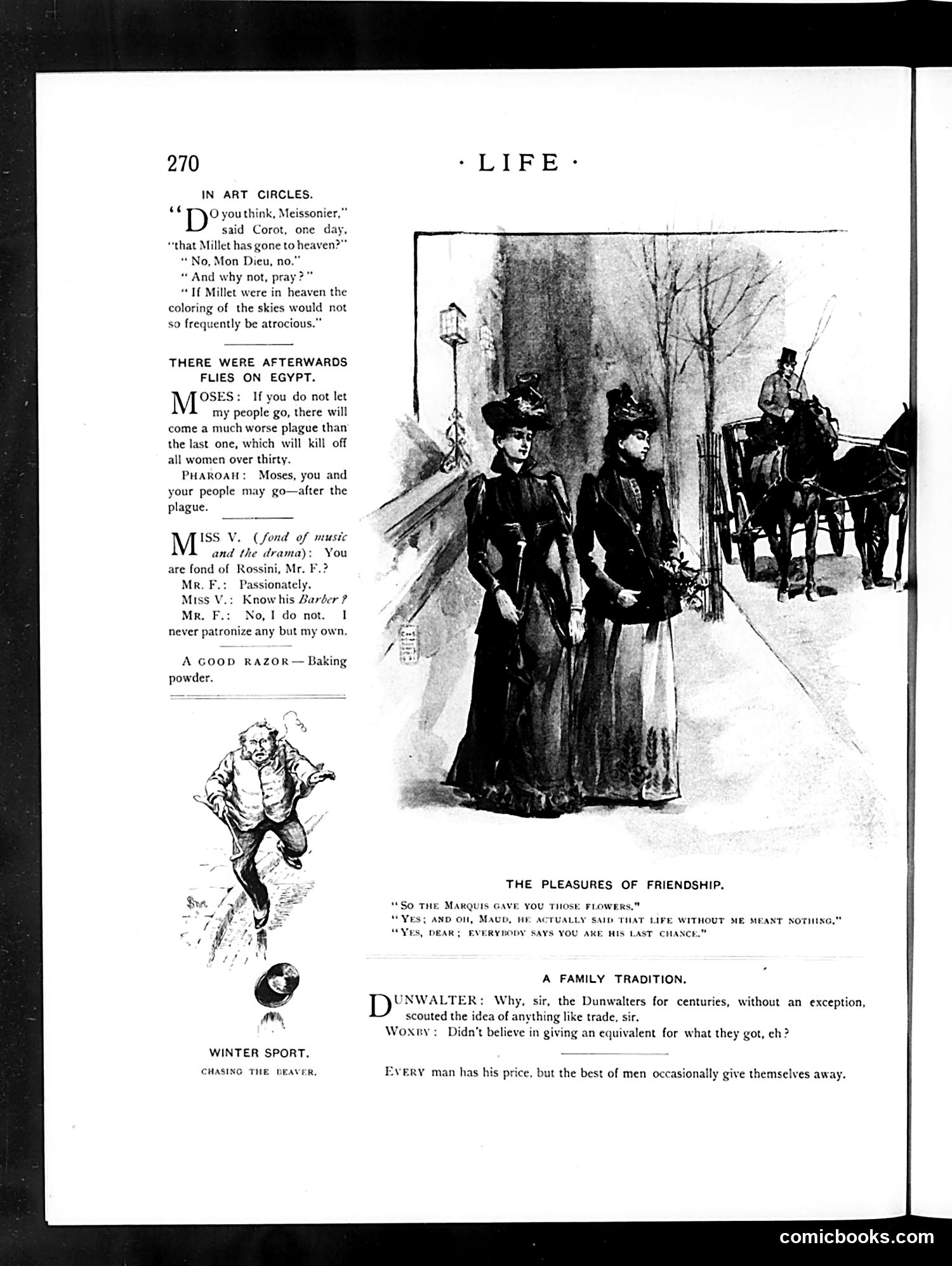
This page from *Life* magazine contains several satirical pieces: **"In Art Circles"** mocks pretentious aesthetic debates between Corot and Meisonnier (19th-century painters), with the joke that disagreements about artistic merit are ultimately trivial. **"There Were Afterwards Flies on Egypt"** presents a biblical-style dialogue between Moses and Pharaoh about plagues—likely satirizing contemporary political conflicts through biblical allegory, though the specific reference is unclear. **"The Pleasures of Friendship"** depicts an illustration of two women with a carriage, accompanied by witty dialogue about gift-giving and relationships. **"A Family Tradition"** features a dialogue between Dunwalter and Woxby about aristocratic pride and class attitudes toward commerce. **"Winter Sport: Chasing the Beaver"** shows a cartoon figure, likely satirizing some contemporary activity. The overall tone is genteel social satire typical of *Life*'s era.
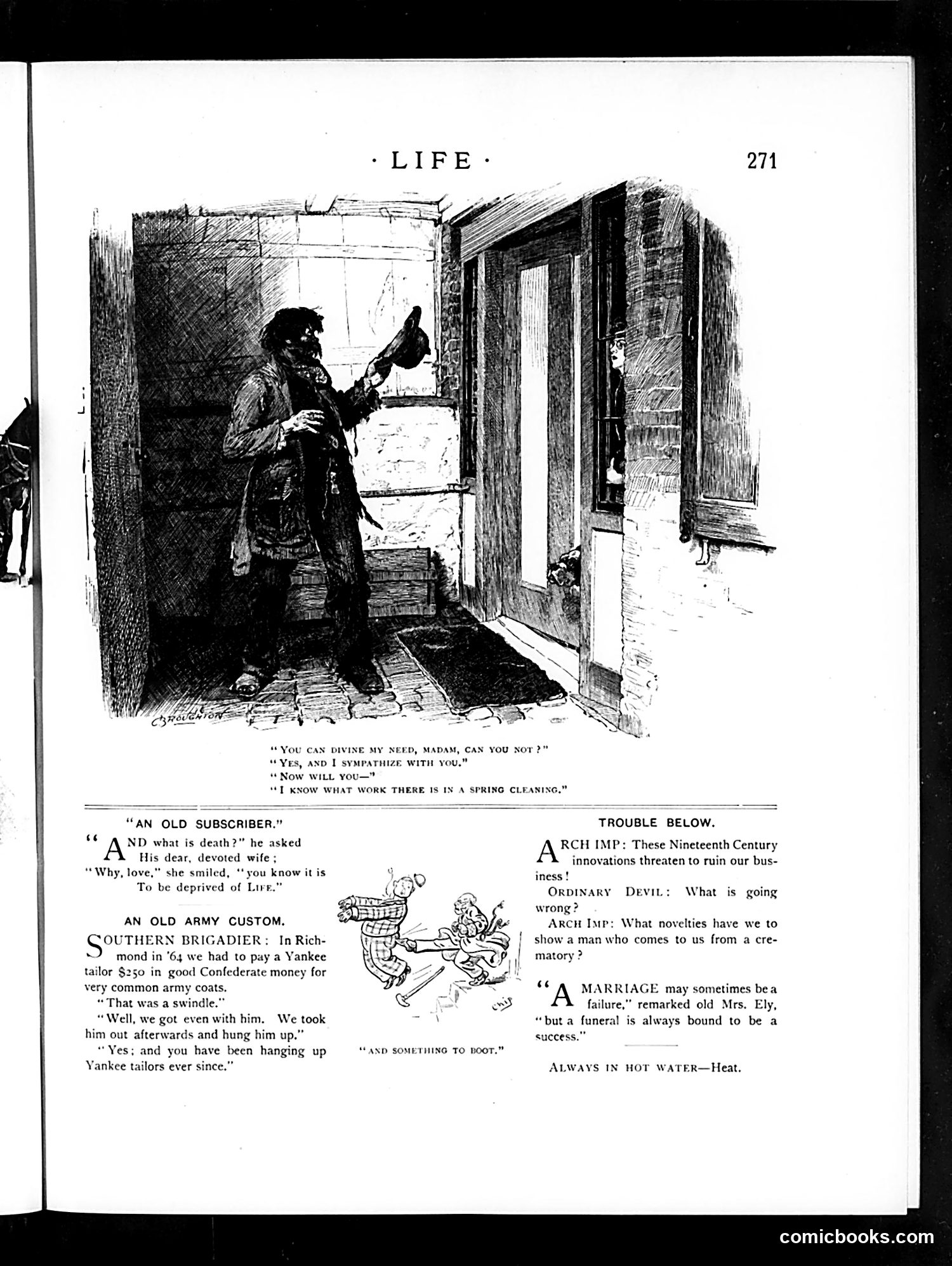
The main cartoon depicts a man with an axe confronting a woman at a doorway, illustrating the caption "You can divine my need, madam, can you not?" — a darkly humorous reference to spring cleaning. The woman responds she'll "sympathize" and knows "what work there is in a spring cleaning," suggesting domestic labor. Below are three brief satirical pieces: "An Old Subscriber" jokes about death; "An Old Army Custom" recounts hanging a Yankee tailor during the Civil War for counterfeiting; and "Trouble Below" mocks 19th-century innovations threatening business, with dialogue between "Arch Imp" and "Ordinary Devil." The page concludes with aphorisms on marriage and heat, typical of Life's miscellaneous humor format.
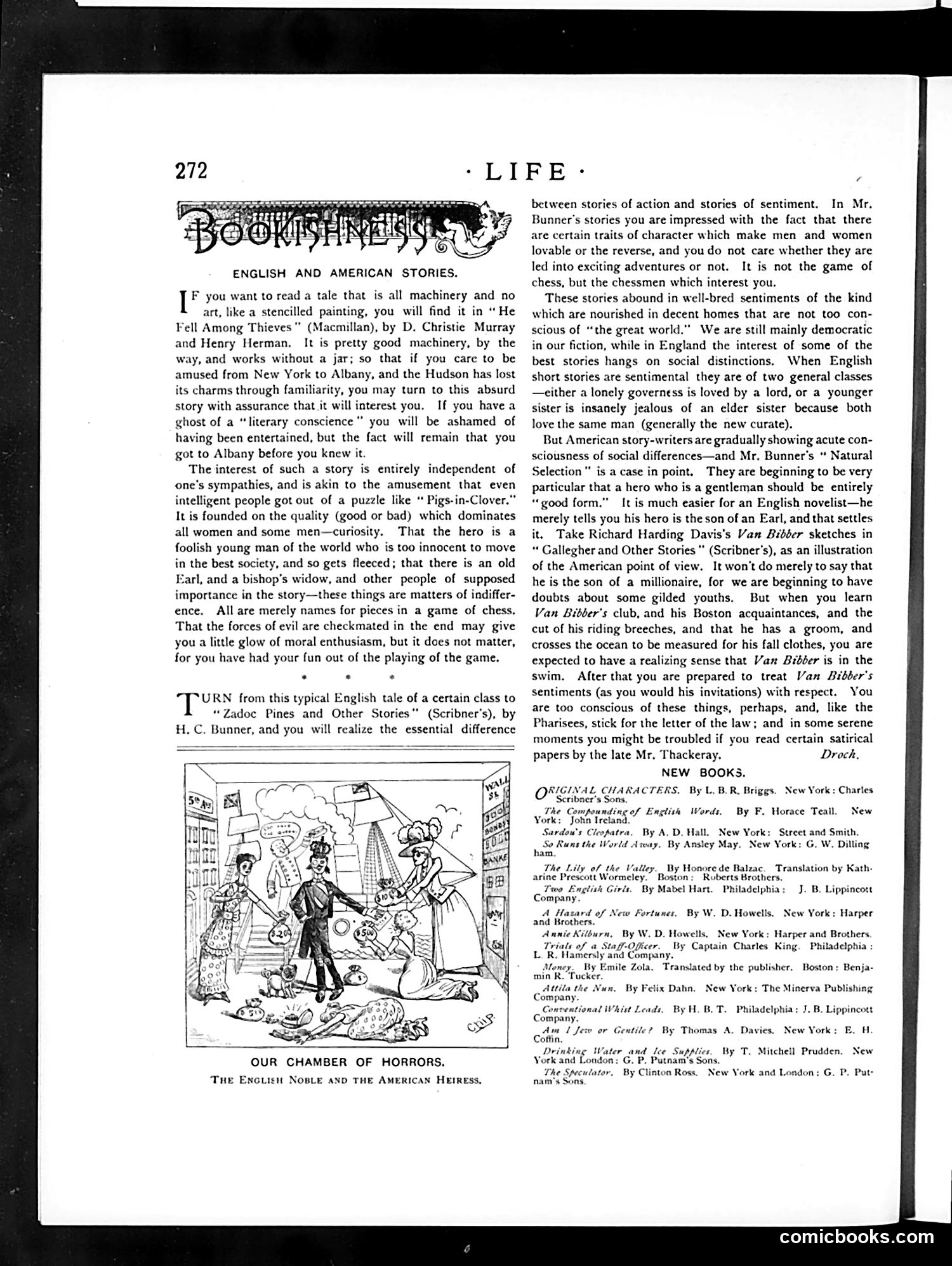
This cartoon satirizes the contrast between English and American social hierarchies. The illustration depicts a chaotic domestic scene labeled "The English Noble and the American Heiress" — likely referencing the contemporary phenomenon of wealthy American women marrying impoverished European aristocrats. The accompanying text discusses how English fiction emphasizes social distinctions and propriety, while American stories focus on individual character rather than class status. The cartoon appears to mock this cultural clash: the "chamber of horrors" shows the disorder and impropriety resulting when an American heiress (accustomed to wealth and informality) encounters English nobility's rigid codes of conduct and decorum. The satire critiques both cultures' pretensions regarding social class and matrimonial arrangements.
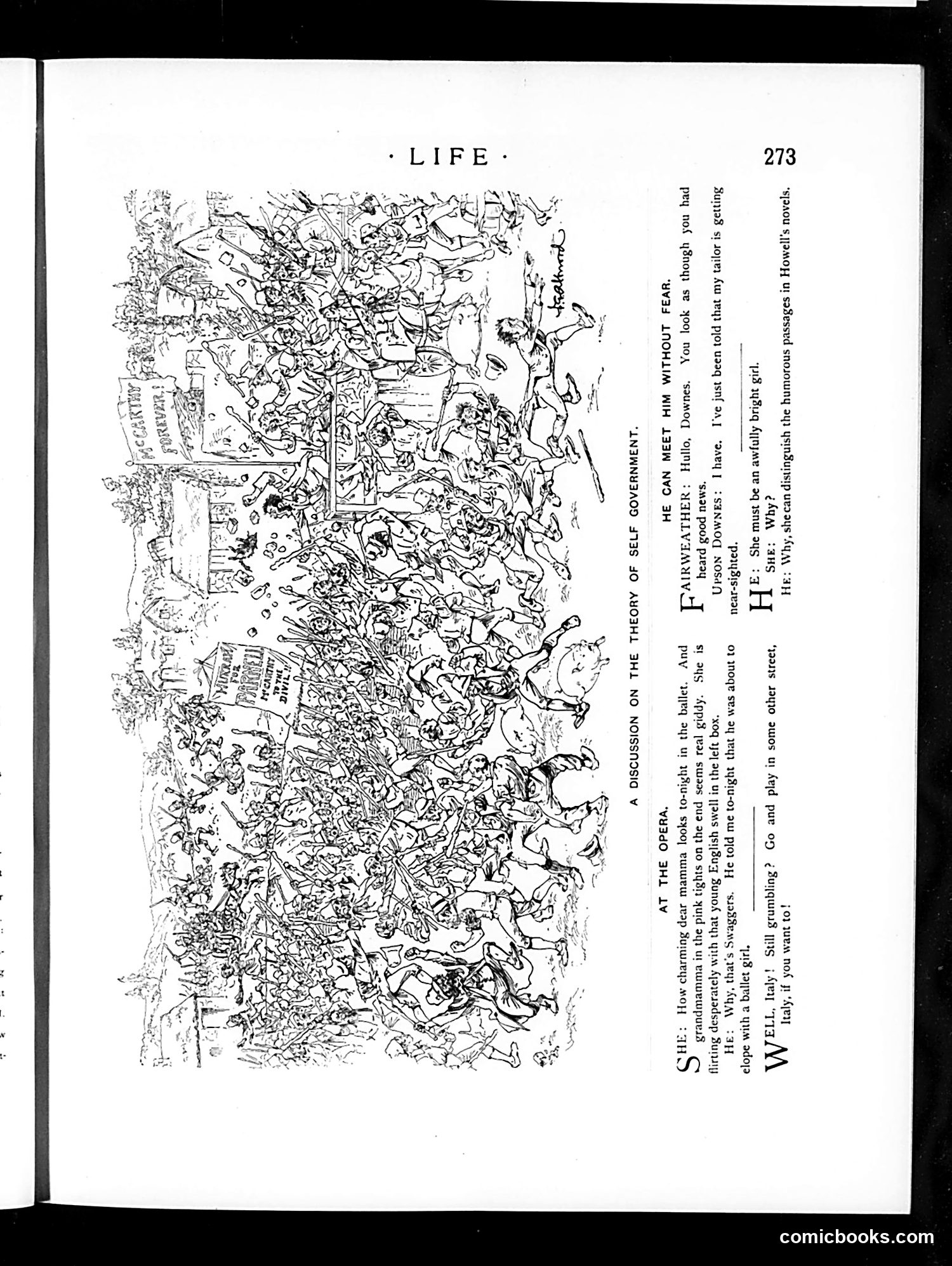
This page features a densely crowded cartoon titled "A Discussion on the Theory of Self Government at the Opera." The illustration depicts what appears to be an operatic or theatrical scene packed with numerous figures in apparent chaos or animated discussion. The accompanying text references "unweathers" and "hard govs" (likely "hard governance"), suggesting political debate. References to "She" and "Why" indicate this satirizes gender politics or women's suffrage — a hot topic in early 20th-century America. The satire seems to mock serious political discourse by setting it in an opera house, suggesting the participants are theatrical or performative rather than genuinely substantive. The crowded composition emphasizes chaos and cacophony in democratic debate about self-government, particularly regarding women's political participation.
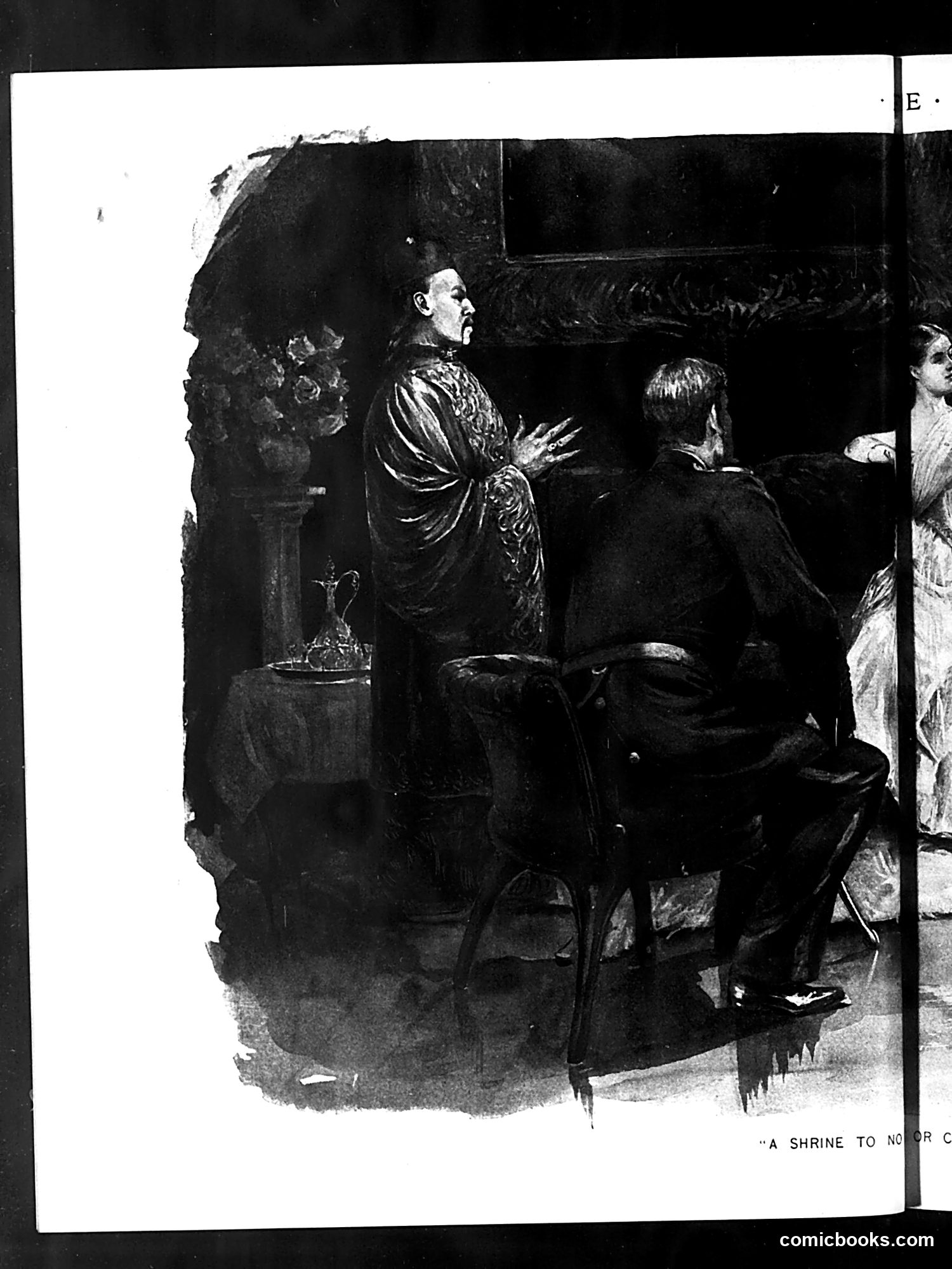
This appears to be a satirical illustration from *Life* magazine showing an interior scene. A standing figure in elaborate robes gestures expressively while addressing a seated man in dark clothing. The composition and the visible caption fragment "A SHRINE TO NO..." suggest this is political satire, likely mocking some form of worship or reverence directed toward a particular figure or ideology. The formal, ornate setting and the robed figure's theatrical posture suggest the cartoonist is ridiculing excessive veneration or idolatry. However, without the complete caption text, I cannot definitively identify which specific political figure, movement, or historical event is being satirized. The image quality and partial text limit certain identification of the exact target of this satire.
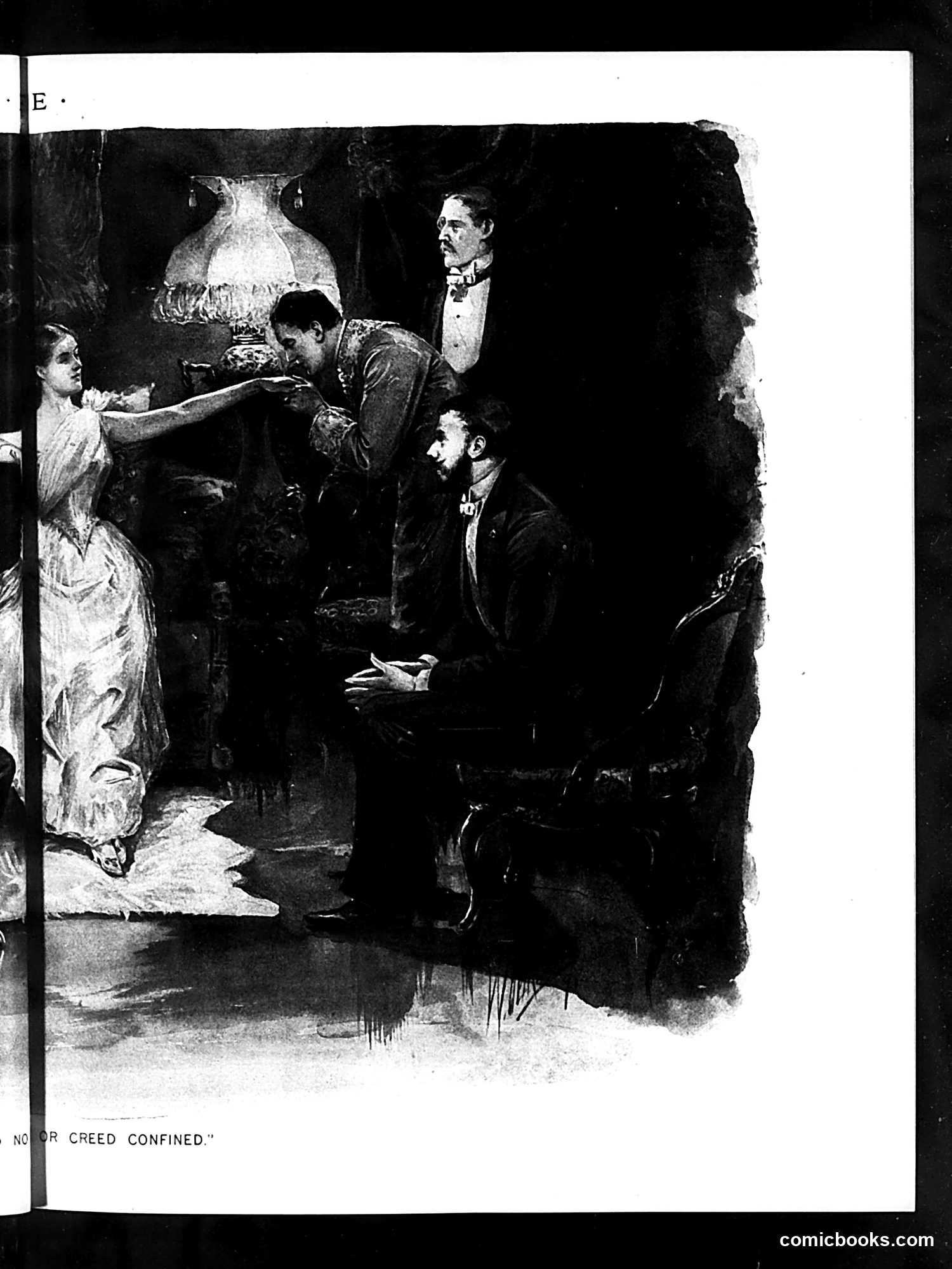
This appears to be a satirical scene depicting a social or religious gathering. The visible text fragment "NO CREED CONFINED" suggests commentary on religious tolerance or the breaking of sectarian boundaries. The image shows five figures in formal early 20th-century dress in what appears to be an interior setting, with a large decorative vessel visible above them. Without access to the full page context or caption, the specific satirical target remains unclear—it could reference interfaith dialogue, religious hypocrisy, or social pretensions about religious acceptance among the wealthy or elite. The sketch style and composition suggest Life magazine's typical approach to mocking social attitudes or current events through dramatic scenes. More context from surrounding text or captions would be needed to identify the specific figures or events being ridiculed.
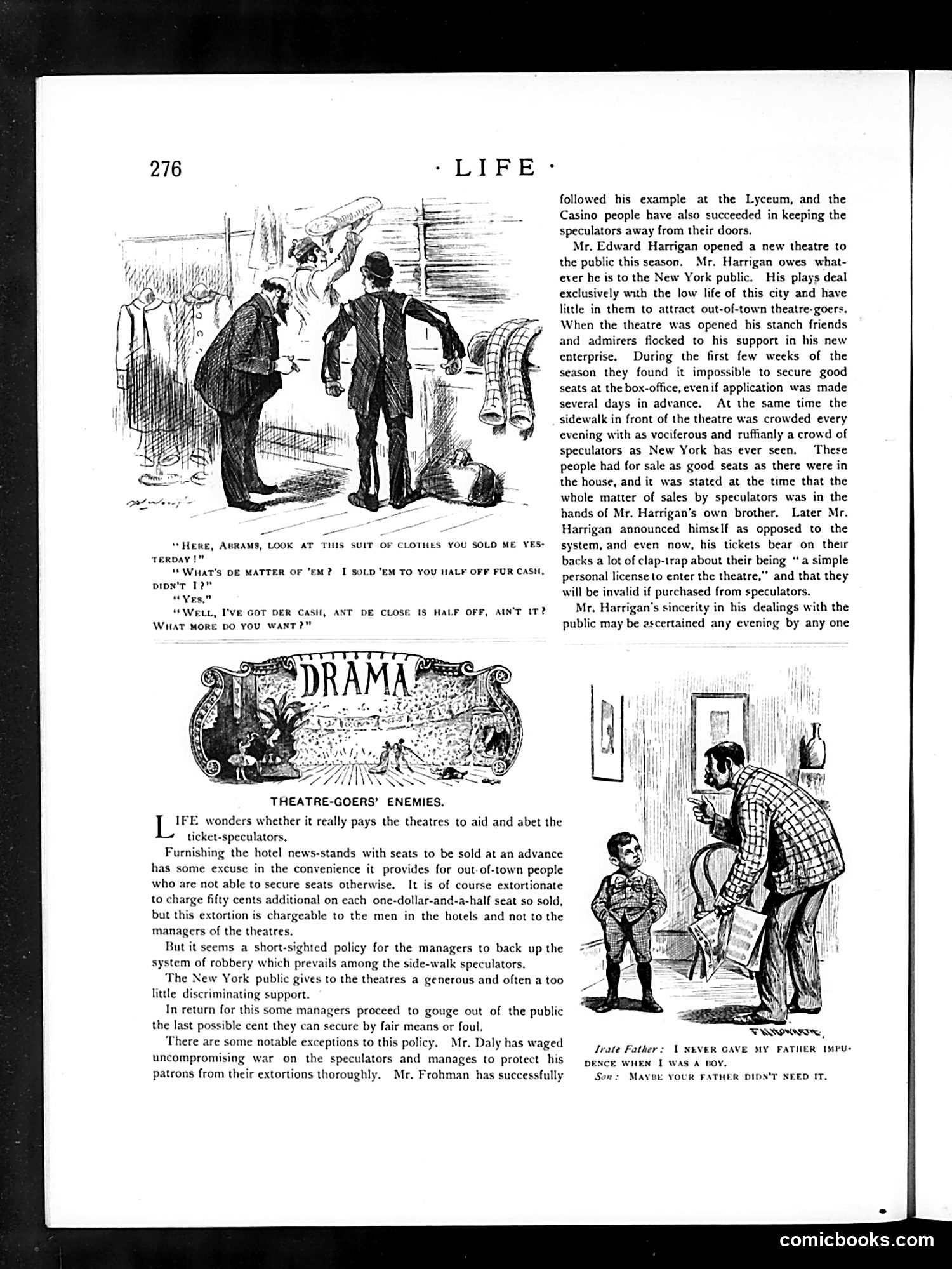
This page satirizes **ticket scalping**—a practice where speculators bought theater seats at face value and resold them at inflated prices to desperate patrons. The top cartoon mocks a Jewish clothing merchant (stereotyped as "Abrams") using circular logic: he sold clothes "half off for cash," yet when the customer points out the clothes are literally falling apart (half-off = falling off), he claims he's delivered exactly what was promised. This parallels theater scalpers' exploitation—technically delivering goods while brazenly cheating customers. The article criticizes theater managers who *enable* scalpers by supplying them inventory through hotel news-stands. It praises exceptions like **Mr. Daly** and **Mr. Frohman** who fought speculators, while condemning **Edward Harrigan** (a popular playwright) whose brother allegedly controlled ticket sales despite Harrigan's public opposition to the practice. The bottom cartoon is unrelated domestic humor about parental discipline.
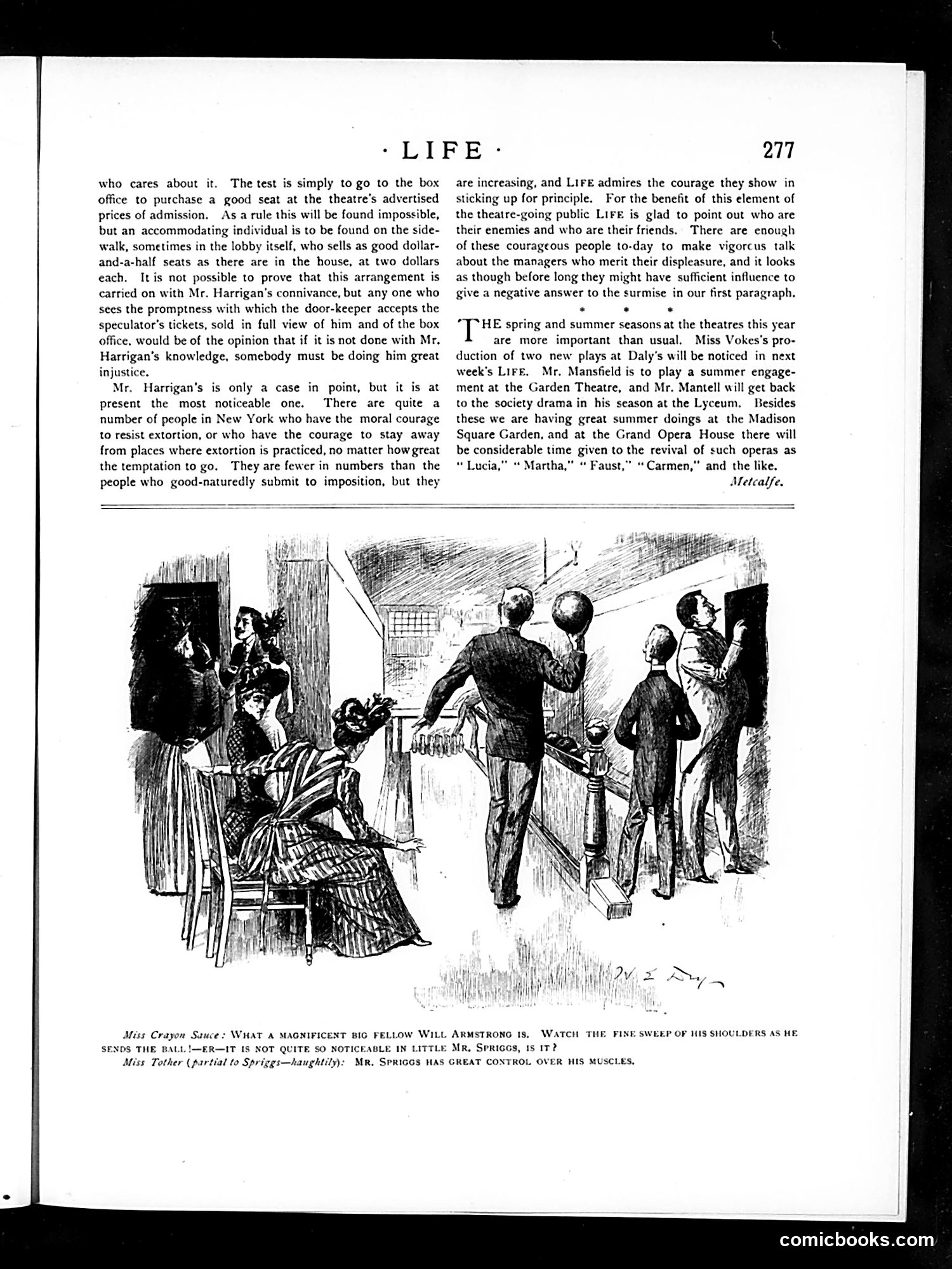
This page critiques **ticket scalping at New York theaters**, particularly at Harrigan's Theatre. The text describes how box-office seats are nearly impossible to obtain at advertised prices, forcing patrons to buy from sidewalk scalpers charging inflated rates (two dollars instead of one-and-a-half). Life suggests theater management tacitly permits this scheme, praising those with "moral courage" to resist extortion. The cartoon below satirizes vanity and physical boasting. **Miss Crayon Sauce** marvels at "Armstrong's" magnificent physique and broad shoulders, while dismissively noting that **little Mr. Spriggs** lacks such visible musculature—though Miss Tother defensively insists Spriggs has "great control over his muscles." The joke mocks how people rationalize or compensate for physical shortcomings through claims of hidden strength or discipline.
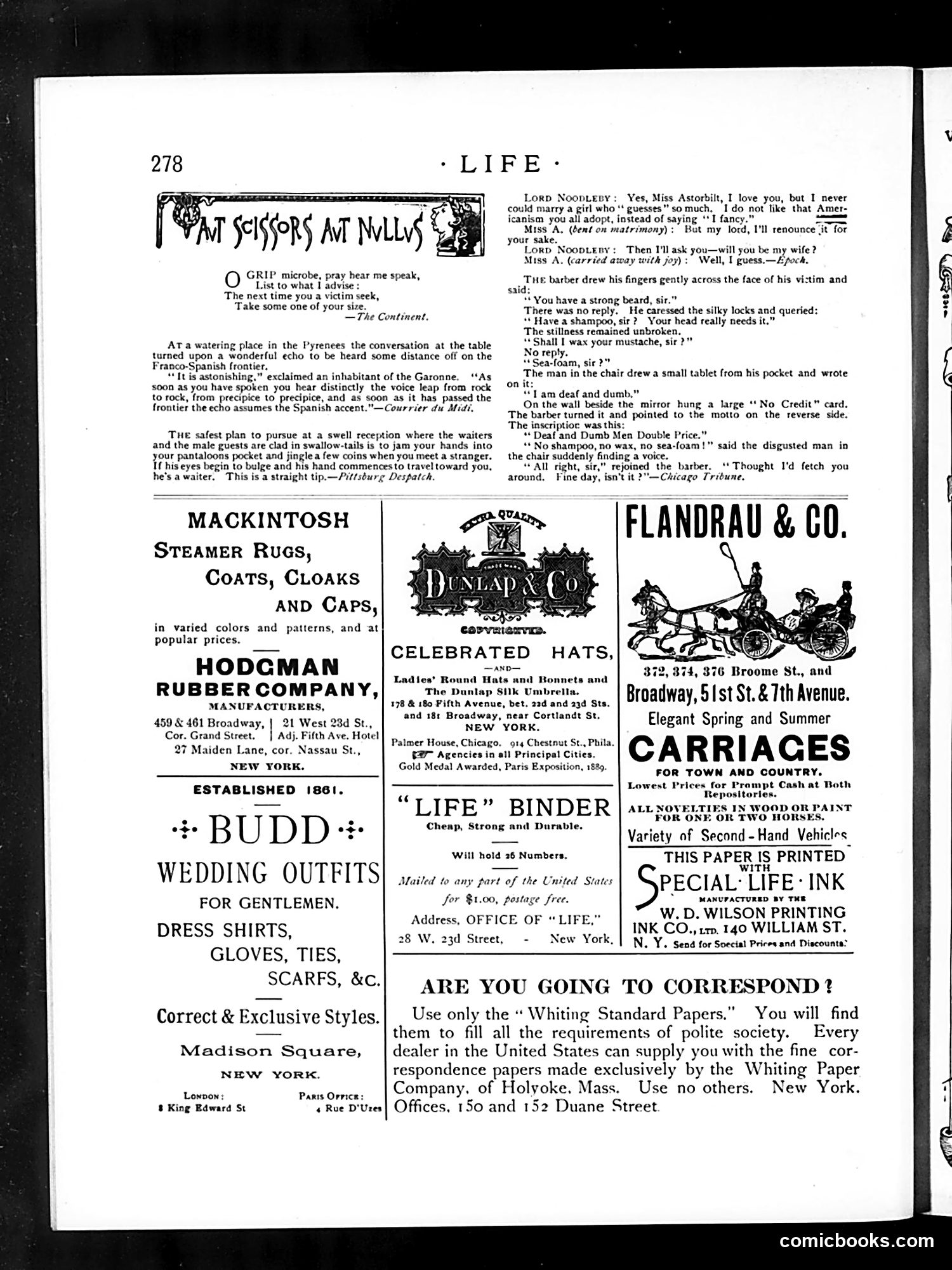
This page contains three short humorous pieces typical of *Life* magazine's satirical style: 1. **"Scissors at Nulls"**: A poem advising "Grip microbe" (personified disease/illness) to attack victims of equal strength rather than the weak—a jab at bullies who prey on the defenseless. 2. **Franco-Spanish Echo**: A joke about national stereotypes, claiming the echo itself adopts a Spanish accent after crossing the frontier—mocking Spanish speech patterns as distinctive or comedic. 3. **The Deaf Barber's Ruse**: A working-class comedy about a barber who pretends not to hear a customer's requests, then suddenly "finds his voice" when the customer protests the "double price for deaf and dumb men" sign. The barber's deception exposes petty fraud. The page is primarily **advertising** for period goods (rubber goods, hats, carriages, wedding outfits), with these satirical pieces interspersed—typical *Life* magazine format showcasing social humor and commercial messages together.