
Life, 1891-04-30 · page 12 of 14
Life — April 30, 1891 — page 12: what you’re looking at
What you’re looking at
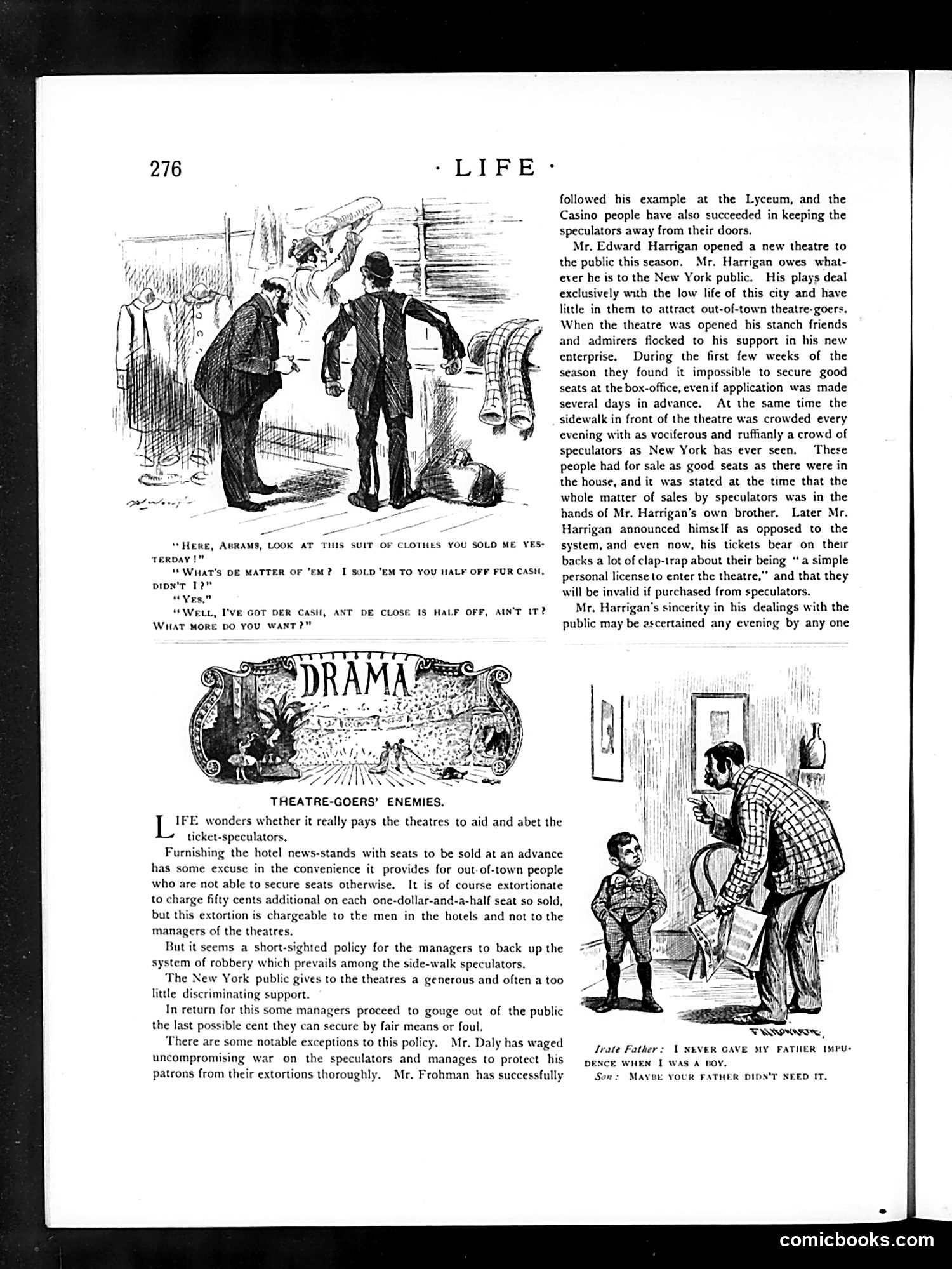
This page satirizes **ticket scalping**—a practice where speculators bought theater seats at face value and resold them at inflated prices to desperate patrons. The top cartoon mocks a Jewish clothing merchant (stereotyped as "Abrams") using circular logic: he sold clothes "half off for cash," yet when the customer points out the clothes are literally falling apart (half-off = falling off), he claims he's delivered exactly what was promised. This parallels theater scalpers' exploitation—technically delivering goods while brazenly cheating customers. The article criticizes theater managers who *enable* scalpers by supplying them inventory through hotel news-stands. It praises exceptions like **Mr. Daly** and **Mr. Frohman** who fought speculators, while condemning **Edward Harrigan** (a popular playwright) whose brother allegedly controlled ticket sales despite Harrigan's public opposition to the practice. The bottom cartoon is unrelated domestic humor about parental discipline.
📄 Transcribed text from this page (OCR, searchable)
Machine-transcribed from the original scan — historical spelling and the odd misread are preserved.
“HERE, ABRAMS, LOOK AT THIS SUIT OF CLOTHES YOU SOLD ME YES- TeRpay !” “WHAT'S DE MATTER OF ‘em? I SOLD 'EM TO YOU HALF OFF FUR CASH, pipy'r 12” “YES,” “WELL, I'VE GOT DER CAS » ANT DE CLOSE IS HALF OFF, AIN'T IT? WuaT MORE DO YOU WANT?” followed his example at the Lyceum, and the Casino people have also succeeded in keeping the speculators away from their doors. Mr. Edward Harrigan opened a new theatre to the public this season. Mr. Harrigan owes what- ever he is to the New York public. His plays deal exclusively with the low life of this city and have little in them to attract out-of-town theatre-goers. When the theatre was opened his stanch friends and admirers flocked to his support in his new enterprise. During the first few weeks of the season they found it impossible to secure good seats at the box-office, even if application was made several days in advance. At the same time the sidewalk in front of the theatre was crowded every evening with as vociferous and ruffianly a crowd of speculators as New York has ever seen, These people had for sale as good seats as there were in the house, and it was stated at the time that the whole matter of sales by speculators was in the hands of Mr. Harrigan’s own brother. Later Mr. Harrigan announced himself as opposed to the system, and even now, his tickets bear on their backs a lot of clap-trap about their being “a simple personal license to enter the theatre,” and that they will be invalid if purchased from speculators. Mr. Harrigan’s sincerity in his dealings with the public may be ascertained any evening by any one THEATRE-GOERS’ ENEMIES, IFE wonders whether it really pays the theatres to aid and abet the ticket-speculators, Furnishing the hotel news-stands with seats to be sold at an advance has some excuse in the convenience it provides for out-of-town people who are not able to secure seats otherwise, It is of course extortionate to charge fifty cents additional on each one-dollar-and-a-half seat so sold, but this extortion is chargeable to the men in the hotels and not to the managers of the theatres, But it seems a short-sighted policy for the managers to back up the system of robbery which prevails among the side-walk speculators. The New York public gives to the theatres a generous and often a too litle discriminating support. In return for this some managers proceed to gouge out of the public the last possible cent they can secure by fair means or foul. There are some notable exceptions to this policy. Mr. Daly has waged uncompromising war on the speculators and manages to protect his patrons from their extortions thoroughly. Mr. Frohman has successfully Irate Father: V SEVER GAVE MY FATHER IMPU- DENCE WHEN I WAS A boy. Son: MAYBE YOUR FATHER DIDN'T NEED IT, comicbooks.com