
A complete issue · 16 pages · 1885
Life — May 21, 1885
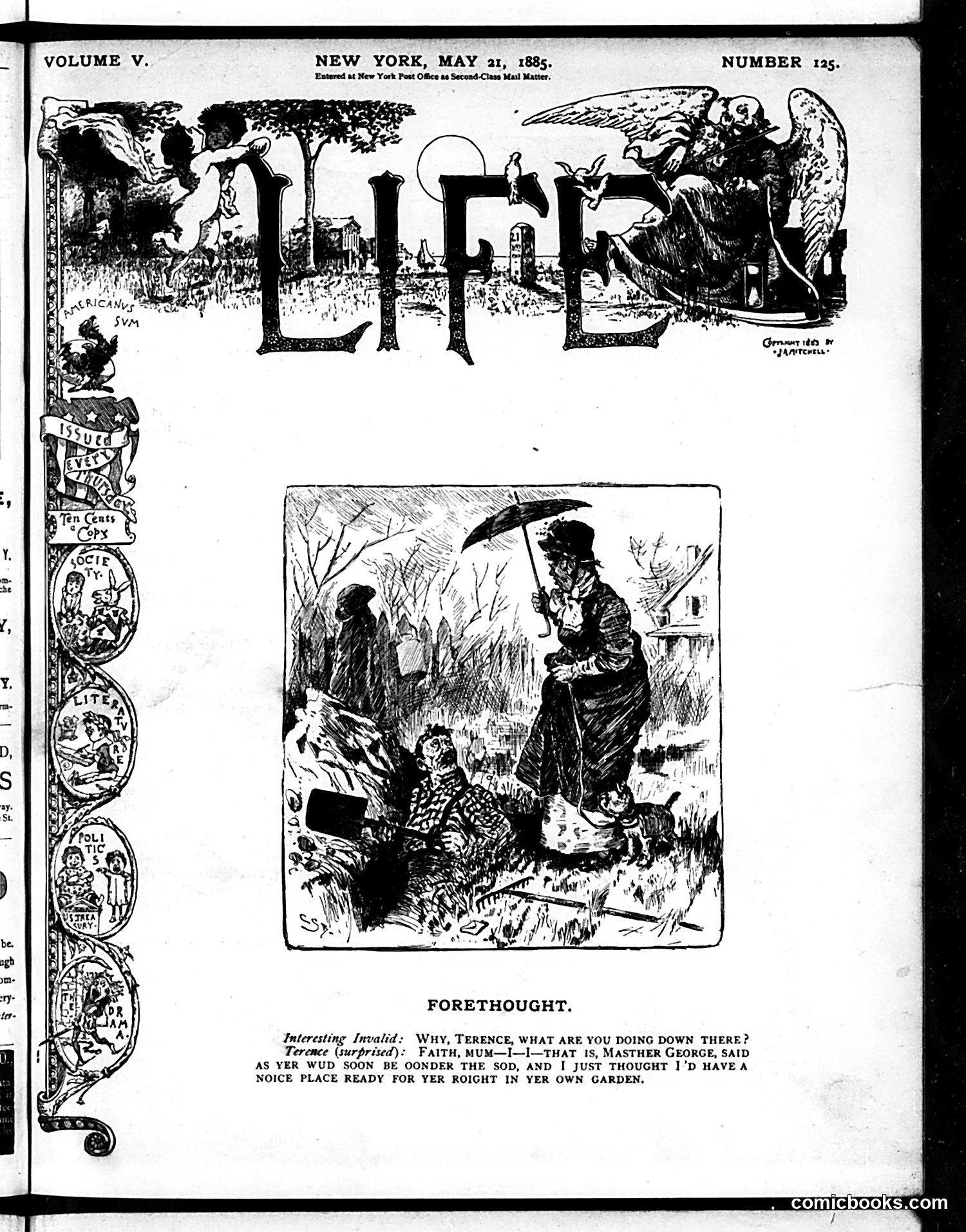
This page from *Life* magazine features a cartoon titled "Forethought." The illustration shows two figures discovering a child in what appears to be a garden or outdoor setting during rain. The dialogue indicates one character (Terence, apparently Irish based on dialect) is surprised to find a boy outside, while another explains he's prepared a "noice place" in the garden for the child to play in foul weather. The humor appears to target Irish immigrant parenting practices or working-class child-rearing methods of the era—satirizing the notion of leaving children outdoors in rain as "preparation" or practical child-rearing. The exaggerated Irish dialect reinforces contemporary ethnic stereotyping common in 1890s American satire. The "forethought" title suggests ironic commentary on questionable parental judgment.
The page contains three satirical editorial pieces with no visible cartoon illustrations. **Key topics:** 1. **Lothrop appointment**: Criticizes President Cleveland's appointment of George V. N. Lothrop as Minister to Russia, arguing he lacks political credentials and has obtained the position through connections rather than merit. 2. **Boston criticism**: Mocks a Bostonian's claim that New York is filthy, countering that Boston's own conditions are poor and that Bostonians lack civic pride compared to New Yorkers. 3. **Legislative relief**: Celebrates that the legislature has adjourned, joking that churches should be thankful. References the "Freedom of Worship Bill" as problematic for religious enthusiasts. 4. **Criminal justice**: Notes recent deaths of notorious gamblers, arguing that removing hardened criminals reduces social danger and legal burden.
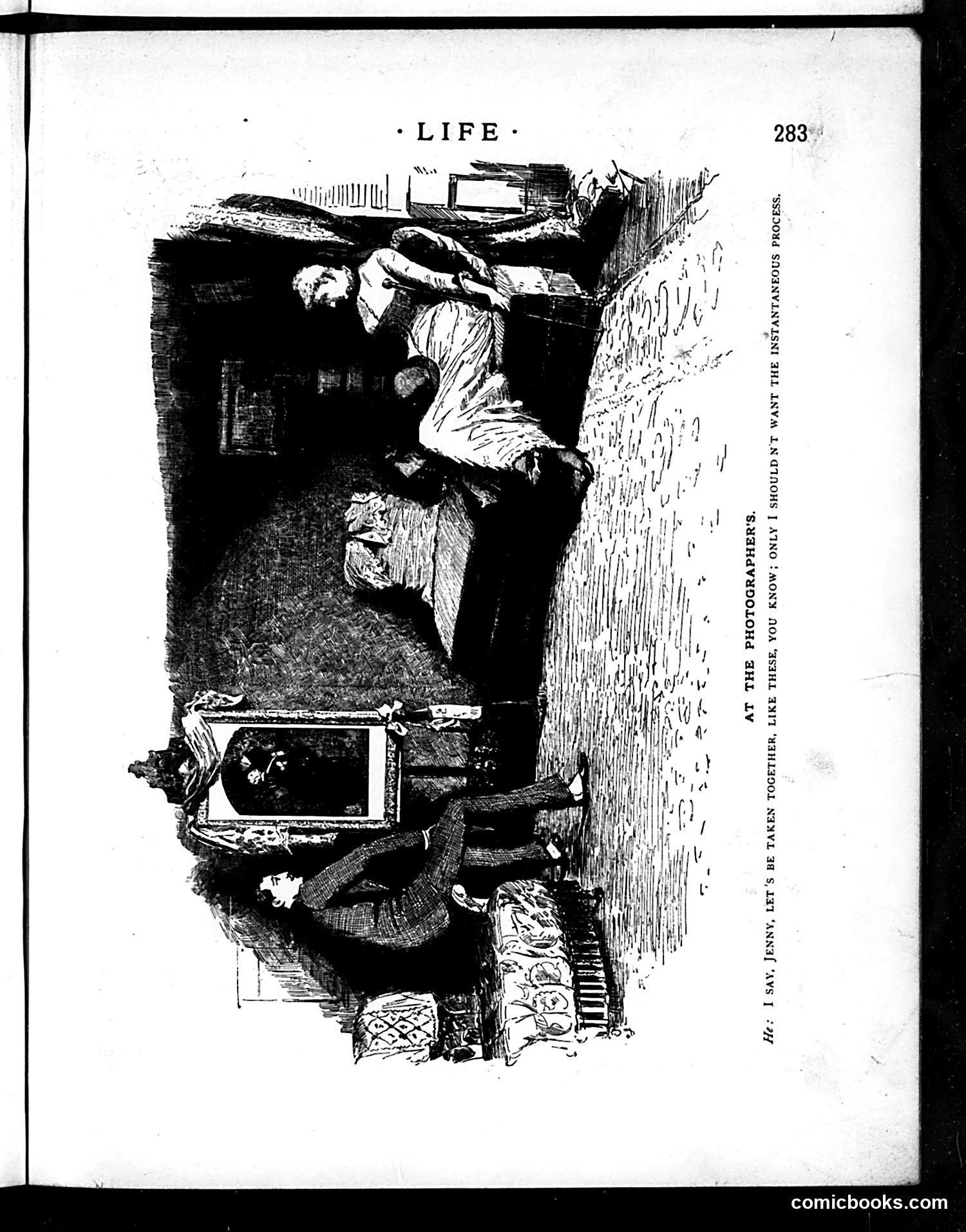
This page from *Life* magazine (page 283) contains a single cartoon titled "At the Photographer's," with the caption: "He: 'I am, Jenny, let's turn together like these, you know I should want the disastrous process.'" The image shows two figures in what appears to be a photography studio setting. The cartoon satirizes the awkwardness and discomfort of having one's photograph taken—a process that was more formal and lengthy in the era when this was published. The male figure appears to be giving instructions to the female subject about posing, likely making an uncomfortable or presumptuous suggestion during the sitting. The satire targets the social awkwardness and potentially inappropriate behavior that could occur during intimate studio photography sessions.
The page contains three separate pieces: 1. **"The Russian General's Song"** — A satirical poem mocking Russian military ambitions, likely from the Russo-Japanese War era (early 1900s). The speaker boasts of destructive power while the refrain "sonofa skeet" (phonetic dialect humor) undercuts his grandiosity. References to the Czar, dynamite, and conflicts with England suggest contemporary geopolitical anxieties. 2. **Brief items** about Sunset Cox (a historical political figure) and ship-naming conventions—minor satirical notes. 3. **"The Autobiography of an Unsuccessful Slugger"** — A humorous first-person account by someone claiming Bostonian/Philadelphian heritage, apparently about failing at boxing or some competitive endeavor, with social commentary on marriage and class. The decorative header features silhouetted figures in exaggerated poses, typical of Life's artistic style.
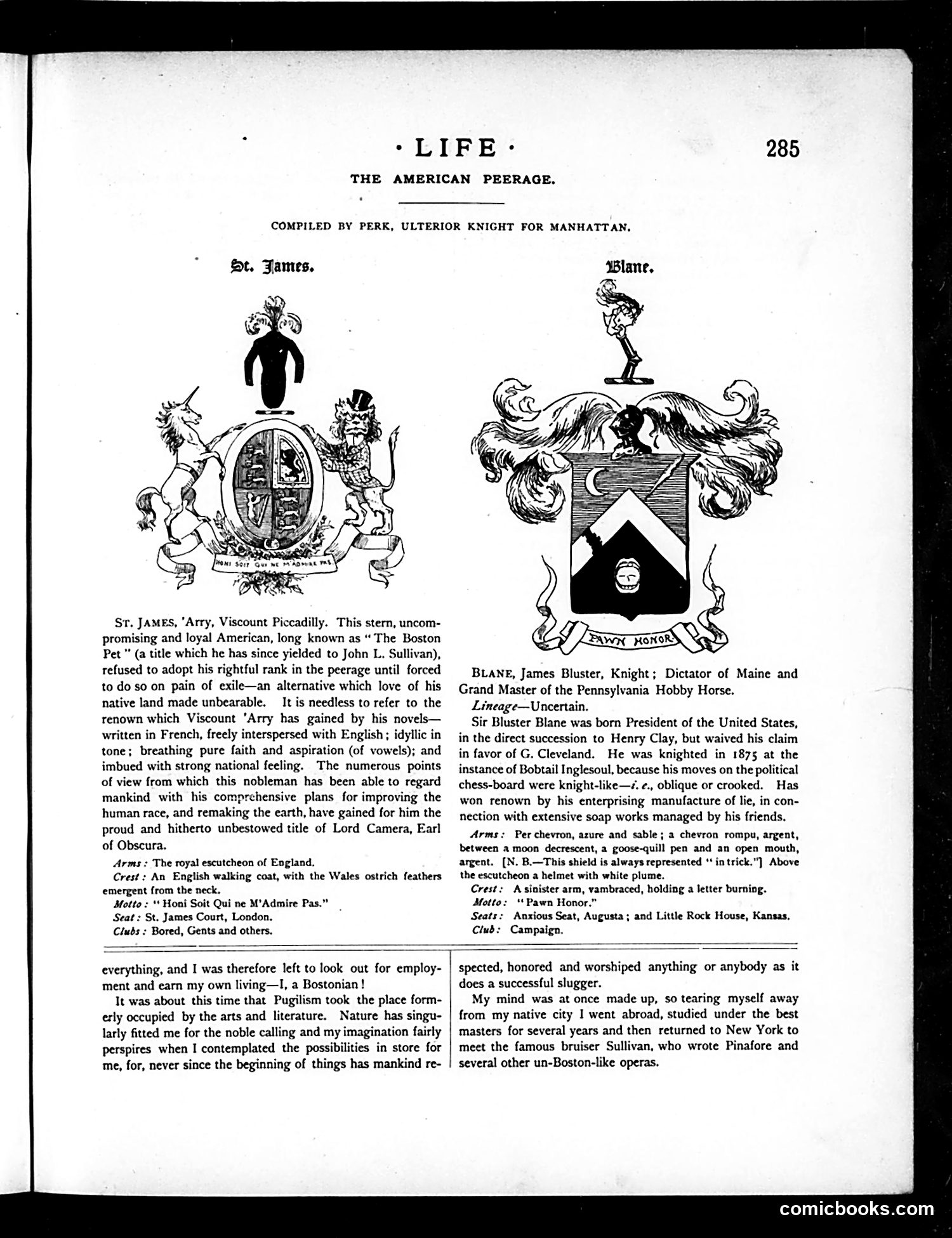
This page from *Life* magazine presents heraldic coats of arms for two prominent Americans, treating them as if they were European nobility—a satirical commentary on American social pretension. **St. James** (Viscount Piccadilly), described as an "unpromising and loyal American," refused his rightful aristocratic rank, preferring American identity. The joke satirizes those claiming European credentials. **James Bluster Blanc**, a "Knight" and "Dictator of Maine," appears to be a fictional character created to mock American self-aggrandizement. The elaborate heraldry—with crests, mottos, and genealogical claims—lampoons how wealthy Americans invented or exaggerated titles and noble ancestry to appear sophisticated. The satire targets American social climbing and the desire to mimic European aristocracy despite the nation's republican ideals.
This page contains primarily literary content rather than political cartoons. The main sections are: 1. **A personal narrative** describing a dramatic evening at "Square Garden" involving Sullivan and the author, touching on victory and family drama. 2. **"Ideal"** — a poem by Ward Ernest Smith about romantic love and female perfection. 3. **"Bookshelf" section** reviewing Howard Pyle's novel "Within the Capes," praising its artistic descriptions of Bahamian landscapes and suggesting it effectively combines adventure, crime, and natural scenery. The page lacks satirical political commentary or caricatures. It appears to be a cultural/literary page typical of Life magazine's broader content beyond political satire, focusing on contemporary fiction and poetry.
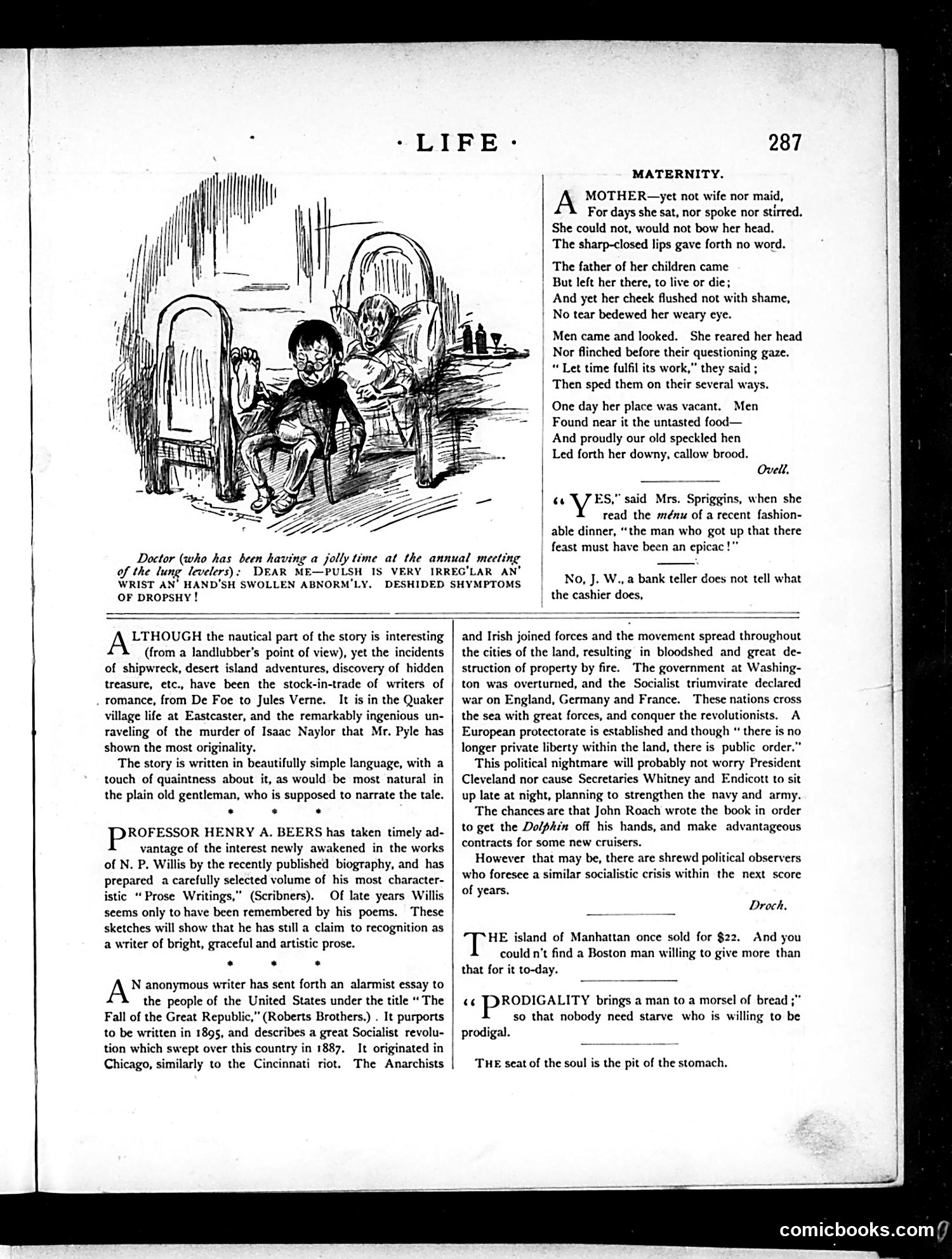
**The Cartoon:** The sketch depicts a thin, gaunt mother with children in a sparse interior, illustrating the poem "Maternity" below it. The image shows domestic poverty and maternal suffering—a woman who has borne children but received no support from their father, left "to live or die." **The Satire:** The accompanying text satirizes social indifference to poverty. One anecdote mocks a wealthy dinner guest who complained about an "epicure" waiter—suggesting the rich obsess over trivial dining details while mothers and children starve. Another quip jokes that a bank teller wouldn't reveal what a cashier does, implying financial corruption. **Context:** This reflects late-19th-century Progressive Era criticism of social inequality, inadequate labor wages, and abandonment of poor mothers—issues that motivated Socialist movements and reform efforts of the period.
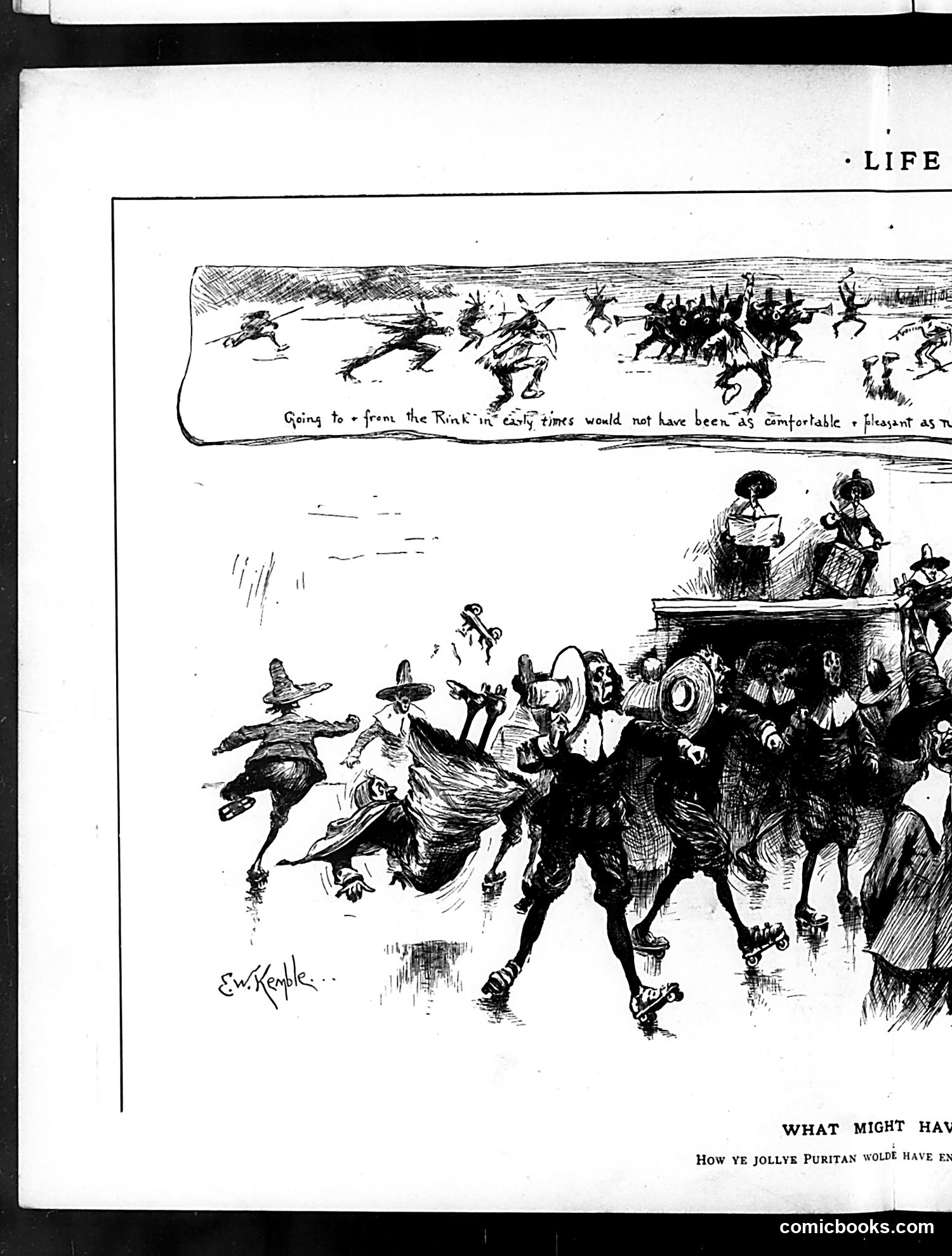
This satirical cartoon depicts ice skating as a leisure activity. The top panel shows historical figures awkwardly skating, with text reading "Going to & from the Rink in early times would not have been as comfortable & pleasant as it..." The main illustration below shows a chaotic ice skating scene with people in various states of comedic distress—slipping, falling, and colliding. The artist's signature appears to read "E.W. Kemble" (a noted Life contributor). The caption references "WHAT MIGHT HAVE" and mentions "HOW YE JOLLYE PURITAN WOULD HAVE EN[JOYED]" (text cut off). The satire likely contrasts modern ice-skating comfort with how Puritans would have ungracefully attempted the activity, using physical comedy to mock both their presumed awkwardness and the contrast between historical and contemporary leisure pursuits.
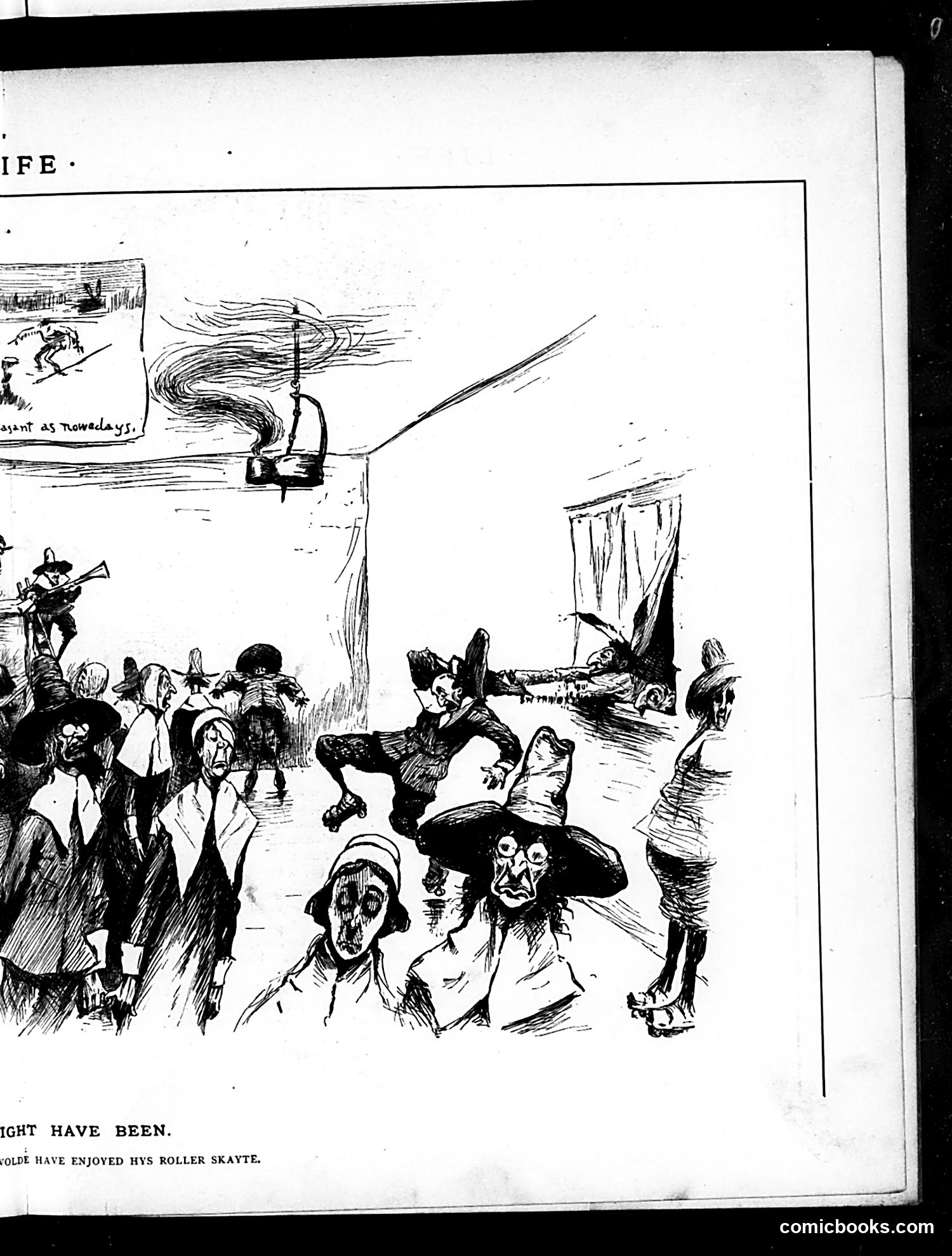
This satirical cartoon depicts a chaotic street scene with exaggerated caricatures of various figures. The text references "roller skate" enjoyment, suggesting the cartoon comments on a contemporary social trend or leisure activity. The drawing style employs grotesque facial features typical of early 20th-century satire in *Life* magazine. The crowded composition with multiple expressive faces and dynamic poses suggests social commentary on public behavior or a particular group's activities. However, without clearer identification of specific figures or more legible text fragments visible in the image, I cannot definitively identify which political figures or social movement this targets. The caricatured style indicates mockery of recognizable personalities, but their specific identities remain unclear from what's visible here.
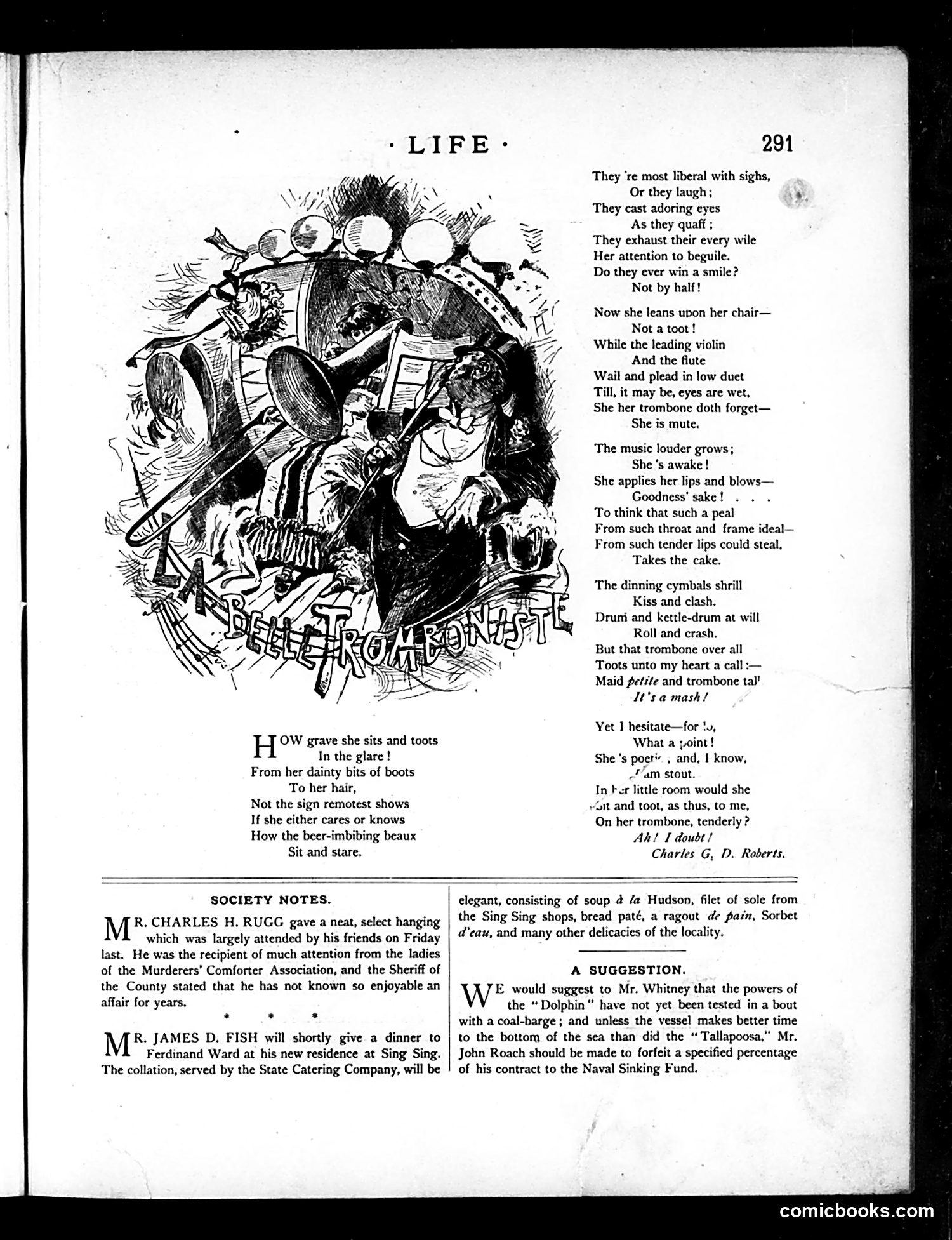
This page from Life magazine features a satirical poem (attributed to Charles G.D. Roberts) about a female trombonist who captivates an admirer. The central illustration shows a woman musician surrounded by adoring male patrons in what appears to be a concert hall or beer garden. The satire operates on multiple levels: The poem mocks both the sentimental romanticism of male admirers ("cast adoring eyes / As they quaff") and the incongruity of a delicate, "petite" woman producing such powerful, unladylike sounds from a trombone. The narrator finds himself unexpectedly charmed despite his doubts ("Ah! I doubt!"), suggesting the contradiction between her refined appearance and her musical prowess. The "Society Notes" below are satirical jabs at criminals: Rugg's hanging receives praise as a social event; Fish's dinner for fellow criminal Ferdinand Ward at Sing Sing prison is presented as fashionable society gossip.
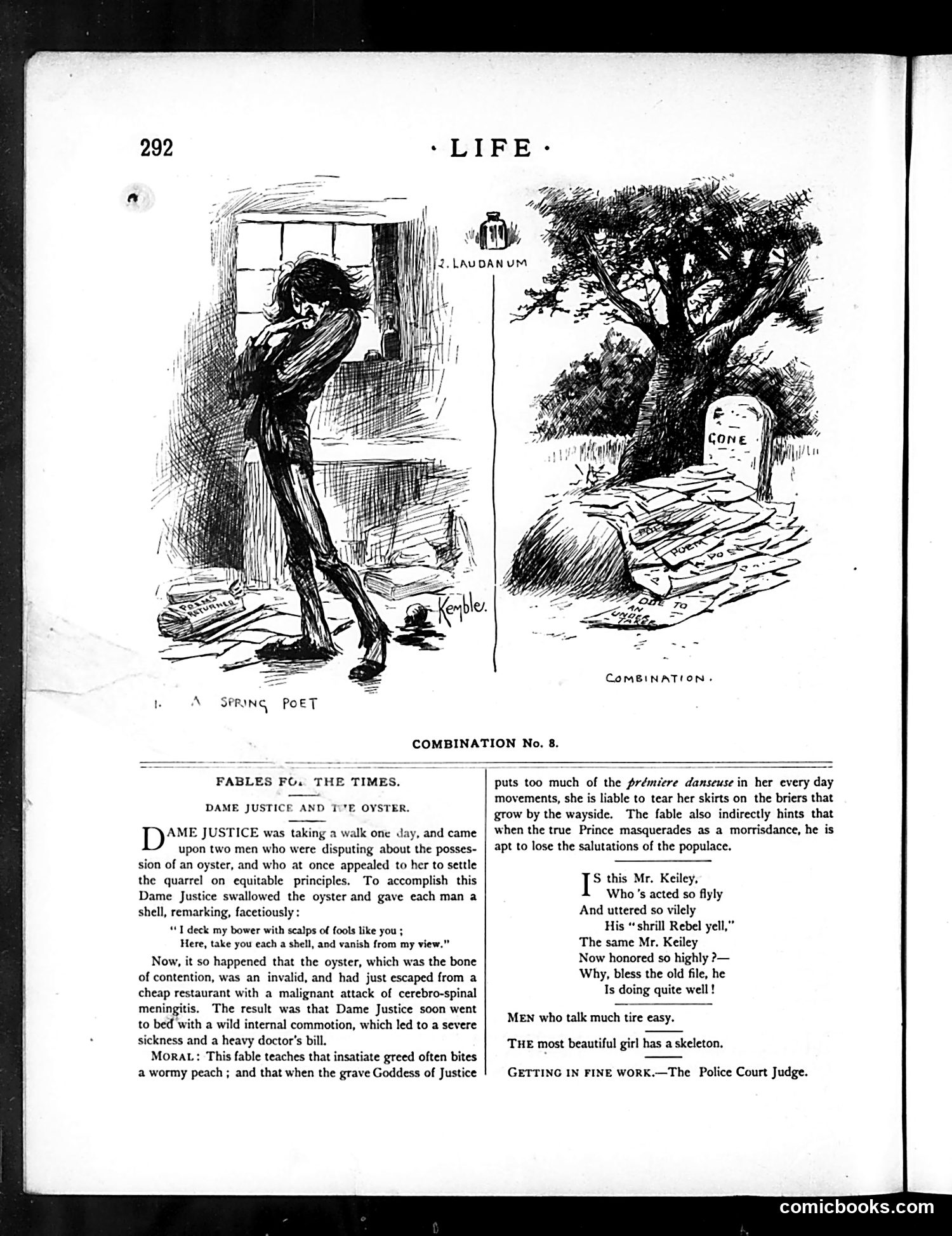
This page contains two satirical pieces mocking the American justice system circa the early 20th century. **"Dame Justice and the Oyster"** is a fable attacking judicial greed and corruption. When two men dispute over an oyster, Justice herself seizes it and gives each man only a shell—a direct critique of judges who enrich themselves by settling disputes. The punchline: the oyster was diseased, sickening Justice and leaving her with doctor's bills. The moral sardonically suggests that corrupt judges who prioritize profit over fairness inevitably suffer consequences. The second section appears to reference **Mr. Keiley**, someone who previously acted "flyly" (deceitfully) and uttered a "shrill Rebel yell" (suggesting Confederate sympathies), yet is now "honored so highly" and "doing quite well." This critiques how disreputable figures are rehabilitated by the system. The accompanying sketches—a gaunt "Spring Poet" and a cemetery scene—reinforce themes of hypocrisy and moral decay beneath surface respectability.
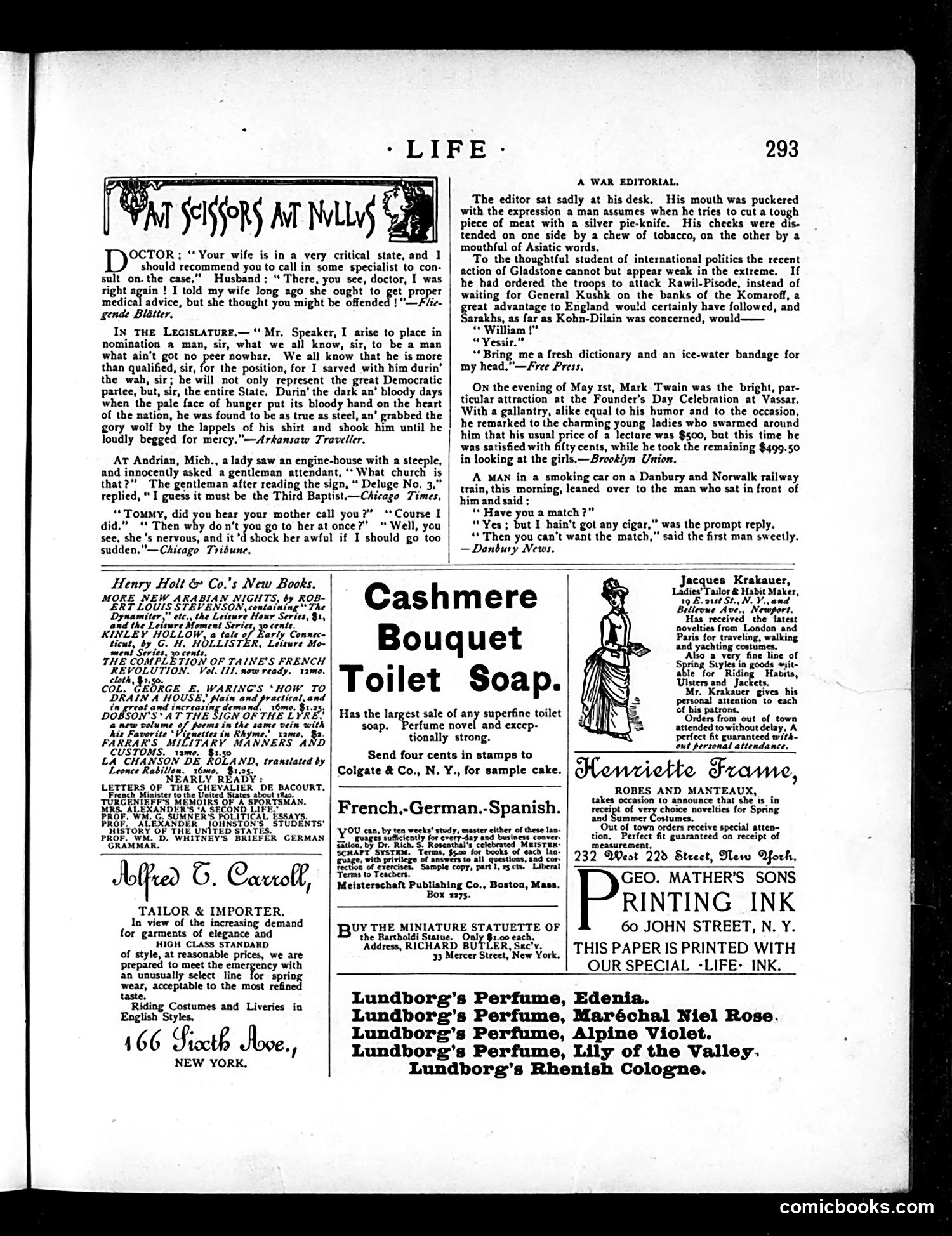
The cartoon depicts a domestic dispute where a husband consults a doctor about his wife's "critical state." The husband proudly recalls having told his wife months ago to seek specialist medical care, implying her current illness is her own fault for ignoring his advice. The satire mocks the husband's self-righteousness and defensive posturing—he's more concerned with being proven right than with his wife's actual welfare. The joke suggests this type of domestic quarreling was common enough to be recognizable to readers. The "gentle Blatter" attribution indicates this is reprinted from a German humor publication, reflecting the magazine's practice of translating European satirical content. The humor targets petty male vanity and the tendency to prioritize "I told you so" moments over genuine care during a spouse's illness—a social critique wrapped in domestic comedy.
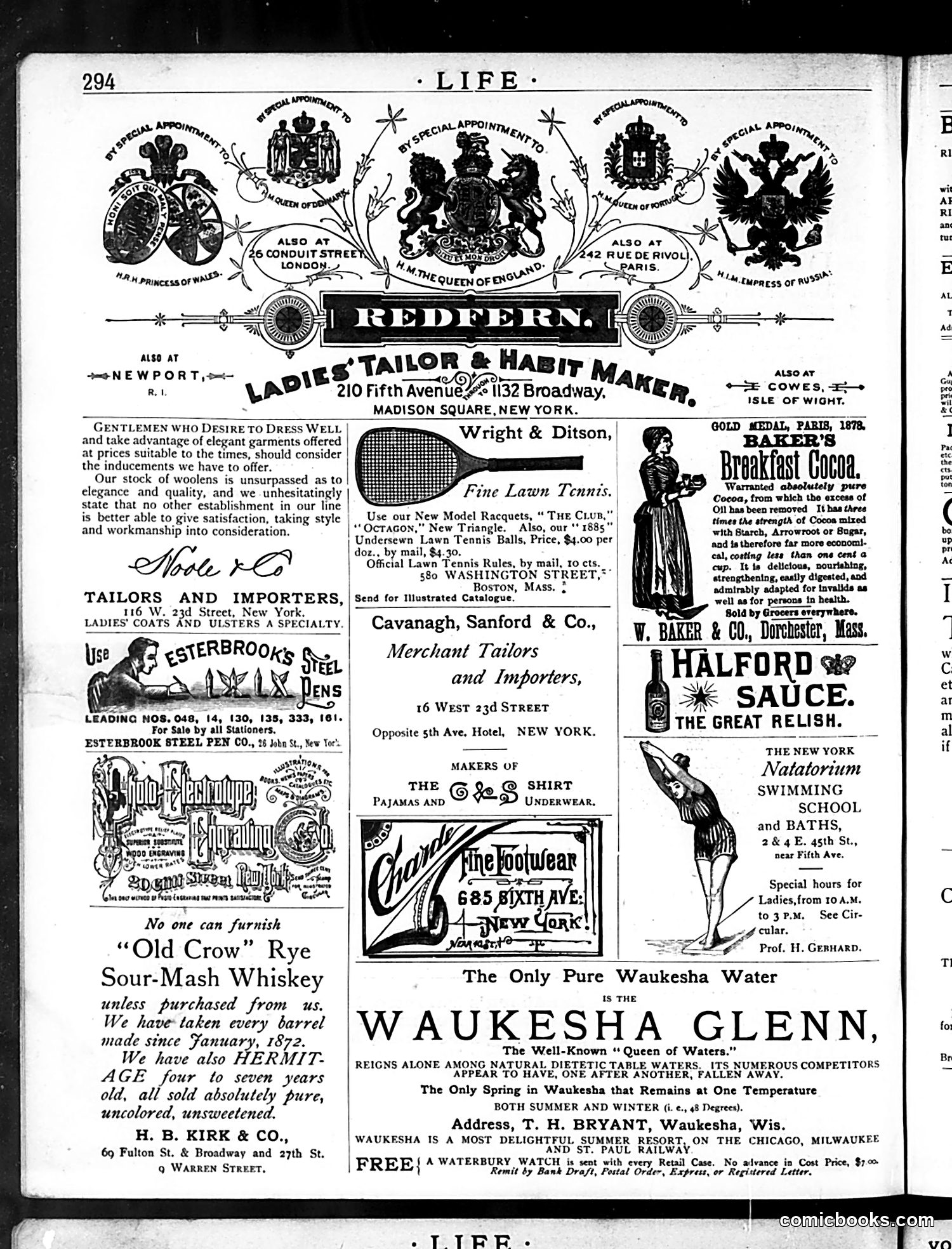
This page is primarily **advertising**, not editorial content or political cartoons. It consists entirely of commercial advertisements typical of late 19th-century American magazines, featuring: **Fashion & Tailoring**: Multiple ads for tailors and clothing makers (Redfern, Esterbrook's, Cavanagh Sanford & Co.) promoting elegant garments and custom services to wealthy clientele. **Beverages & Food**: Advertisements for "Old Crow" whiskey, Baker's Cocoa (a premium product), and Waukesha Glenn spring water—products marketed as pure and superior to competitors. **Sporting Goods & Recreation**: Wright & Ditson tennis equipment and the New York Natatorium swimming school. **Decorative Elements**: The page features ornate royal seals and crests (indicating prestigious appointments to European royalty) as branding devices. The page reflects **Gilded Age consumption patterns**—luxury goods marketed to wealthy readers through appeals to quality, purity, and exclusivity. No political satire or cartoons appear here; the visual sophistication serves commercial rather than editorial purposes.
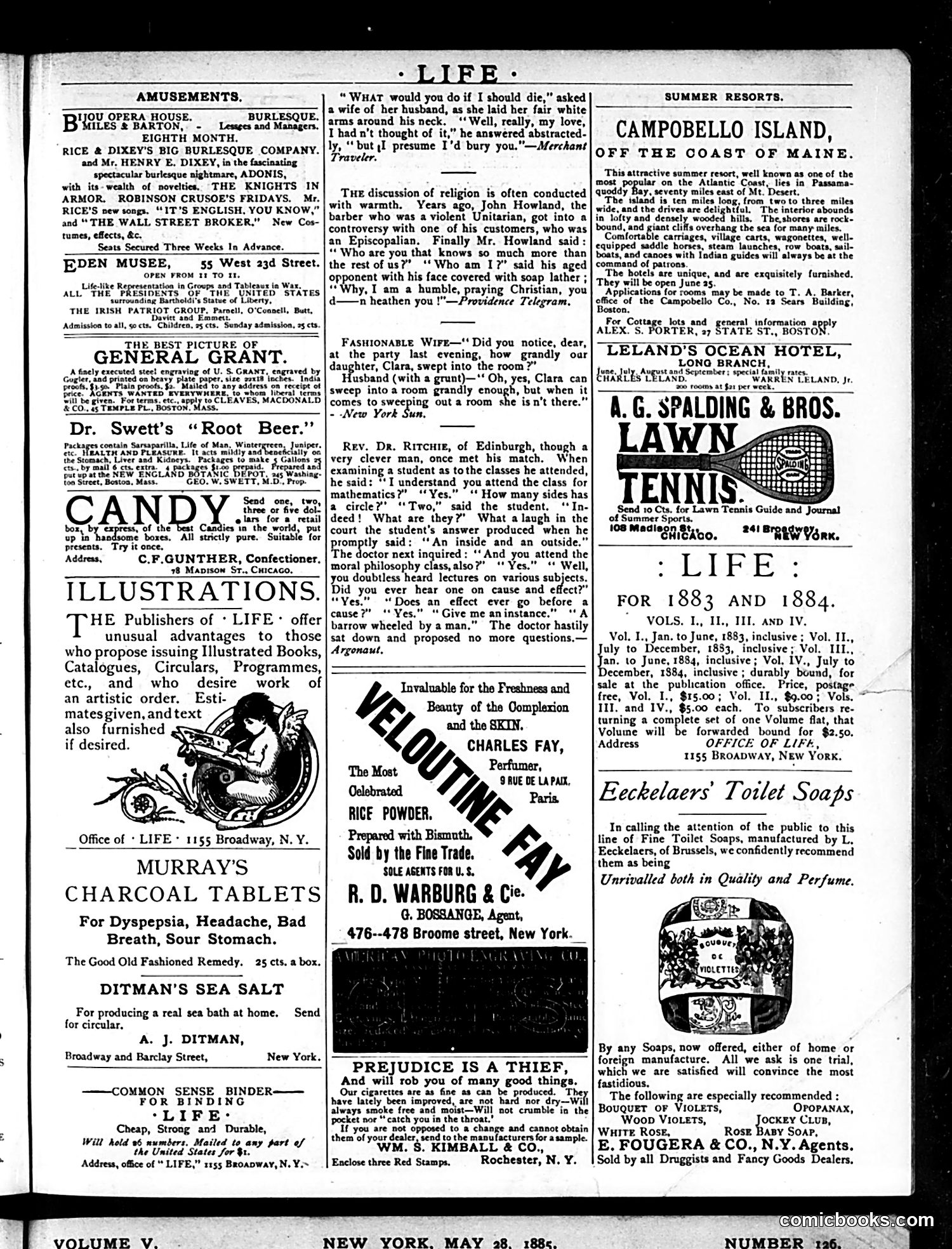
This is primarily an **advertisements and amusements page** rather than a political cartoon page. The content consists of theater listings and commercial advertisements typical of the era. The page advertises **burlesque theater** (Rice & Dixey's "Adonis"), a wax museum ("Eden Musee"), and various patent medicines and consumer goods (charcoal tablets, sea salt, candy, root beer). These reflect 1880s consumer culture and entertainment. One small anecdote mentions **John Howland, a barber and Unitarian**, engaged in religious debate with an Episcopalian customer—illustrating sectarian religious tensions common in the period. The humor derives from the working-class barber confidently asserting his religious superiority despite his social position. The **General Grant engraving advertisement** references the recently deceased former president (died 1885), showing his continuing cultural prominence. Overall, this page offers insight into **1880s entertainment, medicine, and social attitudes** rather than political satire—mostly documenting what middle-class Americans bought and watched.
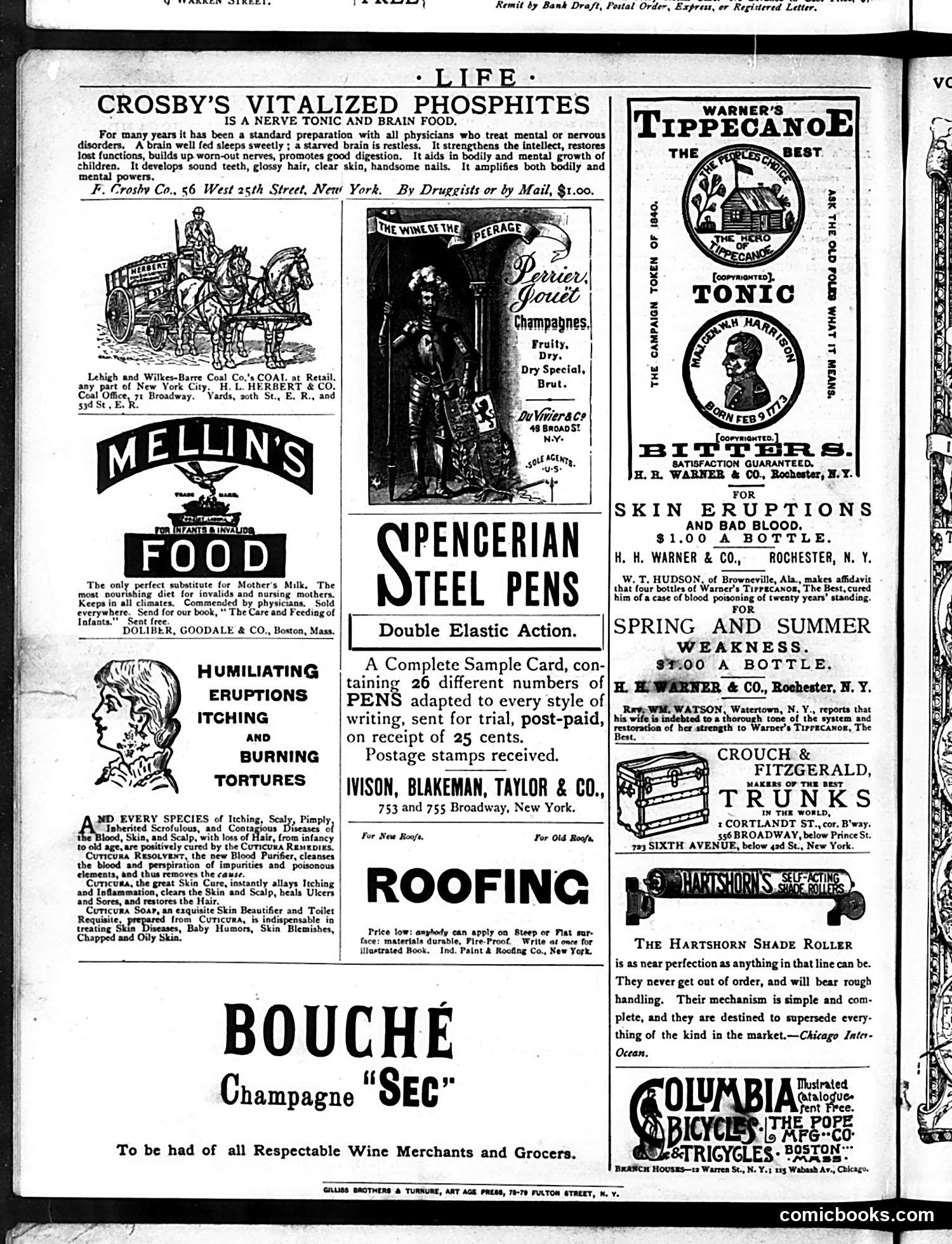
This is primarily an **advertising page** from Life magazine, not a satirical cartoon page. The page showcases patent medicines and consumer products typical of the late 19th century. Notable advertisements include: - **Crosby's Vitalized Phosphites**: A "nerve tonic and brain food" claiming to cure mental disorders, strengthen intellect, and improve physical appearance - **Cuticura products**: Remedies for skin conditions, featuring dramatic language about "humiliating eruptions" - **Warner's Tipecanoe**: A patent medicine for "skin eruptions and bad blood" and "spring and summer weakness" - **Spencerian Steel Pens**, roofing materials, champagne, and trunks **For modern readers**: These ads reflect the era's unregulated patent medicine industry, where products made extravagant health claims without scientific evidence. The emphatic language and testimonials were standard marketing tactics. The page demonstrates how magazines monetized readers' health anxieties before FDA regulations (enacted 1906) required truth in advertising.