A complete issue · 37 pages · 1934
Judge — December 1934
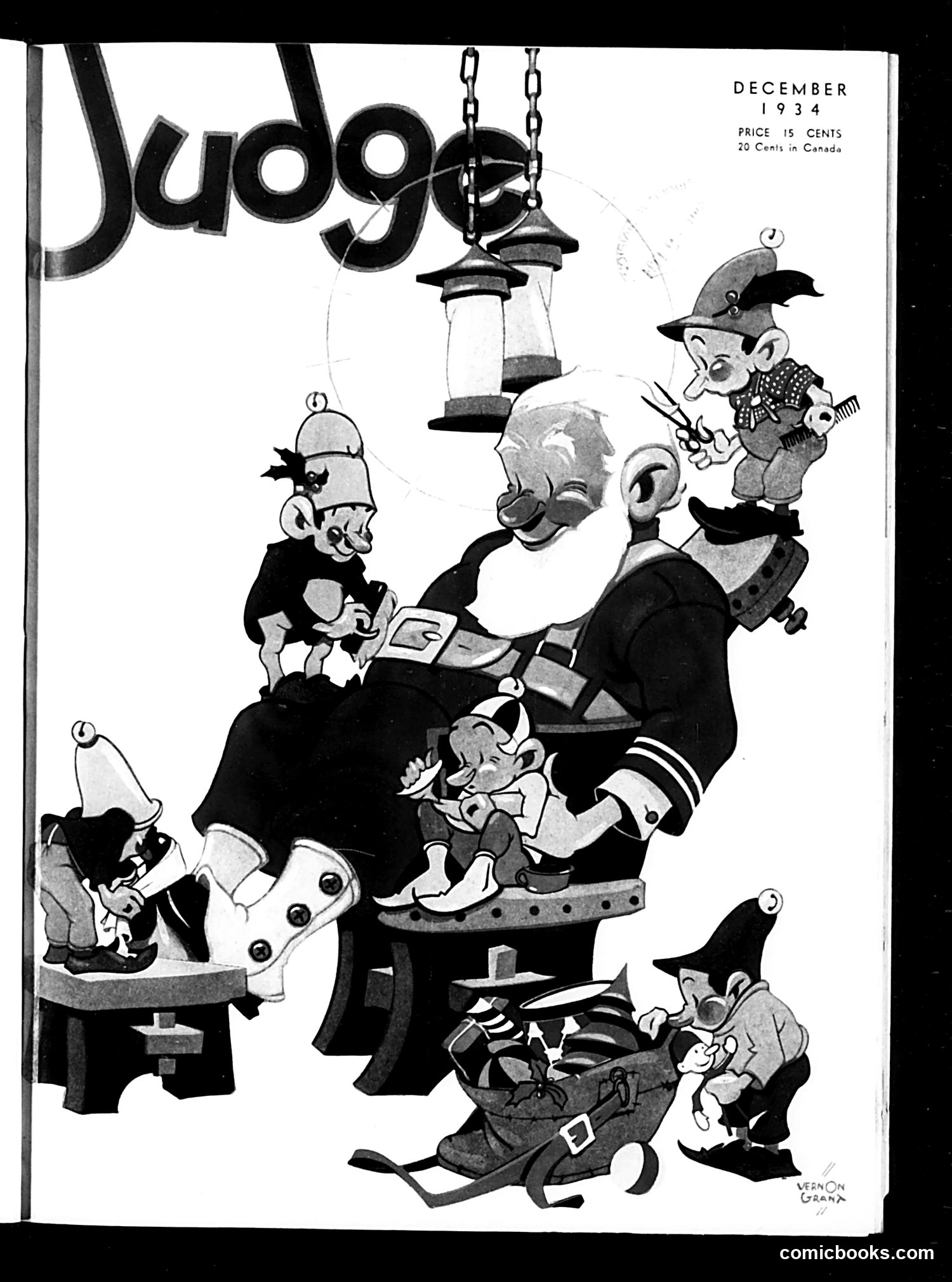
# Judge Magazine, December 1934 This satirical cover depicts a central bald figure—likely representing a politician or public figure of 1934—surrounded by small gnome-like characters wearing pointed hats, possibly representing elves, imps, or mischievous spirits. The figure appears to be reading or reviewing documents while the smaller characters cavort around him, some hanging from chains above, others operating him like a puppet or toy. The satire likely critiques either political manipulation during the Great Depression or suggests that a particular public figure is being controlled by unseen forces or special interests. The playful yet pointed imagery—treating the central figure as somewhat ridiculous or out of control—was typical of *Judge*'s political commentary from this era. Without clearer identifying marks, the specific target remains unclear.
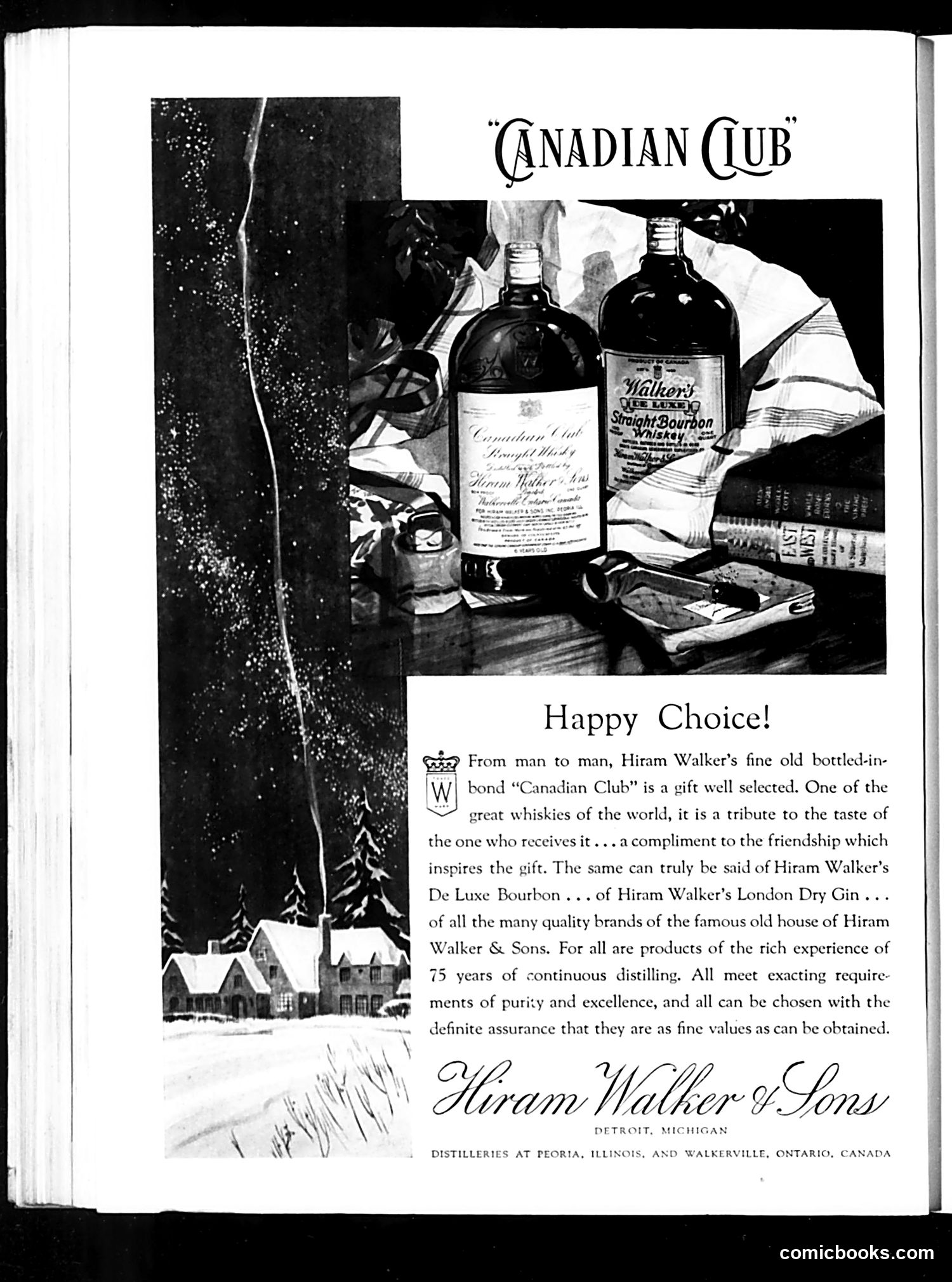
# Analysis This page is primarily an **advertisement**, not a political cartoon. It promotes "Canadian Club" whiskey by Hiram Walker & Sons, a Detroit-based distillery with operations in Canada. The ad uses the tagline "Happy Choice!" and appeals to gift-giving between men, positioning the whiskey as a mark of friendship and refined taste. It references the company's "75 years of continuous distilling" and mentions their other products (De Luxe Bourbon, London Dry Gin). The left side shows a snowy winter scene, likely evoking Canadian imagery to reinforce the "Canadian Club" branding. The composition emphasizes luxury and social sophistication rather than satire or political commentary. This reflects 1920s-era advertising before Prohibition enforcement became strict.
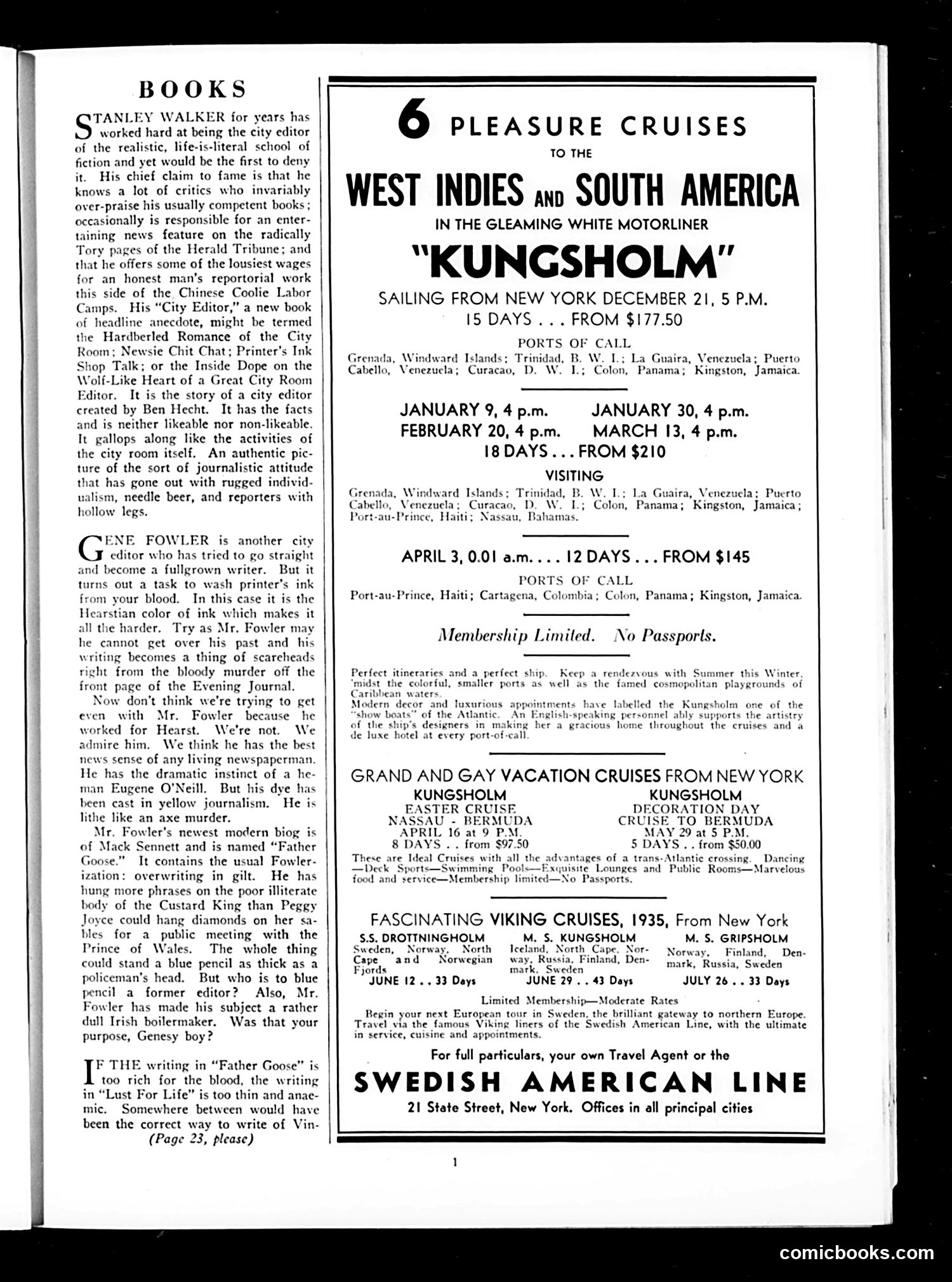
# Analysis This page is **primarily advertising**, not satirical content. The left column contains a "BOOKS" section with brief reviews of works by Stanley Walker and Gene Fowler—both journalists and writers of the era. The reviews discuss their literary merit and writing style in a straightforward manner. The bulk of the page features cruise advertisements from the Swedish American Line, promoting luxury voyages to the West Indies, South America, and Scandinavia. These ads emphasize the ships' elegance, amenities, and itineraries. There is **no political cartoon or satire evident** on this page. It appears to be a standard magazine layout mixing book reviews with commercial advertising, typical of Judge magazine's format during this period.
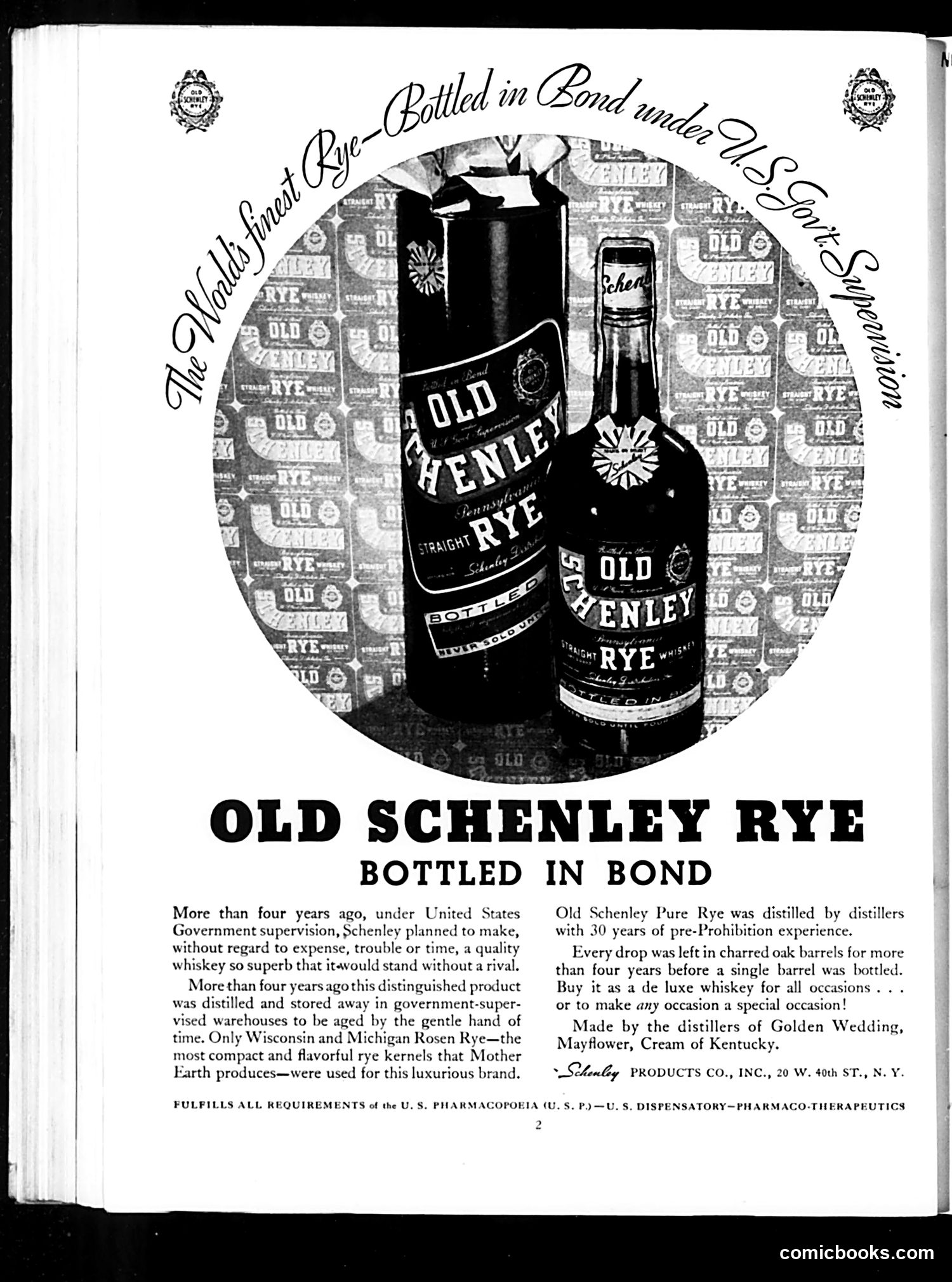
# Analysis This page is **primarily an advertisement**, not satire or political commentary. It promotes Old Schenley Rye whiskey, emphasizing that it was "bottled in bond" under U.S. Government supervision and aged over four years. The ad highlights that the whiskey was distilled before Prohibition (which lasted 1920-1933), stored in government-supervised warehouses, and made from Wisconsin and Michigan rye. The copy promises quality and luxury. The circular image shows two bottles against a patterned background of repeated labels. This appears in Judge likely because the magazine accepted advertising. Post-Prohibition whiskey ads like this were common in the 1930s as the industry re-established itself. There is no satirical content—it's straightforward commercial promotion.
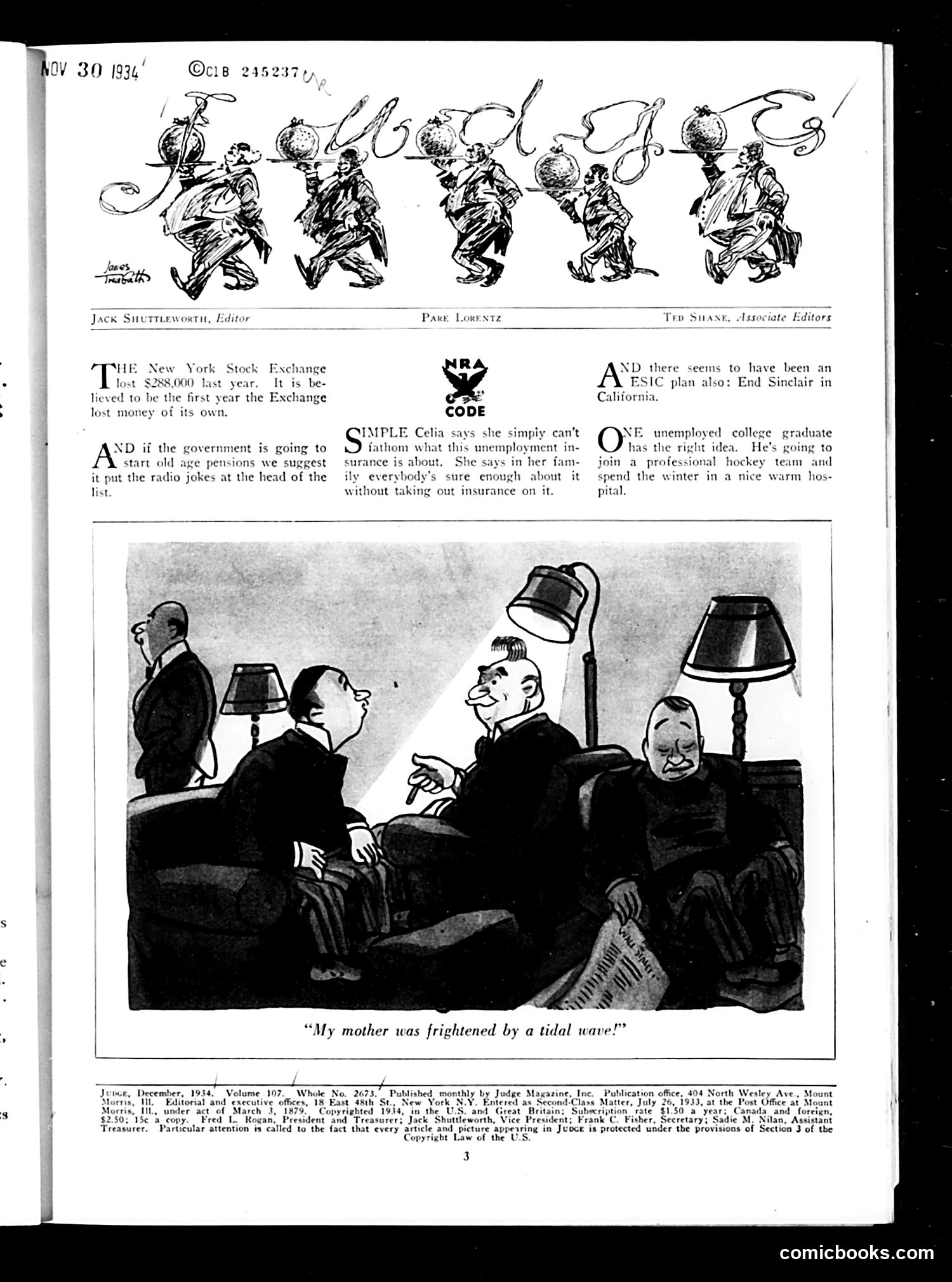
# Analysis of Judge Magazine Page (Nov. 30, 1934) **Main Cartoon Caption:** "My mother was frightened by a tidal wave!" This single-panel cartoon depicts four men in a living room, with one woman. The joke appears to be a dark humor piece about inheritance or family dynamics—the woman's exaggerated facial expression suggests she's reacting dramatically to the men's conversation, possibly about her mother-in-law's misfortune. The caption implies the woman is using the "tidal wave" as an explanation for her mother's condition or appearance, a euphemistic cover story. **Text Content:** Brief satirical items reference the 1934 stock market losses, unemployment insurance debates, and a college graduate joining a professional hockey team as a way to survive winter—typical Depression-era commentary on economic hardship and creative survival strategies.
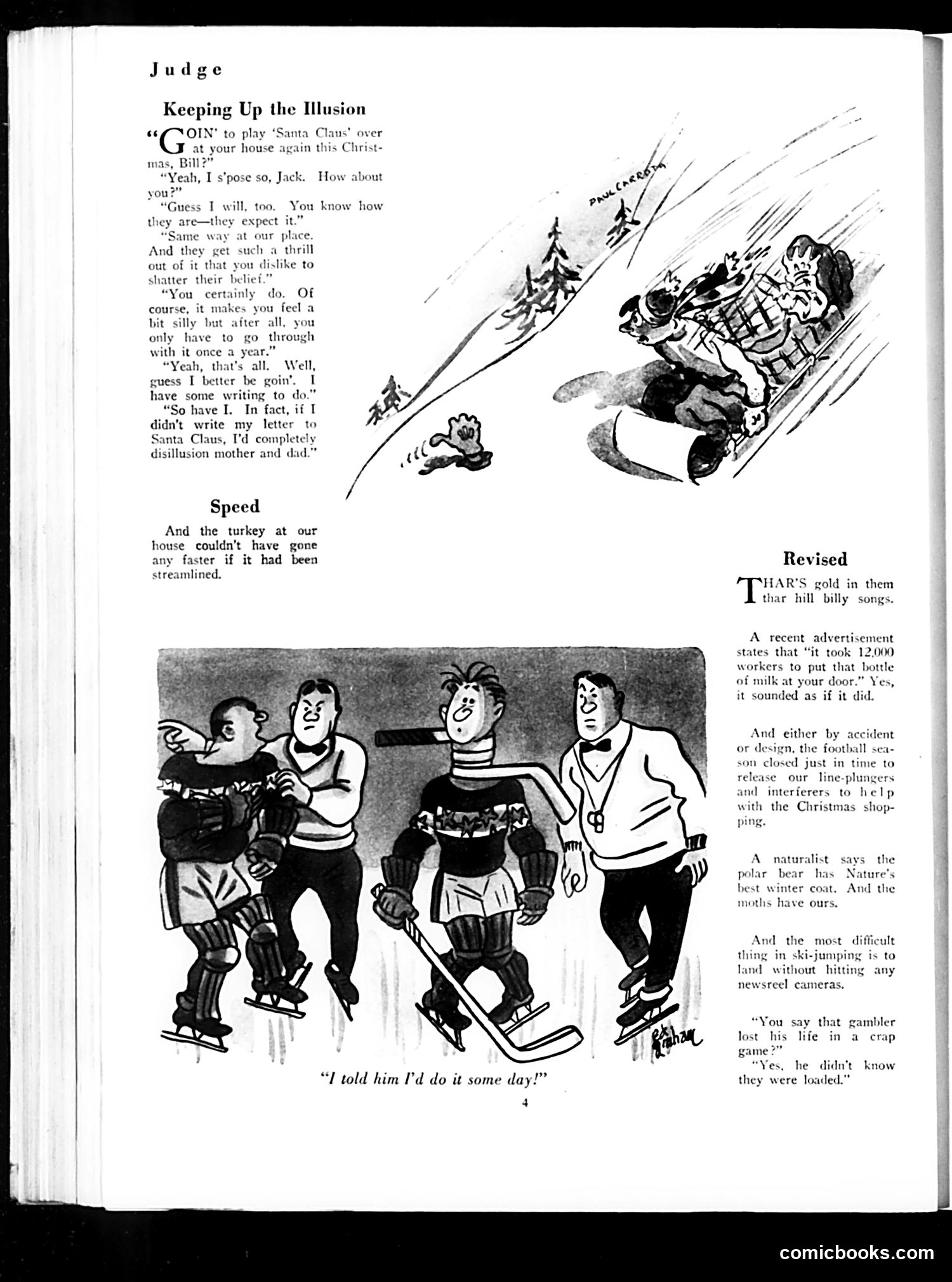
# Analysis of Judge Magazine Page This page contains three humor sections typical of early-20th-century satirical magazines: **"Keeping Up the Illusion"** jokes about parents pretending Santa Claus visits their home for Christmas, with one father admitting he never actually wrote to Santa—essentially admitting the whole enterprise is a parental fabrication to maintain childhood wonder. **"Speed"** is a brief quip about a turkey that couldn't have moved faster if streamlined (a contemporary design concept). **"Revised"** collects short one-liners mocking advertising claims, consumer culture, and modern life—including a milk bottle delivery claim and observations about polar bears' winter coats versus moth biology. The skating cartoon illustrates the "Speed" section, showing people ice skating enthusiastically. These are gentle, family-oriented humor pieces typical of Judge's editorial content between advertisements.
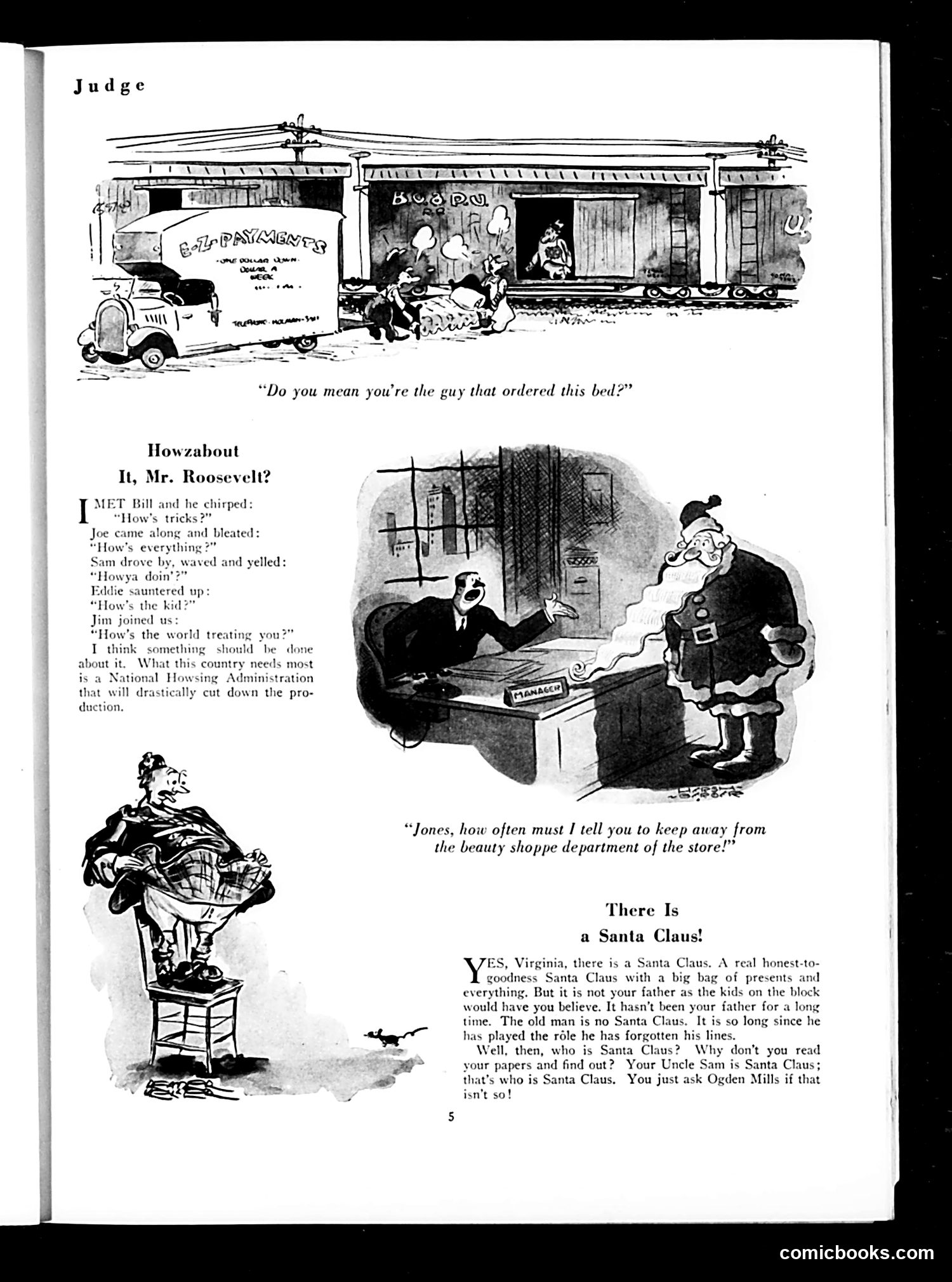
# Analysis of Judge Magazine Page This page contains three separate items: 1. **Top cartoon**: A man is confronted at a railroad car about ordering an expensive bed. The satire targets Depression-era consumer excess and questionable spending priorities. 2. **"Howzabout It, Mr. Roosevelt?"**: A political cartoon depicting someone (likely FDR, given the text reference) at a desk being asked about economic conditions by various acquaintances. The speaker advocates for a National Housing Administration to address the housing crisis—suggesting this page predates or coincides with New Deal housing programs of the 1930s. 3. **"There Is a Santa Claus!"**: A lighthearted editorial explaining that Uncle Sam represents Santa Claus, promoting patriotic goodwill during economic hardship. The page reflects Depression-era concerns about housing, spending, and national recovery.
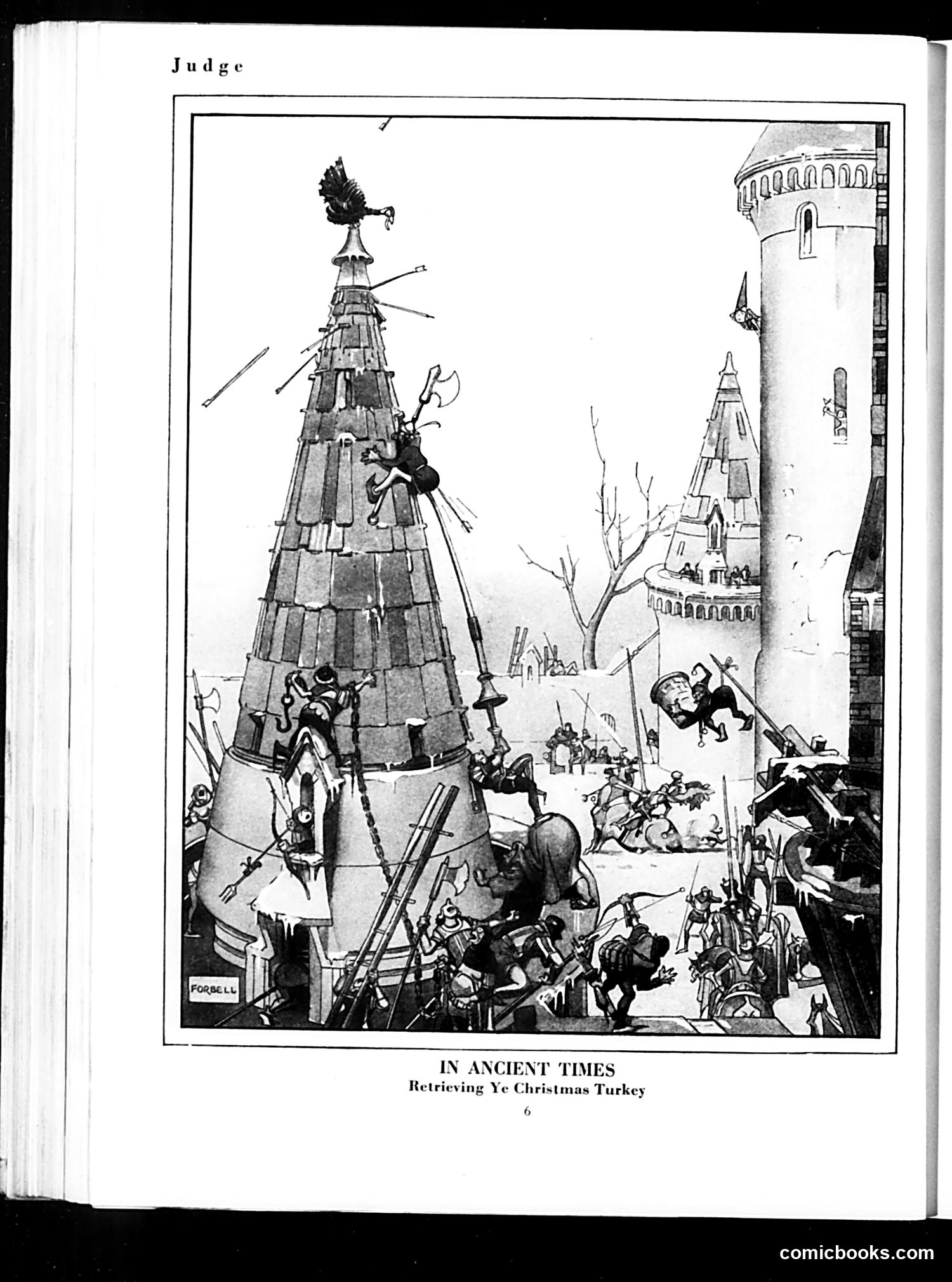
# Analysis of "In Ancient Times: Retrieving Ye Christmas Turkey" This satirical illustration depicts a chaotic medieval siege scene where soldiers are attacking a tall conical structure topped with what appears to be a turkey. The title's reference to "Ye Christmas Turkey" suggests this is a humorous commentary on the difficulty or absurdity of acquiring holiday dinner provisions. The cartoon likely satirizes either: - The challenge of obtaining Christmas dinner (perhaps during scarcity or high prices) - Commercial competition around holiday shopping/preparation - Bureaucratic or social obstacles to simple holiday traditions The "ancient times" framing adds comedic exaggeration—treating turkey procurement as if it requires military conquest. The artist's signature appears to read "Formell" (unclear). Without additional historical context about Judge magazine's publication date, the specific contemporary reference remains uncertain.
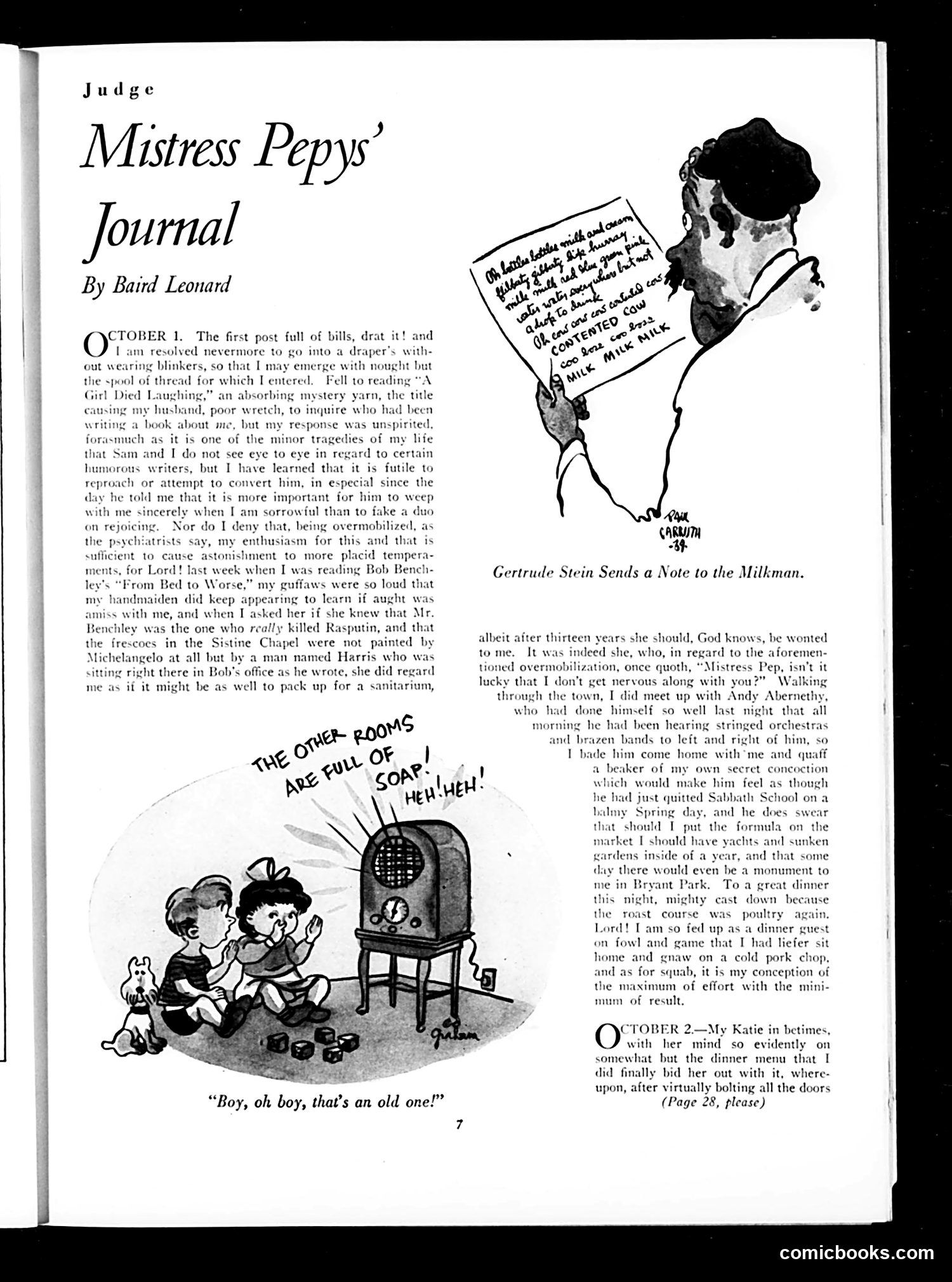
# Explaining "Mistress Pepys' Journal" to Modern Readers This is a humorous column mimicking Samuel Pepys' famous 17th-century diary, but set in the 1930s-40s. The narrator is a society wife complaining about everyday domestic annoyances: bills, husband's lack of appreciation for her reading, servants' gossip, and dinner party frustrations. The two cartoons illustrate specific complaints: the top shows a woman sending a note to "the milkman" (suggesting domestic logistics or possibly flirtation); the bottom depicts children listening to radio drama, captioning "The other rooms are full of soap! Heh! Heh!" — mocking radio soap operas' ubiquity and melodrama. The humor relies on contrasting dignified historical pastiche (Pepys-style diary language) with petty modern grievances. References to mystery novels and Rasputin indicate 1930s-40s popular culture. The satire gently mocks middle-class housewives' preoccupations while maintaining affectionate mockery of the narrator's own pretension.
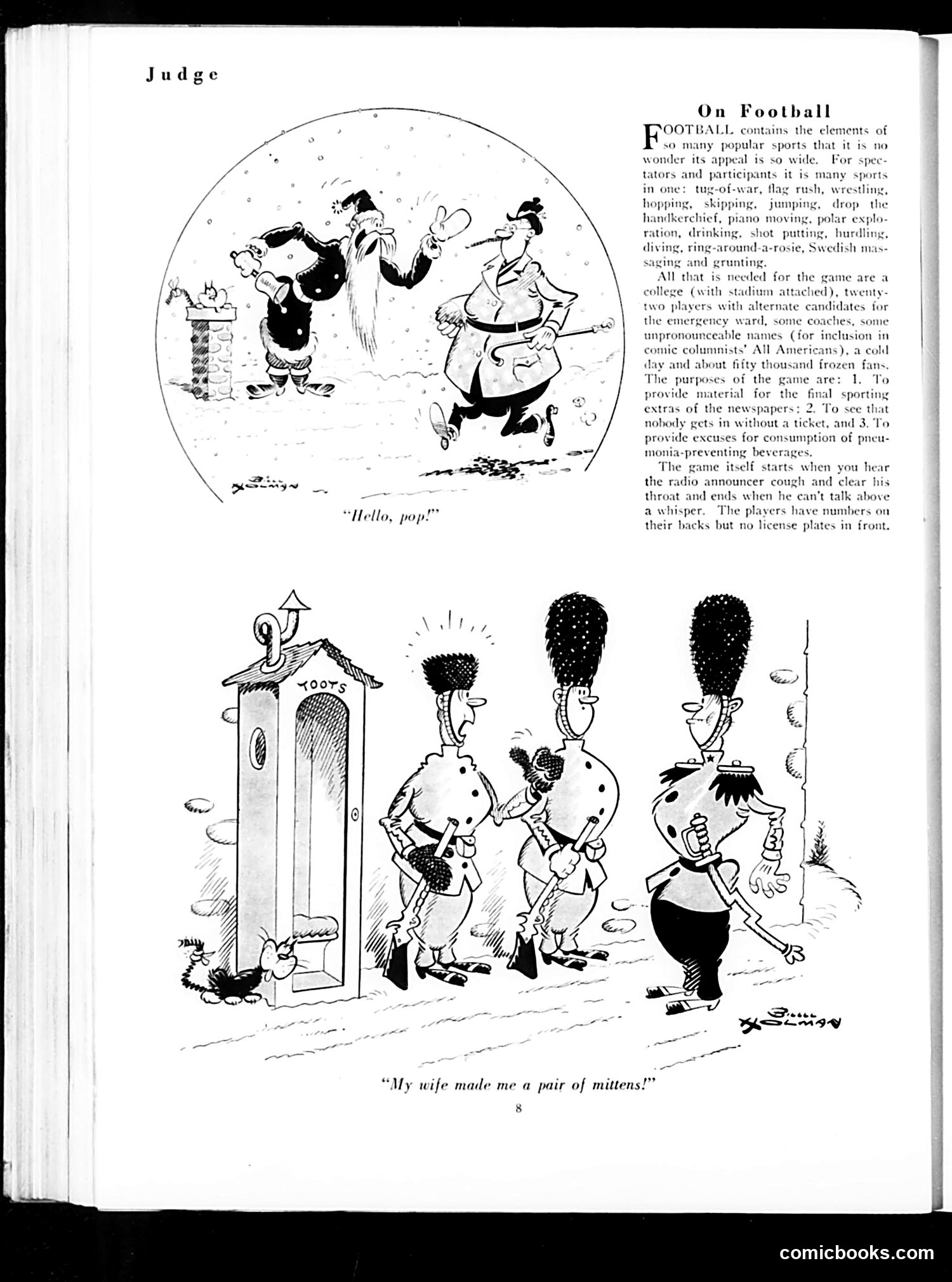
# Explanation for Modern Readers This page contains two cartoons satirizing American football culture. **Top cartoon ("Hello, pop!"):** Shows what appears to be a father figure greeting someone at a football stadium. The satire targets the social chaos of game day—the text notes football combines "tug-of-war, flag rush, wrestling, drinking, shot putting" and other activities, suggesting the sport is an excuse for general mayhem and excess rather than organized athletics. **Bottom cartoon ("My wife made me a pair of mittens!"):** Three men with enormous, absurd mittens stand outside a "Toots" establishment. The joke plays on the cold weather at football games and perhaps mock-sympathetic excuses men use to justify leaving home or spending money during the season—blaming their wives for inadequate winter gear. Both cartoons mock football's appeal as primarily social rather than athletic, emphasizing spectator drinking, the cold conditions endured, and the sport as a male escape from domestic life. The satirical tone suggests Judge viewed football culture as ridiculous excess.
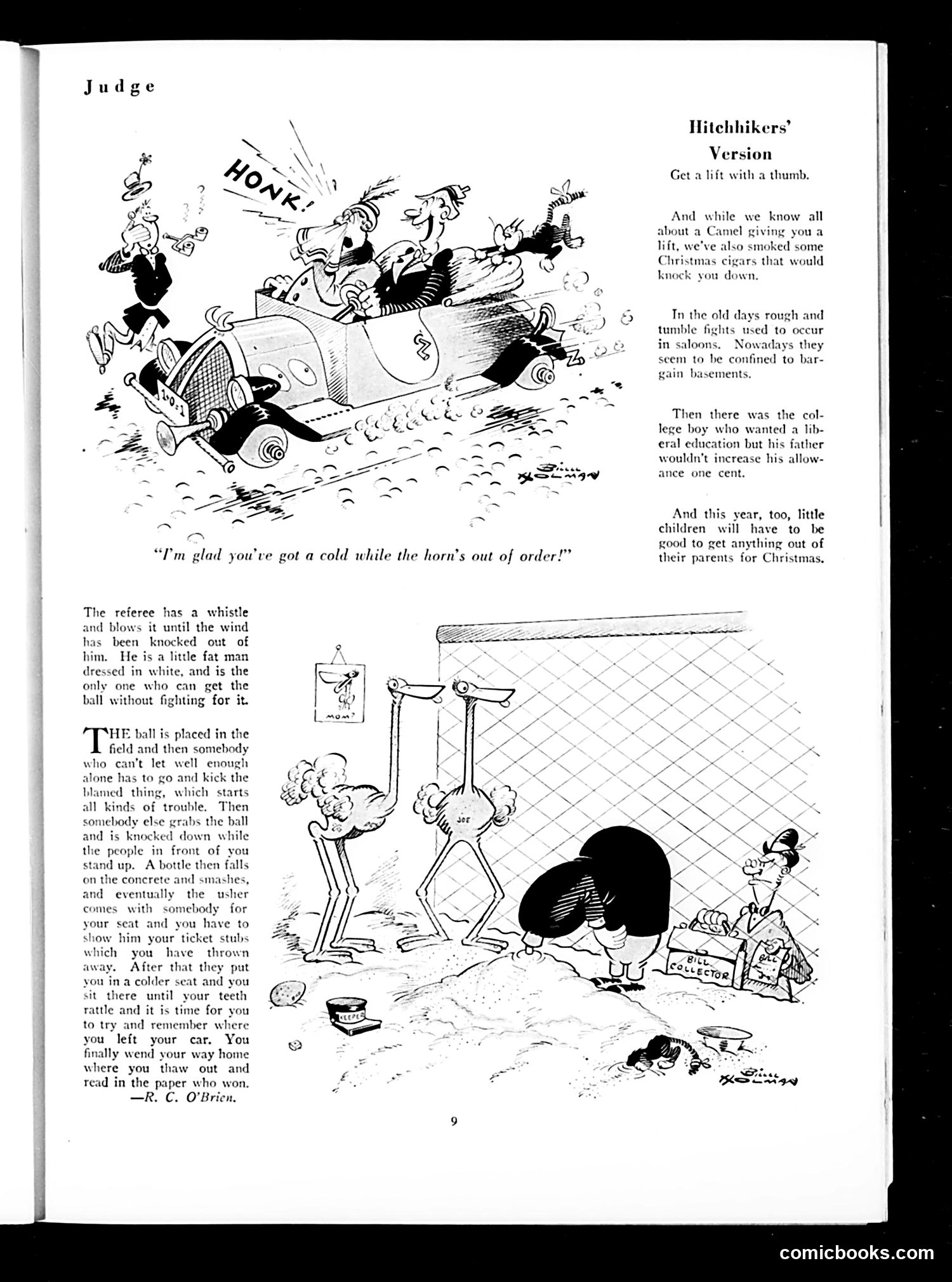
# Judge Magazine Page Explanation This page contains humorous satirical commentary on 1920s-30s American life. The top cartoon depicts hitchhikers piled into an overloaded car, joking about the era's new hitchhiking culture and casual transportation. The right column offers brief social observations: commercialized Christmas, college affordability, saloon violence confined to department store sales, and consumer culture. The Camel cigarette reference suggests Judge's advertising clients. The lower section, attributed to R.C. O'Brien, satirizes football spectating—the chaos, violence, referee authority, rowdy crowds, and uncomfortable conditions that make attending games miserable. The detailed complaint about thrown-away ticket stubs and freezing seats reflects working-class frustrations with entertainment accessibility. The middle cartoon shows people attempting to play volleyball, illustrating recreational games of the period. Overall, the page mocks contemporary American consumer culture, sports enthusiasm, and modern inconveniences through light satire.
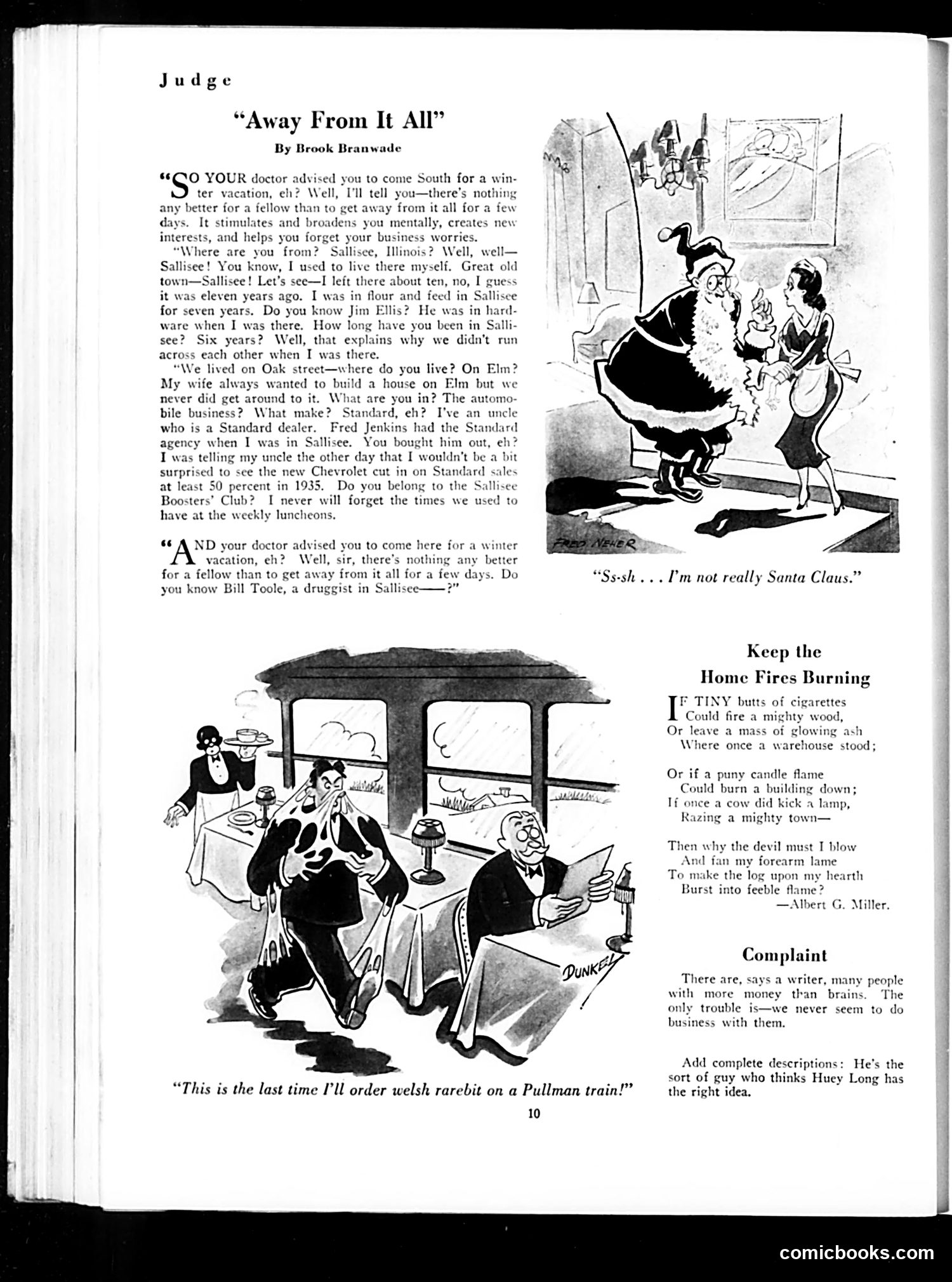
# Analysis of Judge Page Content The page features "Away From It All" by Brook Branwade, a satirical piece about vacation advice. The humor contrasts two scenarios where a doctor recommends escaping to the South or away on vacation. The **top cartoon** shows Santa Claus meeting a woman, with the caption "S-s-sh... I'm not really Santa Claus"—likely mocking commercialized Christmas and fake department-store Santas. The **lower cartoon** depicts dining-car passengers, captioned "This is the last time I'll order welsh rarebit on a Pullman train!"—presumably joking about indigestion or poor train food quality. The text satirizes small-town life and business obsessions, suggesting that even vacations can't truly escape from familiar people and concerns. The inclusion of a fire-safety poem adds an unrelated public-service element typical of period magazines.