A complete issue · 36 pages · 1934
Judge — October 1934
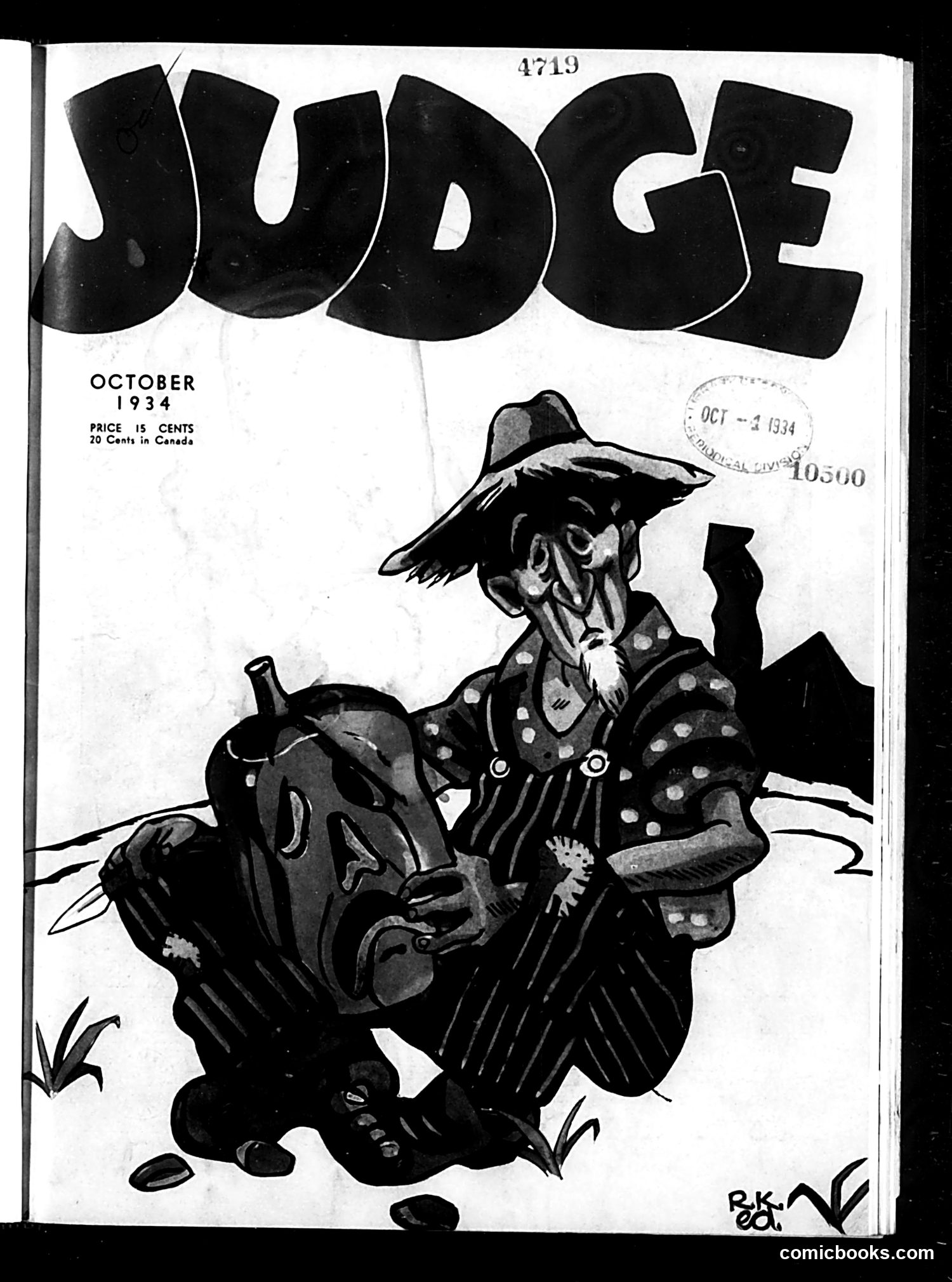
# Judge Magazine, October 1934 This is the cover of Judge, a satirical magazine priced at 20 cents (10 cents in Canada). The large cartoon depicts a disheveled, caricatured figure dressed as a vagrant or hobo, carrying a bindle (bundle on a stick). The exaggerated facial features and shabby appearance suggest social commentary during the Great Depression era. The figure's clothing—striped jacket with polka dots, worn hat, and tattered appearance—represents economic hardship and unemployment that characterized 1934 America. The "JUDGE" masthead above appears as bold typography. The cartoonist's signature appears in the lower right corner. Without additional context on the page's interior content, the specific political target remains unclear, though the satire likely addresses Depression-era economic conditions or a contemporary political figure associated with poverty or failed policies.
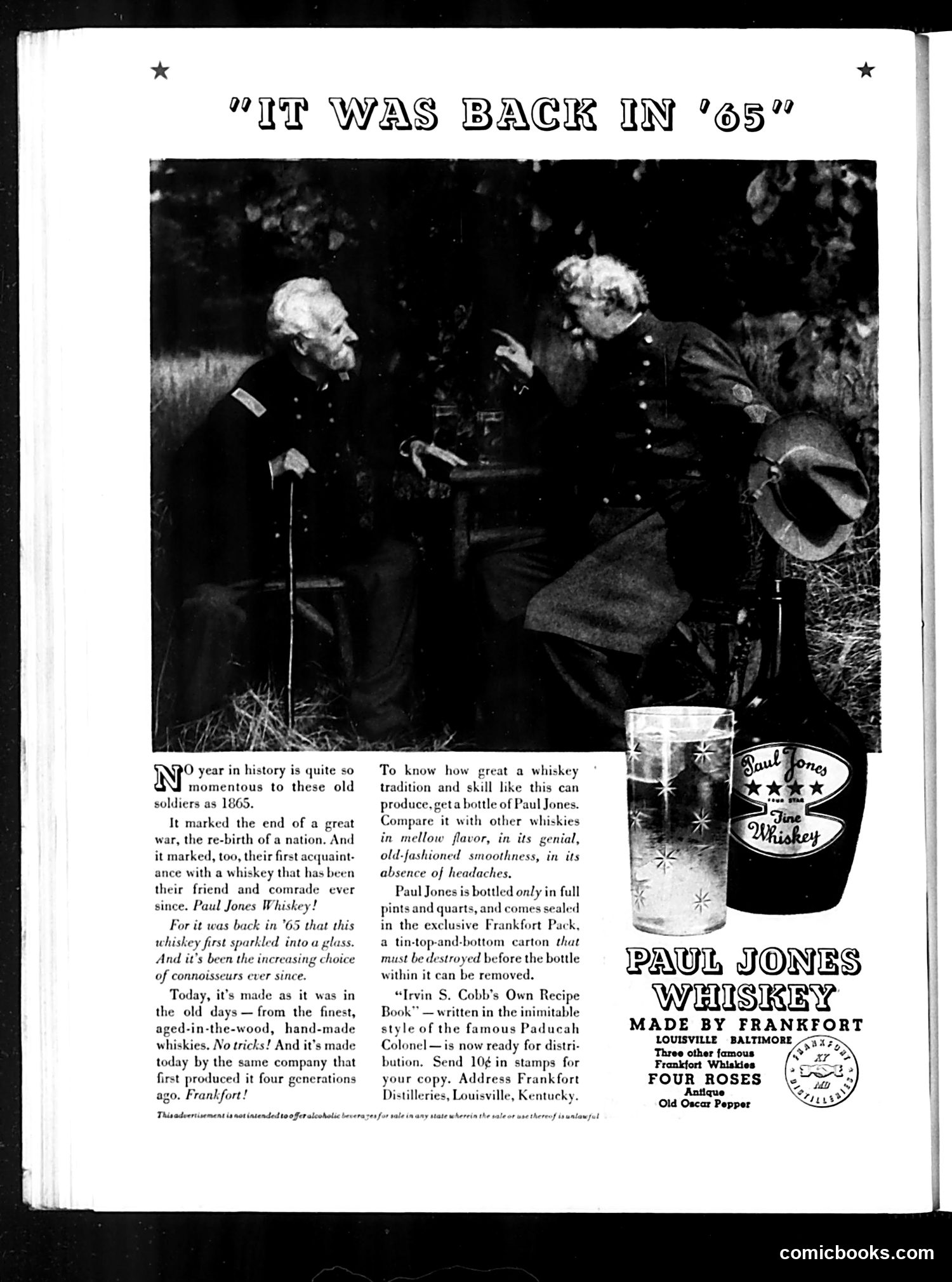
# Analysis This page is primarily a **whiskey advertisement** for Paul Jones Whiskey, not political satire. The heading "It Was Back in '65" references 1865—the end of the Civil War—to create nostalgic marketing. The black-and-white photograph shows two elderly men in military uniforms, apparently Civil War veterans, sharing a drink. The advertisement uses this emotional imagery to suggest the whiskey has been a trusted companion through American history since that pivotal year. The text emphasizes the product's traditional production methods ("made as it was in the old days") and positions it as a premium choice. The ad includes competitive claims about flavor and smoothness, along with purchasing information directing readers to Frankfort Distilleries in Louisville, Kentucky. This represents early 20th-century advertising strategy: leveraging patriotic sentiment and historical nostalgia to sell consumer products.
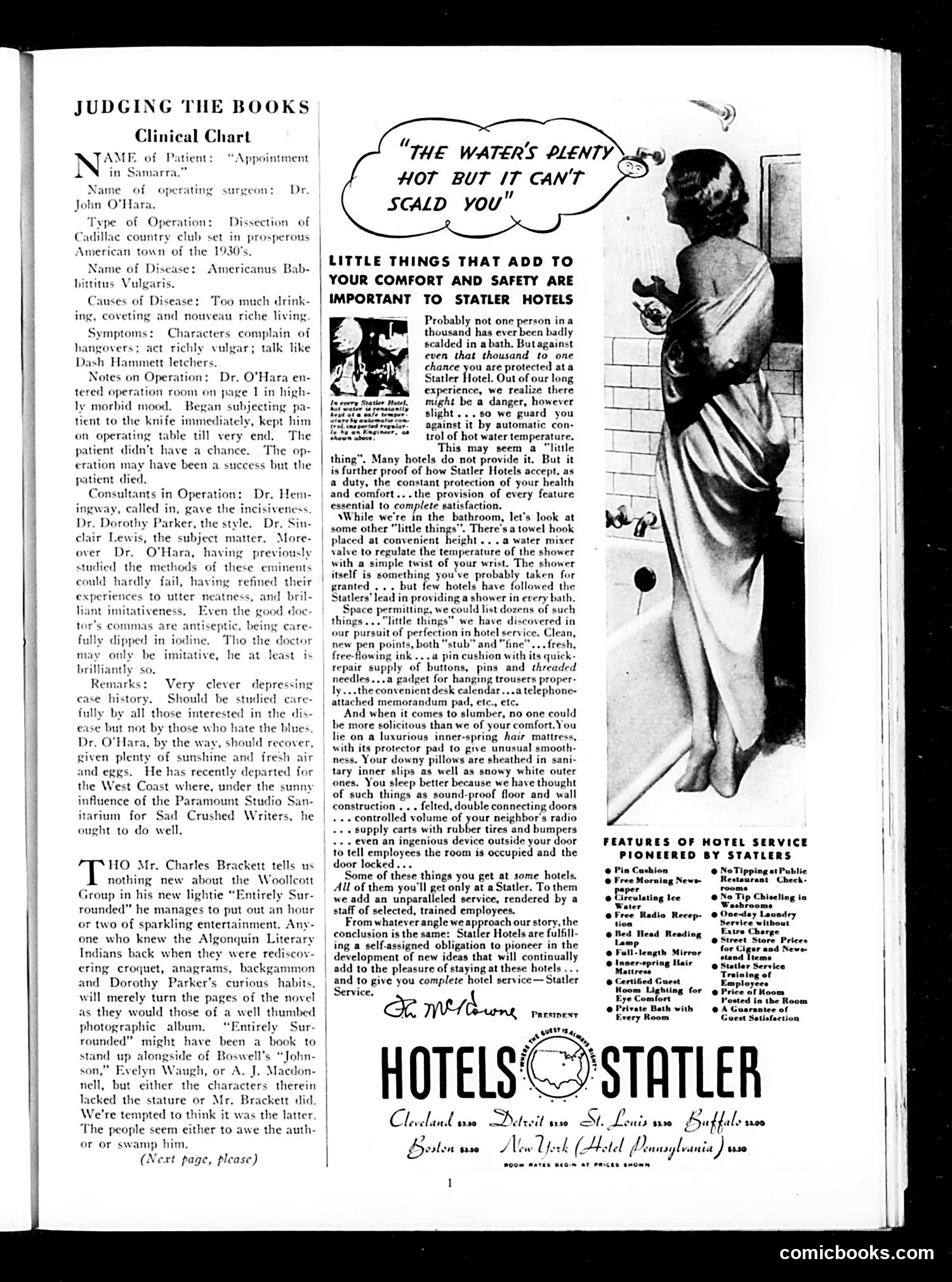
# Analysis This page is primarily a **Statler Hotels advertisement**, not political satire. The main content features a woman in a bathrobe next to bathroom fixtures, promoting hotel amenities like temperature-controlled water and various comfort features. The top left contains "Judging the Books," a book review section discussing a clinical case study about an appendectomy at a country club. The review critiques the work's depiction of doctors and medical procedures, suggesting the author's characterizations lack authenticity. The cartoon speech bubble ("The water's plenty hot but it can't scald you") reinforces the advertisement's safety message about Statler Hotels' modern temperature controls—a practical innovation positioning the chain as offering superior accommodations with contemporary conveniences.
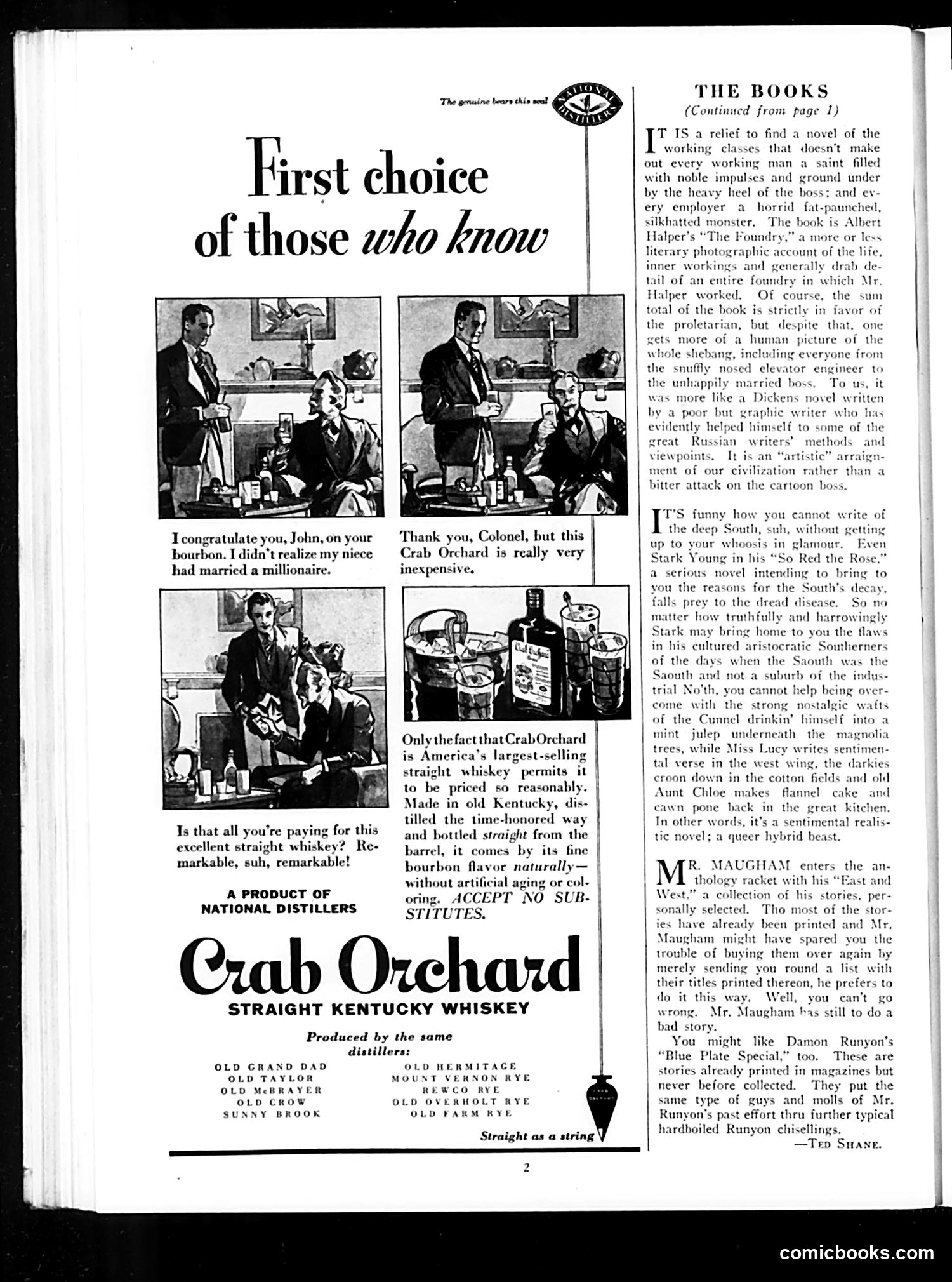
# Analysis This page is primarily a **Crab Orchard whiskey advertisement** rather than political satire. The comic panels show wealthy men in formal dress congratulating each other on business deals—one mentions marrying a millionaire's niece, another praises the whiskey's affordability despite its quality. The humor relies on **class-based satire**: the advertisement depicts the wealthy elite casually discussing money while drinking premium bourbon, implying that even America's richest find this whiskey appropriately priced. The joke targets both upper-class pretension and marketing to the affluent. The right column reviews books but contains no identifiable political figures or current events. The page appears designed to sell liquor to Judge's educated, affluent readership through gentle mockery of their own social circle.
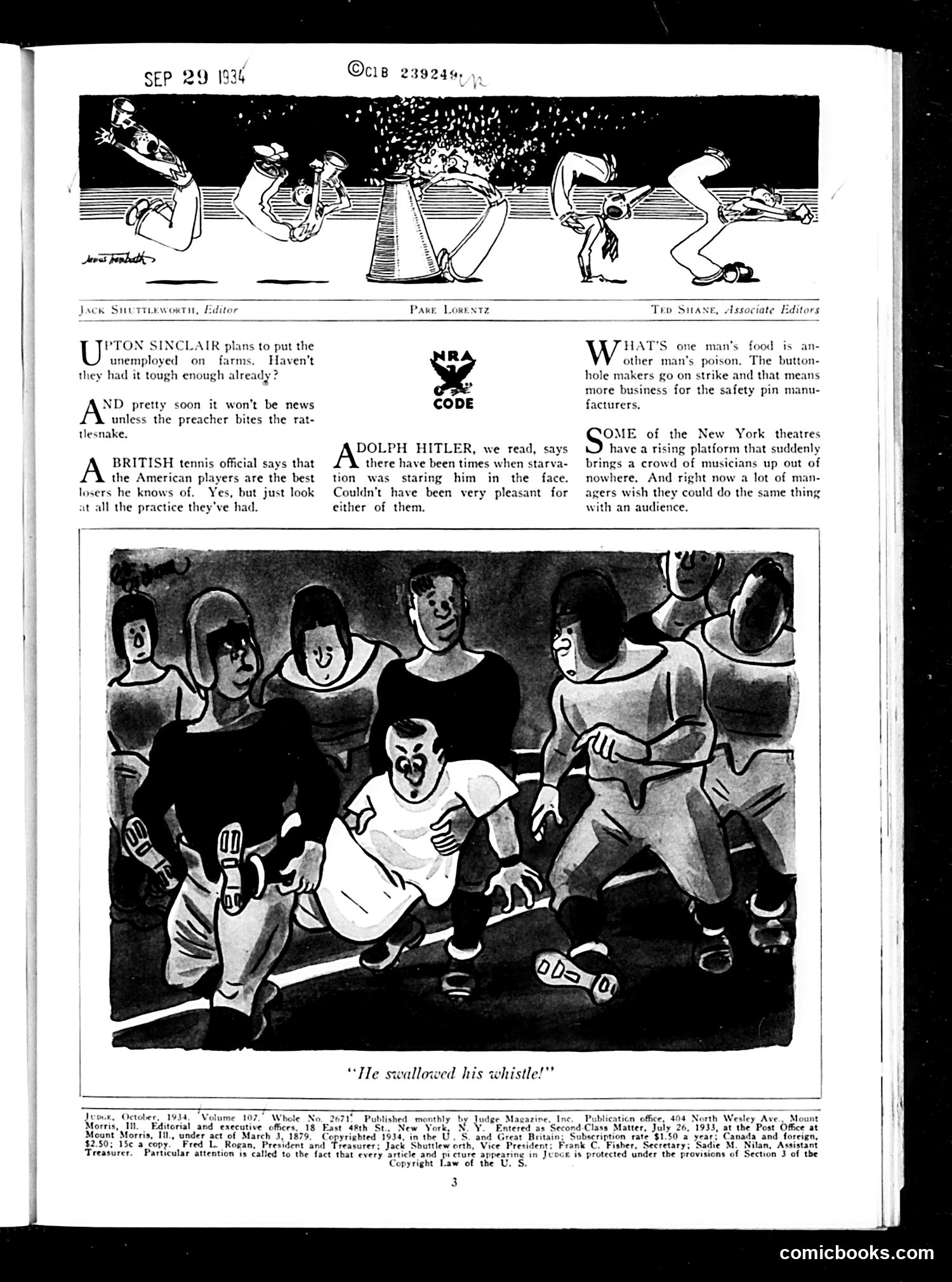
# Analysis of Judge Magazine Page (September 29, 1934) **Main Cartoon:** The large illustration depicts "He swallowed his whistle!" — showing a central figure (appearing to be a Nazi, identifiable by the swastika armband) surrounded by what look like referees or officials in striped uniforms. The satire appears to criticize **Adolf Hitler**, whom the text explicitly mentions: "ADOLPH HITLER, we read, says there have been times when starvation was staring him in the face. Couldn't have been very pleasant for either of them." The whistle-swallowing joke suggests Hitler has silenced himself or lost control—likely mocking his authoritarian suppression of dissent or his own contradictory statements about hardship. **Context:** This is early Depression-era American satire targeting Nazi leadership through dark humor about power and control, before U.S. entry into WWII.
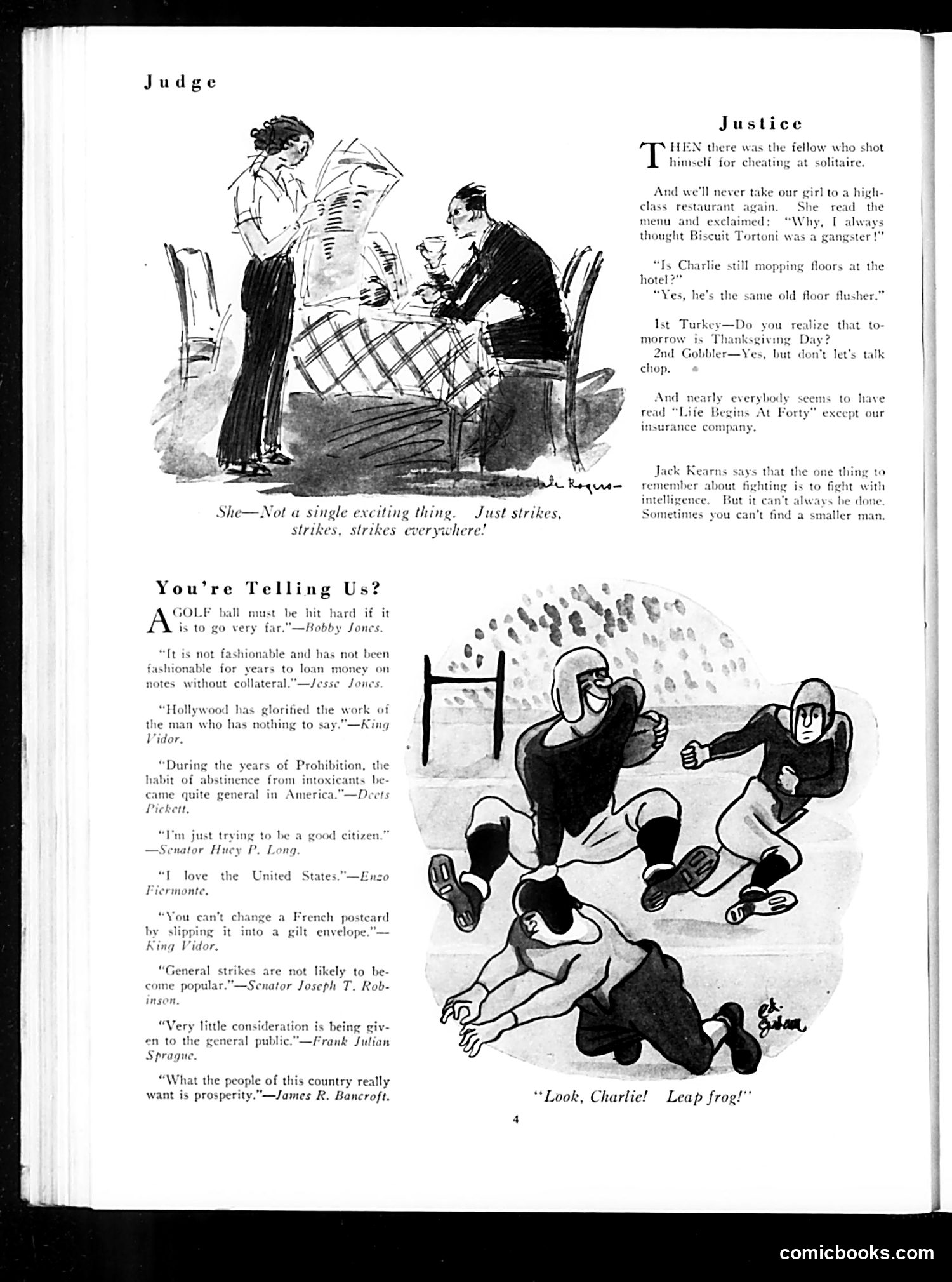
# Analysis The top cartoon depicts a restaurant scene satirizing class pretension. A woman complains that she'll never return to a "high-class restaurant" after discovering the famous "Biscuit Tortoni" dessert was made by a gangster—mocking how easily diners are fooled by fancy presentation regardless of disreputable origins. The lower section, "You're Telling Us?", compiles brief satirical quotes from public figures (Bobby Jones, King Victor, Senator Long, etc.) about various social issues—strikes, prohibition's failure, citizenship, and prosperity. These appear to mock politicians' empty platitudes. The cartoon "Look, Charlie! Leap frog!" shows children playing, likely satirizing something contemporary, though the specific reference is unclear without additional context. Overall, the page critiques American pretension, political hypocrisy, and social contradictions of the era.
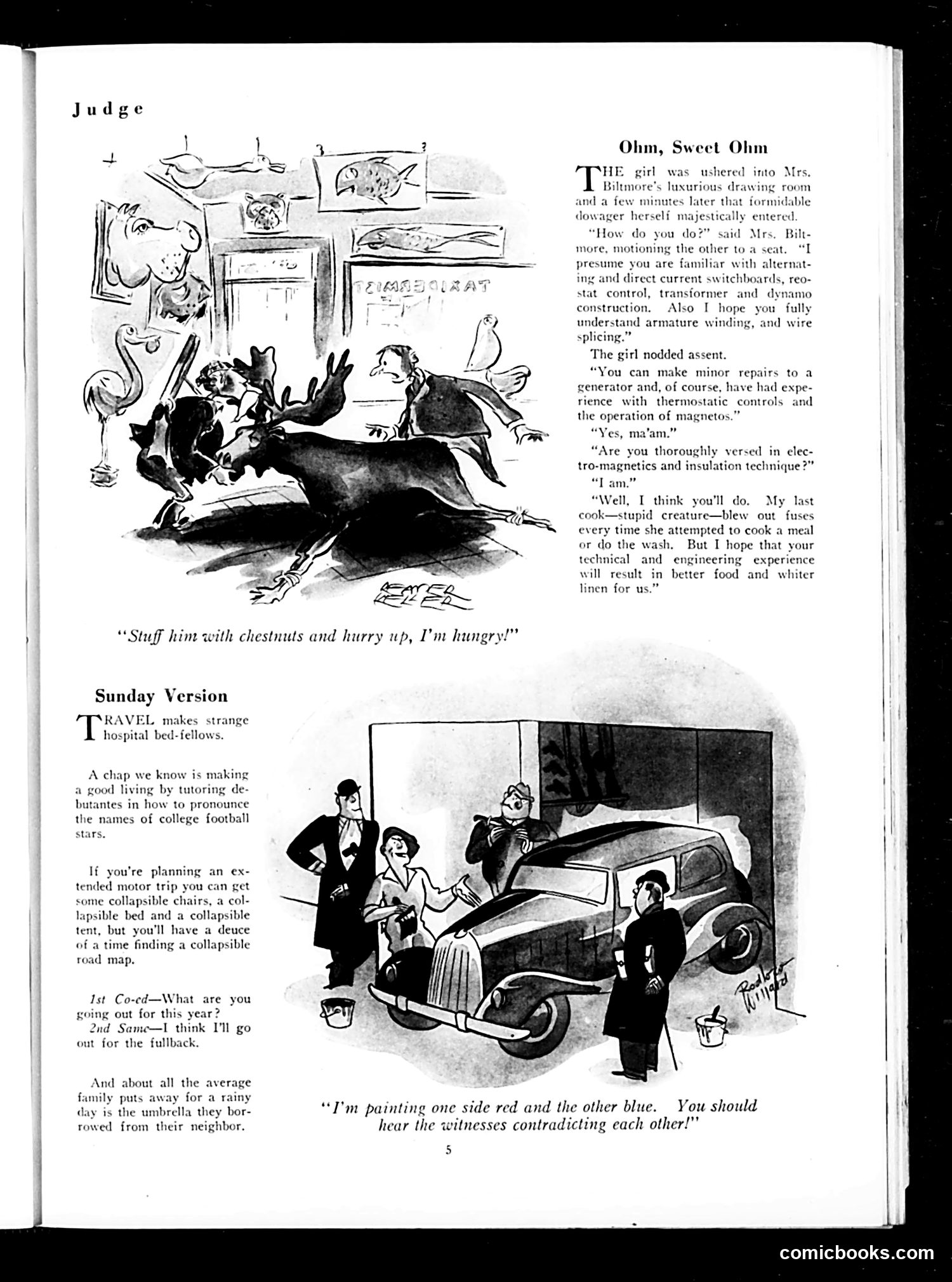
# "Judge" Page Analysis **Top cartoon ("Ohm, Sweet Ohm"):** A girl applying for a domestic position is interviewed by Mrs. Biltmore. The employer quizzes her on electrical knowledge—switchboards, current control, transformers, dynamos, armature winding, electromagnets, and insulation. The joke satirizes how modern electrical appliances have complicated household management. Mrs. Biltmore sarcastically hopes this "technical and engineering experience" will produce better cooking and cleaner linens than her previous cook, who "blew out fuses." The humor mocks both the expanding complexity of domestic technology and the absurd over-qualification now seemingly required for housework. **Bottom cartoon ("Sunday Version"):** Men discussing road trips mention collapsible furniture and maps, then joke about painting a car half-red, half-blue to create "witnesses contradicting each other"—likely referencing insurance fraud or accident liability disputes.
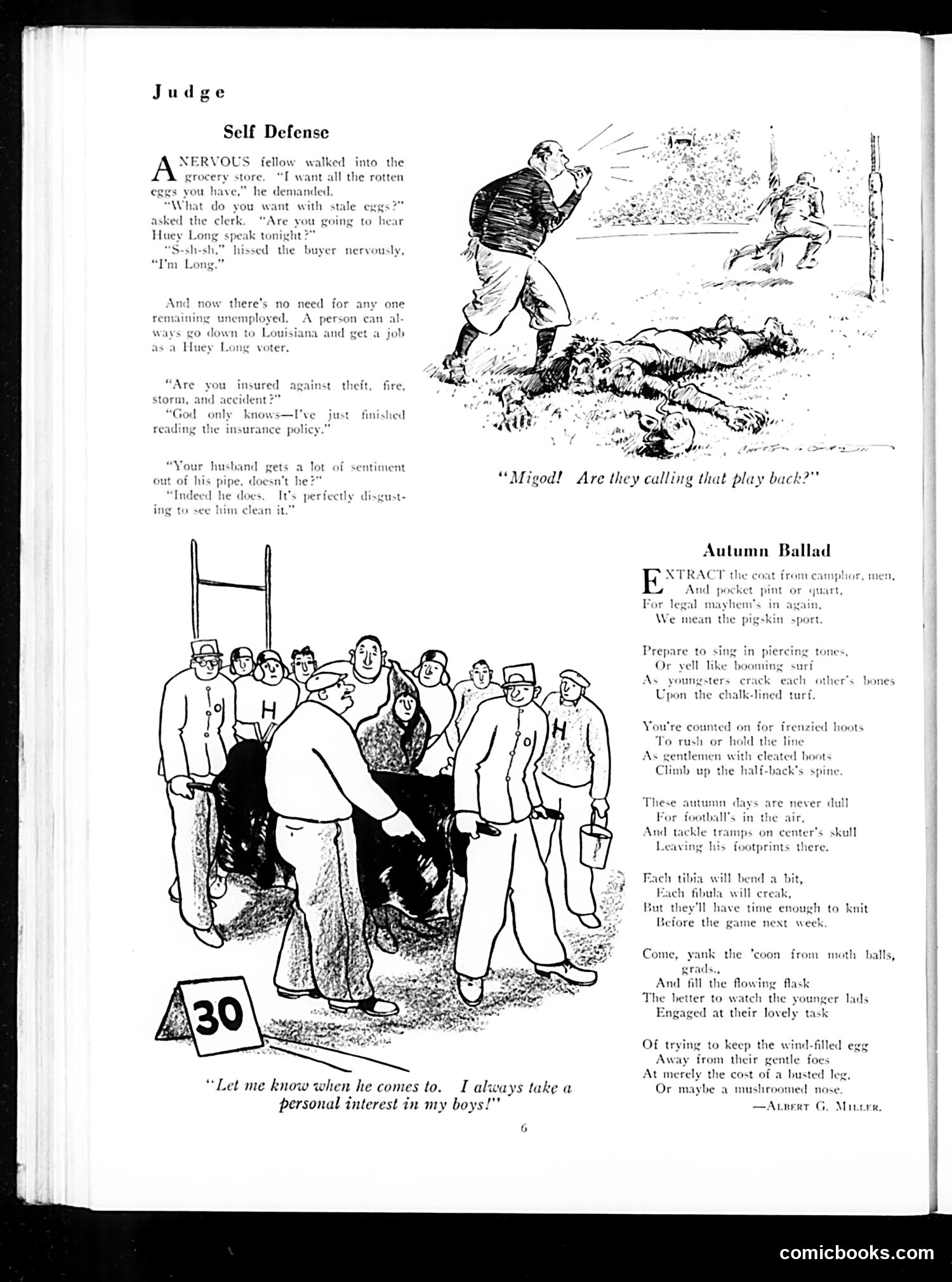
# Analysis of Judge Magazine Page **"Self Defense" cartoon (top):** A man throws eggs at someone fleeing. The dialogue references "Huey Long" and "rotten eggs you have," suggesting satire of Louisiana politics during the Depression era. The joke appears to be about corrupt politicians (likely Long, a controversial Louisiana figure) deserving public mockery. **Football cartoon (bottom):** Shows a coach surrounded by players marked with "H" (likely representing a specific school). The caption "Let me know when he comes to. I always take a personal interest in my boys!" satirizes coaching brutality—the implication being the coach has knocked a player unconscious and considers this normal or acceptable. **"Autumn Ballad" (right):** A humorous poem about football season's violence, celebrating injuries with dark comedy typical of 1920s-30s sports satire.
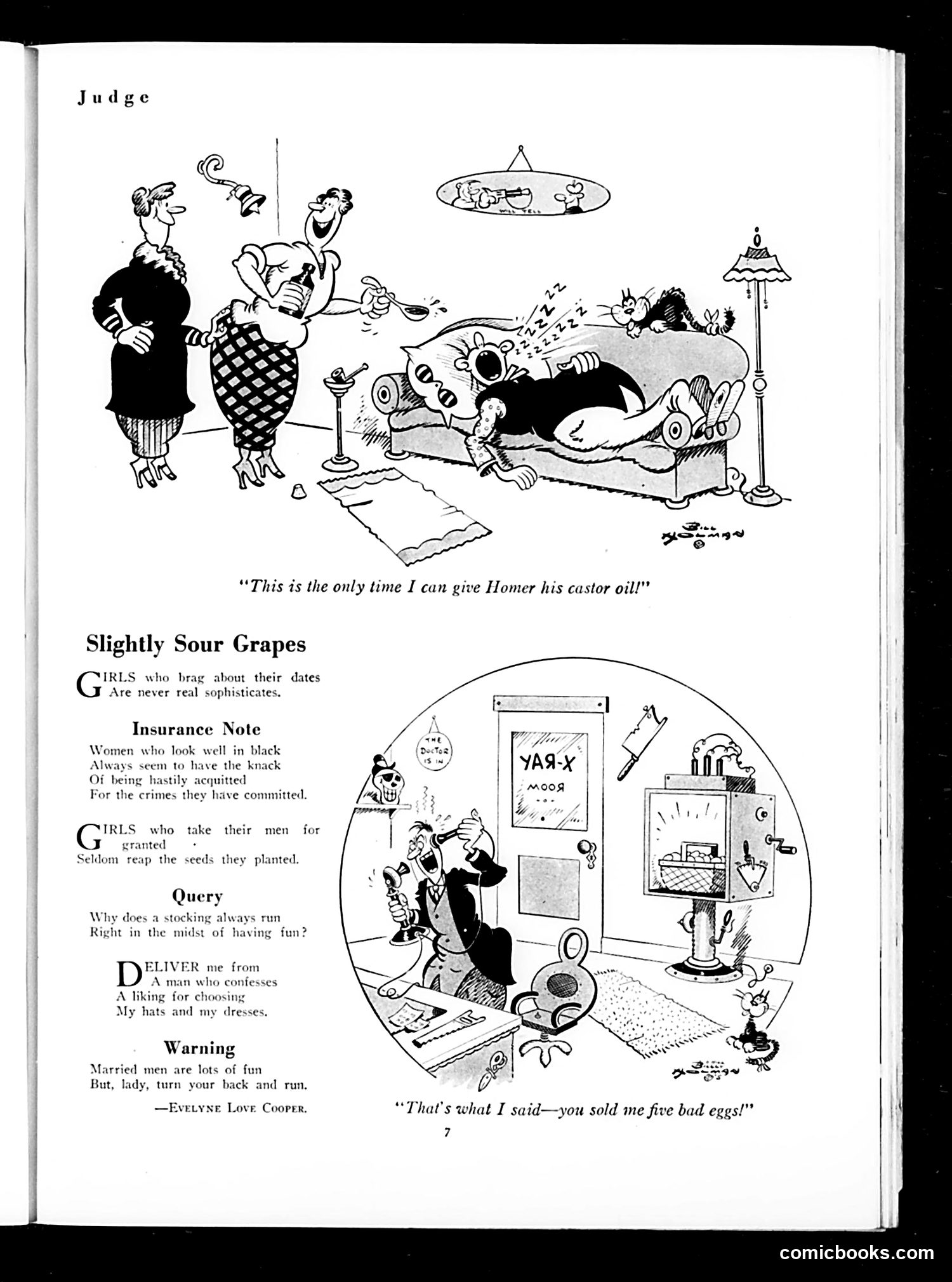
# Judge Magazine Page Analysis This page contains two unrelated cartoons and several humorous verse snippets targeting women's social behavior. The **top cartoon** depicts a domestic scene where a woman forces castor oil (a common laxative) on a man named Homer, apparently during a medical emergency or illness. The joke plays on the double meaning: she can only give him this unpleasant medicine under the guise of medical necessity. The **bottom cartoon** shows a woman at a general store complaining to the proprietor about bad eggs, with various store items visible. The humor suggests a domestic dispute or marital tension over household purchases. The surrounding verses mock women stereotypically: those who brag about dates, women in black appearing suspiciously acquitted of crimes, girls taking men for granted, and warnings against controlling men and married men generally. This reflects early 20th-century satirical humor targeting gender dynamics and domestic life, with somewhat misogynistic undertones typical of the era's entertainment publications.
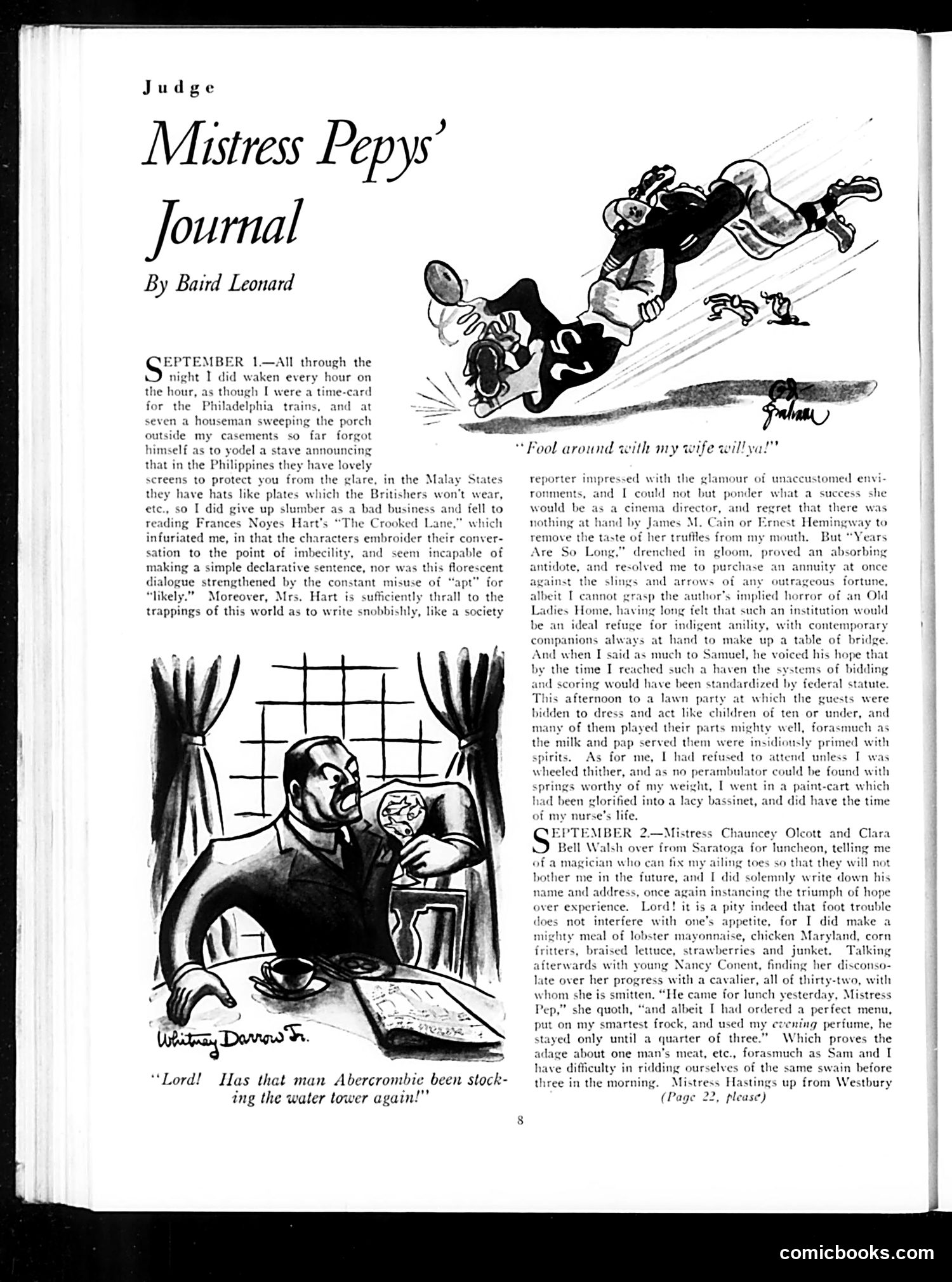
# Analysis of "Mistress Pepys' Journal" This is a humor column mimicking Samuel Pepys' 17th-century diary style, applying it to contemporary 1920s socialite concerns. The satire targets upper-class affectation and trivial preoccupations. **The cartoons** illustrate two complaints: a man desperately fleeing down stairs (captioned about "fooling around with my wife"), and a houseman at a water tower—both depicting domestic chaos and servants' misbehavior. **The text** mock-seriously chronicles absurd social problems: a housekeeper yodeling at dawn, critiques of an author's flowery prose, attendance at a children's costume party where adults dress as ten-year-olds, and romantic difficulties. The narrator complains about foot troubles and trivial social failures with exaggerated gravity. **The satire's point**: Judge ridicules wealthy society's self-importance while obsessing over petty matters—bad books, servants' antics, and romantic snubs—treated with the grandiose tone of historical significance. The faux-Pepys format heightens this mockery, suggesting modern socialites' concerns are unworthy of such elaborate documentation.
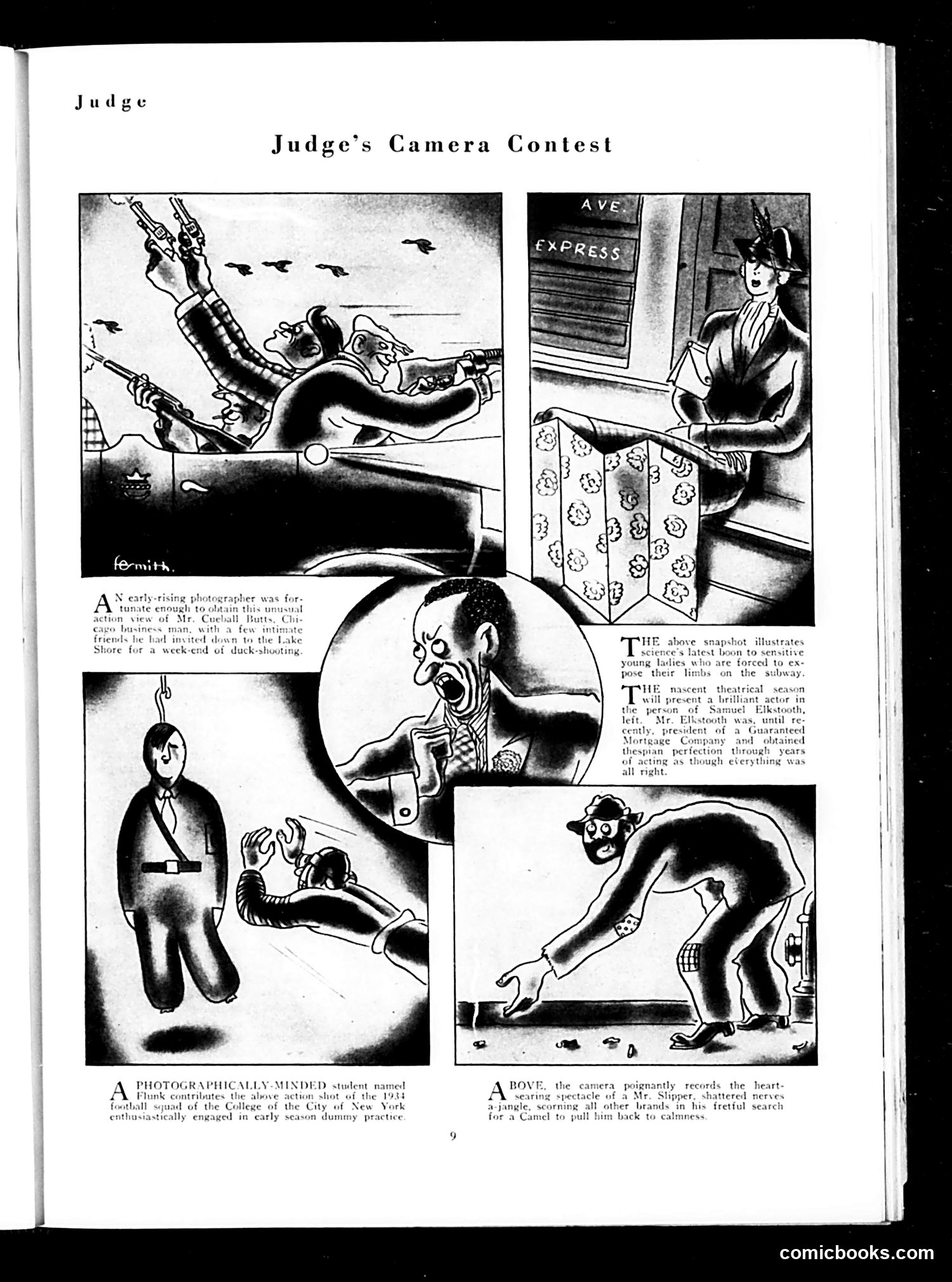
# Judge's Camera Contest This page showcases humorous photographs submitted to a camera contest. The cartoons depict exaggerated, comedic scenes meant to be absurd: - Top left: A photographer attempting an action shot of football practice, capturing players in awkward, contorted poses - Top right: A woman posed unnaturally on a windowsill for a "science" photograph about sensitive young ladies - Bottom left: A man suspended by a rope in an bizarre pose - Bottom right: A man in an exaggerated crouching position The satire mocks both amateur photographers' attempts at capturing "artistic" images and the subjects' willingness to pose ridiculously. The joke relies on the contrast between the photographers' pretensions and the undignified, silly results—poking fun at 1930s photography enthusiasts and their often-absurd compositions.
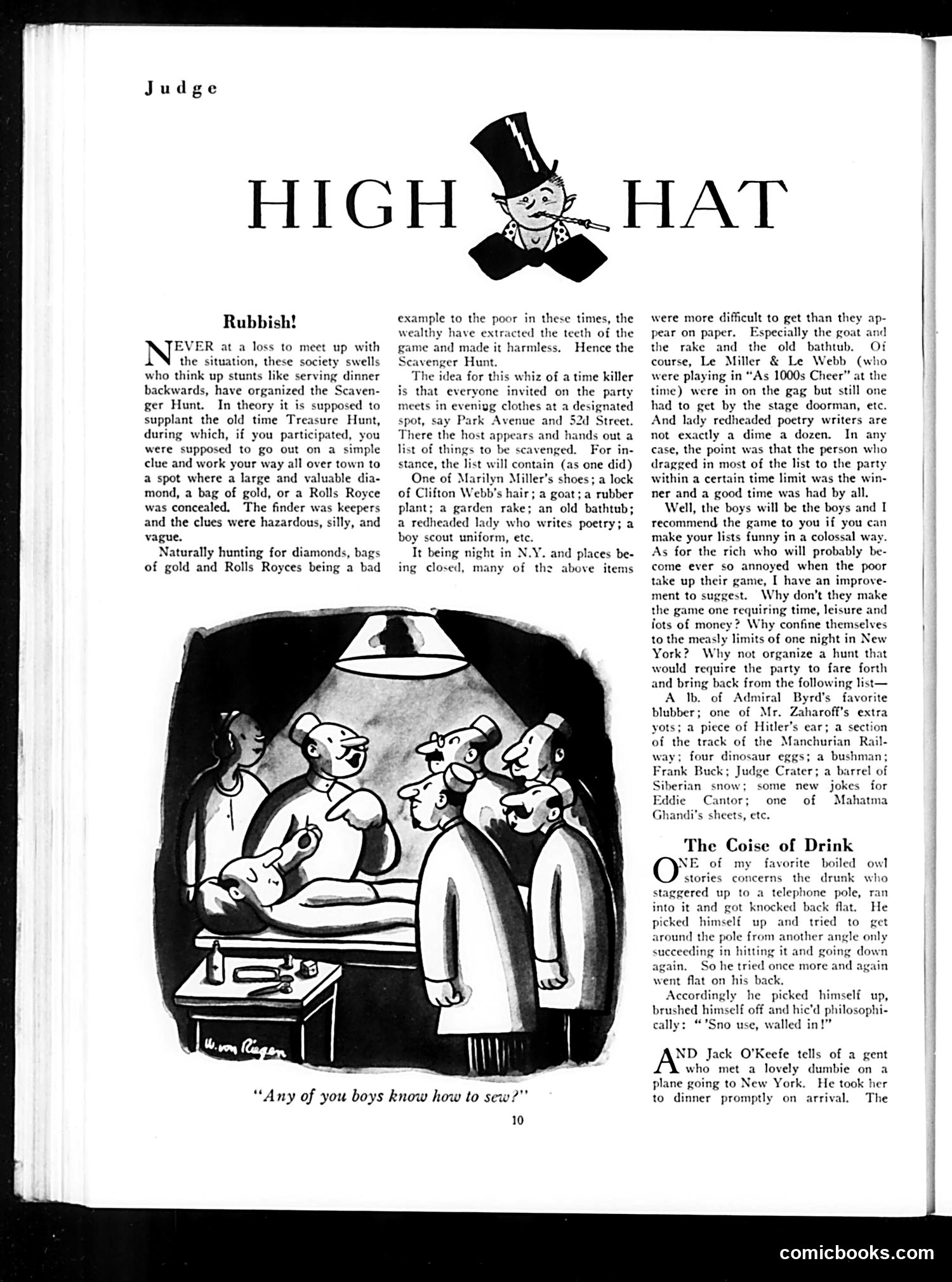
# "High Hat" and "The Coise of Drink" - Judge Magazine This page satirizes wealthy society's attempts to appear socially conscious. The **Scavenger Hunt** article mocks the rich for sanitizing the traditional "Treasure Hunt" (which rewarded finding valuable items like diamonds or Rolls Royces) into a harmless game collecting mundane objects—shoes from Broadway star Marilyn Miller, a goat, a bathtub. The judge argues this "ruins" the game's appeal to the poor during economic hardship, then sarcastically suggests the wealthy organize a *truly* expensive hunt requiring months and vast sums, referencing contemporary figures like Admiral Byrd, Judge Crater (a famous missing person), and Hitler. The cartoon illustrates the scavenger hunt's chaos: well-dressed participants scramble indoors gathering absurd items while asking "Any of you boys know how to sew?" Below, "The Coise of Drink" tells a slapstick joke about a drunk repeatedly colliding with a telephone pole before concluding he's "walled in"—typical period drinking humor. Both pieces reflect Judge's satirical criticism of upper-class frivolity and excessive drinking culture.
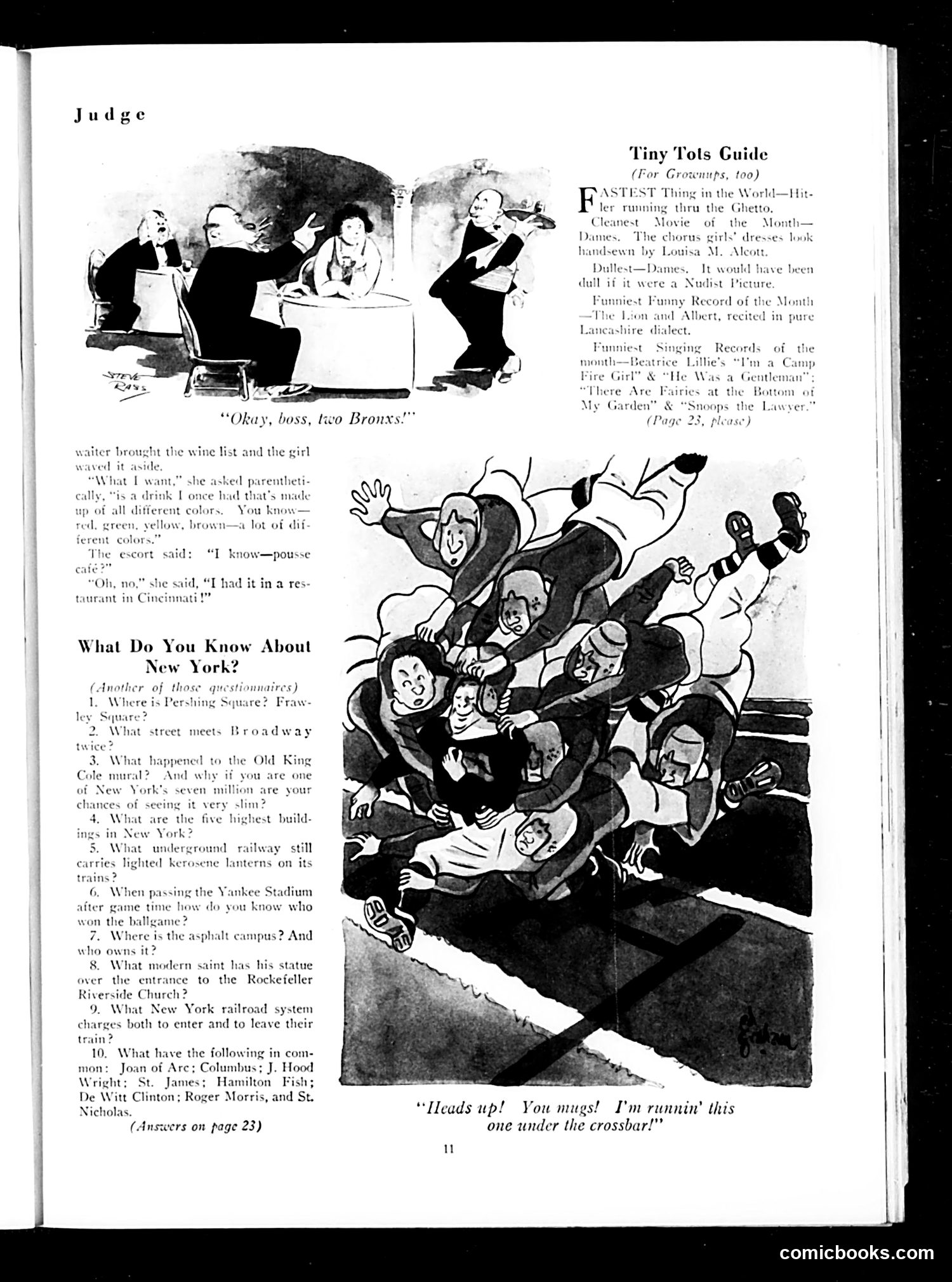
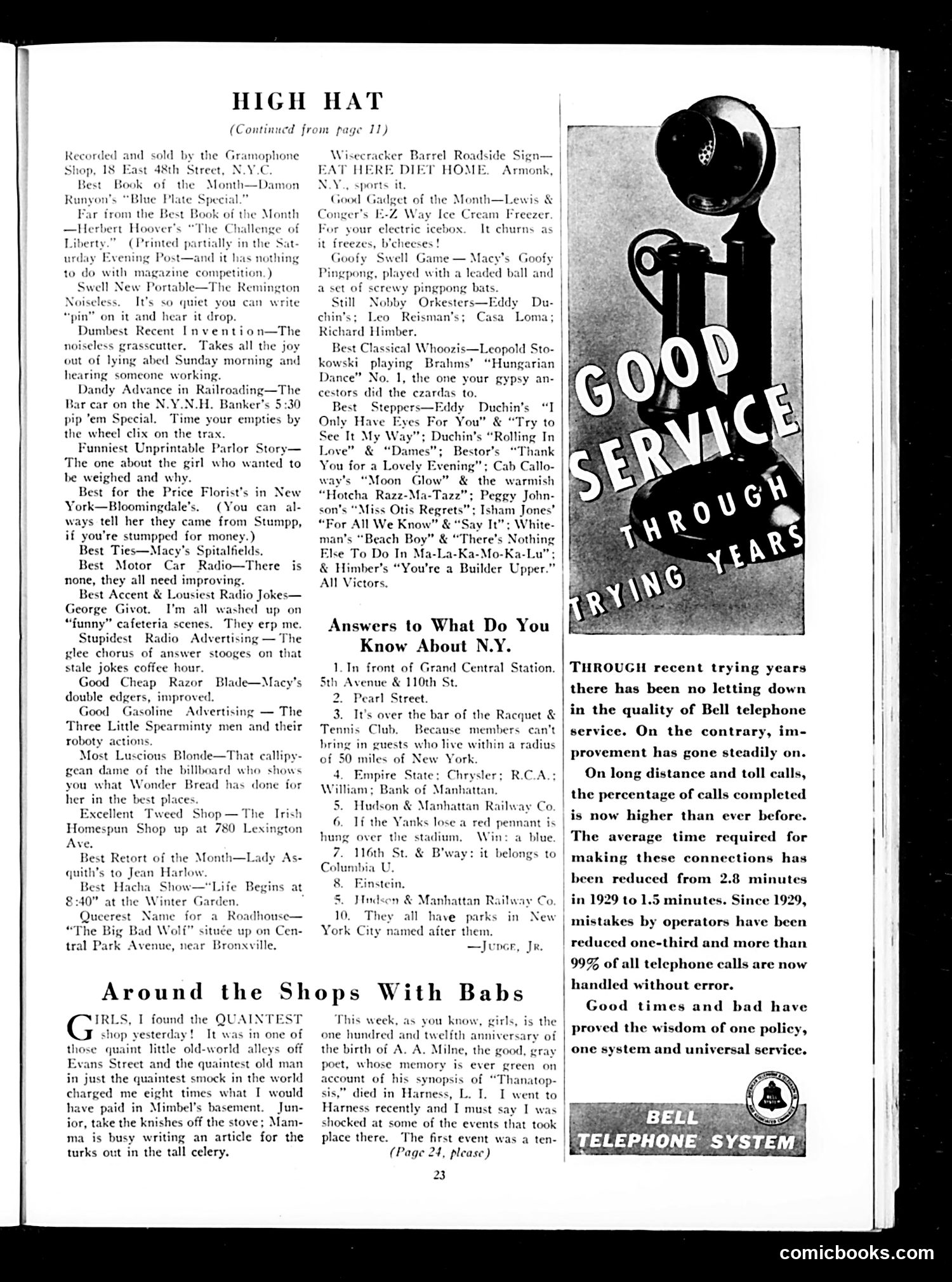
# Analysis of Judge Magazine Page This page contains multiple sections typical of Judge's satirical format: **Top Cartoon ("Okay, boss, two Bronxs!"):** Shows a waiter serving clients at what appears to be a restaurant. The joke satirizes pretentious diners ordering obscure drinks—the woman asks for a cocktail "made up of all different colors" (green, yellow, brown), then reveals she had it once "in a restaurant in Cincinnati," mocking both her lack of sophistication and Midwestern tourist culture. **"Tiny Tots Guide" Section:** A humorous column for adults includes a Nazi reference ("Hitler running thru the Ghetto")—this appears to be wartime-era satire, likely from the 1940s given the crude joke about Nazi brutality. **"What Do You Know About New York?":** A trivia quiz mocking New Yorkers' (lack of) knowledge about their own city—questions about obscure landmarks, the Yankee Stadium, and historical figures. It's gentle satire about urban provincialism. **Bottom Cartoon:** Depicts children playing a rough contact sport, with one shouting about running "under the crossbar"—likely satirizing dangerous children's games. The page exemplifies Judge's mix of social commentary, urban humor, and era-specific references.