A complete issue · 36 pages · 1934
Judge — September 1934
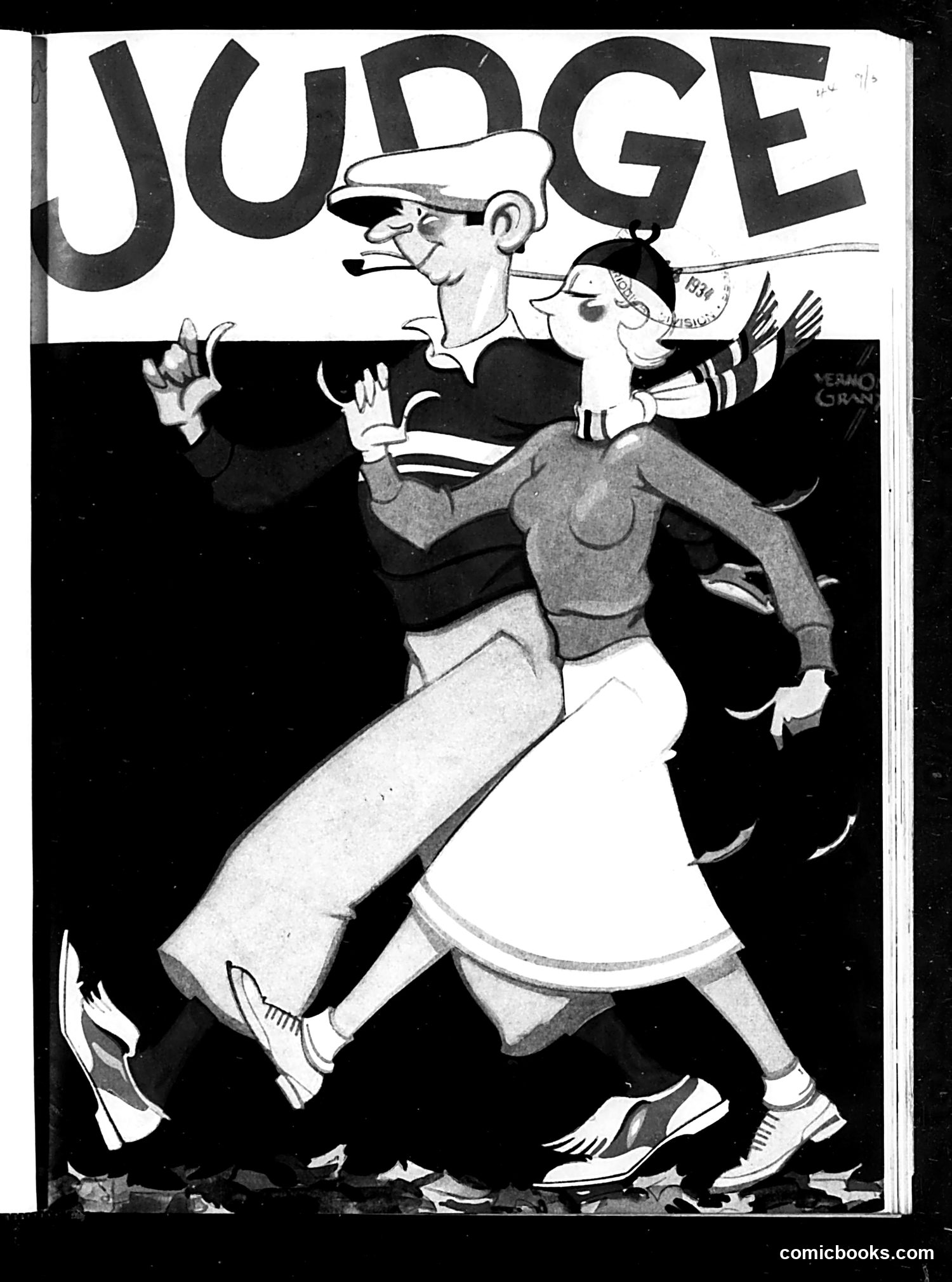
# Judge Magazine Cartoon Analysis This appears to be a cover from *Judge* magazine featuring a caricatured couple dancing. The large word "JUDGE" dominates the top, establishing this as the magazine's masthead or cover. The cartoon depicts a man in a cap and woman in athletic/sailor-style clothing dancing together energetically. The exaggerated style and dynamic poses suggest satire about modern social behavior—likely commentary on 1920s-1930s dancing, courtship, or changing social mores. Without additional visible text identifying specific figures or dated context, I cannot definitively state whether these represent particular political figures or reference a specific event. The jovial, physical humor suggests the satire targets contemporary social trends rather than serious political matters. The artistic style is consistent with early 20th-century American comic illustration.
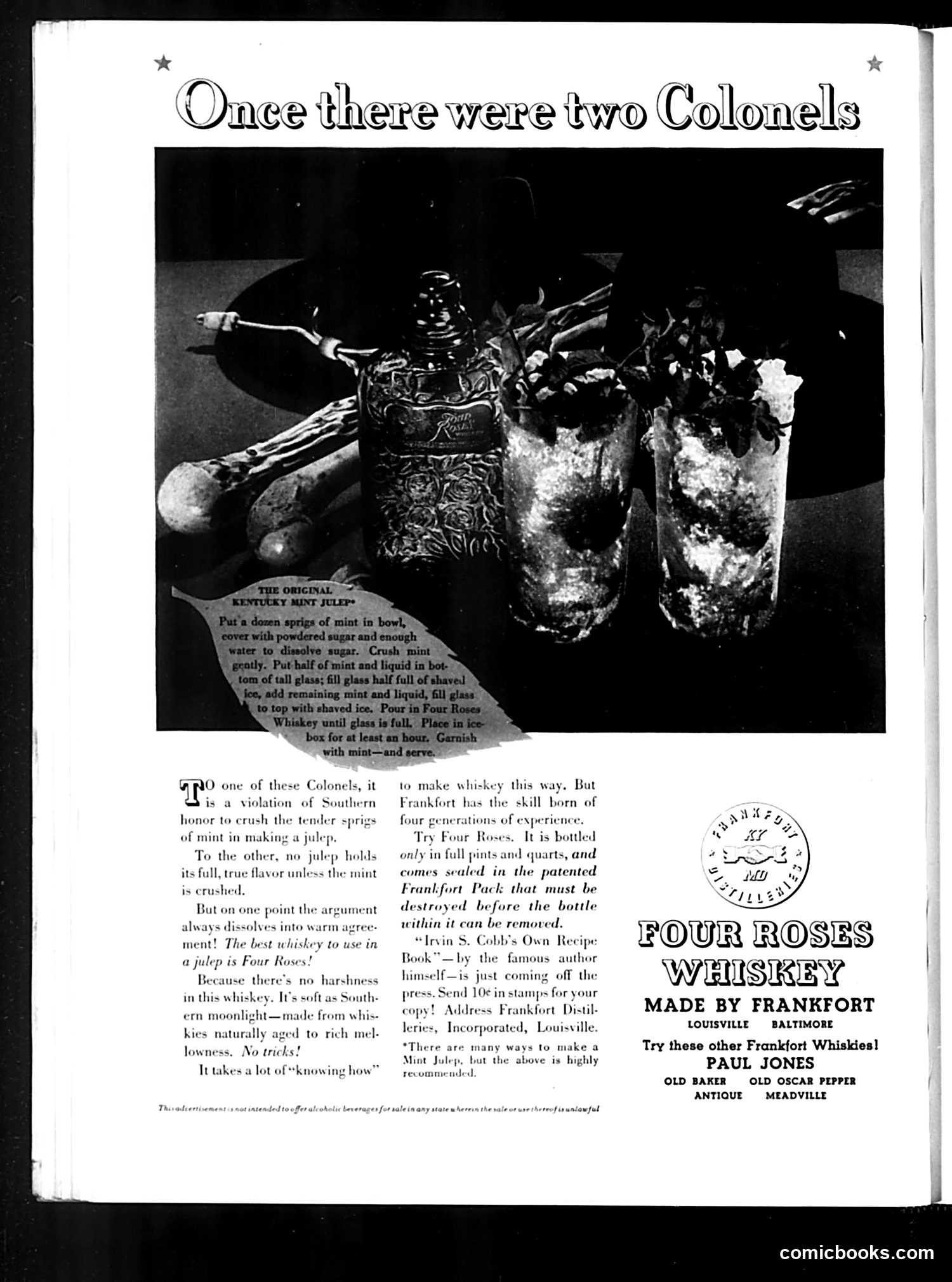
# Analysis This page is primarily **advertising**, not political satire. It features a full-page ad for Four Roses Whiskey made by Frankfort Distilleries in Louisville and Baltimore. The "two Colonels" reference in the headline appears to be a marketing device rather than political commentary—likely referring to the brand's association with Southern gentility and bourbon tradition (the "Colonel" being a social rank evoked by Kentucky whiskey culture). The page includes a recipe for "The Original Kentucky Mint Julep" and emphasizes the whiskey's quality and proper preparation methods. There's also text about obtaining a recipe book by H.S. Cobb. Additional Frankfort whiskey brands are advertised: Paul Jones, Old Baker, Old Oscar Pepper, Antique, and Meadville. This is primarily a consumer advertisement rather than editorial satire.
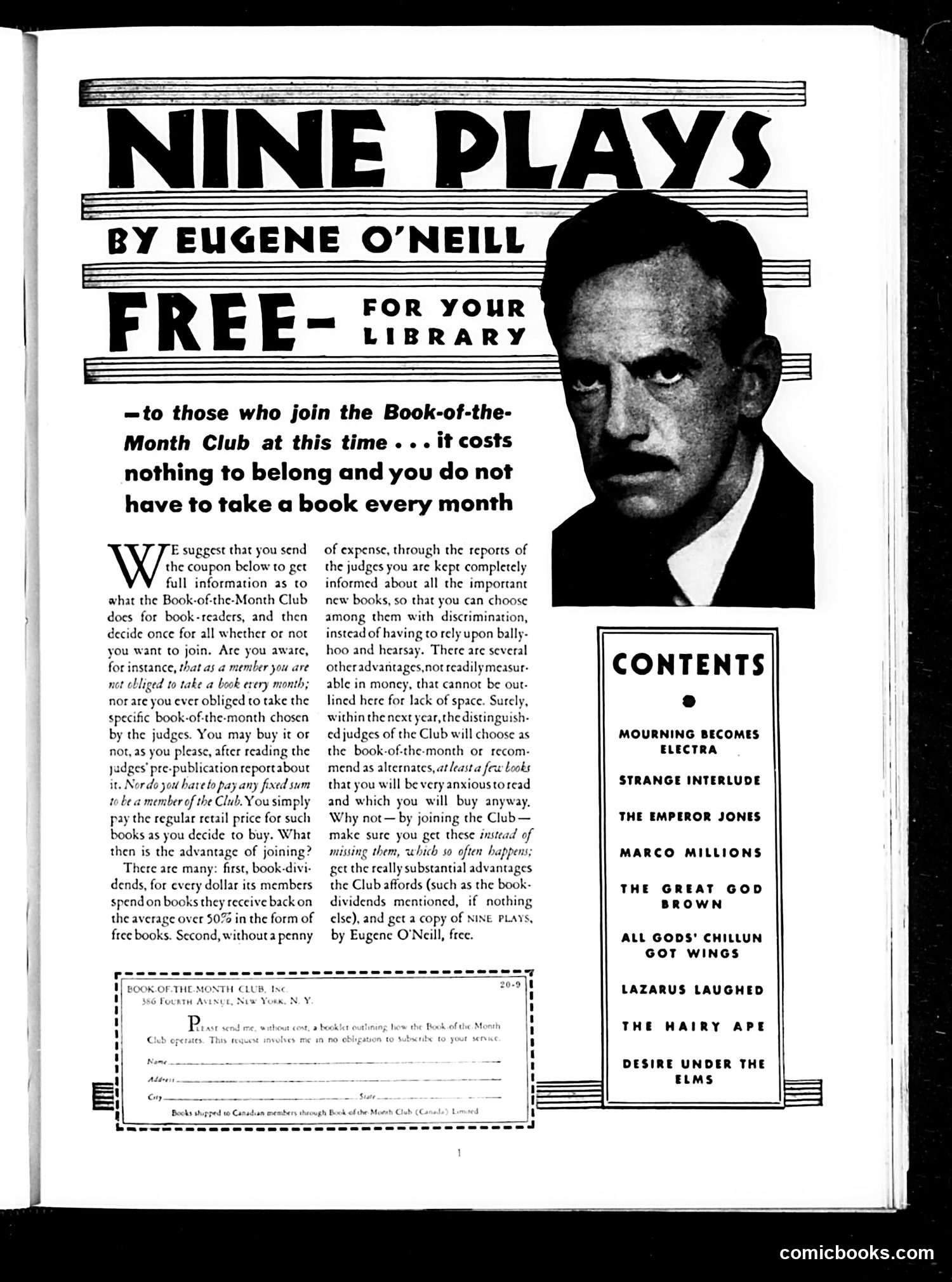
# Analysis This page is primarily **advertising, not satire or editorial content**. It promotes a Book-of-the-Month Club membership offering nine plays by Eugene O'Neill as a free gift. The portrait shows **Eugene O'Neill**, the celebrated American dramatist. O'Neill was a prestigious literary figure in the 1920s-1930s, so featuring him lent prestige to the club's offer. The "Contents" box lists the nine plays included, such as *Mourning Becomes Electra* and *The Great Good Brown*. The pitch emphasizes membership benefits: free books, no obligation to purchase monthly selections, and access to curated literary choices through expert judges. The coupon at bottom allows readers to request club information. This is straightforward commercial promotion, not satirical commentary on contemporary politics or society.
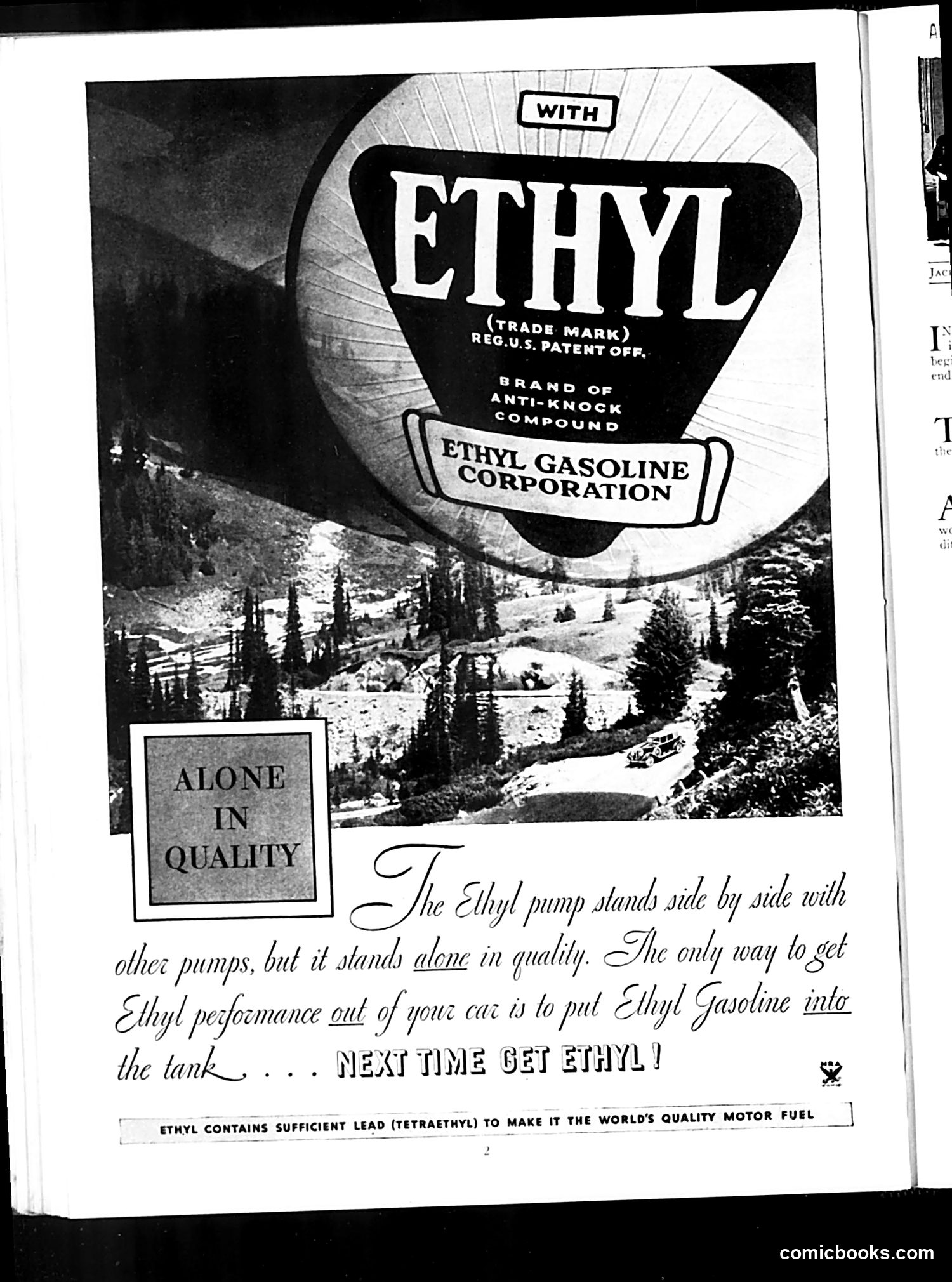
# Ethyl Gasoline Advertisement This is a **product advertisement**, not political satire. The Ethyl Gasoline Corporation is promoting their branded fuel additive (tetraethyl lead) as superior to competitors. The ad's tagline "Alone in Quality" claims Ethyl stands apart despite competing pumps existing "side by side." The copy urges drivers to use Ethyl gasoline to achieve better car performance. **Historical context for modern readers**: This advertisement openly highlights lead (tetraethyl) as a desirable ingredient—what we now know is a toxic neurotoxin. This reflects early-20th-century ignorance about lead's dangers. Lead additives were eventually banned from gasoline in most countries due to severe public health impacts. The ad represents an era when harmful products were marketed without safety warnings.
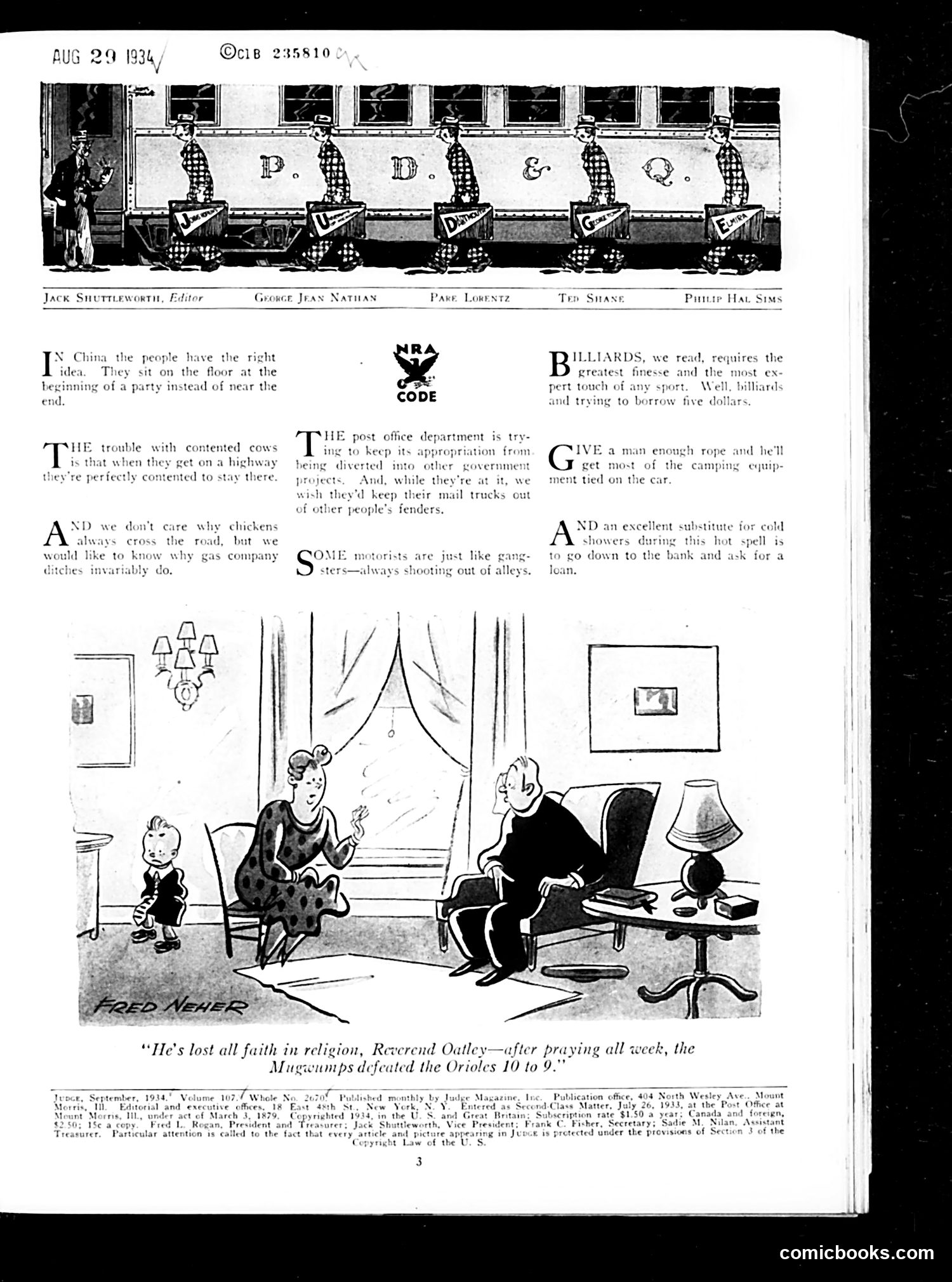
# Judge Magazine Page Analysis (August 29, 1934) The main cartoon by Fred Neher depicts a domestic scene where a man tells a woman: "He's lost all faith in religion, Reverend Oatley—after praying all week, the Mugwumps defeated the Orioles 10 to 9." This satirizes how sports outcomes can shake people's faith more than religious practice. The joke turns on the absurdity of prioritizing baseball results over spiritual conviction—the man prayed all week yet the Mugwumps (likely a local or semi-professional team) lost to the Orioles, apparently devastating his faith. The surrounding text contains unrelated quips about contentment, post office trucks, chickens crossing roads, motorists, billiards, and cold showers—typical Judge magazine filler humor for the era.
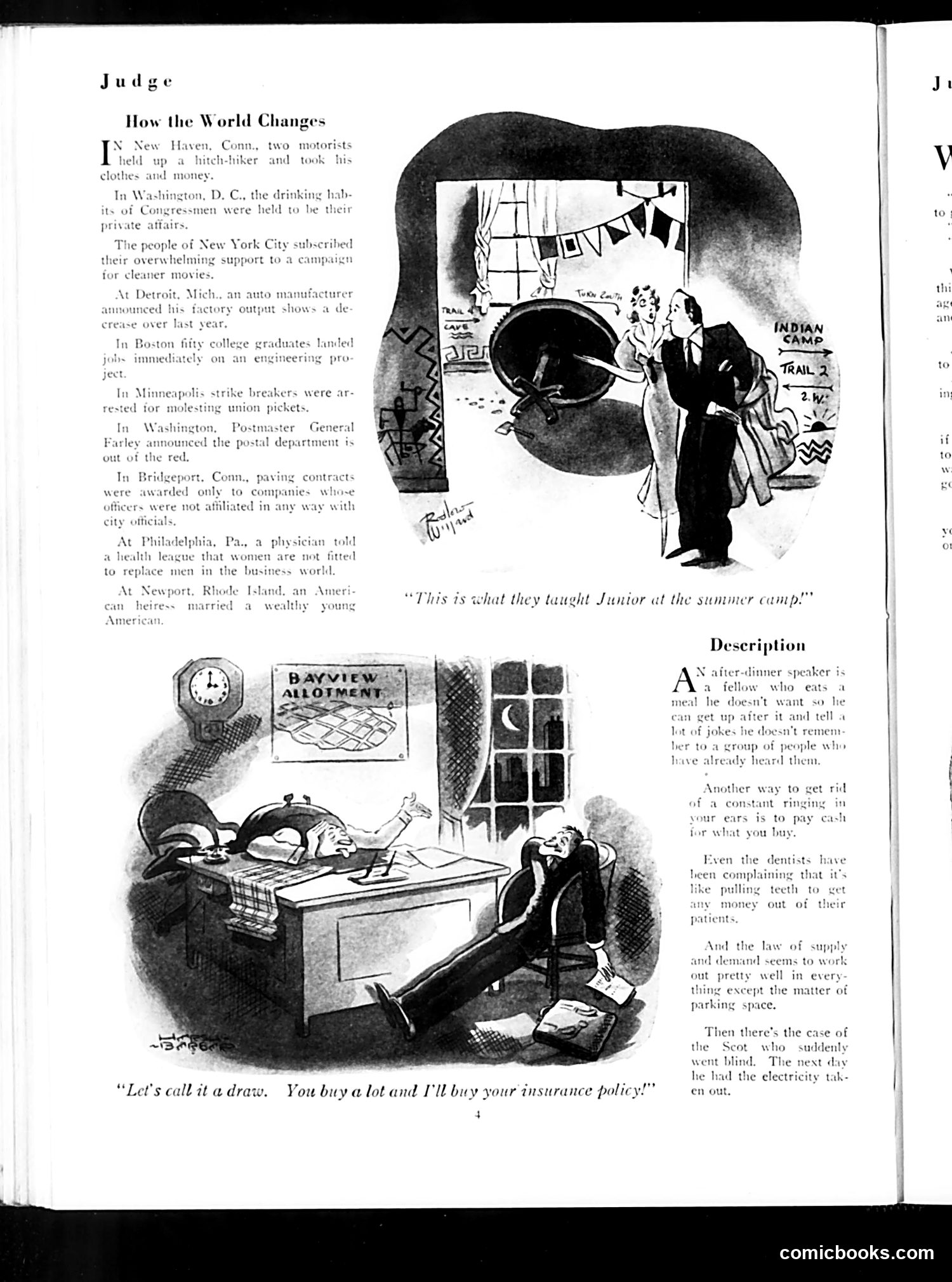
# Analysis of Judge Magazine Page **Top Cartoon:** Shows a man at a summer camp looking at what appears to be Native American imagery ("Indian Camp" and "Trail" visible). The caption "This is what they taught Junior at the summer camp" satirizes the educational content of children's camps, likely mocking either overly romanticized depictions of Native Americans or questioning what children actually learn at such institutions. **Bottom Cartoon:** Depicts two men at a desk labeled "Bayview Allotment" with one's feet up. The caption "Let's call it a draw. You buy a lot and I'll buy your insurance policy!" suggests satire about real estate dealings and insurance schemes, implying collusion or dubious business practices between developers and insurance agents during this period.
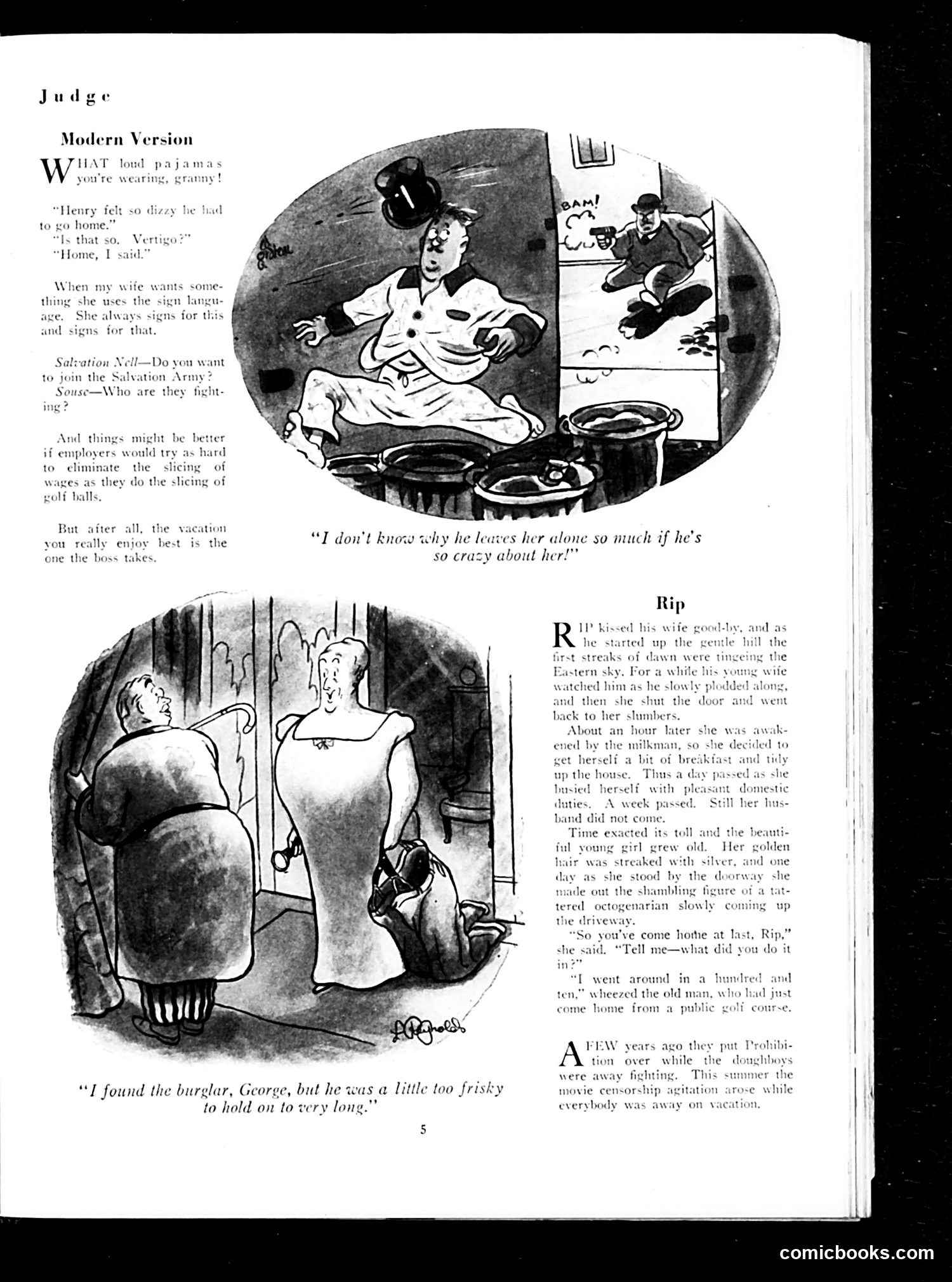
# Analysis of Judge Magazine Page This page contains two satirical pieces from Judge magazine (known for humor and social commentary): **"Modern Version"** (top): Mocks marital dynamics and workplace culture. The joke criticizes how wives cite "signs of lunacy" for husbands' behavior, while husbands tolerate bosses' unreasonable demands. The cartoon shows a dizzy wife, suggesting gender stereotypes about female irrationality. **"Rip"** (bottom): A longer story about a man's infidelity. The narrative follows a husband who leaves his wife, years pass, and he returns as an aged man. The woman has aged gracefully while he's become unrecognizable. The setup appears to play on the classic "Rip Van Winkle" tale of lost time, but inverts it as moral commentary on abandonment. Both pieces reflect early 20th-century attitudes toward marriage, gender roles, and morality.
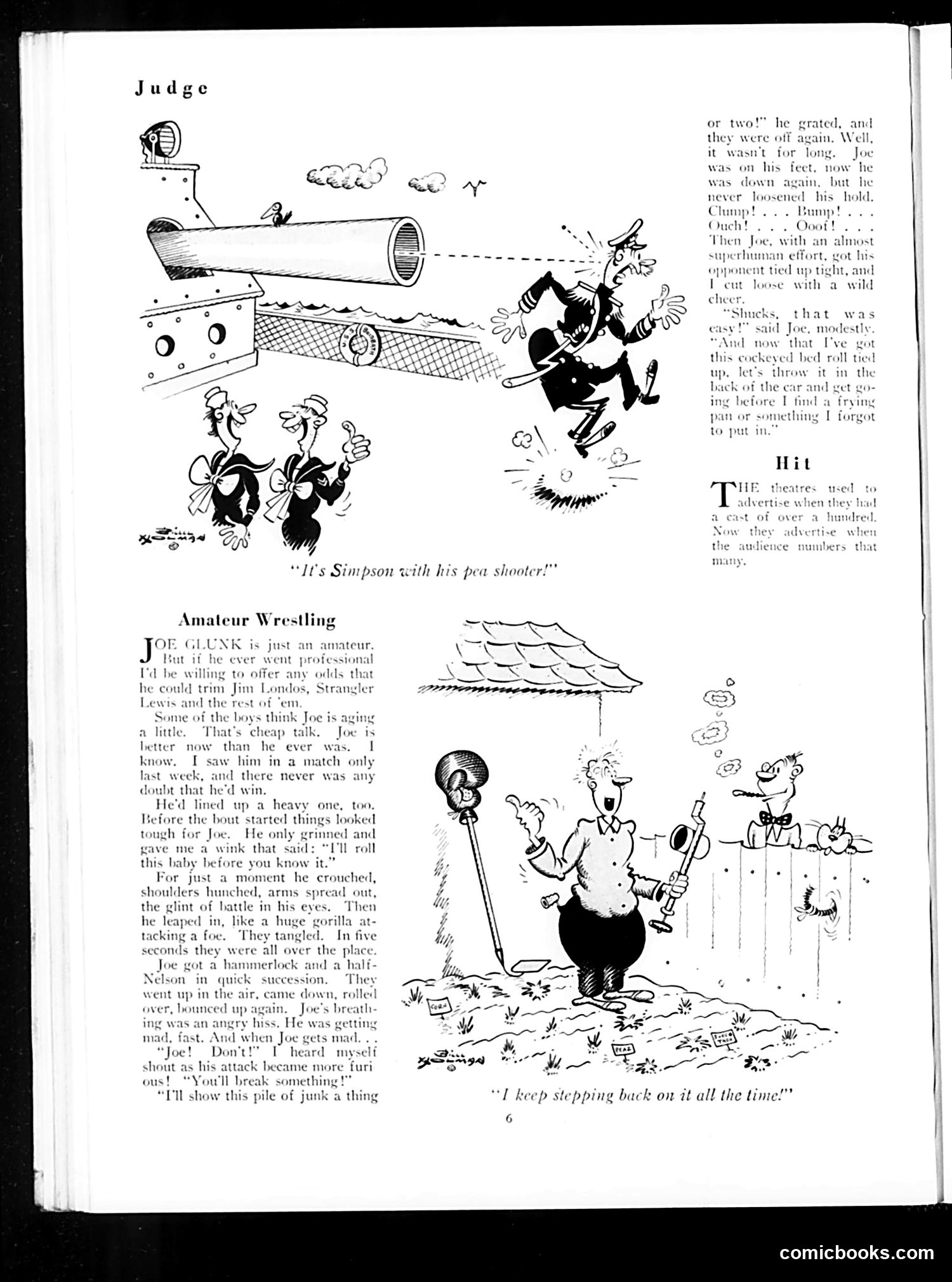
# Analysis of Judge Magazine Page This page contains three unrelated humor pieces: **"It's Simpson with his pea shooter!"** depicts a character (Simpson) operating what appears to be a military cannon or large weapon, with the implication of using it as a trivial pea shooter—satirizing someone's absurdly excessive response to a minor problem. **"Judge"** is a brief editorial note about theatrical advertising practices, commenting that theaters now advertise audience size rather than cast size, suggesting commercialism has shifted focus to attendance numbers over star power. **"Amateur Wrestling"** humorously recounts a backyard wrestling match between Joe Glunk and opponents, emphasizing Joe's surprising strength despite aging. The narrative mock-seriously documents his violent wrestling style, culminating in the caption "I keep stepping back on it all the time!"—likely referencing collateral damage from the fight.
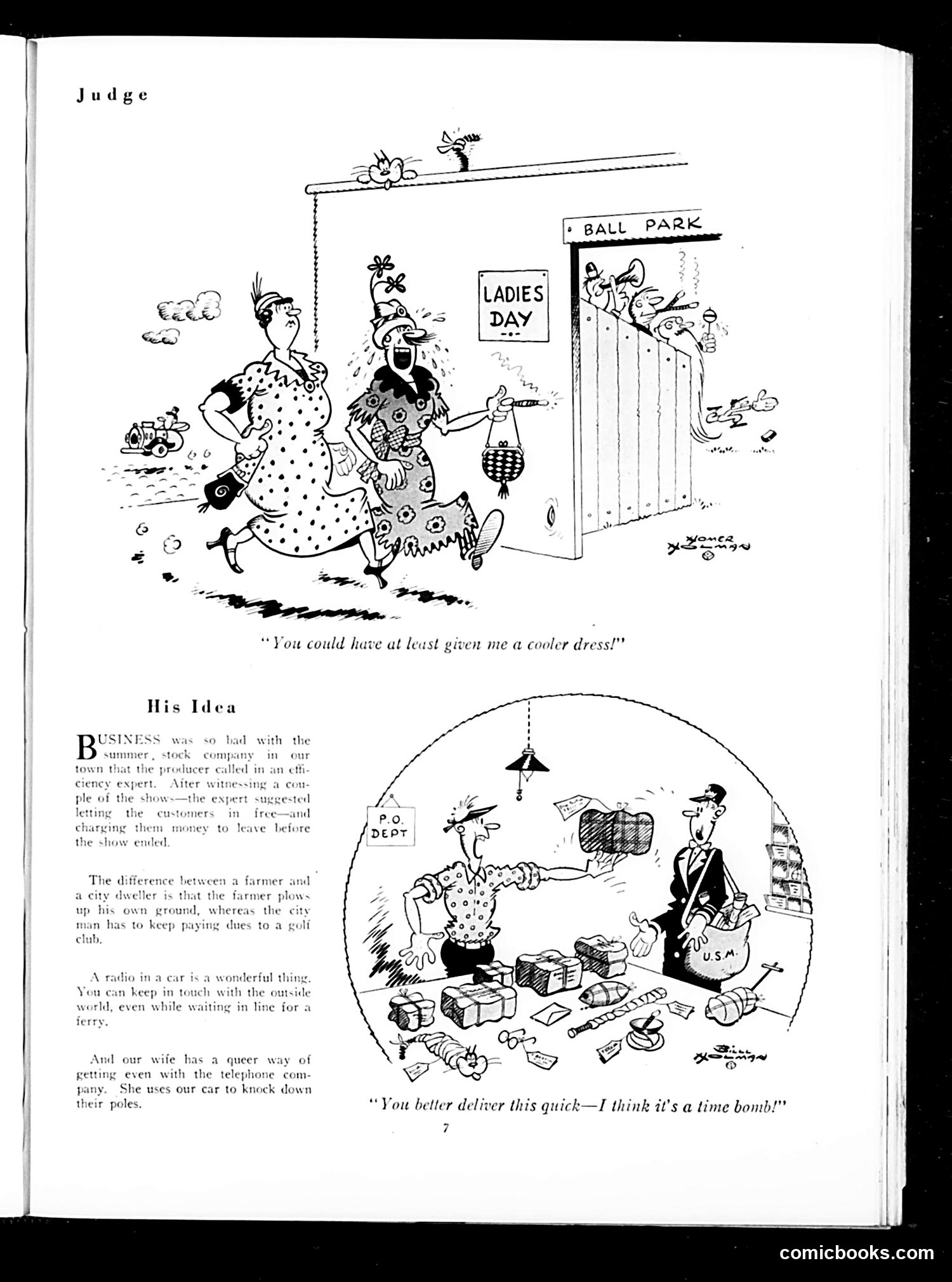
# Explanation for Modern Readers This page from *Judge* magazine contains two cartoons satirizing early 20th-century domestic life and gender roles. **Top cartoon ("Ladies Day"):** A woman complains to her husband at a baseball game that he didn't buy her a nice dress for the outing. The satire targets wives' materialism and the expectation that husbands finance their appearance for social occasions. **Bottom cartoon ("His Idea"):** A postal worker delivers a package to a businessman, warning it might be a "time bomb." The accompanying text jokes about the differences between farmers and city dwellers, and includes a quip about wives using cars to "knock down" telephone company poles—suggesting reckless or vengeful behavior. The satire mocks both domestic tensions and the absurdity of wives' supposed retaliatory tactics against service companies. Both cartoons reflect period stereotypes about nagging wives, henpecked husbands, and women as frivolous consumers—humor rooted in traditional gender dynamics now widely recognized as sexist.
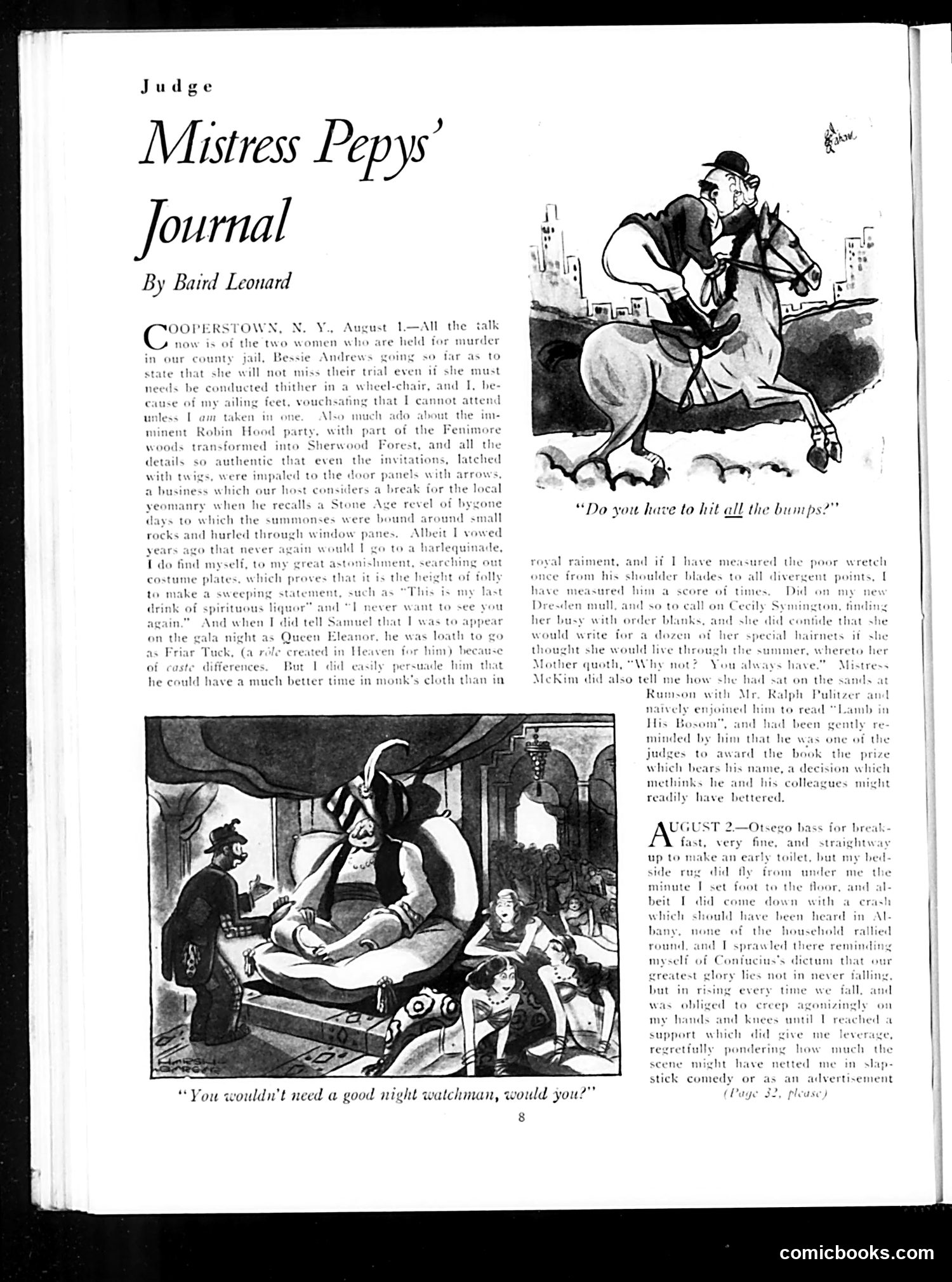
# Judge Magazine: "Mistress Pepys' Journal" (August 1933) This is a humorous diary column by Baird Leonard mimicking Samuel Pepys's famous 17th-century diary. The narrator—a society woman with gout—recounts absurd summer experiences in upstate New York. The two cartoons illustrate incidents from her account: the top shows her on horseback asking "Do you have to hit *all* the bumps?"—referring to a painful ride. The lower cartoon depicts what appears to be a chaotic domestic scene with the caption "You wouldn't need a good night watchman, would you?"—likely mocking servant incompetence or household disorder. The satire targets upper-class pretension: the narrator affects Pepys's literary voice while complaining about trivial ailments (ailing feet, a fall), references Robin Hood pageants and literary prizes, and namedrops society figures like Ralph Pulitzer. The juxtaposition of high literary aspirations with slapstick physical comedy creates the humor—she's ridiculous precisely because she takes her minor mishaps so seriously.
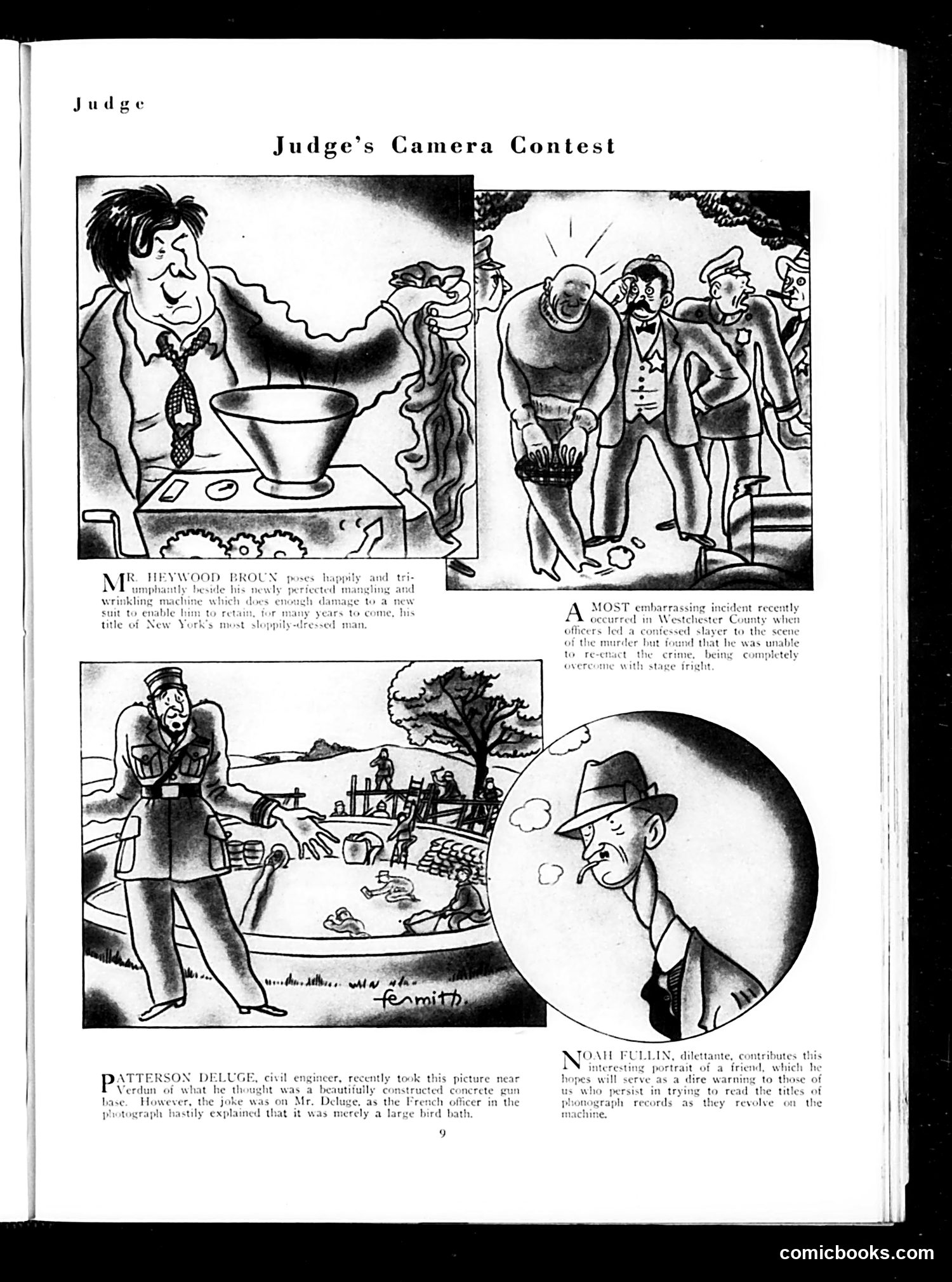
# Judge's Camera Contest This page presents satirical cartoons mocking people who submit photos to a magazine camera contest, likely Judge's own competition. The top left cartoon ridicules Mr. Heywood Broux, who supposedly submitted a photo of his "newly perfected mangling and wrinkling machine"—a mundane domestic device he mistakenly believed worthy of publication. The upper right shows officers with a confessed slayer who was "unable to re-enact the crime" due to stage fright—mocking both criminal absurdity and theatrical pretense. The bottom cartoons feature Patterson Deluge, a civil engineer who photographed what he thought was a "beautifully constructed concrete gun base," only to have a French officer explain it was actually a large bird bath—humor derived from oblivious misidentification and professional embarrassment.
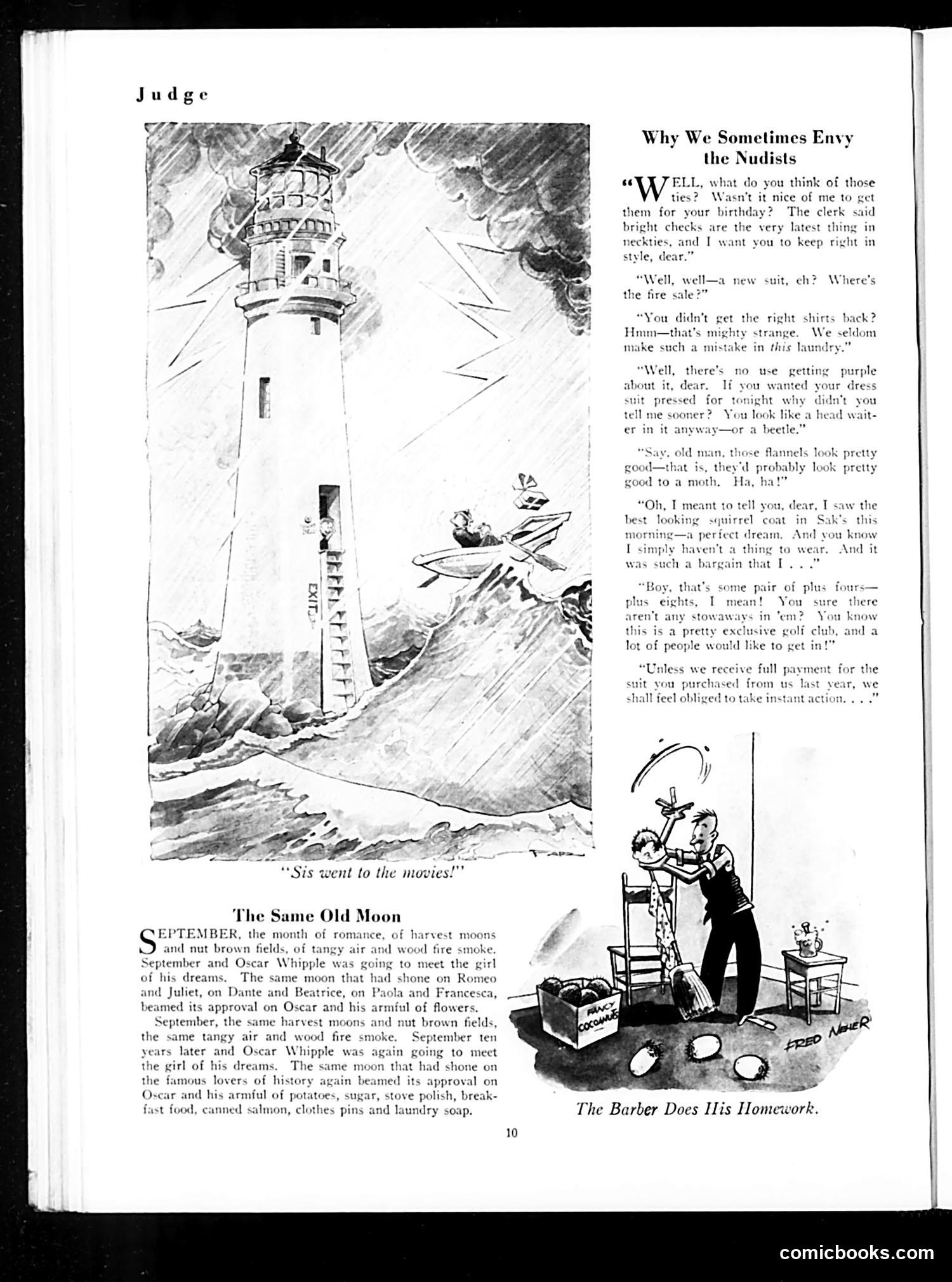
# Analysis of Judge Magazine Page This page contains two distinct satirical pieces: **"Why We Sometimes Envy the Nudists"** (right) mocks the burdens of clothing fashion and social expectations. A husband and wife bicker about his wardrobe choices—new ties, suits, and golf attire—while creditors threaten legal action over unpaid bills. The satire suggests that constant pressure to maintain fashionable appearance and keep up with social status (exclusive golf clubs, designer purchases) creates financial strain and marital discord. Nudists, by contrast, avoid these expenses and social performance entirely. **"The Same Old Moon"** (center/left) uses romantic irony. Young Oscar Whipple courts his dream girl under September's moon with flowers; ten years later, the same moon shines on him carrying potatoes, stove polish, and laundry soap instead—marriage has replaced romance with domestic drudgery. The illustration shows a lighthouse and couple, emphasizing how time transforms idealistic courtship into prosaic household management. Both pieces satirize early 20th-century marriage and consumer culture's demands.