A complete issue · 36 pages · 1932
Judge — July 1932
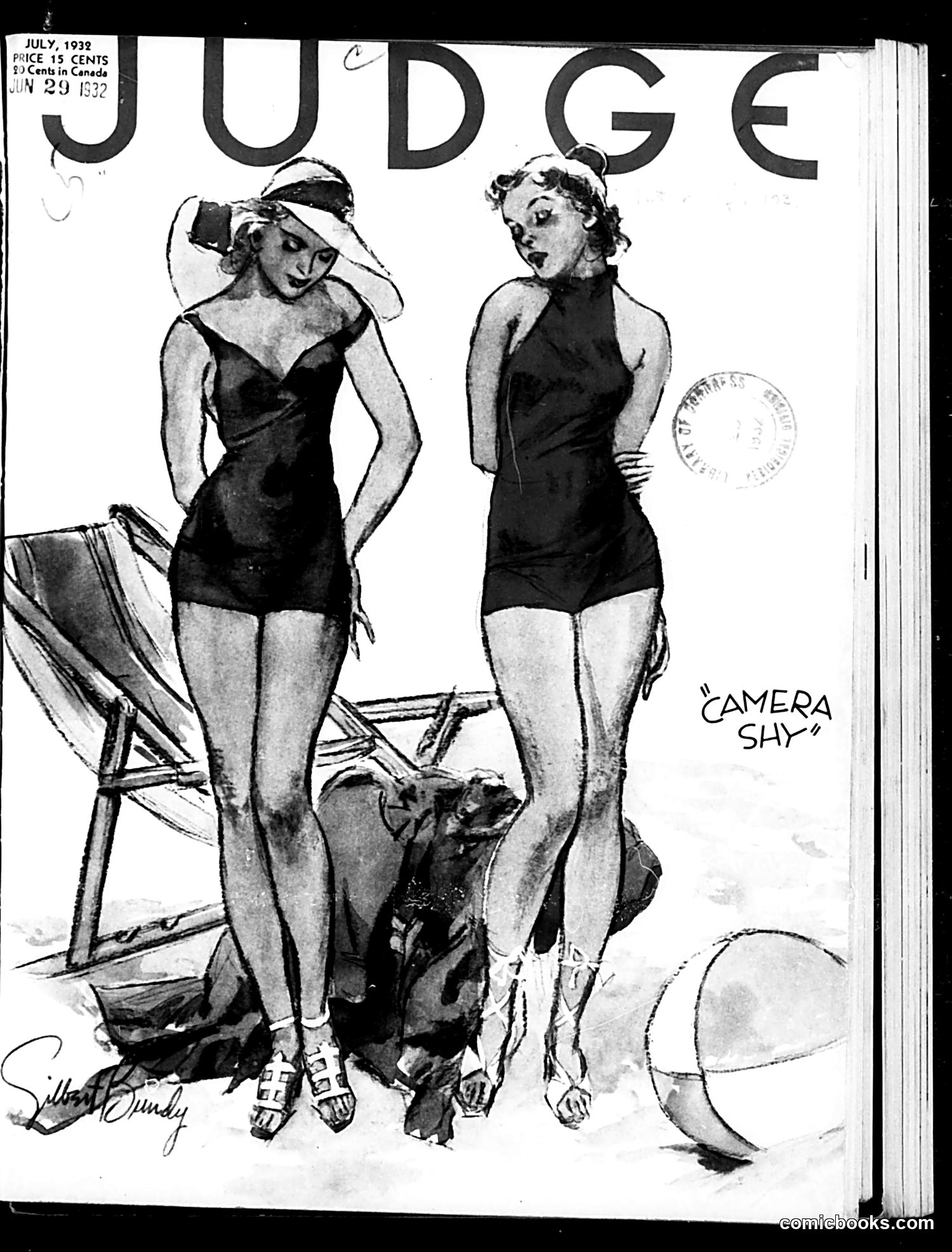
# Judge Magazine Cover - July 1932 This cover illustration by "Camera Shy" depicts two women in bathing suits at a beach with a small dog, accompanied by beach equipment. The title "JUDGE" dominates the top in large letters. The satire likely references the beach culture and leisure activities of the early 1930s, during the Great Depression. The phrase "Camera Shy" (the artist's signature) suggests the cartoon's humor derives from the women's self-conscious posing despite claiming bashfulness—a commentary on vanity or the contradiction between modesty and desire for attention. The specific social commentary remains unclear without additional context, though beach fashion and women's public appearance were common Judge magazine topics of this era. The small dog may add humorous accompaniment to the scene.
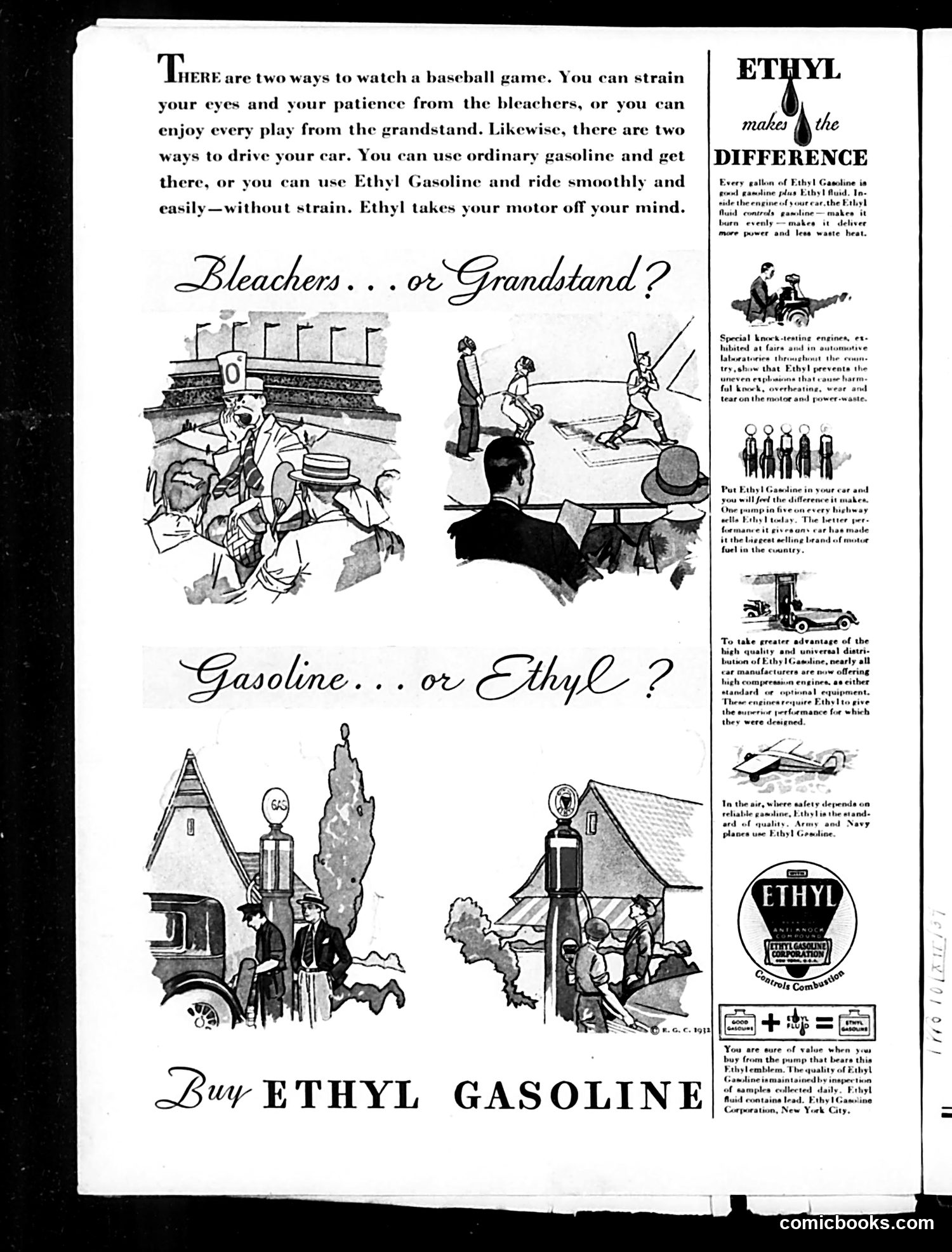
# Analysis This is primarily **advertising, not satire**. The page promotes Ethyl Gasoline through commercial messaging rather than political commentary. The ad uses an analogy comparing two choices: watching a baseball game from bleachers versus the grandstand, and using regular gasoline versus Ethyl Gasoline. The images illustrate these contrasts—discomfort versus comfort, strain versus ease. The bottom section contrasts "Gasoline...or Ethyl?" with illustrations of a malfunctioning car with smoke and fire versus a properly functioning vehicle, suggesting Ethyl prevents engine problems. The right sidebar includes testimonials and technical claims about Ethyl's performance benefits. This is straightforward product marketing from the Ethyl Gasoline Corporation (New York City), not satirical commentary on contemporary politics or society.
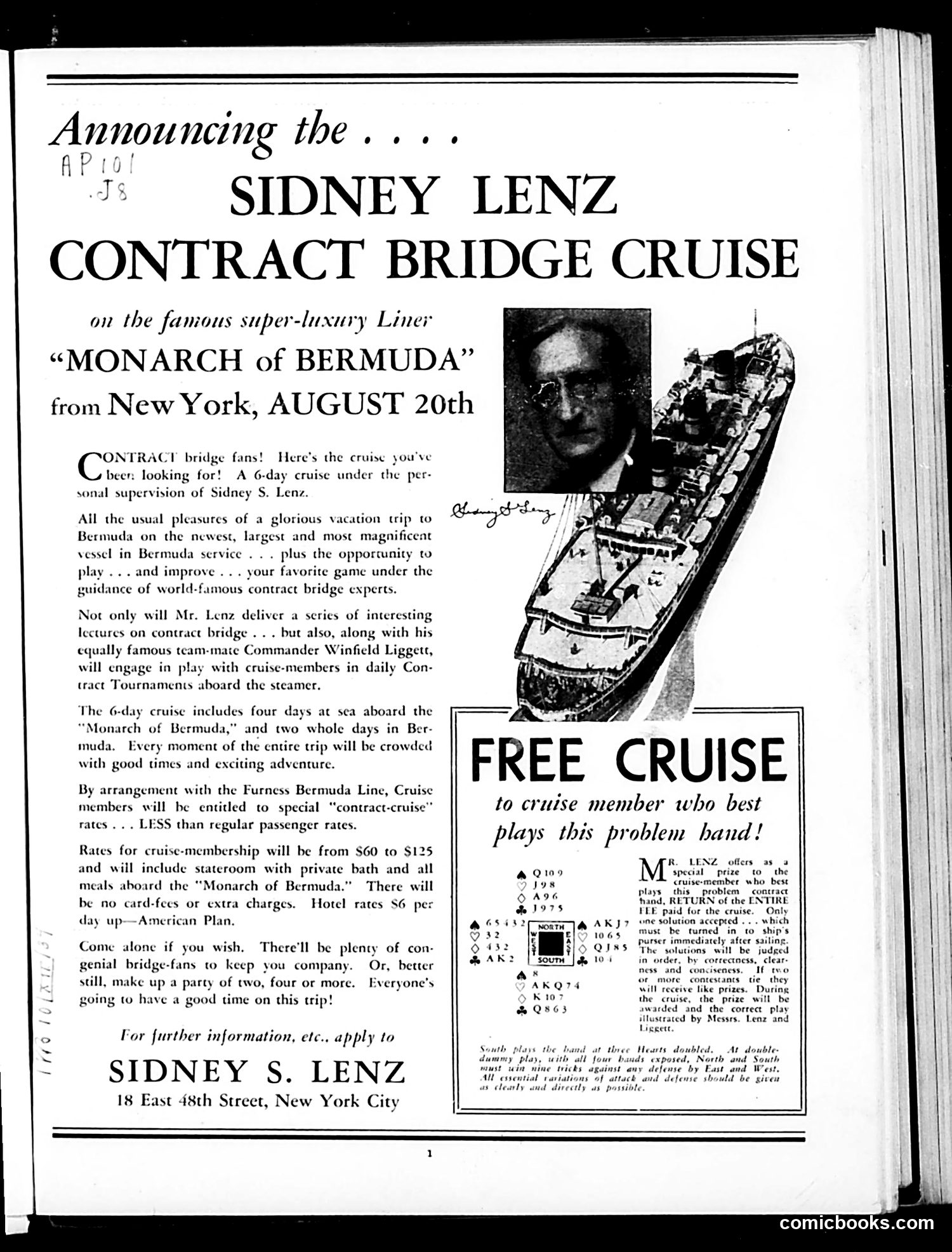
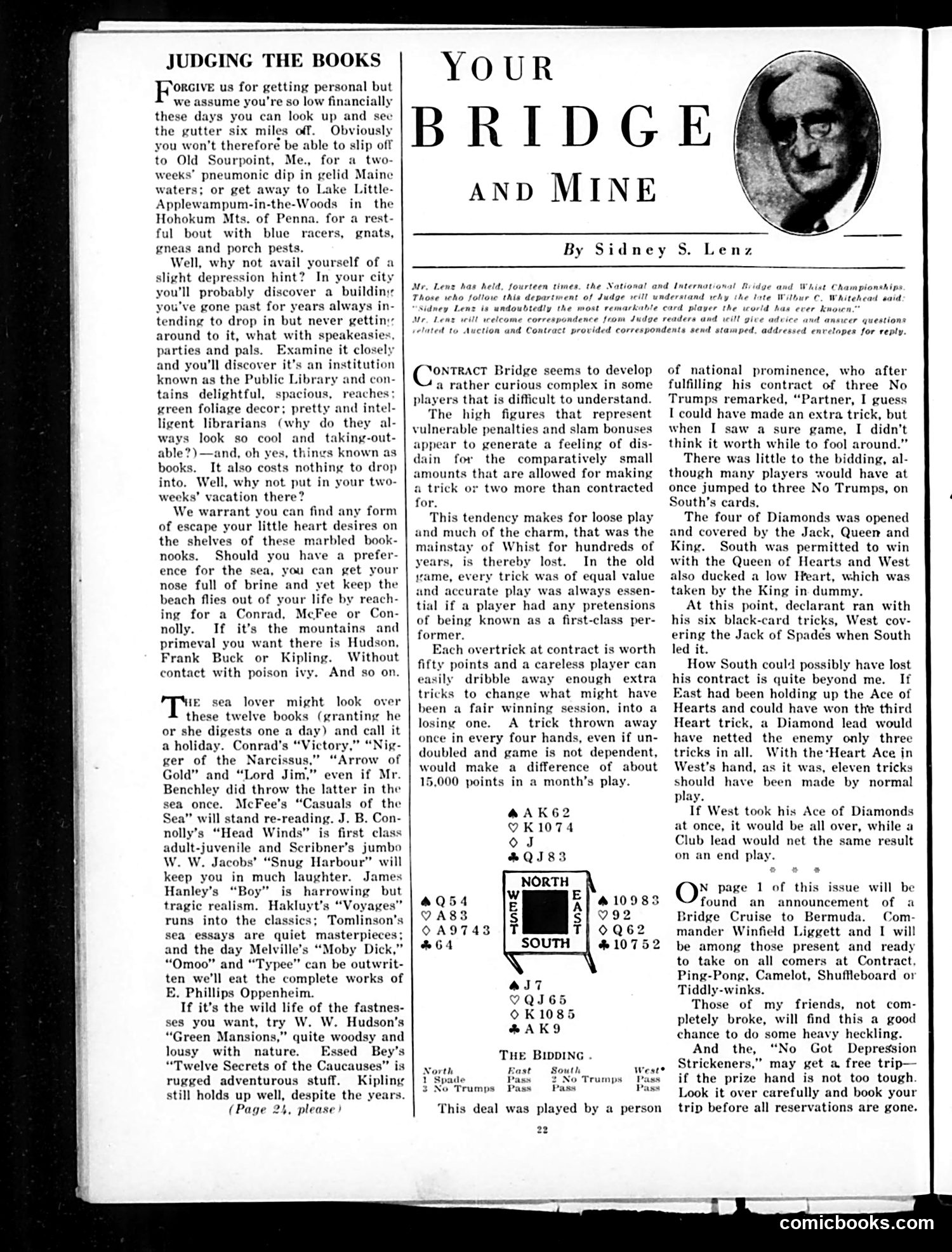
# Sidney Lenz Contract Bridge Cruise Advertisement This page is primarily a **cruise advertisement**, not political satire. It announces a 6-day cruise departing New York August 20th aboard the "Monarch of Bermuda," organized by Sidney S. Lenz, a famous contract bridge expert. The advertisement emphasizes that cruise members will receive instruction from Lenz and Commander Winfield Liggett, another bridge authority, with daily tournaments aboard ship. The right side includes a **bridge problem as a contest**: players submitting the best solution to a complex card hand win a free cruise. This combines advertising with interactive engagement—a marketing technique targeting bridge enthusiasts during the 1930s-40s bridge craze. The page reflects bridge's status as a serious competitive game among affluent Americans of that era.
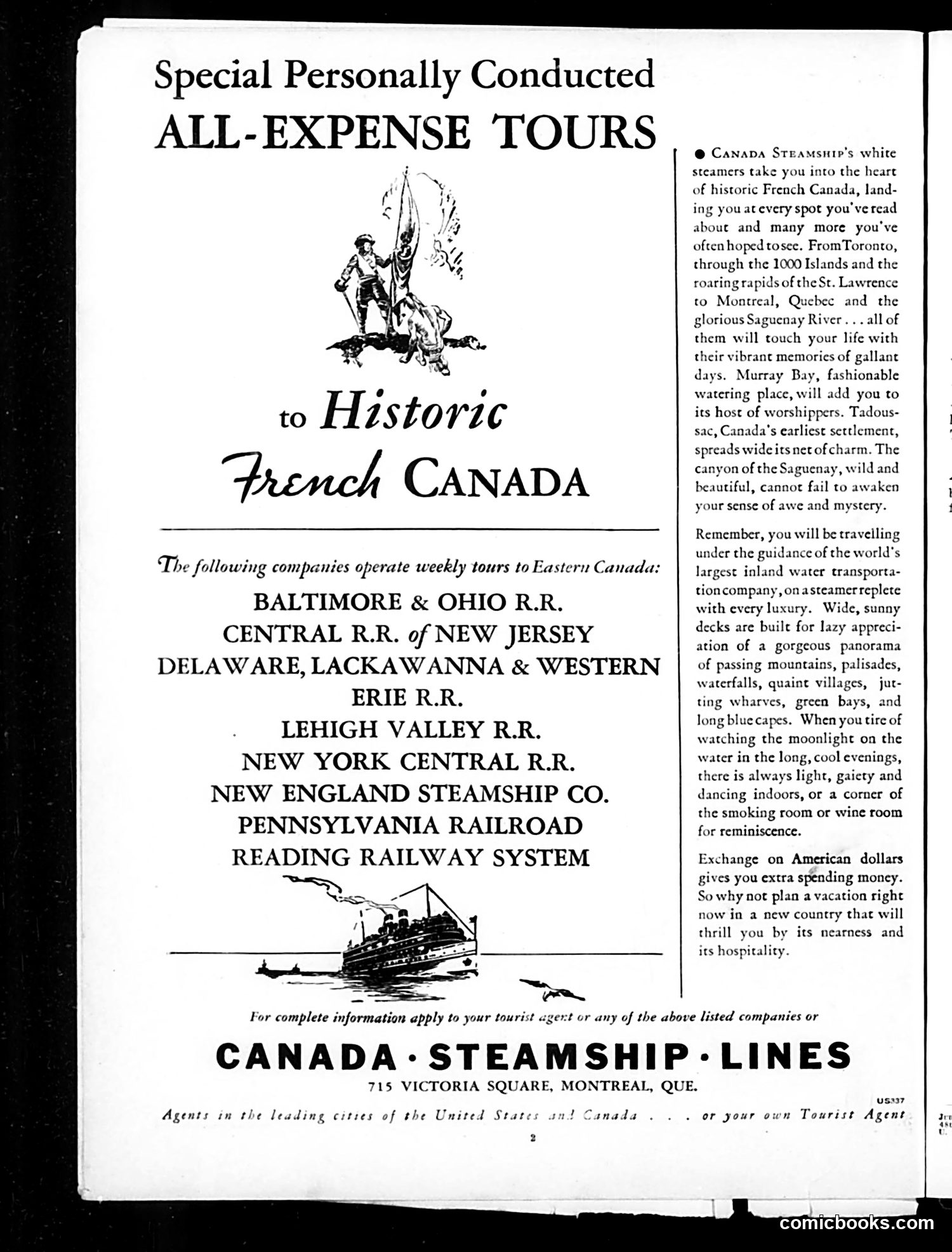
# Analysis This page is primarily **advertising, not satire or political commentary**. It advertises all-expense tours to French Canada operated by various American railroad and steamship companies (Baltimore & Ohio, New York Central, Erie Railroad, etc.). The small illustration shows a coureur de bois (French-Canadian fur trader) with a canoe—a historical figure meant to evoke French Canada's colonial past and appeal to tourists seeking authentic, exotic experiences. The text emphasizes luxury travel amenities ("wide, sunny decks," evening entertainment) and the appeal of spending American dollars in Canada. The underlying message: Canadian tourism offers accessible adventure and charm to affluent American travelers. This reflects early 20th-century tourism marketing rather than political satire.
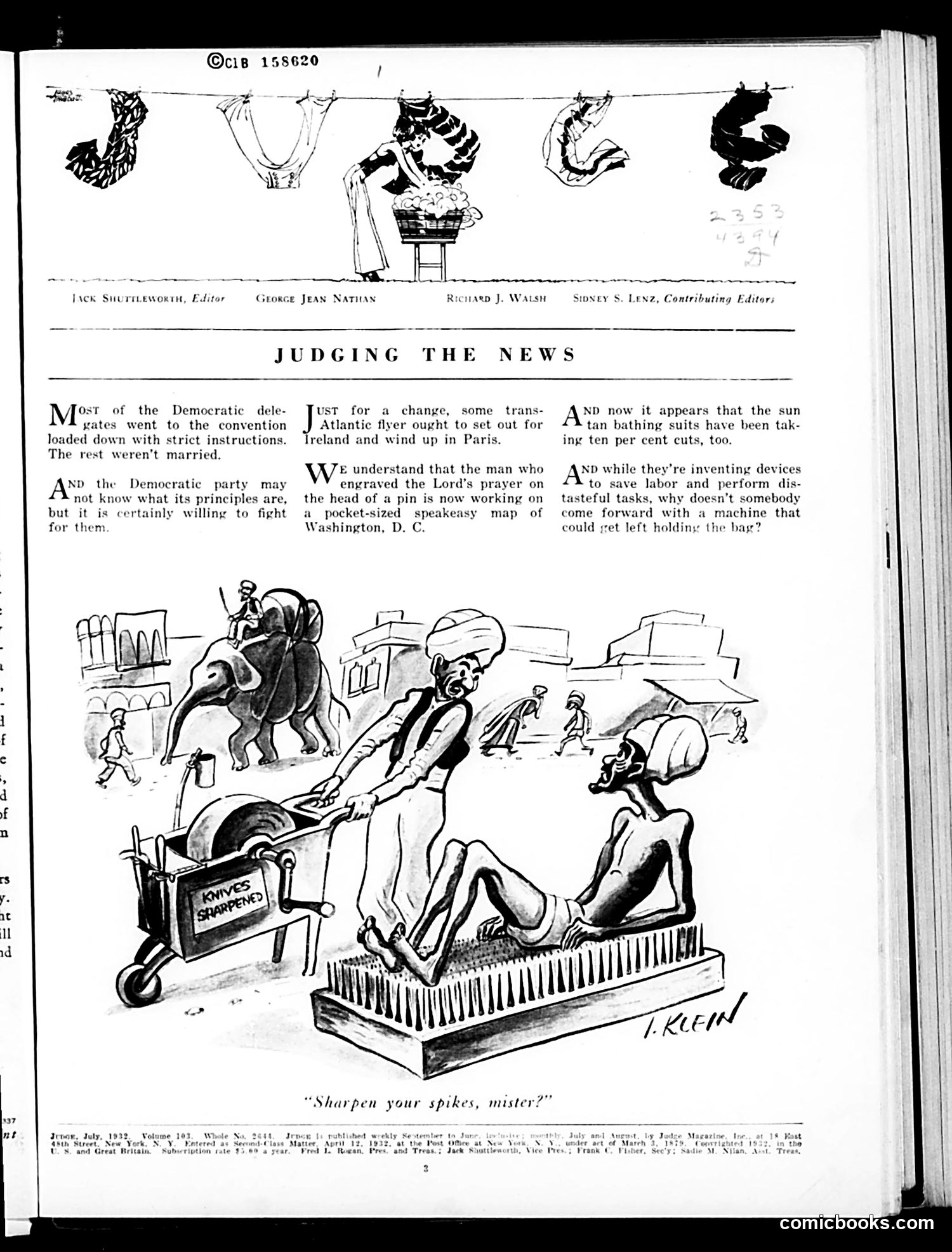
# Analysis of "Judging the News" Page This page from *Judge* magazine contains brief satirical commentary on current events and one central cartoon. **The Cartoon ("Sharpen your spikes, mister?"):** depicts a woman operating a mechanical device labeled "WIVES' EFFICIENCY" that sharpens spikes. The satire targets the efficiency/labor-saving movement popular in the 1920s, mocking the idea that wives could be made more "efficient" through mechanical means. The setup suggests absurdist humor about applying industrial optimization to domestic life and women's roles. **Text Items:** Brief jokes about Democratic Party conventions, transatlantic travel plans, pin-head engravings, and bathing suit fashions. These appear typical of the magazine's quick-hit satirical commentary on contemporary news and trends rather than addressing specific political figures or events.
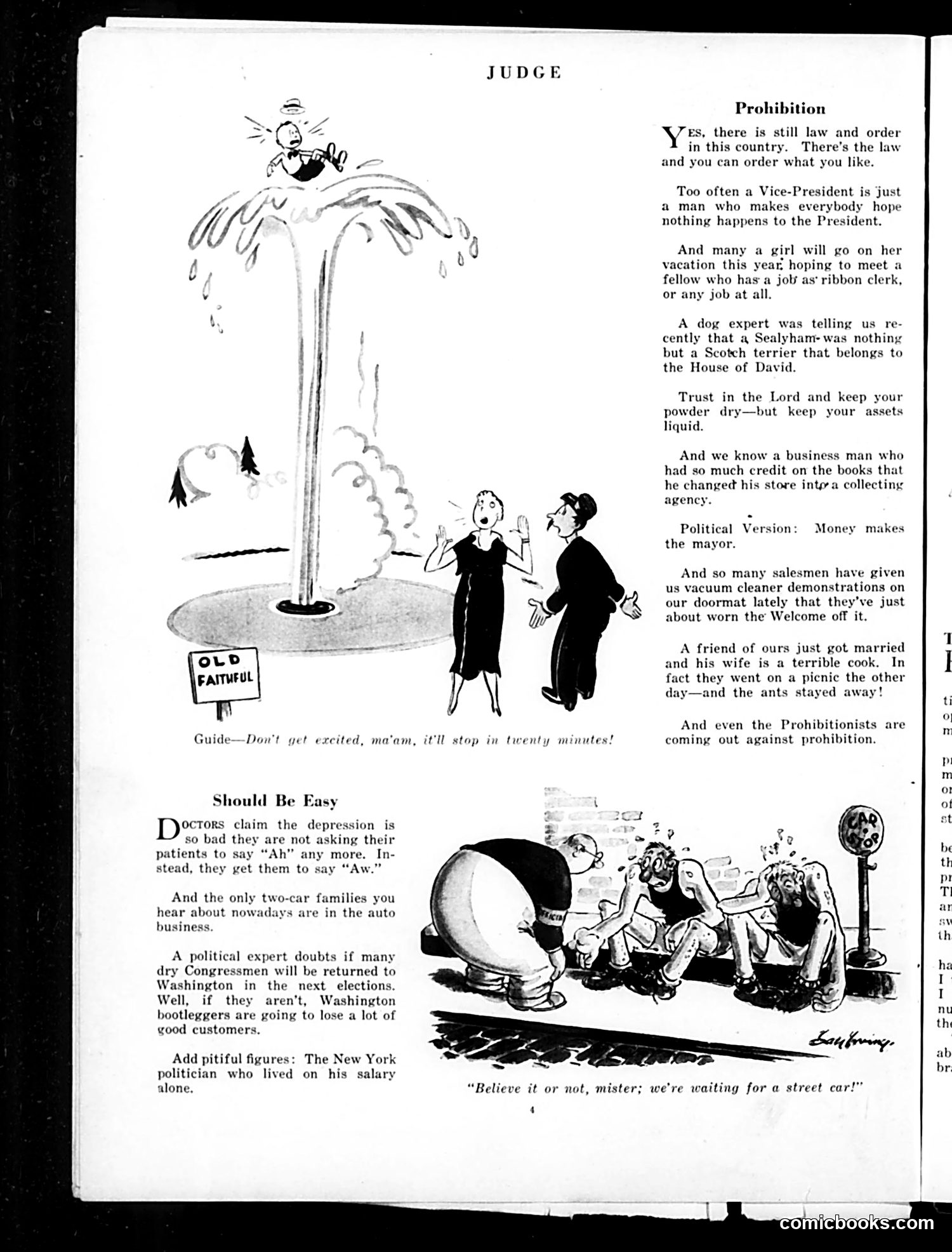
# Judge Magazine Satire Analysis This page contains two separate cartoons satirizing American life during Prohibition era. The top cartoon depicts "Old Faithful" (the geyser) erupting with a figure riding on top, while two people below discuss it. The caption "Don't get excited, ma'am, it'll stop in twenty minutes" suggests Prohibition's temporary nature—implying it will inevitably fail, much like a natural phenomenon that cannot be permanently controlled. The bottom cartoon shows children playing with a large barrel, captioned "Believe it or not, mister; we're waiting for a street car!" This satirizes how Prohibition created absurd situations where barrels (likely alcohol-related) became common street fixtures, normalizing what should be illegal. Both cartoons mock Prohibition's ineffectiveness and the cultural absurdities it produced.
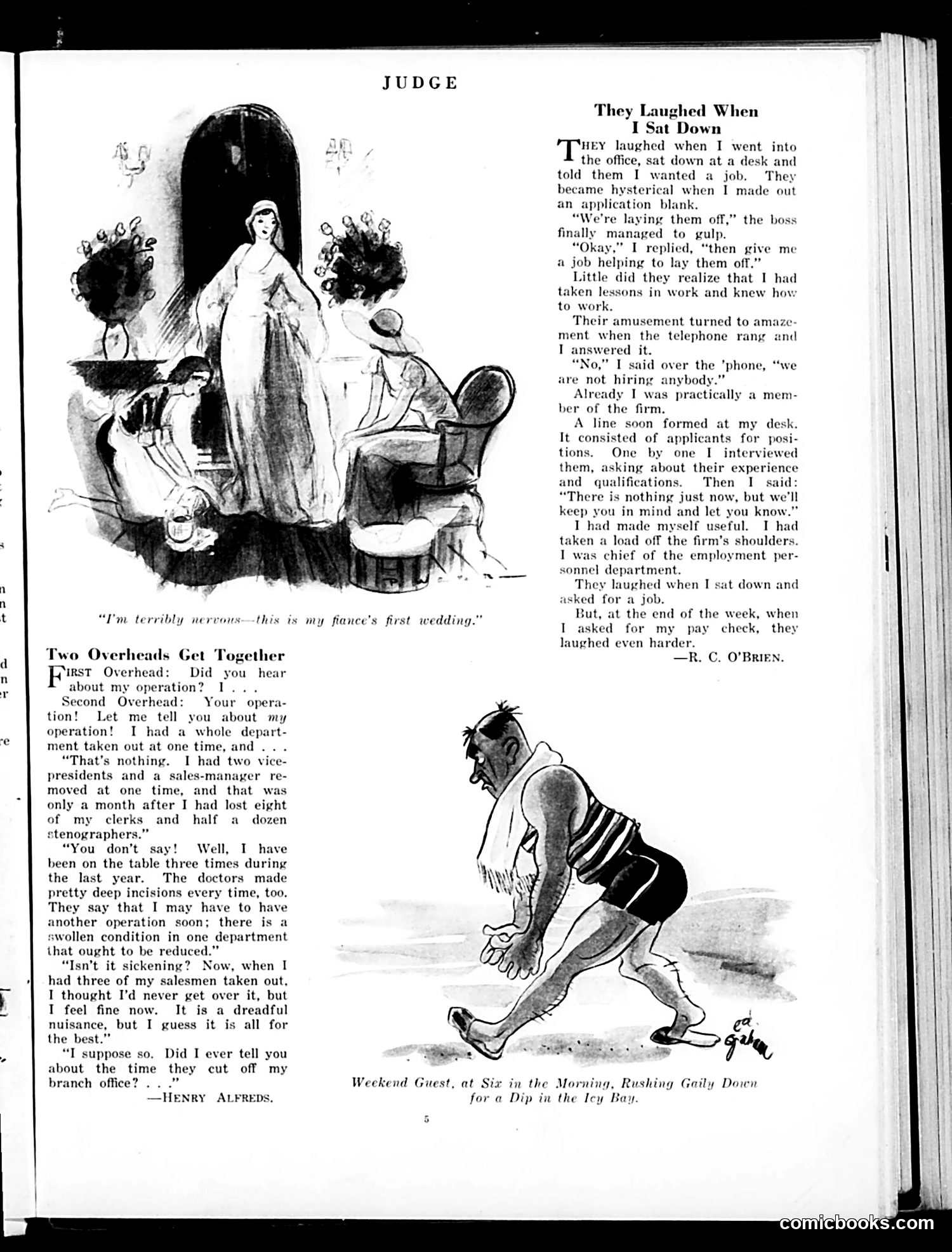
# Analysis of Judge Magazine Page This page contains three separate pieces of workplace humor from early 20th-century America: **"They Laughed When I Sat Down"** (by R.C. O'Brien) mocks job applicants' surprise when a young woman becomes a manager. The narrator, now chief of employment, receives interview applicants and reveals she'd previously worked her way up—satirizing both sexism in hiring and the gap between candidates' expectations and reality. **"Two Overheads Get Together"** presents competing executives comparing their organizational difficulties (operations removed, staff cuts, health problems), with each claiming worse circumstances—a satire on corporate one-upmanship and workplace complaints. **The bottom cartoon** shows a portly gentleman rushing toward the ocean, captioned as a "weekend guest" hurrying for a morning swim—likely satirizing overeager visitors or the discomforts of seaside hospitality. The humor derives from his ungainly appearance and apparent desperation.
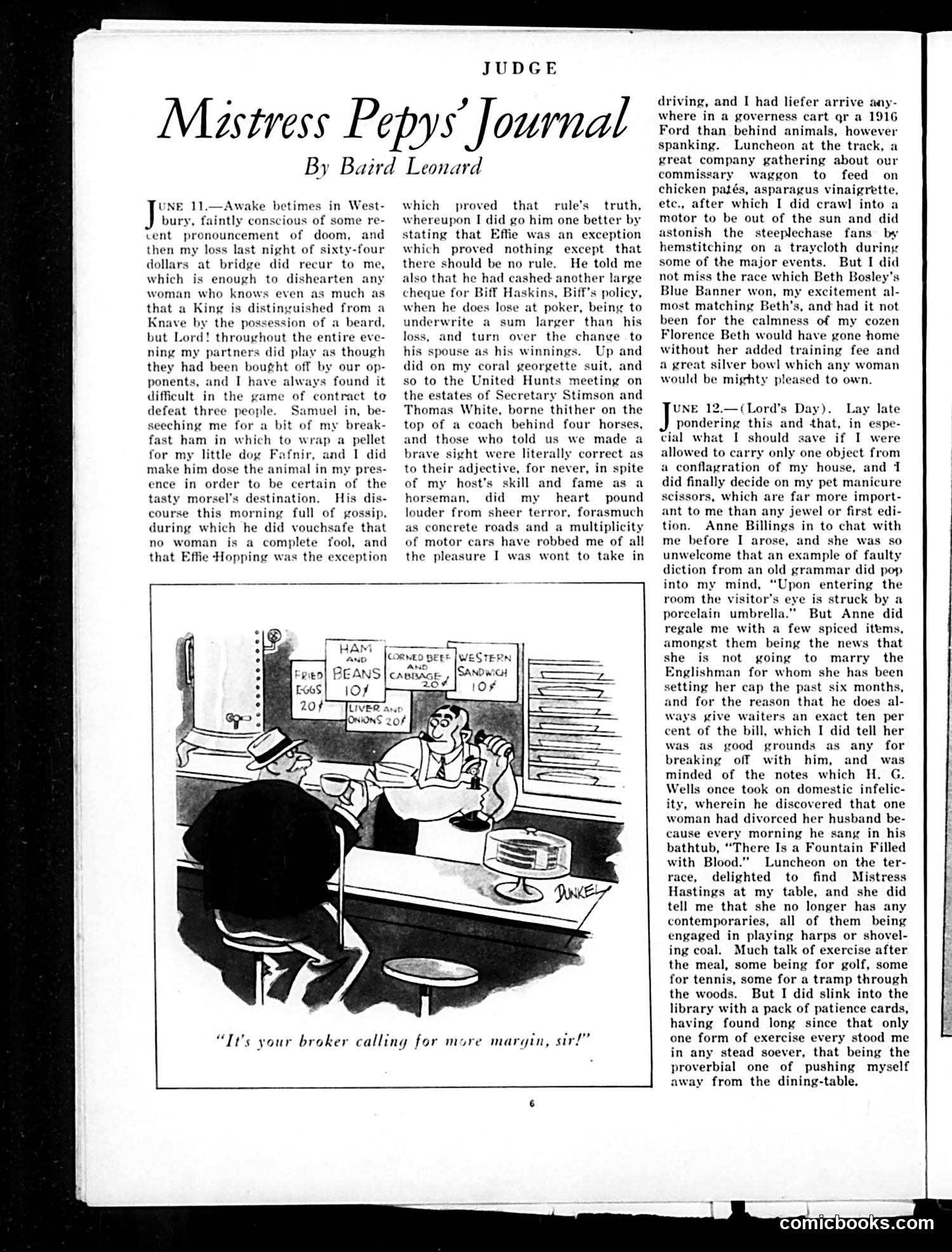
# "Mistress Pepys' Journal" by Baird Leonard This is a humorous advice/gossip column styled as a modern woman's diary. The single cartoon shows a woman at a desk being told by someone off-screen: "It's your broker calling for more margin, sir!" The joke plays on 1920s stock market terminology. "Margin" refers to buying stocks on credit—a practice that fueled the pre-crash boom. The humor conflates two contemporary concerns: women's newly independent roles (she has her own broker) with the aggressive, risky financial practices of the era. The "sir" address adds absurdist comedy, treating the woman as if she were a serious Wall Street operator rather than a society lady. The accompanying diary entries discuss social events and gossip among wealthy circles, typical of Judge's satirical takes on upper-class life.
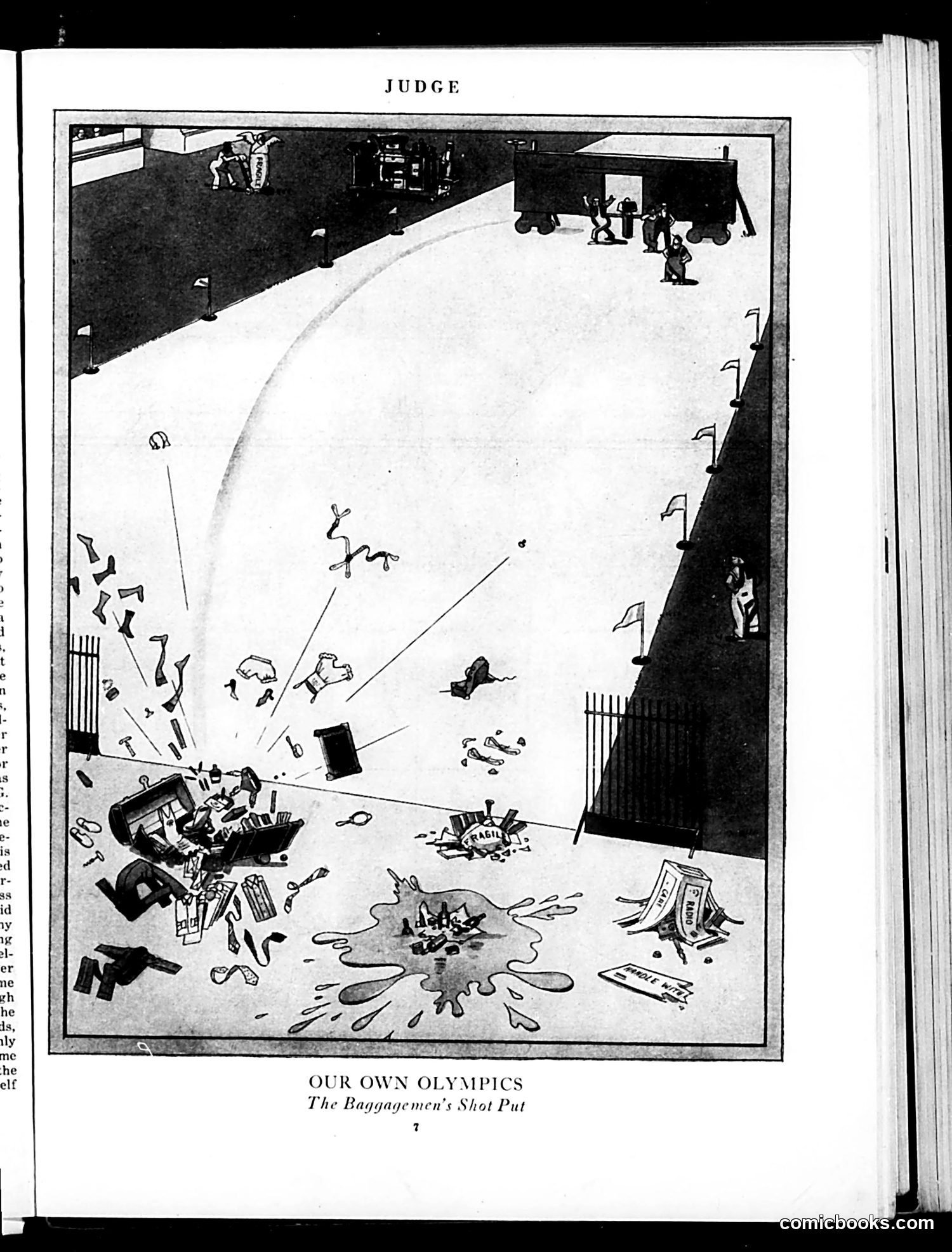
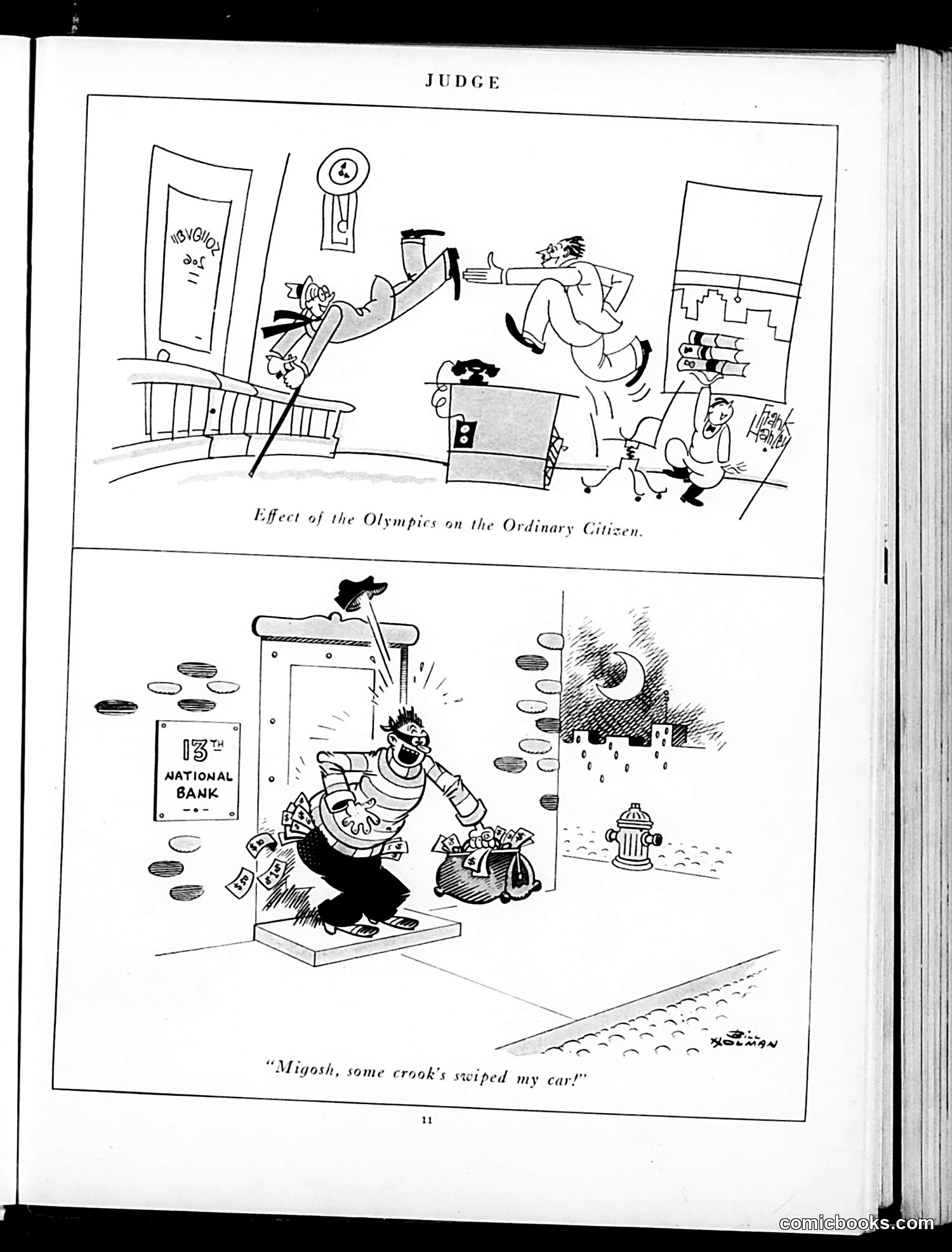
# Explanation for Modern Readers This is a satirical cartoon titled "The Baggagemen's Shot Put," part of a series called "Our Own Olympics." It mocks railroad baggage handlers by depicting their work as an Olympic sport. The cartoon shows baggage and cargo being violently thrown across what appears to be a train platform or depot. Trunks, suitcases, and various luggage items are scattered in all directions, with lines indicating forceful trajectories. Spectators sit in bleachers watching this "competition." The satire criticizes the rough, destructive handling of passengers' baggage by railroad workers—a common complaint in the early-to-mid 20th century. By framing this careless treatment as an "Olympic event," Judge magazine humorously highlights how poorly baggage was actually being handled, turning a legitimate consumer grievance into comedic commentary on railroad service standards.
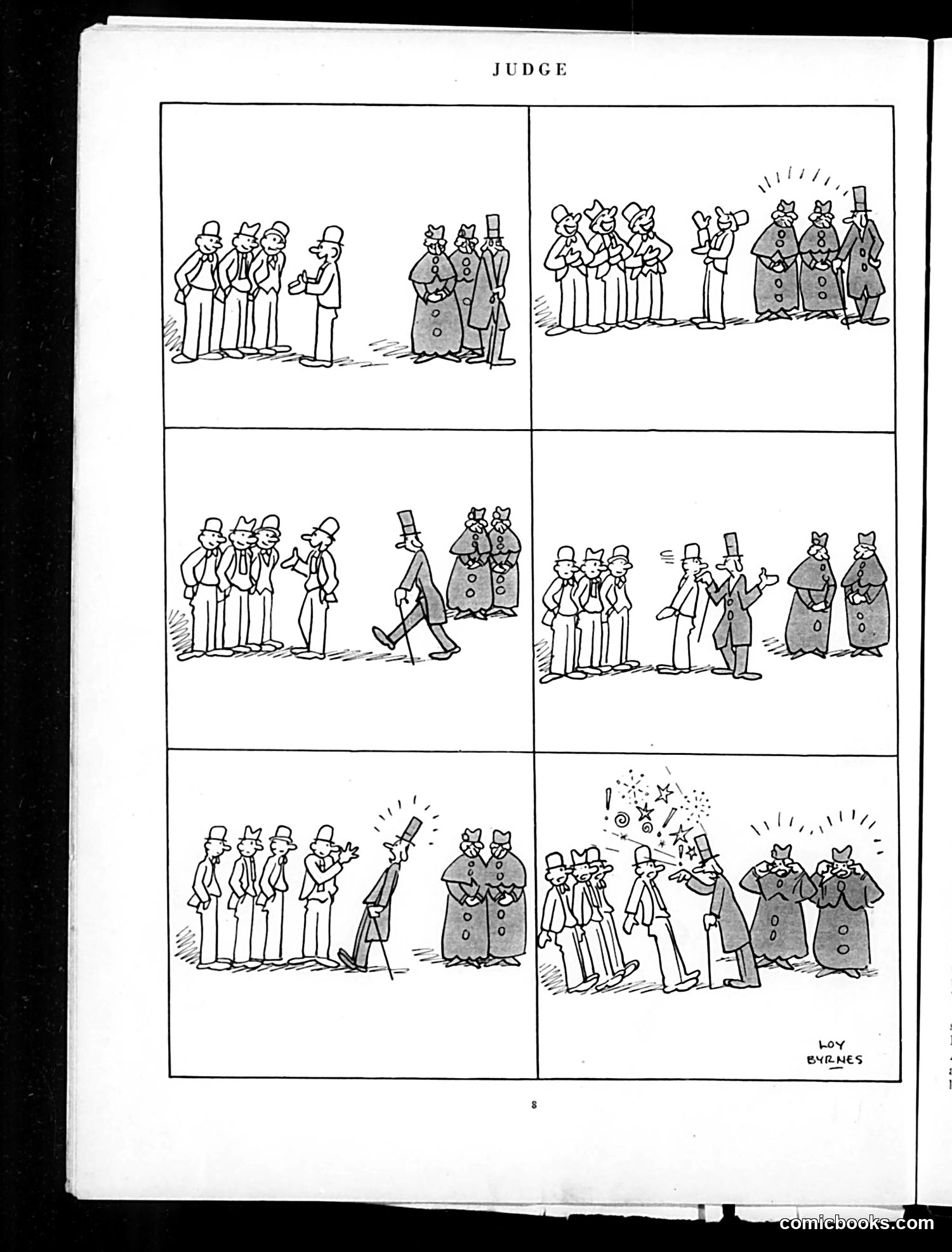
# "Judge" Cartoon: "Judge" This six-panel satirical comic by Roy Byrnes depicts a judge's interaction with a group of men in top hats (appearing to be businessmen or politicians) and two women in long dresses (shaded, suggesting they represent justice or authority figures). The narrative appears to show the judge progressively losing control of the situation. The men initially present themselves respectfully, but progressively become more assertive or disruptive. By the final panels, there's chaos—with what appears to be celebrations or explosions—suggesting the judge's authority has been completely undermined or overwhelmed. The satire likely critiques judicial ineffectiveness against powerful interests or corruption, showing how figures of authority (the judge) are ultimately powerless against determined wrongdoers or special interests.
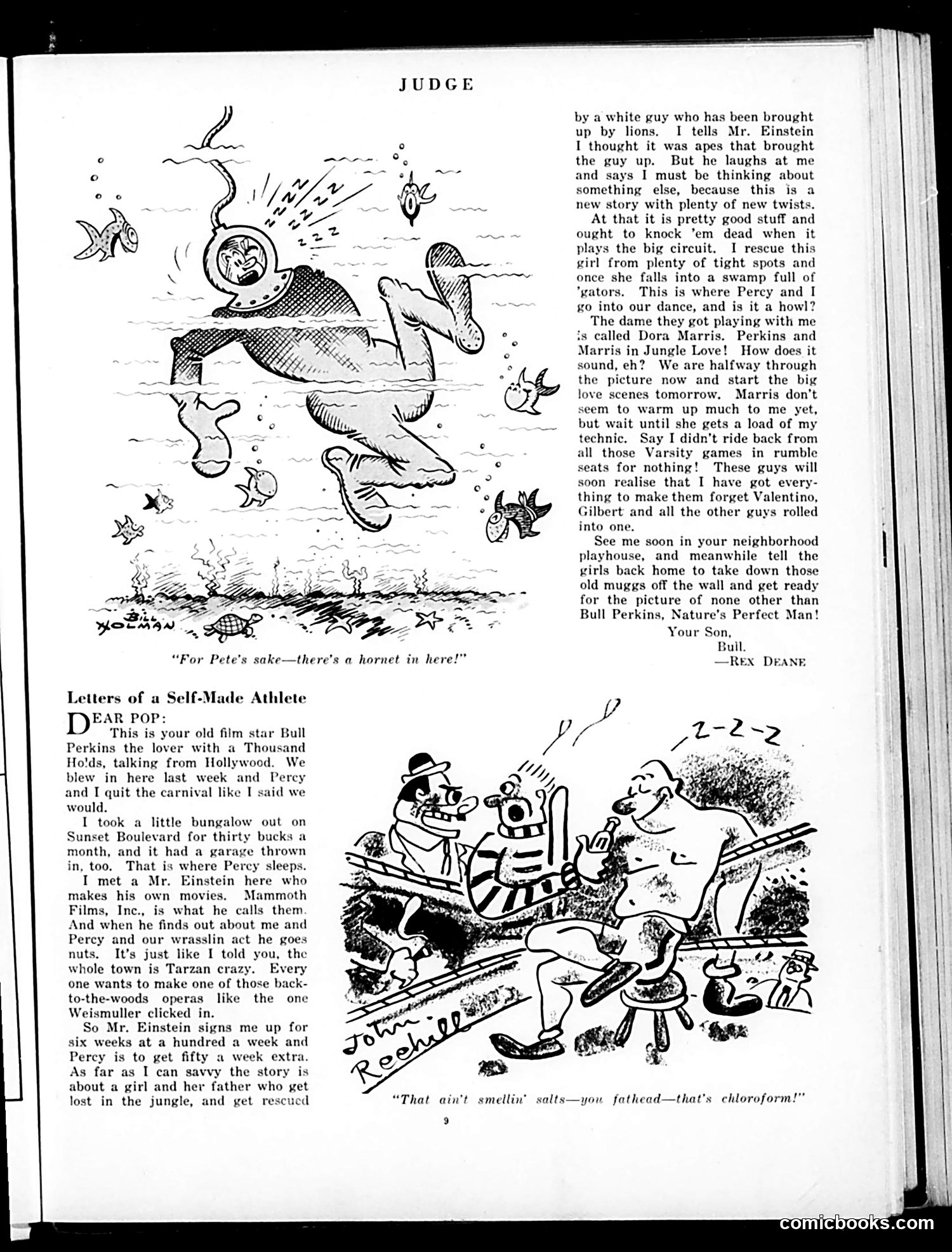
# Explaining This Judge Page for Modern Readers This page satirizes Hollywood's jungle-adventure craze of the late 1920s-early 1930s. "Bull Perkins," a self-made athlete and carnival wrestler, writes to his father about landing a movie contract in Hollywood. The satire works on multiple levels: **The Setup:** Bull is a buffoonish ex-wrestler hired for a "Jungle Love" film, apparently because studios were copying the success of Johnny Weissmuller's *Tarzan* pictures (referenced explicitly). Bull is comically delusional about his talents and appeal to actresses. **The Joke:** The letter mocks both Bull's ignorance (confusing lions with apes in plot details, overestimating his charm) and the absurdity of low-quality jungle films being churned out to capitalize on *Tarzan's* popularity. **The Cartoons:** Illustrate the chaotic film production, with the bottom cartoon's caption—"That ain't smellin' salts—you fathead—that's chloroform!"—emphasizing the incompetence and danger of these rushed productions. The piece ridicules both wannabe actors and Hollywood's formulaic profit-seeking.
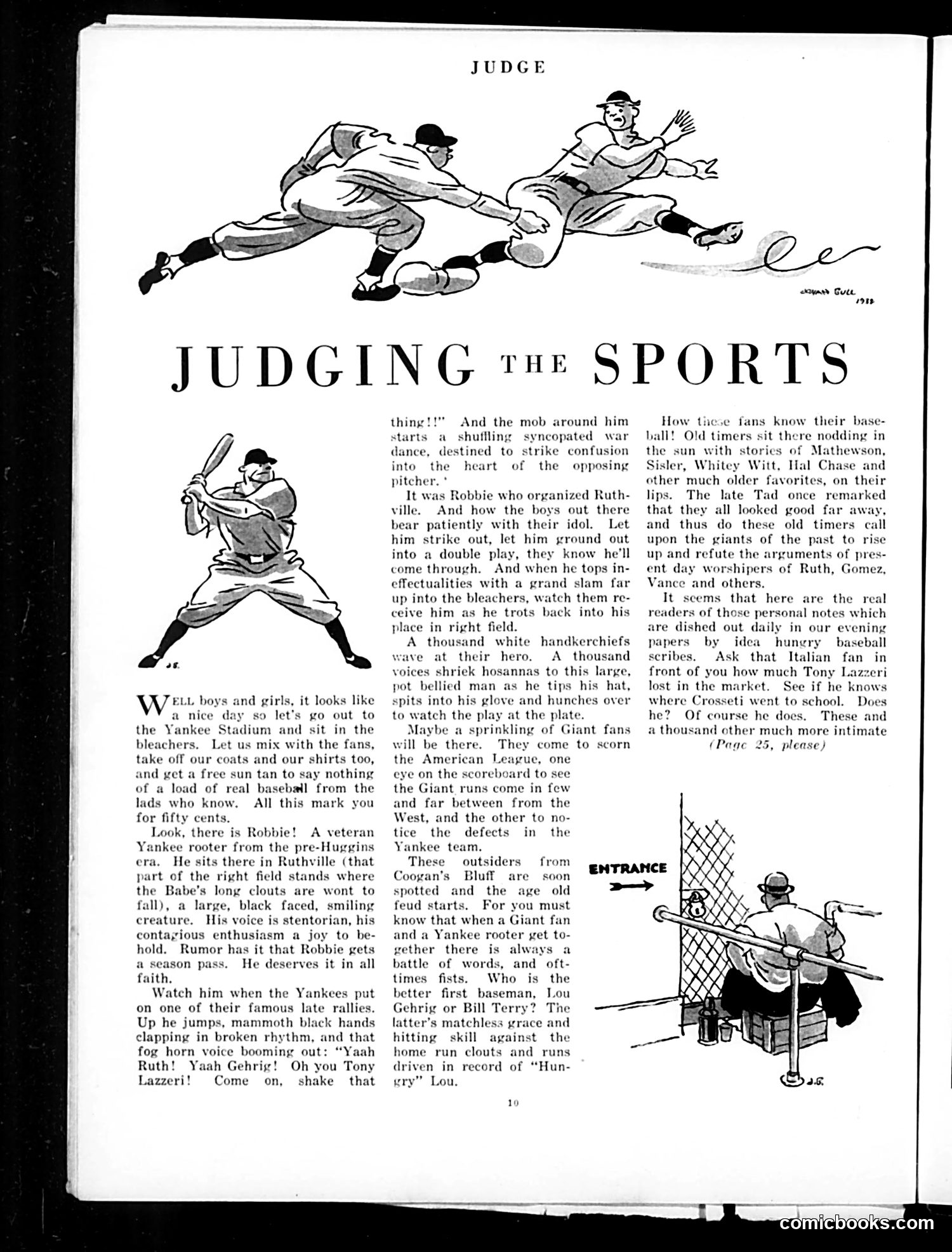
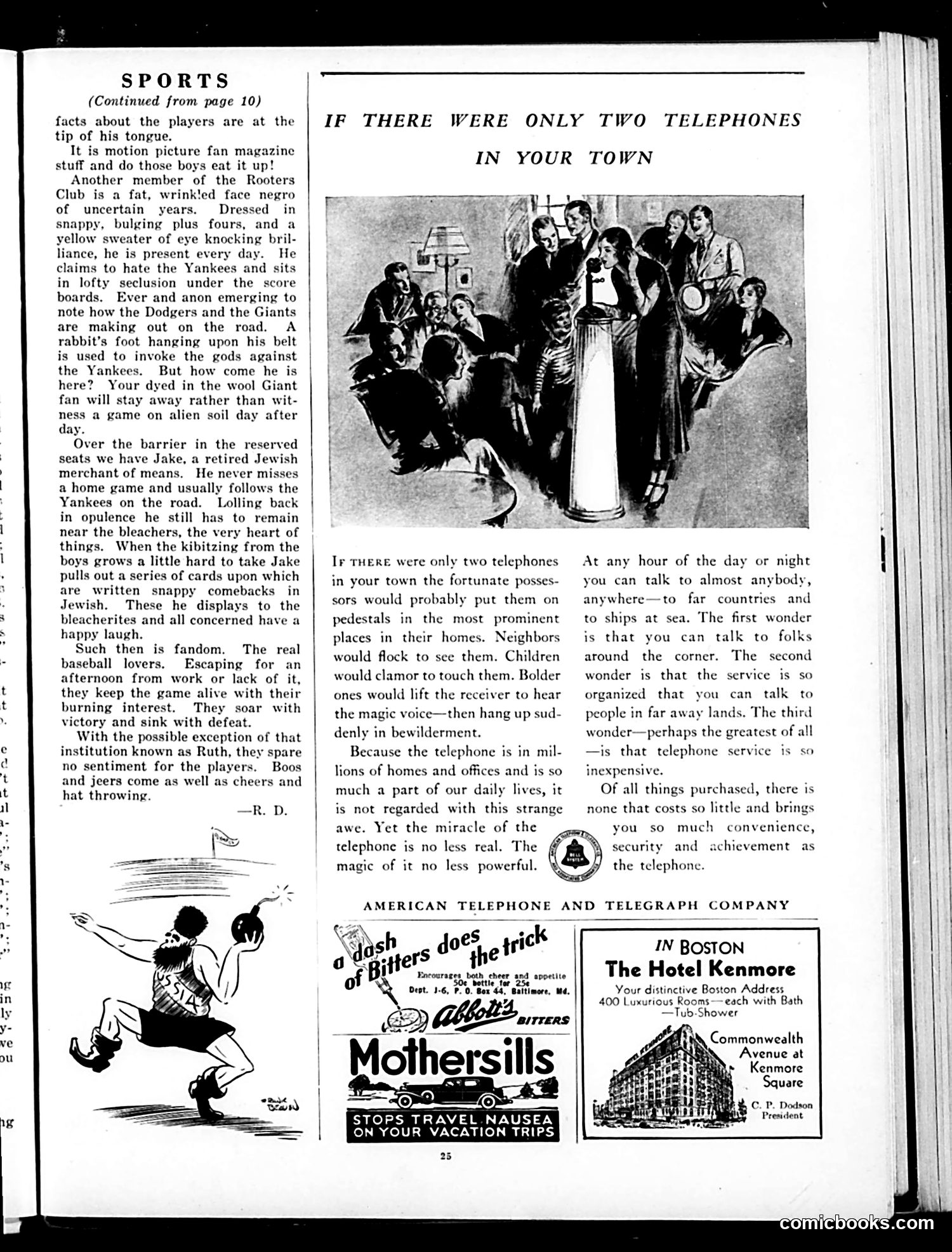
# "Judging the Sports" — Judge Magazine This article celebrates baseball fandom at Yankee Stadium, specifically focusing on "Robbie," a stereotypical enthusiastic fan character. The piece describes the passionate fan culture surrounding the 1920s Yankees, naming real players: **Babe Ruth, Lou Gehrig, Tony Lazzeri, Bill Terry, and others**. The satire targets: 1. **Fan devotion**: Robbie organizes "Ruthville" (the right field bleachers where Ruth's home runs land), leading ritualistic cheers and handkerchief waves. 2. **Ethnic stereotyping**: The description of Robbie as "large, black faced, smiling creature" with "stentorian" voice conducting "syncopated war dance" reflects period racial caricature common to Judge's era. 3. **Baseball tribalism**: The feud between Giants fans (from Coogan's Bluff) and Yankees fans, debating which first baseman is superior. 4. **Knowledge gaps**: The piece ironically notes fans obsessively follow players' market losses and school histories while claiming deep baseball expertise. The humor assumes readers recognize these famous players and 1920s baseball culture.