A complete issue · 36 pages · 1932
Judge — May 21, 1932
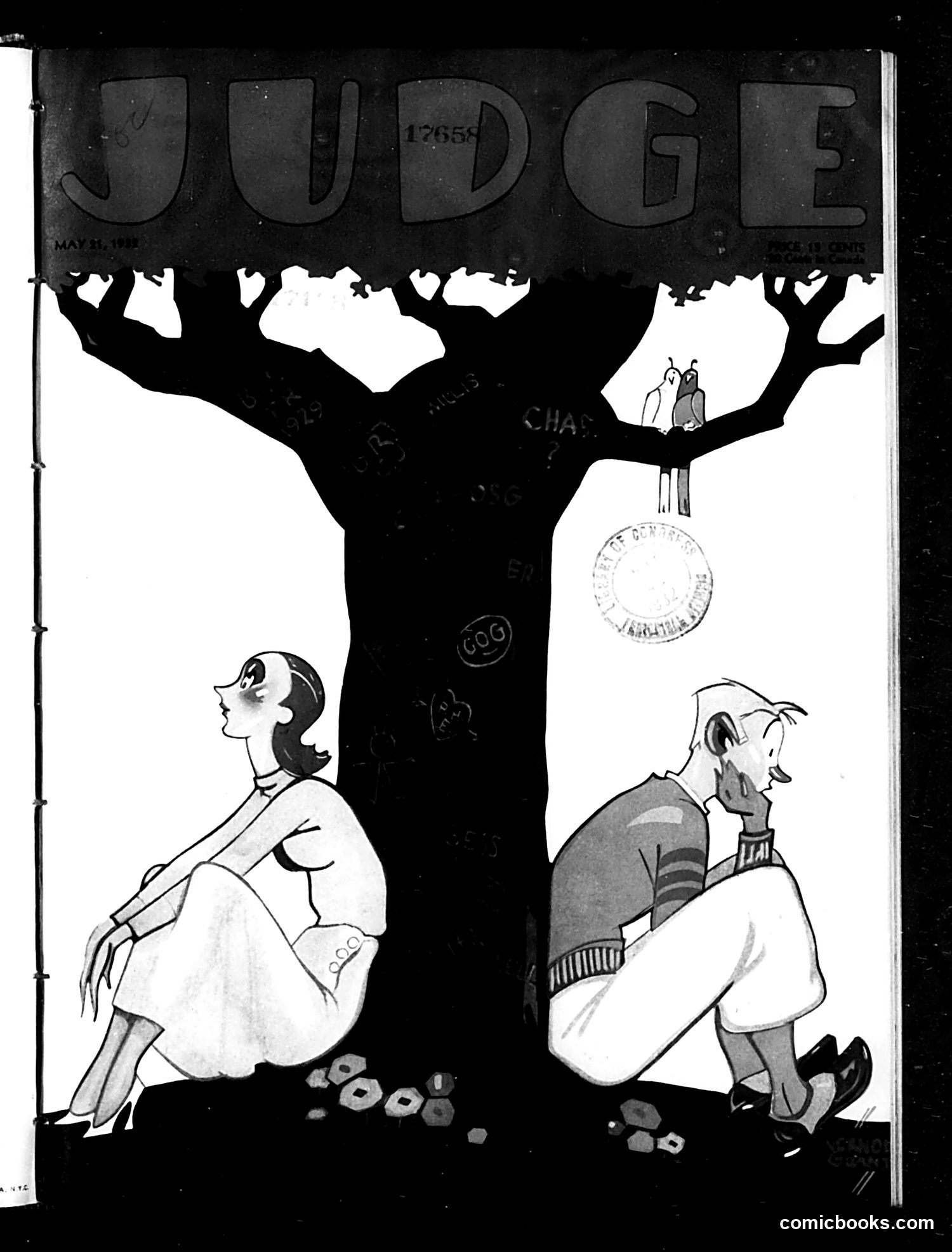
# Analysis of Judge Magazine Cover - May 8, 1912 This satirical cover depicts two figures sitting beneath a bare, dead tree—a classic symbol of desolation or failed hopes. The composition suggests a political or social commentary about disillusionment or broken promises. The silhouetted tree dominates the composition, with two people positioned at its base appearing distressed or contemplative. Without clearer identifying features or accompanying text visible in the image, the specific political figures or event remain uncertain. The May 1912 date places this during a significant American political moment (the Progressive Party split and presidential election), but the exact targets of satire cannot be definitively determined from the visual elements alone. The overall tone suggests commentary on disappointed expectations or political failure.
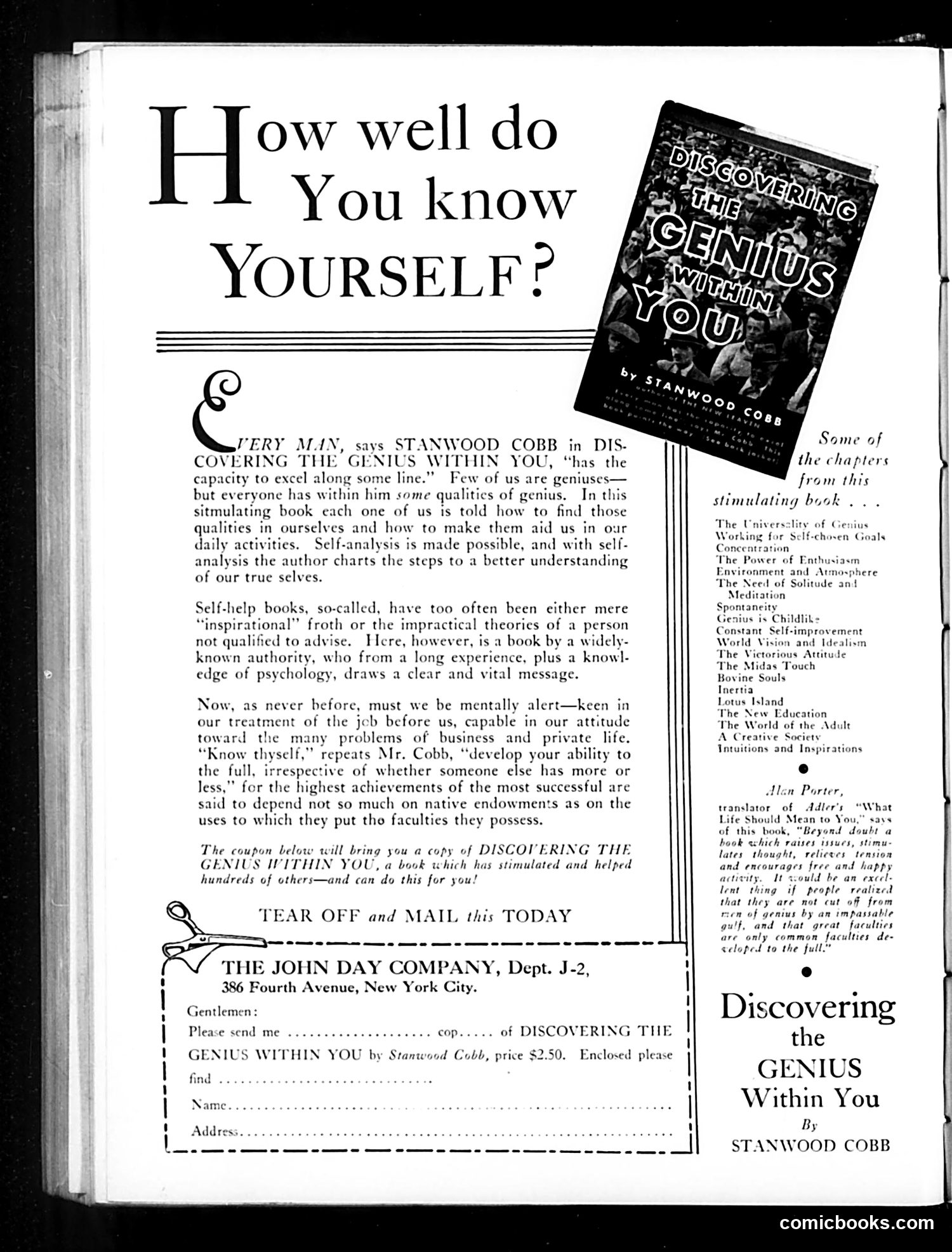
# Analysis This page is primarily **advertising**, not satire or political cartooning. It promotes "Discovering the Genius Within You" by Stanwood Cobb, a self-help book published by The John Day Company. The advertisement uses a testimonial format, quoting Every Mix (likely a contemporary figure, though unclear who exactly) endorsing Cobb's psychology-based approach to self-improvement. The text contrasts this book favorably against typical self-help literature of the era, claiming it offers practical psychological guidance rather than mere "inspirational froth." The page includes a mail-order coupon and lists chapter titles emphasizing personal development themes popular in 1920s-30s American culture: concentration, enthusiasm, meditation, and self-improvement. **No political satire is evident here.**
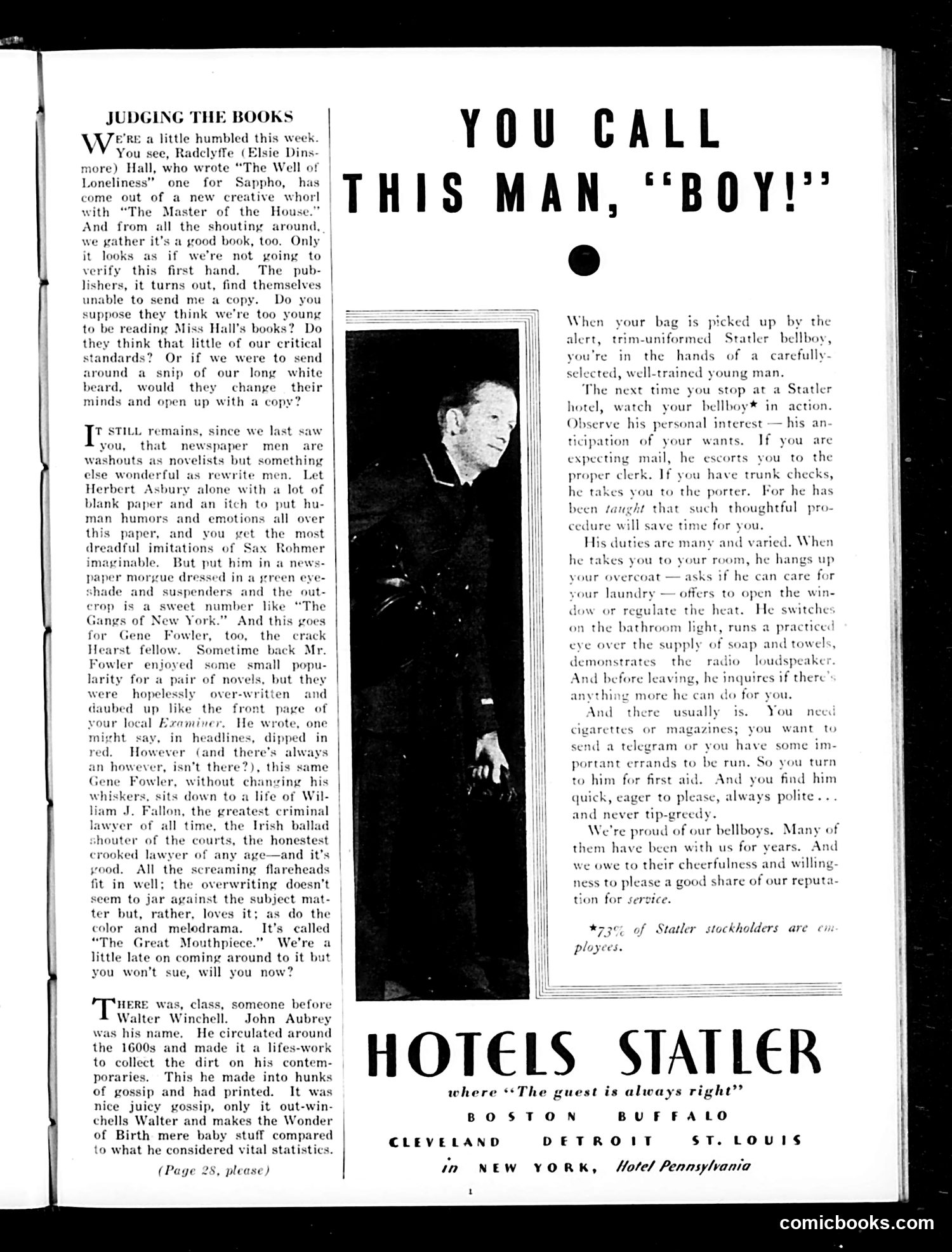
# Analysis This page is primarily **advertising**, not satire or political commentary. The large right-hand section is a Hotels Statler advertisement featuring a photograph of a bellhop with the headline "YOU CALL THIS MAN, 'BOY!'" The ad describes the Statler hotel chain's bellhop service—their training, attentiveness, and professionalism. The phrase "call this man 'Boy'" appears to reference common era practice of addressing service workers informally, which the ad positions as contrary to the Statler bellhops' professional demeanor and dignity. The left side contains a book review column ("Judging the Books") discussing recent publications, including works by Radclyffe Hall and Gene Fowler. This is editorial content, not satire.
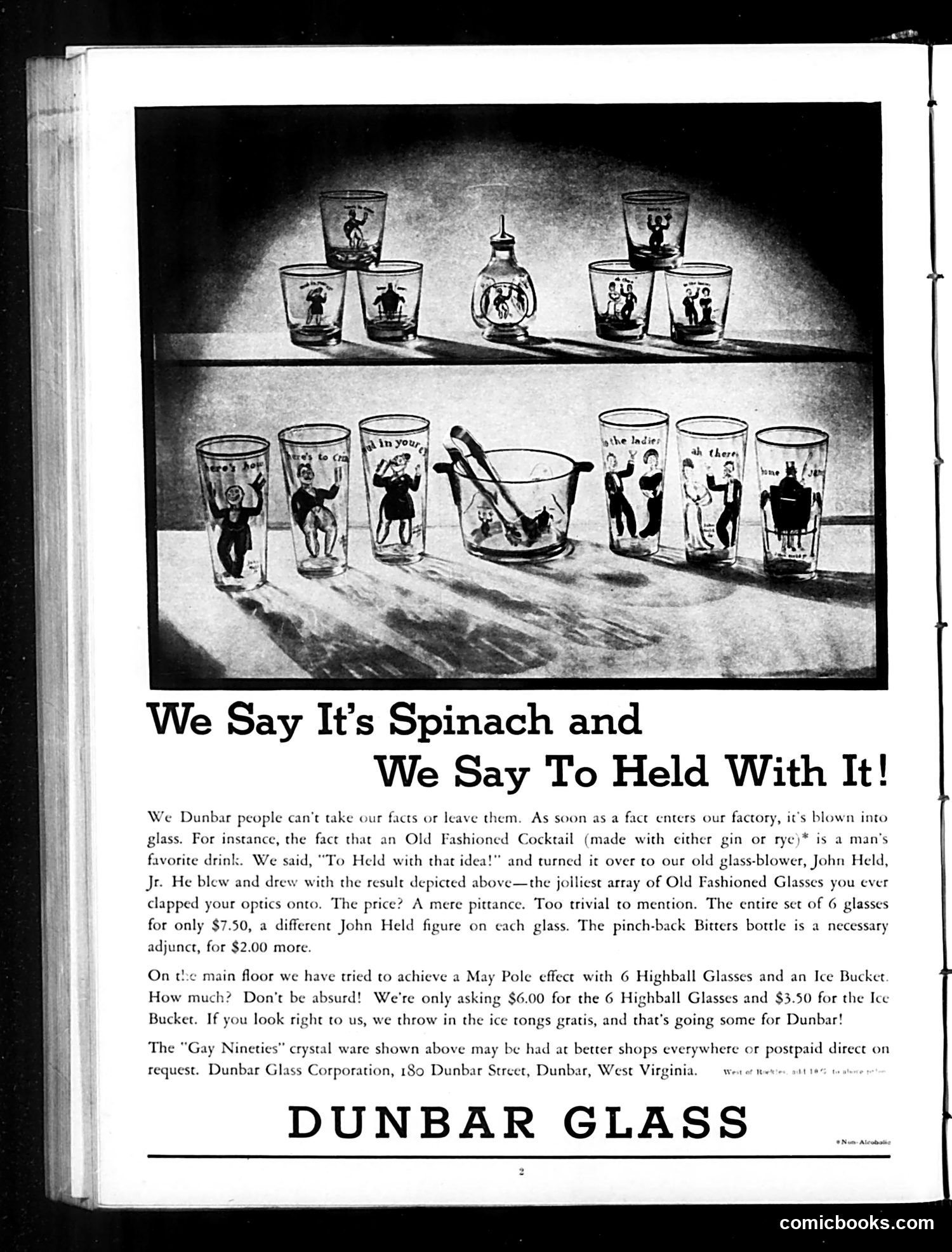
# Analysis This is primarily **advertising content**, not editorial satire. Dunbar Glass Corporation of Dunbar, West Virginia is promoting their decorative glassware line called "Gay Nineties" crystal ware. The ad uses humor to sell cocktail glasses and novelty items featuring silhouetted figures in 1890s-style dress and poses. The headline "We Say It's Spinach and We Say To Held With It!" appears to reference contemporary slang (likely referencing a 1928 E.B. White cartoon caption that became popular). The advertisement highlights various glass products: Old Fashioned cocktail glasses ($7.50 for a set of 6), Highball glasses ($6.00), and an ice bucket ($3.50). The tone is lighthearted and colloquial, appealing to consumers interested in novelty barware and period-themed glassware during what was likely the Depression era.
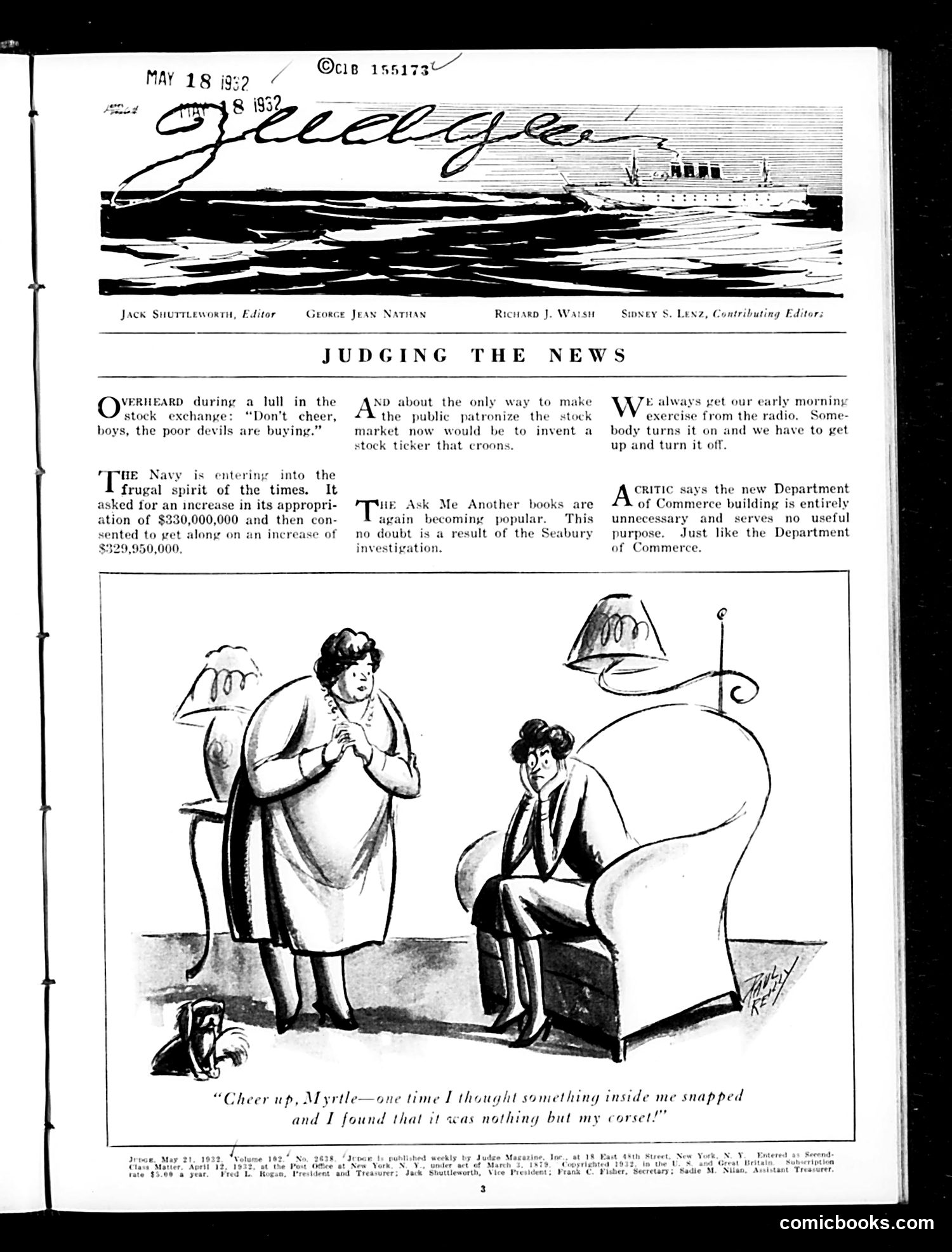
# Analysis of Judge Magazine Page (May 18, 1932) This page from Judge magazine contains satirical commentary on contemporary issues. The main cartoon depicts a woman consoling a distressed man sitting in a large chair, with the caption: "Cheer up, Myrtle—one time I thought something inside me snapped and I found that it was nothing but my corset!" The joke plays on economic anxiety during the Great Depression (this is May 1932). The woman's quip suggests that what felt like an internal collapse was merely a physical garment failure—satirizing how people minimized serious financial worries or psychological distress as trivial matters. Above, brief editorial items mock current events: Navy budget increases, the "Ask Me Another" book trend (linked to the Seabury investigation), and criticism of the new Commerce Department building as wasteful during economic hardship.
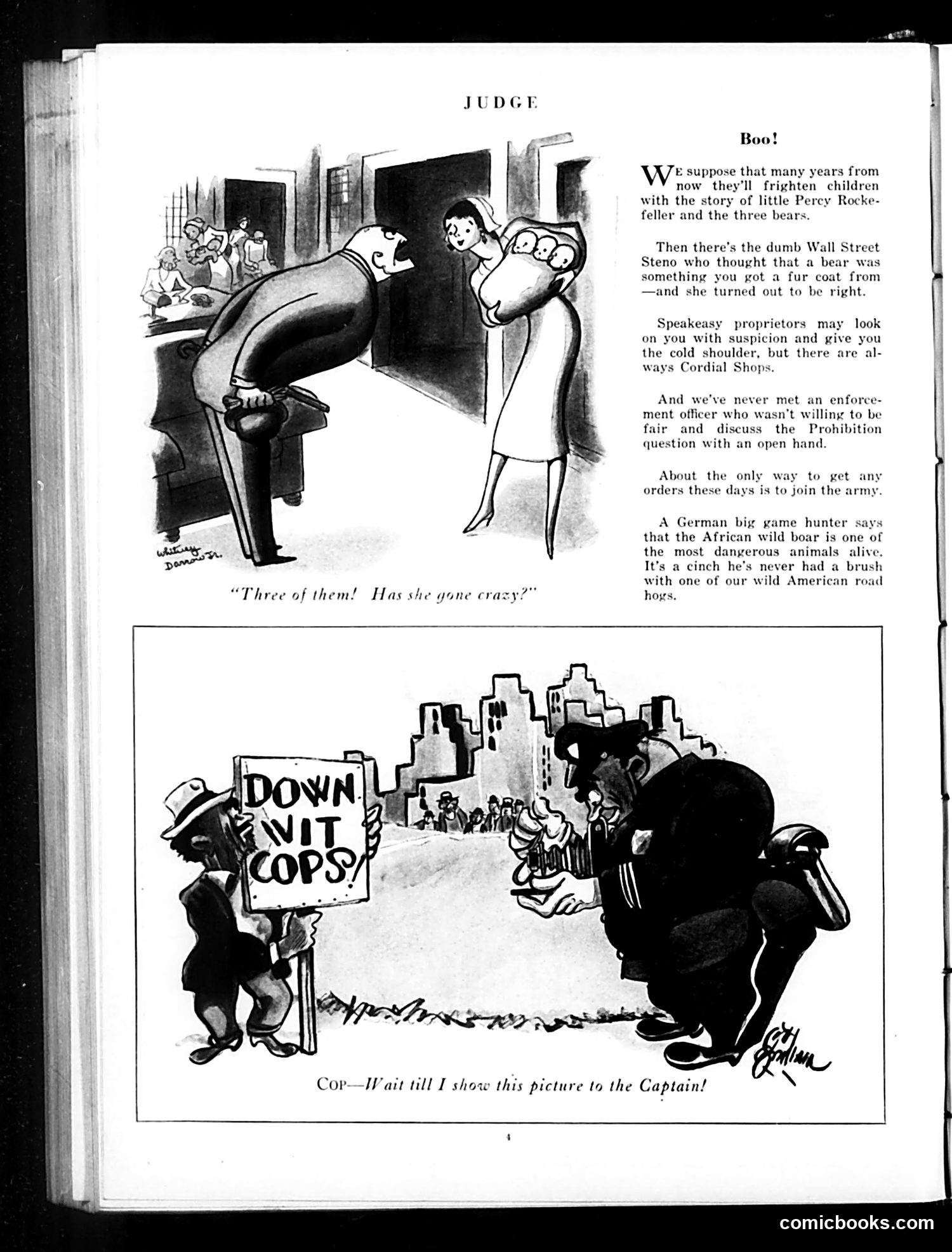
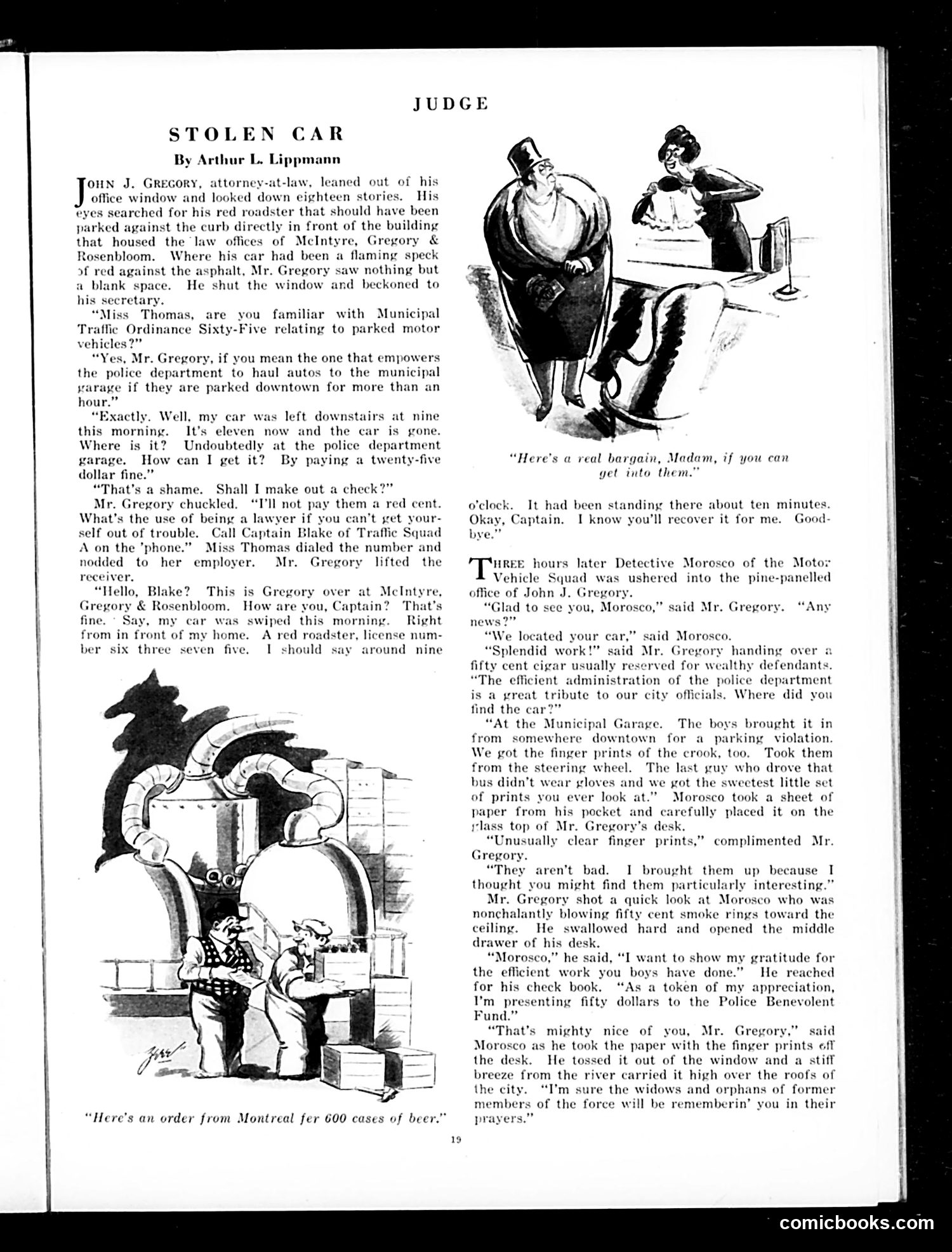
# Judge Magazine Page Analysis This page contains two satirical cartoons about Prohibition-era law enforcement and social attitudes. The top cartoon depicts a man being thrown out a door by a woman holding a baby, with the caption "Three of them! Has she gone crazy?" The accompanying text jokes about various Prohibition-related matters, including speakeasies, enforcement officers, and wild game hunting. The bottom cartoon shows what appears to be a police officer holding a "DOWN WITH COPS" sign while confronting a bear near a city skyline. The caption reads "Cop—Wait till I show this picture to the Captain!" The satire appears to mock both Prohibition enforcement's ineffectiveness and the public's conflicted attitudes toward police during this period. The bear cartoon likely satirizes law enforcement priorities or the absurdity of anti-police sentiment coexisting with calls for order.
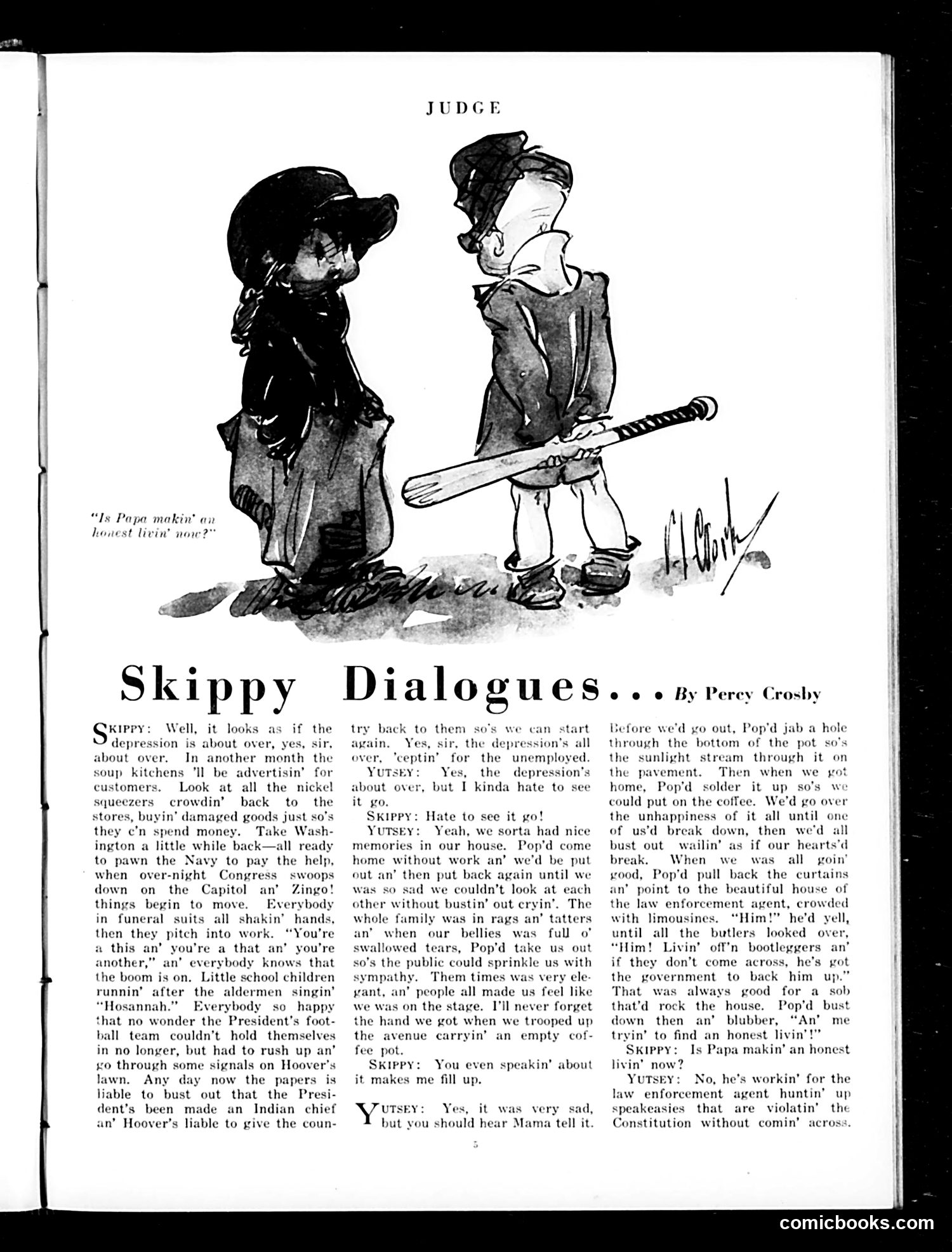
# "Skippy Dialogues" - Judge Magazine Cartoon This is a comic dialogue by Percy Crosby featuring two young characters discussing the Great Depression. "Skippy" (left) and "Utsev" (right) are talking about economic hardship—unemployed fathers, families in poverty, and children going hungry. The satire targets how the Depression affected ordinary Americans. The children mention fathers "busting" to find work, mothers taking in laundry, and the family's desperation. References to "Hoover's lawn" and political blame suggest criticism of President Herbert Hoover's response to the crisis. The humor is dark: children discussing homelessness, empty pockets, and survival—capturing how Depression hardship permeated everyday American life, even children's conversations.
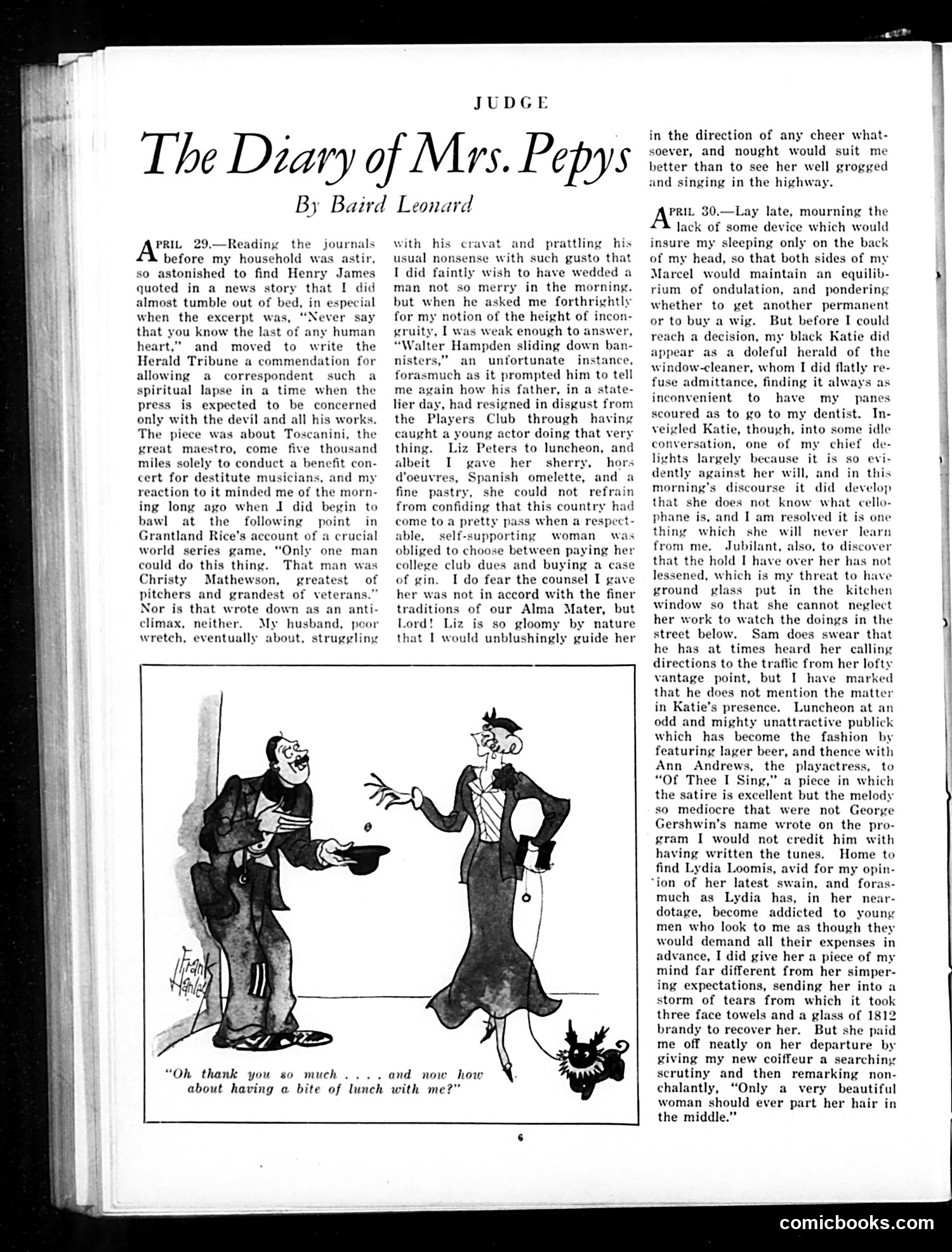
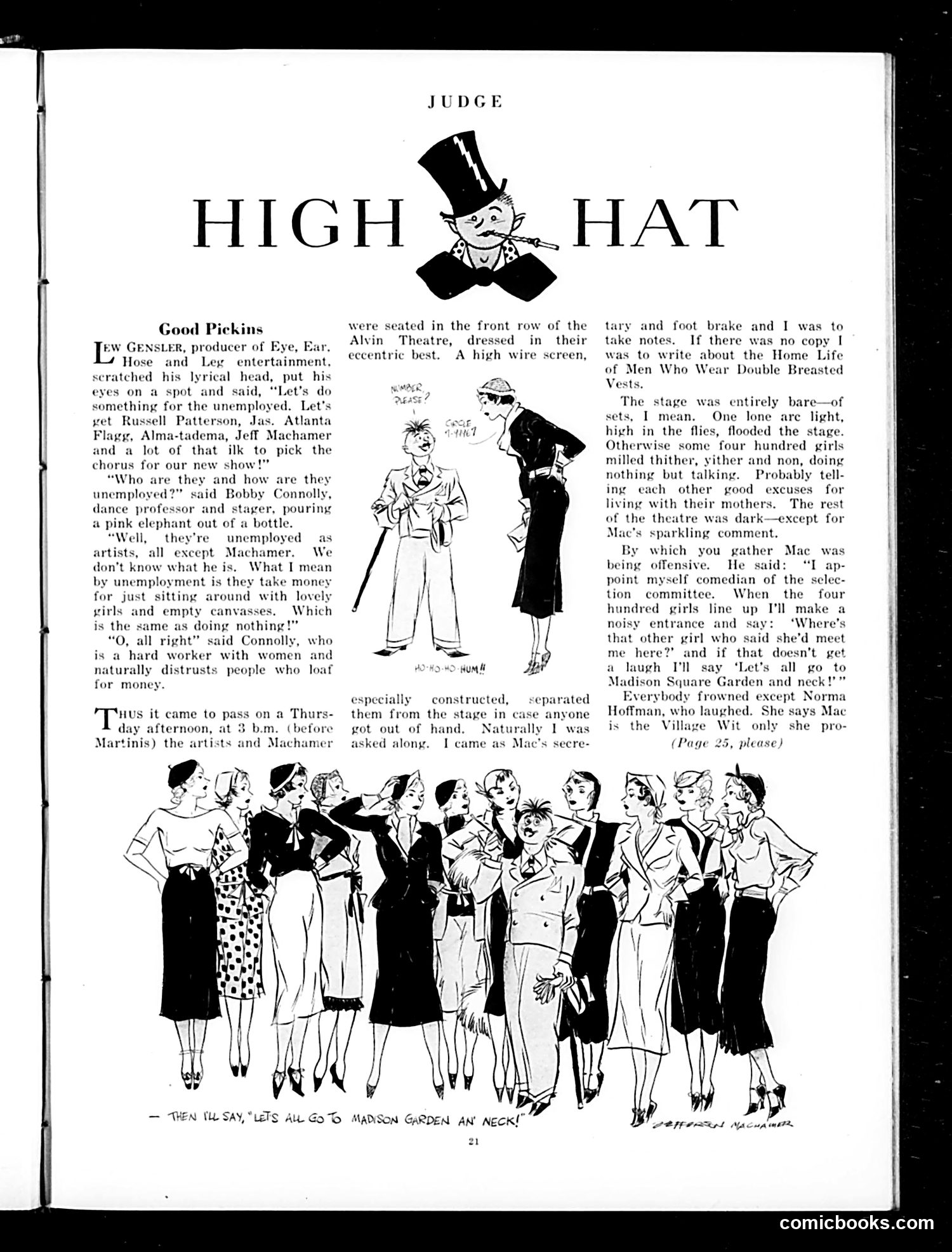
# The Diary of Mrs. Pepys by Baird Lenard This is a satirical society column presented as diary entries from April 29-30. The cartoon depicts a society woman (likely Mrs. Pepys, the fictional diarist) being accosted by a shabby man asking for lunch money. The satire targets upper-class pretension and gossip culture. The text mocks Manhattan's social elite—including theater people, socialites, and cultural figures of the era. It satirizes women like "Lydia Loomis" and "Ann Andrews" (likely real or recognizable society figures), their superficial concerns, romantic entanglements, and competitive fashion consciousness. The humor derives from the contrast between the refined world these people inhabit and their petty, often ridiculous preoccupations, presented through the sardonic voice of an observant society columnist.
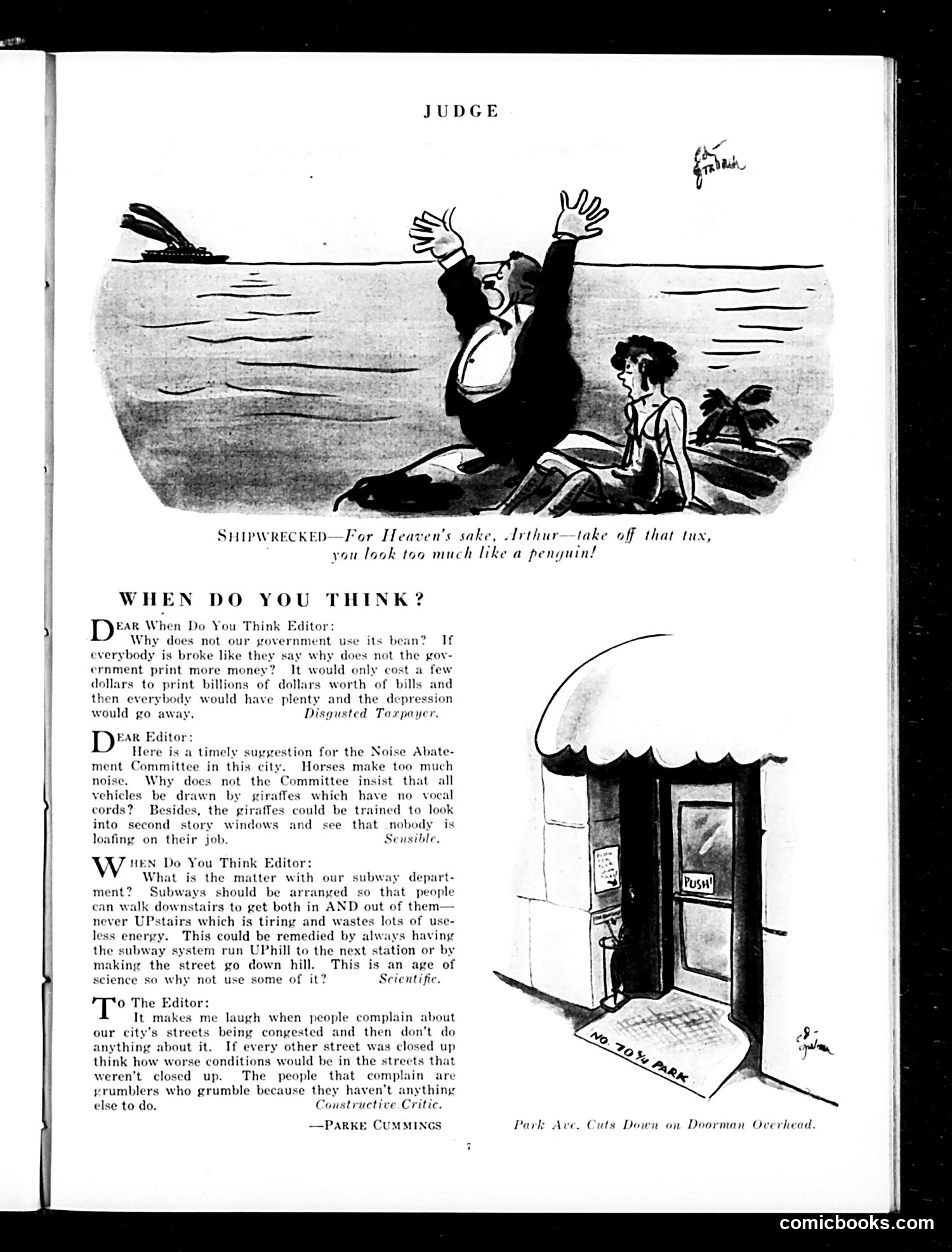
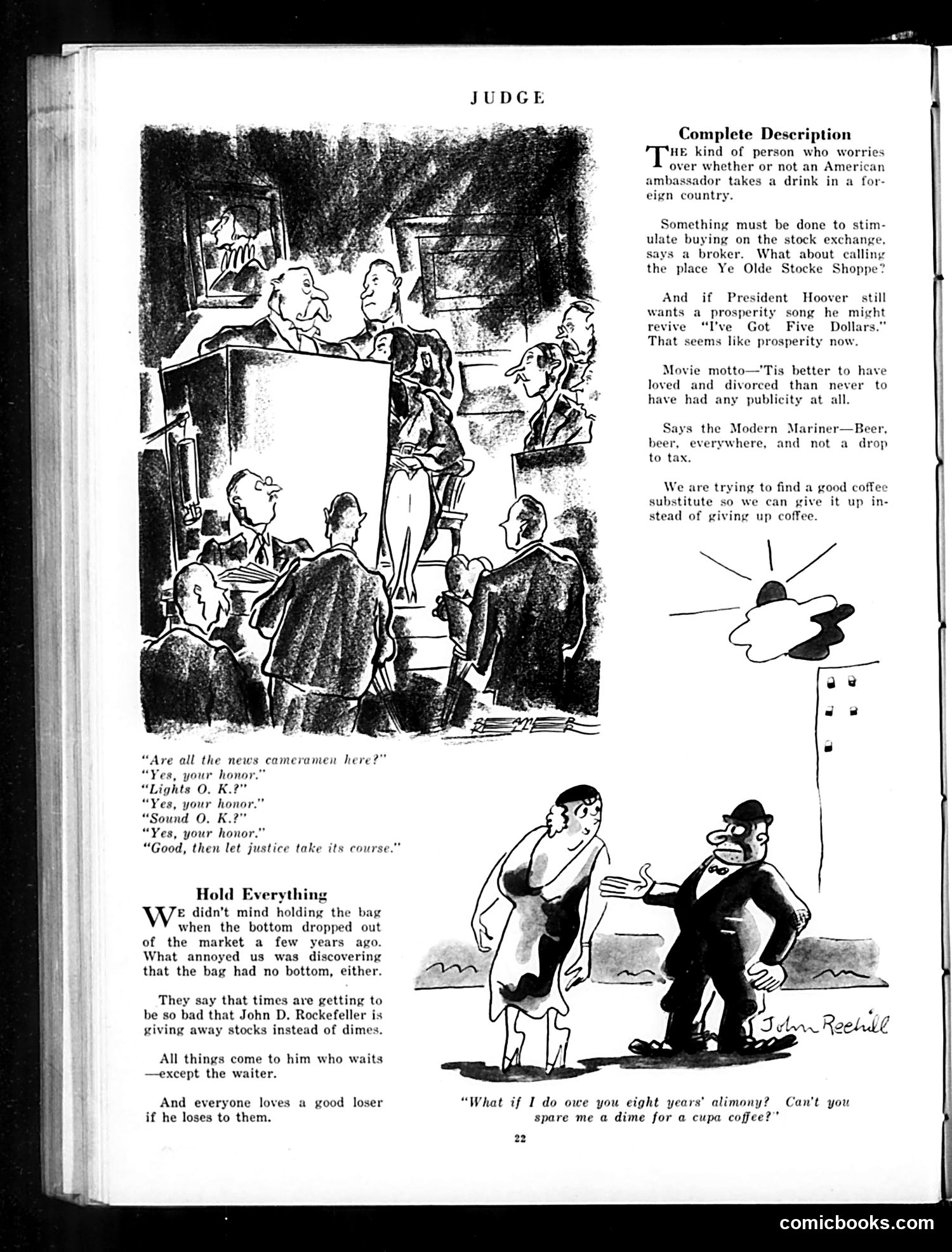
# Judge Magazine Page Analysis **Top Cartoon:** A shipwrecked man in formal wear clings to wreckage while a woman suggests he remove his tuxedo because he "looks too much like a penguin." This is a simple visual gag playing on the penguin's formal appearance. **"When Do You Think?" Section:** This is a letters column featuring satirical reader submissions mocking Depression-era economic anxiety and urban complaints: 1. **First letter** ridicules the naive suggestion that printing more money would end the Depression—treating it as obviously foolish. 2. **Second letter** absurdly proposes replacing horses with giraffes for noiseless transportation while using them as workplace supervisors. 3. **Third letter** suggests redesigning subways so people descend rather than climb stairs—implying the writer doesn't understand gravity or engineering. 4. **Fourth letter** sarcastically defends street congestion, claiming closed streets would make remaining streets worse. The column satirizes public complaints and half-baked solutions to urban problems through intentionally ridiculous "common sense" proposals. The humor relies on readers recognizing the logical absurdity.
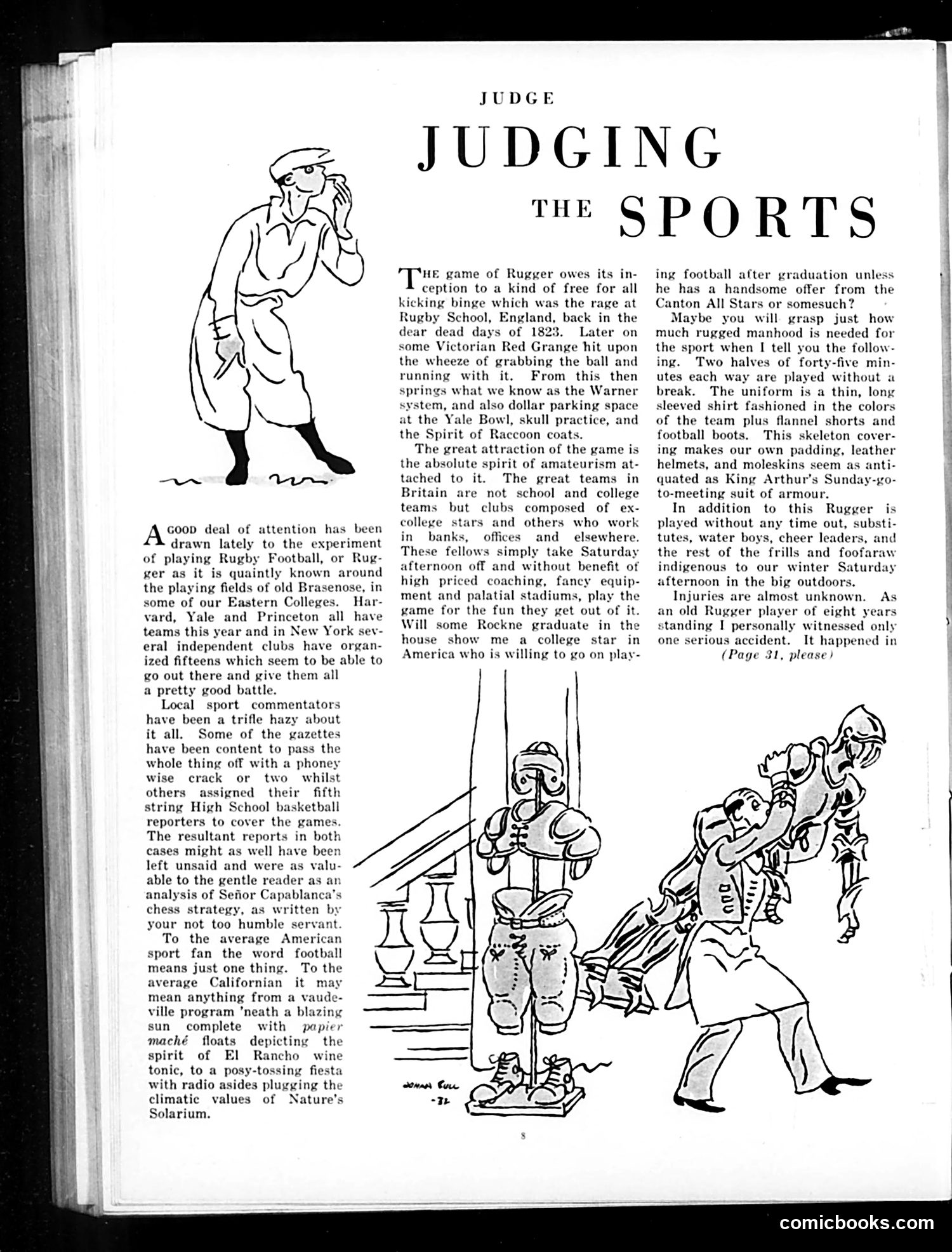
# "Judging the Sports": Rugby Football Satire This page mocks American sportswriters' ignorance of rugby football, recently introduced to elite colleges like Harvard, Yale, and Princeton. The author criticizes how newspapers either dismissed rugby with "phoney wise cracks" or assigned incompetent "fifth string High School basketball reporters" to cover it—comparing such coverage to having a chess grandmaster analyze sports. The cartoons illustrate rugby players in full gear preparing for the game. The satire's central point: American sportswriters and fans understand only American football; to them, "football means just one thing," while Californians might confuse it with vaudeville entertainment. The author contrasts British rugby's amateur spirit—played by ordinary working men for fun—with American college football's commercialism, expensive equipment, coaching, and demand for professional contracts. The underlying critique: American sports have become professionalized and corrupt, while British rugby maintains genuine amateurism and physicality (played without breaks, minimal protective gear, few injuries).
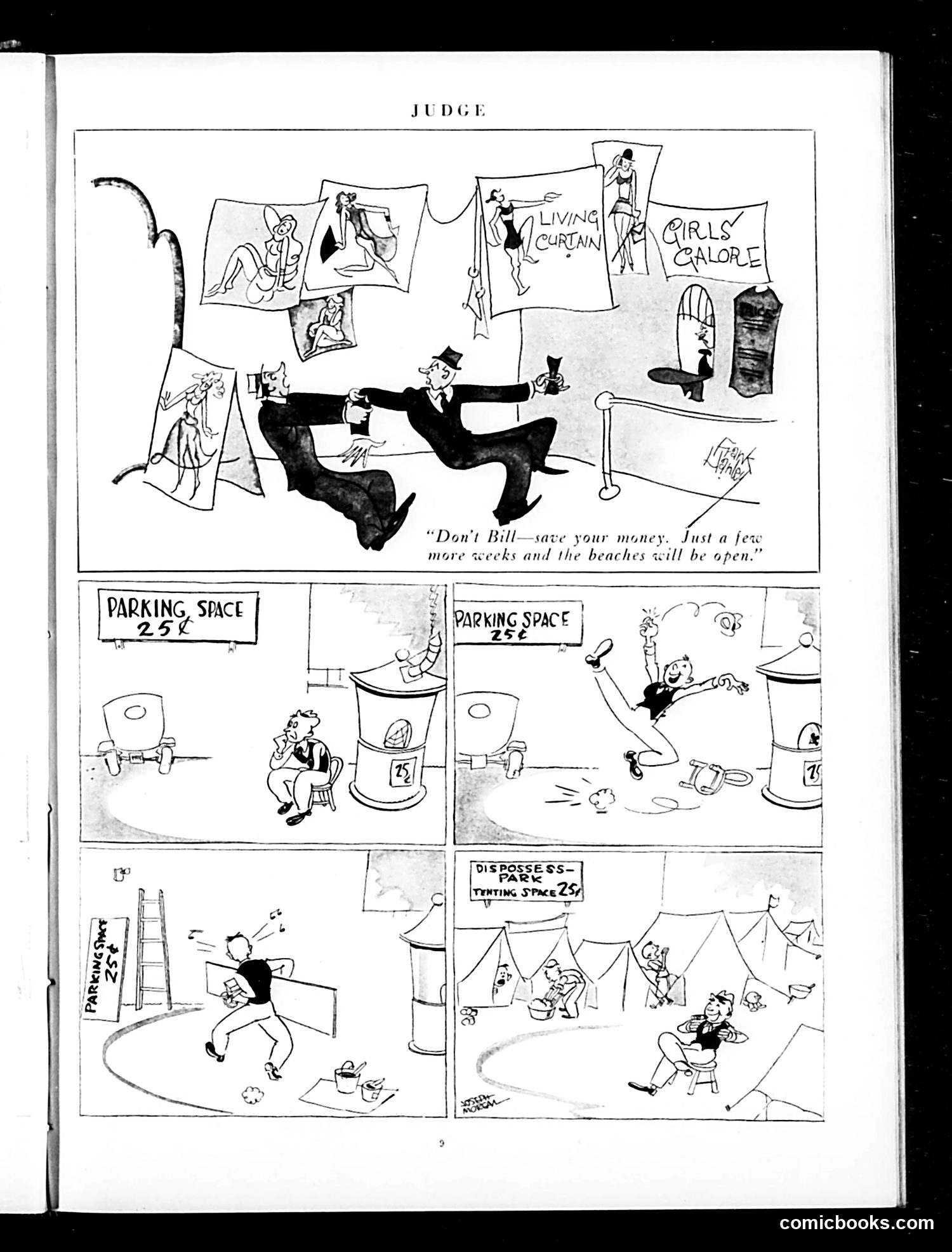
# Analysis The top cartoon depicts a judge character surrounded by suggestive theater posters ("Living Curtain," "Girls Galore") and what appear to be vice-related imagery. The caption suggests someone named Bill should avoid spending money on entertainment because beaches will soon open—implying temporary closure of illicit establishments. The bottom comic strip shows a "Parking Space 25¢" scenario where someone pays for parking, then the space mysteriously disappears or becomes unavailable, leaving them frustrated. This appears to satirize urban parking frustrations and the scarcity of affordable parking spaces in cities. The page likely dates to a period when beach closures were temporary (possibly WWII-era blackouts or seasonal regulations) and reflects early-20th-century urban complaints about parking challenges.
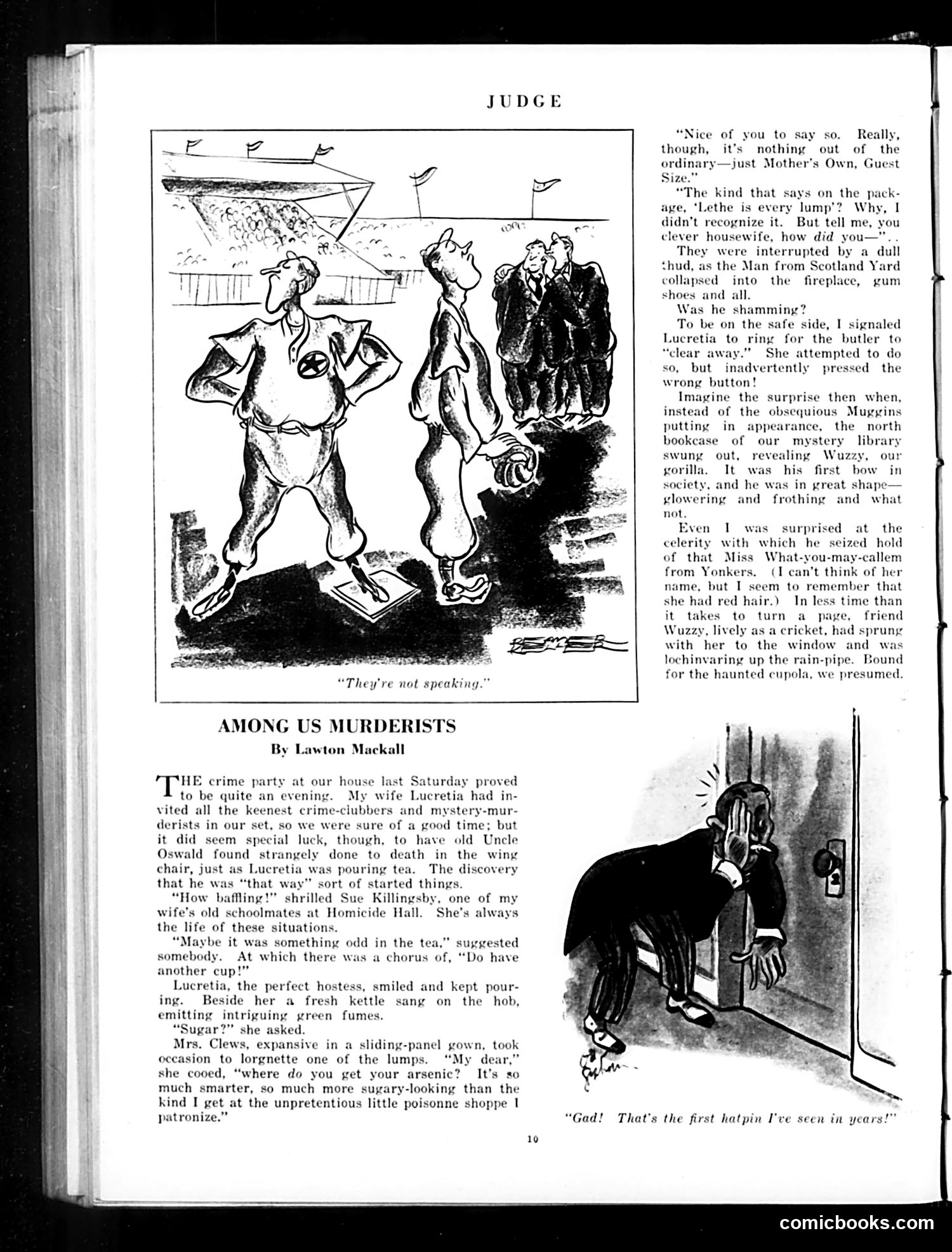
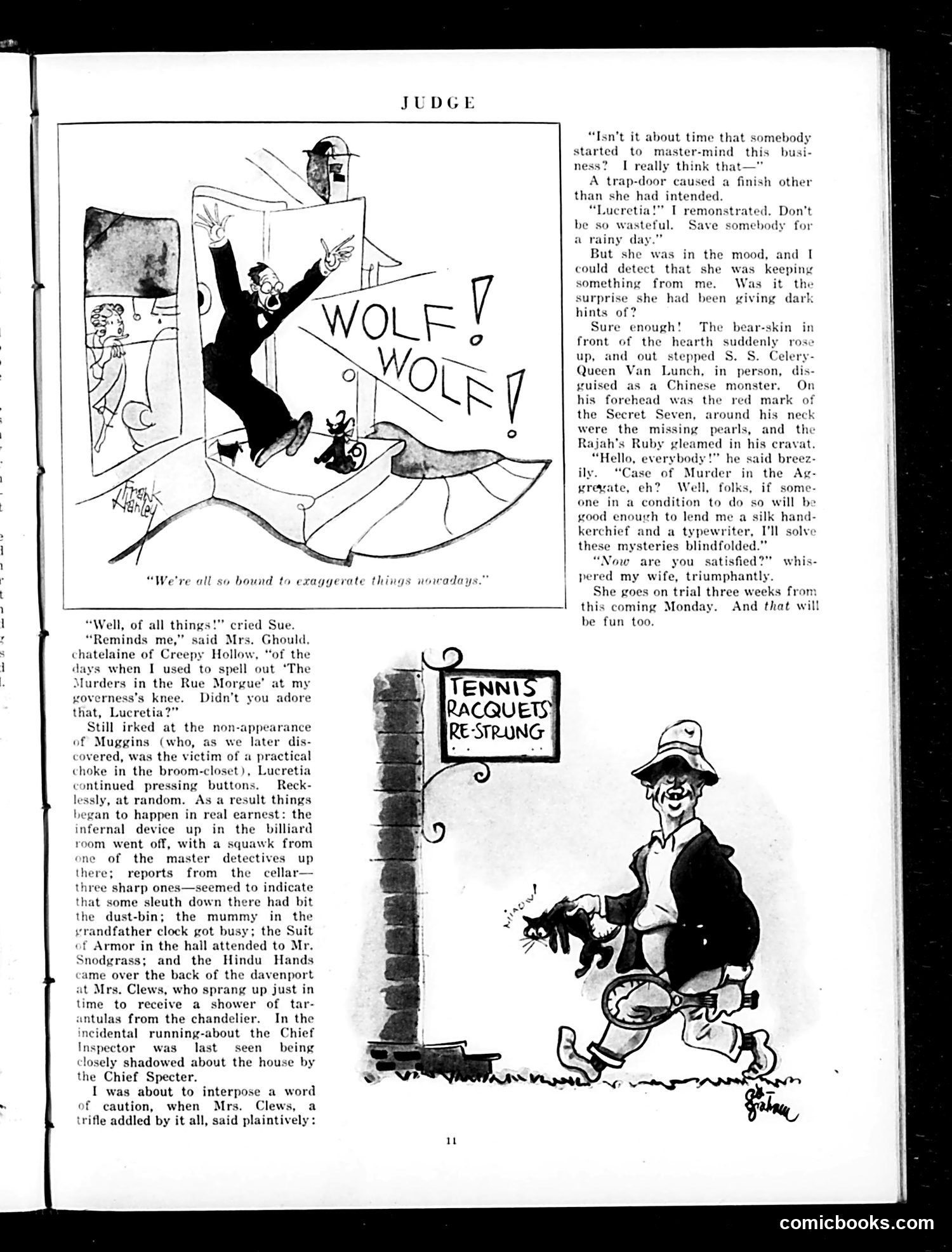
# Analysis for Modern Readers This is a humorous murder-mystery parody titled "Among Us Murderists" by Lawton Mackall. The satire mocks the popularity of 1920s-30s detective fiction and "cozy mystery" conventions. The joke: at a dinner party, an uncle dies suspiciously. Rather than genuine alarm, the guests treat it as entertainment—one woman even compliments the hostess's arsenic quality, comparing shopping for poison as casually as buying groceries. A Scotland Yard detective collapses into the fireplace. A secret bookcase opens, revealing a gorilla that absconds with a guest through a window and rain-pipe. The cartoon above shows characters in deliberately ridiculous poses captioned "They're not speaking"—exaggerating melodramatic mystery-story tropes. The satire targets how fashionable mystery fiction had become among society people, treating real violence as parlor game entertainment. The escalating absurdity (competitive poison shopping, gorillas in libraries) mocks the implausible plot mechanics these stories relied upon.