A complete issue · 36 pages · 1932
Judge — March 5, 1932
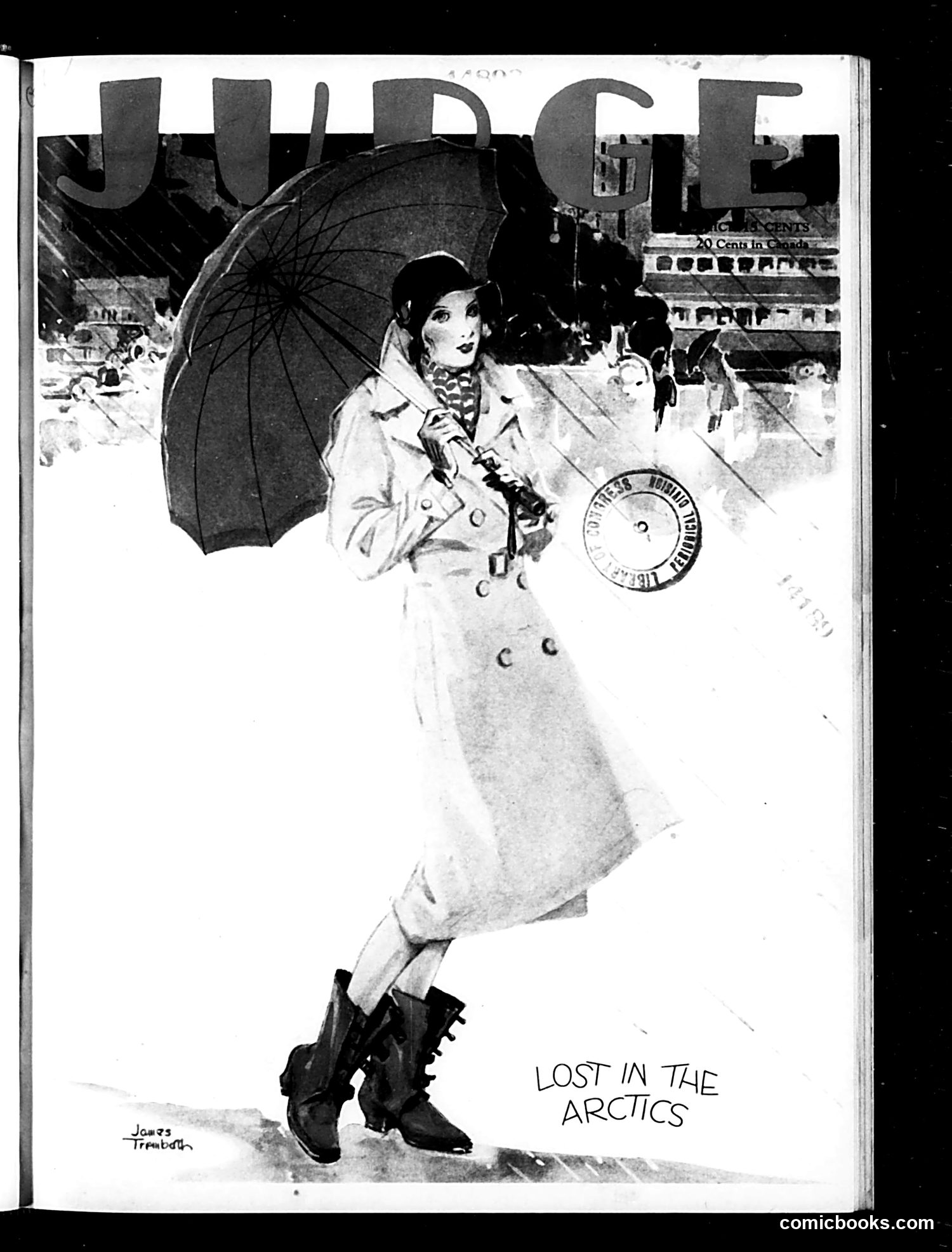
# Judge Magazine Cover Analysis This appears to be a Judge magazine cover featuring a stylized illustration by Jones Travelstead. The central image shows a fashionably dressed woman in a light-colored coat and dark boots, holding a large umbrella, with the caption "LOST IN THE ARCTICS." The satire likely plays on early 20th-century Arctic exploration fever—a popular public fascination. The joke appears to contrast the elegant, fashionable woman (suggesting someone unprepared for harsh conditions) against the Arctic setting visible in the background. The elaborate coat and feminine styling humorously suggest she's hopelessly lost in a dangerous environment while maintaining her fashionable appearance. Without additional context from the magazine's date, specific Arctic expeditions referenced remain unclear, but the piece satirizes either exploration culture or feminine vanity through incongruity.
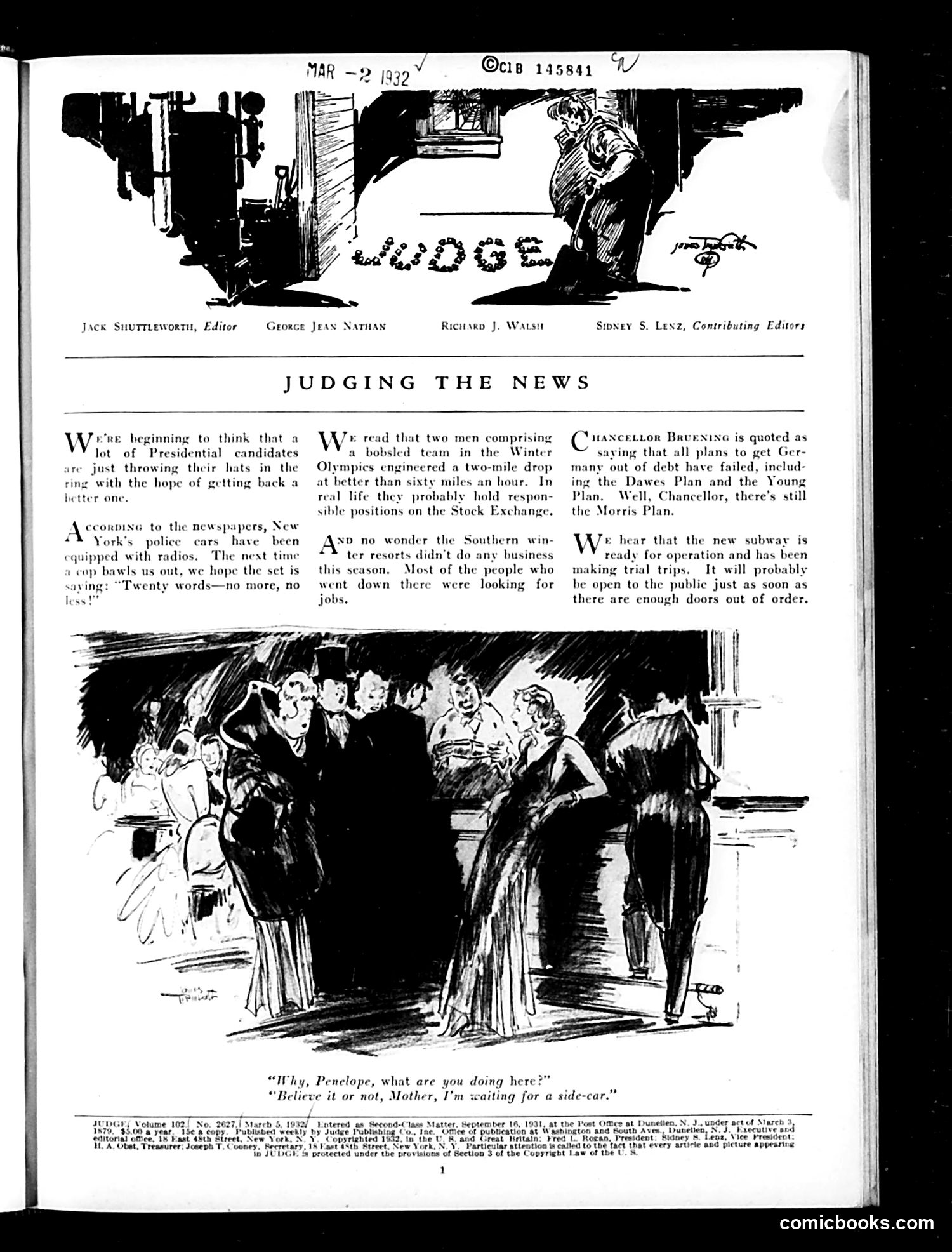
# "Judging the News" - Judge Magazine, March 1932 This page features editorial commentary and a cartoon satirizing contemporary issues during the Great Depression era. The main cartoon depicts a woman (Penelope) waiting for a side-car, telling her mother "Believe it or not, Mother, I'm waiting for a side-car"—likely mocking the economic desperation of the period, where people cobbled together unusual transportation solutions. The text columns reference: Presidential candidates "throwing their hats in the ring"; New York police cars equipped with "radio" (emerging technology); a Winter Olympics bobsled team; Stock Exchange positions; Southern winter resorts facing business collapse due to the depression; and a new subway system with operational problems. The overall tone critiques both the absurdities of political campaigning and the widespread economic disruption affecting American life in early 1932.
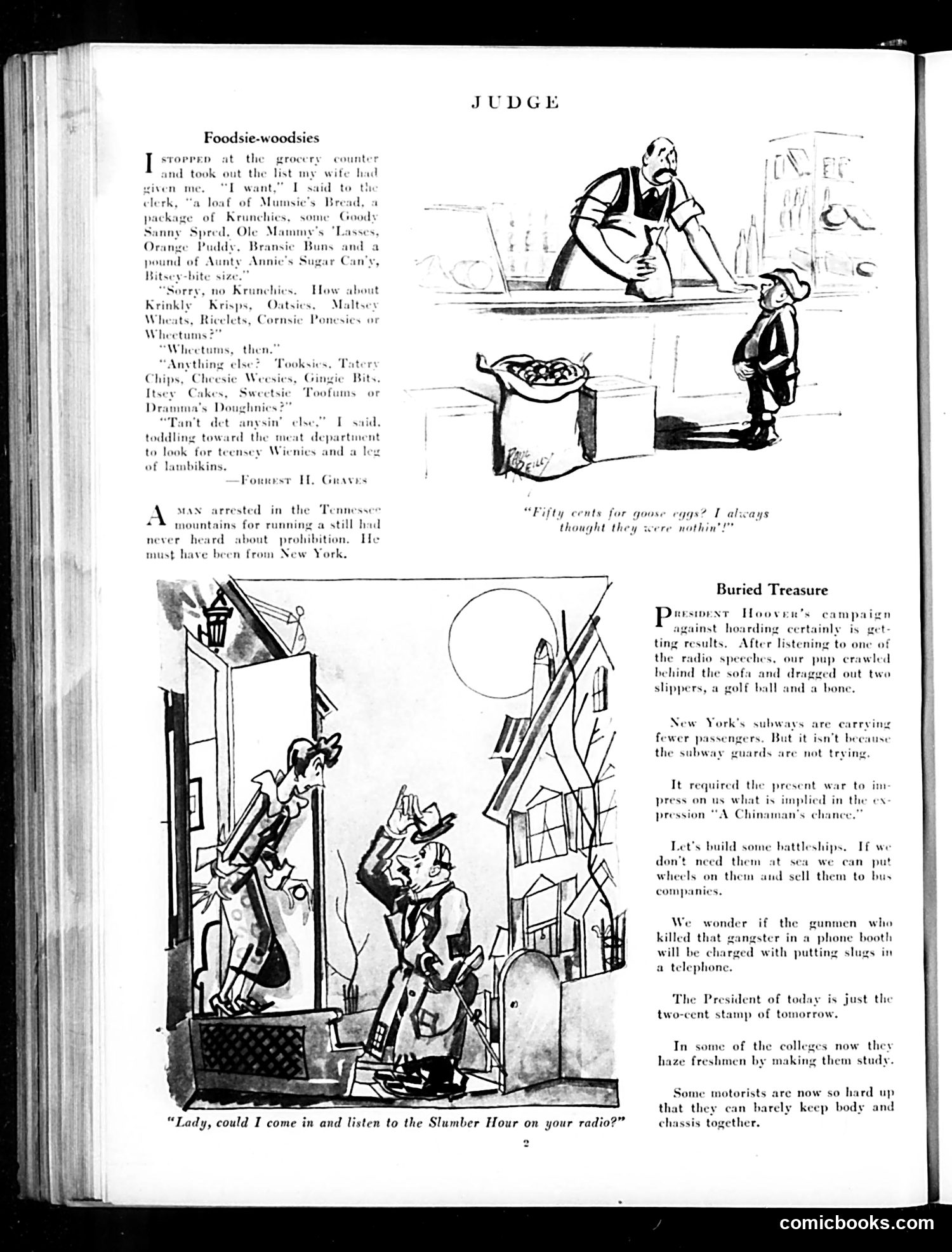
# Analysis of Judge Magazine Page **"Foodsie-woodsies"** (top): A humorous poem by Forrest H. Graves mocking a husband's grocery list that includes novelty foods and brand names (Mumsie's Bread, Sunny Spread, etc.) rather than basic items. The accompanying cartoon shows a wife at a counter with a child, illustrating domestic shopping absurdity. **"Fifty cents for goose eggs?"** (right cartoon): A grocer and customer exchange about pricing, likely satirizing inflated wartime prices or food scarcity. **"Buried Treasure"** (main cartoon): Shows people crammed in a tenement building's elevator, apparently trying to reach upper floors. The caption reads "Lady, could I come in and listen to the Slumber Hour on your radio?" This satirizes overcrowded urban housing conditions and the era's new radio entertainment culture—suggesting people are so packed together they share neighbors' entertainment.
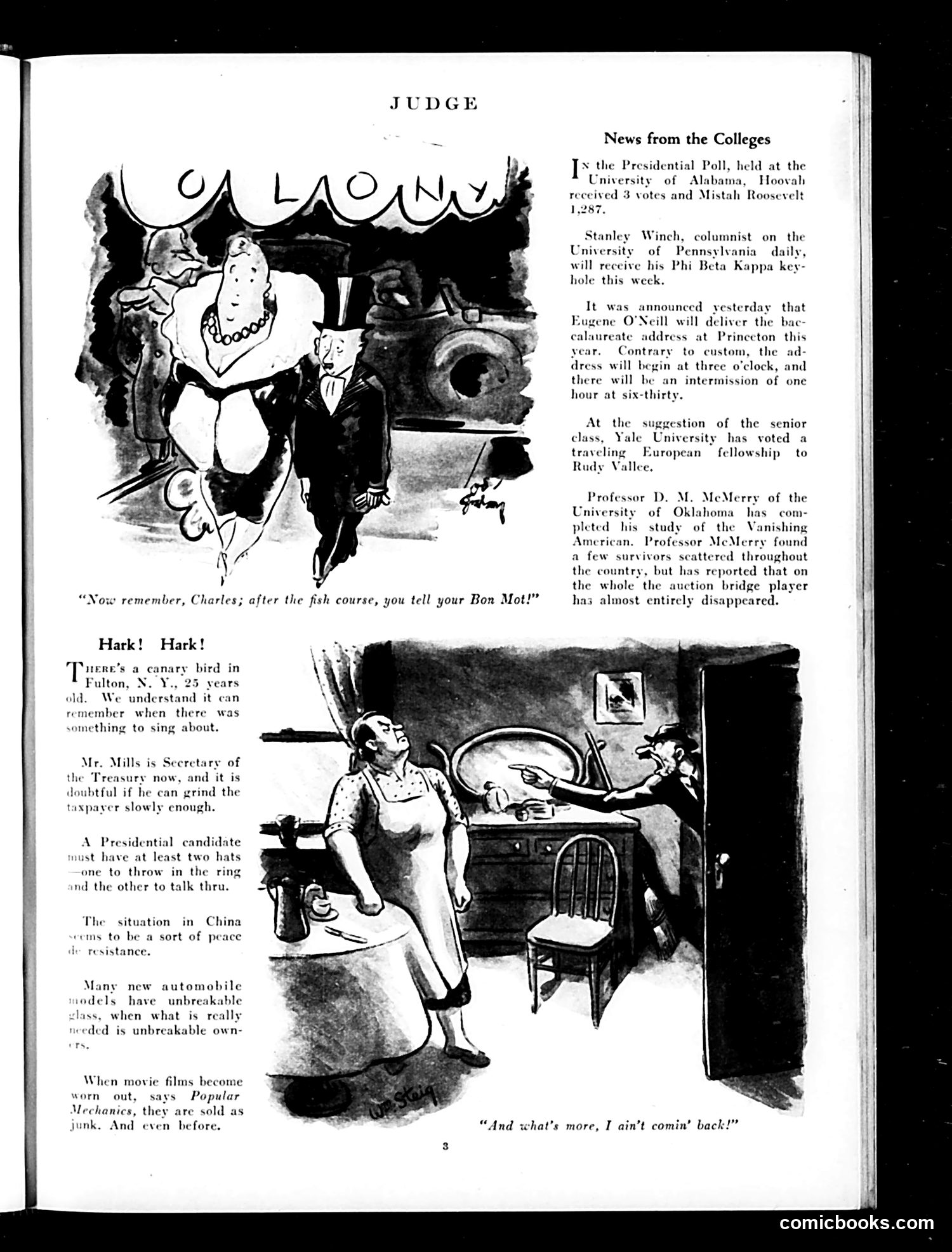
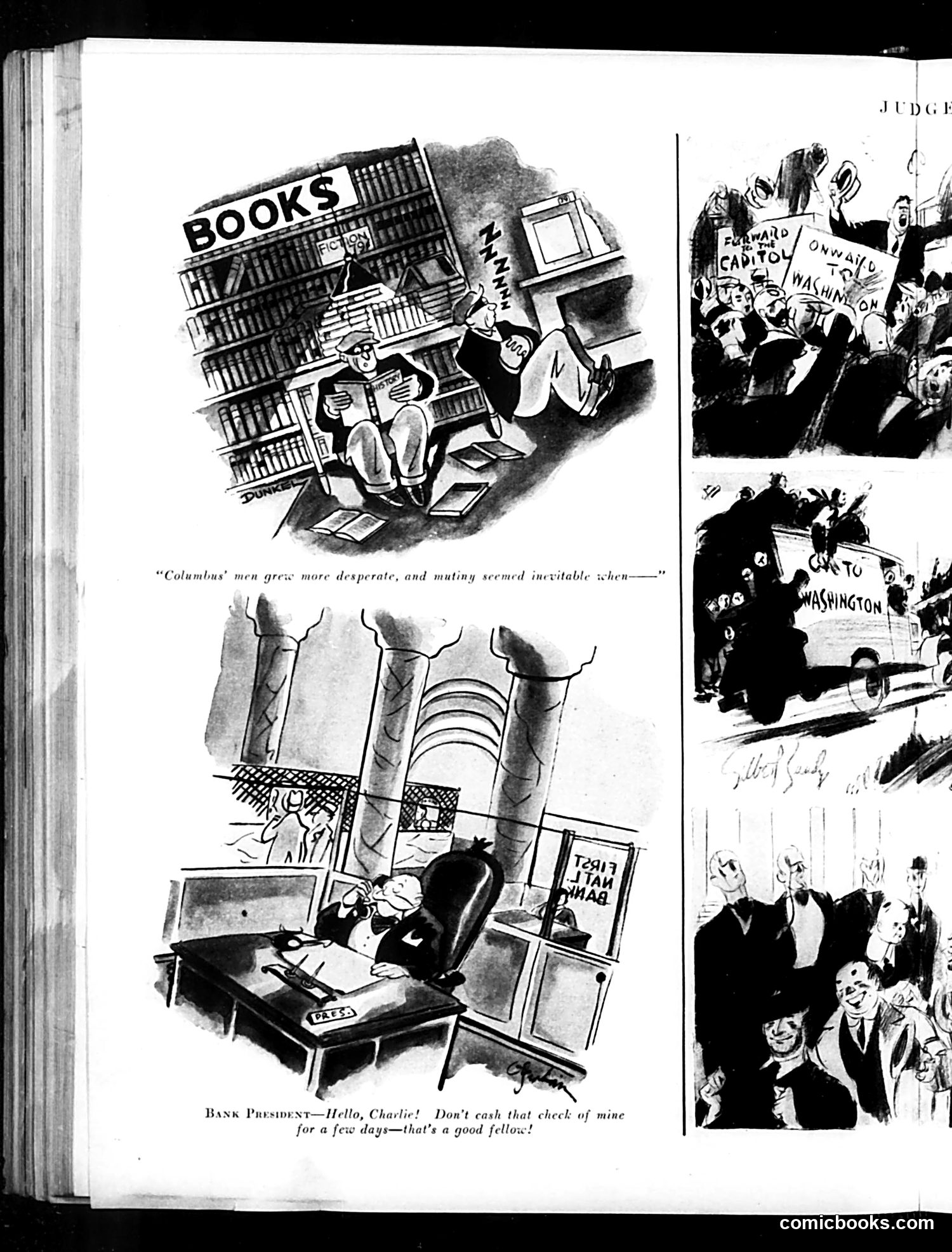
# Judge Magazine Page Analysis The top cartoon depicts a rotund figure in formal dress at what appears to be a fancy restaurant, with the caption "Now remember, Charles; after the fish course, you tell your Don Me!" This satirizes pretentious dining etiquette and social climbing—likely mocking someone coaching their companion on when to make an important announcement or impression during a formal meal. The bottom cartoon shows a woman at a radio saying "And what's more, I ain't comin' back!" This appears to satirize women's independence or domestic disputes, popular comedy fodder of the era. The radio suggests this is a modern woman using contemporary technology, possibly criticizing or leaving her husband. The "News from the Colleges" section contains light campus gossip typical of Judge's collegiate humor.
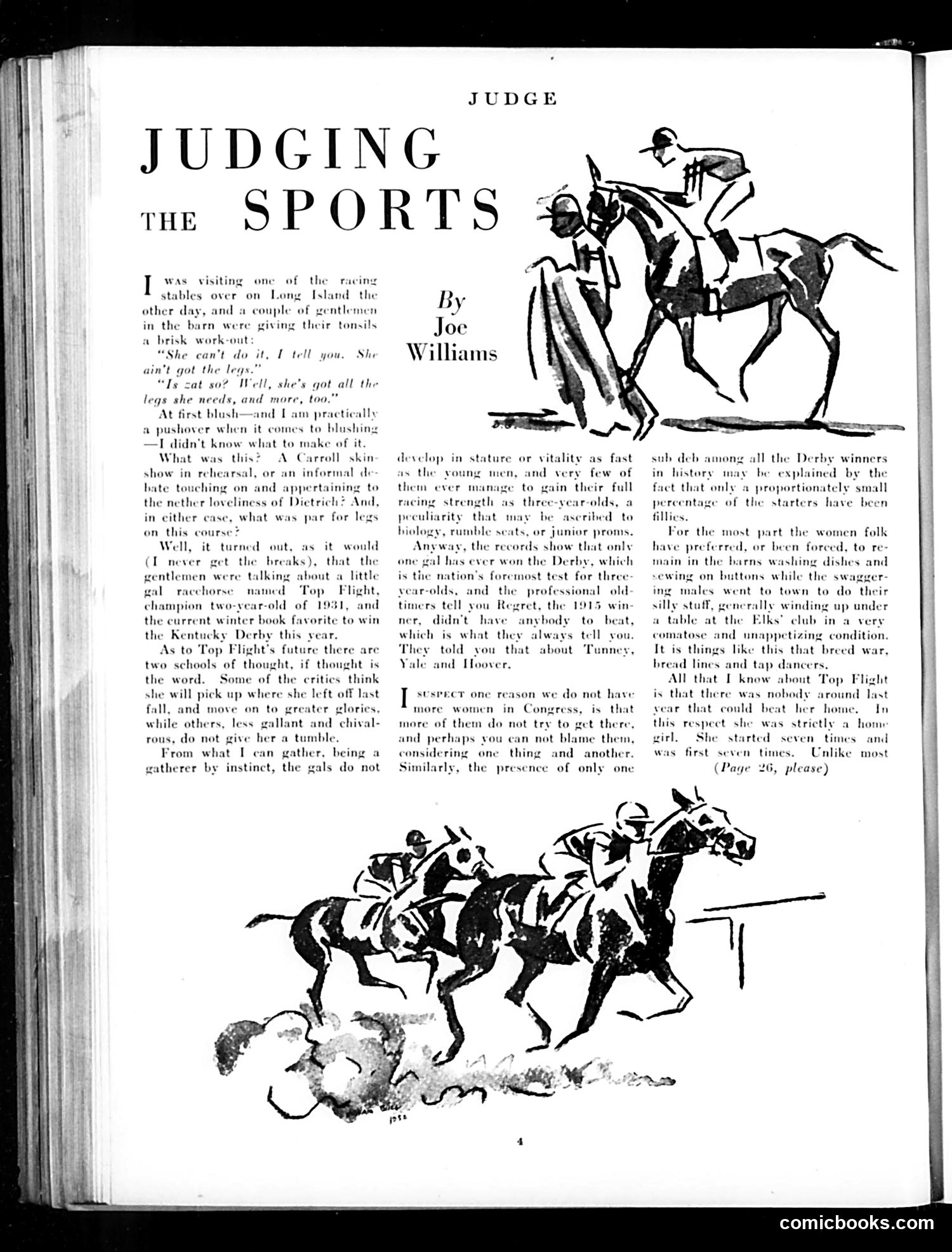
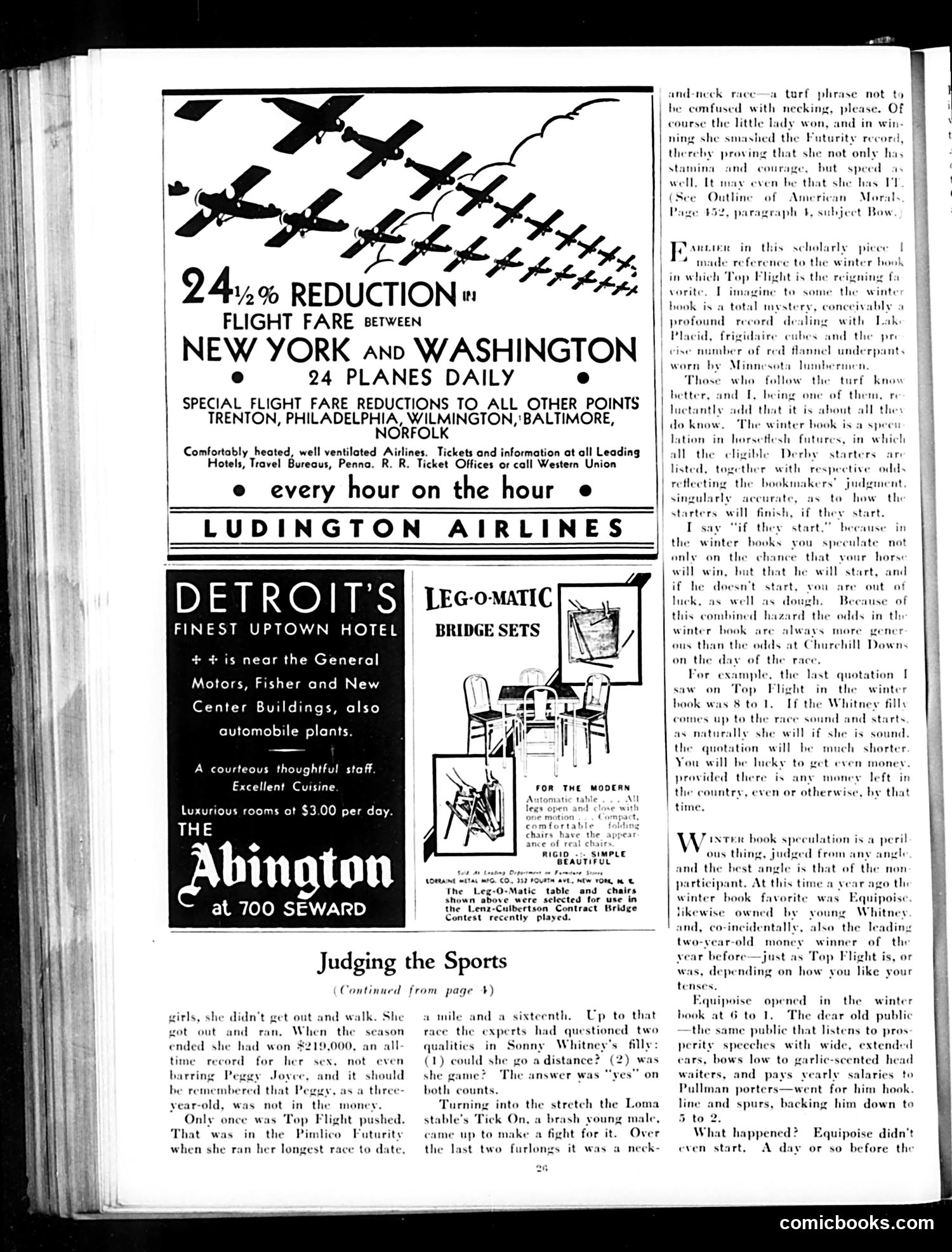
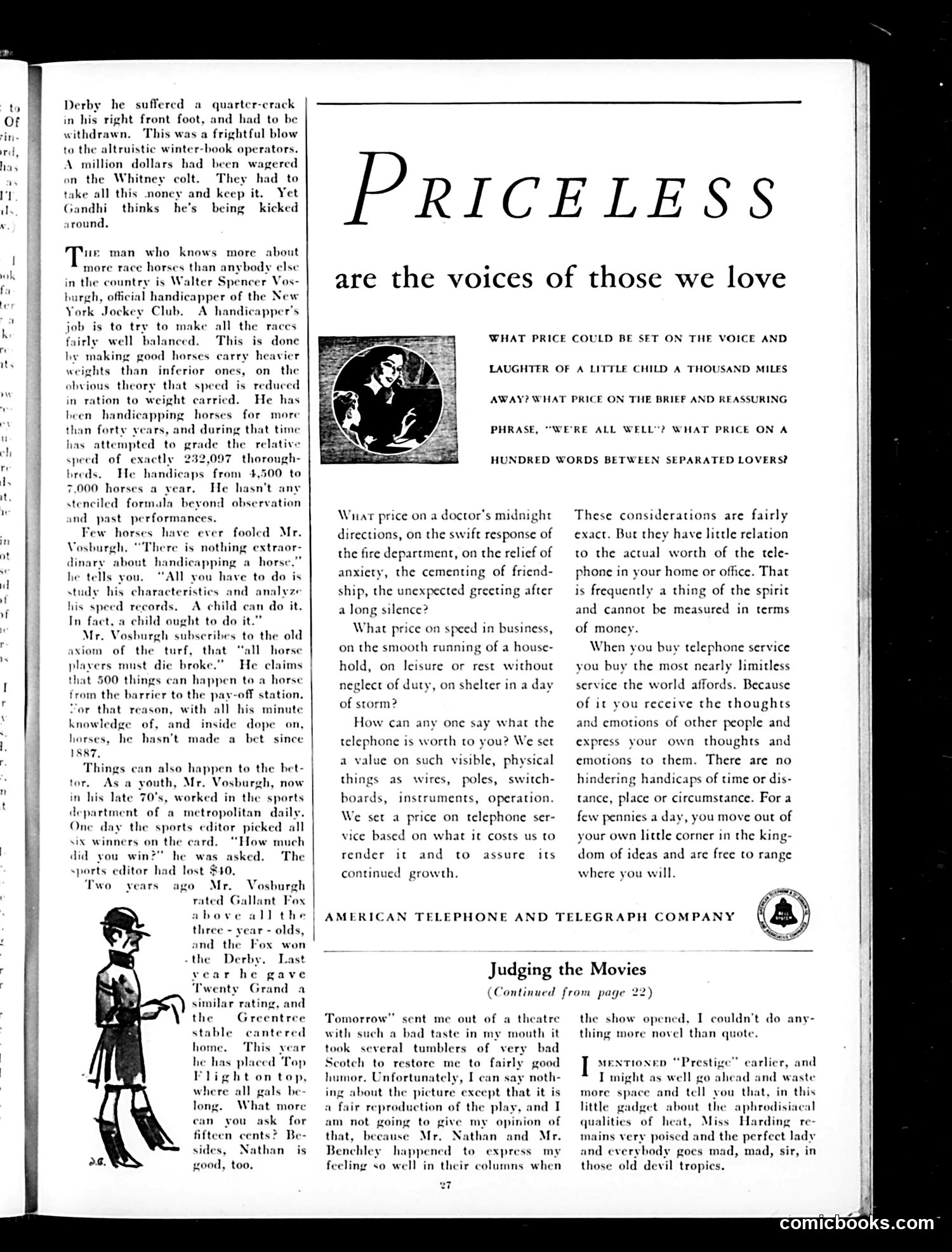
# "Judging the Sports" by Joe Williams This satirical article criticizes women's limited presence in horse racing and sports governance. Williams recounts visiting racing stables where gentlemen claimed a horse named "Top Flight" couldn't win because "she ain't got the legs"—a dismissive comment about the animal's breeding. He then pivots to social commentary, noting that women are similarly underrepresented in Congress and sports decision-making, suggesting comparable prejudice excludes them from power. The illustrations show horse racing scenes. Williams argues that the absence of women in positions of influence isn't due to inability but systemic exclusion—people simply "do not try to get there." The piece appears to advocate for greater female participation in governance and sports, using horses as an ironic parallel to highlight the arbitrariness of exclusionary attitudes.
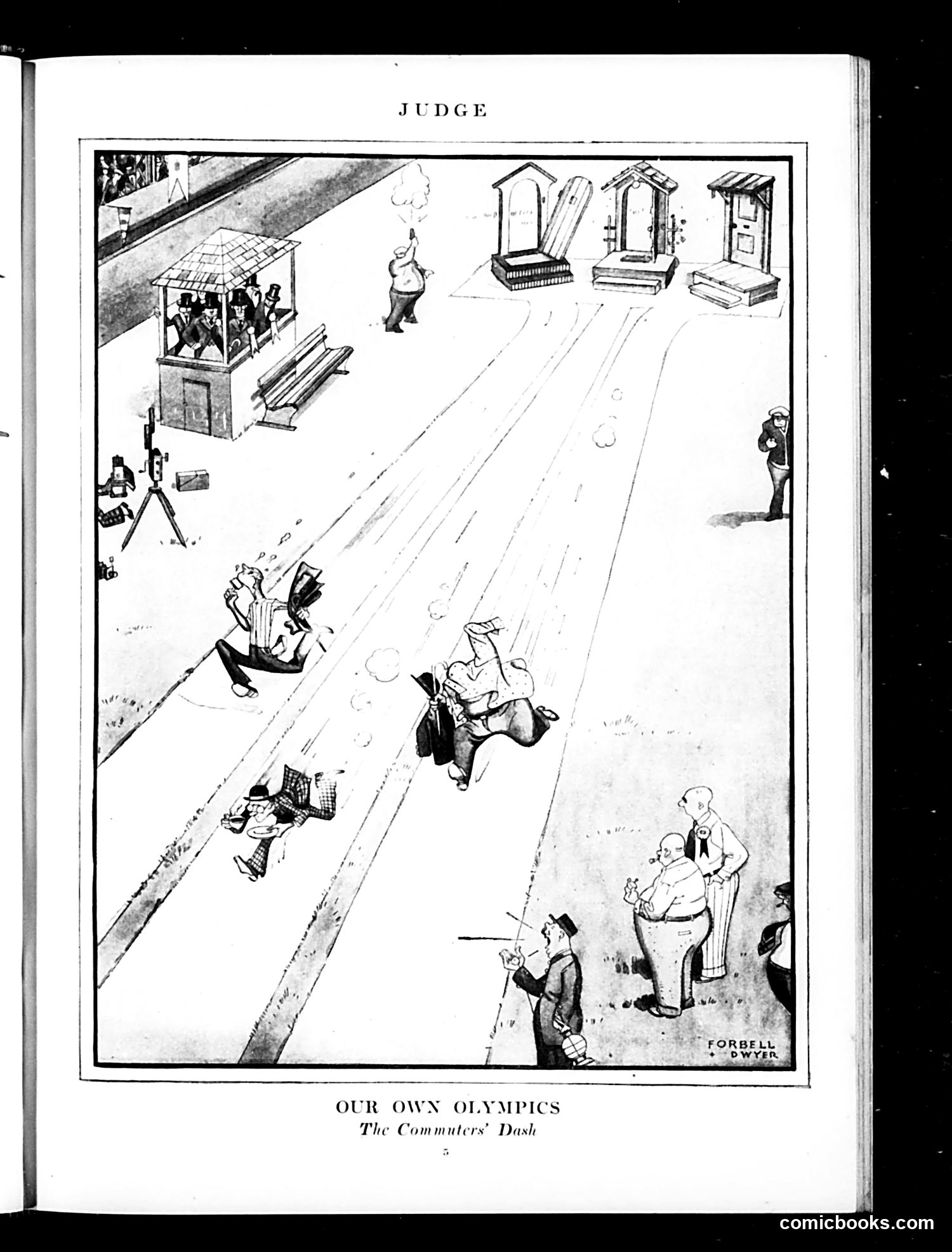
# "Our Owx Olympics: The Commuters' Dash" This satirical cartoon depicts commuters racing along what appear to be railroad tracks or pathways, portraying their daily commute as a competitive sport. The figures are shown in exaggerated, athletic poses—some tumbling or lunging forward—suggesting the frantic, chaotic nature of rush-hour travel. The joke centers on transforming mundane commuter behavior into an "Olympic" spectacle. Period spectators (judges, officials with equipment) oversee the "competition," complete with viewing stands. The satire mocks both the intensity with which commuters rushed to catch trains and the era's obsession with Olympic athleticism and competition. This likely dates to early-to-mid 20th century, when rail commuting was the primary urban transportation method, and commuters' scrambling for trains was a recognizable social phenomenon worth satirizing.
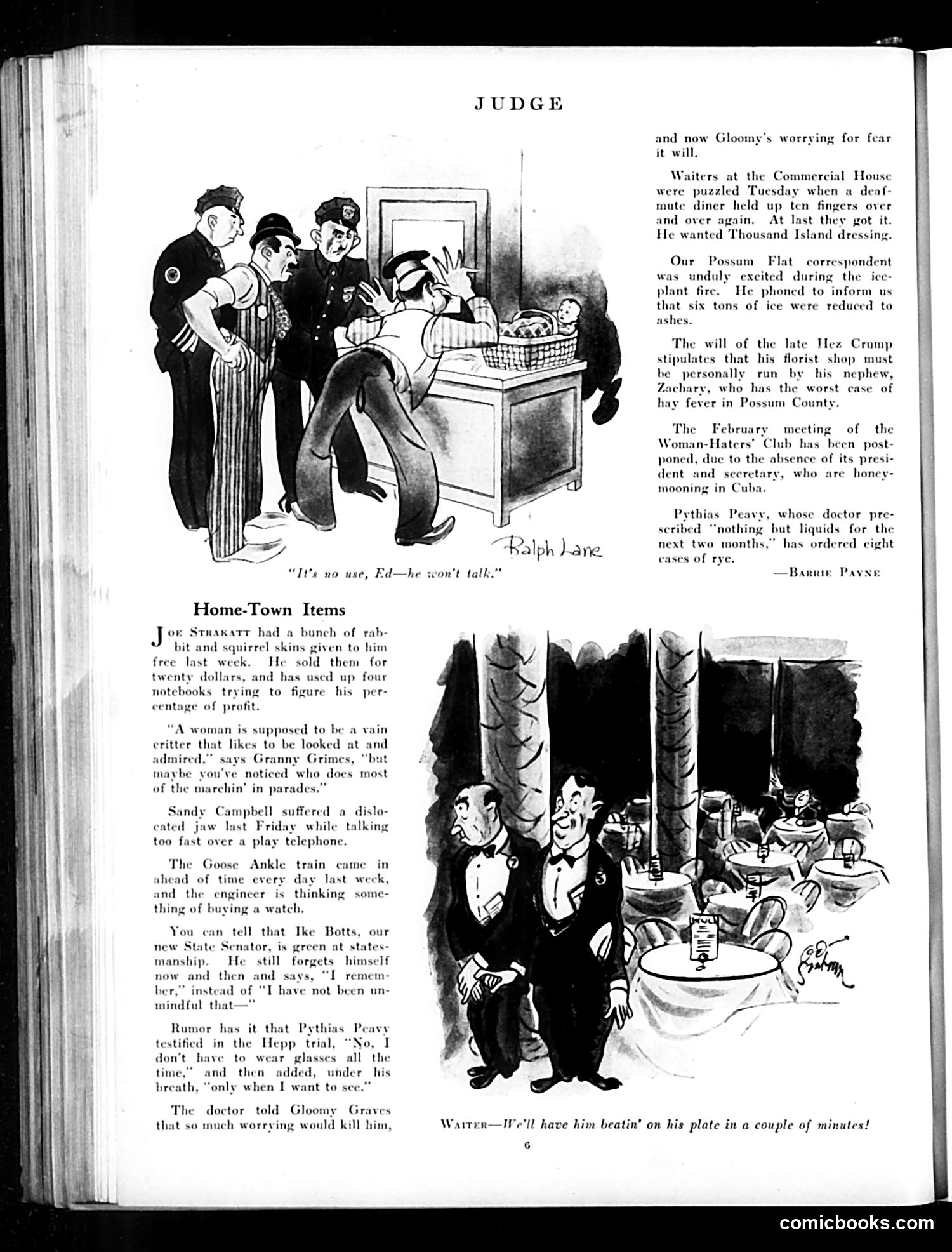
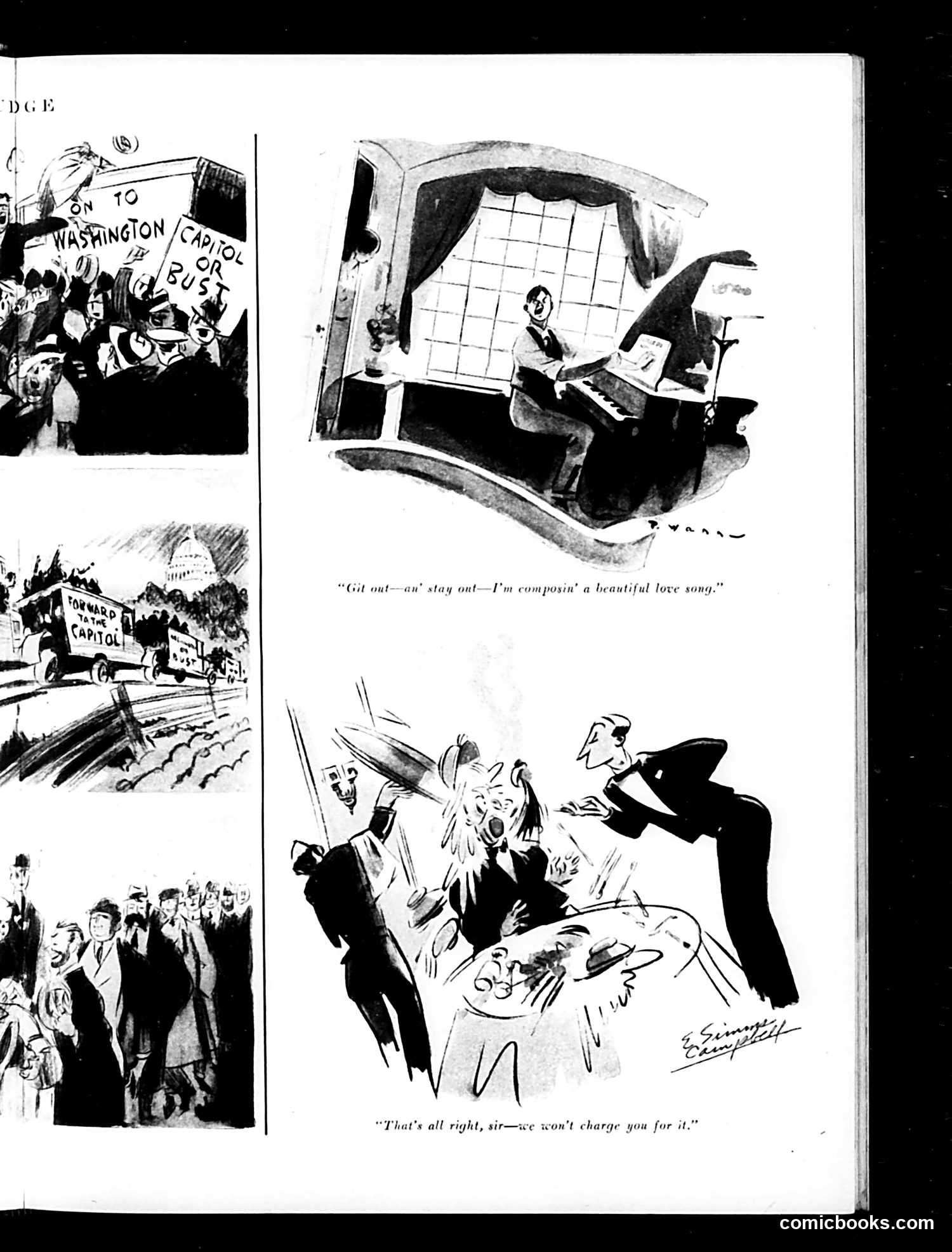
# Analysis of Judge Magazine Page This page contains two distinct sections: a cartoon and local gossip items. **Top Cartoon ("It's no use, Ed—he won't talk"):** Shows what appears to be police or officials questioning a suspect who refuses to cooperate. The joke suggests someone in custody is refusing to speak to interrogators. **"Home-Town Items" section:** A collection of brief local anecdotes about small-town characters and situations—Joe Strakatt selling animal skins, Granny Grimes commenting on women in parades, Sandy Campbell's jaw injury from a phone mishap, and various other trivial incidents. **Bottom illustration:** Shows two formally dressed men at a dinner party or social gathering, with a waiter announcing someone will soon be "beatin' on his plate." The page exemplifies Judge's formula of mixing satirical humor with lighthearted local gossip and social observations typical of early 20th-century American magazines.
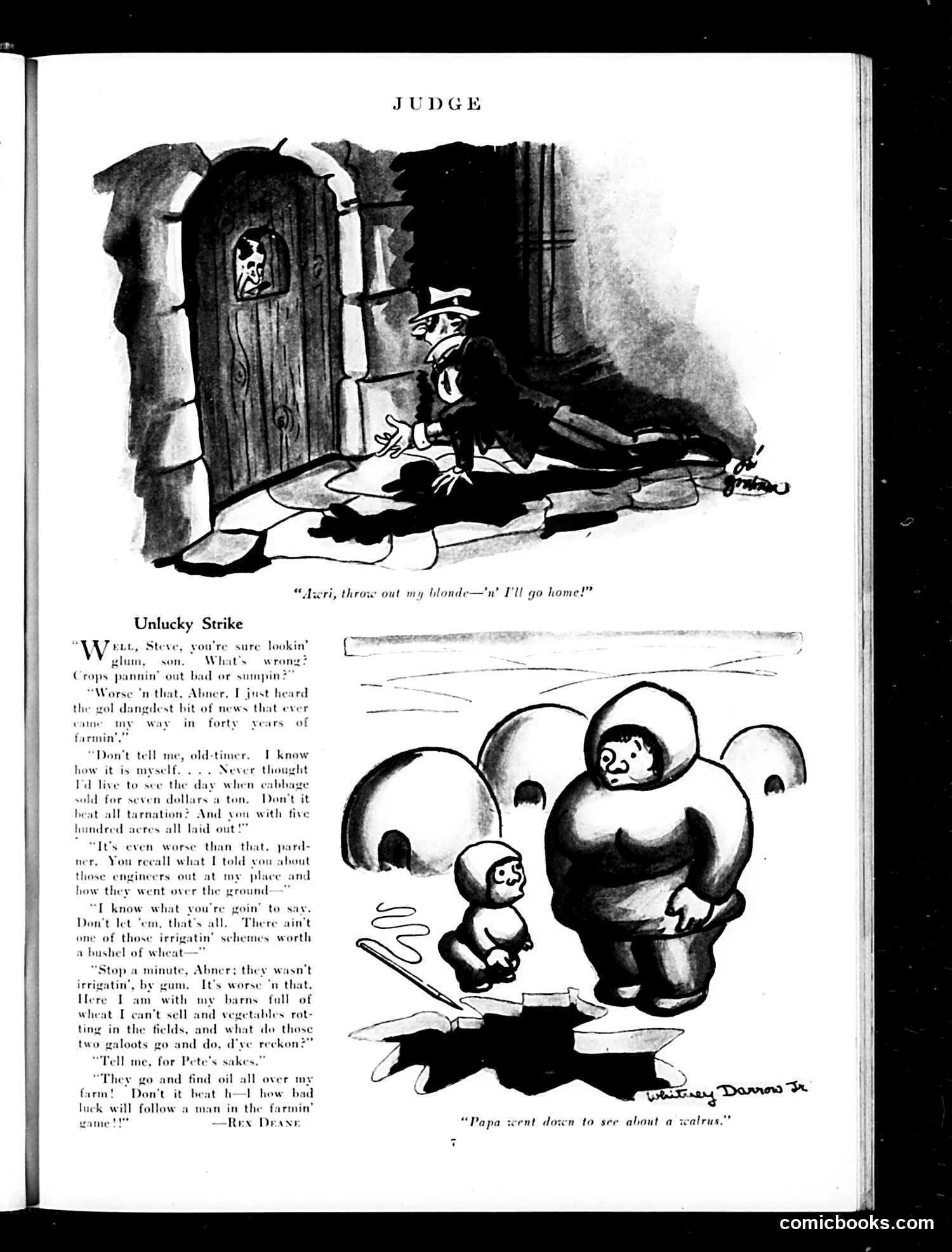
# Unlucky Strike This two-panel Judge page satirizes early 20th-century American agricultural anxieties through rural dialogue. The main cartoon depicts a farmer's complaint about discovering oil on his property—a reversal of fortune that appears disastrous. Two farmers discuss crop failures, falling cabbage prices (seven dollars a ton), failed irrigation schemes, and rotting produce. The punchline: engineers discovered oil reserves on the farmer's land, which he views as a curse rather than blessing. The satire mocks rural skepticism toward sudden wealth and modernization—the farmer prefers familiar agricultural problems to unexpected industrial development disrupting his way of life. The smaller cartoon shows children playing with oversized pumpkins, captioned "Papa went down to see about a walrus"—a non-sequitur joke with unclear satirical intent. The page reflects Judge's urban, educated audience mocking rural conservatism and resistance to economic change during the oil boom era.
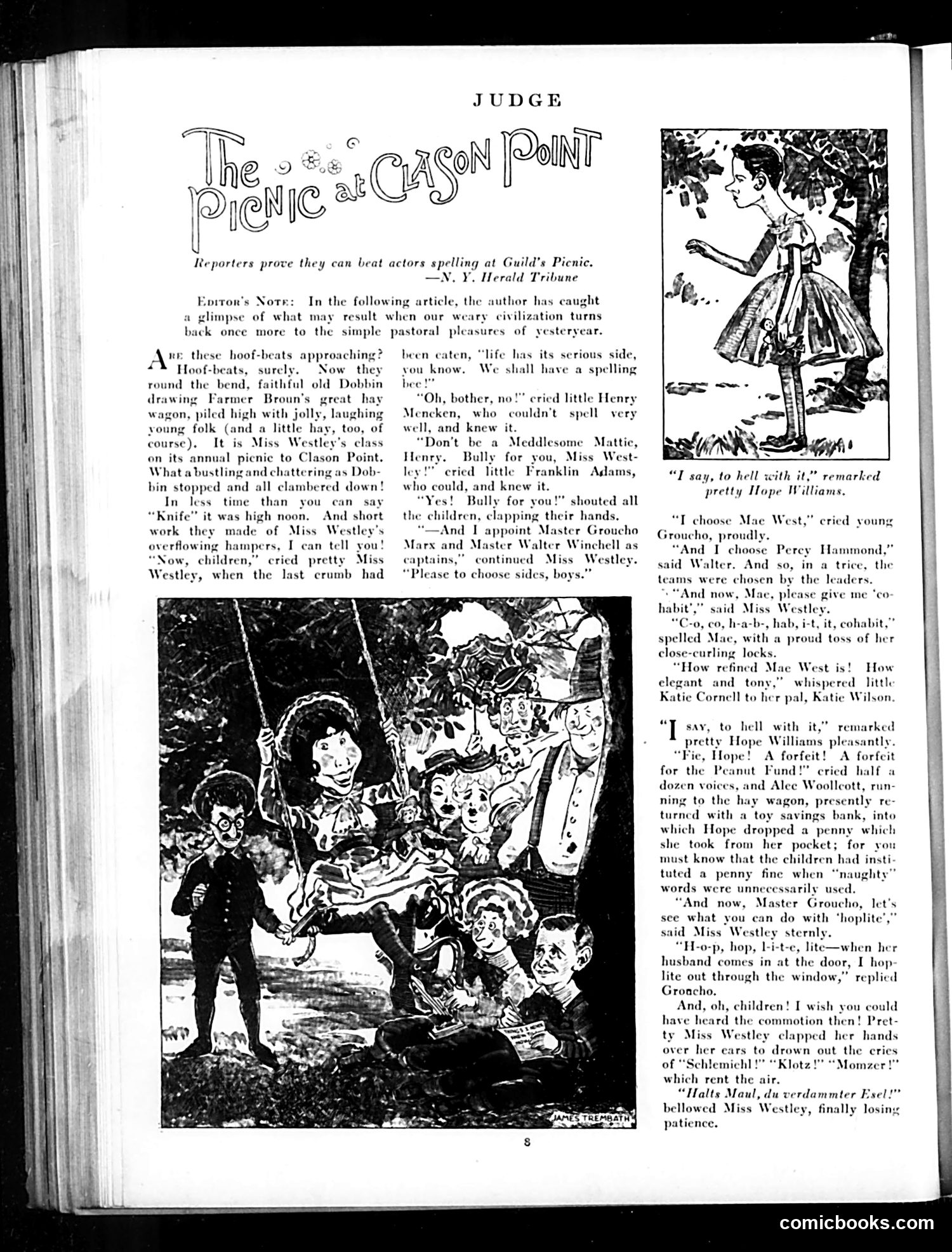
# "The Picnic at Cason Point" - Judge Magazine Satire This is a humorous fictional article satirizing a spelling bee at a school picnic. The satire works by having children select famous 1920s-30s entertainers and cultural figures as team captains—Mae West, Groucho Marx, Walter Winchell, and Percy Hammond—then having these celebrities answer spelling questions with characteristic wisecracks rather than actual answers. The joke targets both the celebrities' public personas (Mae West's sultry confidence, Groucho's irreverent humor) and contemporary American culture's celebrity worship. By placing these famous figures in a children's educational context, the piece mocks how entertainment celebrities dominate public discourse while suggesting they're intellectually frivolous. The editor's note frames this as social commentary: our "weary civilization" abandoning serious pursuits for entertainment-driven pastimes. The children's casual profanity ("to hell with it") reinforces the satirical point about cultural decline.
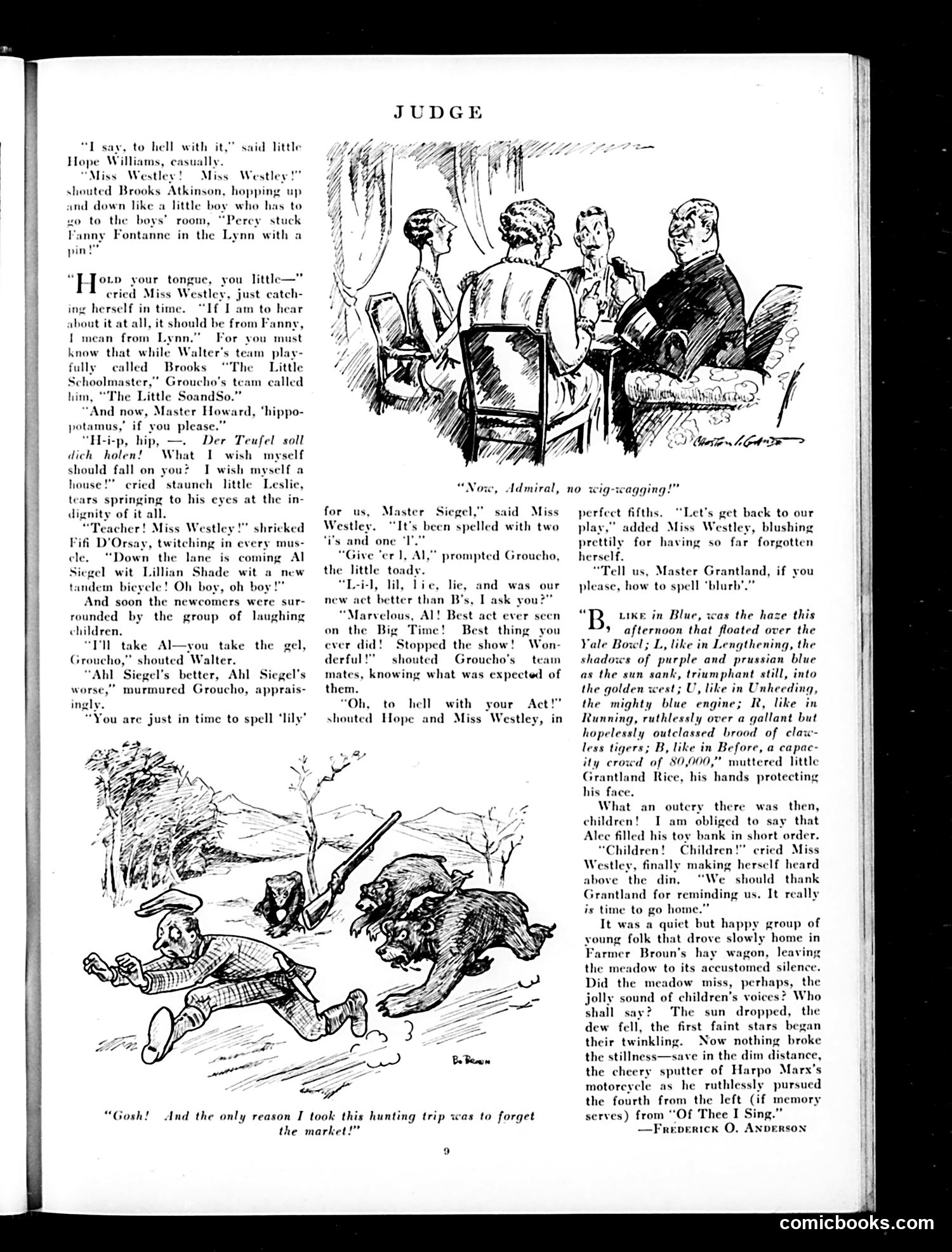
# "Judge" Page Analysis This appears to be a humorous short story about children on an outing, rather than political satire. The narrative involves young people spelling words competitively—a parlor game—with adult judges including figures identified as "Brooks," "Groucho," "Walter," and others. The satire targets **theatrical people and their pretensions**: The story mocks Broadway personalities (the references to "Fanny Fontanne" and performance teams suggest theatrical circles) who take themselves seriously while children play innocent word games around them. The bottom illustration's caption—"the only reason I took this hunting trip was to forget the market!"—satirizes the financial preoccupations of the era, likely referencing stock market anxieties. The closing reference to "Harpo Marx" (the silent comedian) pursuing "the fourth from the left" is self-aware comedic randomness typical of Judge's absurdist humor. Overall: lighthearted satire of theatrical vanity and urban financial worry, not political commentary.
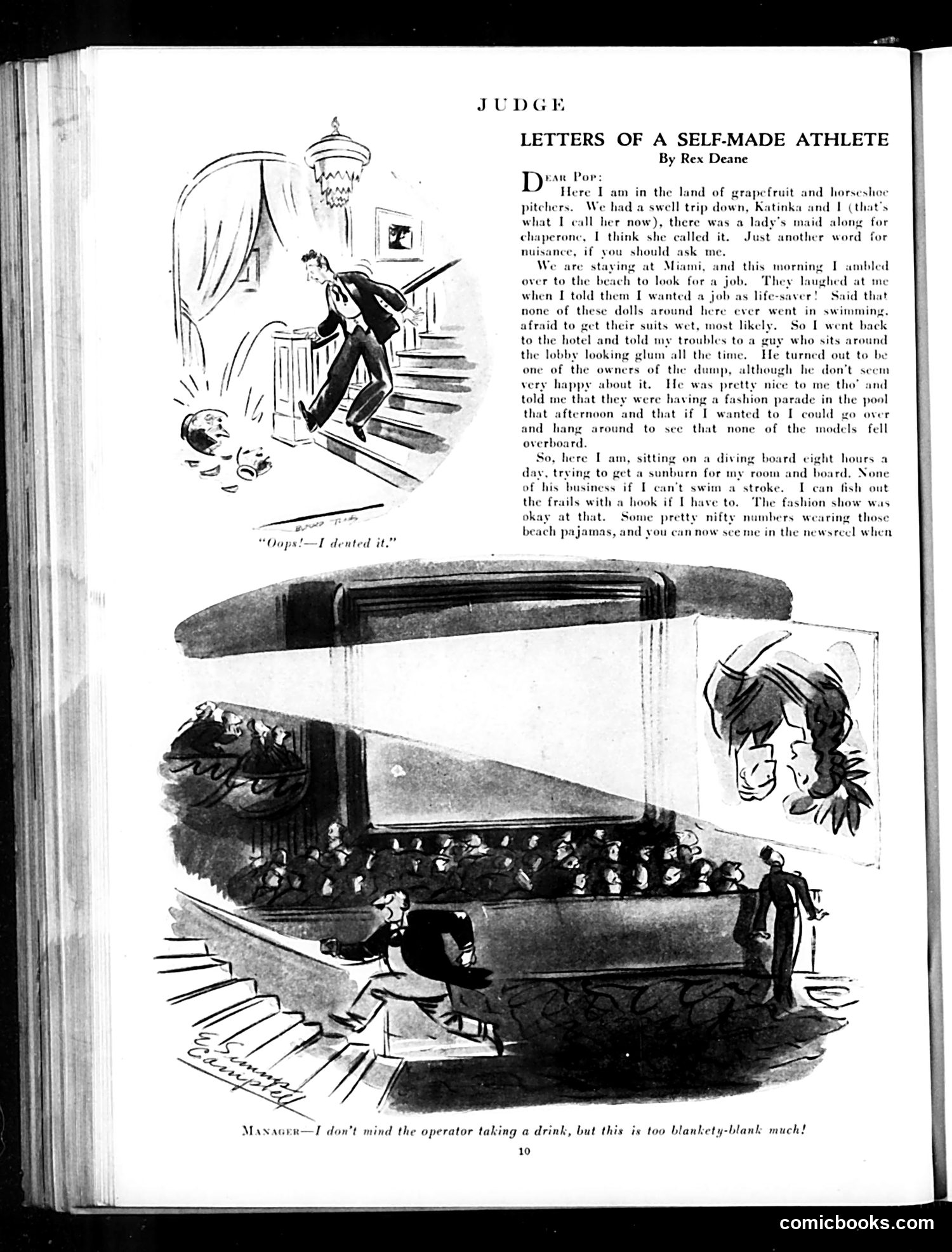
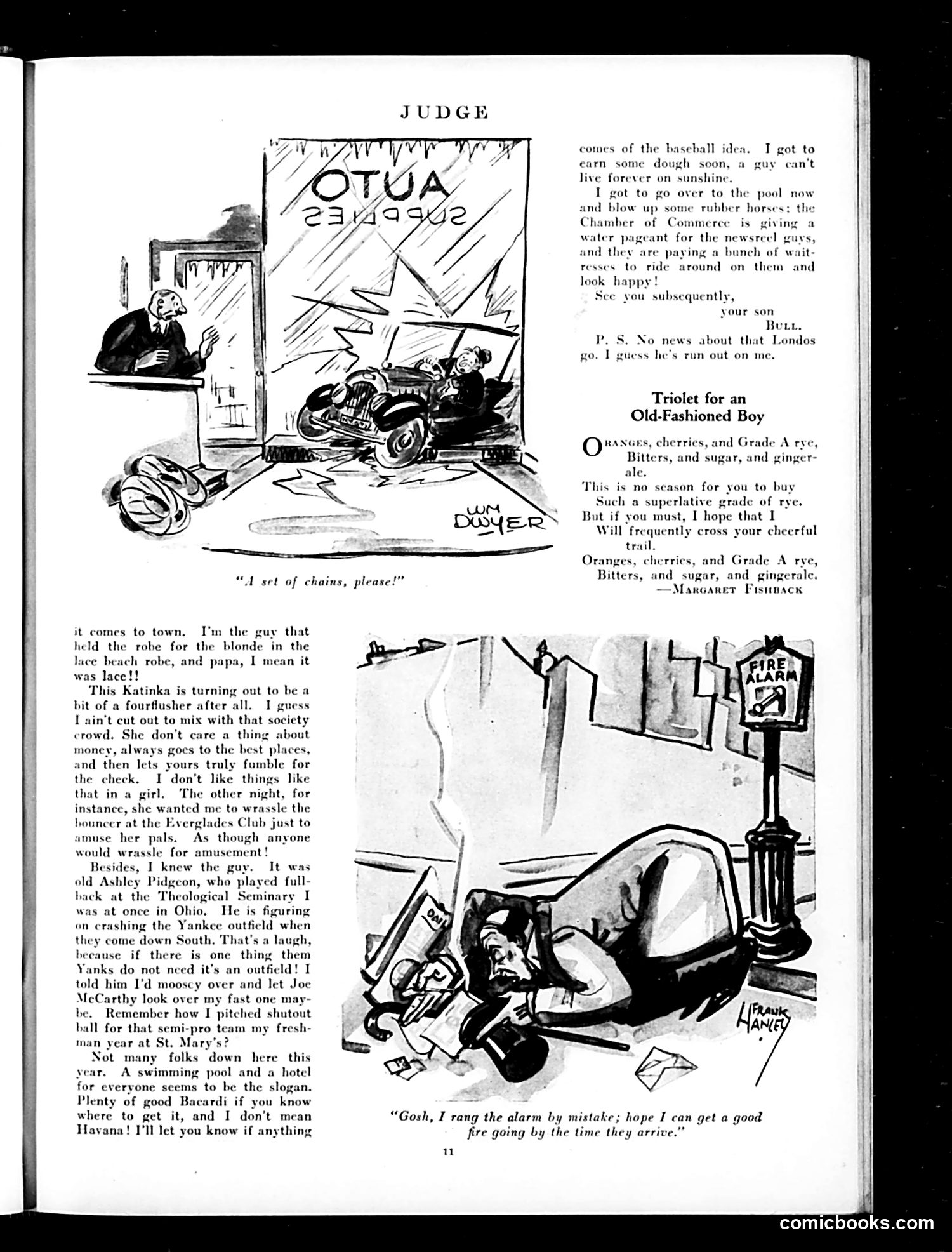
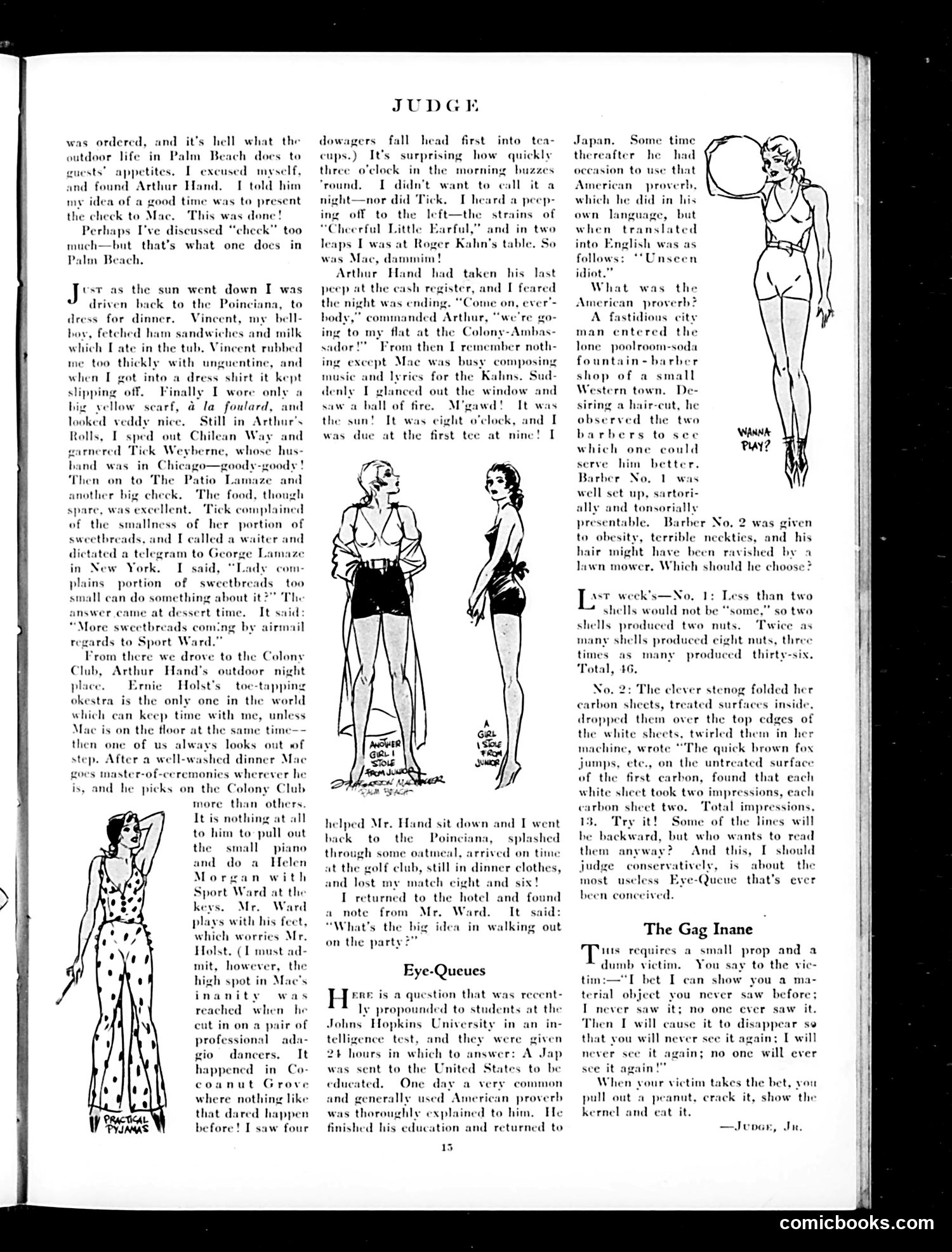
# Analysis for Modern Readers This is a humorous letter from a self-made athlete boasting about his Florida vacation. The narrator is a comically incompetent, self-deluded man who: - Falsely claims athletic prowess while unable to swim - Treats women dismissively ("dolls," bringing a chaperone he calls "Katinka") - Gets a hotel job as a diving board lifeguard despite having no qualifications - Attends a fashion show featuring "beach pajamas" (1920s swimwear) - Desperately seeks newsreel exposure to boost his fake reputation **The satire targets:** Nouveau riche pretenders, male vanity, and the 1920s obsession with celebrity and publicity. The humor depends on the reader recognizing this character as a transparent fraud—someone fabricating credentials and accomplishments while remaining oblivious to his own inadequacy. The two cartoon illustrations depict his mishaps and pomposity, reinforcing the text's mockery of this self-aggrandizing con artist.