A complete issue · 36 pages · 1931
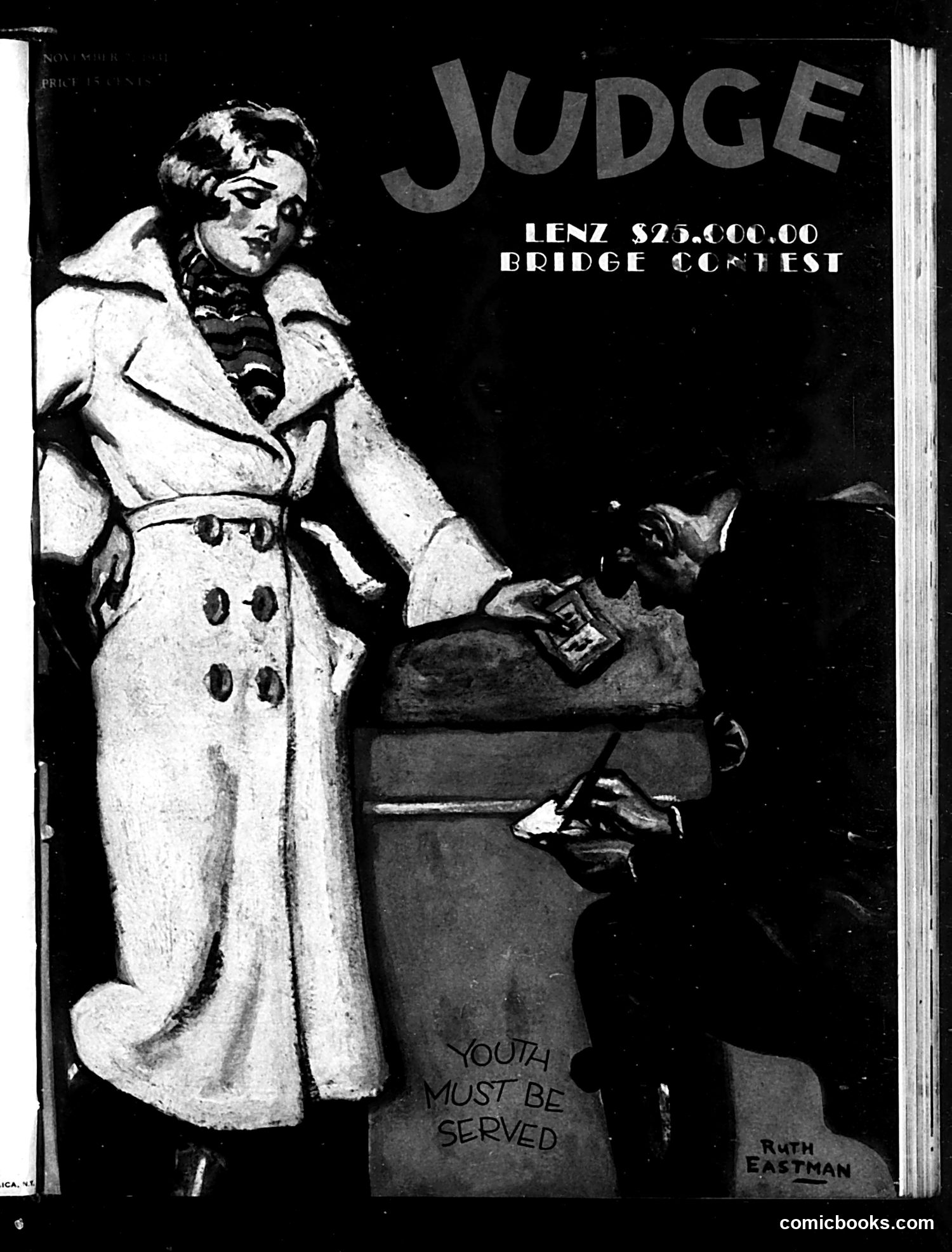
Judge — November 7, 1931
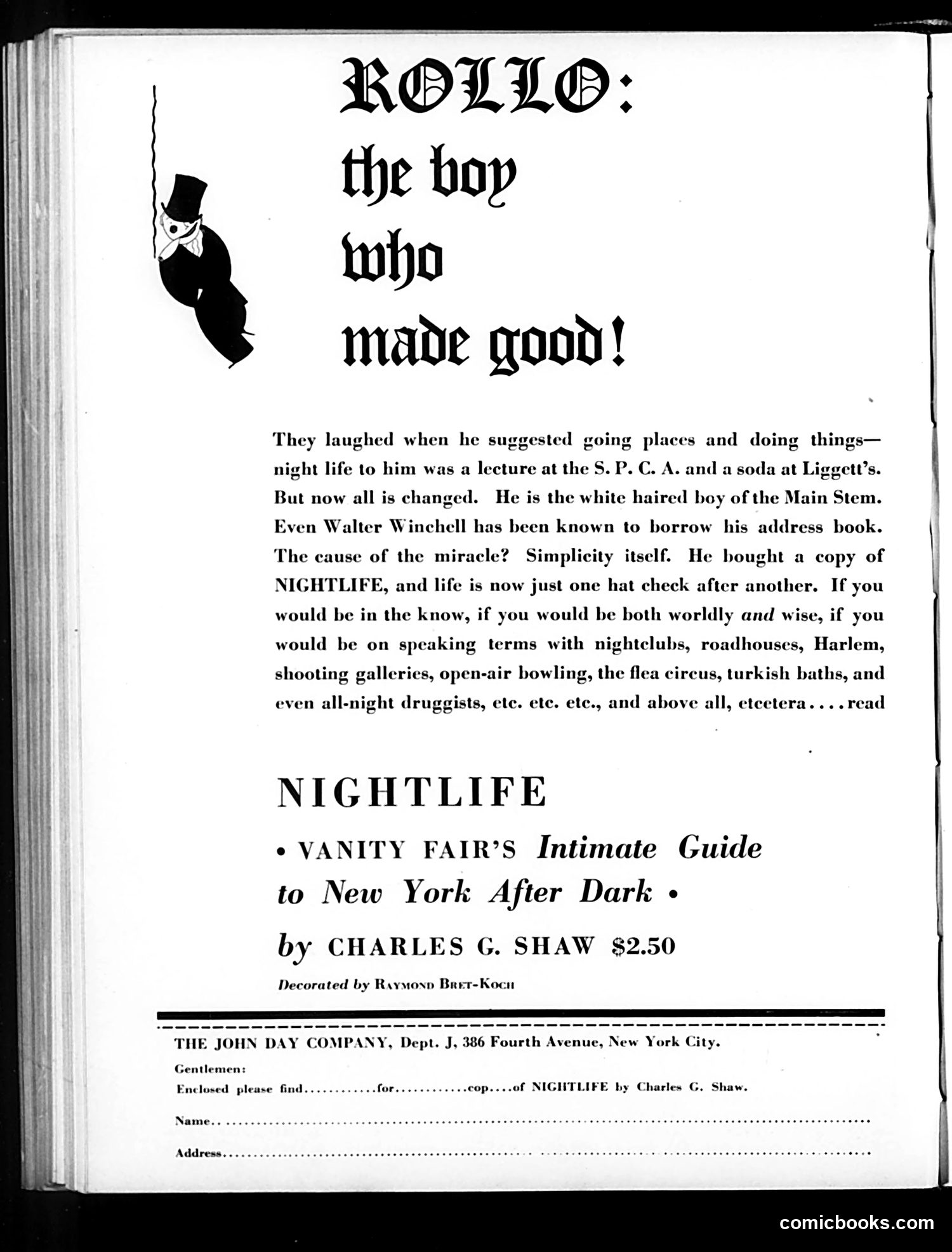
# Analysis This page is primarily **an advertisement for a book**, not a political cartoon. The small illustration shows a stylized figure in formal attire hanging from a rope—a visual metaphor suggesting the book's subject matter. The ad promotes *Nightlife: Vanity Fair's Intimate Guide to New York After Dark* by Charles G. Shaw (illustrated by Raymond Bert-Koch), priced at $2.50. The satirical text mocks a naive young man ("the boy who made good") who was once considered dull, boring only with YMCA lectures and sodas. After reading this book about nightclubs, roadhouses, Harlem venues, and other establishments, he's transformed into someone socially sophisticated and worldly. The humor lies in suggesting that simply reading about nightlife—rather than actual experience—can create an appearance of cosmopolitan knowledge.
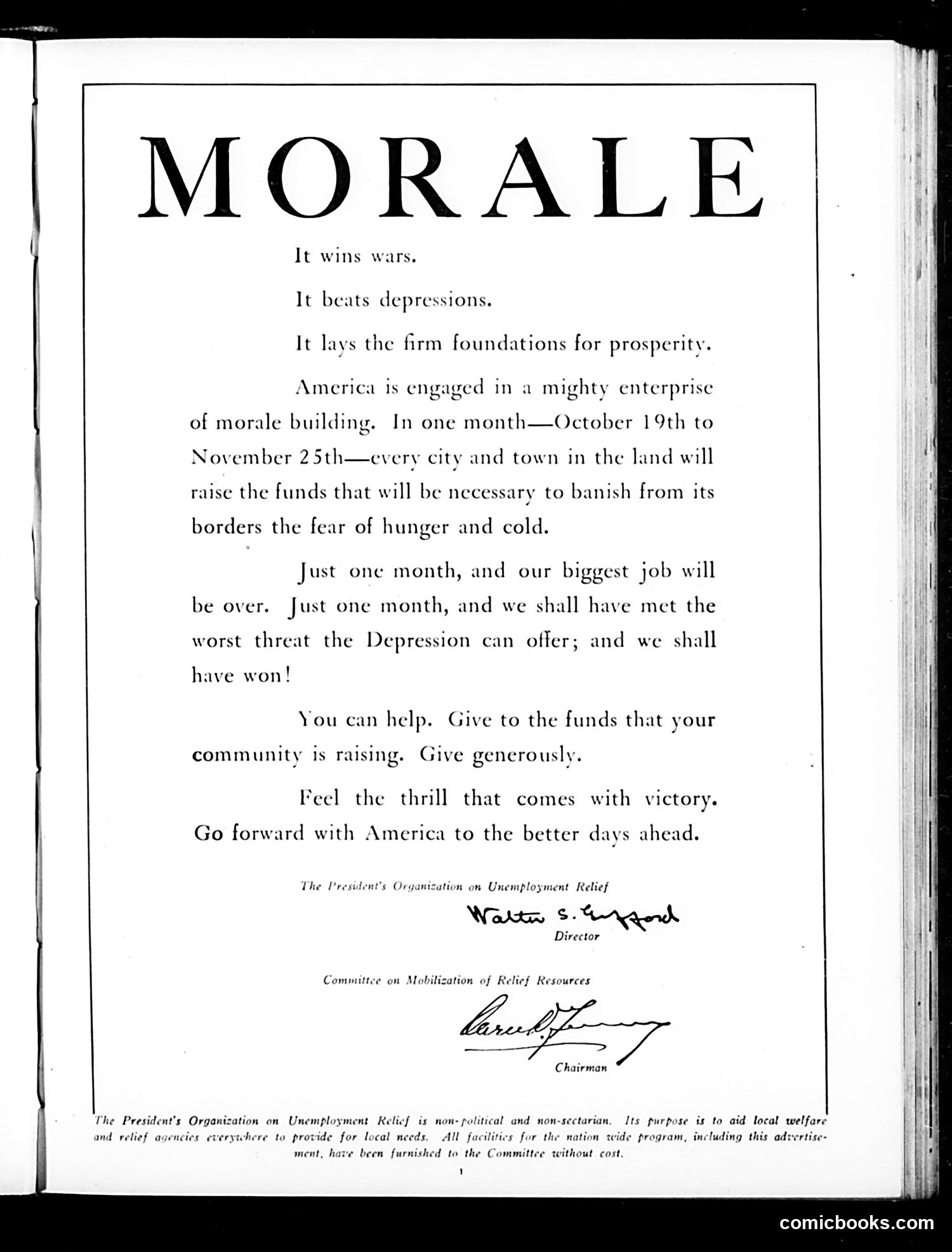
# Analysis This is **not a satirical cartoon**, but rather a **genuine public service advertisement** from Judge magazine. The page promotes "MORALE" as essential to American victory and prosperity during what appears to be the Great Depression era. The ad urges citizens to donate to community relief funds during a specific campaign period (October 19th to November 25th). It's signed by officials from the President's Organization on Unemployment Relief, presenting this as a patriotic duty. The text emphasizes moral strength as a weapon against economic hardship, appealing to American optimism and collective action. This represents Depression-era rhetoric promoting volunteerism and community fundraising as solutions to widespread poverty and unemployment.
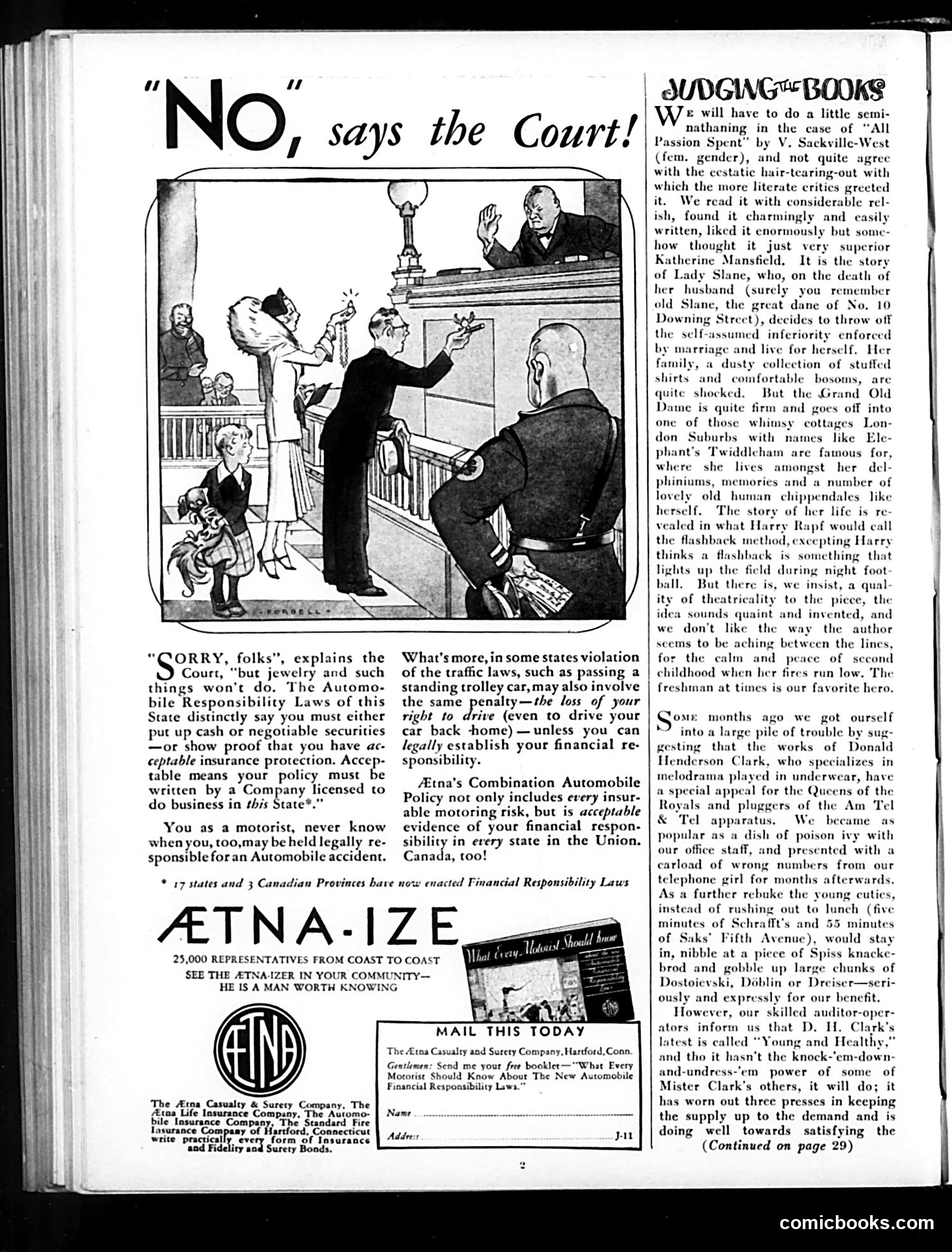
# Analysis of Judge Magazine Page The main cartoon satirizes automobile liability laws. A judge in court declares "NO" to a defendant's argument, explaining that motorists cannot escape financial responsibility for accidents simply by citing traffic law violations. The Aetna insurance advertisement below reinforces this point: drivers must carry liability insurance because they're legally responsible "in every state in the Union." The satire targets motorists who believed traffic laws or technical violations could absolve them of accident liability. The cartoon's judge character represents judicial authority firmly rejecting such loopholes. The "Judging the Books" column reviews *Passion Spent* by V. Sackville-West—a literary sidebar unrelated to the automotive liability theme. This page reflects 1920s-30s concerns about establishing automobile accident responsibility and insurance standards.
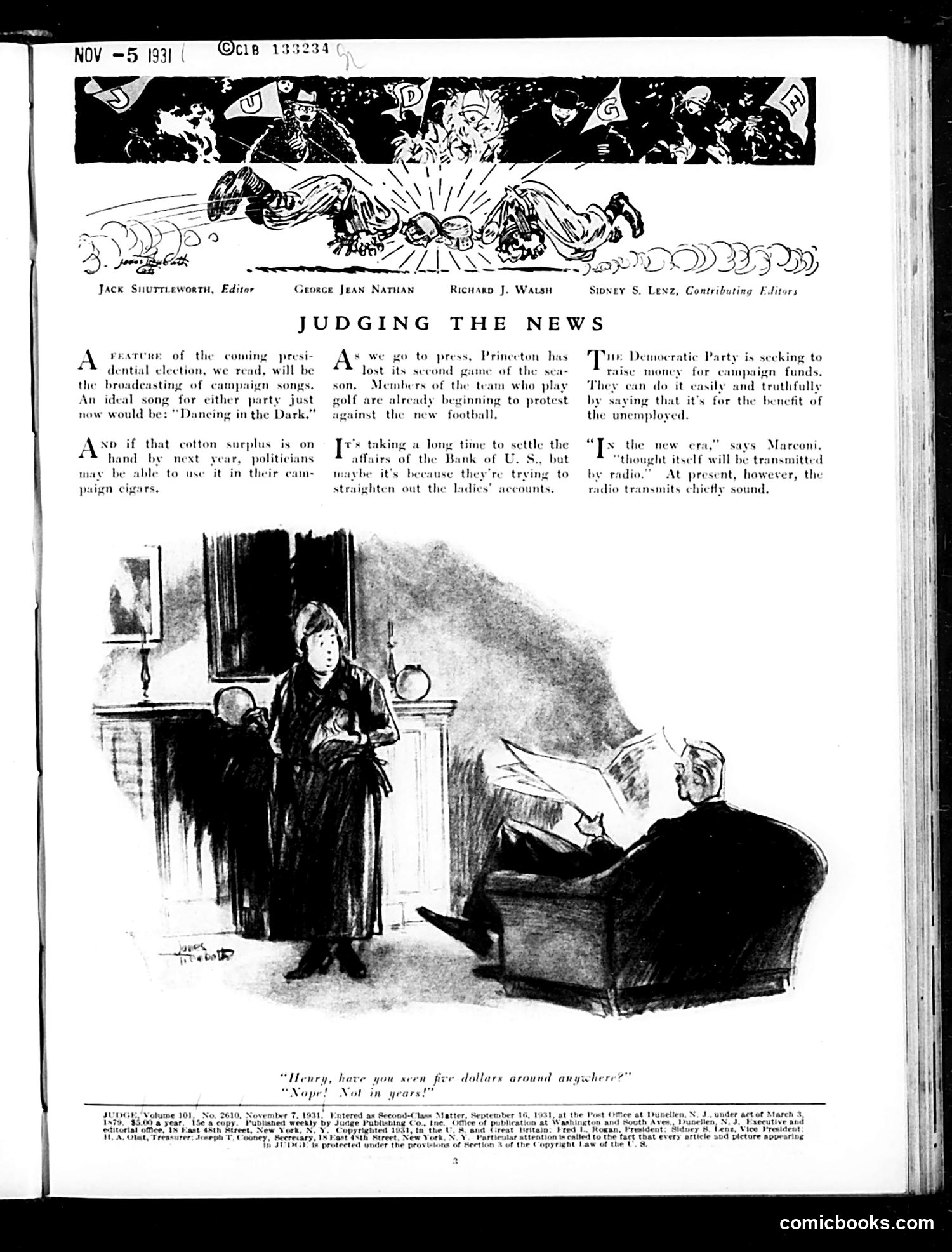
# "Judging the News" - November 5, 1931 The main cartoon depicts a domestic scene where a man reads a newspaper while a woman stands nearby asking, "Henry, have you seen five dollars around anywhere?" He responds, "Nope! Not in years!" This joke reflects the **Great Depression's financial hardship** on ordinary American households. The satire targets economic devastation—by 1931, widespread unemployment and poverty made even finding five dollars seem impossibly difficult. The woman's desperate search and the man's resigned "not in years" response humorously underscores how completely depleted family finances had become. The accompanying "Judging the News" column contains brief political commentary, including references to Princeton's football struggles and Bank of U.S. financial troubles, typical of Judge's satirical news commentary from this period.
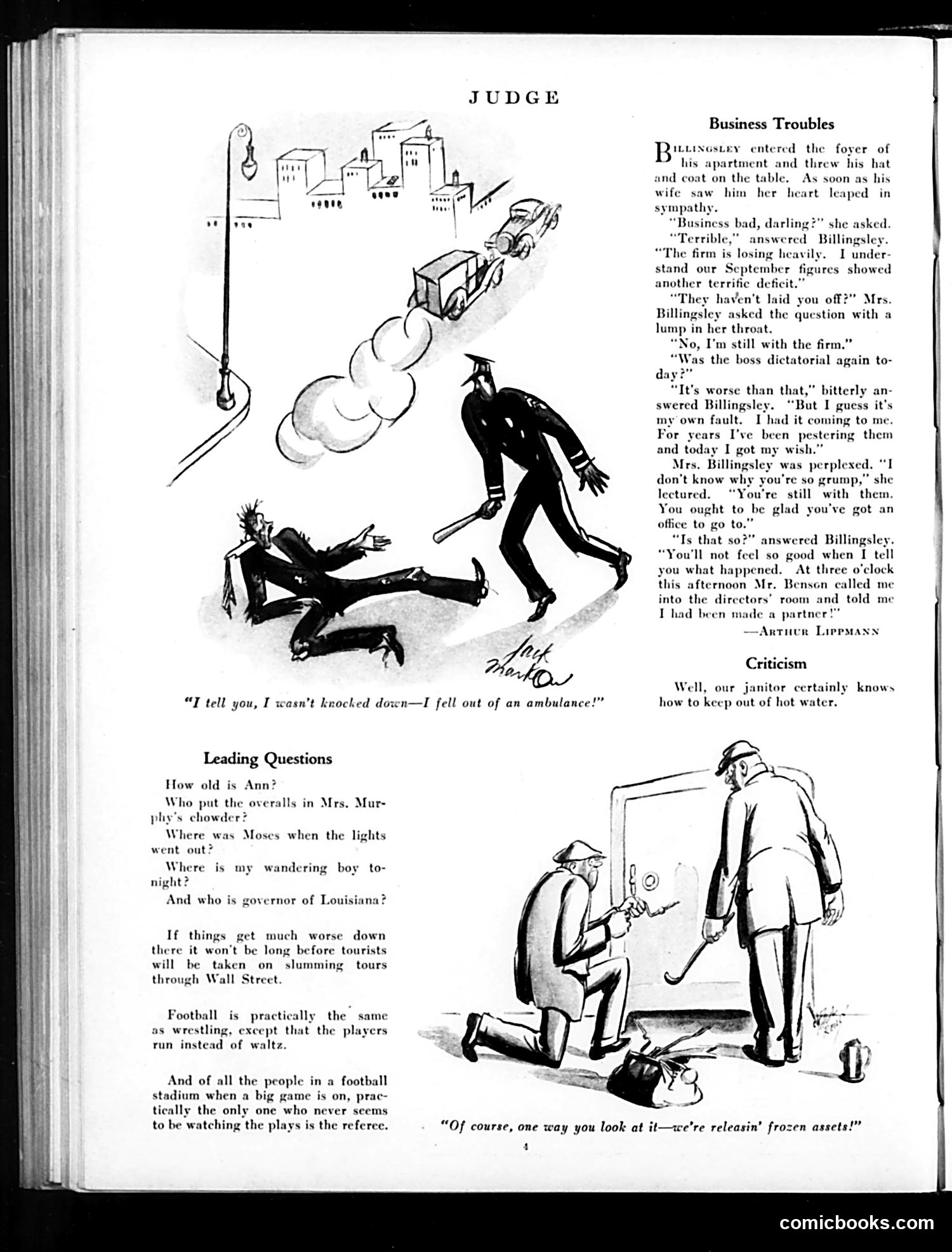
# Page Analysis: Judge Magazine This page contains three distinct satirical pieces: **"Business Troubles"**: A dialogue between Mr. and Mrs. Billingsley about the firm's financial crisis and potential layoffs. The satire targets business anxiety and masculine grumpiness during economic hardship—Billingsley resents his wife's sympathy and later learns he's been made a partner, inverting his self-pity into awkward pride. **"Leading Questions"**: Observational humor about current events (references to "Ann," Moses, Louisiana's governor) and football culture, mocking the referee as the only inattentive observer. **"Criticism"**: A cartoon showing a janitor appearing to assault someone, with the caption about "releasing frozen assets"—likely wordplay on Depression-era financial terminology, treating the janitor's roughness as inadvertent economic commentary. The overall tone reflects early-to-mid 20th-century anxieties about business, masculinity, and social hierarchy.
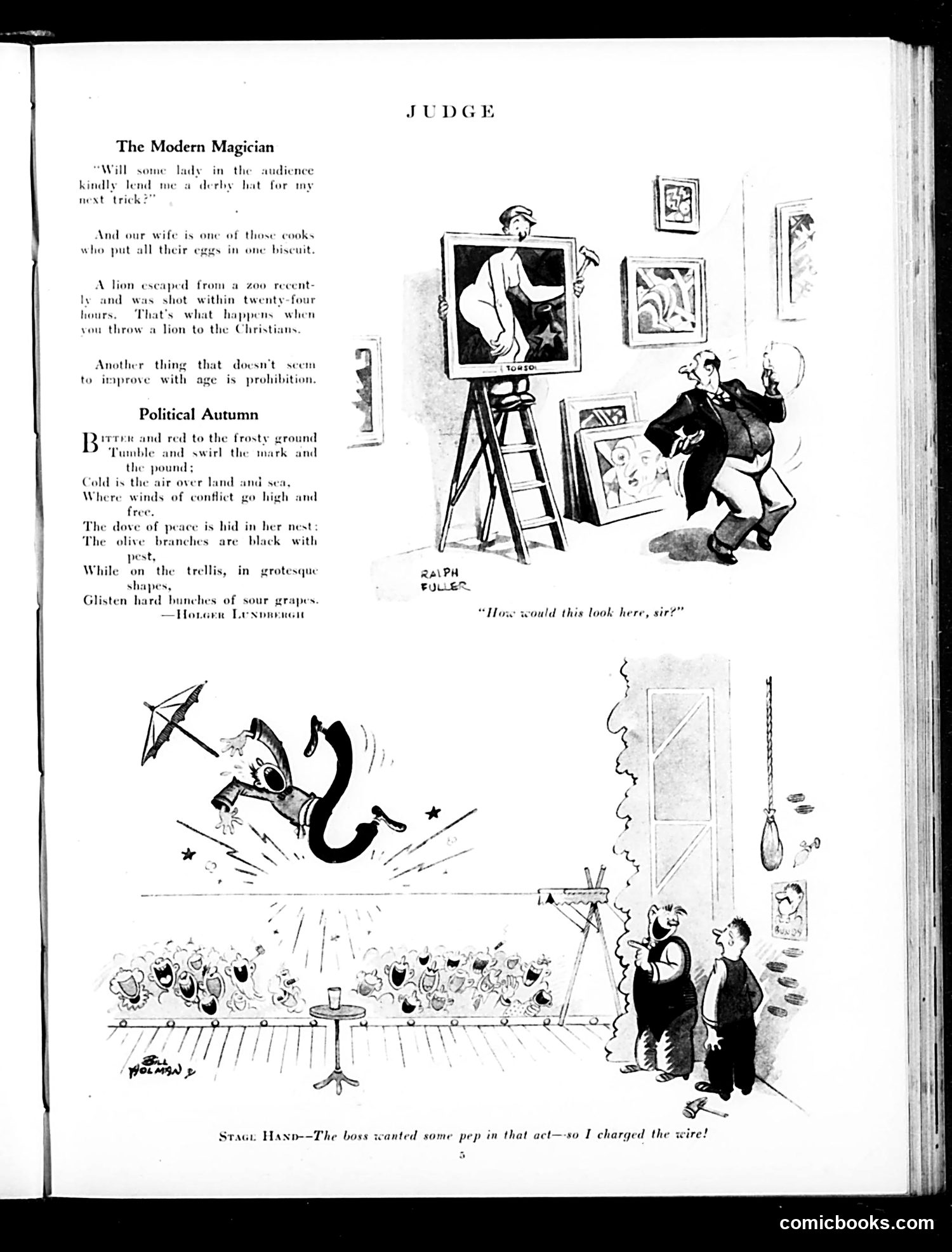
# Analysis of Judge Magazine Page This page contains humorous commentary and cartoons typical of early 20th-century satirical journalism. **"The Modern Magician"** depicts an artist or charlatan performing magic tricks. The jokes mock domestic life ("wife...puts all their eggs in one biscuit") and make a dark religious reference about "throwing a lion to the Christians." **"Political Autumn"** is a poem by Hugh Loughborough using seasonal metaphors—likely commentary on political turbulence, though the specific political context is unclear without dating information. **"Stage Hand"** shows a theatrical manager or producer dealing with audience demands, referencing backstage chaos when "the boss wanted some pep in that act—so I charged the wire!" This suggests electrifying stage effects as entertainment. The cartoons satirize modern entertainment, domestic absurdity, and theatrical performance through visual exaggeration typical of Judge's satirical style.
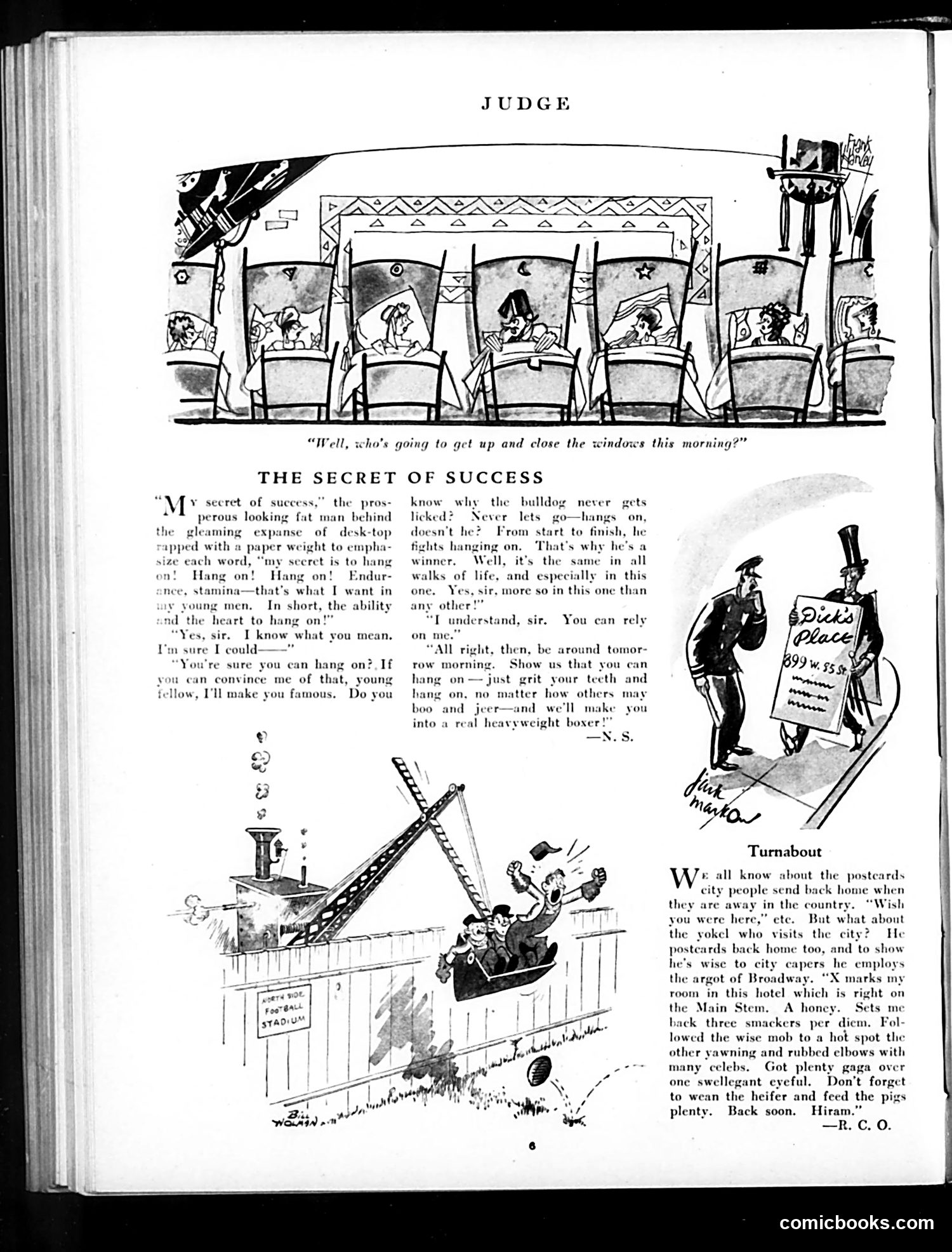
# "Judge" Page Analysis: The Secret of Success **Top Cartoon:** A judge addresses courtroom spectators about closing windows. The caption quotes the judge explaining his "secret of success"—persistence. He uses a bulldog metaphor: the dog succeeds because it never lets go; similarly, one must "hang on" through life's struggles to achieve success. **Bottom Cartoon:** Depicts a amusement park ride malfunction with people being thrown about. The accompanying text, "Turnabout," humorously describes postcards tourists send home, contrasting pleasant wishes with chaotic reality. The joke satirizes the gap between vacation expectations and actual experiences—particularly the yokel's discovery that city attractions aren't always pleasant. Both pieces employ humor to comment on perseverance and expectations.
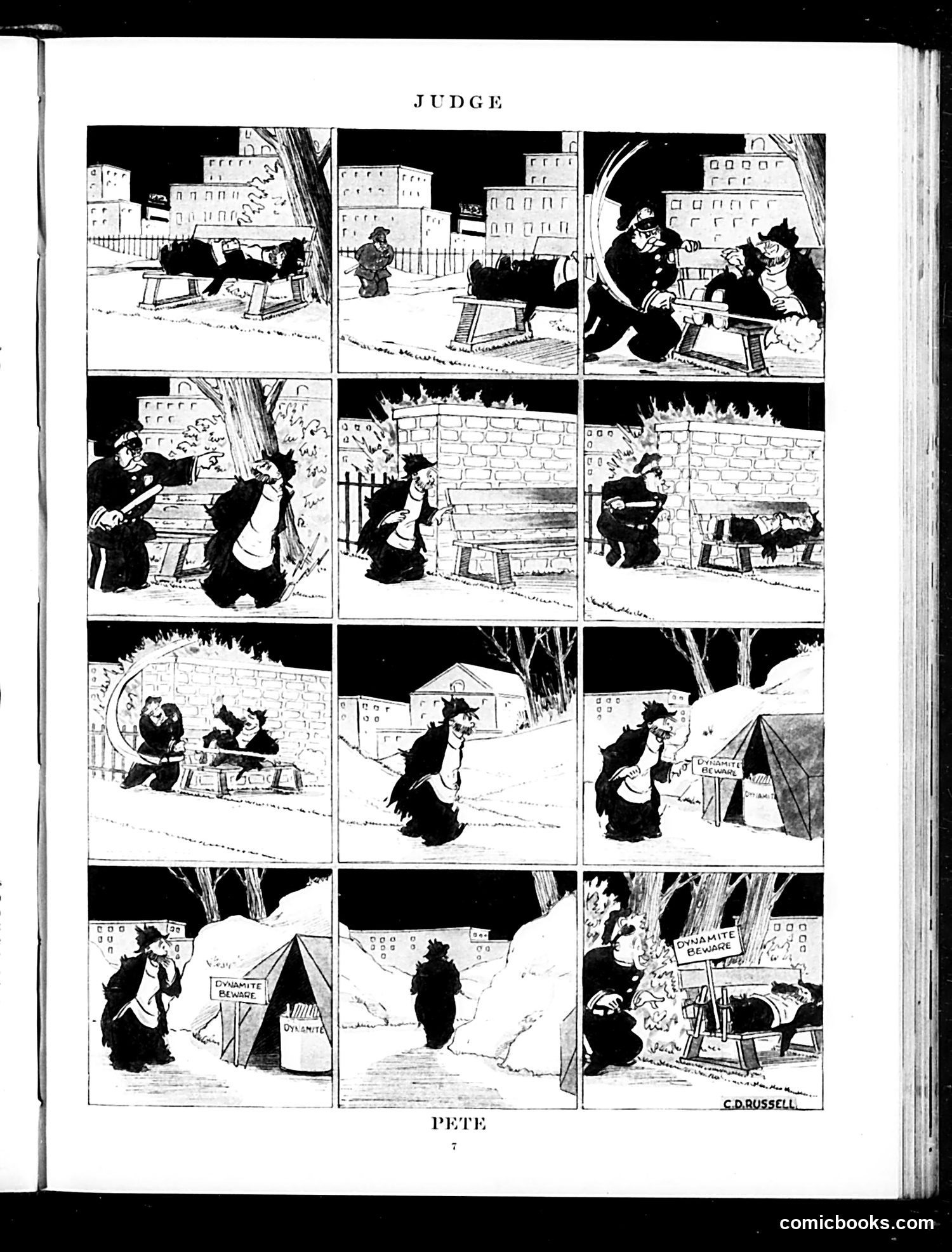
# Analysis of "Judge" Comic Page This page contains a sequential comic strip titled "Judge" (credited to C.D. Russell) depicting what appears to be a homeless or displaced person in winter conditions. The narrative follows a figure moving through snowy urban scenes, including encounters near buildings and eventually setting up a makeshift tent or shelter. The satirical point likely critiques poverty and homelessness in urban America, using the character as social commentary. The final panels show the figure establishing temporary shelter, suggesting themes about economic hardship and survival. Without additional historical context or clearer facial details, specific political figures remain unclear, but the strip appears to comment on class inequality and urban conditions typical of early-to-mid 20th century American satirical cartooning.
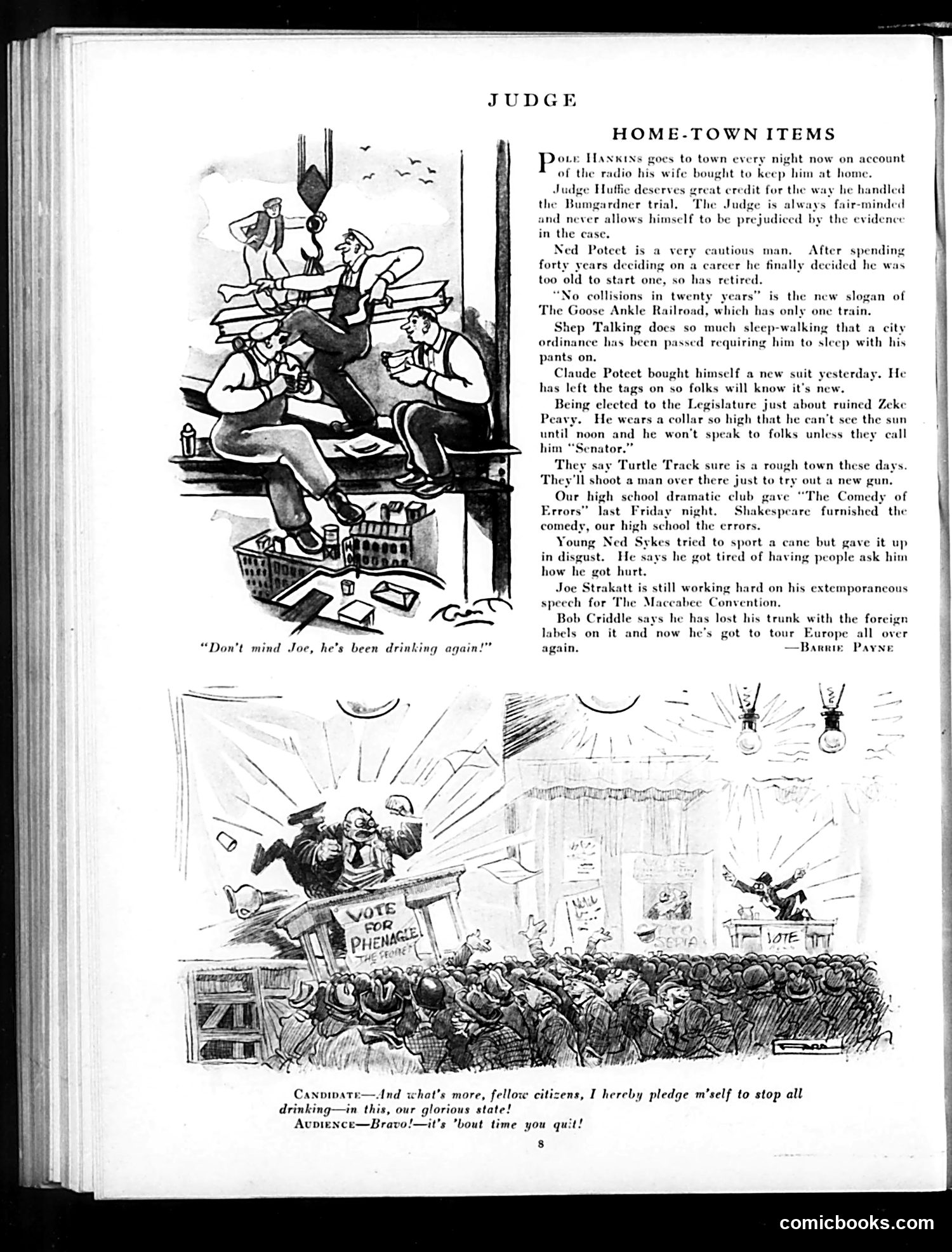
# Explanation for Modern Readers This page from *Judge* magazine contains two types of satirical content: **Top Section: "Home-Town Items"** — A series of humorous small-town gossip pieces mocking local characters. Examples include a judge who's biased despite claims of fairness; a cautious man who spent forty years deciding on a career before retiring; and a politician (Zeke Peavy) elected to the Legislature who now wears an absurdly high collar and demands to be called "Senator," becoming insufferable. These are gentle, provincial jokes about small-town pretension and human folly. **Bottom Cartoon** — Shows a political candidate on a platform pledging to "stop all drinking—in this, our glorious state!" while the audience sarcastically shouts "Bravo!—it's 'bout time you quit!" This is clearly Prohibition-era satire (likely 1920s-early 1930s), mocking politicians who made grand temperance pledges while audiences knew such promises were hollow and unenforceable. The joke: the candidate's obvious hypocrisy and the public's cynical recognition of it.
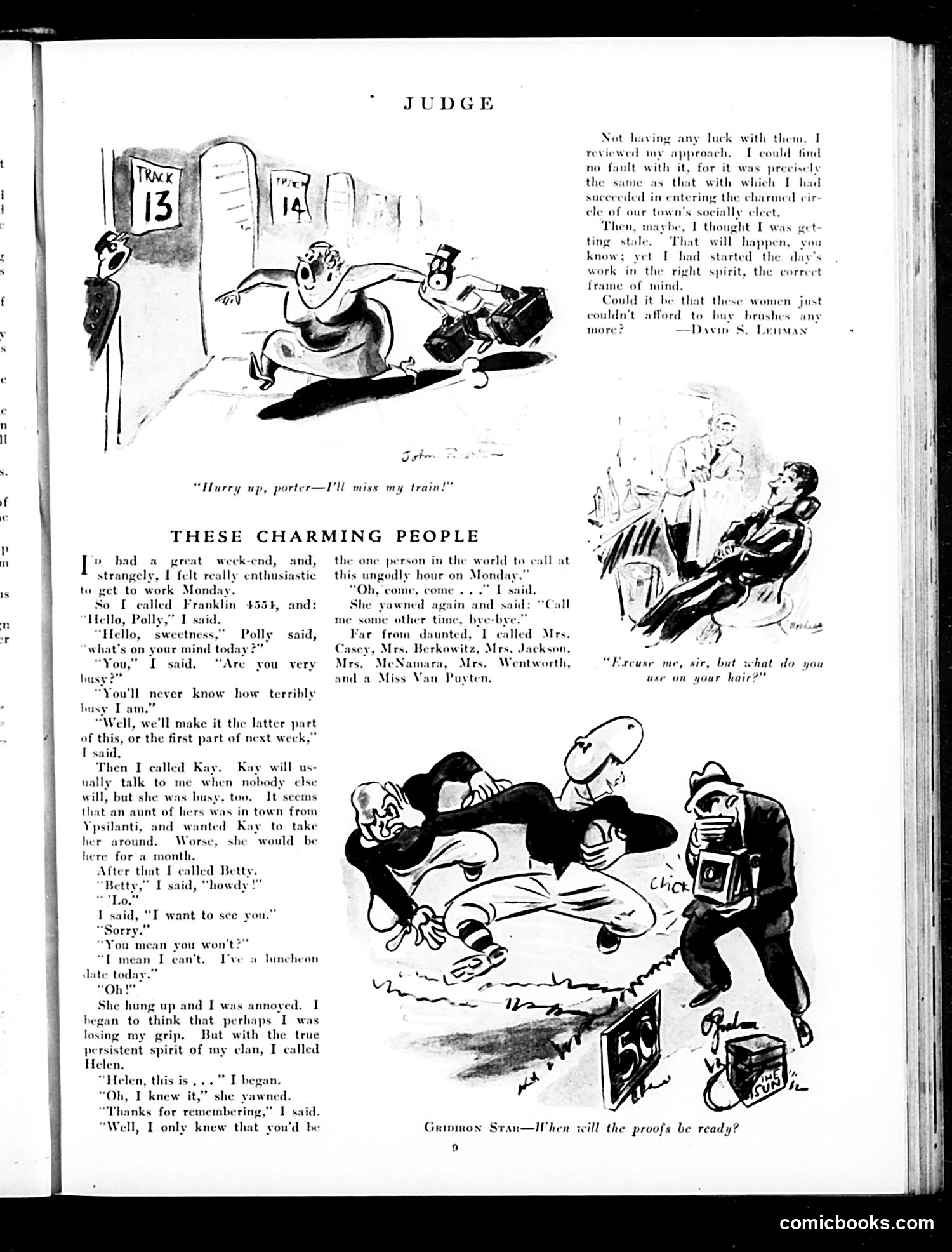
# Analysis of Judge Magazine Page This page contains two separate satirical pieces typical of Judge's humor. **"These Charming People"** (main story) mocks the social frustrations of a persistent salesman or social climber repeatedly calling women for appointments on a Monday morning. Each woman deflects with excuses—busy with relatives, lunch plans, yawning indifference—suggesting either genuine disinterest or the social pretense of unavailability among the leisured class. The satire targets both the pushy caller's lack of social awareness and the affectations of women feigning busyness to maintain elite status. **Top cartoon**: A harried porter carries luggage while a passenger rushes, captioned "Hurry up, porter—I'll miss my train!" Simple visual humor about travel chaos. **Bottom cartoon** ("Common Stare"): Appears to satirize commercial or artistic proof-checking delays, with figures examining photographs or proofs and asking when they'll be ready—likely mocking slow production or client impatience in publishing/advertising work. The overall tone is gently mocking of middle-class social pretense and workplace frustrations.
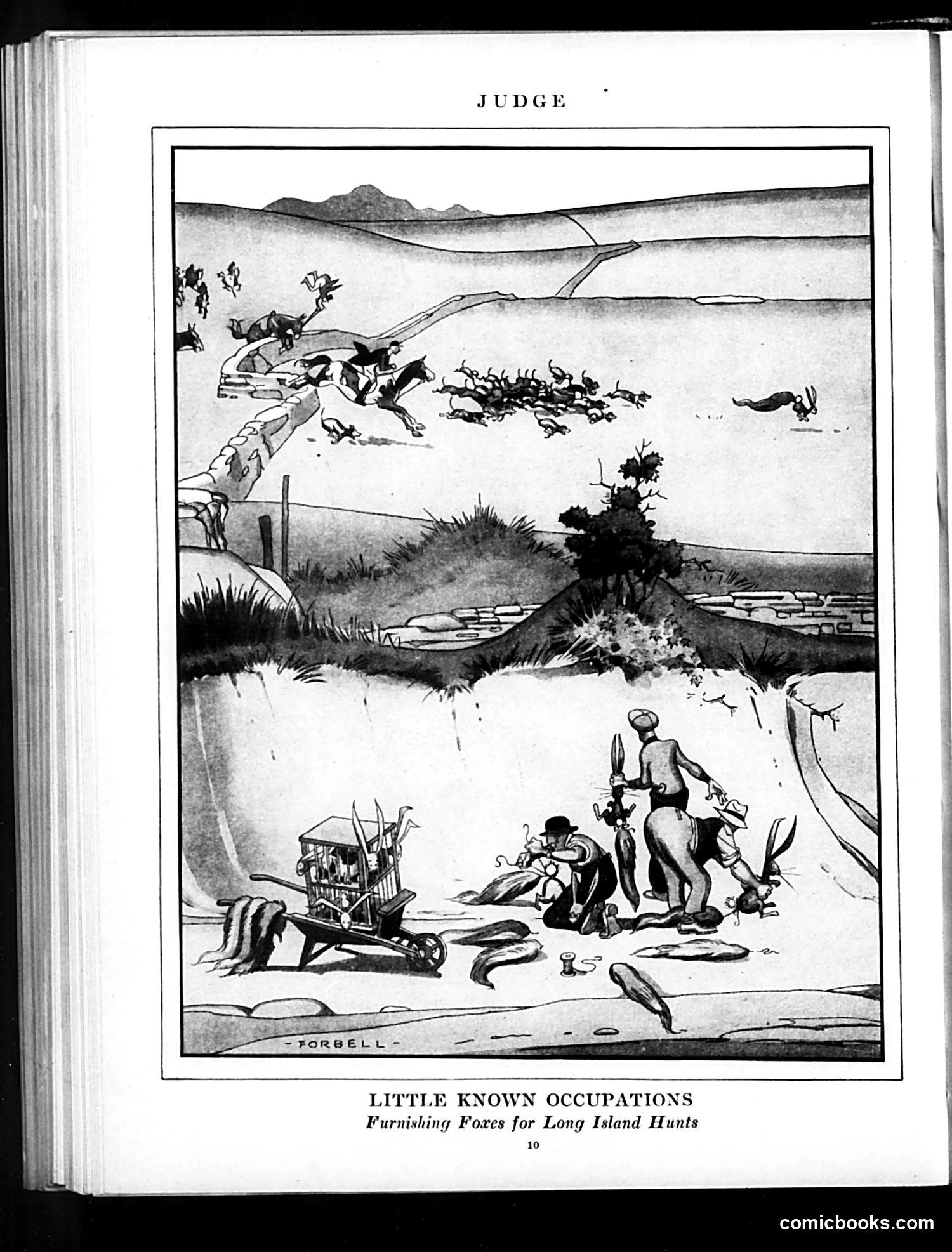
# "Furnishing Foxes for Long Island Hunts" This cartoon satirizes the wealthy leisure practices of Long Island's elite during the early 20th century. The image depicts a humorous "occupation" where foxes are apparently bred or captured to supply fox hunts—a fashionable sport among the affluent. The cartoon shows workers in a rural setting managing foxes (visible in cages and loose), suggesting this was an actual commercial enterprise catering to wealthy hunters. The satire targets the artificiality of these "hunts"—rather than genuine hunting, the wealthy were purchasing pre-arranged sporting events with supplied foxes. The title's tone ("Little Known Occupations") treats this dubious livelihood as a legitimate trade, mocking both the occupational pretension and the leisure-class culture that created demand for such services. This reflects Judge magazine's satirical critique of Gilded Age excess and upper-class absurdities.