A complete issue · 36 pages · 1931
Judge — August 22, 1931
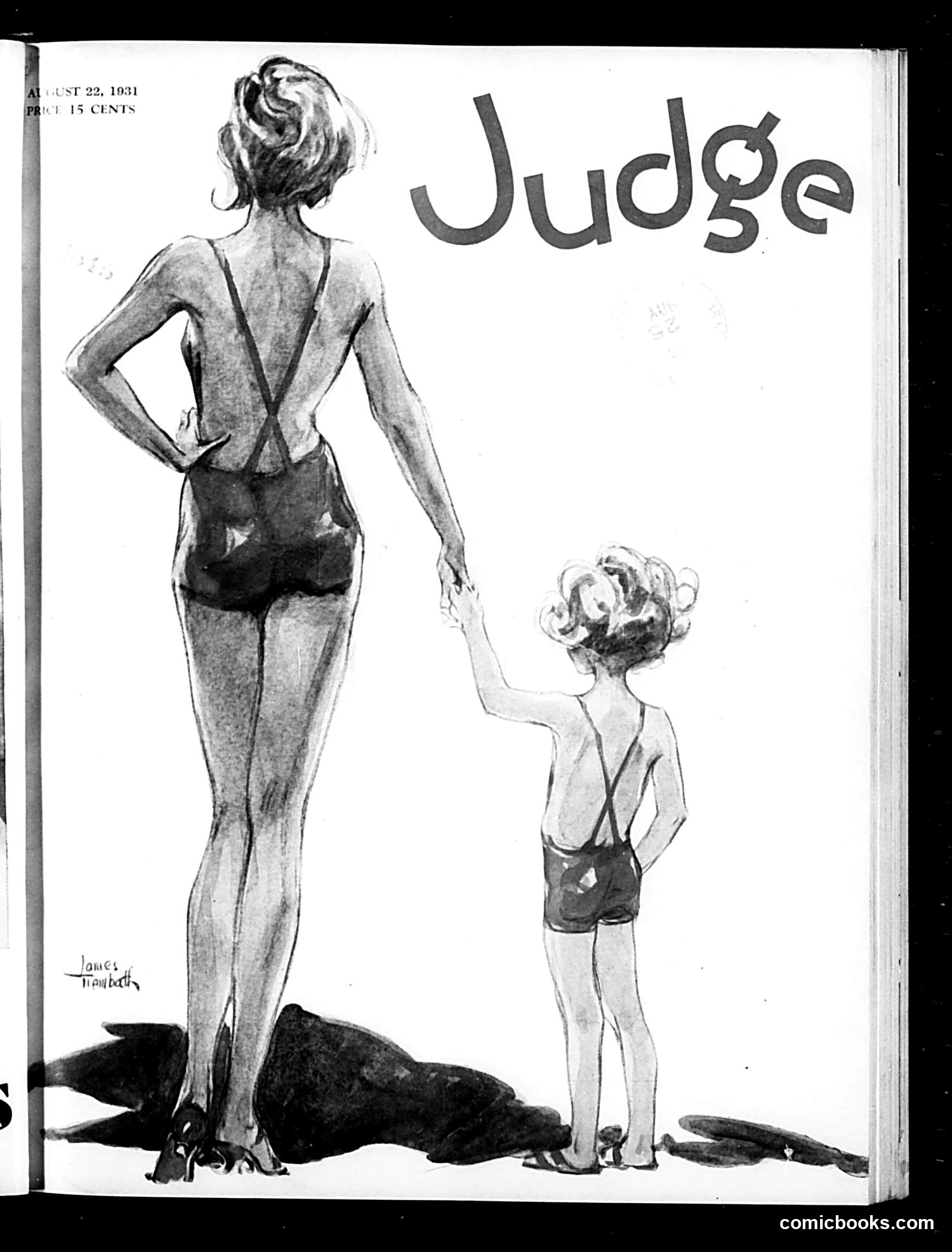
# Judge Magazine Cover Analysis (August 22, 1931) This cover depicts an adult woman and child in swimwear, holding hands on a beach. The title "Judge" appears prominently. The illustration is signed by James Montgomery Flagg, a renowned commercial illustrator. Without accompanying text or captions visible on this page, the specific satirical message is unclear. However, given the 1931 date during the Great Depression, this likely comments on contemporary social themes—possibly contrasting wealth/leisure, parenting styles, or beach culture of the era. The page appears to be primarily a cover illustration rather than containing multiple cartoons or substantial text-based satire typical of Judge's interior pages. Additional context from the magazine's accompanying articles would be needed to determine the precise satirical intent.
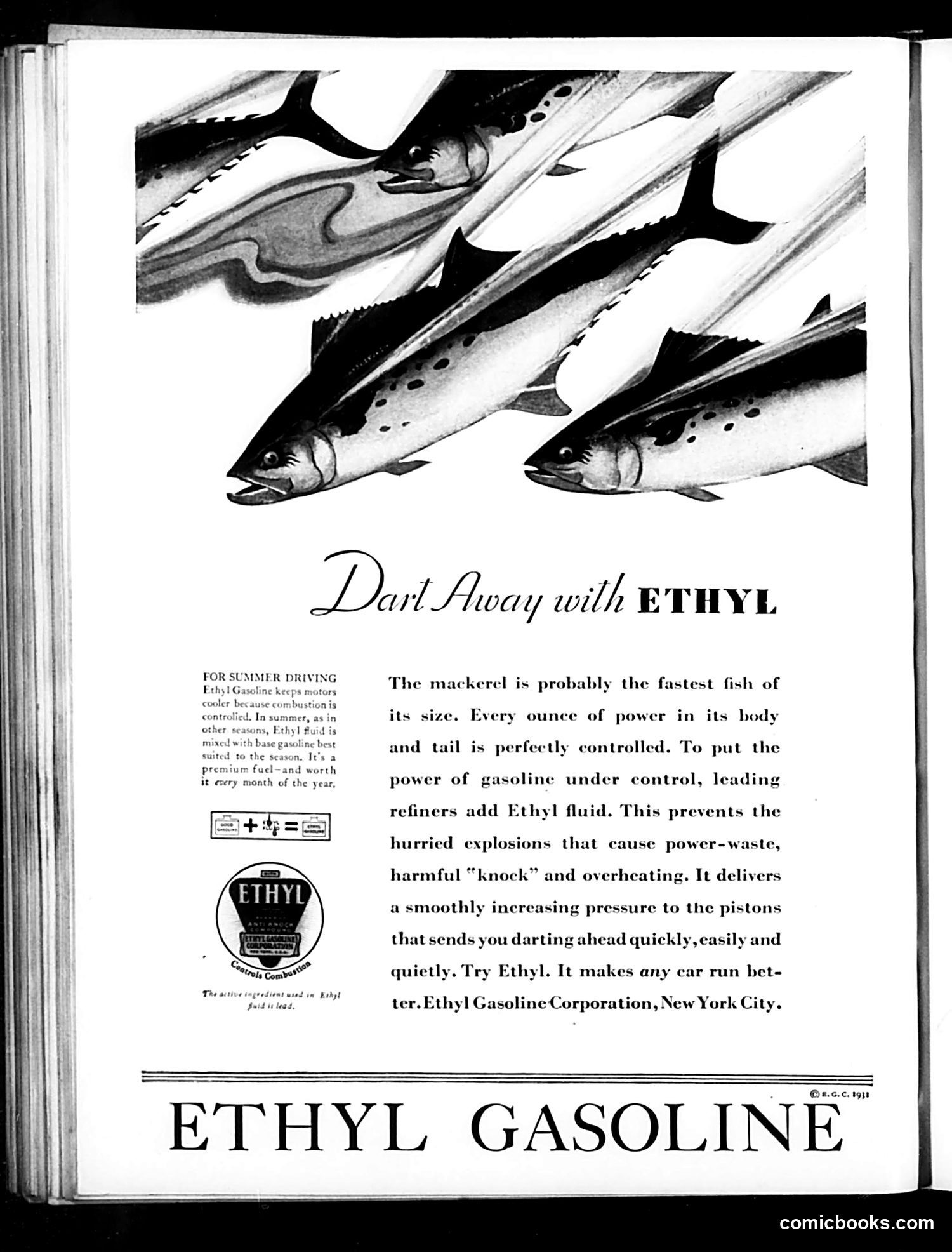
# Analysis This page is **primarily an advertisement**, not a political cartoon. It advertises Ethyl Gasoline, a fuel additive product from the Ethyl Gasoline Corporation in New York City. The "Dart Away with ETHYL" headline uses a mackerel illustration as a metaphor for speed and control—comparing the fish's perfect body control and power to how Ethyl fluid controls gasoline combustion in engines. The ad claims Ethyl prevents engine "knock" and overheating while delivering smooth, quick acceleration. This represents **1920s consumer advertising**, where companies used vivid imagery and scientific-sounding claims to market automotive products during the early automobile era. The page contains no political satire or social commentary—it's straightforward product promotion in a magazine context.
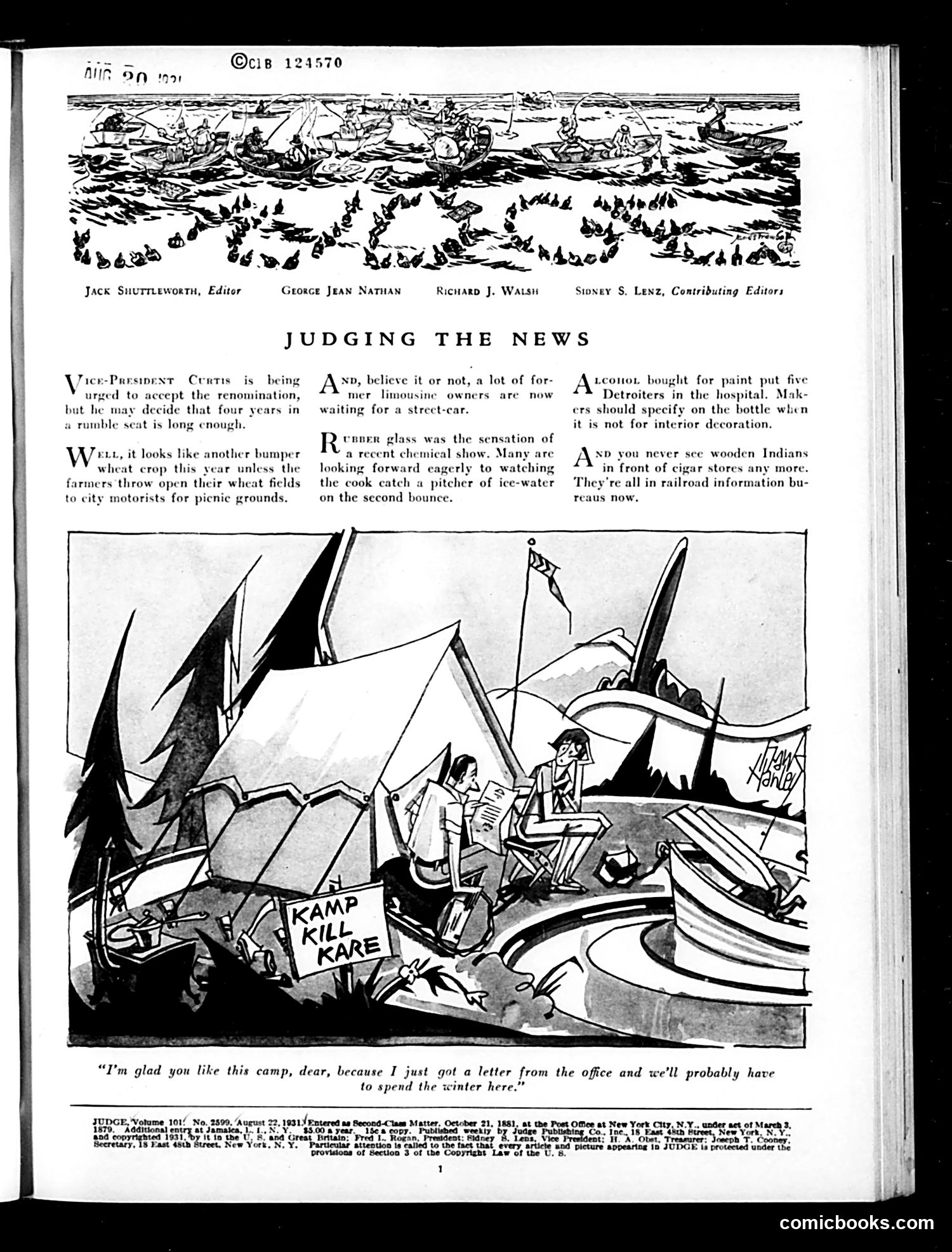
# Analysis of Judge Magazine Page The main cartoon depicts a military camp scene labeled "KAMP KILL KARE," showing soldiers in a recreational setting with tents and flags. A woman tells a man: "I'm glad you like this camp, dear, because I just got a letter from the office and we'll probably have to spend the winter here." The satire likely targets **military camp conditions or logistics during wartime** (possibly WWI era, given the magazine's date). The joke suggests that what appears to be a pleasant temporary camping situation will become a permanent, uncomfortable winter encampment—mocking either military inefficiency or soldiers' misplaced optimism about deployment duration. The "KAMP KILL KARE" pun plays on both military terminology and the ironic contrast between leisurely camping and harsh winter conditions ahead.
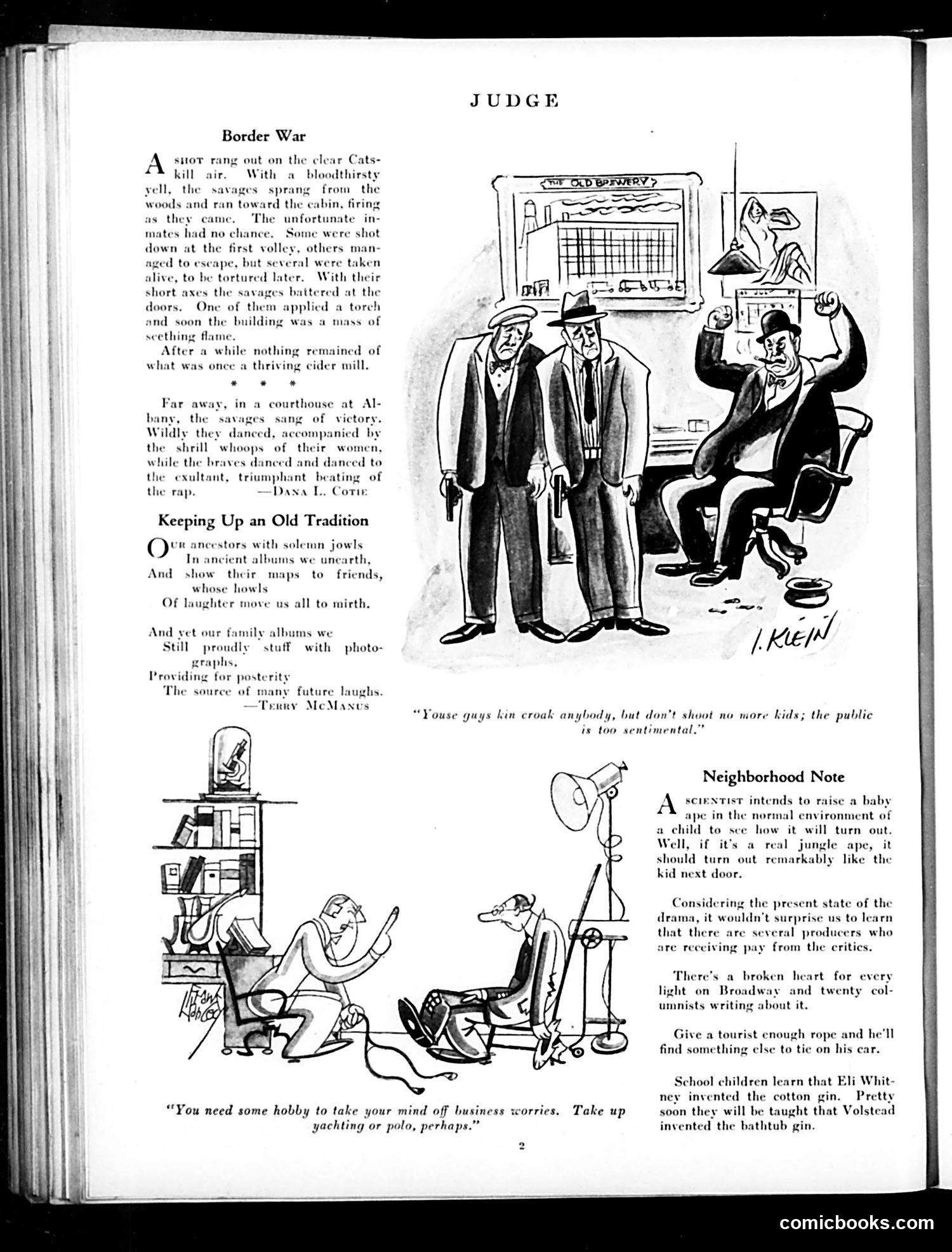
# Analysis of Judge Magazine Page This page contains three distinct pieces: **"Border War"** — A prose poem about frontier violence, likely referencing Prohibition-era bootlegging conflicts or border skirmishes. **"Keeping Up an Old Tradition"** — Humorous verse by Tunny McManus about family photo albums, with no obvious political content. **Top cartoon** (by I. Klein) — Three men in coats view sketches on a wall. The caption satirizes censorship: "Your guys kin croak anybody, but don't shoot no more kids; the public is too sentimental." This appears to critique film industry self-censorship regarding violence, particularly violence against children. **Bottom cartoon** — A man on exercise equipment, captioned about taking up hobbies like "yachting or polo" to escape business worries. This satirizes wealthy individuals' leisure pursuits. **"Neighborhood Note"** — Gossip items mocking pretentiousness, including jabs at aspiring scientists and tourists. The page dates to the Prohibition/early-talkie era, roughly 1920s-1930s.
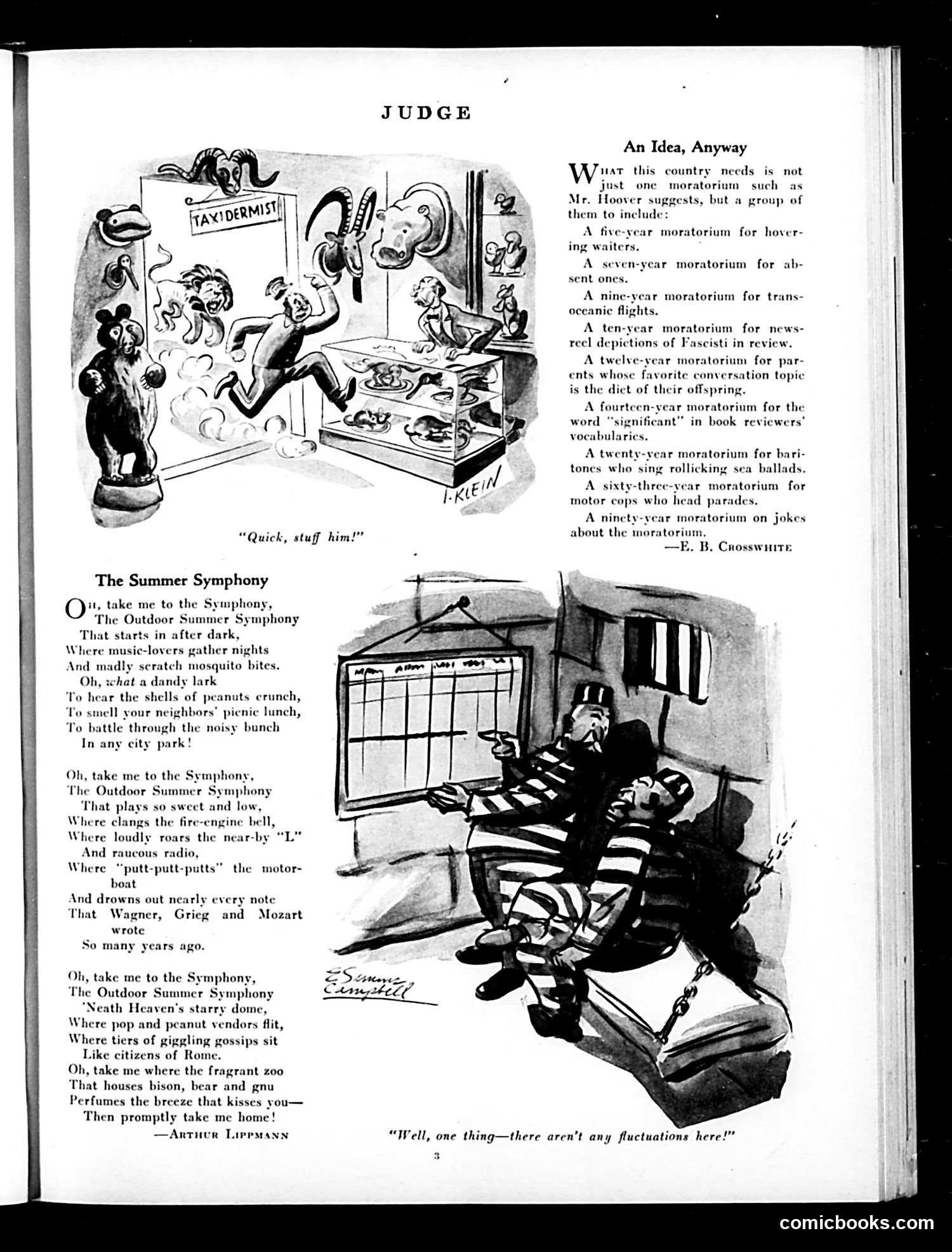
# Analysis of Judge Page **Top Cartoon ("Quick, stuff him!")**: This appears to be political satire about taxidermy or preservation. A figure labeled "TAXIDERMIST" is stuffing what looks like an animal or creature, while chaos erupts around a display case. The joke likely critiques someone or something being artificially "preserved" or kept alive artificially—possibly referencing a political figure or outdated ideology being propped up rather than allowed to naturally decline. **"The Summer Symphony"**: This is lighthearted social satire about attending outdoor symphonies in city parks. Arthur Lipmann's poem humorously describes the disruptions: mosquito bites, peanut shells, noisy crowds, sirens, and zoo odors overwhelming the classical music experience. The accompanying cartoon shows two people trying to enjoy music while surrounded by urban noise and chaos, making the poem's point visually.
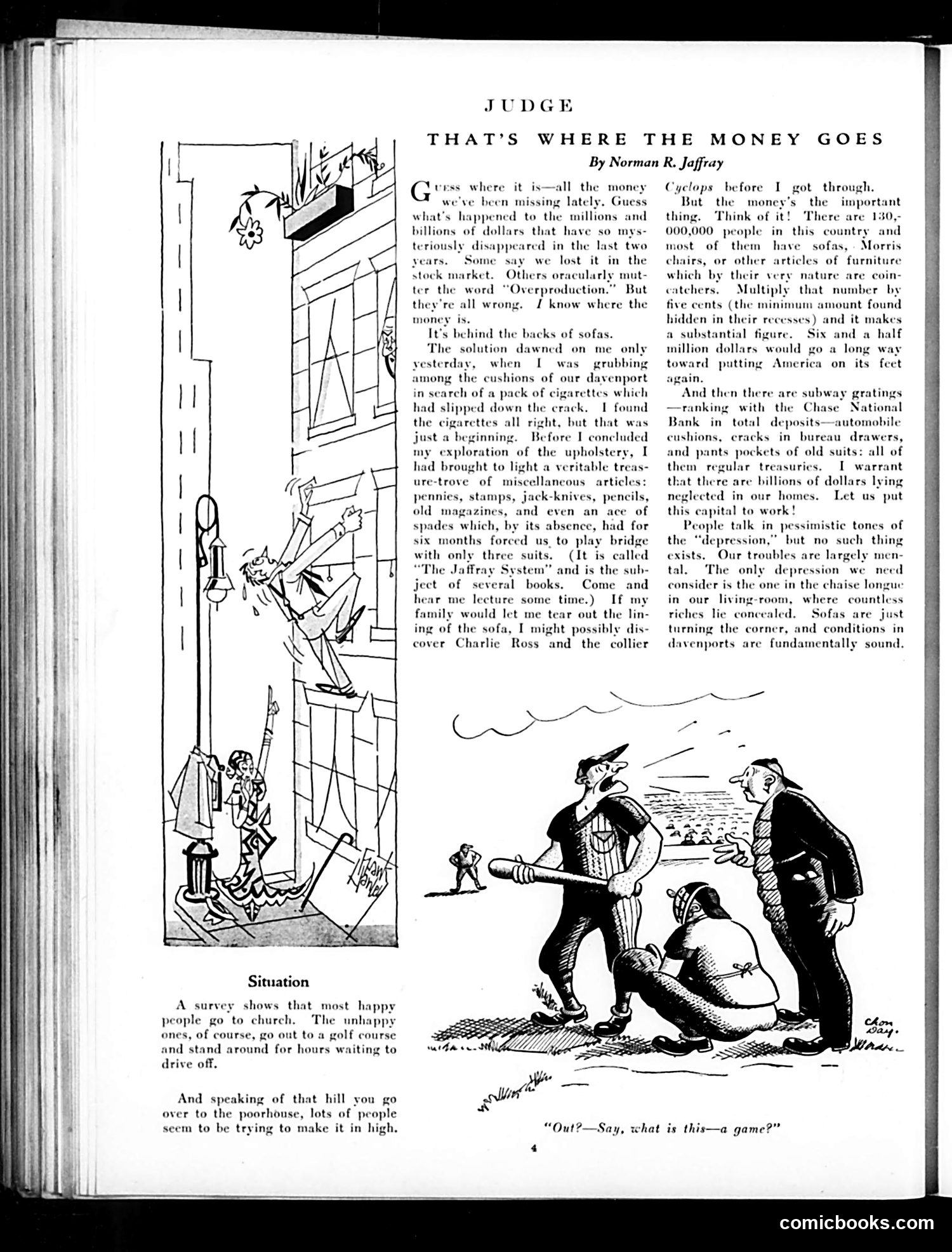
# Judge Magazine Satire Analysis This page satirizes wealth inequality and hidden consumer spending during economic hardship. The article "That's Where the Money Goes" by Norman Hapley uses humor to explain where America's "missing" money went—not lost in stock markets or overproduction, but hidden in household goods. The left cartoon shows a person discovering accumulated possessions (furniture, goods, magazines) crammed behind a sofa—a visual metaphor for frivolous consumer spending. The bottom cartoon depicts wealthy businessmen playing baseball while a small figure (likely representing common workers or the poor) struggles with the game, captioned "Out?—Say, what is this—a game?" This suggests the economic system is rigged or unfair for ordinary people. The satire critiques both conspicuous consumption by the wealthy and structural economic inequality of the era.
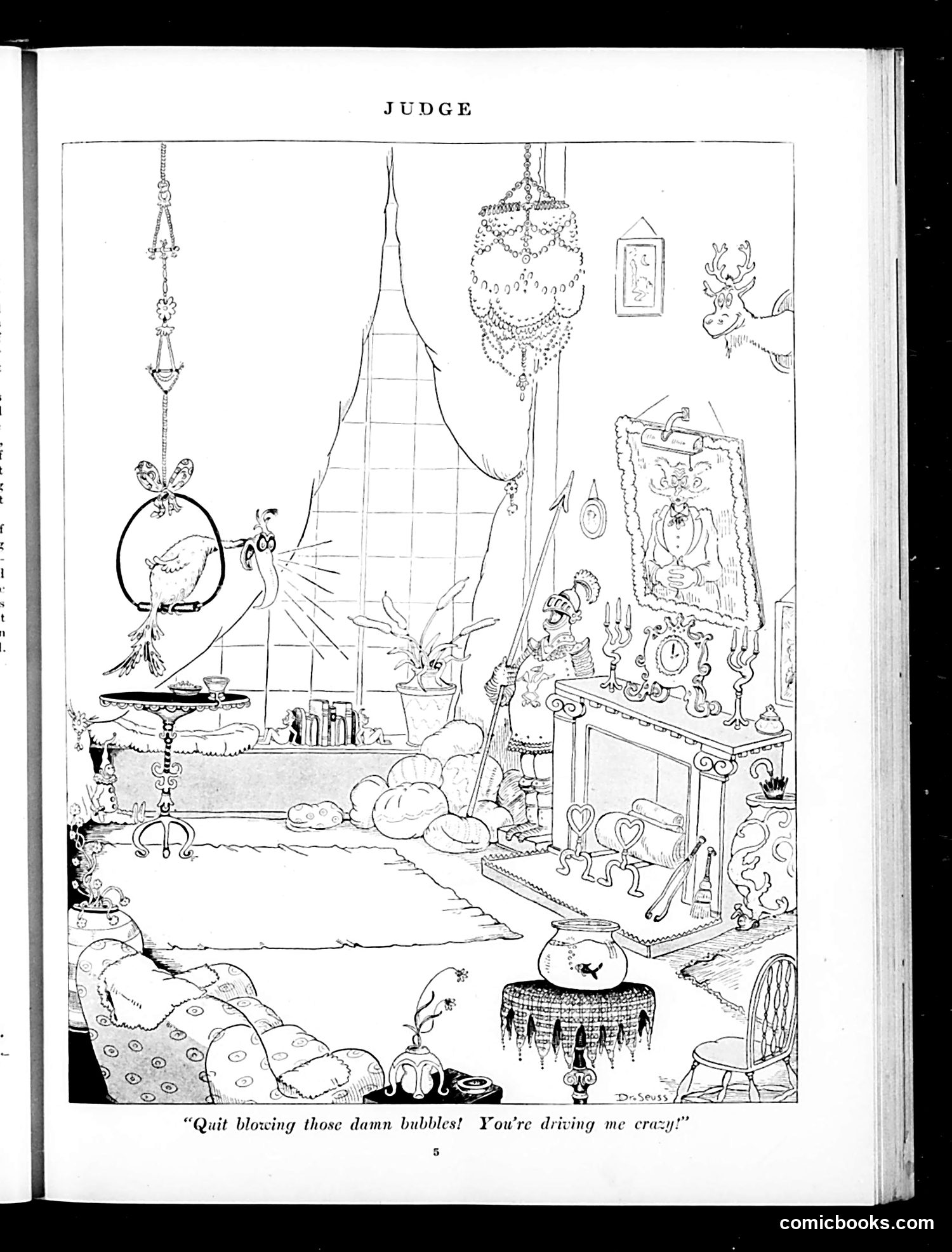
# Explanation for Modern Readers This is a single-panel cartoon by Dr. Seuss (signed lower right) depicting an elaborate, fantastical interior space filled with surreal decorative objects—hanging ornaments, potted plants, decorative furniture, and whimsical creatures. The caption reads: "Quit blowing those damn bubbles! You're driving me crazy!" The humor appears to target **excessive interior decoration or collecting**—a common satirical theme in Judge magazine. Someone is blowing bubbles amid an already overstuffed, chaotic room, and the frustrated complaint suggests that even minor additions to cluttered spaces become maddening. This likely satirizes 1920s-30s consumer culture, ostentatious home decoration, or perhaps complaints about household habits. Without additional context, the specific social target remains somewhat unclear, though the absurdist visual style is characteristically Seussian.
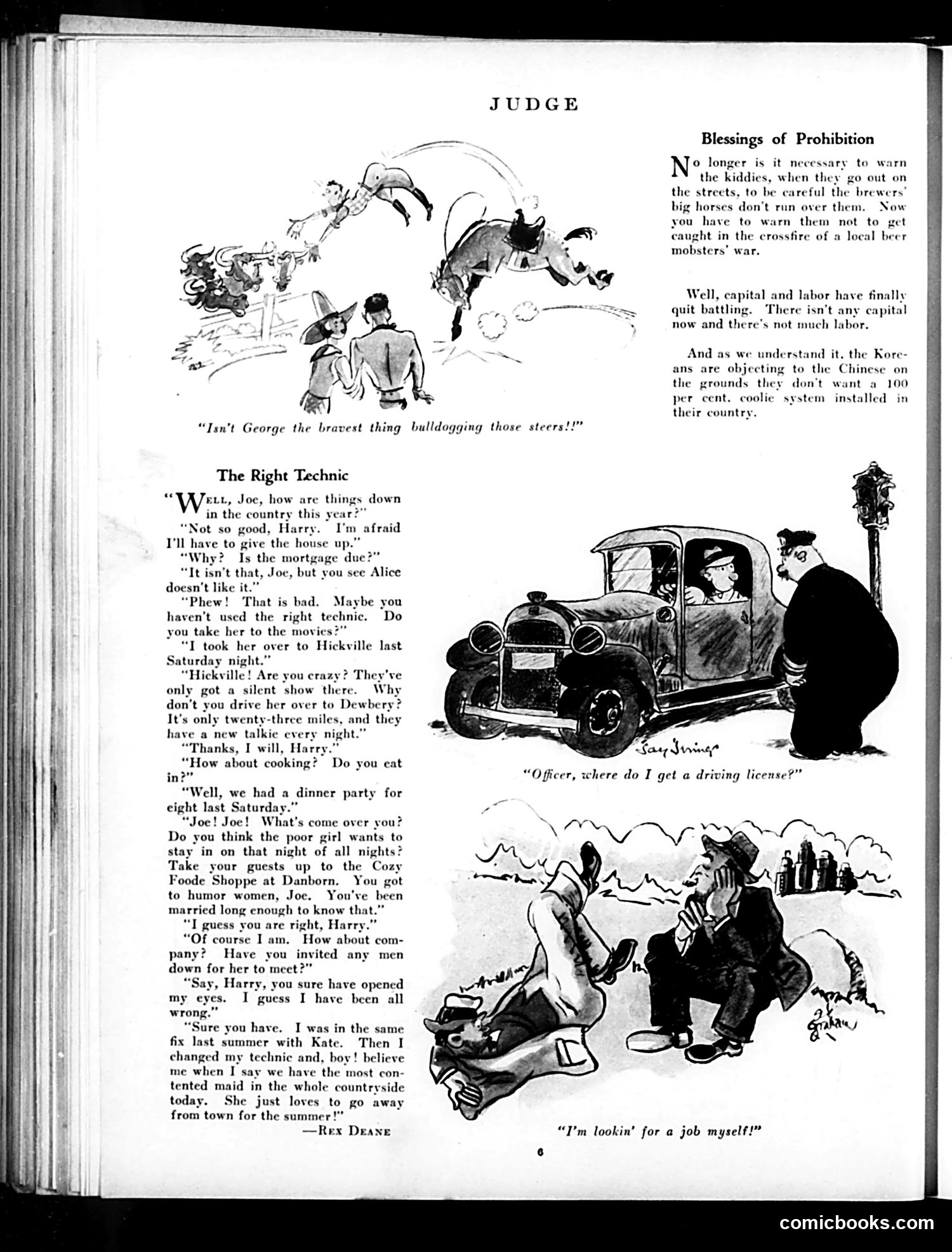
# Analysis of Judge Magazine Page This page contains satirical commentary on Prohibition's effects and workplace social dynamics. **"Blessings of Prohibition"** (top) mocks how Prohibition supposedly eliminated street hazards—now children needn't fear drunk drivers or "beer monsters' wars." The satirist suggests capital and labor have stopped fighting, and references Korean objections to a "coolie system" (indentured labor practices). **"The Right Technic"** (main feature) is a dialogue between characters discussing marital/social advice. A man named Joe is told his wife Alice dislikes their home situation. Harry advises taking her to movies, dinner parties, and social outings with other couples. The implication: proper "technique" for keeping a wife satisfied involves entertainments and social engagement. The accompanying cartoons illustrate modern social scenarios: obtaining a driving license and job-hunting.
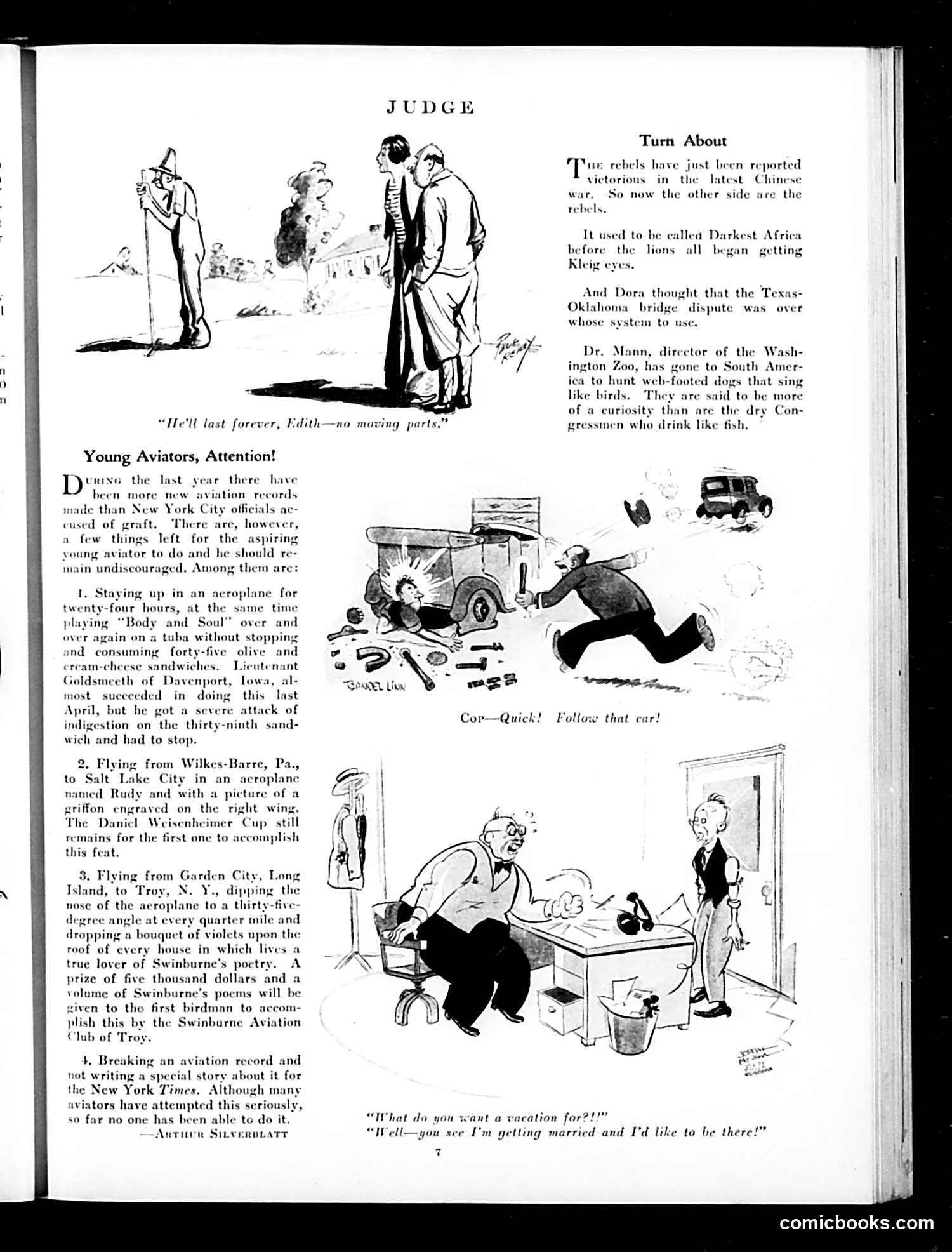
# Judge Magazine Satire Analysis This page contains several brief satirical items mocking contemporary absurdities: **"Turn About"** jokes about the Chinese civil war's shifting sides, African wildlife acquiring "Kleig eyes" (stage lights) from film production, and a Texas-Oklahoma bridge dispute. The humor lies in treating serious issues trivially. **The top cartoon** depicts a couple with a skeleton, captioned "He'll last forever, Edith—no moving parts"—satirizing mechanical/soulless relationships or products. **"Young Aviators, Attention!"** parodies aviation's rapid progress by listing deliberately ridiculous aviation challenges: staying aloft 24 hours while playing tuba and eating sandwiches, flying a plane named "Rudy," or dropping violets on Swinburne fans' roofs. The jokes mock both aviation's trendy status and the absurd record-chasing competitions of the era. **Lower cartoons** show slapstick scenes of a cop chasing a car and a couple's vacation conversation about marriage—generic humor rather than topical satire. The page represents Judge's typical blend of political commentary and light domestic humor.
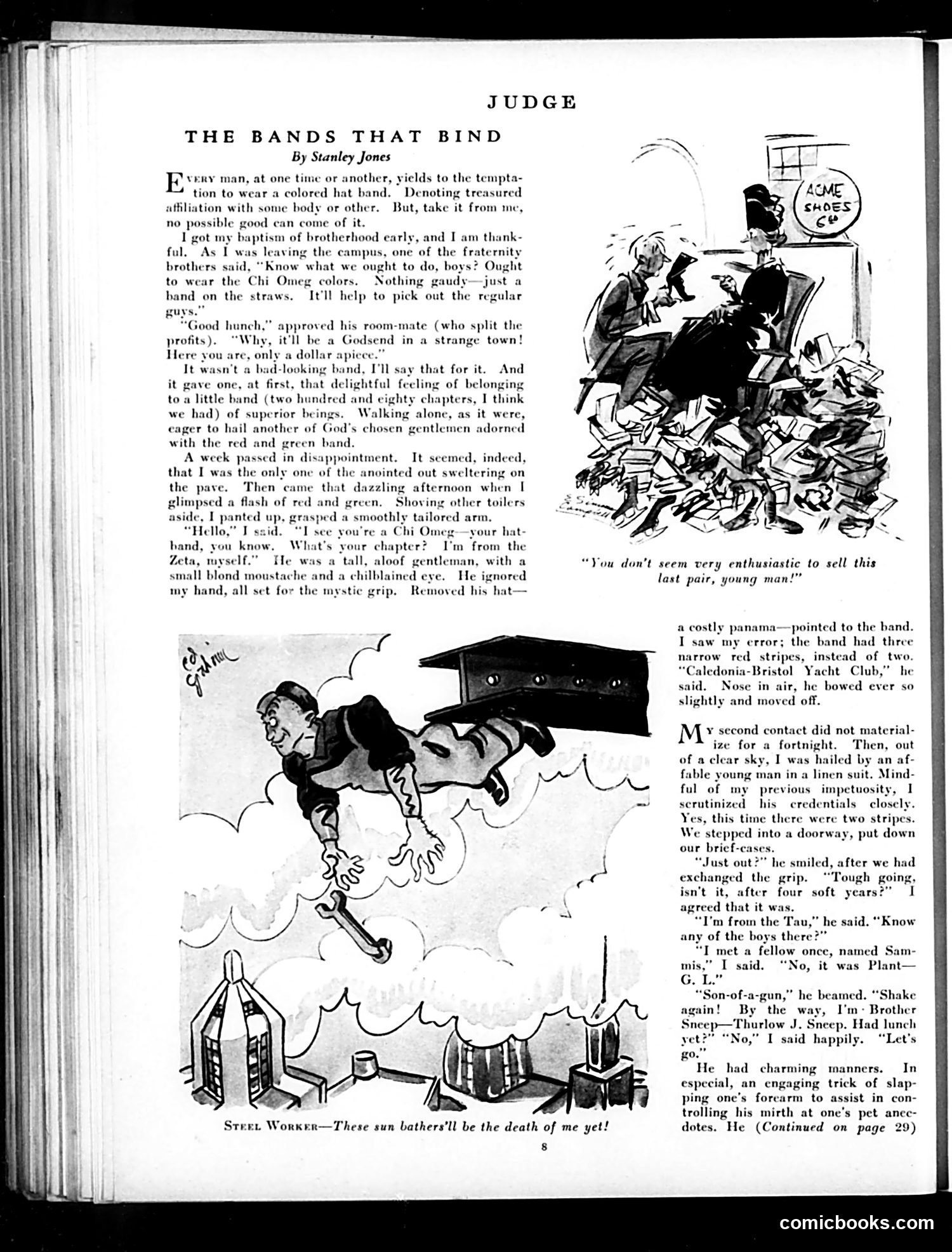
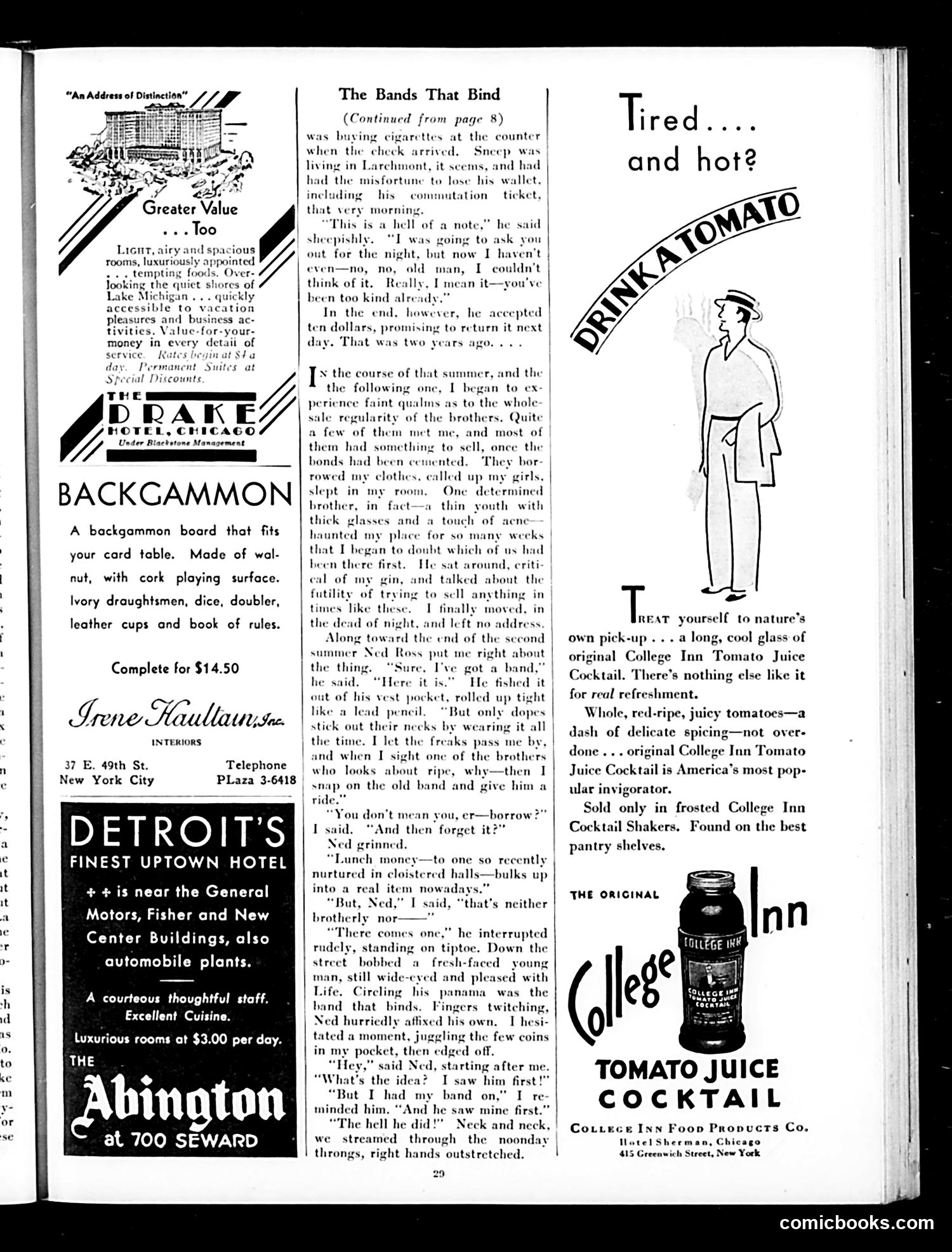
# "The Bands That Bind" - Judge Magazine Satire This satirical story mocks fraternity culture and the superficial bonds created by Greek-letter organizations. The narrator purchases a Chi Omega fraternity hatband as a symbol of belonging to an "elite" group, expecting camaraderie with fellow members. The joke centers on the absurdity of these "bands that bind": the narrator's first encounter reveals his band has the *wrong number of stripes*—it's actually a Yacht Club band—causing an embarrassing rejection. His second encounter with a "real" fraternity brother appears more promising, but the humor suggests the connection is hollow; these men bond over mere credentials rather than genuine friendship. The accompanying cartoon (bottom left) shows a worker being literally bound, parodying how such affiliations symbolically "bind" men together. The satire critiques how young men naively believe fraternity membership grants them superior status and meaningful brotherhood, when it actually reduces human connection to costume and ritual.
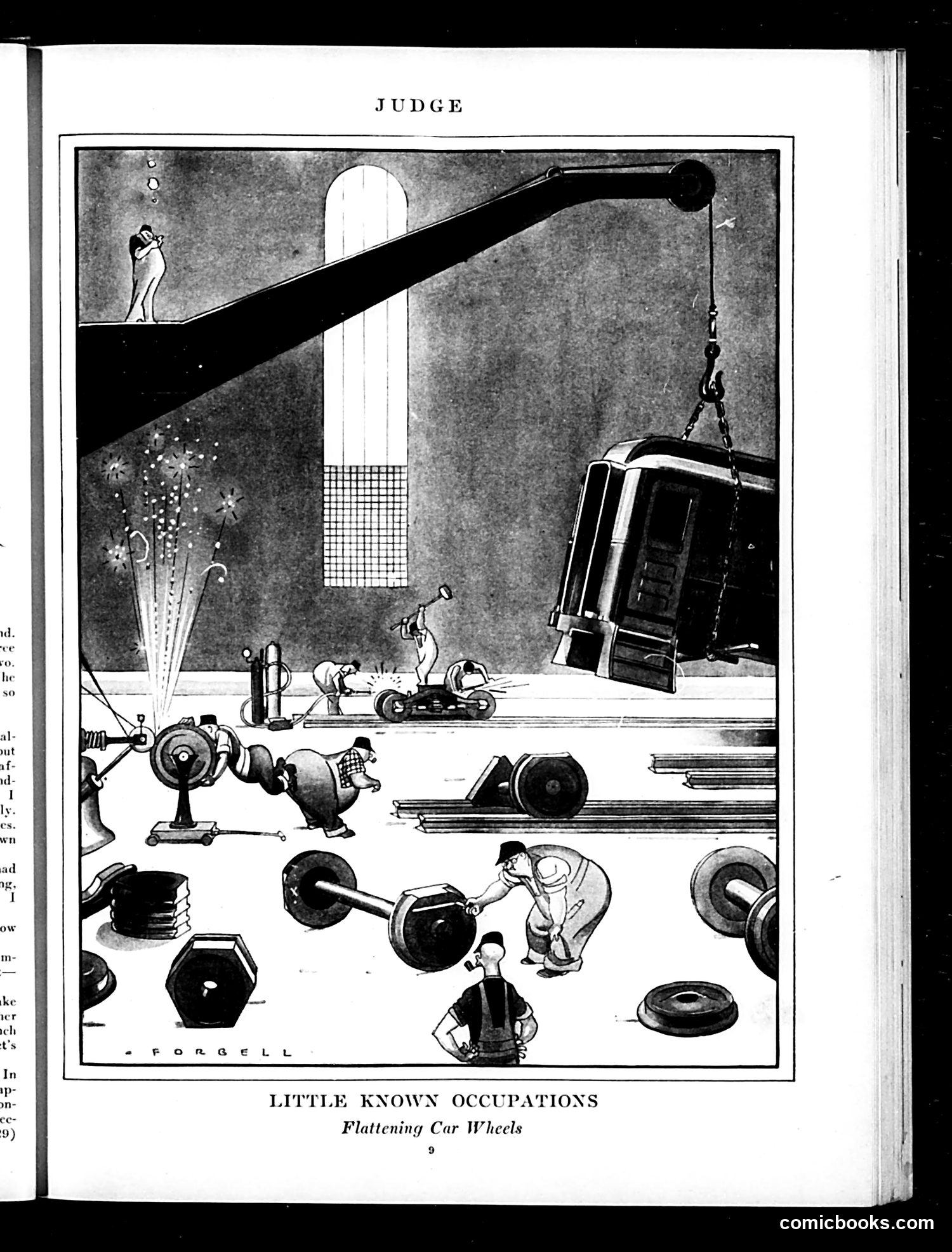
# Analysis This is a satirical illustration titled "Little Known Occupations: Flattening Car Wheels." The cartoon depicts an absurd industrial scene where workers use a large crane to flatten automobile wheels and other car parts on the ground floor of what appears to be a factory or workshop. The satire likely mocks either: 1. **Inefficient industrial practices** of the era, suggesting ridiculous methods of manufacturing or recycling 2. **Wasteful or destructive business practices** — intentionally damaging goods rather than properly repairing or repurposing them 3. **Labor absurdities** — workers engaged in pointless, dangerous work The "little known occupations" framing suggests this is commentary on real but absurd jobs that actually existed during the industrial period. The illustrated crane crushing materials is deliberately exaggerated for comedic effect, making what might be a real (if wasteful) practice appear laughably inefficient.
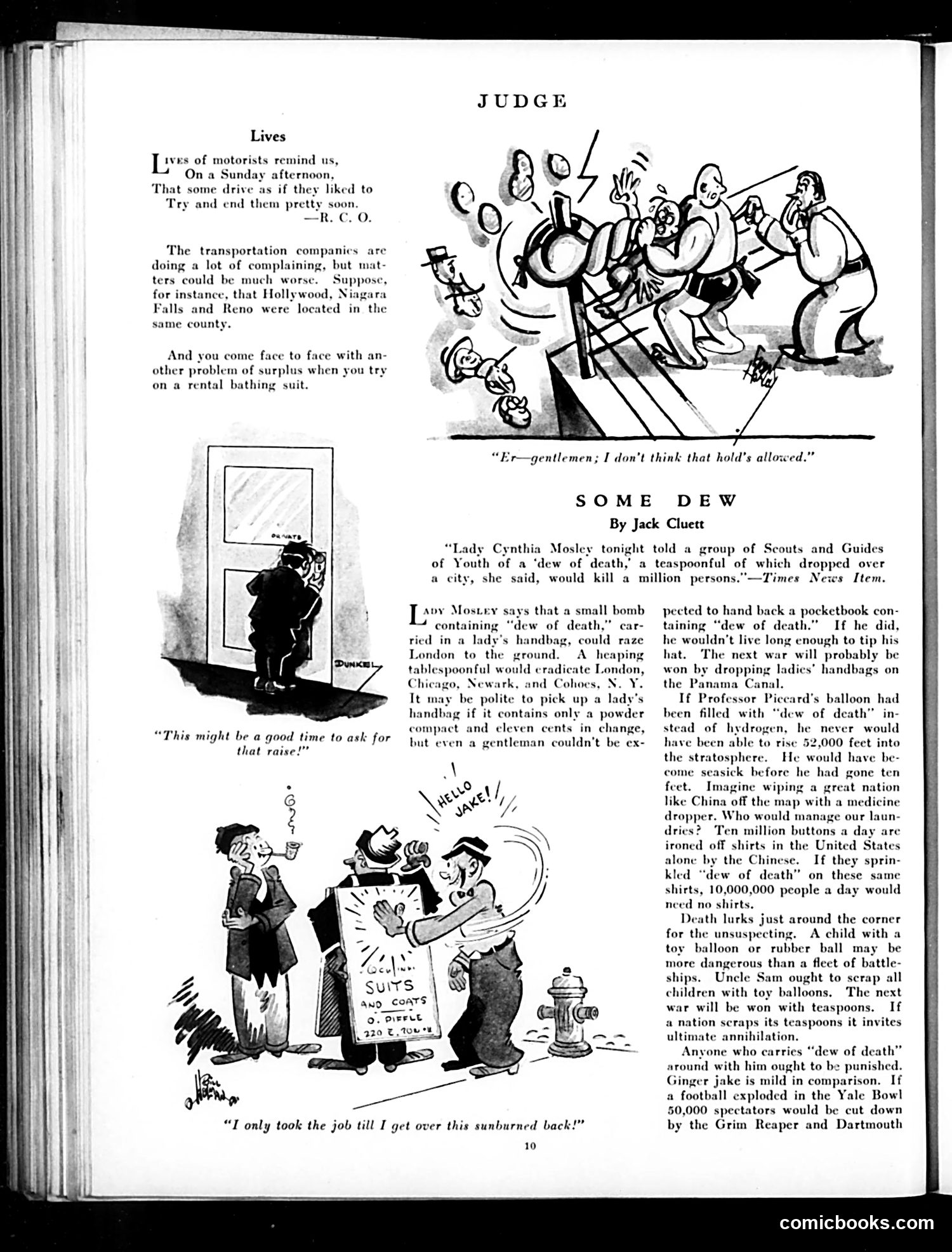
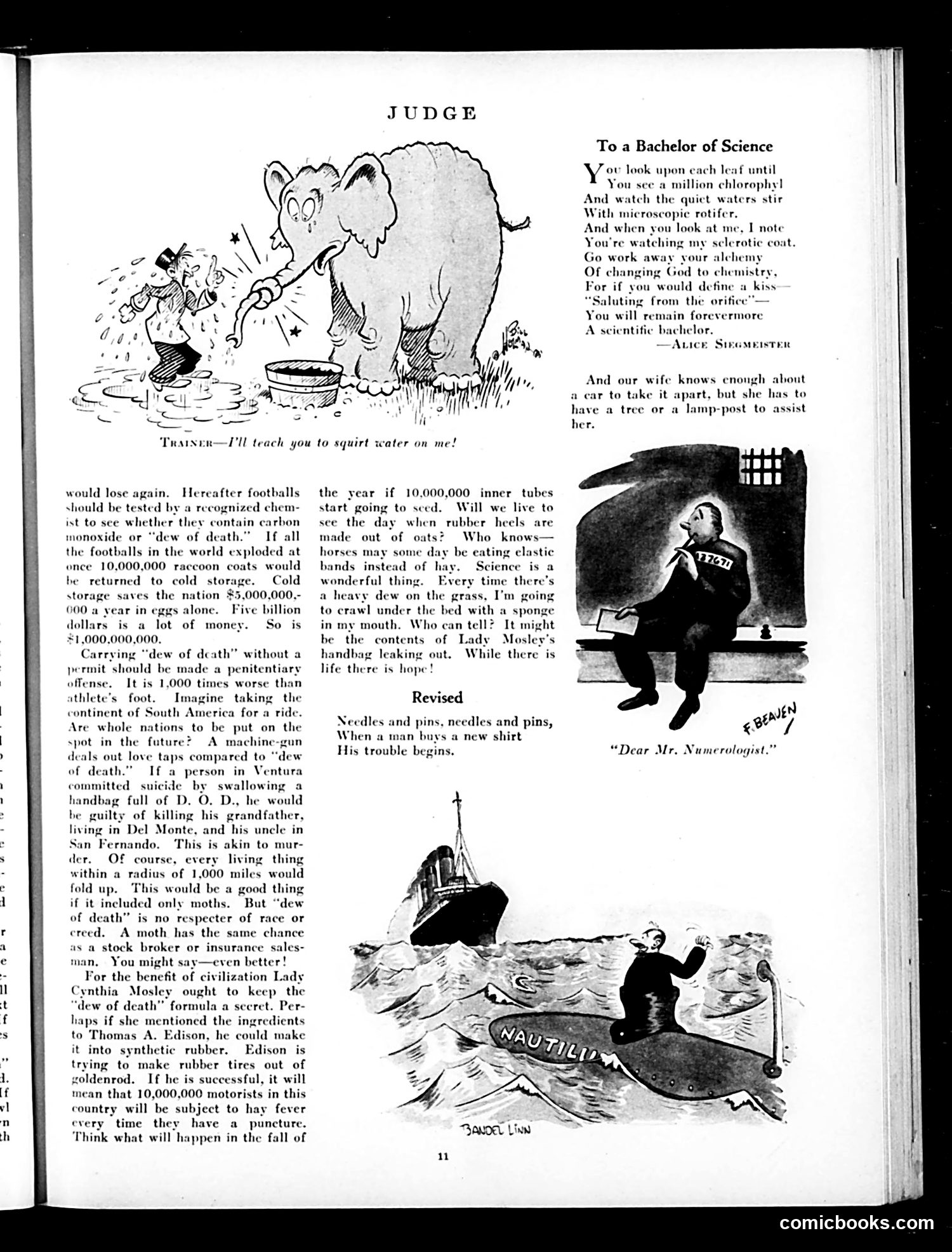
# "Some Dew" by Jack Cluett This satirical piece mocks Lady Cynthia Mosley's alarming public statement about a hypothetical "dew of death"—a weapon so potent that a teaspoonful could kill a million people. Cluett uses absurdist humor to expose the ridiculousness of her claims by extrapolating to ridiculous extremes: a powder bomb in a lady's handbag could destroy cities; Professor Piccard's balloon filled with it would wipe China off maps; ten million buttons ironed daily by Chinese laundries would kill millions; toy balloons become weapons of mass destruction. The cartoons accompanying the text show everyday anxiety (motorists, swimmers, sunburned workers) contrasted with this imagined catastrophic threat. Cluett's point: Mosley's scaremongering about a fictional weapon creates irrational panic while ignoring actual social problems. The satire criticizes both her inflammatory rhetoric and public credulity.