A complete issue · 36 pages · 1931
Judge — April 25, 1931
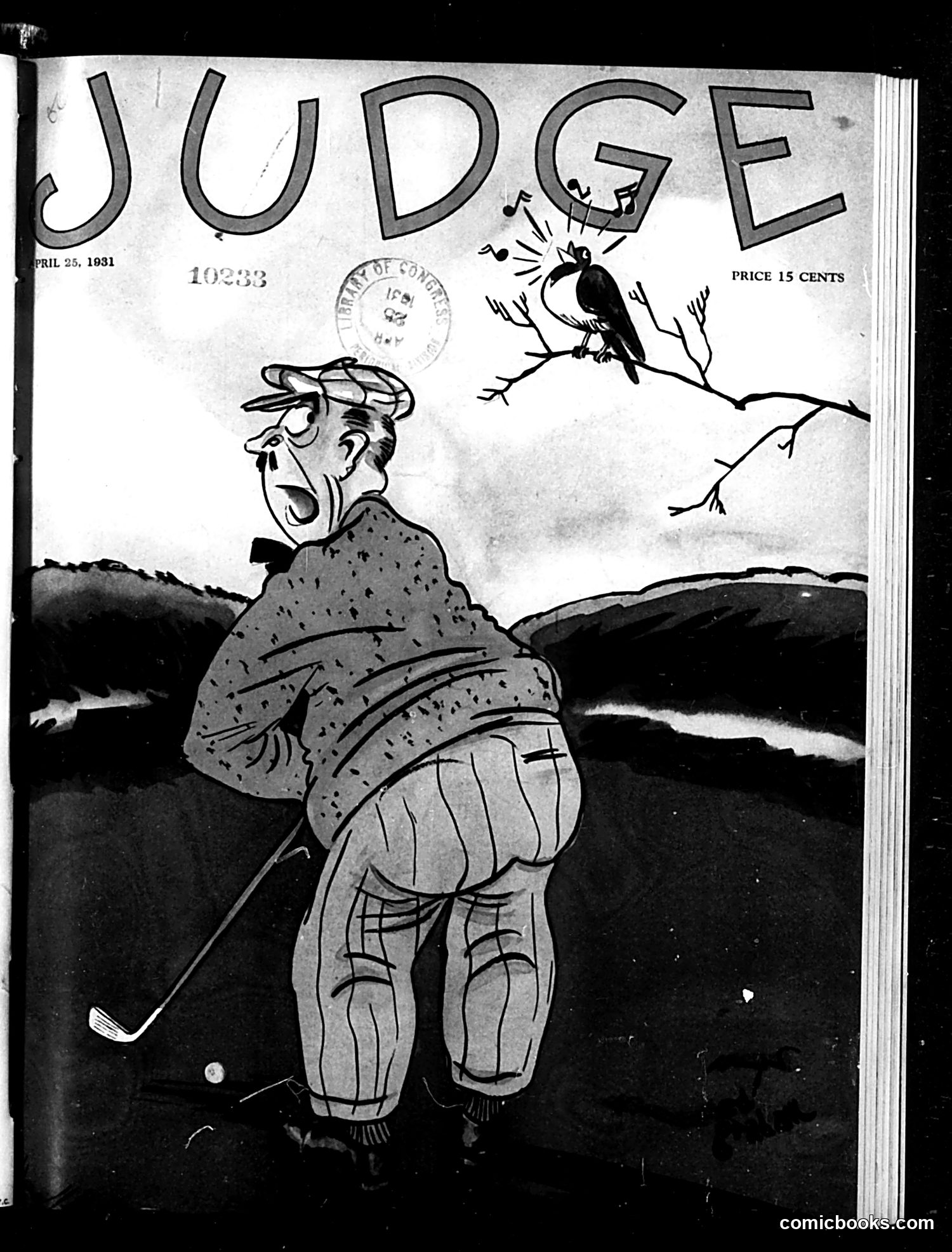
# Judge Magazine Cover Analysis **April 25, 1931** This cover depicts a caricatured golfer with exaggerated features playing on what appears to be a links course, while a crow perches mockingly above on a bare branch. The figure's distorted facial expression and awkward posture suggest incompetence or frustration at the sport. The satire likely comments on golf culture during the Great Depression era—a leisure activity associated with wealth and privilege during economic hardship. The crow observing from above may represent fate or misfortune mocking the golfer's efforts. The bare landscape and the bird's predatory presence reinforce themes of difficulty or bad luck. Without additional OCR text or caption information, the specific political target remains unclear, though the timing suggests commentary on Depression-era class divisions or entertainment choices.
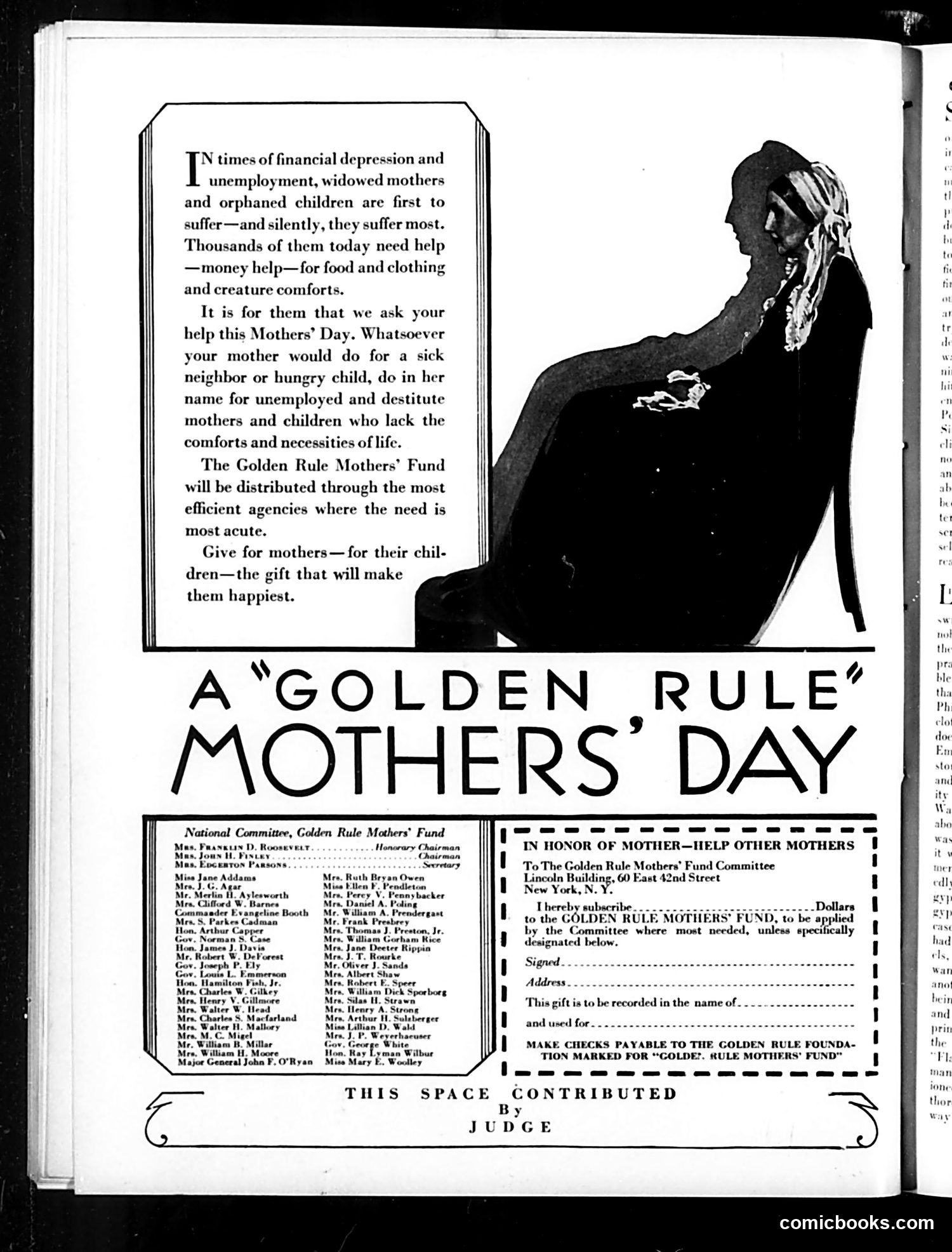
# Analysis of "A 'Golden Rule' Mothers' Day" (Judge Magazine) This is **not satire but a charitable advertisement** dressed as editorial content. The page solicits donations for the "Golden Rule Mothers' Fund," which would distribute aid to unemployed mothers and destitute children during financial depression. The silhouetted illustration shows a mother cradling an infant—an emotionally direct appeal. The text frames charitable giving as a moral imperative, invoking the "Golden Rule" (treat others as you'd wish to be treated). The committee list suggests this was a real Depression-era relief initiative with prominent supporters, including Mrs. Franklin D. Roosevelt as honorary chairman. The contribution notice at bottom clarifies this is paid advertising space ("This space contributed by Judge"), making it a platform for philanthropic messaging rather than satirical commentary.
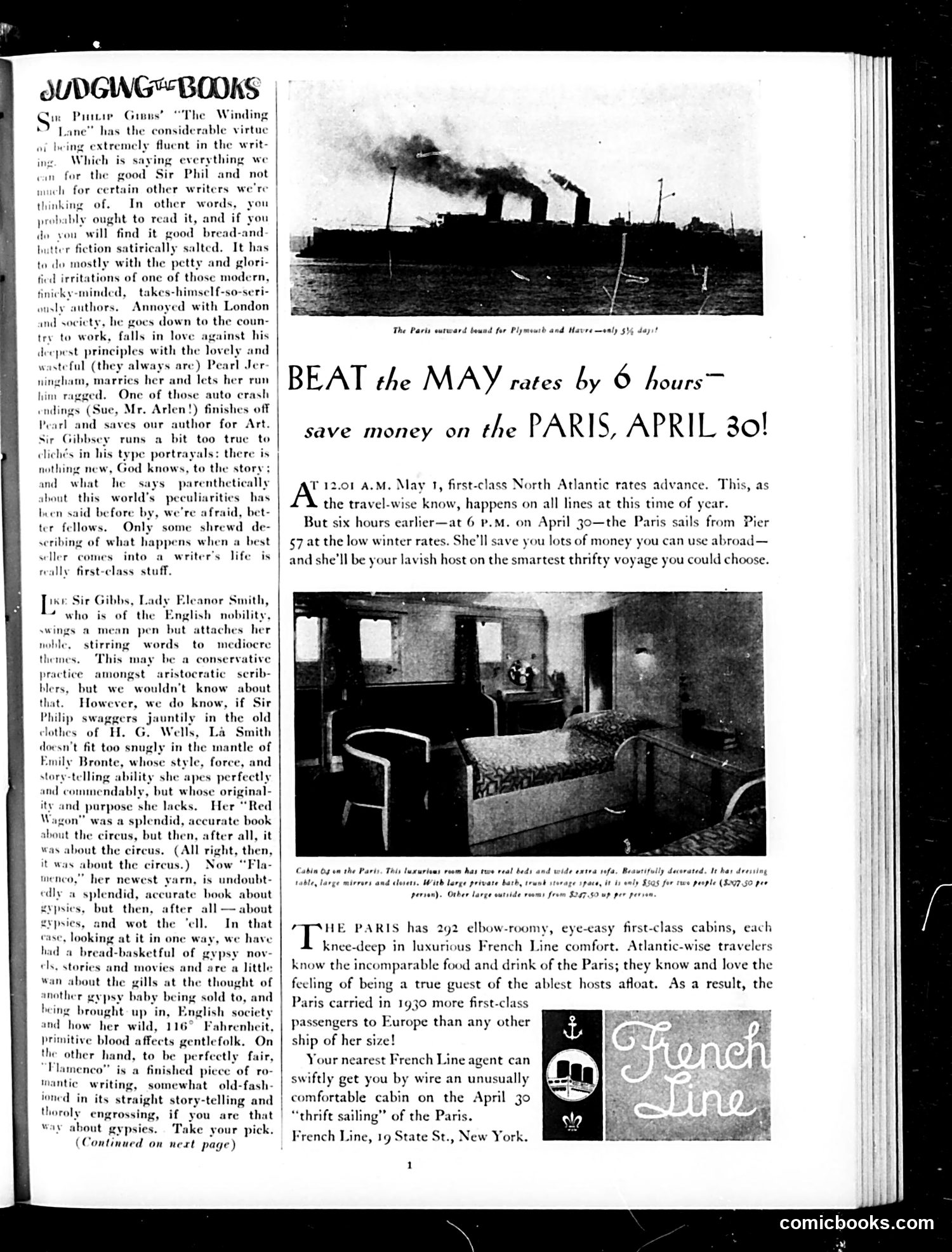
# Analysis This page is primarily **advertising**, not political satire. The main content promotes the SS *Paris*, a French Line ocean liner, emphasizing cost savings by booking before May 1st when rates increase. The top section contains a brief book review ("Judging the Books") of Sir Philip Gibbs' *"The Winding Lane,"* praising his fluent writing style. This transitions into discussion of other authors like Lady Eleanor Smith and references to H.G. Wells and Emily Brontë. The dominant visual is a photograph of the *Paris* at sea, with a cabin interior photograph below. The French Line logo appears at bottom right. The advertisement targets affluent American readers considering European travel, promoting the ship's 292 first-class cabins and superior accommodations. No political cartoons or satirical commentary appears on this page.
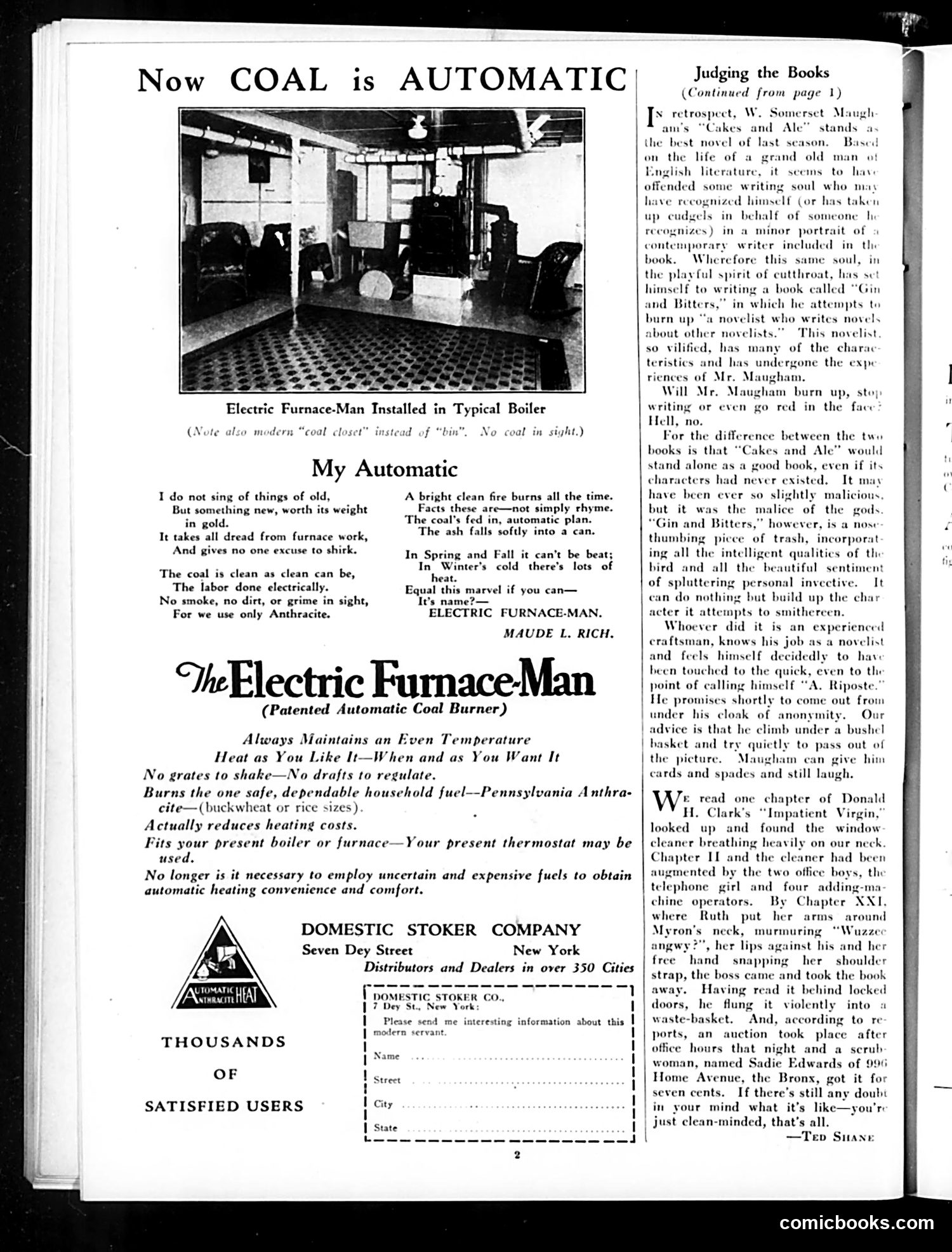
# Analysis This page is **primarily advertising**, not political satire. The dominant content is a full-page advertisement for the "Electric Furnace-Man," an automatic coal-burning heating system by the Domestic Stoker Company of New York. The ad includes a poem by Maude L. Rich praising the device's convenience—automatic temperature control, cleanliness, and reduced labor. The photograph shows the furnace installed in a typical boiler room. The right column contains "Judging the Books," a literary review discussing W. Somerset Maugham's novel "Cakes and Ale" and Donald H. Clark's "Impatient Virgin." This is unrelated editorial content. There is **no political cartoon or social satire** on this page. It represents Judge magazine's revenue model: advertisements subsidizing satirical content.
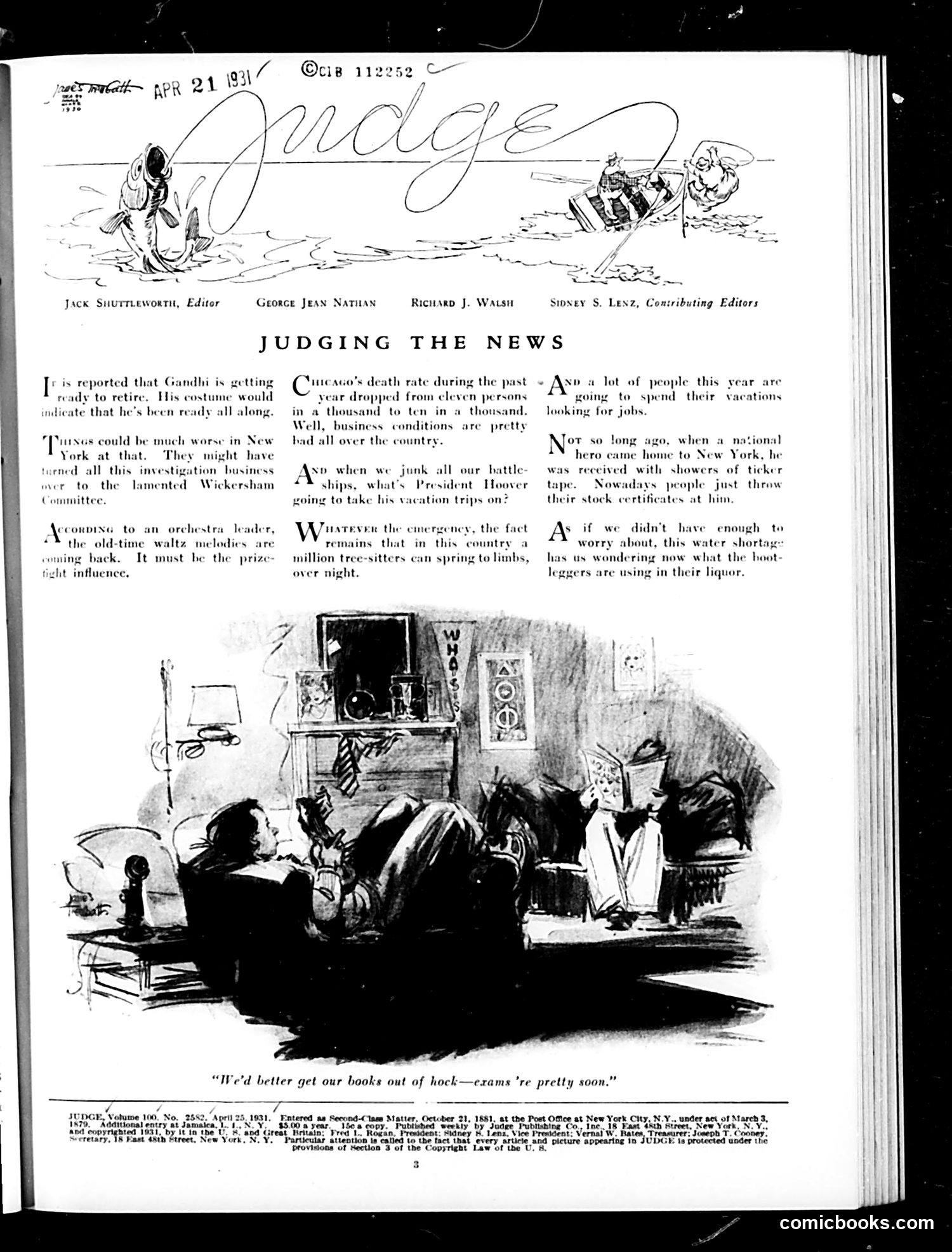
# "Judging the News" - Judge Magazine, April 21, 1931 This satirical page comments on early Depression-era events through brief editorial quips paired with illustrations. The main cartoon depicts a crowded pawnshop where people are depositing books, with the caption "We'd better get our books out of hock—exams 're pretty soon." This jokes darkly about financial desperation: families pawning possessions (including schoolbooks) for survival money during the economic crisis. The text above addresses contemporary concerns: Gandhi's rumored retirement, Chicago's high death rate, vacation spending despite economic hardship, a national hero's homecoming, and water shortages allegedly caused by bootleggers during Prohibition. The satirical tone reflects Judge's practice of mocking both current events and public follies with sharp, often cynical commentary typical of early 1930s humor magazines.
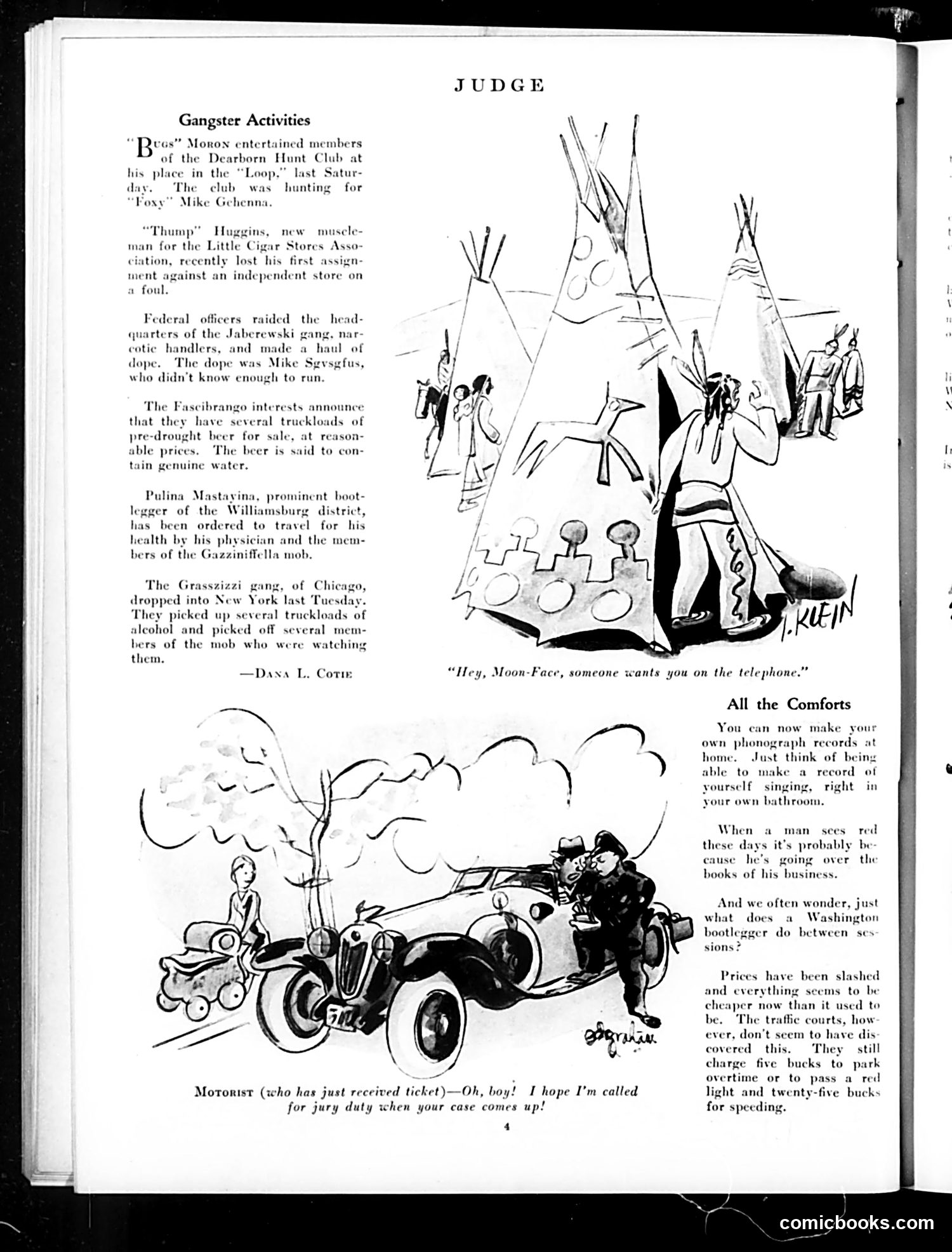
# Analysis of Judge Page This page contains two main sections: **"Gangster Activities"** (top left) describes criminal underworld figures and incidents from Prohibition-era America, including raids on gang headquarters and bootlegging operations. The text satirizes organized crime, mentioning specific individuals like "Foxy" Mike Gehenna and the Jaberowski gang. **Two cartoons illustrate the content:** 1. Top right: Native American tepees with figures in Native dress, captioned about someone wanting "Moon Face" on the telephone—appears to mock gangster communications. 2. Bottom: A motorist receiving a traffic ticket, with caption about hoping for jury duty instead—satirizing the era's casual attitude toward traffic violations versus serious legal consequences. The page satirizes Prohibition-era organized crime, corruption, and the public's resigned acceptance of lawlessness as commonplace.
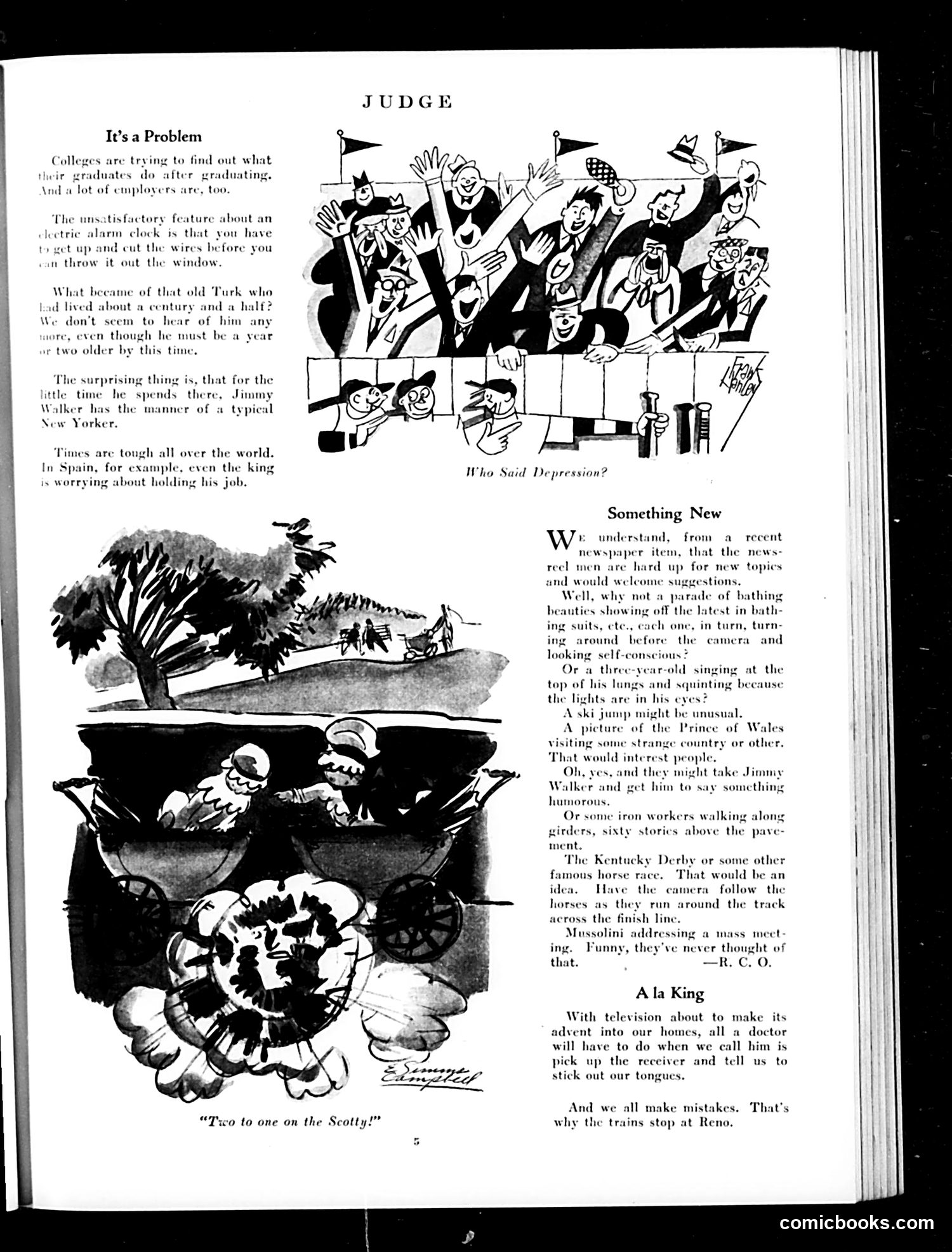
# Analysis of Judge Page This page contains three satirical pieces: **"It's a Problem"**: Comments on college employment struggles and mentions an old Turkish immigrant ("that old Turk") who's lived in America for 1.5 years—likely referencing contemporary immigration debates. Notes that Jimmy Walker (New York City's mayor during the 1920s-30s) has "the manner of a typical New Yorker." **"Who Said Depression?"**: The top cartoon shows celebratory graduates, sarcastically titled—presumably mocking economic hardship while privileged students celebrate. **"Something New" & "A la King"**: Discussion sections suggesting parade ideas and television's future. The final joke about trains stopping in Reno likely references the city's famous divorce industry and quick marriages. The page reflects Depression-era American anxieties about employment, immigration, and economic uncertainty.
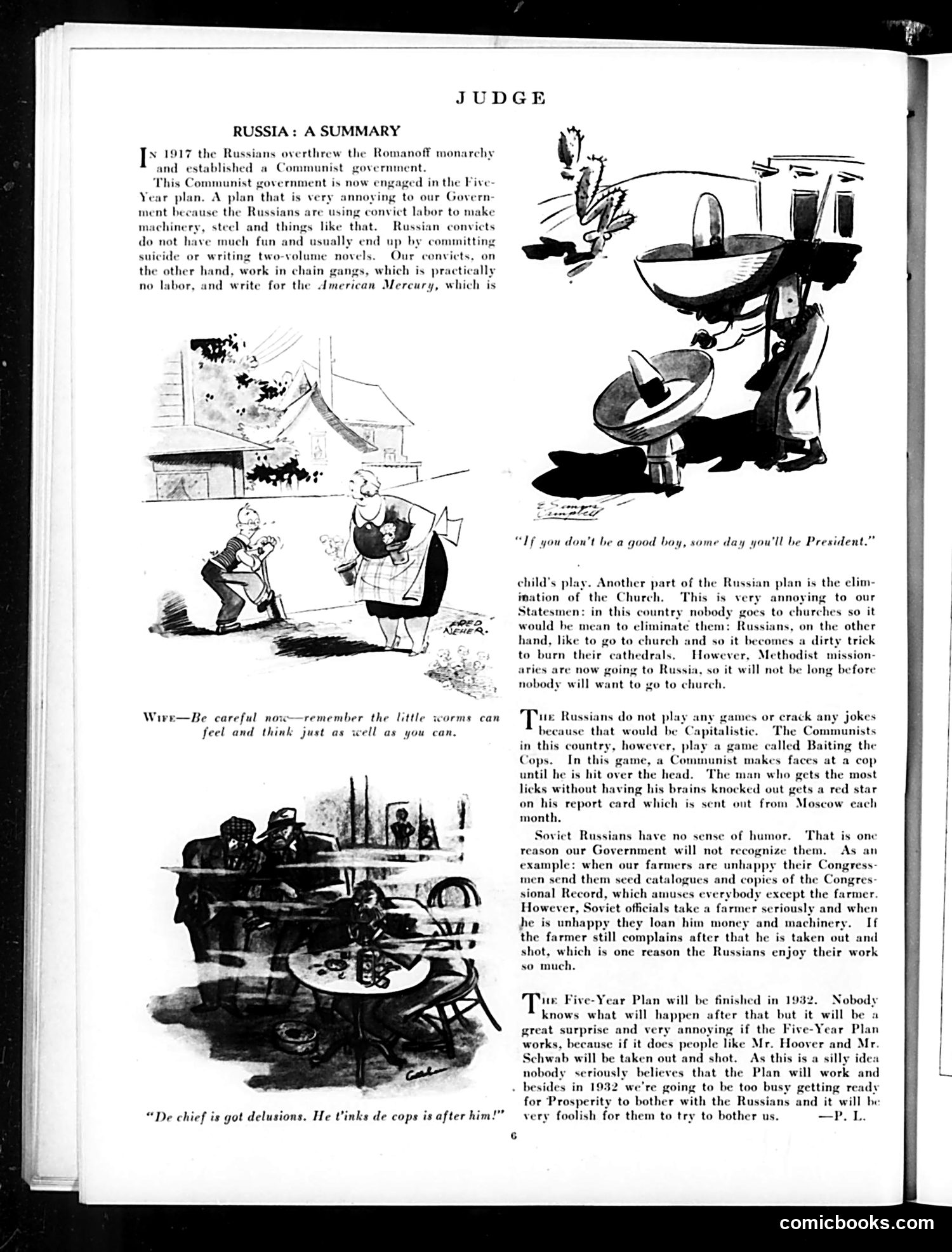
# Analysis of Judge Magazine Page: "Russia: A Summary" This 1930s satirical piece mocks Soviet communism through crude caricatures. The text criticizes Russian convicts for laboring on industrial projects while American workers write for magazines like *American Mercury*. The cartoons ridicule Soviet society: one depicts children being indoctrinated ("If you don't be a good boy, some day you'll be President"), another shows farmers resenting Moscow's grain seizures, and a third illustrates "Baiting the Cops"—a supposed game where Communists attack police. The article dismisses the Five-Year Plan as doomed to fail, mocking the idea that people like "Mr. Hoover" would actually cooperate with Soviet ambitions. The satire reflects American anti-communist sentiment and Cold War anxieties of the era.
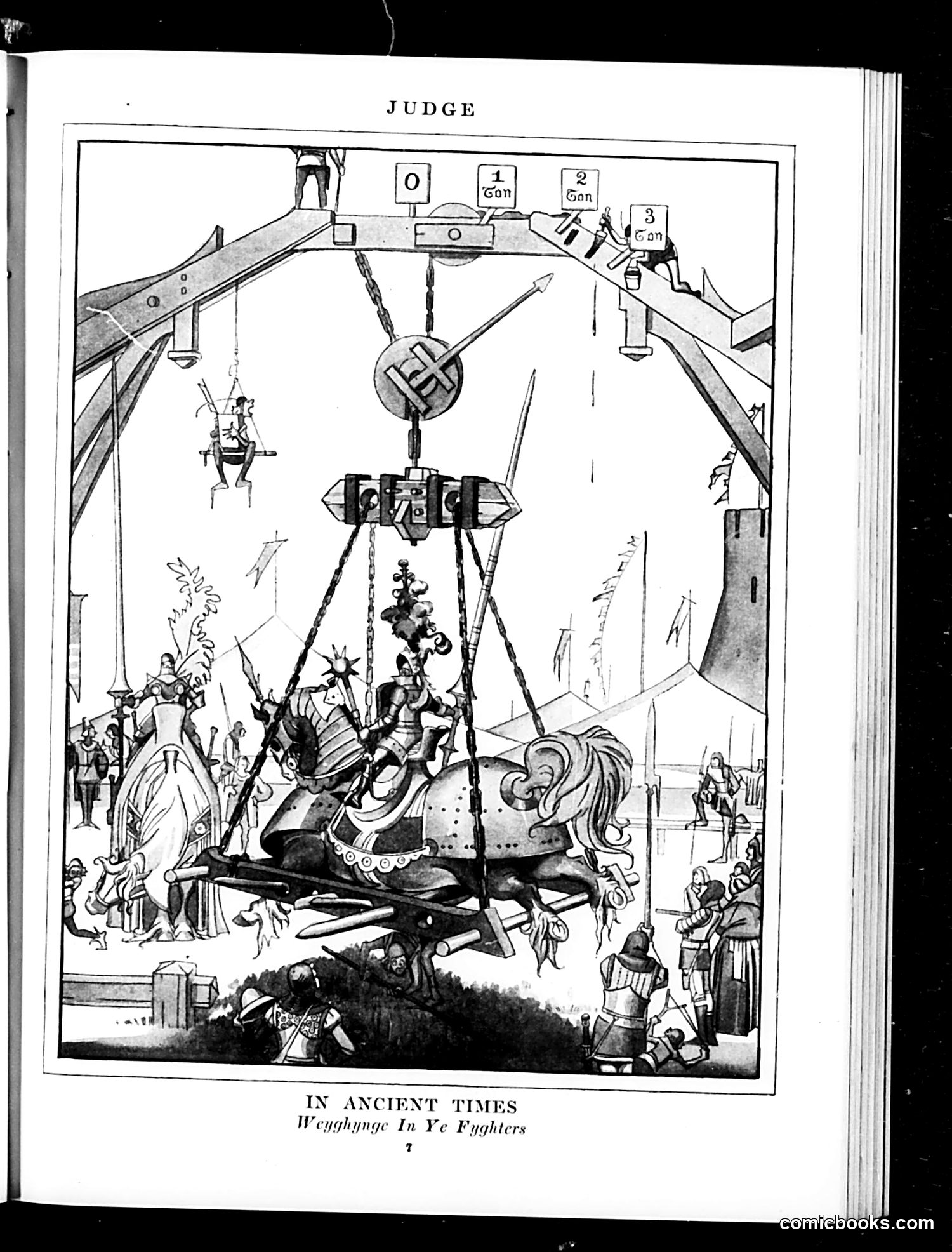
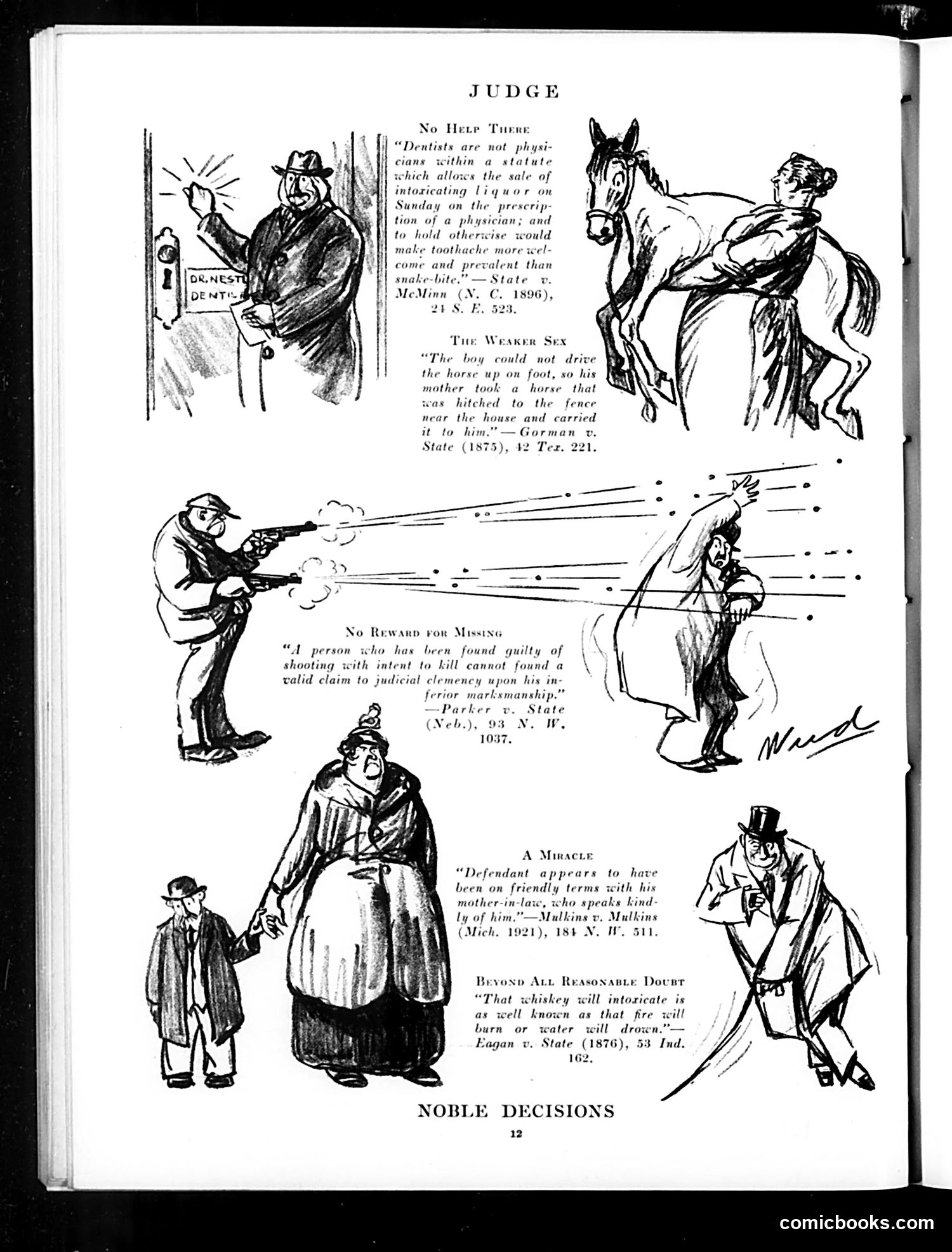
This satirical cartoon titled "In Ancient Times: Weighing in Ye Fighters" depicts a medieval or fantasy scene where armored knights and fighters are being weighed on a large scale suspended from above, as crowds observe. The scale appears to be a judge's scale, reinforced by the "JUDGE" header. The satire likely mocks prize-fighting or boxing matches, where fighters are traditionally "weighed in" before competition to ensure fair matchups by weight class. By placing this modern sporting practice in a ridiculous "ancient times" setting with knights and medieval pageantry, the cartoon ridicules the formality and spectacle surrounding boxing weigh-ins, suggesting the practice is as absurd as imagining medieval warriors being formally measured before combat.
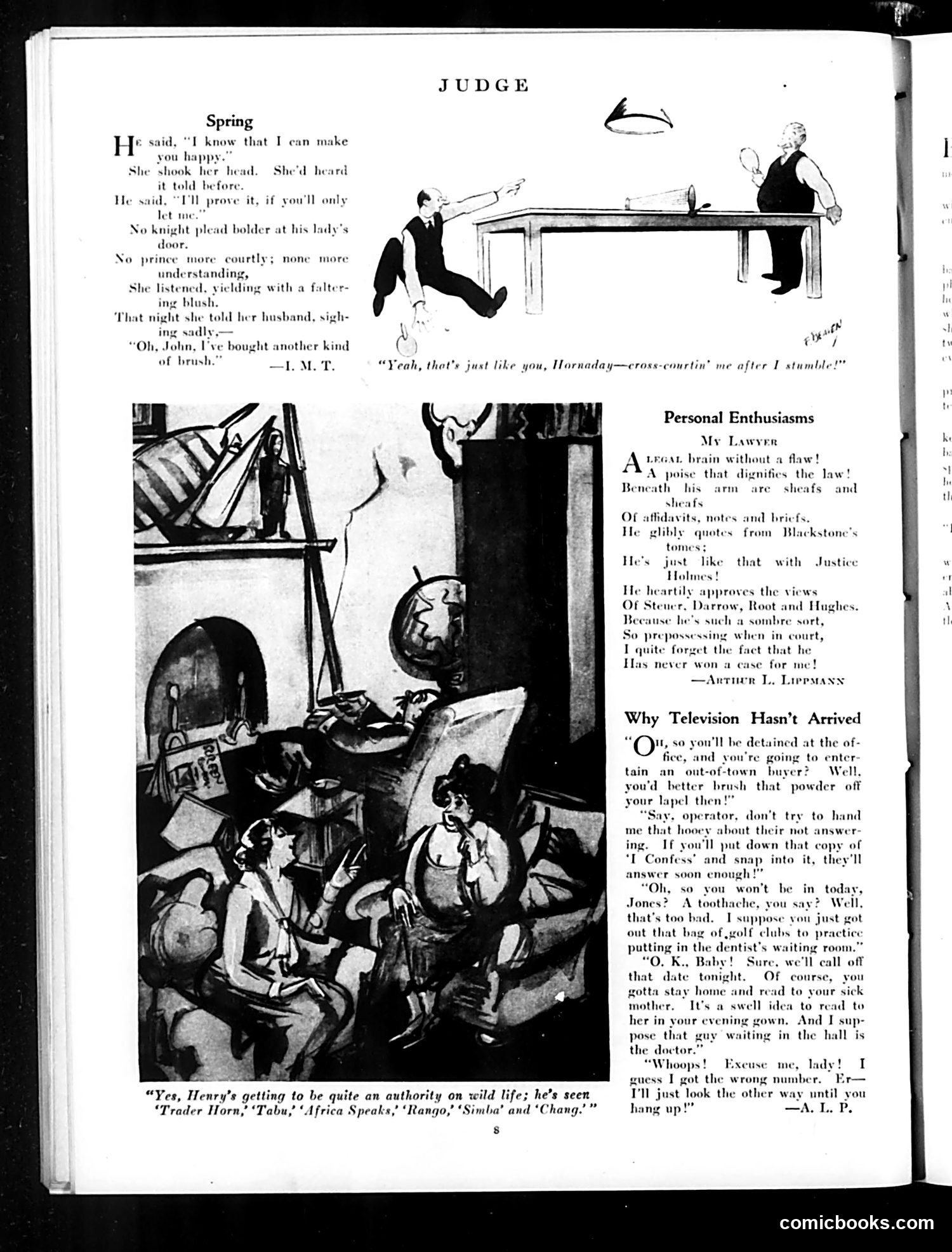
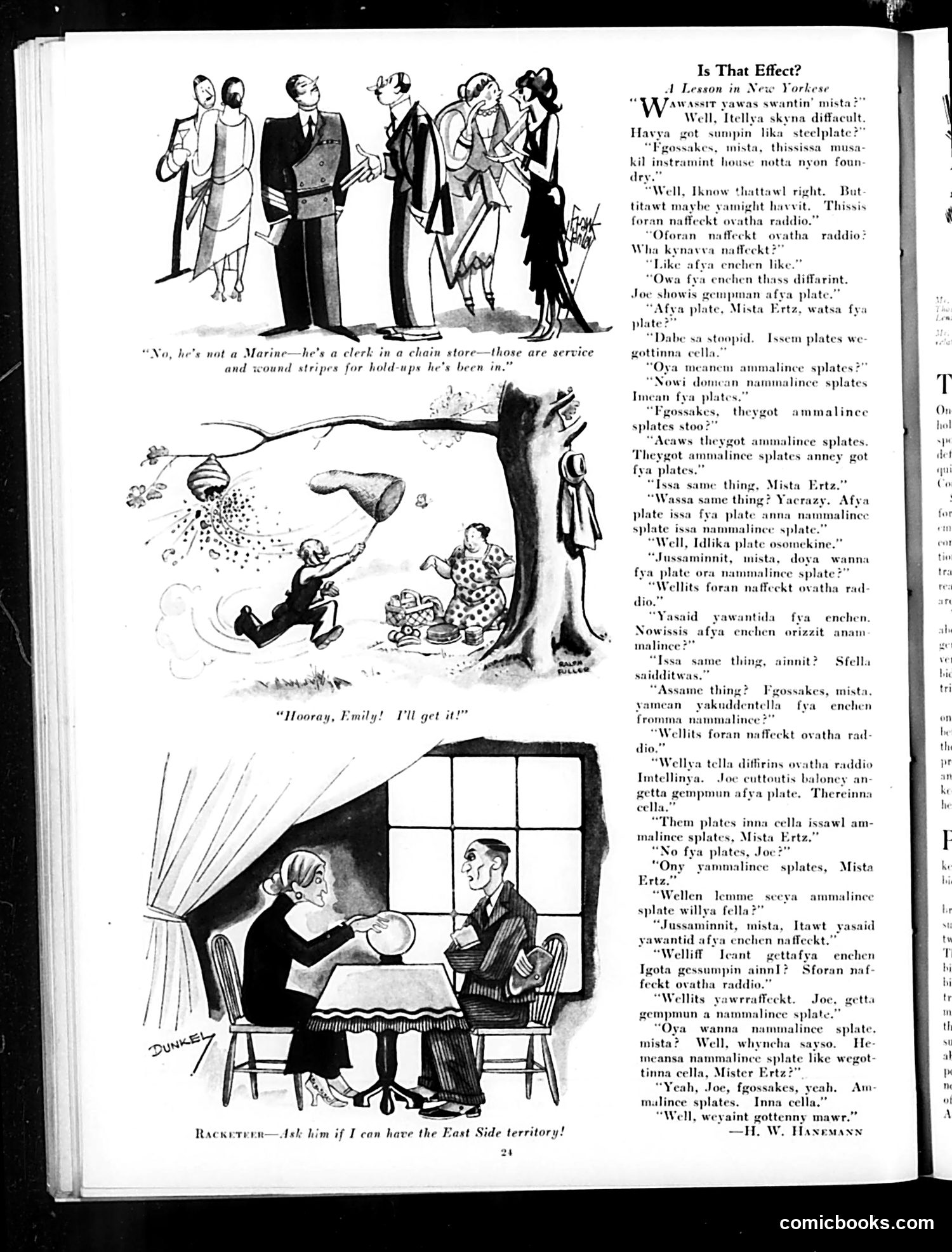
# Analysis of Judge Magazine Page This page contains three satirical pieces typical of Judge's humor: **Top cartoon**: A domestic scene mocking marital discord. A husband attempts to prove his devotion with romantic gestures, but his wife remains skeptical—she's "heard it told before." The joke's punchline appears to reference his clumsiness ("cross-courtin' me after I stumble"), suggesting his romantic efforts are undermined by physical incompetence. **Middle cartoon**: Satirizes cinema obsession. A man has become an "authority on wild life" merely by watching adventure films like *Trader Horn* and *Rango*—he confuses movie-watching with actual knowledge. **Right section**: Two pieces mock professional pretension and the impracticality of television (still emerging technology). "My Lawyer" ridicules an eloquent but unsuccessful attorney who quotes legal authorities yet never wins cases. "Why Television Hasn't Arrived" presents absurd excuses people give for unavailability, suggesting society isn't ready for instantaneous communication technology. The humor targets human vanity, marital friction, and technological skepticism characteristic of interwar American satire.
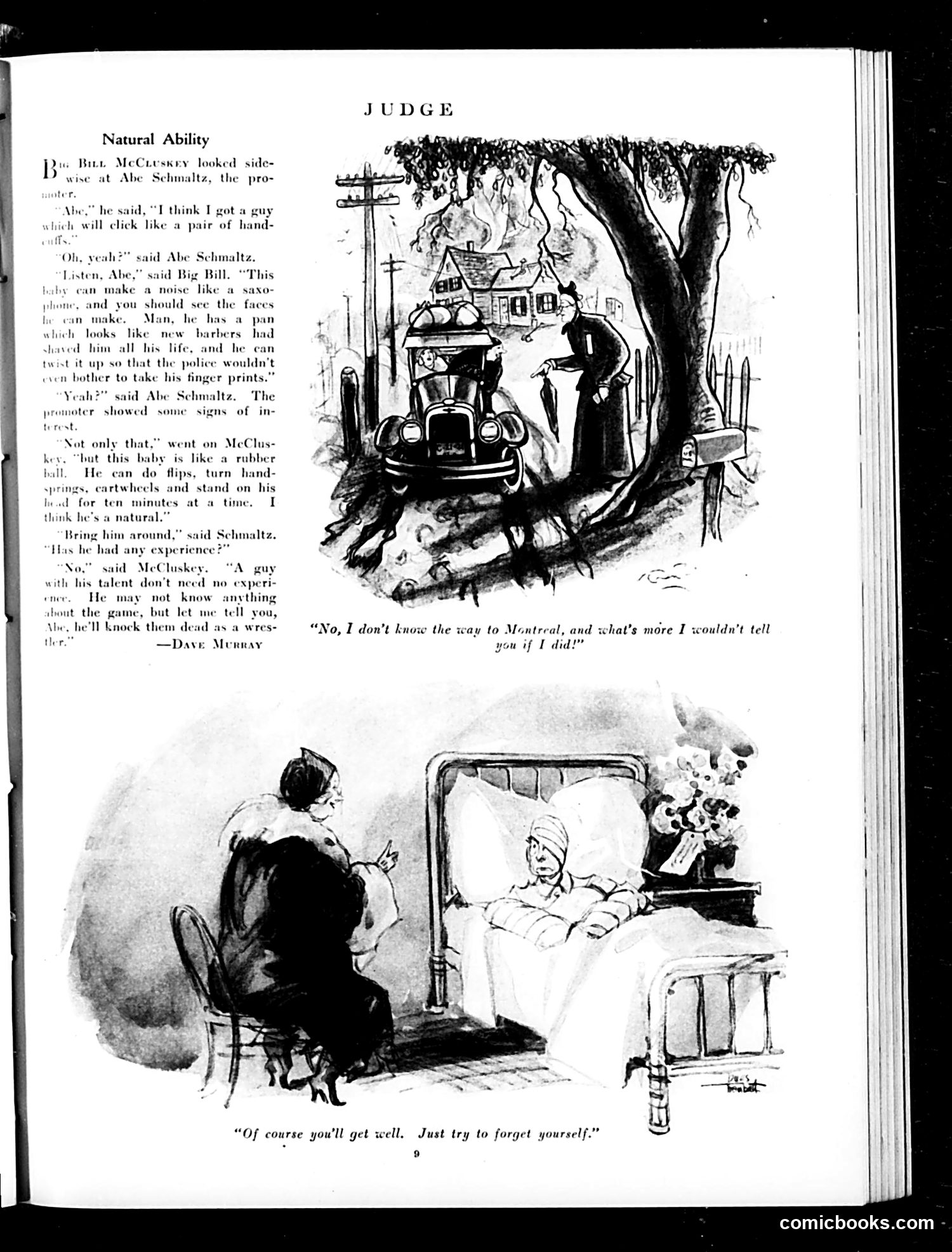
# Analysis This page contains two distinct comic pieces from Judge magazine. **Top cartoon ("Natural Ability"):** Two promoters—Big Bill McCluskey and Abe Schmaltz—discuss a talented performer. McCluskey pitches an act featuring a saxophonist who can also perform acrobatic feats (flips, handstands, cartwheels). Schmaltz expresses skepticism about the act's viability without experience, but McCluskey insists raw talent alone will succeed. The satire mocks overconfident promoters who overvalue natural ability while dismissing the need for training or experience—a recurring theme in entertainment industry criticism. **Bottom cartoon:** A woman sits bedside with an ill person. The sick person says they won't forget their troubles, and the visitor replies "Of course you'll get well. Just try to forget yourself." This is absurdist humor mocking the vapid platitudes offered to the sick—well-meaning but entirely unhelpful advice that dismisses genuine suffering with cheerful willful ignorance. Both pieces use humor to critique human folly through exaggeration.
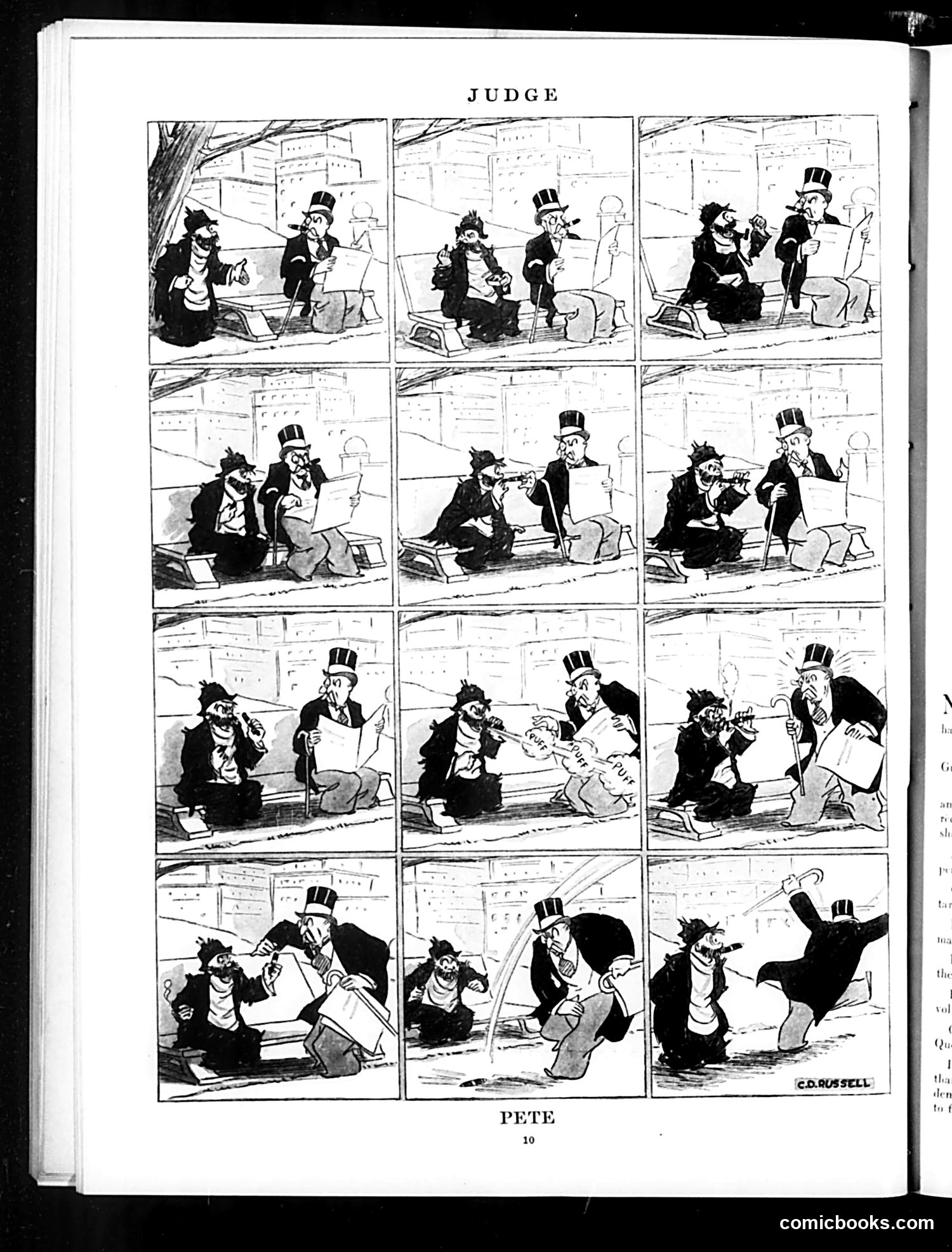
# Judge Comic: "Judge" and "Pete" This is a 12-panel satirical comic strip by G.D. Russell showing two caricatured figures in formal attire (top hats and coats) in what appears to be an urban setting. The characters engage in an escalating physical confrontation, progressing from conversation to argument to fighting, culminating in one character being kicked. The figures appear to represent political or social types—their exaggerated features and formal dress suggest they're meant as satirical commentary on specific public figures or social classes, likely judges or legal/political authorities given the page title "JUDGE." However, without additional context or clearer identification of the specific individuals being caricatured, the precise political reference remains unclear. The humor derives from the visual slapstick escalation and the characters' pompous appearance contrasted with their undignified brawling.
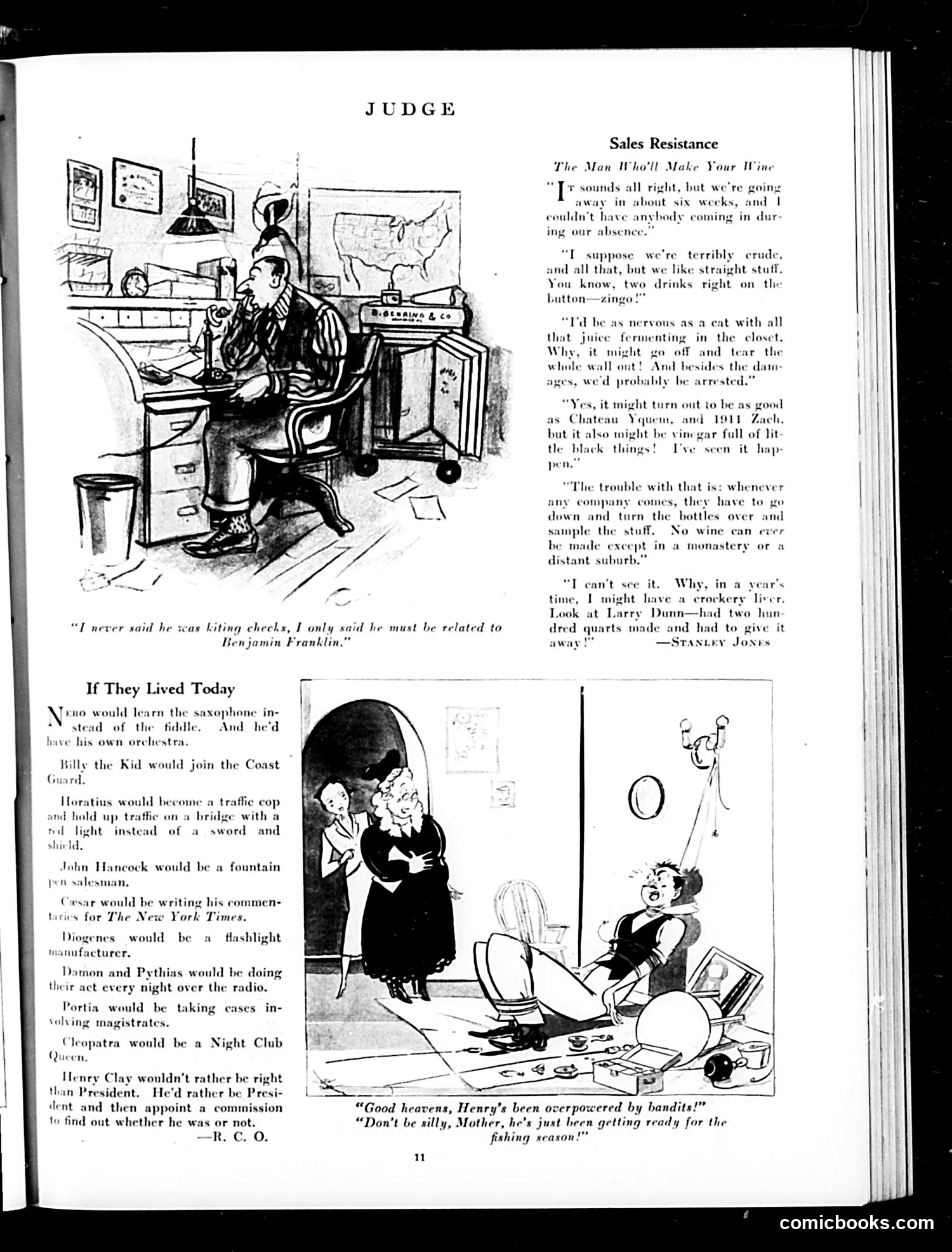
# Analysis of Judge Magazine Page This page contains two satirical pieces typical of 1920s-era Judge magazine humor: **"Sales Resistance"** depicts a wine salesman's pitch to customers hesitant about home winemaking during Prohibition. The joke hinges on their elaborate excuses—they're leaving town, they fear explosions, the wine might turn to vinegar—while the salesman counters with references to prestigious wines like Château d'Yquem and "1911 Zach" (likely Château d'Iquem 1911). The final punchline references "Larry Dunn," apparently someone known for making homemade wine, suggesting the absurdity of their resistance. **"If They Lived Today"** imagines historical figures in modern (1920s) occupations: Nero as a saxophonist, Julius Caesar writing for the New York Times, Diogenes as a flashlight manufacturer. The humor relies on incongruity between ancient figures and contemporary American life. The second cartoon shows a boy surrounded by fishing gear while his mother exclaims he's been "overpowered by bandits"—likely satirizing overprotective mothers or American anxiety about childhood dangers of the era.