A complete issue · 36 pages · 1930
Judge — August 2, 1930
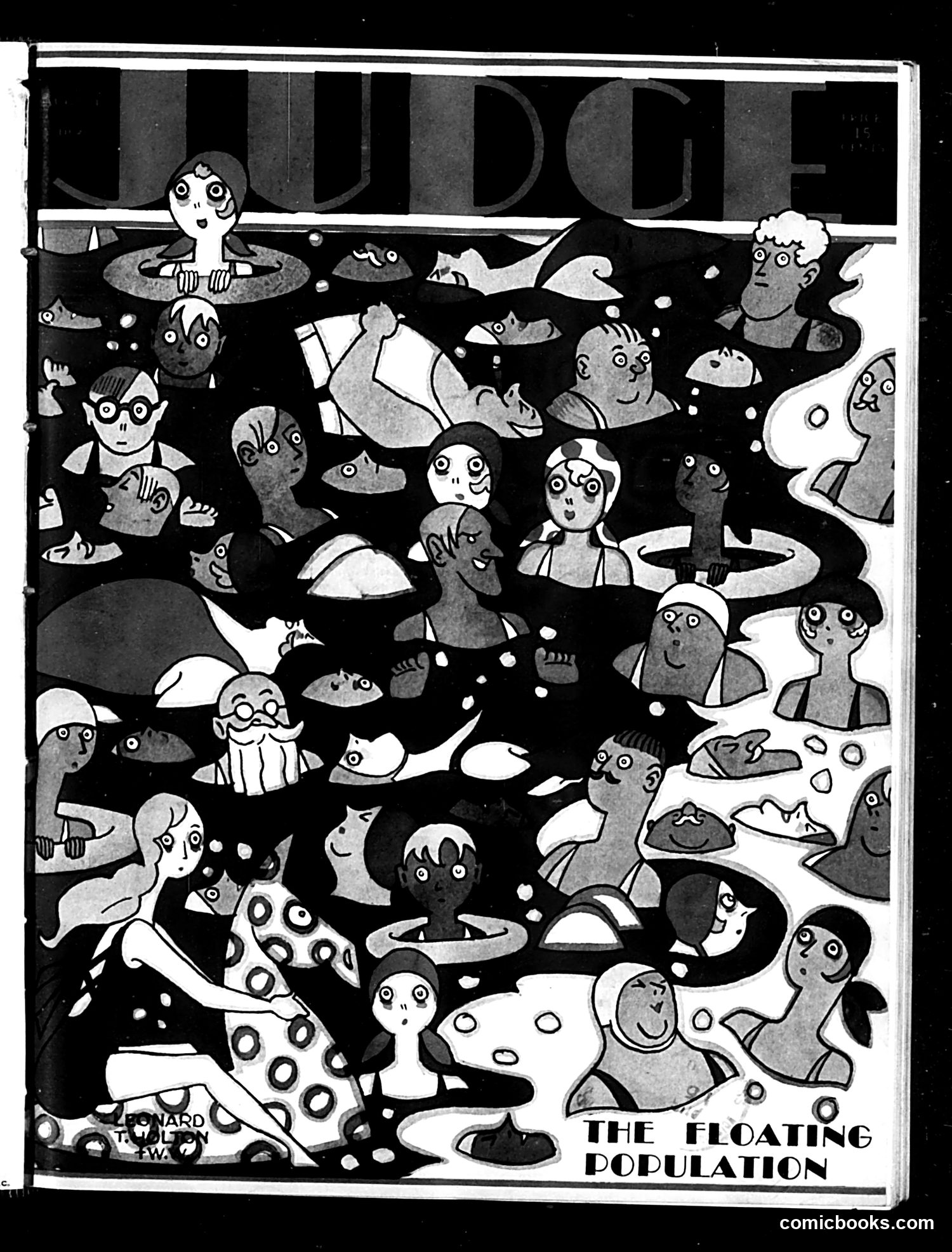
# "The Floating Population" - Judge Magazine This satirical cartoon depicts what appears to be an underwater or fantastical scene titled "The Floating Population." The densely packed composition shows numerous grotesque figures with exaggerated features—wide eyes, distorted faces, and unusual body proportions—crowded together in a surreal space with fish, bubbles, and strange vessels. The satire likely comments on immigration, overcrowding, or urban population density, themes Judge frequently addressed. The aquatic setting may metaphorically represent people adrift or displaced. The term "floating population" historically referred to transient workers or those without fixed residence. Without clearer identification of specific caricatures or publication date, the exact political target remains uncertain, though the grotesque stereotyping and crowded composition suggest commentary on contemporary social anxieties about demographic change.
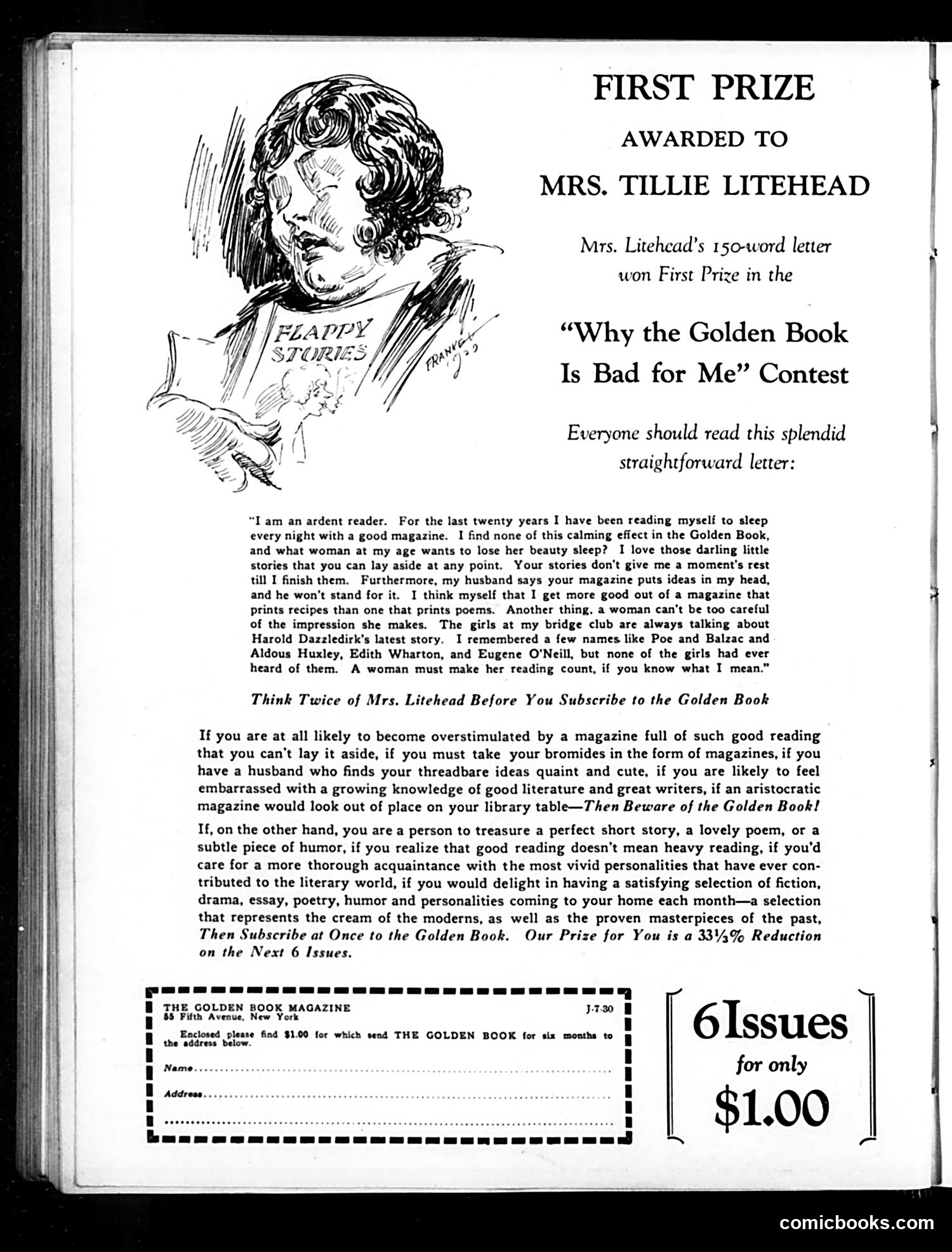
# Analysis This page primarily functions as **advertising** for *The Golden Book* magazine, not political satire. It features a contest winner, Mrs. Tillie Litehead, whose letter critiques *The Golden Book* as unsuitable for serious readers. Mrs. Litehead's complaint centers on the magazine's lightweight content: she values substantive literature by canonical authors (Poe, Balzac, Huxley, Wharton, O'Neill) over the magazine's accessible short stories. She argues it corrupts readers' taste and promotes superficial knowledge. The *Judge* editors use her letter ironically to **mock literary snobbery**—positioning Mrs. Litehead as the satirical target. They suggest that readers who dismiss *The Golden Book* as lowbrow miss its genuine literary merit and variety. The advertisement frames rejecting the magazine as pretentious.
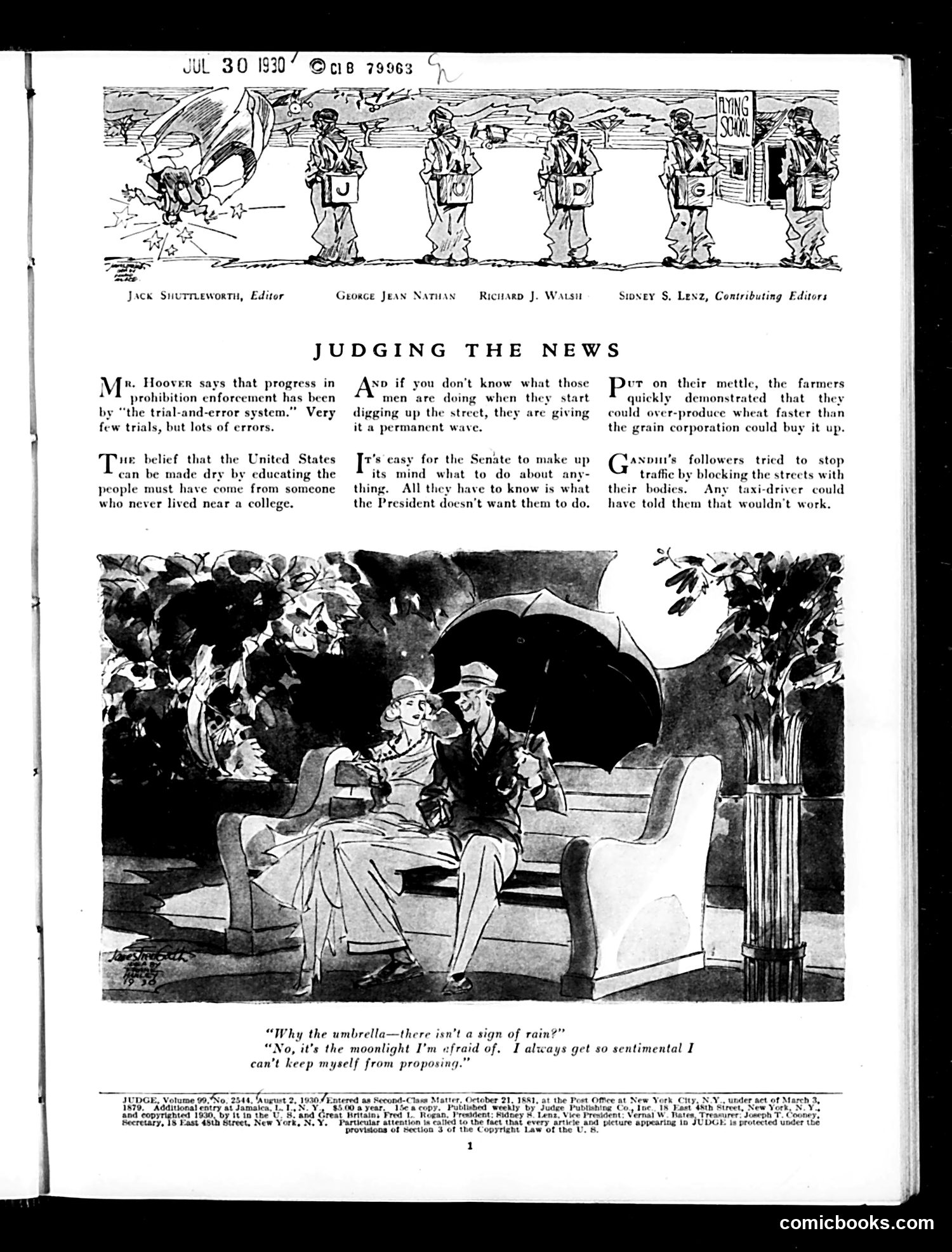
# "Judging the News" - August 2, 1930 This satirical page critiques news commentary and current events. The header cartoon depicts five male editors/commentators holding newspapers, with one dramatic figure on the left (possibly representing sensationalism or exaggeration in reporting). Below, a main cartoon shows a couple on a park bench under an umbrella during rain. The man proposes marriage, attributing his sentimentality to moonlight—despite the weather clearly contradicting this. The caption satirizes how people deceive themselves or manufacture romantic pretenses. The brief text snippets above mock various political figures and policies: Hoover's prohibition enforcement claims, Senate decision-making, and Gandhi's non-violent protest tactics. The satire suggests these public figures similarly distort truth or reality to serve their agendas—paralleling the romantic self-deception in the main cartoon.
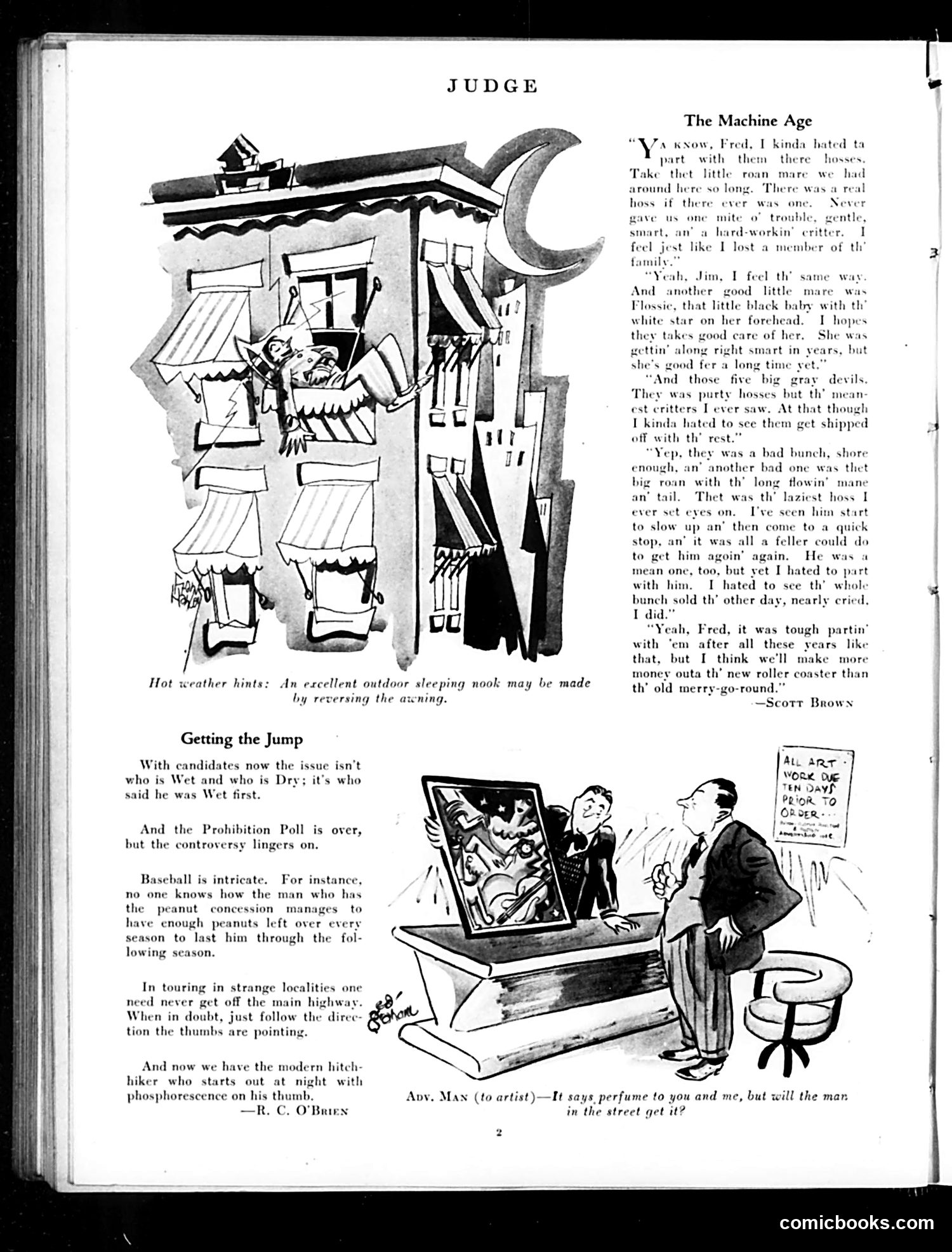
# Page Analysis: Judge Magazine Satire **Main Cartoon ("Getting the Jump"):** This political cartoon appears to reference early 20th-century election politics, specifically mentioning "Wet" vs. "Dry" candidates—a reference to Prohibition debates. The figure at the machine appears to be a political operative or candidate manipulating public opinion through what looks like an early arcade or mechanical device, suggesting cynical control of political messaging. **Surrounding Humor:** Brief satirical notes mock baseball management, touring etiquette, and modern hitchhikers with phosphorescent thumbs—typical period humor about contemporary absurdities. The adjacent "Adv. Max" cartoon jokes about perfume advertising's manipulative tactics. **Context:** This reflects Progressive Era skepticism toward political machinery and emerging mass-media influence on democracy.
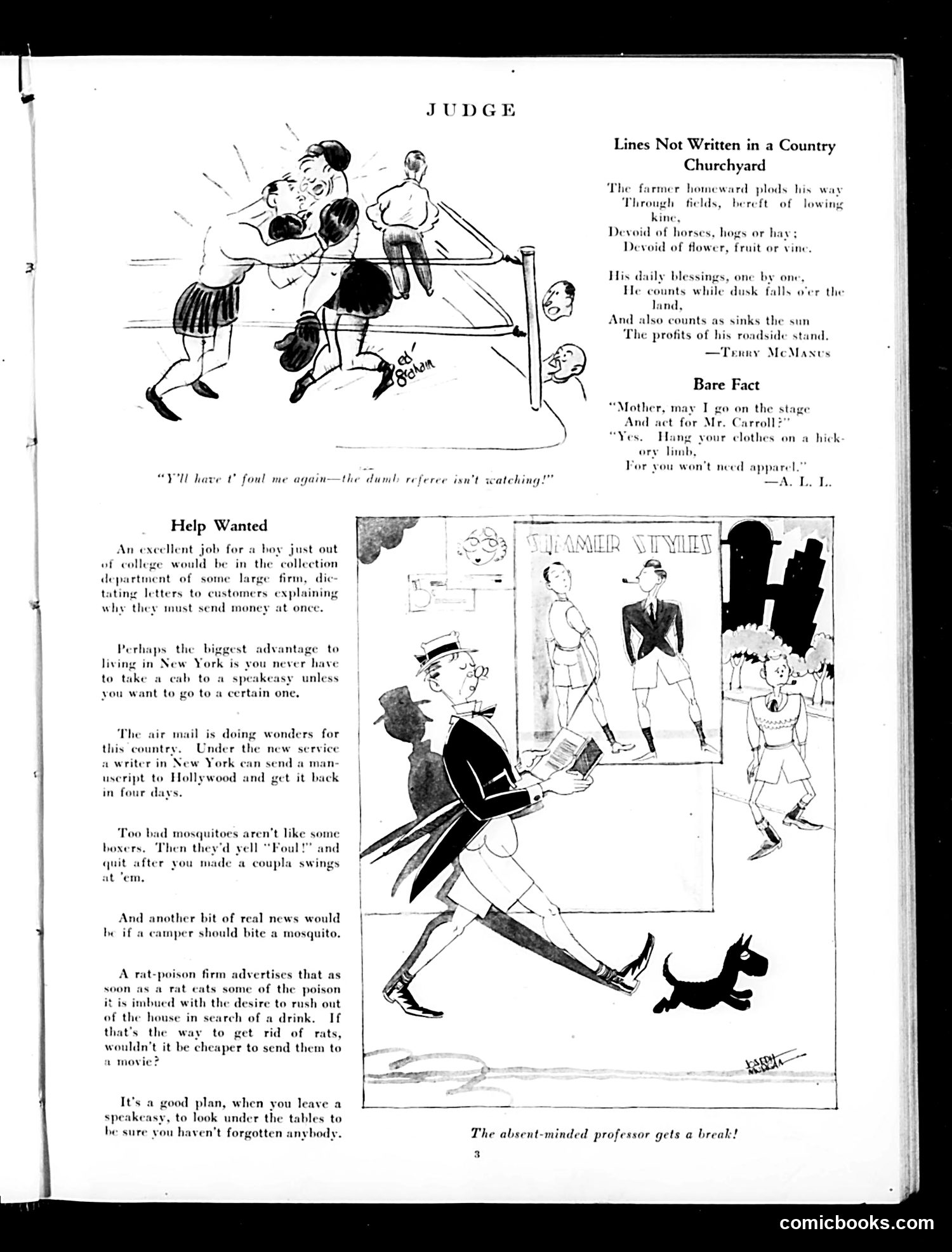
# Judge Magazine Page Analysis **Top Cartoon:** Shows what appears to be a street fight or altercation with the caption "I'll have t' foul me again—the dumb referee isn't watching!" This is boxing/sports humor about a referee not paying attention, suggesting dirty play will go unpunished. **"Help Wanted" Section:** Contains humorous job advice and observations—collecting overdue debts, New York transportation, mosquitoes, rat poison, and speakeasy etiquette. These are satirical commentary on 1920s urban life, with the speakeasy reference suggesting Prohibition-era venues. **Right Cartoon:** "The absent-minded professor gets a break!" shows a disheveled man chasing a small dog near what appears to be a summer theater or outdoor venue, poking fun at an absent-minded academic. The page is primarily humor and light satire about contemporary urban American life.
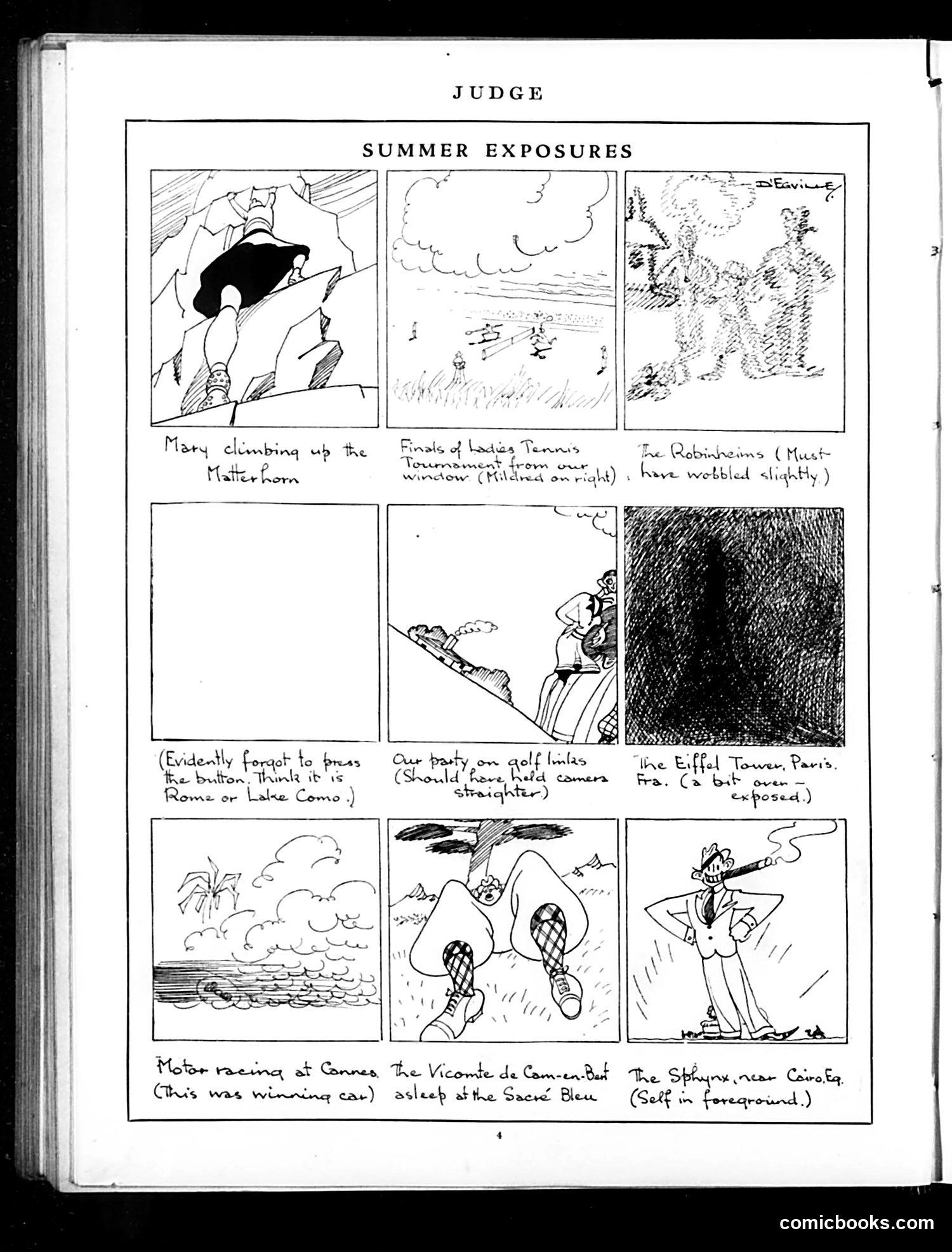
# "Judge" - Summer Exposures This page presents nine comic panels depicting humorous "exposures" of summer activities, likely from the early 20th century based on the art style. The cartoons satirize typical upper-class summer pastimes: a woman climbing a matterhorn, ladies' tennis tournament spectators, the Rothschilds's supposedly webfooted nature, golf outings, Parisian tourism (Eiffel Tower), motor racing at Cannes, and a character near Cairo's Sphinx. The humor relies on physical comedy and gentle mockery of wealthy leisure activities—forgotten camera film, improper golf attire, sleeping at formal events, and exaggerated anatomical jokes about prominent families. The page appears non-partisan, targeting fashionable society's summer habits rather than political figures or specific events, functioning as light social commentary typical of Judge magazine's satirical approach to contemporary manners.
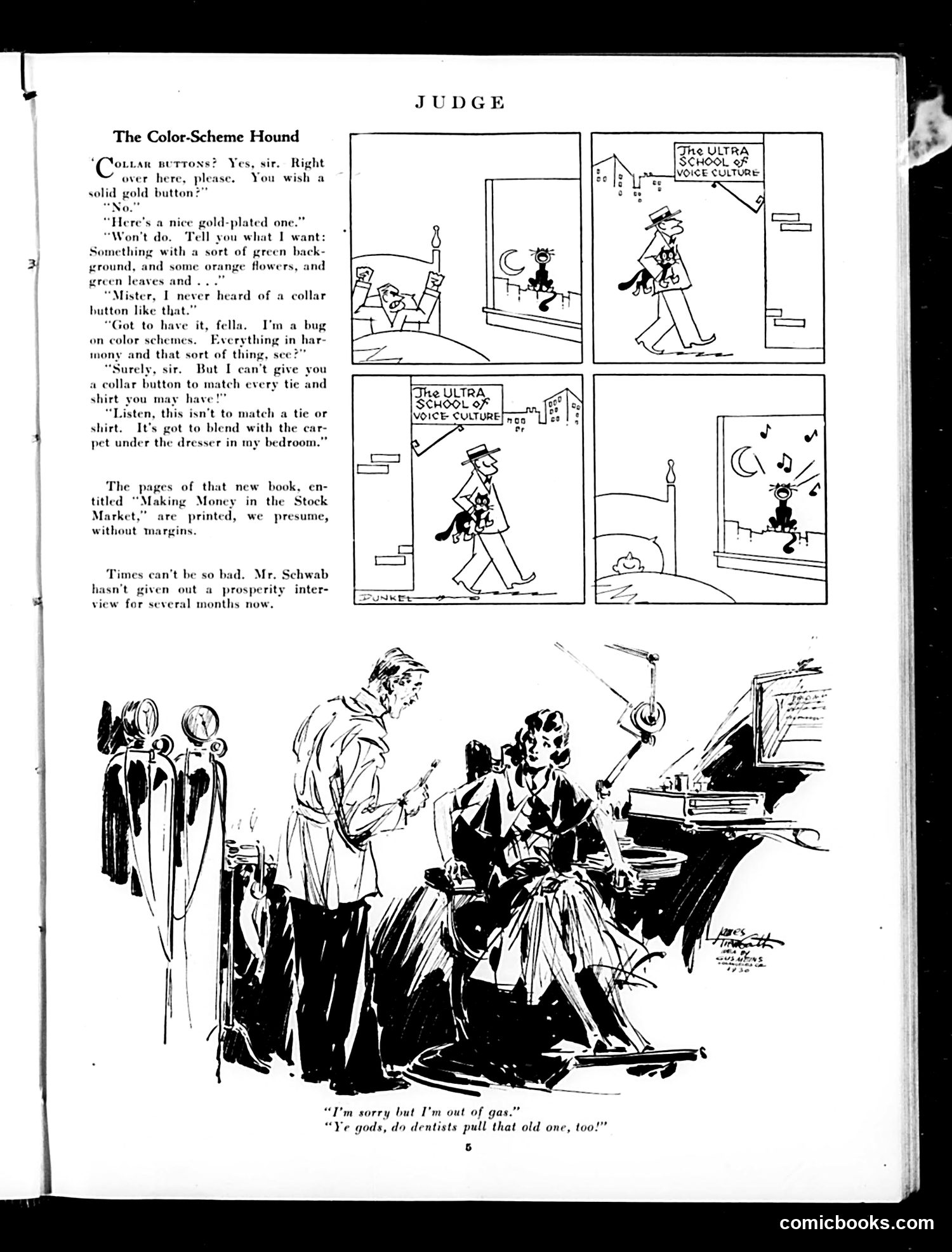
# "The Color-Scheme Hound" - Judge Magazine This page satirizes someone obsessed with color coordination in fashion and home décor. The dialogue shows a fussy character demanding a collar button that matches his entire wardrobe and carpet—an impossibly pedantic aesthetic concern. The humor targets this type of person as a "bug on color schemes." The comic strips above show "The Ultra School of Voice Culture," mocking exaggerated vocal training methods popular in the era. The larger illustration below depicts what appears to be a dentist or doctor's office during an emergency, with the caption "'I'm sorry but I'm out of gas.' / 'Ye gods, do dentists pull that old one, too!'" This jokes about a common excuse (running out of gas) being used even by professionals, suggesting it's an overused alibi during the economic constraints referenced in the text about "Making Money in the Stock Market" and economic hardship.
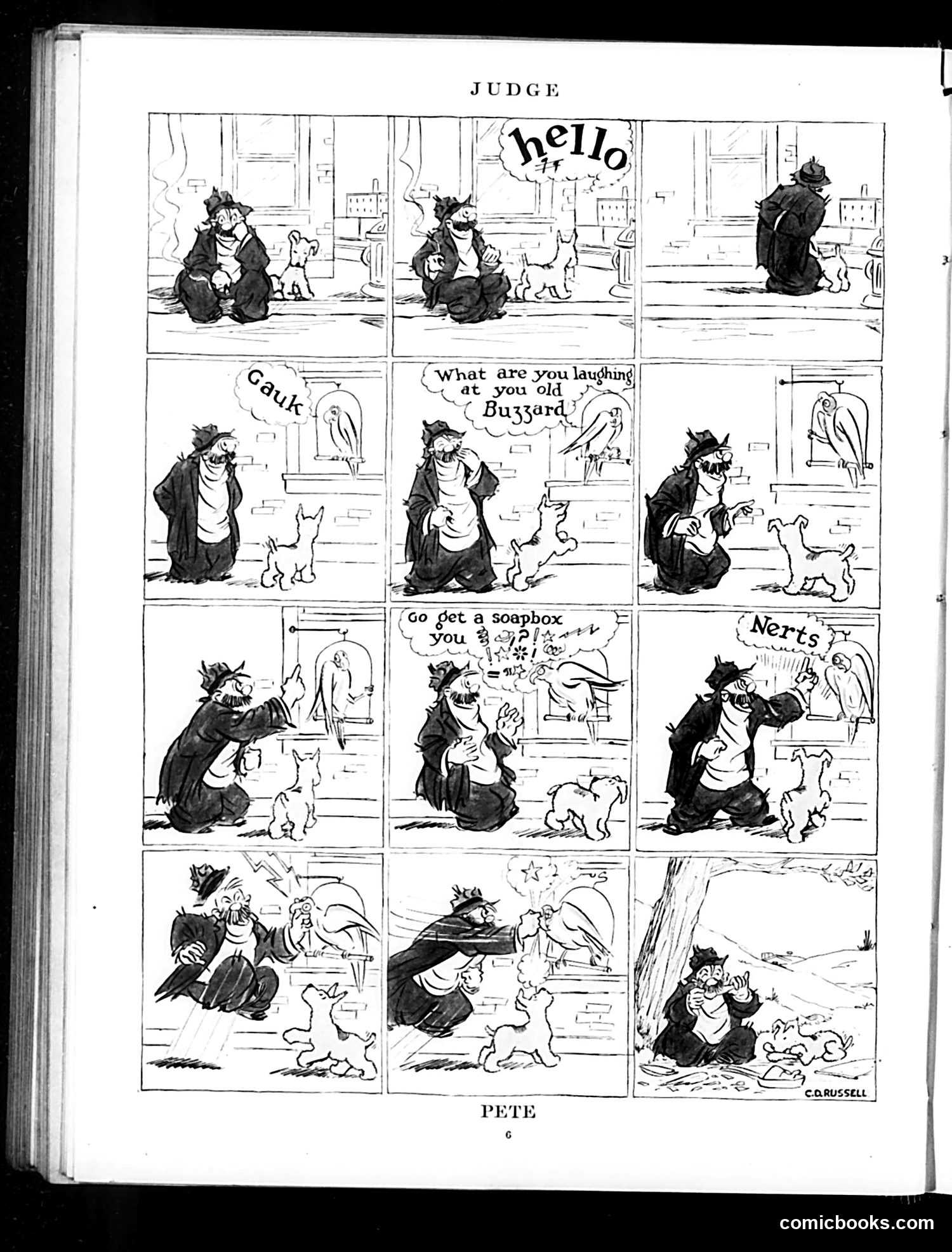
# Judge Comic Strip Analysis This is a humorous comic strip titled "Judge Pete" by C. Russell depicting an interaction between a grumpy, disheveled man in dark clothing and a small dog. The narrative shows the man initially greeting the dog with "hello," then becoming irritated ("Gauk!") when the dog laughs at him. He insults the dog, calling it a "Buzzard," and orders it to get a soapbox. The strip culminates with the man chasing the dog and declaring "Nerts!" (a period exclamation expressing frustration). The humor relies on the absurdist reversal of roles—the man treats the dog with contempt typically directed at human rivals or adversaries. The "soapbox" reference suggests street-corner debate culture common in early 20th-century America. The satire appears to mock cantankerous human nature rather than target specific political figures.
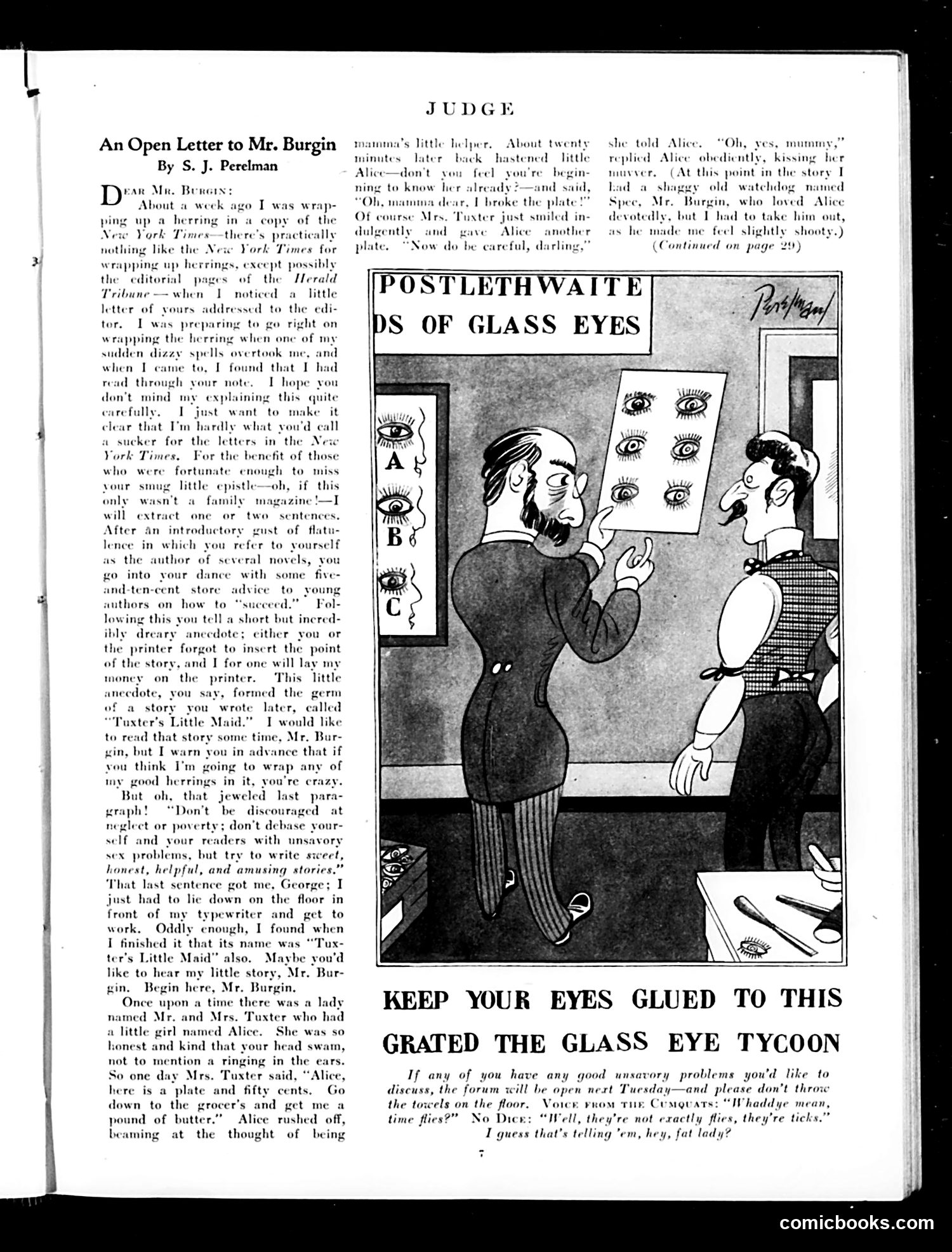
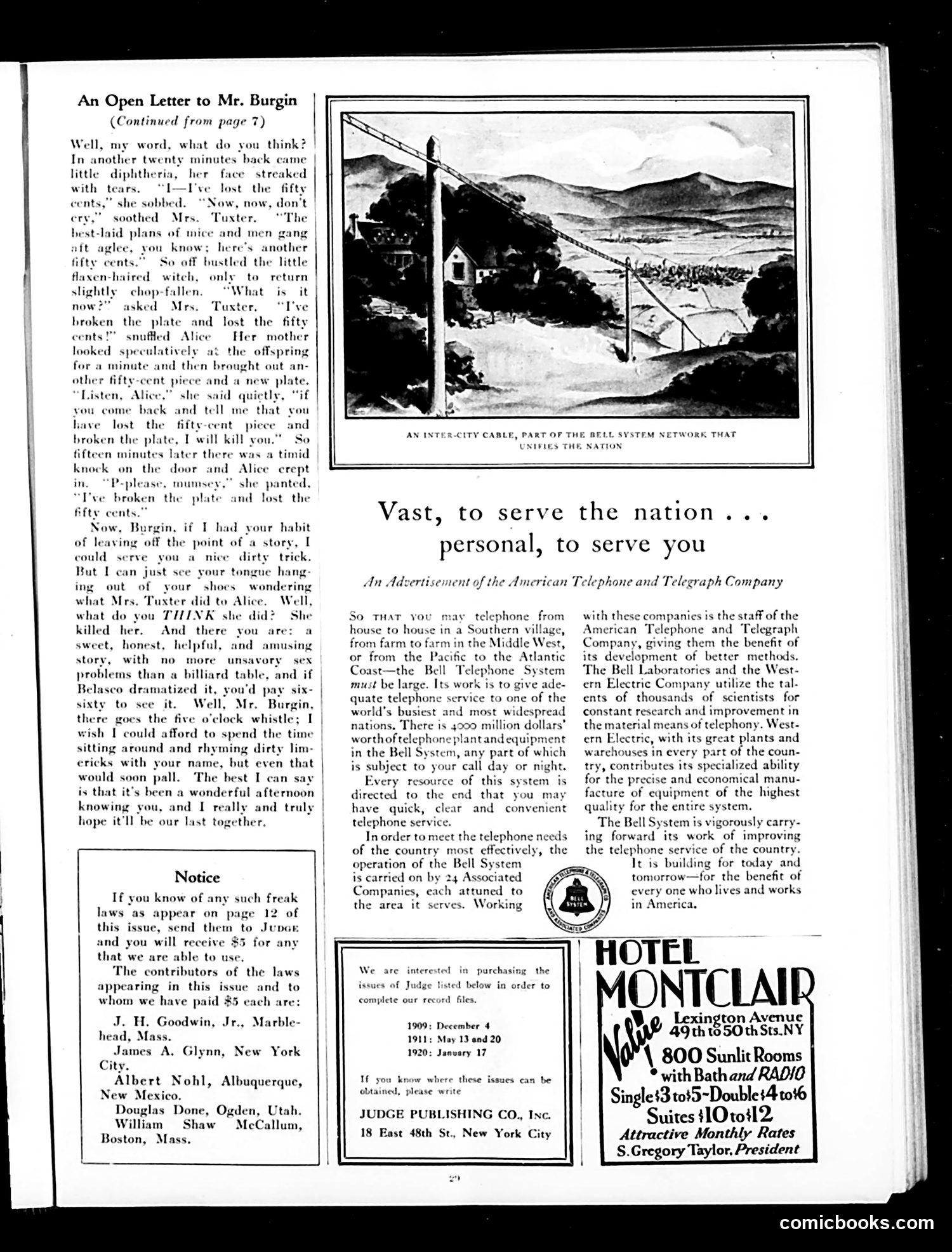
# Analysis for Modern Readers This page contains two satirical pieces from *Judge* magazine: **"An Open Letter to Mr. Burgin"** is a humorous essay by S.J. Perelman mocking writing advice. Burgin (likely a real advice columnist) had published self-important tips for aspiring authors, urging them to avoid "unsavory" topics and write "sweet, honest, helpful" stories. Perelman ridicules this sanctimonious guidance by composing "Tuxter's Little Maid"—a deliberately saccharine children's story about Alice delivering butter—to demonstrate the absurdity of Burgin's constraints on writers. The satire attacks censorious, moralizing gatekeepers who dictate what literature "should" be. **"Glass Eyes" cartoon** (right) shows a man displaying glass eyes to a customer, with a pun-based caption. The humor is largely visual wordplay now obscure to modern readers, though it appears to mock commercial hucksterism. Both pieces reflect mid-20th-century anxieties about artistic freedom versus propriety—Perelman championing writers against puritanical critics.
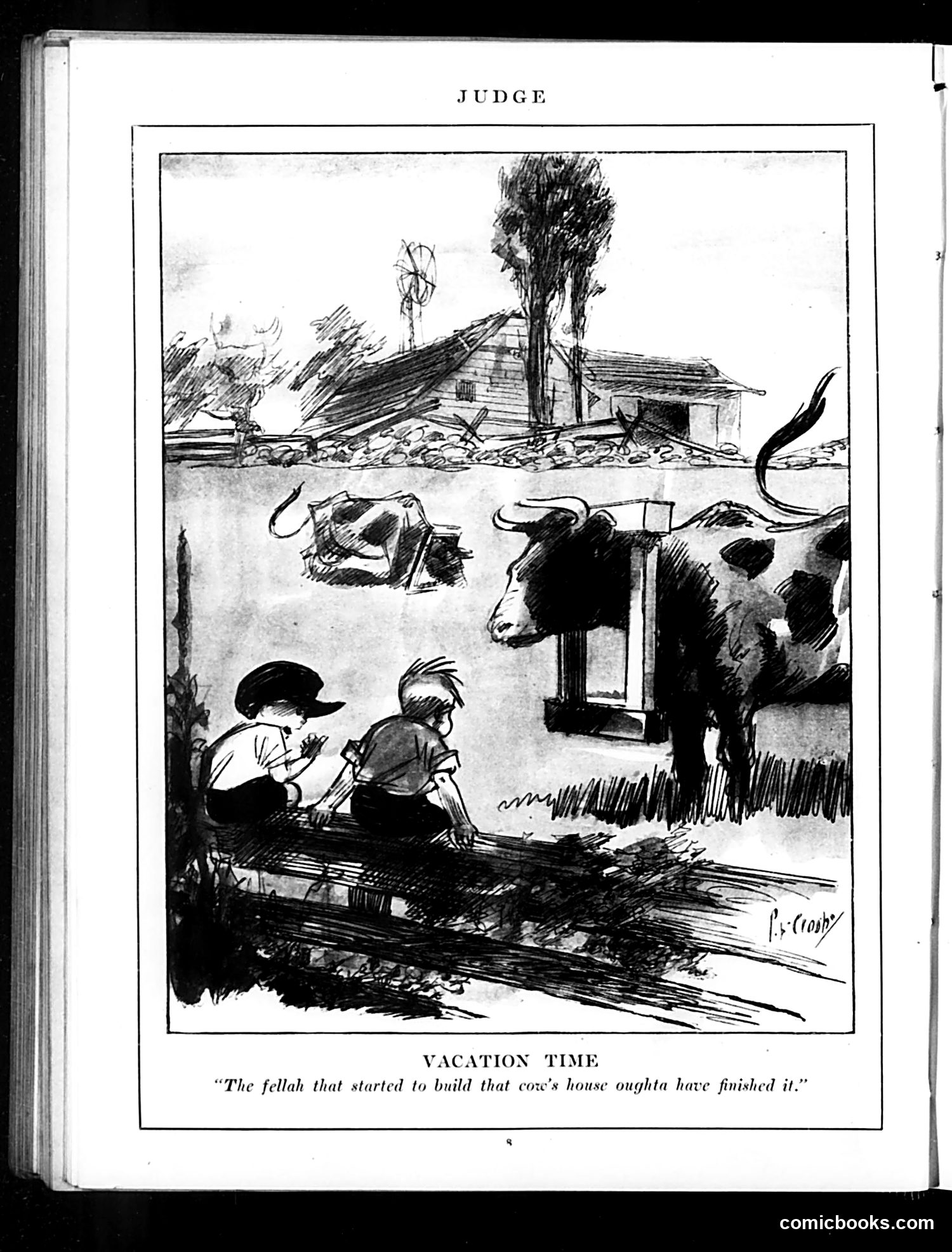
# Explanation for Modern Readers This cartoon satirizes incomplete home construction projects. Two boys observe an unfinished structure in a rural setting while cattle roam nearby. The caption's humor relies on the absurdist idea that someone began building a house specifically *for the cow* rather than for themselves—suggesting the builder prioritized the animal's shelter over their own or abandoned the project midway. The joke likely targets vacation-time laziness or poor planning: someone started an ambitious building project before taking time off, leaving it incomplete. The "fellah" (fellow) should have finished before leaving. The cartoon mocks both incomplete DIY projects and poor time management, themes relatable to early-20th-century middle-class readers of *Judge* magazine who might attempt home improvements.
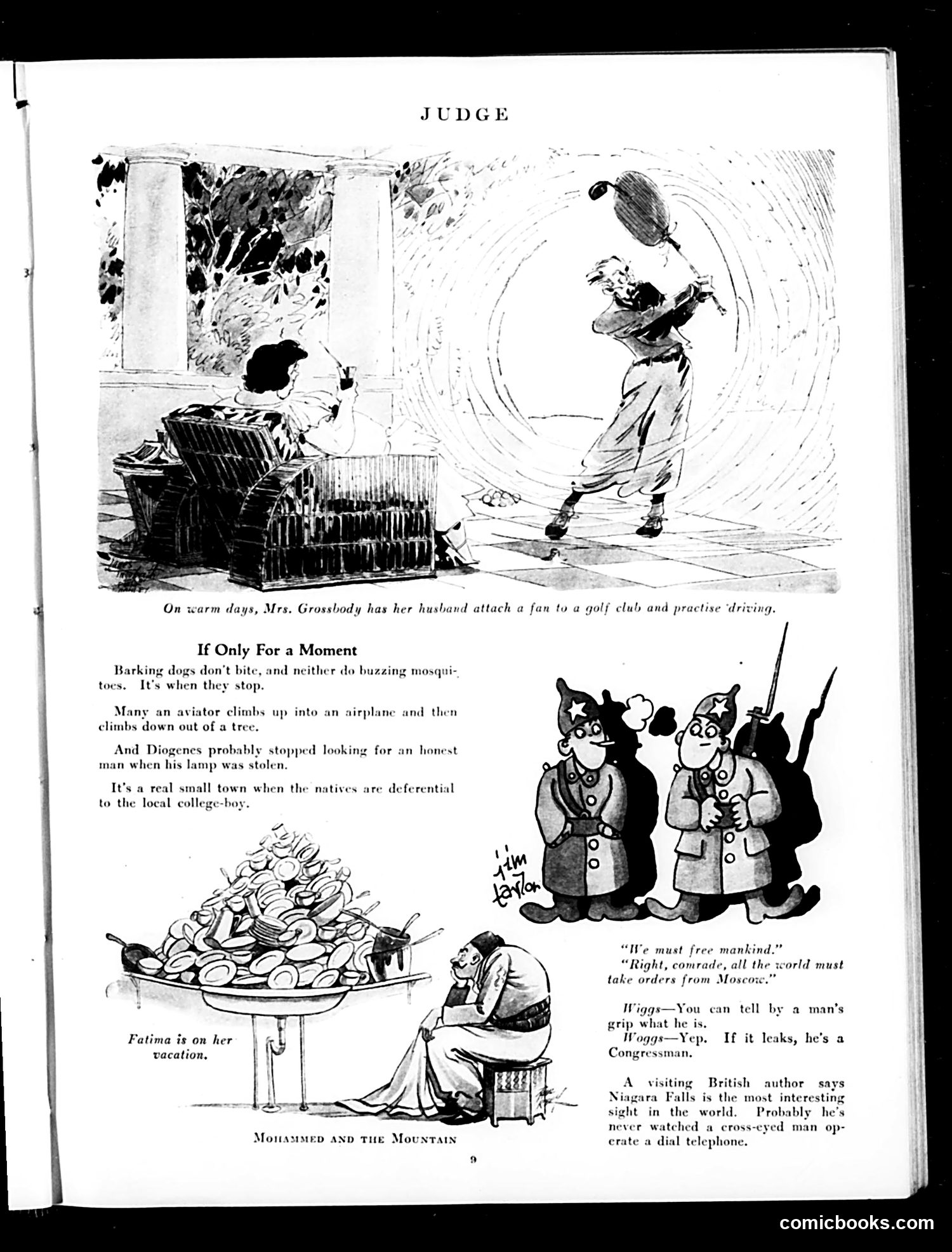
# Analysis of Judge Magazine Page This page contains several unrelated humorous short jokes and cartoons typical of Judge's satirical format: **Top cartoon**: Mrs. Grossbody's husband attaches a fan to a golf club as a makeshift cooling device—a practical solution for hot weather that plays on domestic improvisation. **"If Only For a Moment"**: A series of one-liners exploiting logical paradoxes and social observations (barking dogs don't bite, aviators crashing, etc.). **Political cartoon** (right side): Two military figures discussing freeing mankind while taking orders from Moscow—clear Cold War-era satire about Soviet communism and the contradiction of Soviet-controlled "liberation." **"Wiggs/Woggs" joke**: A pun where a weak handshake (leaking grip) indicates someone is a Congressman—satirizing politicians as unreliable or insubstantial. **Bottom cartoons**: Fatima on vacation and a joke about a cross-eyed man operating a telephone—absurdist humor with no clear political meaning. The page reflects Judge's blend of domestic satire, political commentary (anti-Soviet), and general wit aimed at early-to-mid 20th century readers.
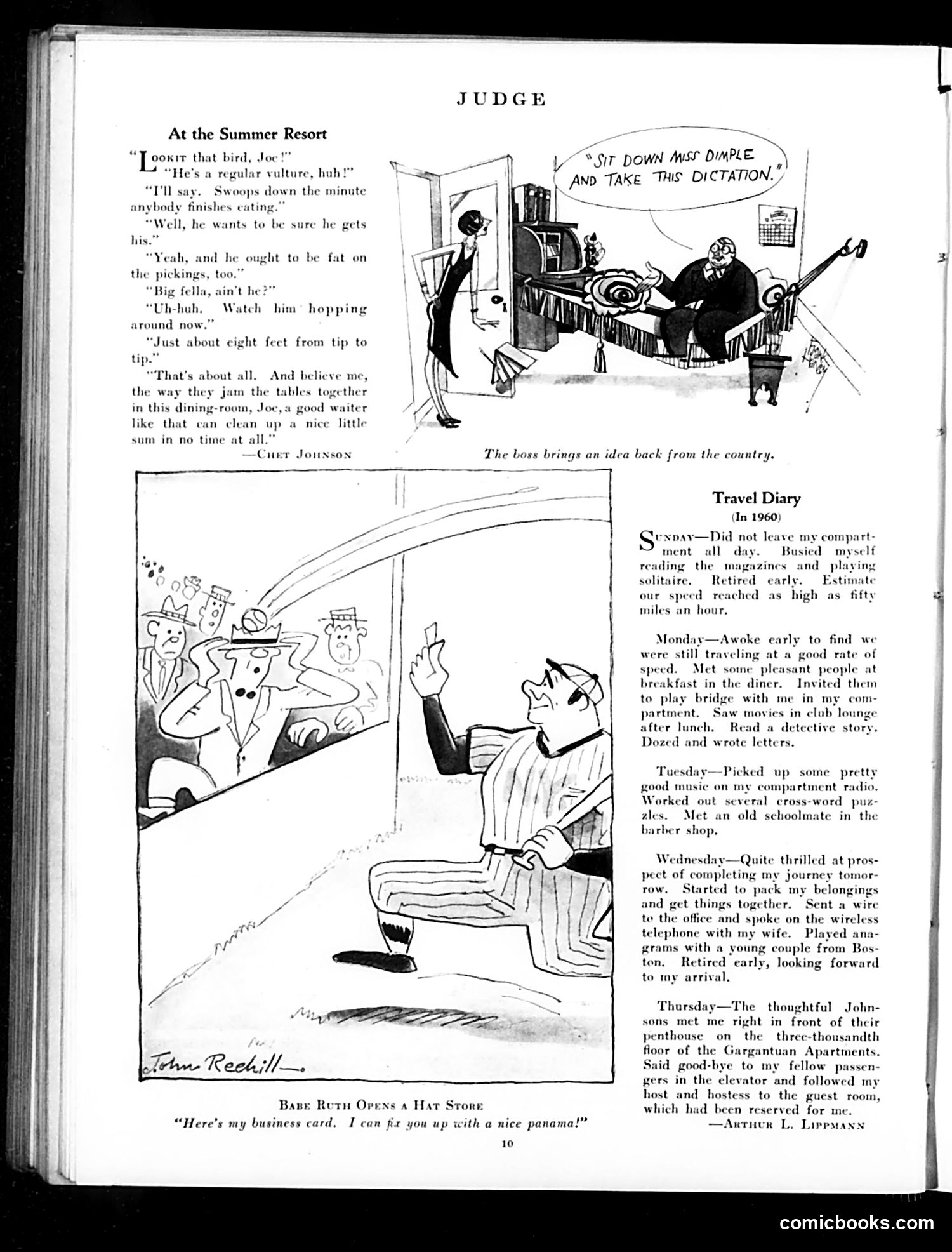
# Analysis of Judge Magazine Page **Top Cartoon ("At the Summer Resort"):** This depicts wealthy diners complaining about a large bird (a vulture) that aggressively steals food scraps from their table. The joke satirizes both the vulture's shameless opportunism and the diners' obsessive concern with "getting theirs"—suggesting summer-resort society mirrors the bird's greedy behavior. The vulture becomes a caricature of uncouth wealth-seeking. **Middle Cartoon ("Babe Ruth Opens a Hat Store"):** Signed by John Reckhill, this shows baseball legend Babe Ruth working retail, offering customers panama hats. The caption's casual tone ("I can fix you up with a nice panama!") satirizes celebrities endorsing products outside their expertise—a common 1920s-era practice. It mocks both Ruth's business venture and celebrity marketing culture. **Travel Diary Section:** Arthur L. Lippmann's account of a 1960 train journey describes mundane leisure activities (card games, radio, meeting acquaintances). This appears straightforward anecdotal writing rather than satirical commentary, documenting period travel habits.