A complete issue · 36 pages · 1930
Judge — April 26, 1930
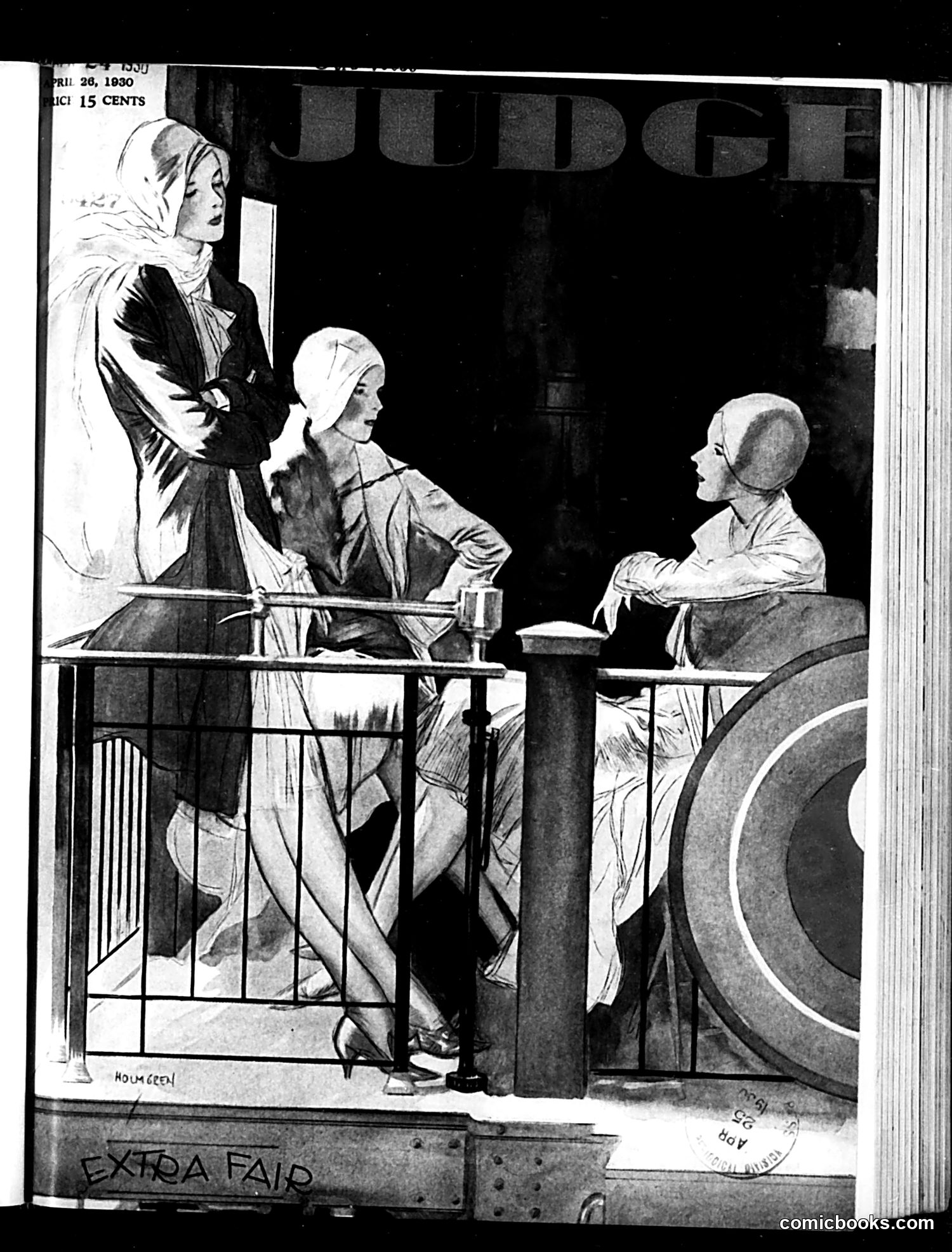
# Analysis of Judge Magazine Page (April 30, 1930) This cartoon, titled "EXTRA FAIR," depicts three women in what appears to be a laundry or washing facility, suggested by the large barrel or drum visible on the right. One woman stands elevated, gesturing to the two seated figures below her. The satire likely comments on women's labor conditions or domestic work during the Depression era. The "EXTRA FAIR" title and the positioning suggest commentary on fair wages or treatment for female workers—possibly critiquing either inadequate compensation or unfair working conditions. The elevated figure may represent management or authority explaining (or failing to explain) why conditions remain problematic. Without additional context about contemporary events from April 1930, the specific industrial or labor dispute referenced remains unclear.
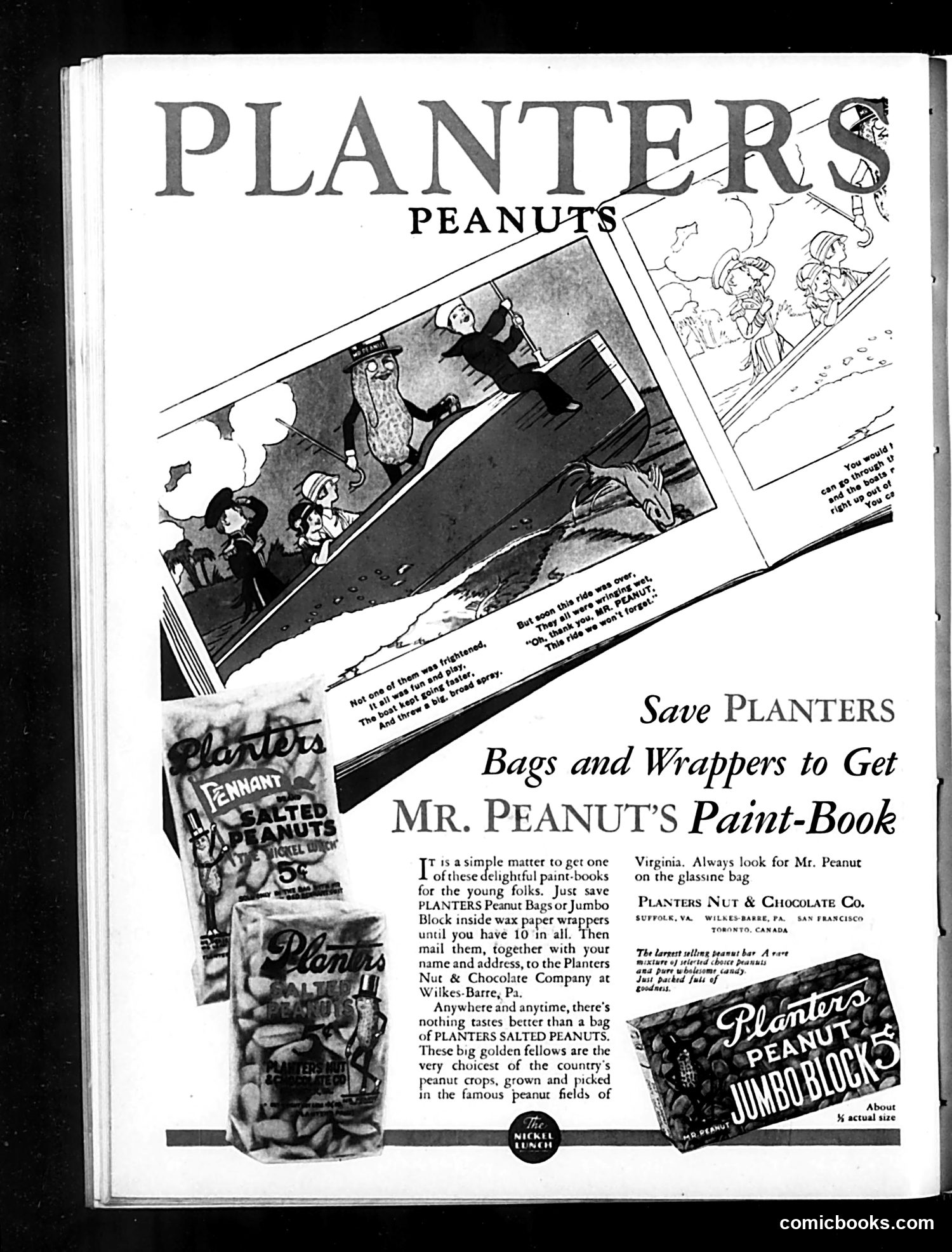
# Analysis This page is primarily a **Planters Peanuts advertisement** rather than political satire. The main content promotes a mail-in promotion: consumers could collect 10 Planters Peanut bags or Jumbo Blocks to obtain a free "Mr. Peanut's Paint-Book" for children. The cartoon illustration shows Mr. Peanut (the brand's monocled mascot) as a distinguished gentleman, along with other figures in what appears to be a whimsical scene—likely designed to appeal to young audiences and justify the paint-book premium offer. The ad emphasizes Planters' product quality and heritage from Virginia peanut fields. Two product images (Salted Peanuts and Jumbo Block) are displayed. The advertising strategy targets families by offering a collectible children's item, a common marketing tactic of the era.
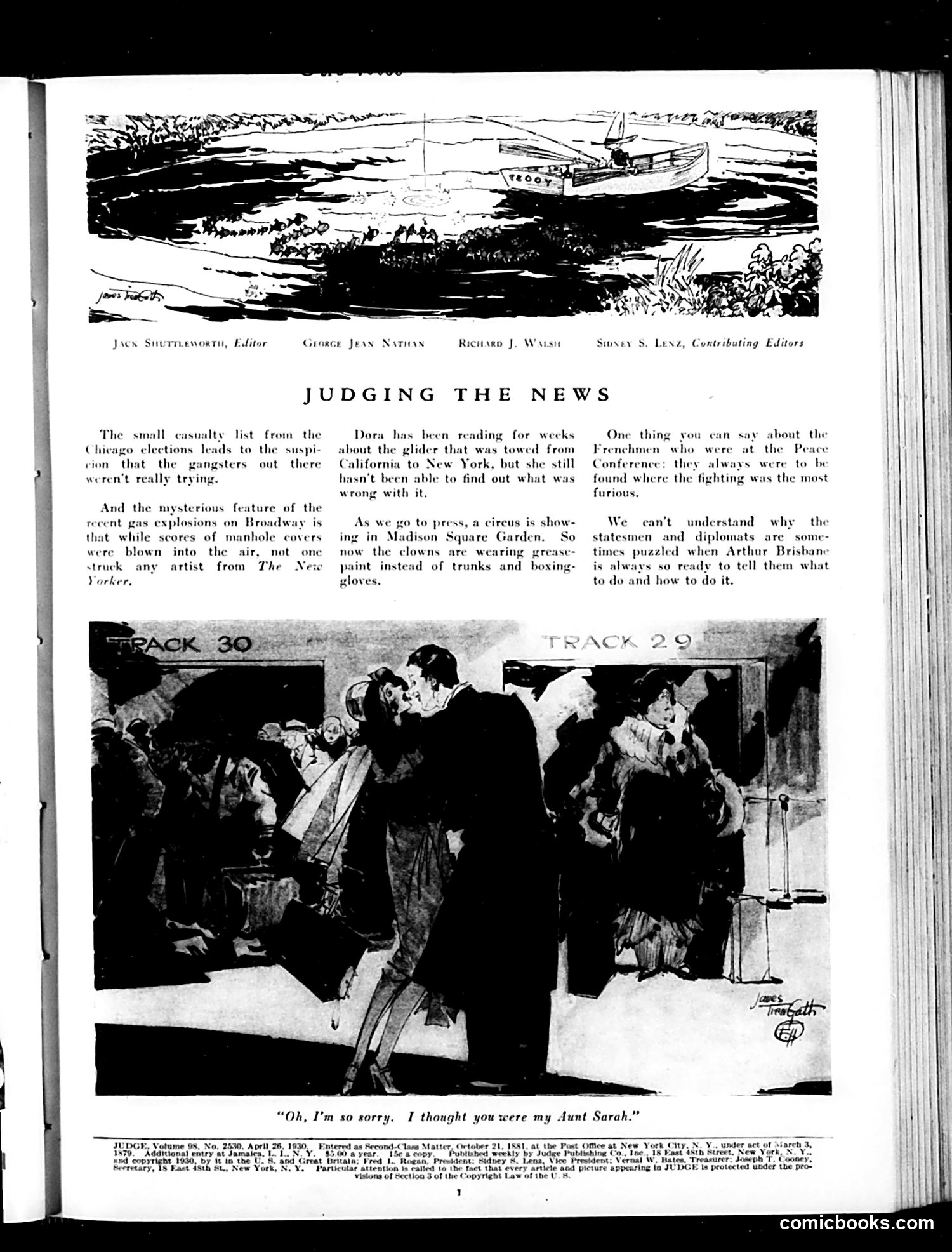
# Analysis of "Judging the News" Page This page from *Judge* magazine contains a satirical column and a single cartoon. The column discusses current events including Chicago election fraud suspicions, Broadway explosions, and a circus in Madison Square Garden. The main cartoon, captioned "Oh, I'm so sorry. I thought you were my Aunt Sarah," depicts two women at what appear to be train platform tracks (labeled 30 and 29). One woman has apparently grabbed or accosted another, mistaking her identity. The humor relies on the awkward social situation of public embarrassment—a common theme in early 20th-century humor where mistaken identity leads to comedic mishaps. The crowded platform setting suggests urban transit chaos, a frequent subject of period satire.
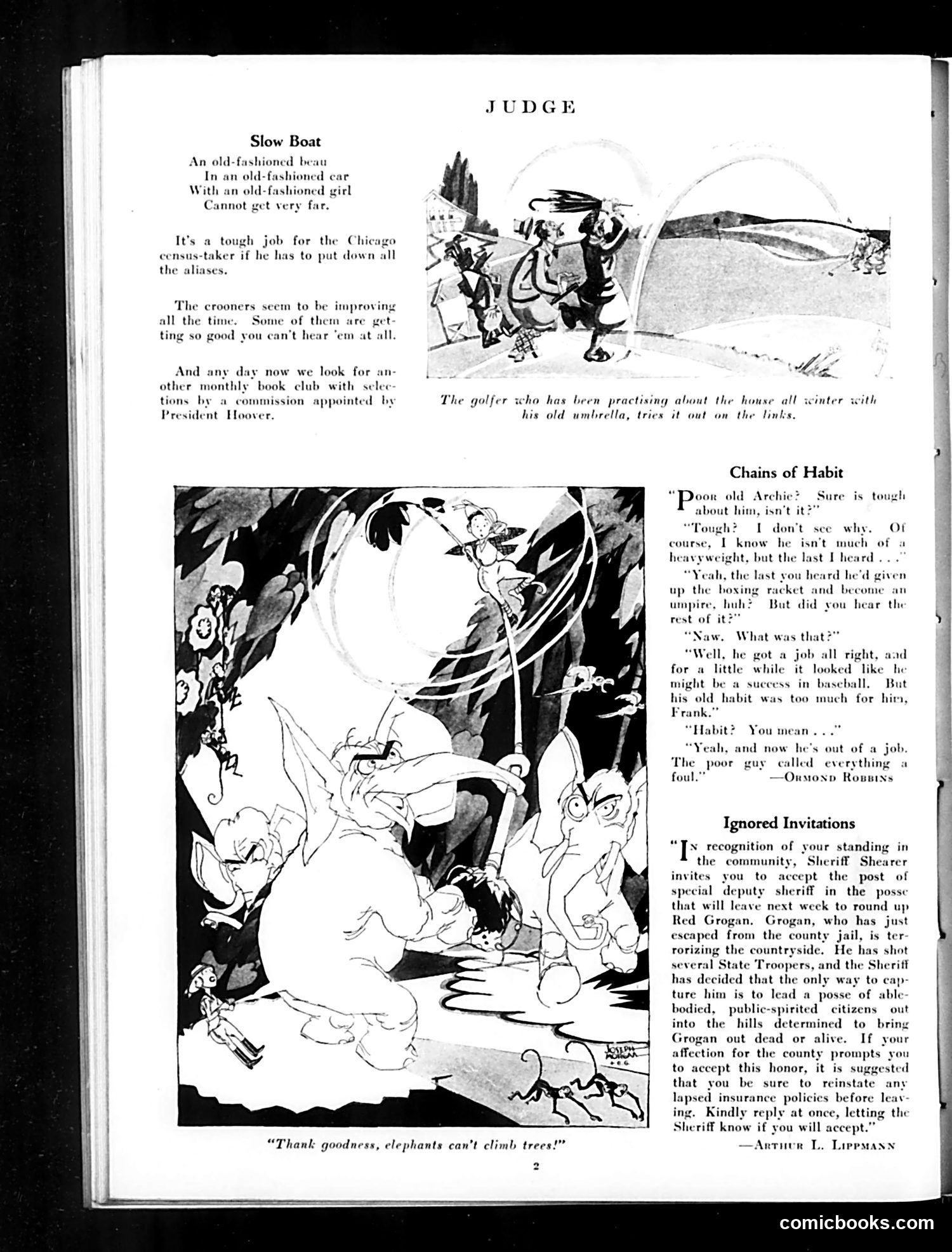
# Judge Magazine Page Analysis This page contains three separate satirical pieces from Judge magazine: 1. **"Slow Boat"** (top): A brief poem mocking old-fashioned courtship—an elderly couple in an old car cannot progress romantically. The satire targets outdated romantic conventions. 2. **"Chains of Habit"** (right): A dialogue about "Poor old Archie" who gave up boxing to get a job, only to lose it. The joke critiques how habits trap people—he's now unemployed but his old ways ruined his prospects. Quote attributed to Osmond Robbins. 3. **"Ignored Invitations"** (bottom right): A humorous invitation from Sheriff Shearer asking someone to become special deputy sheriff to pursue an escaped criminal, Red Grogan. The satire plays on bureaucratic formality in urgent situations. The large illustration (bottom left) appears to show cartoon animals in an animated scene, captioned "Thank goodness, elephants can't climb trees!"—likely slapstick humor unrelated to the text above.
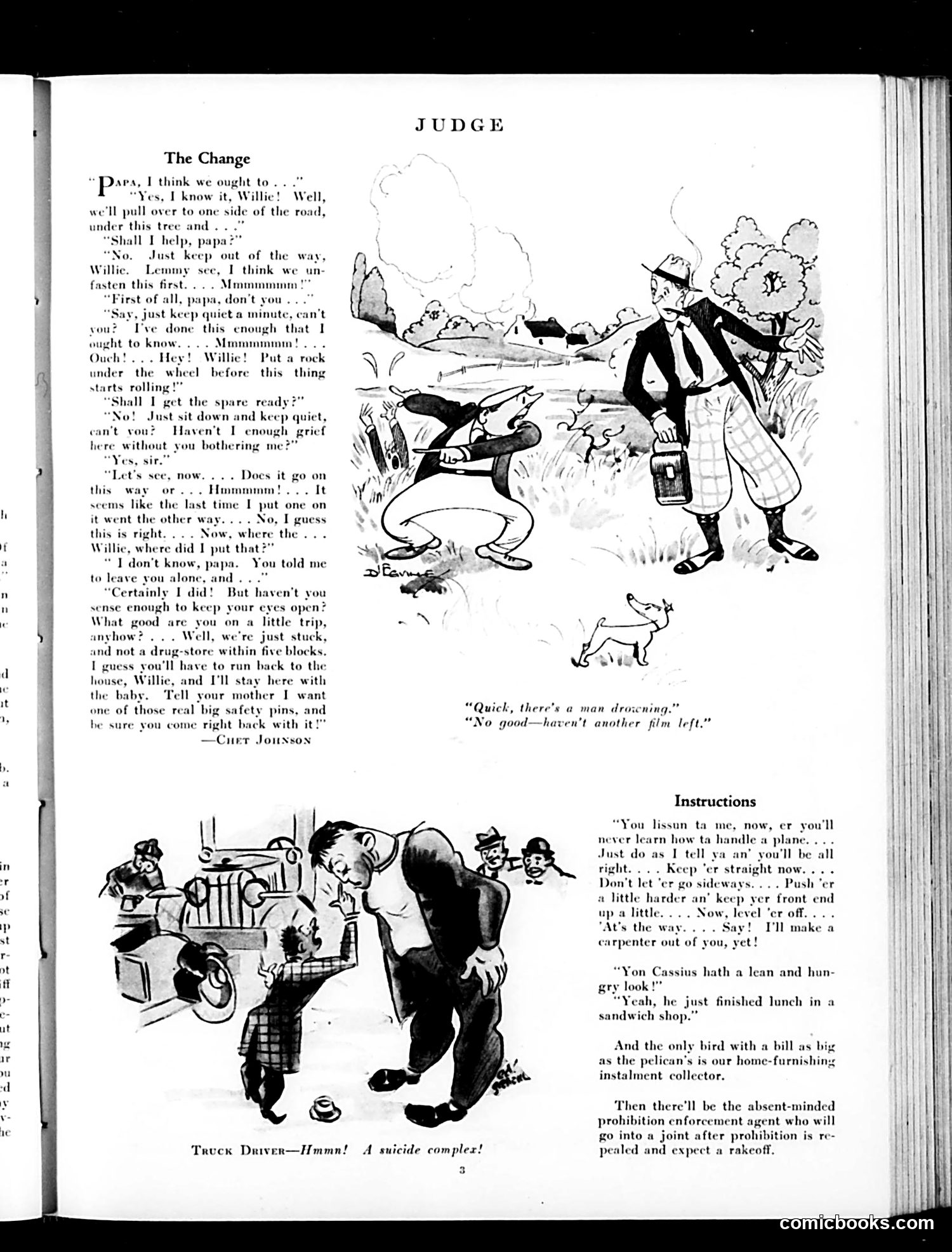
# Analysis of Judge Page This page contains two satirical pieces from Judge magazine: **"The Change"** depicts a family car breakdown. A father and son argue about repairs while the mother waits with a baby—likely satirizing early automobile frustrations and gender roles, with the father trying to appear competent while actually incompetent at mechanical problems. **"Instructions"** below mocks flying lessons and Prohibition enforcement. The cartoon shows a flight instructor with a student, accompanied by commentary about "lean and hungry" appearance and sandwich shops. The final section references "prohibition enforcement agents" preparing for a "rakeoff" (likely "rake-off"—a bribe), satirizing corruption among Prohibition officials. Both pieces use humor to critique contemporary American anxieties: automobile ownership challenges and the widespread corruption accompanying alcohol Prohibition enforcement.
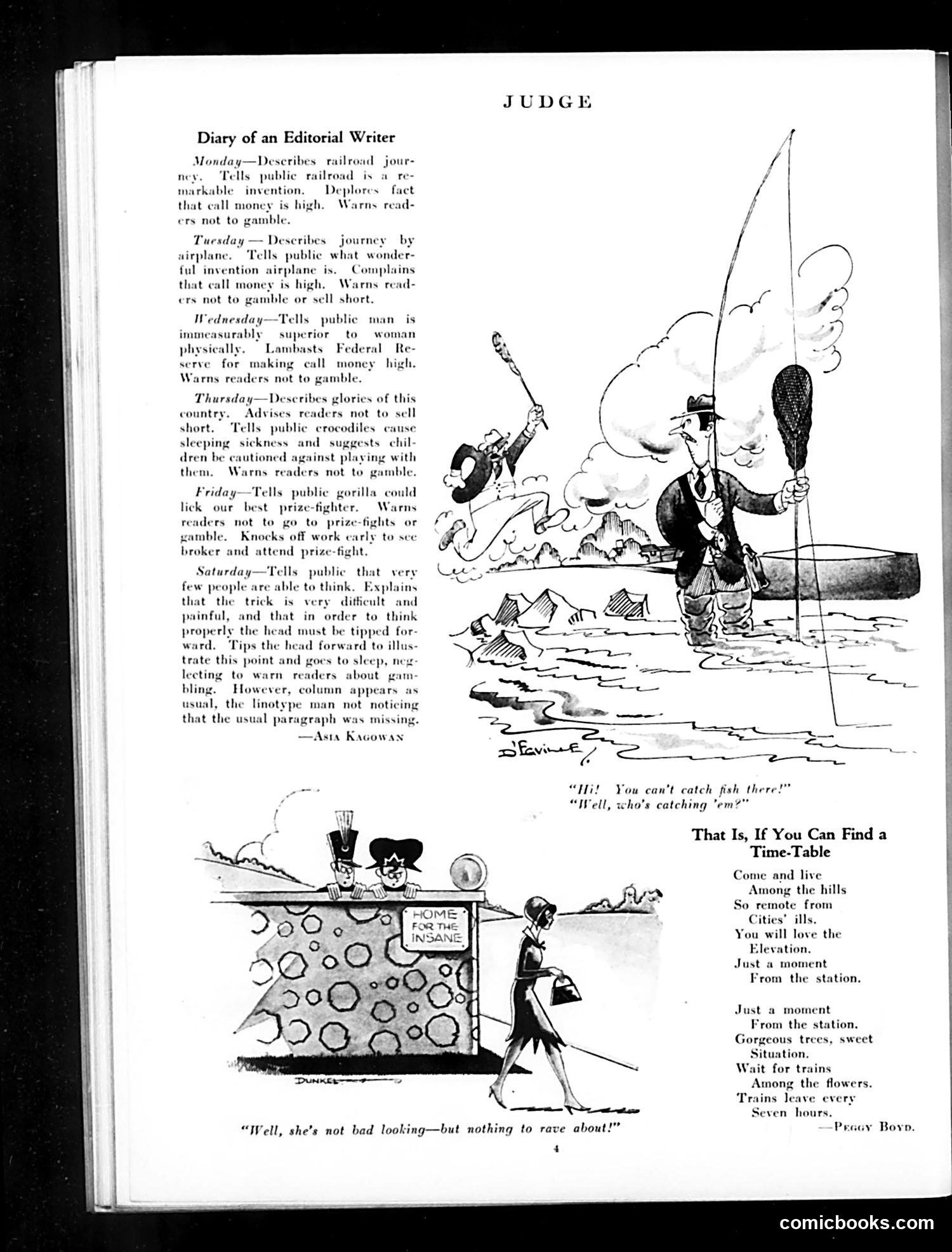
# Judge Magazine Page Analysis This page satirizes an editorial writer's predictable weekly formula. "Diary of an Editorial Writer" mocks how such columnists recycled identical themes—warning readers against gambling and financial speculation while claiming moral superiority—regardless of actual events. The top cartoon depicts a fisherman catching fish, illustrating the writer's consistent message about avoiding "get-rich-quick" schemes. The bottom cartoon shows a "Home for the Insane," implying editorial writers lack independent thought. The accompanying poem "That Is, If You Can Find a Time-Table" advertises rural living as escape from cities—likely referencing early 20th-century back-to-nature trends. The humor lies in exposing editorial predictability: same warnings, same moral posturing, week after week, regardless of news.
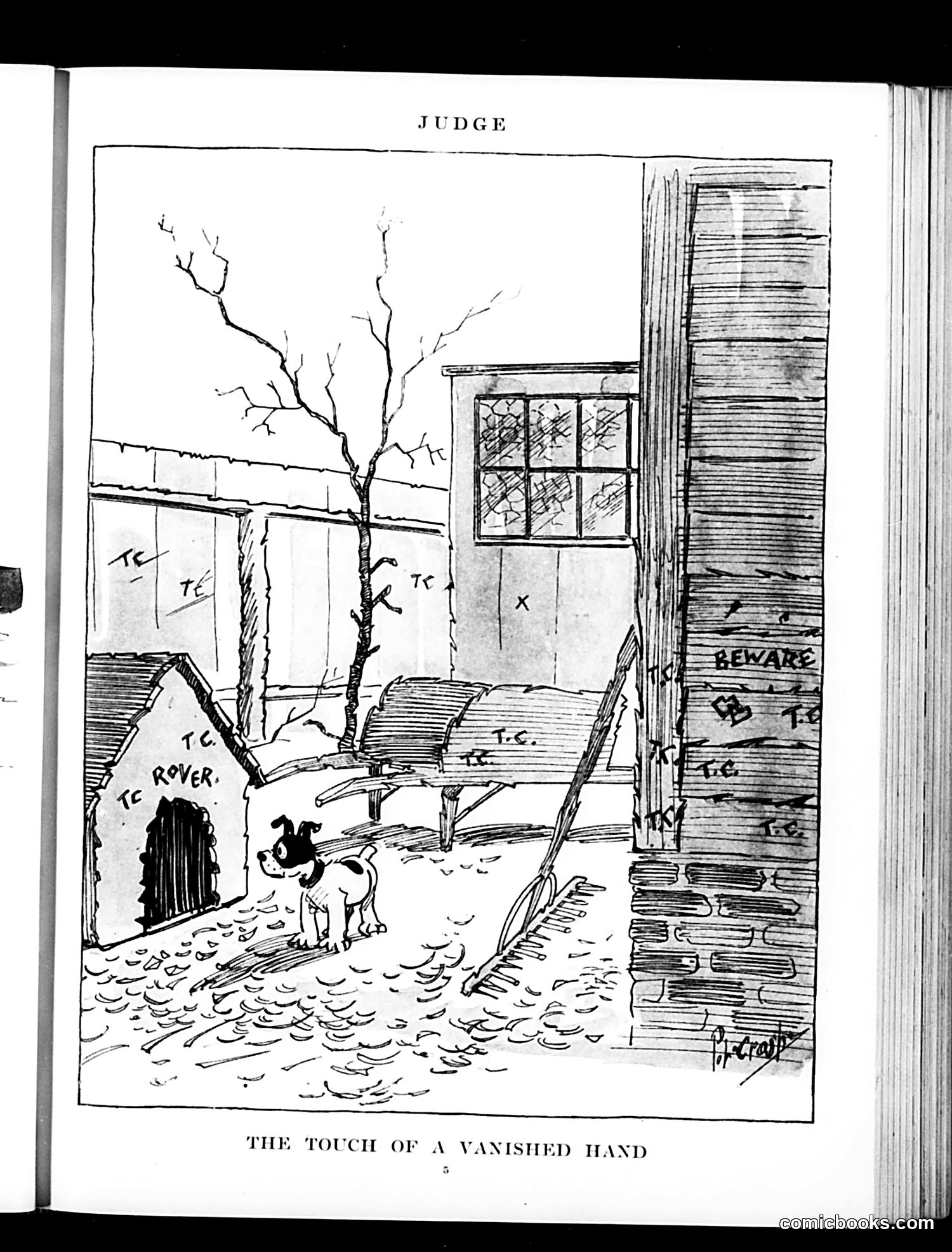
# "The Touch of a Vanished Hand" This cartoon depicts a dog named Rover in a desolate courtyard, appearing to respond to or be touched by an invisible presence. The barren landscape—bare tree, boarded windows marked "BEWARE," empty benches—suggests abandonment or loss. The title "The Touch of a Vanished Hand" indicates the cartoon's subject is a supernatural or ghostly encounter. Without additional context from the magazine's date or accompanying text, the specific political or social reference remains unclear. The image could satirize spiritualism (popular in early 20th-century America), grief, loss of leadership, or possibly a departed public figure. The loyal dog's response to absence may comment on fidelity, memory, or longing for something lost.
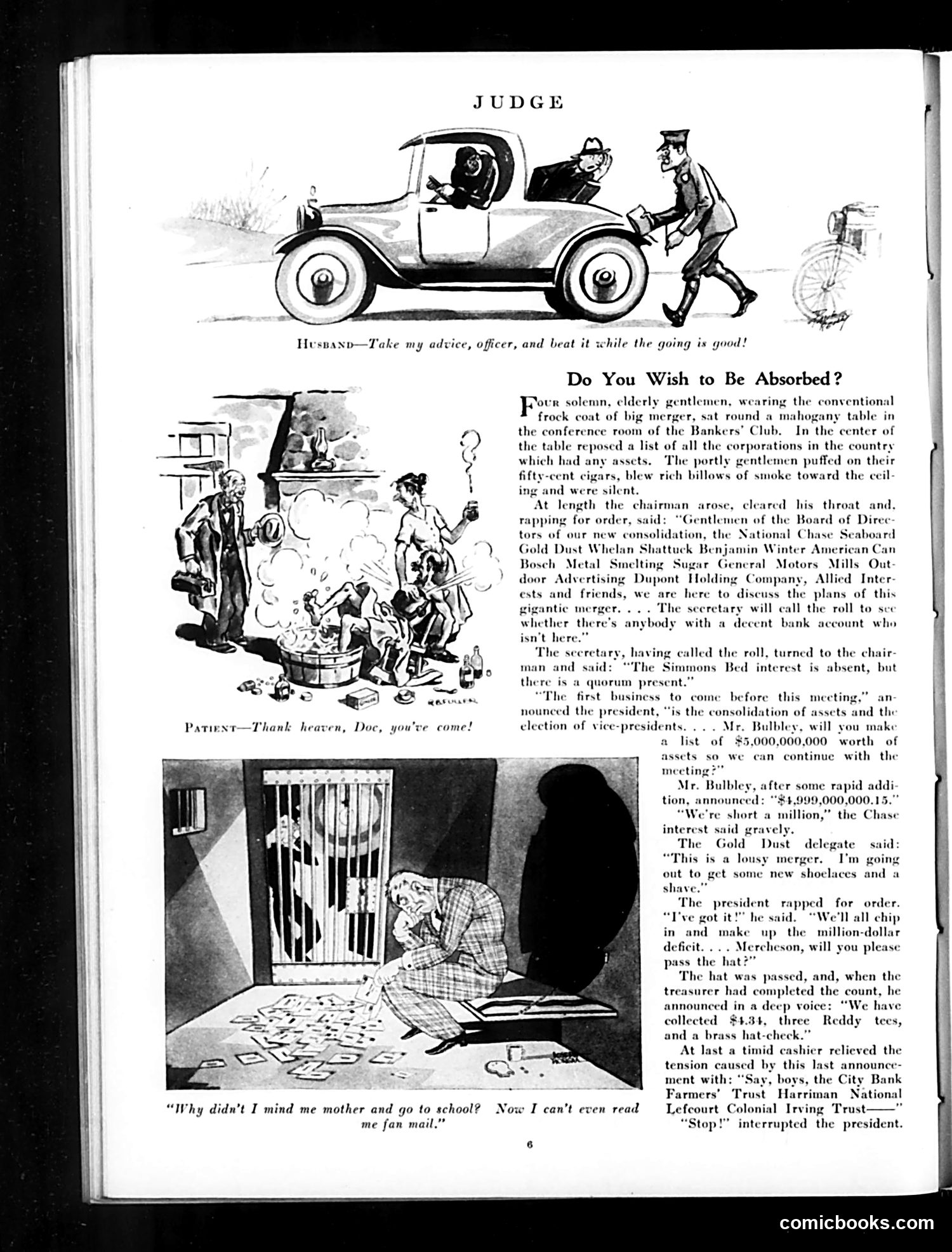
# Analysis of Judge Magazine Page This page satirizes corporate consolidation in early 20th-century American business. The top cartoon mocks a husband seeking a police officer's help to escape his wife—a domestic humor setup. The main article "Do You Wish to Be Absorbed?" depicts elderly bankers at an exclusive club discussing a massive corporate merger involving major industrial companies (National Chase Seaboard, Gold Dust Whelan, Benjamin Moore, American Can, Bosch Metal Smelting, Sugar, General Motors, Mills, and others). The satire targets the merger mania of that era—the absurdly large consolidation, the focus on asset totals and deficit-filling rather than actual business value, and the casual tone of powerful industrialists casually reshaping the economy. The humor lies in treating gigantic financial machinations as casually as discussing a missing hat.
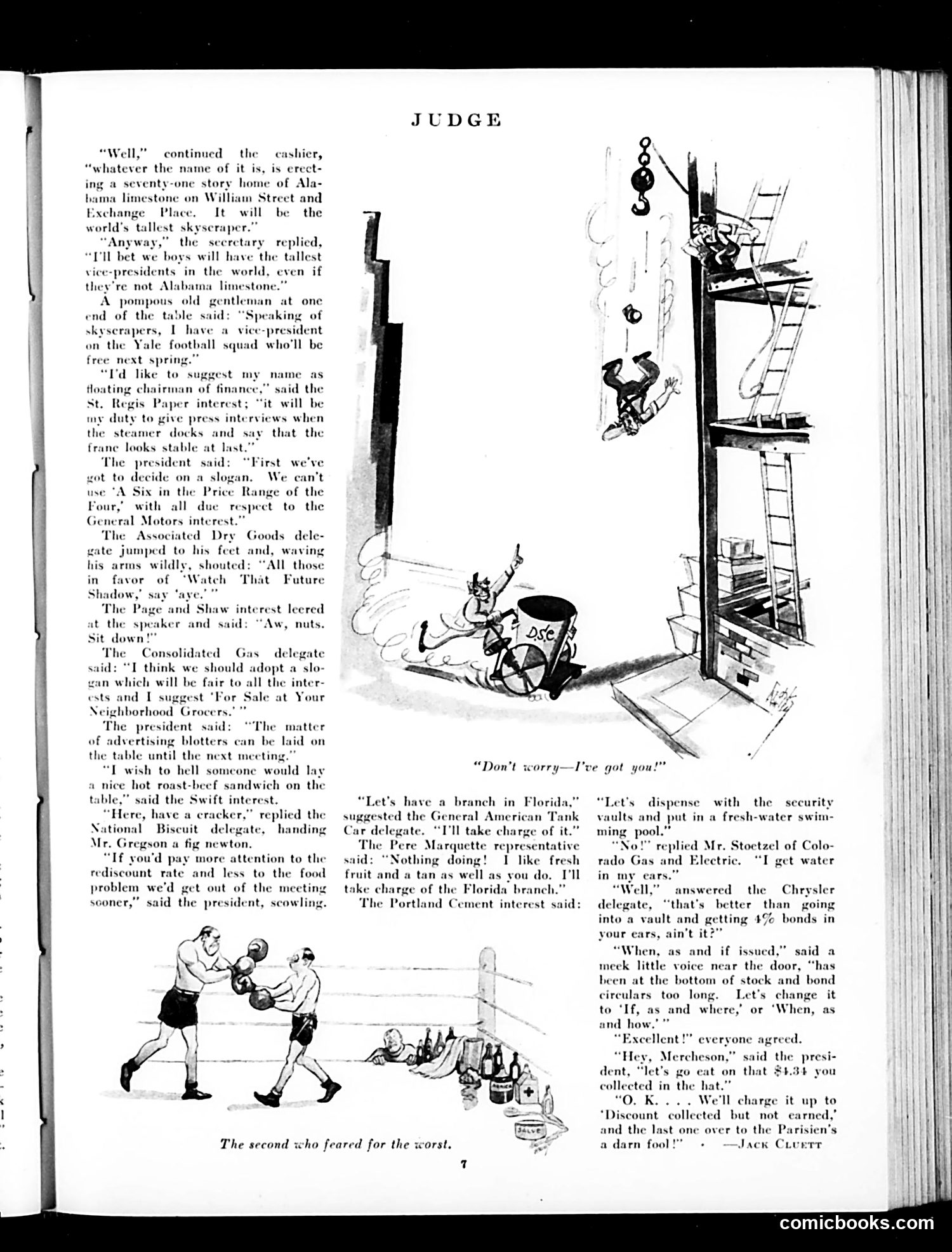
# "Judge" Page Analysis: Corporate Satire of the 1920s This page satirizes **corporate board meetings and advertising culture** of the Jazz Age. The main text depicts executives from competing industries (General Motors, Associated Dry Goods, Consolidated Gas, Swift meat company, National Biscuit, Pere Marquette railroad, Portland Cement, Chrysler) meeting to decide on a building's slogan and advertising strategy. The satire targets how **corporate interests constantly jockey for favorable publicity**, each delegate promoting their own industry's image. The humor lies in their absurd suggestions ("Watch That Future Shadow") and their petty self-interest—they can't even feed themselves properly or agree on basic matters without each faction demanding recognition. The **boxing illustration** (captioned "The second who feared for the worst") is separate, likely unrelated political/sports commentary, though its exact reference is unclear from this page alone. The final exchange mocking accounting practices ("charge it to 'Discount collected but not earned'") suggests **corporate financial manipulation and fraud**—a common satirical target during this era of unregulated business practices.
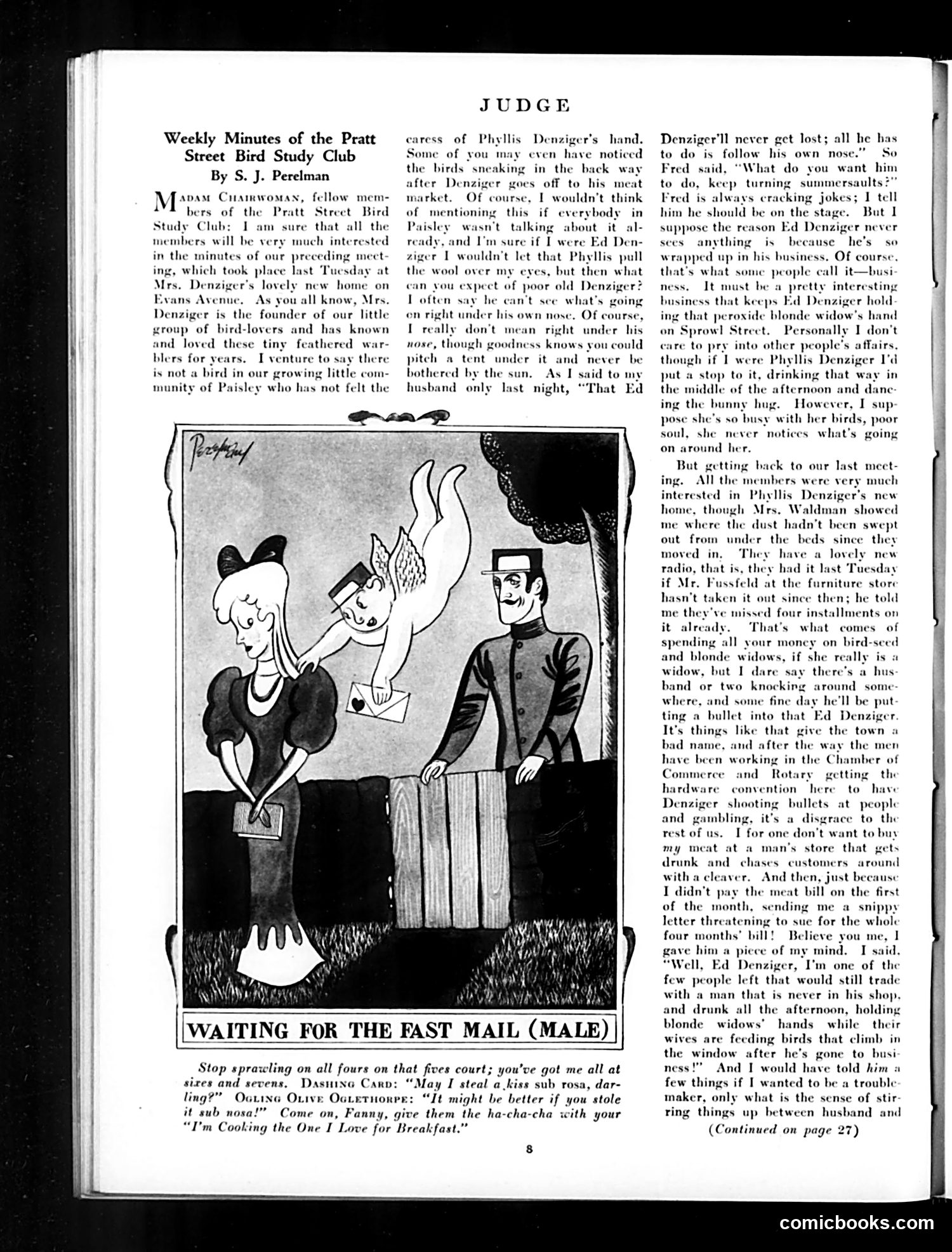
# Explanation for Modern Readers This page presents S.J. Perelman's satirical "Weekly Minutes" of a bird-watching club meeting. The cartoon depicts a gossipy woman speaking to a man in formal attire, likely representing the club's secretary reporting minutes. The satire targets small-town social hypocrisy and petty gossip. Under the guise of discussing a bird study club meeting at Mrs. Denziger's home, the narrator launches into vicious character assassination: questioning Mrs. Denziger's husband Ed's fidelity with a "peroxide blonde widow," mocking her housekeeping, criticizing their unpaid furniture installments, and attacking a local butcher for aggressive debt collection. The humor lies in the contrast between the innocent topic (bird-watching) and the narrator's relentless, catty attacks on her neighbors' finances, appearances, and moral conduct. Perelman satirizes how small communities use social organizations as covers for spreading damaging gossip while maintaining a veneer of respectability. The detailed nature of the attacks—specifics about unpaid bills and alleged affairs—parodies how thoroughly gossips document others' failings.
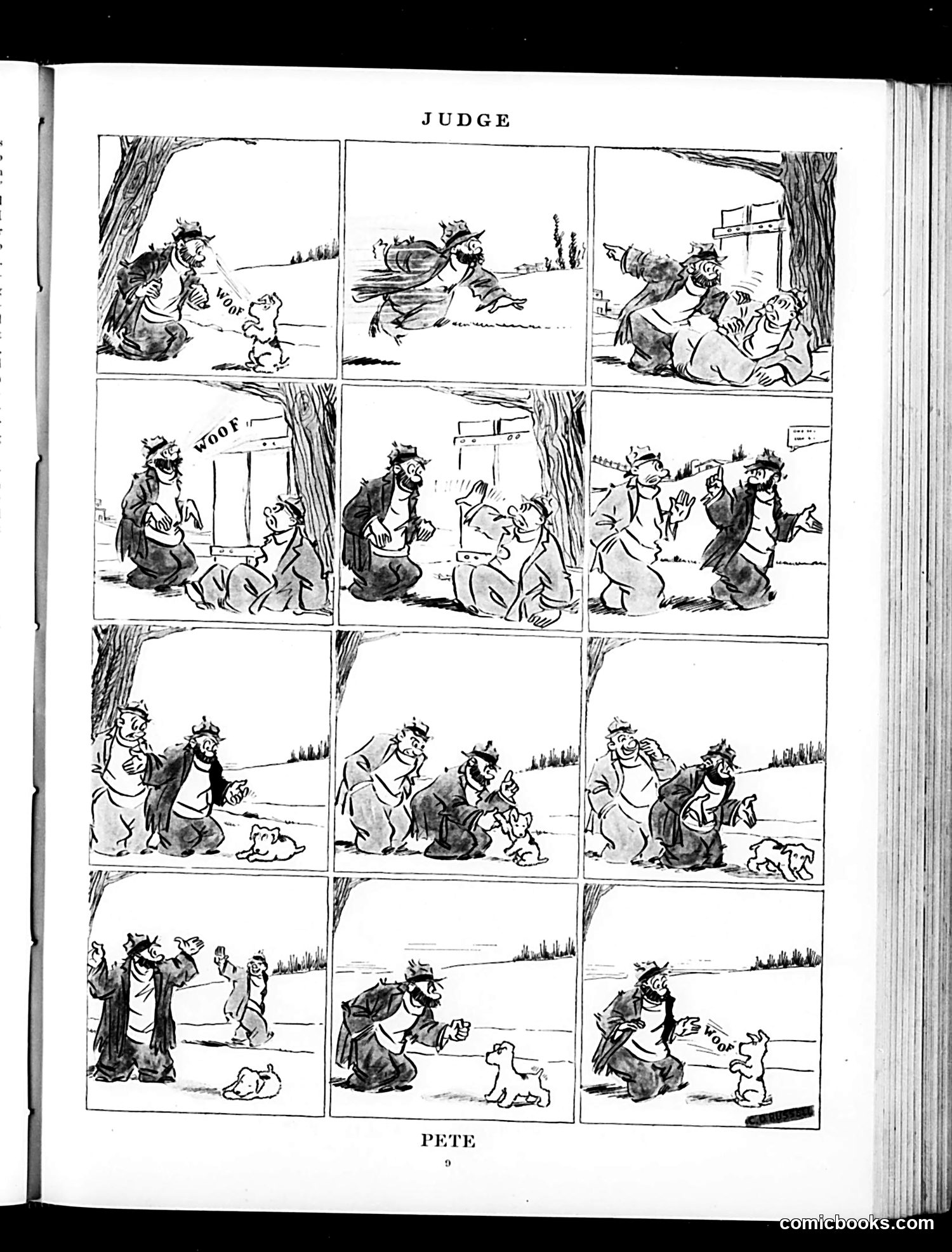
# "Judge" Page Analysis: "Judge" and "Pete" This appears to be a multi-panel comic strip titled "Judge" at the top and "Pete" at the bottom, likely referring to a character name rather than a specific political figure. The narrative follows what seems to be an authority figure (the "Judge," depicted with exaggerated features suggesting caricature) interacting with a small child or young person named Pete. The progression shows the Judge attempting various forms of discipline or instruction—initially stern, then increasingly frustrated or physical—while Pete remains unresponsive or mischievous. The satire likely critiques ineffective parenting, judicial authority, or disciplinary methods of the era. Without clearer context about publication date or specific references, the precise political/social commentary remains unclear, though it appears to mock both the authority figure's methods and the child's defiance.
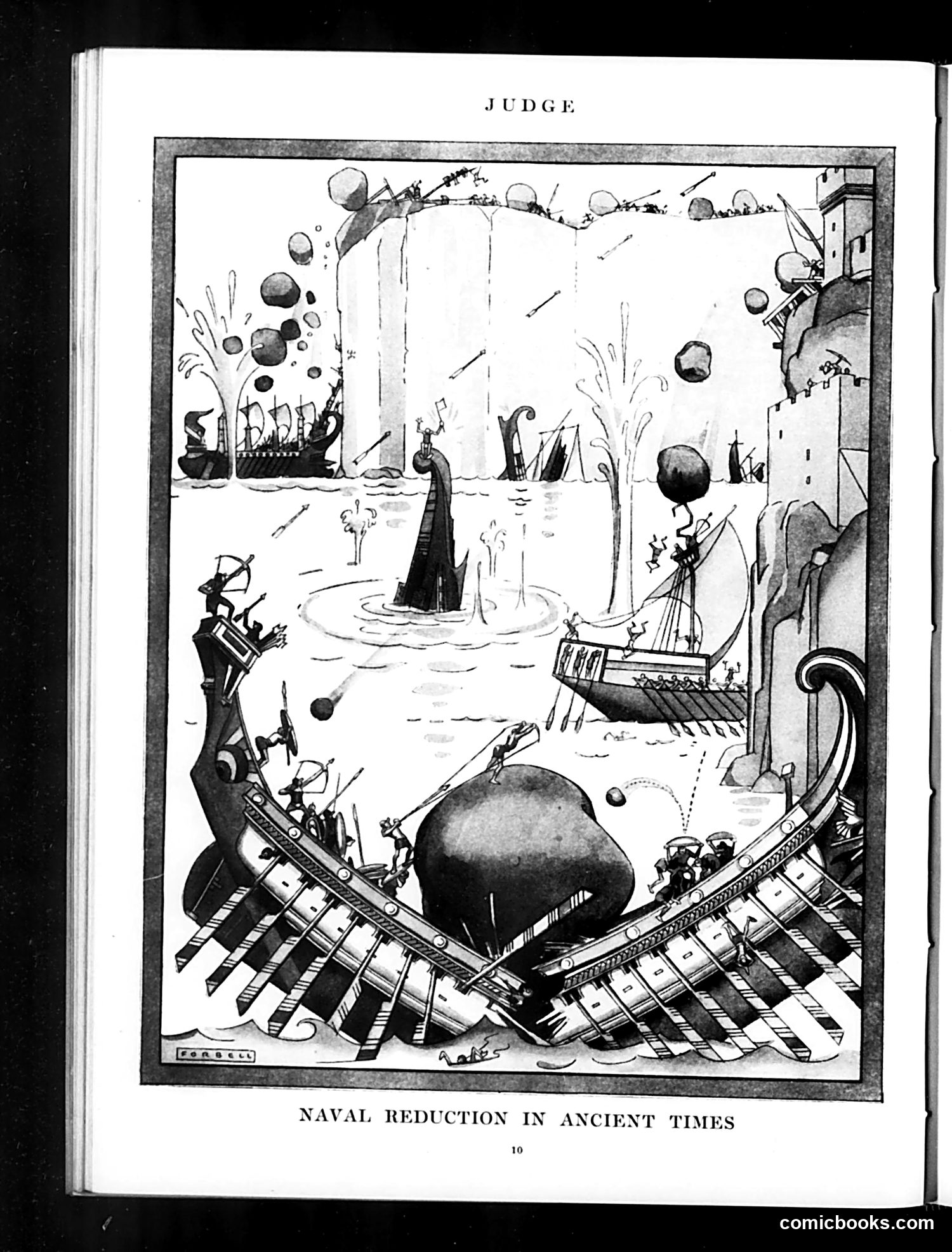
# Naval Reduction in Ancient Times This satirical cartoon depicts warships from an ancient civilization engaged in naval combat in shallow waters. The image shows vessels with heavy military fortifications actively attacking each other—soldiers man the decks firing weapons while large spherical projectiles (cannonballs) splash into the water and arc through the air. The caption's irony is the key: it's titled "Naval Reduction in Ancient Times," but depicts *escalating* naval warfare with substantial destruction. This likely satirizes contemporary political debates about military spending and naval reduction. The cartoon suggests that proposed "reductions" in military budgets would paradoxically lead to more conflict or less effective defense—a commentary on disarmament advocates or pacifist policies of Judge magazine's era (likely early 20th century).