A complete issue · 36 pages · 1930
Judge — April 5, 1930
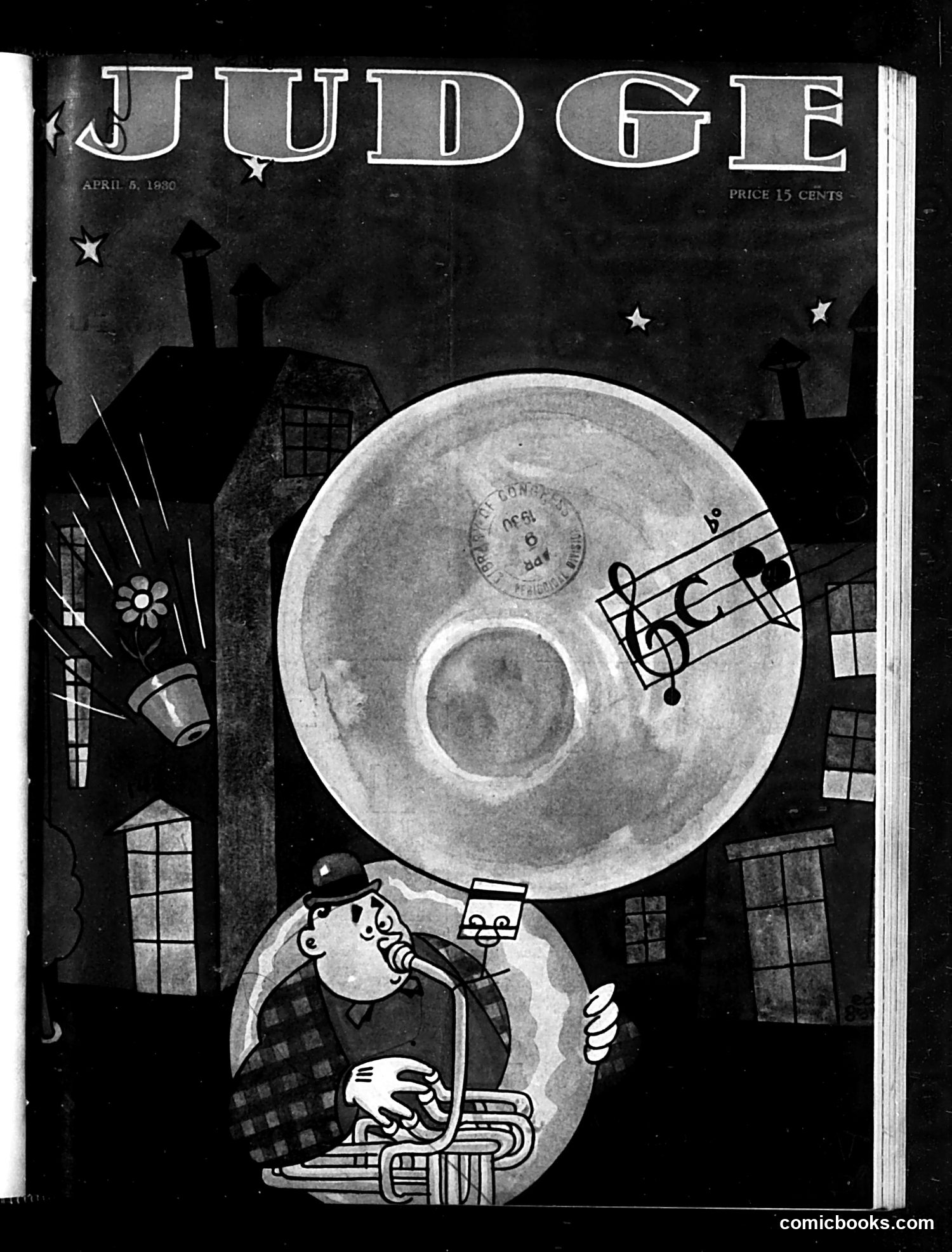
# Judge Magazine Cover Analysis (April 5, 1930) This cover depicts a cartoonist or musician juggling a large phonograph record while conducting music, set against a nighttime cityscape. The figure appears to represent the entertainment industry navigating the early sound-recording era. The musical notes and gramophone suggest satire about the **transition from silent to sound technology** in entertainment—a major disruption of the late 1920s. The precarious juggling act implies the industry's struggle to adapt: phonograph records were competing with radio and cinema, while musicians faced uncertain futures. The "Judge" masthead and "Price 15 cents" date this to **early Depression**, when technological disruption threatened livelihoods. The comic commentary likely criticizes how quickly the entertainment business had to reinvent itself.
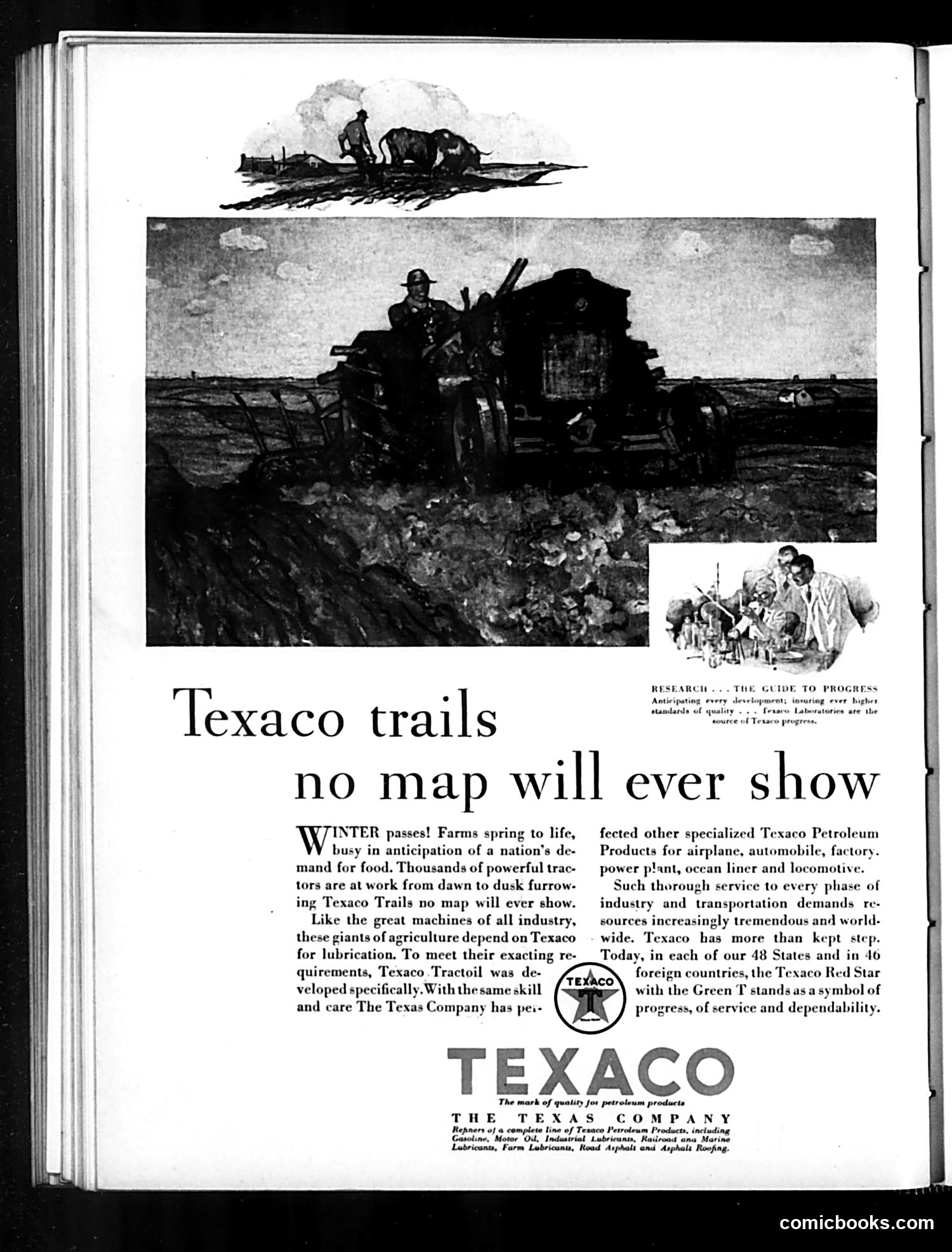
# Analysis This page is primarily a **Texaco petroleum company advertisement**, not satire or political commentary. The headline "Texaco trails no map will ever show" uses agricultural imagery to promote Texaco Tractoil lubricant for farm equipment. The advertisement features photographs of a tractor in a field and farmers at work, positioned above text celebrating how Texaco products serve agriculture and industry. A small illustration labeled "RESEARCH... THE GUIDE TO PROGRESS" appears in the upper right, emphasizing the company's commitment to quality standards. The "satire" appears minimal—this is straightforward marketing content appearing in *Judge* magazine, likely placed as paid advertising rather than editorial content. The imagery emphasizes rural labor and industrial progress rather than critiquing either.
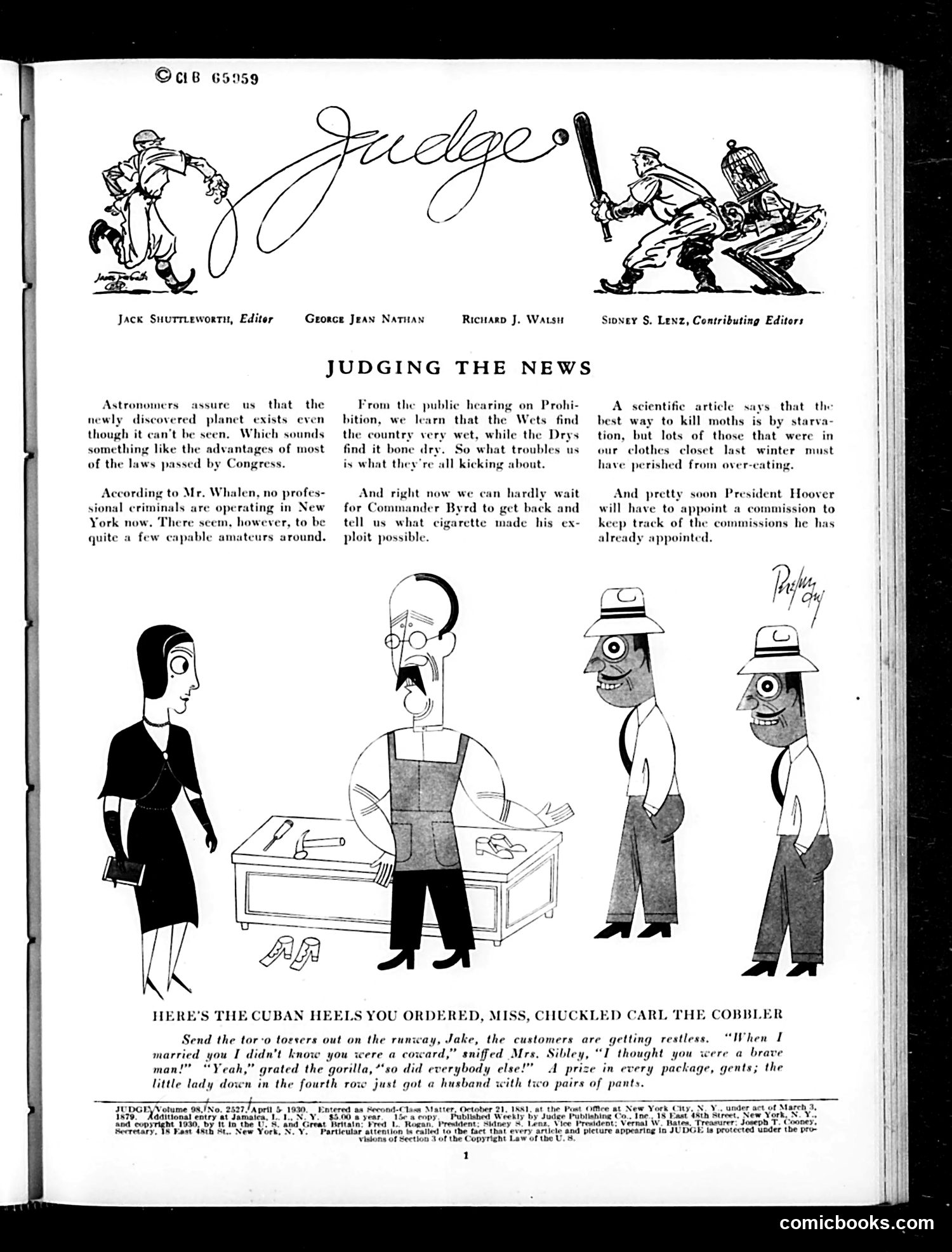
# Explanation of Judge Page Content This page satirizes early 1930s news stories through short commentary pieces and a cartoon. **"Judging the News"** section mocks: - Congressional discovery of a new planet (likely astronomical news) - New York professional criminals ("amateurs" despite their capabilities) - Prohibition enforcement (Wets vs. Drys debate about wet/dry counties) - Commander Byrd's Antarctic expedition and cigarette promotion - President Hoover's commission appointments **Main cartoon** titled "Here's the Cuban Heels You Ordered, Miss" depicts a cobbler workshop scene where Carl the cobbler has apparently delivered the wrong item to a woman customer. The humor plays on the 1920s-30s fashion trend of "Cuban heels" (a shoe style), with the cobbler's confusion or mishap creating comedic confusion. The detailed caption suggests a domestic misunderstanding about footwear orders.
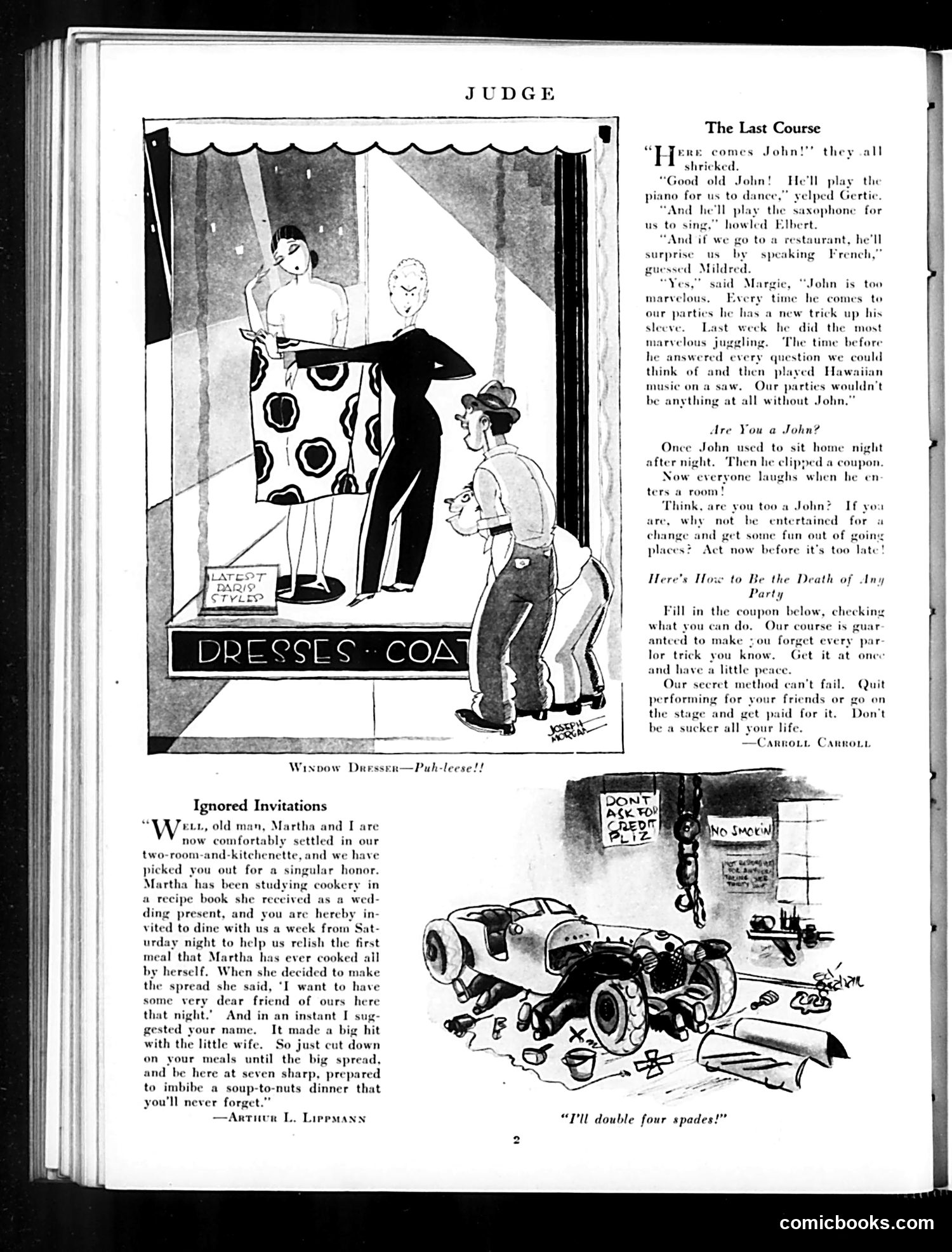
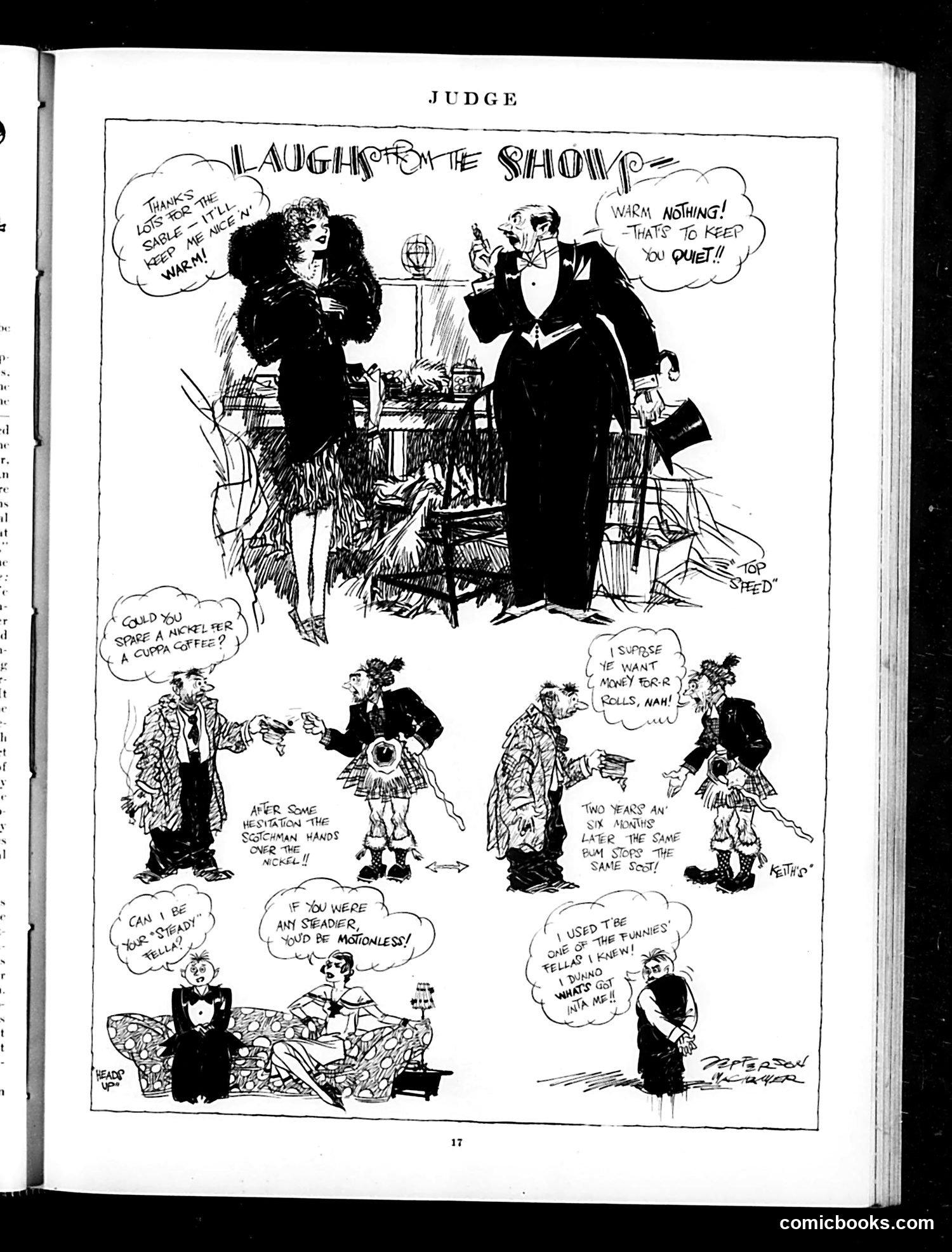
# Analysis of Judge Page This page contains three separate items: 1. **"Window Dresser—Pub-lease!!"** (top): A cartoon mocking fashion display workers. A window dresser shows off dresses and coats to passersby, with the humor appearing to center on the performative nature of retail display and the dresser's apparent desperation for attention ("Pub-lease!!"). 2. **"The Last Course"** (right): Humorous advice about entertaining with a character named John who performs party tricks (piano, saxophone, French-speaking, juggling). The joke satirizes the social obligation to be perpetually entertaining for friends. 3. **"Ignored Invitations"** (bottom): A letter humorously declining a dinner invitation with elaborate excuses, ending with the witty threat "I'll double four spades!"—a bridge-playing reference suggesting the writer prefers card games to socializing. These are light social satire typical of Judge's era.
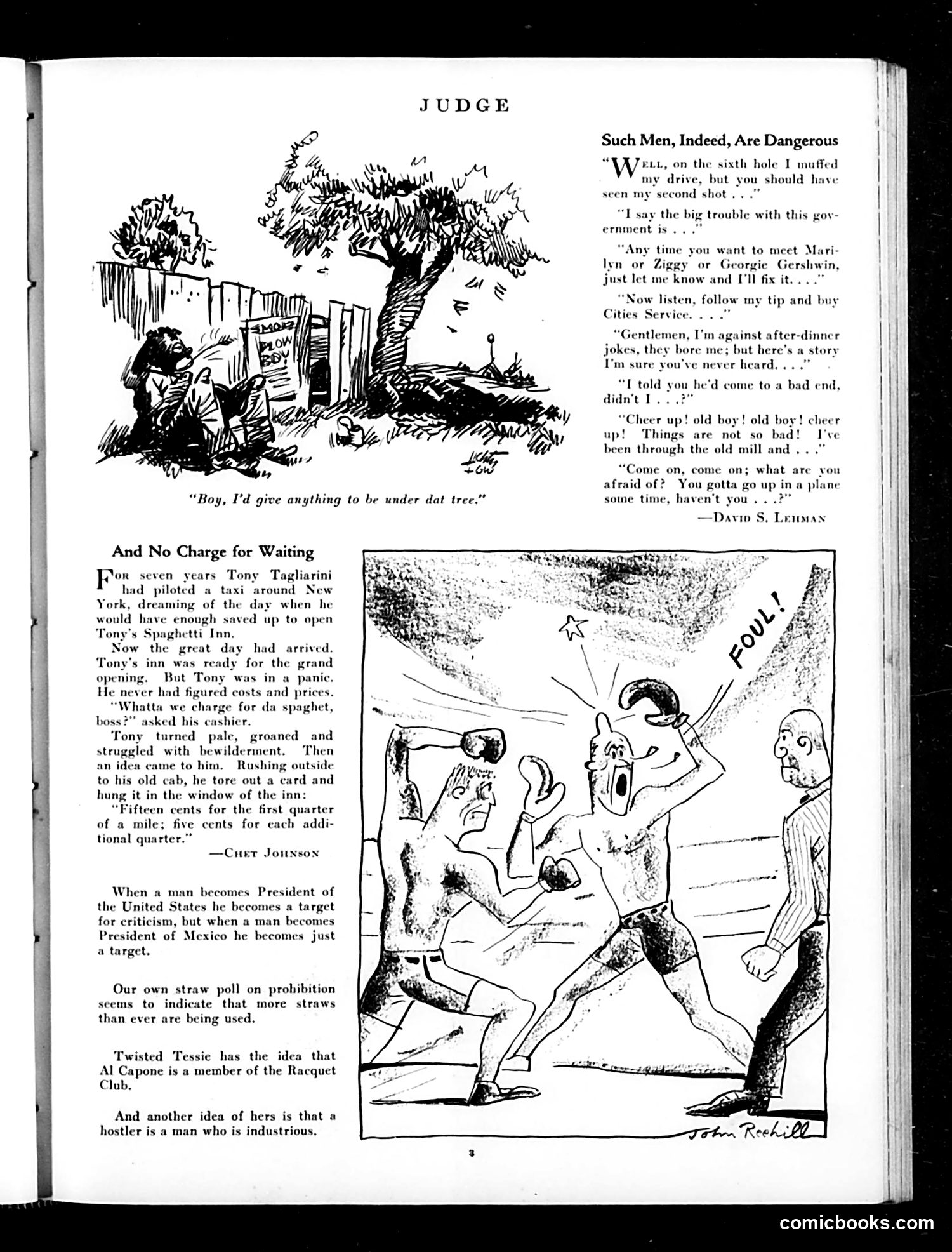
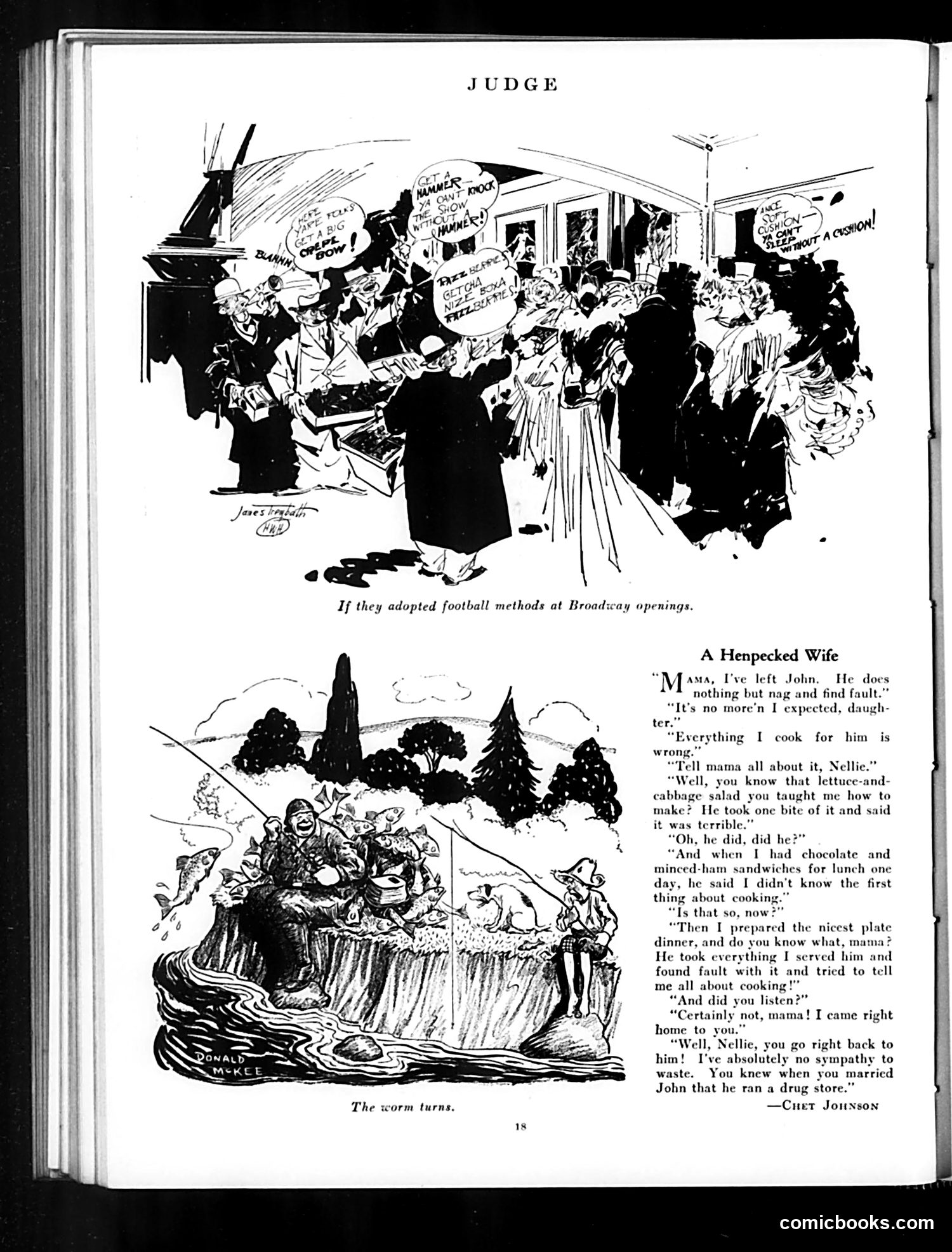
# Analysis of Judge Page **Top Section ("Such Men, Indeed, Are Dangerous"):** This appears to be a humorous advice column satirizing dangerous or foolish suggestions. The quotes mock various scenarios—unsafe driving, fixing problems through connections, and dismissing concerns about flying. The final quote attributes these "dangerous" ideas to David S. Lehman, likely a public figure of the era. **Bottom Section ("And No Charge for Waiting"):** A story about Tony Tagliarini, a taxi driver who saved for seven years to open a spaghetti restaurant. When opening day arrives, he panics over pricing. A cabbie suggests "fifteen cents for the first quarter of a mile; per cent for each additional quarter"—applying taxi rates to spaghetti portions. The joke satirizes absurd business logic by inappropriately mixing industries.
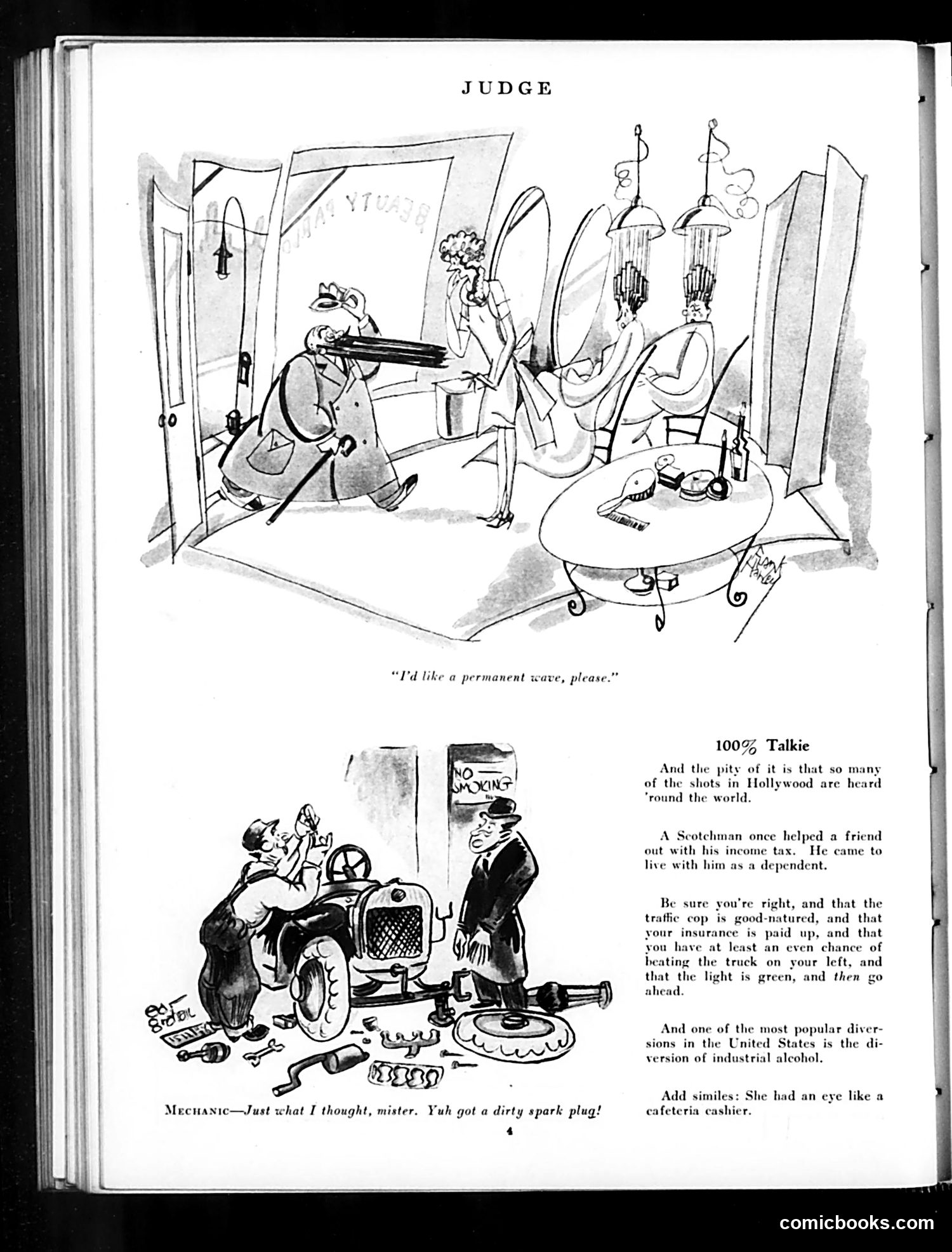
# Page Analysis: Judge Magazine **Top Cartoon ("Judge"):** A woman at a beauty salon requests "a permanent wave, please." The satire likely mocks vanity or the absurdity of salon culture during this era, though the specific target remains unclear without additional context. **Bottom Cartoon ("Mechanic"):** A man with a broken-down vehicle confronts a mechanic, who diagnoses a "dirty spark plug." The humor derives from the automobile's state of disrepair and the mechanic's casual dismissal of serious mechanical problems as trivial. **Text Section ("100% Talkie"):** This discusses Hollywood sound films ("talkies"), referencing how movie dialogue is now heard worldwide. Anecdotes follow about income tax troubles and industrial alcohol diversion—suggesting Prohibition-era concerns about bootlegging.
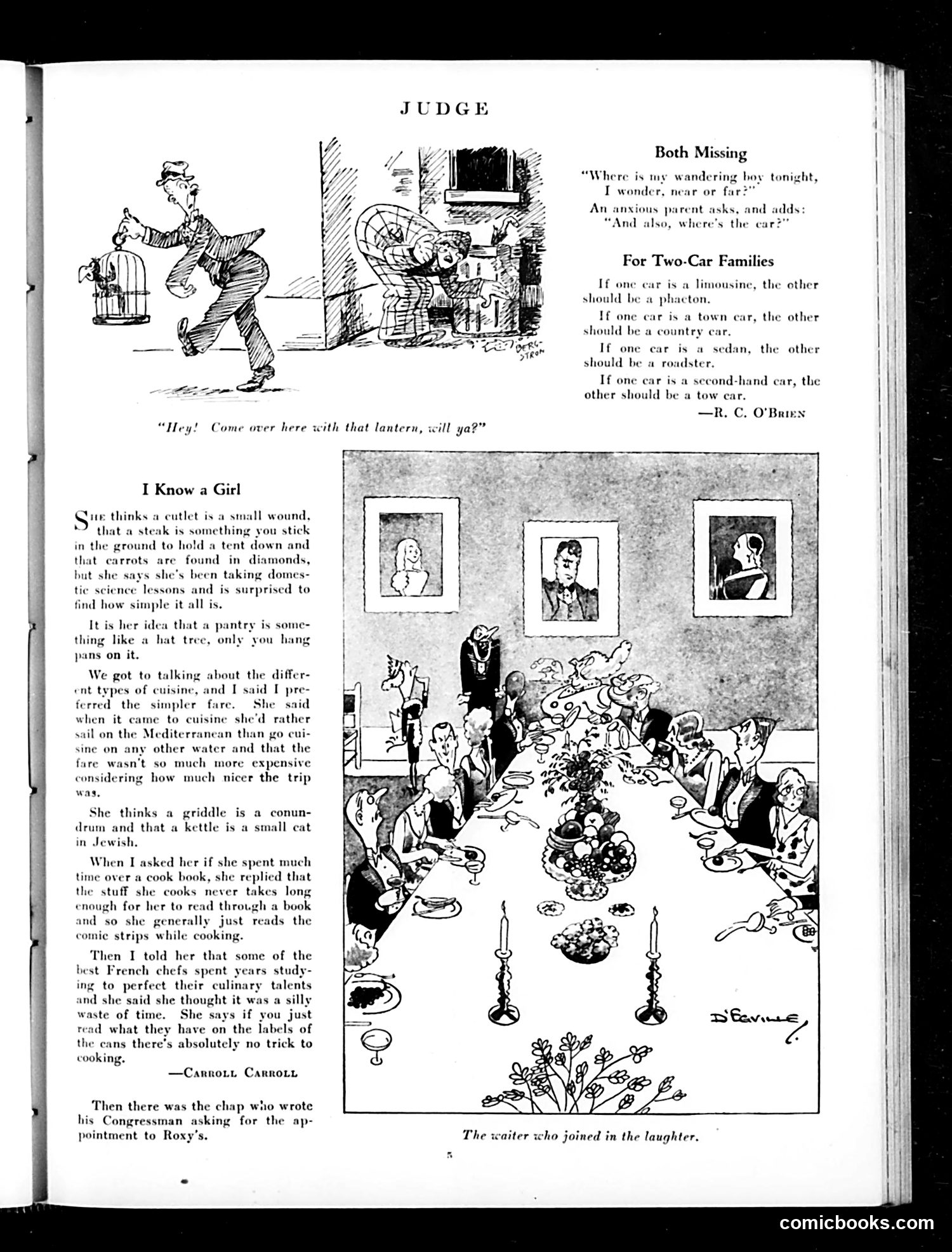
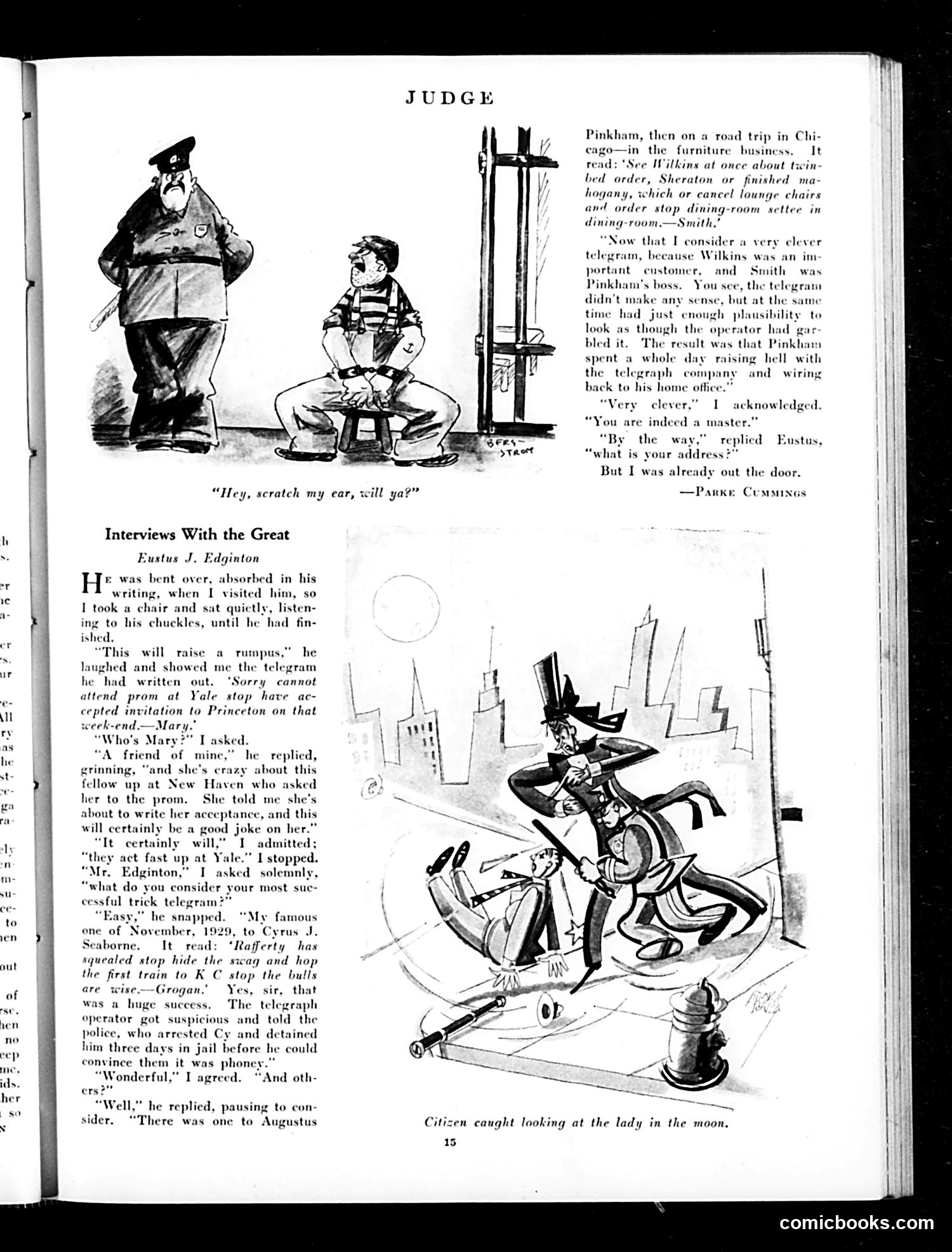
# Analysis The top cartoon shows a judge chasing someone with a birdcage, captioned "Hey! Come over here with that lantern, will ya?" This appears to be a visual pun about judicial authority—the judge pursuing someone, likely depicting a courtroom or legal scenario in humorous fashion. The right column contains two short humor pieces: "Both Missing" jokes about a couple's missing son and car, and "For Two-Car Families" offers absurdist matching-car recommendations (if one is a limousine, the other should be a hearse, etc.). "I Know a Girl" by Carroll Carroll is a longer anecdotal piece mocking a woman's misconceptions about cooking and culinary knowledge. The large illustration shows a formal dinner party, captioned "The waiter who joined in the laughter," depicting social comedy around dining etiquette.
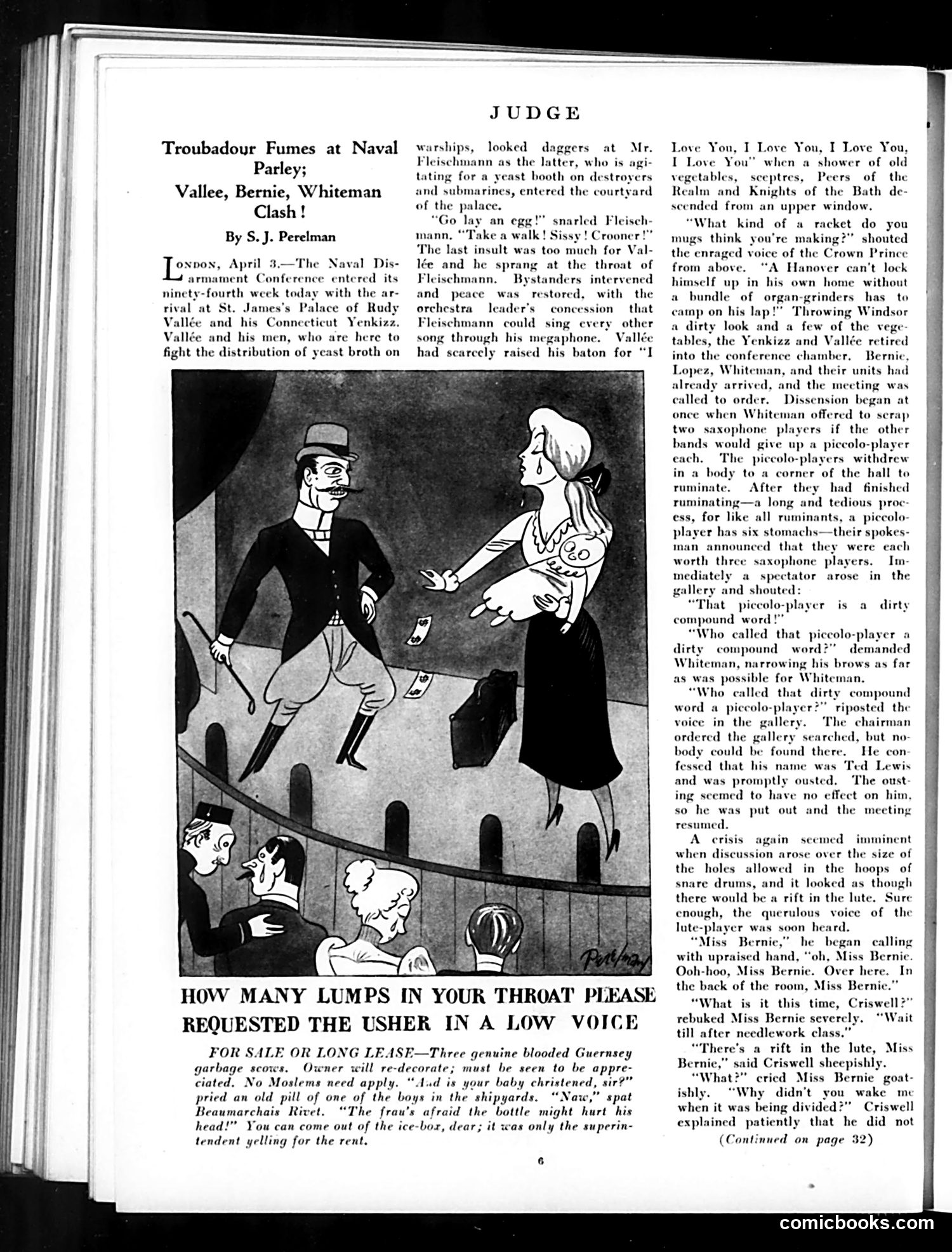
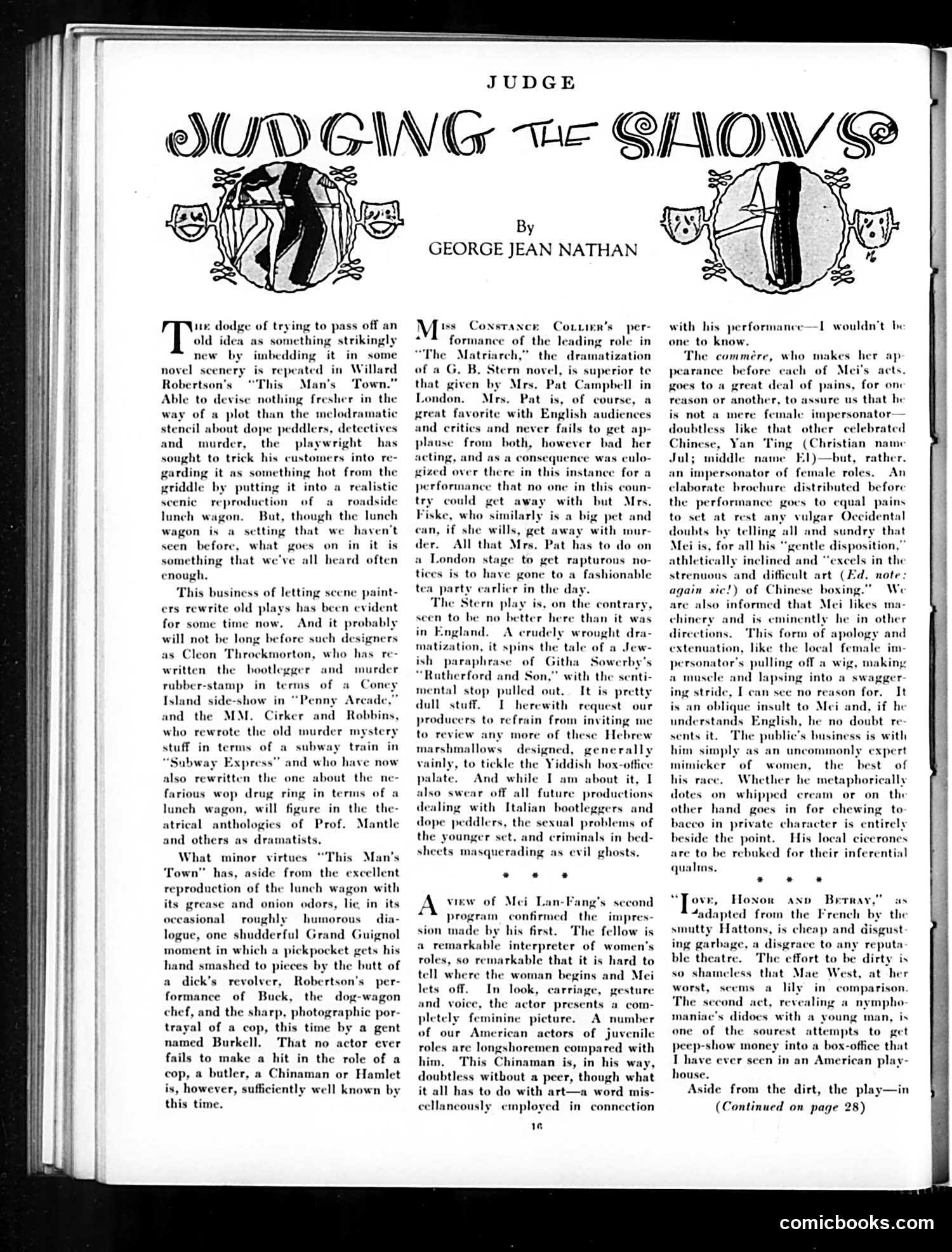
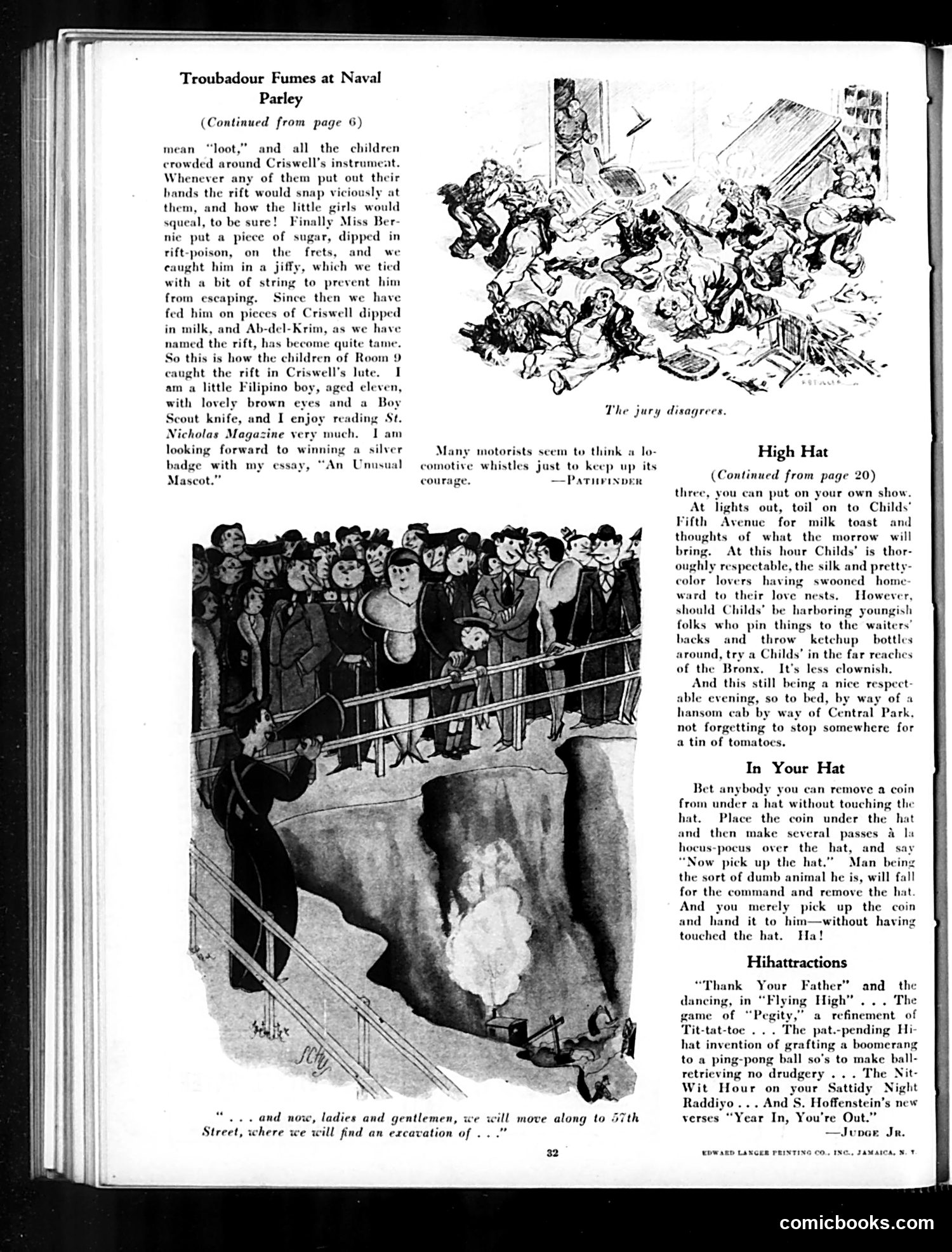
# Analysis of Judge Magazine Page This page satirizes the Naval Disarmament Conference at St. James's Palace, where delegates including Rudy Vallee, Bernie Whiteman, and others gathered to discuss yeast broth distribution. The cartoon depicts a man in formal attire meeting a woman, illustrating the story's premise: a troubadour (Vallee) and his men attempt to settle a dispute by offering saxophone players to other bands. The satirical narrative ridicules the conference through musical absurdity—piccolo-players with "six stomachs," compound insults about "dirty" musical terms, and a missing Ted Lewis. The humor mocks both the naval conference's actual proceedings and American entertainment personalities of the era by casting them as absurd bureaucratic disputants. The advertisements below contain period-specific product offerings now largely obsolete.
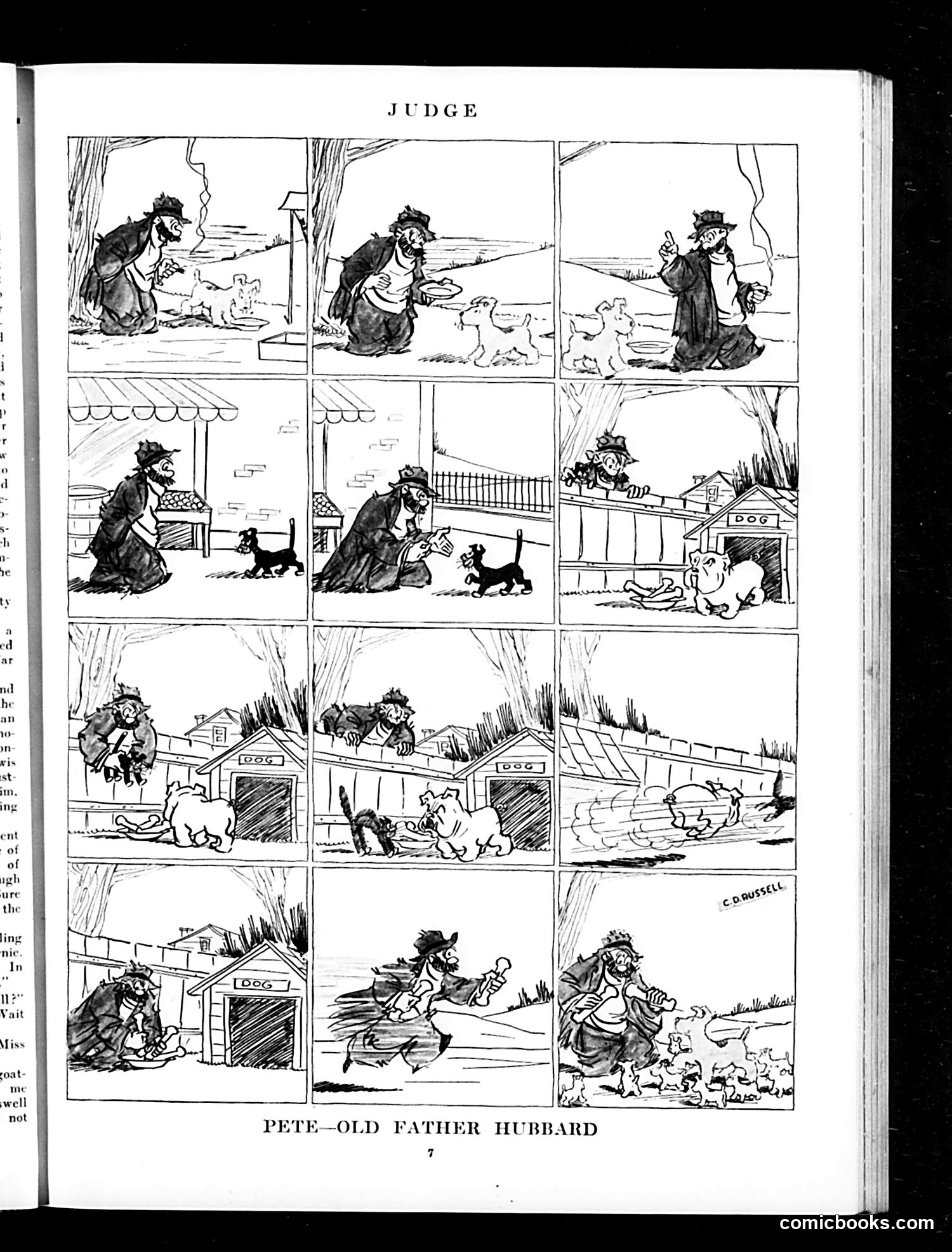
# Analysis This is a single-panel comic strip titled "Pete—Old Father Hubbard," a visual parody of the nursery rhyme "Old Mother Hubbard." The strip shows a character (an old man, "Father Hubbard") attempting to manage or judge multiple small dogs—the humor derives from the chaos of controlling numerous animals simultaneously. The satirical point appears to reference governance or management of difficult situations. The "Judge" title at the top suggests this may be social or political commentary about someone trying to maintain order amid chaos, though the specific historical figure or event being referenced is unclear without additional context. The narrative arc shows escalating mayhem as the character attempts unsuccessfully to corral the dogs, suggesting incompetence or futility in the task at hand.
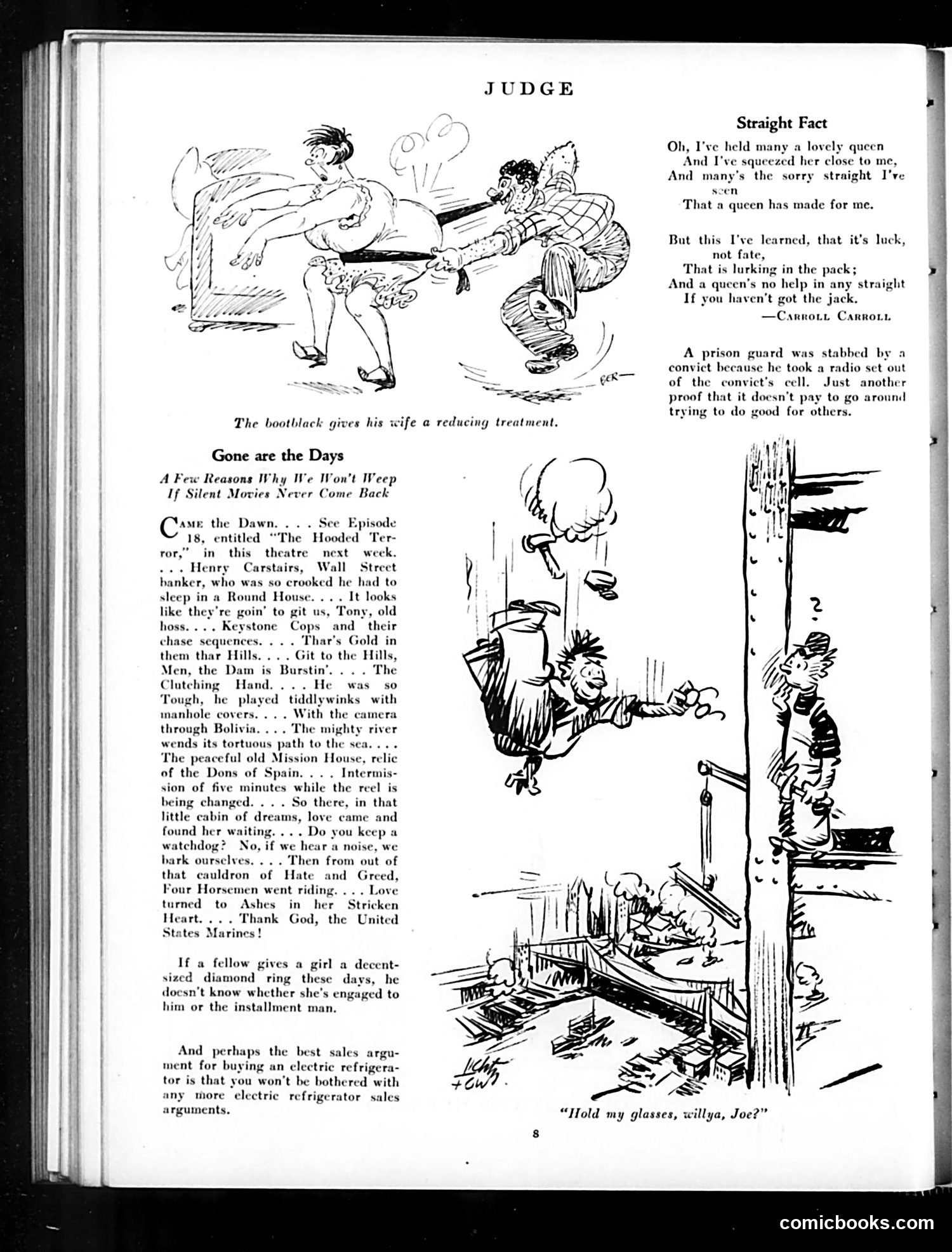
# Judge Magazine Page Analysis This page contains satirical humor typical of 1920s-era Judge magazine: **Top Cartoon**: "The bootblack gives his wife a reducing treatment" shows a domestic violence scene where a man kicks his wife, playing on the cruel "humor" of spousal abuse as entertainment—reflecting attitudes toward women that modern readers would find deeply offensive. **"Straight Fact" Poem**: A poker-themed verse attributed to Carroll Carroll, using card-game metaphors to discuss romantic relationships and luck versus fate—lighthearted romantic cynicism. **Prison Guard Anecdote**: A brief item mocking rehabilitation efforts, suggesting that trying to help convicts (removing a radio) is futile and dangerous—reflecting cynical attitudes toward criminal reform. **"Gone are the Days"**: A satirical list praising the death of silent films, mocking common melodramatic plot devices: crooked bankers, Keystone Cops chases, dams bursting, "Four Horsemen" imagery. This suggests Judge favored talkies over silents. **Bottom Cartoon**: A construction/building accident scene with the caption "Hold my glasses, willya, Joe?"—dark humor about workplace injury. The page reflects 1920s entertainment preferences and social attitudes now considered offensive.
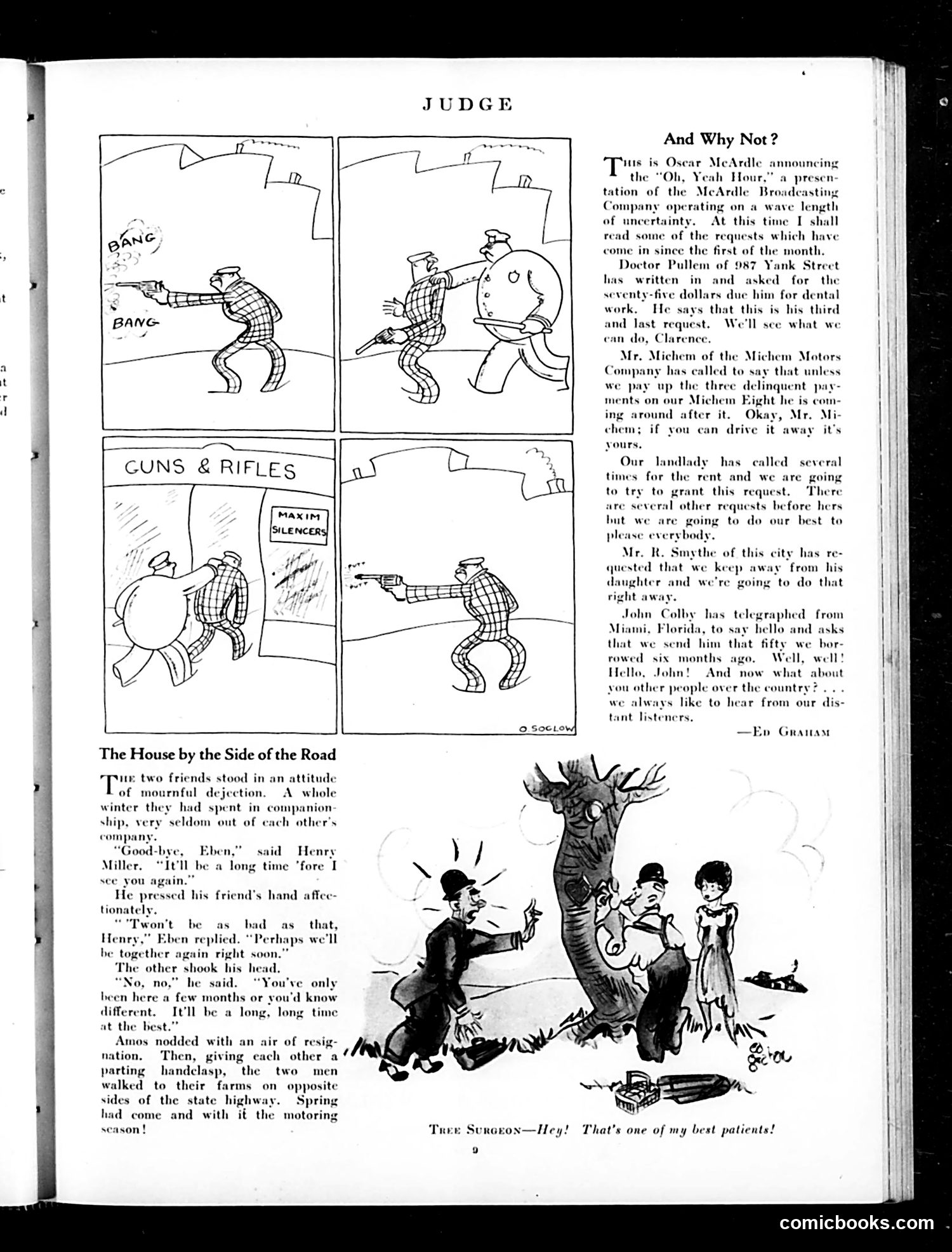
# Analysis of Judge Magazine Page This page contains two distinct pieces of satire: **Top Comic Strip ("And Why Not?")**: A mock radio broadcast parody where Oscar McArdle's "Oh, Yeah Hour" takes listener requests—but they're all complaints and demands for payment. A dentist wants $75 owed him, a car company threatens repossession, the landlady demands rent, and someone demands the broadcaster stay away from his daughter. The satire mocks both the novelty of radio broadcasting in the 1920s and the financial desperation of ordinary Americans, suggesting that broadcast "requests" reveal the economic struggles behind everyday life. **Lower Story ("The House by the Side of the Road")**: Two rural farmers bid farewell, expecting separation. One laments it will be "a long time" before they meet again—but the final sentence reveals the punchline: spring has brought the "motoring season," meaning cars now make visiting easy. The satire targets how automobiles were transforming rural isolation, disrupting the expected melancholy of farm life's separation. Both pieces humorously reflect 1920s anxieties about new technologies (radio, automobiles) reshaping American society.
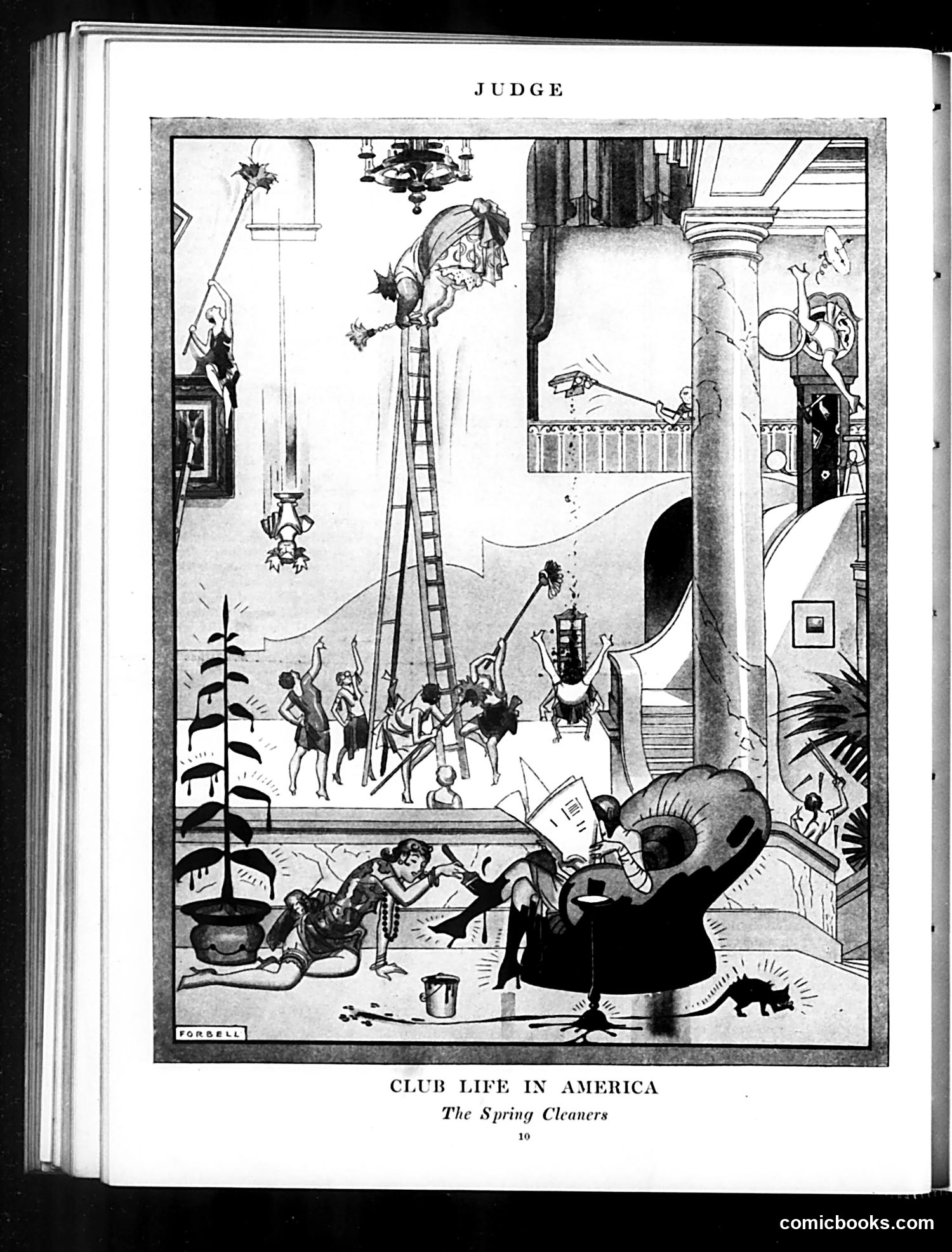
# "The Spring Cleaners" - Judge Magazine Cartoon This satirical illustration depicts spring cleaning chaos in an upper-class American home. The cartoon shows servants and household staff engaged in vigorous, comedic cleaning activities—hanging carpets from windows, scrubbing, climbing ladders, and generally creating mayhem throughout an elegant interior space. The satire targets the seasonal ritual of spring cleaning, particularly mocking the disruption and absurdity it causes. The exaggerated physical comedy—people dangling from ropes, dust clouds, overturned furniture—ridicules how this domestic practice turns orderly homes into temporary disaster zones. The title "Club Life in America" (above the cartoon) suggests this depicts wealthy, leisured-class households. The joke appears aimed at both the frivolous concerns of the wealthy and the theatrical nature of domestic labor performance during this seasonal tradition. The artist's signature reads "Forbell" (or similar).