A complete issue · 36 pages · 1930
Judge — March 15, 1930
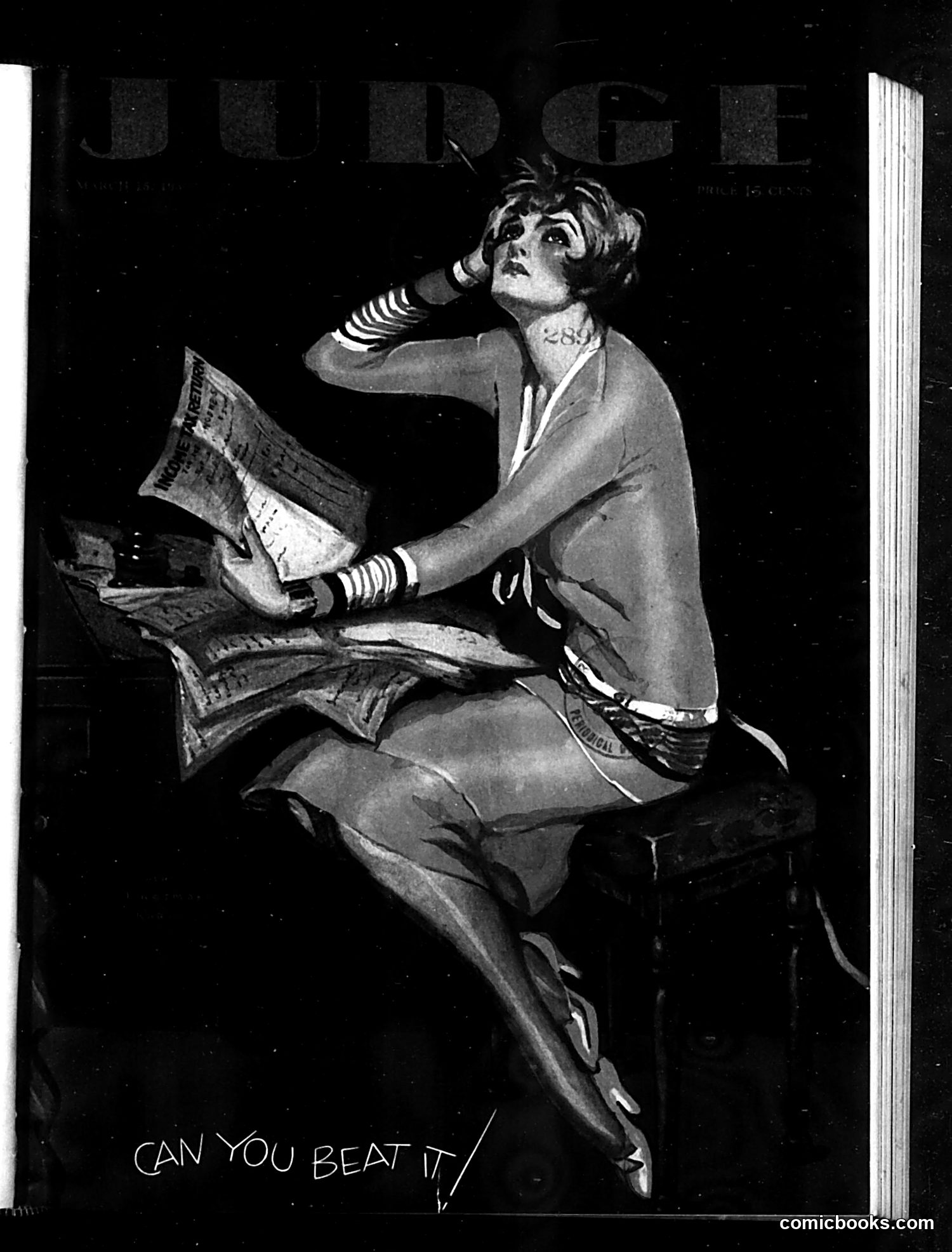
# Judge Magazine Satire Analysis This appears to be a vintage Judge magazine cover featuring a stylized illustration of a young man in casual 1920s-30s attire (striped shirt, loose pants with decorative bands). He's depicted in an exaggerated, dynamic pose reading what appears to be a newspaper, with his expression showing surprise or shock. His hair is styled in a period-typical wave. The caption "CAN YOU BEAT IT?" suggests mockery of contemporary news or social trends. Without additional context or visible dateline, the specific target remains unclear—it likely satirizes either newsworthy events, popular culture trends, or social behaviors of that era that Judge's readers would have immediately recognized. The dramatic black-and-white photography and athletic pose emphasize comedic exaggeration typical of the magazine's style.
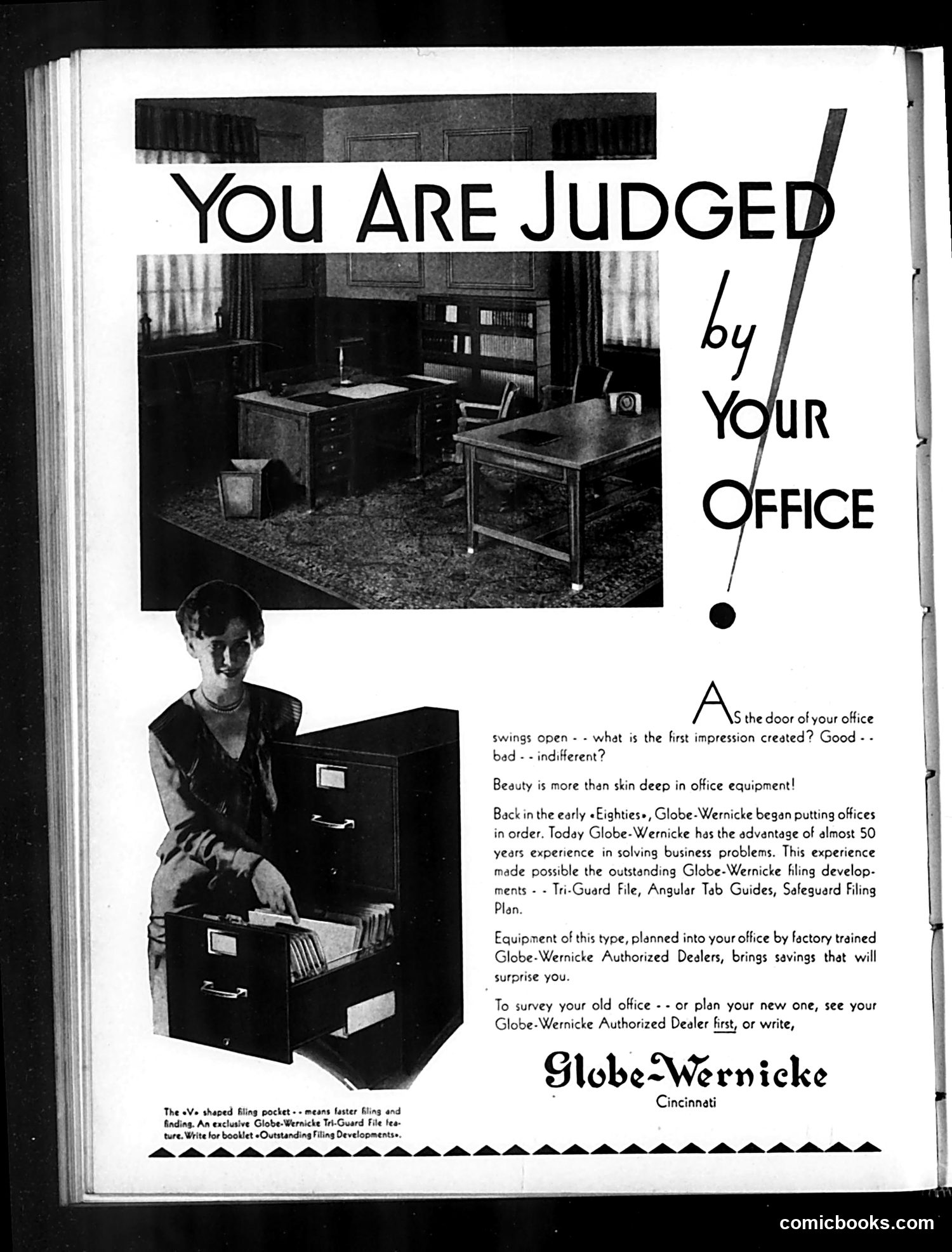
# Analysis This appears to be primarily **advertising rather than satire**. The page is a Globe-Wernicke office furniture advertisement from Cincinnati, disguised as editorial content in Judge magazine. The headline "YOU ARE JUDGED BY YOUR OFFICE" uses a play on Judge's name to suggest that office appearance reflects professional competence. The accompanying photograph shows an organized filing system and office setup. The ad's premise—that good office equipment demonstrates business acumen—is itself mildly humorous, though not satirical. The copy emphasizes Globe-Wernicke's 50 years of experience in office organization and filing systems (Tri-Guard File, Angular Tab Guides, Safeguard Filing Plan). Rather than mocking anything, this is straightforward commercial persuasion: buy quality office furniture to project success. The "satire" framing appears to be an advertising technique to fit Judge's editorial style.
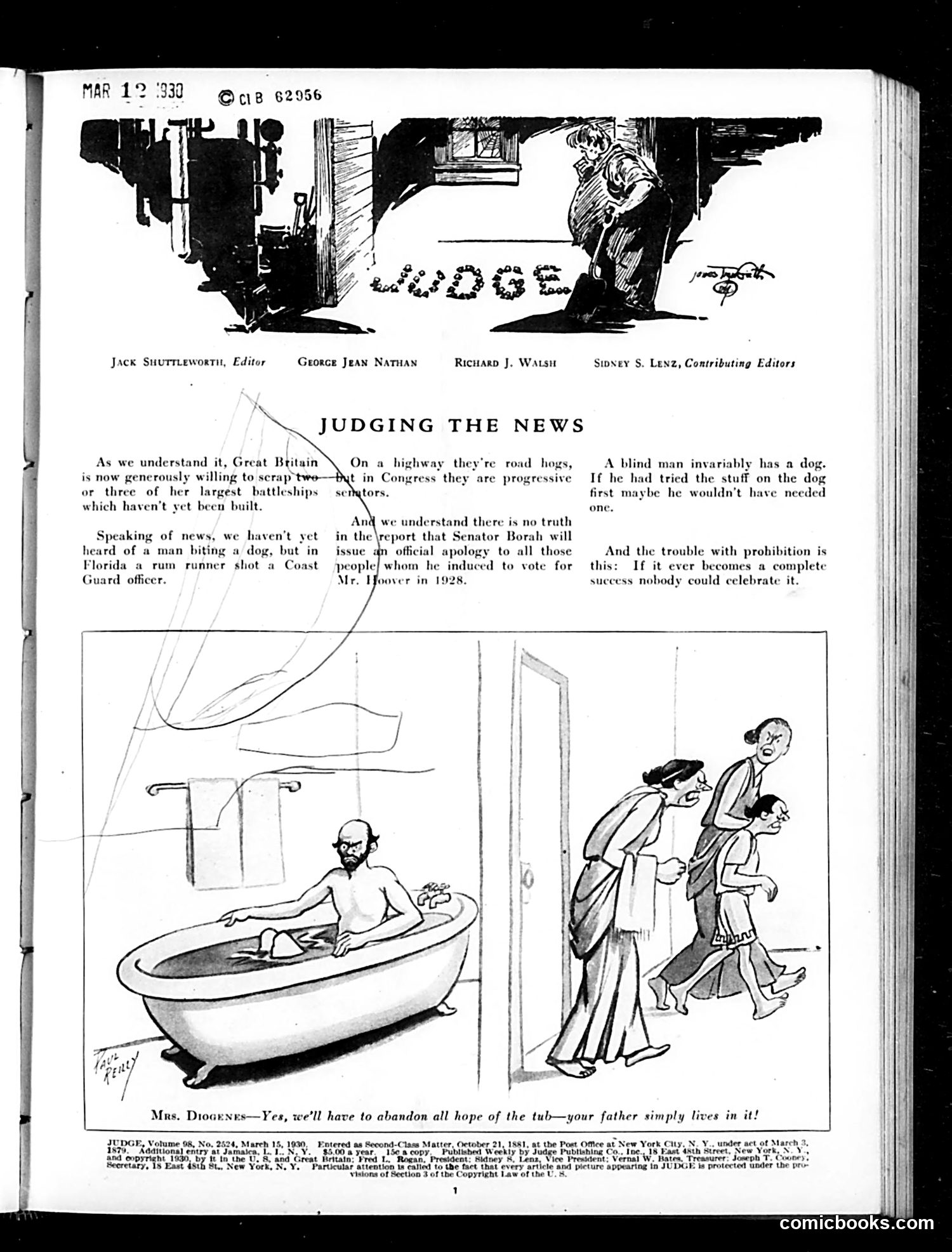
# Analysis of Judge Magazine Page (March 12, 1930) The page contains a satirical editorial section titled "Judging the News" that mocks current events through brief commentary and cartoons. The main cartoon depicts a man in a bathtub labeled "Mrs. Diggines—Yes, we'll have to abandon all hope of the tub—your father simply lives in it!" This appears to satirize domestic life and family dynamics of the era, suggesting a humorous complaint about someone hogging the bathroom. The editorial mentions Great Britain scrapping battleships, Senator Borah issuing an apology, and commentary on Prohibition's failure. The cartoon's humor relies on relatable domestic frustration rather than political commentary—a common Judge format of mixing serious political satire with lighthearted domestic humor for broad appeal to Depression-era readers.
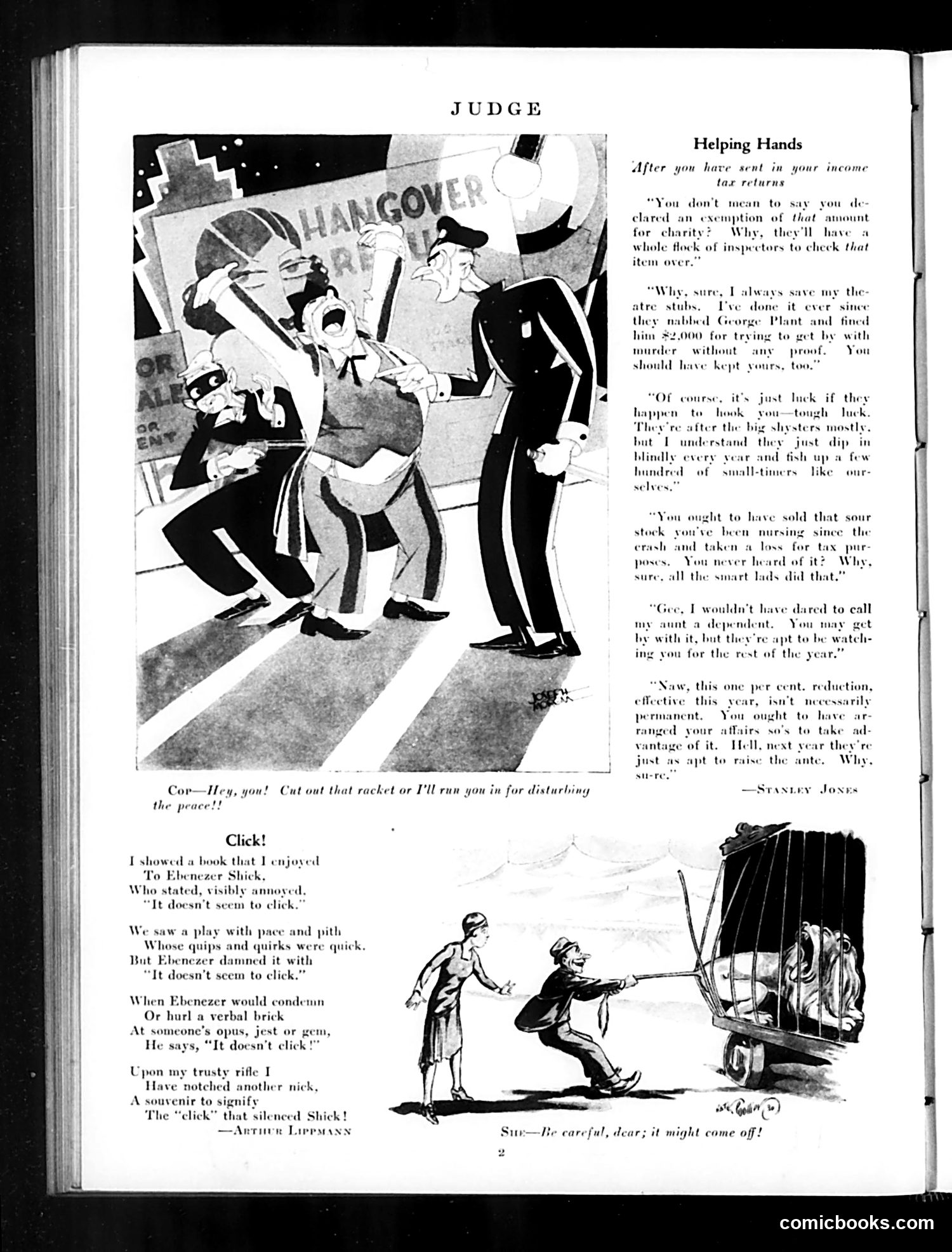
# Analysis of Judge Magazine Page The top cartoon satirizes tax deductions. A man loudly protests claiming charitable donations while an inspector examines his finances. The satire targets wealthy individuals claiming inflated charitable deductions to reduce taxes—a common evasion tactic. The dialogue humorously exposes how people game the system by saving theater stubs and small expenses as false "charitable" write-offs. The "Click!" poem below mocks theater critic Ebenzer Slick, who apparently dismissed a play by saying "It doesn't seem to click"—implying his criticisms are superficial catchphrases rather than substantive analysis. The bottom cartoon shows a man carefully towing an overloaded cart, cautioning his companion it "might come off"—likely a visual pun about precarious situations or unstable ventures.
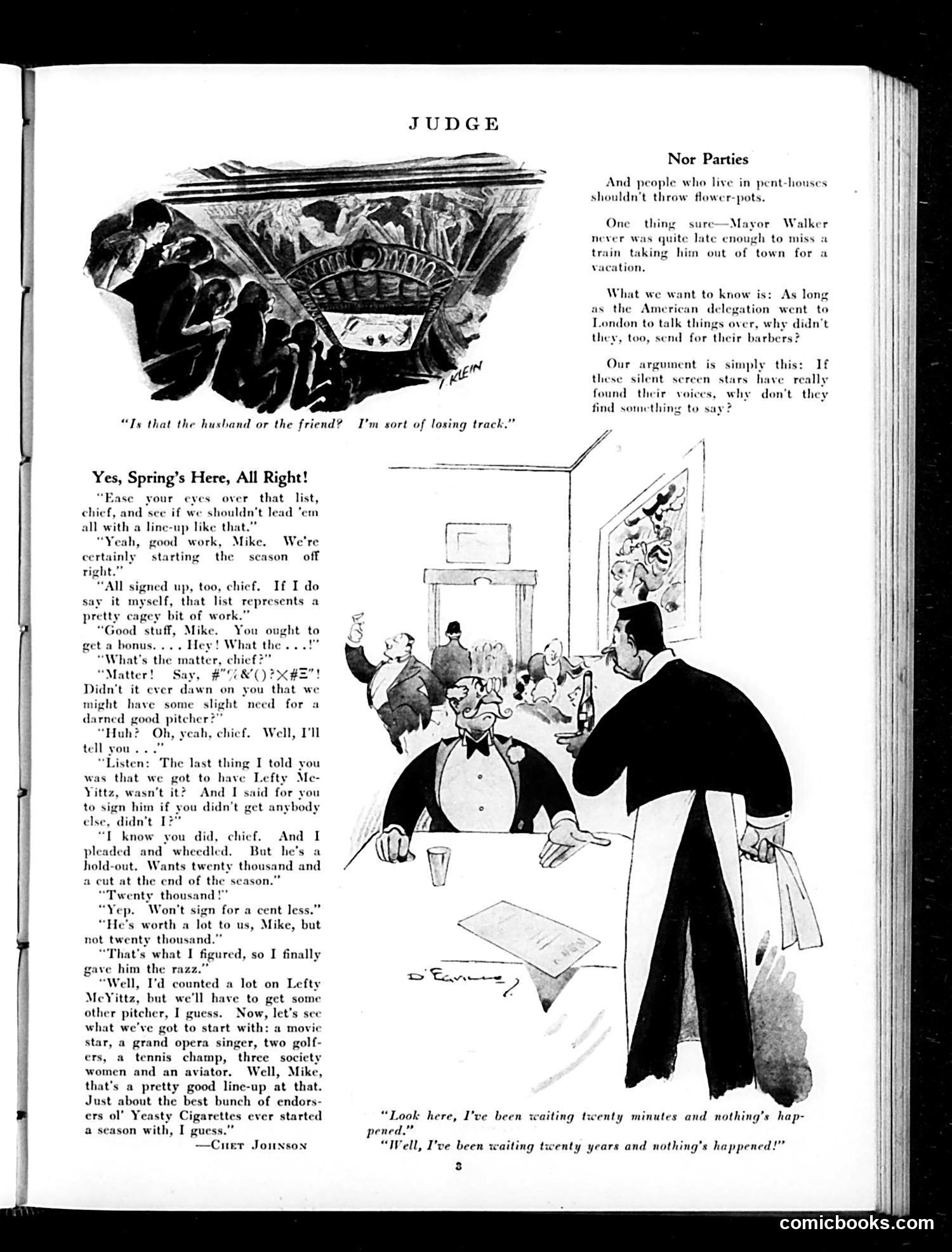
# Analysis of Judge Magazine Page This page contains two distinct pieces of satire: **"Nor Parties" (top right):** A brief editorial criticizing silent film stars for not using their newfound voices after the advent of "talking pictures." The joke: if silent-screen actors have finally found their voices, why remain silent on social/political issues? **"Yes, Spring's Here, All Right!" (bottom):** A dialogue between baseball manager and player "Mike" discussing signing endorsements for the upcoming season. They're negotiating with a player named "Lefty McYittz" (likely ethnic caricature humor typical of the era). The illustration shows a social scene where a woman complains about waiting "twenty minutes" with nothing happening, while a man responds he's been "waiting twenty years and nothing's happened"—a joke about marriage or romantic stagnation. The content reflects 1920s-30s American popular culture preoccupations with baseball, entertainment, and domestic life.
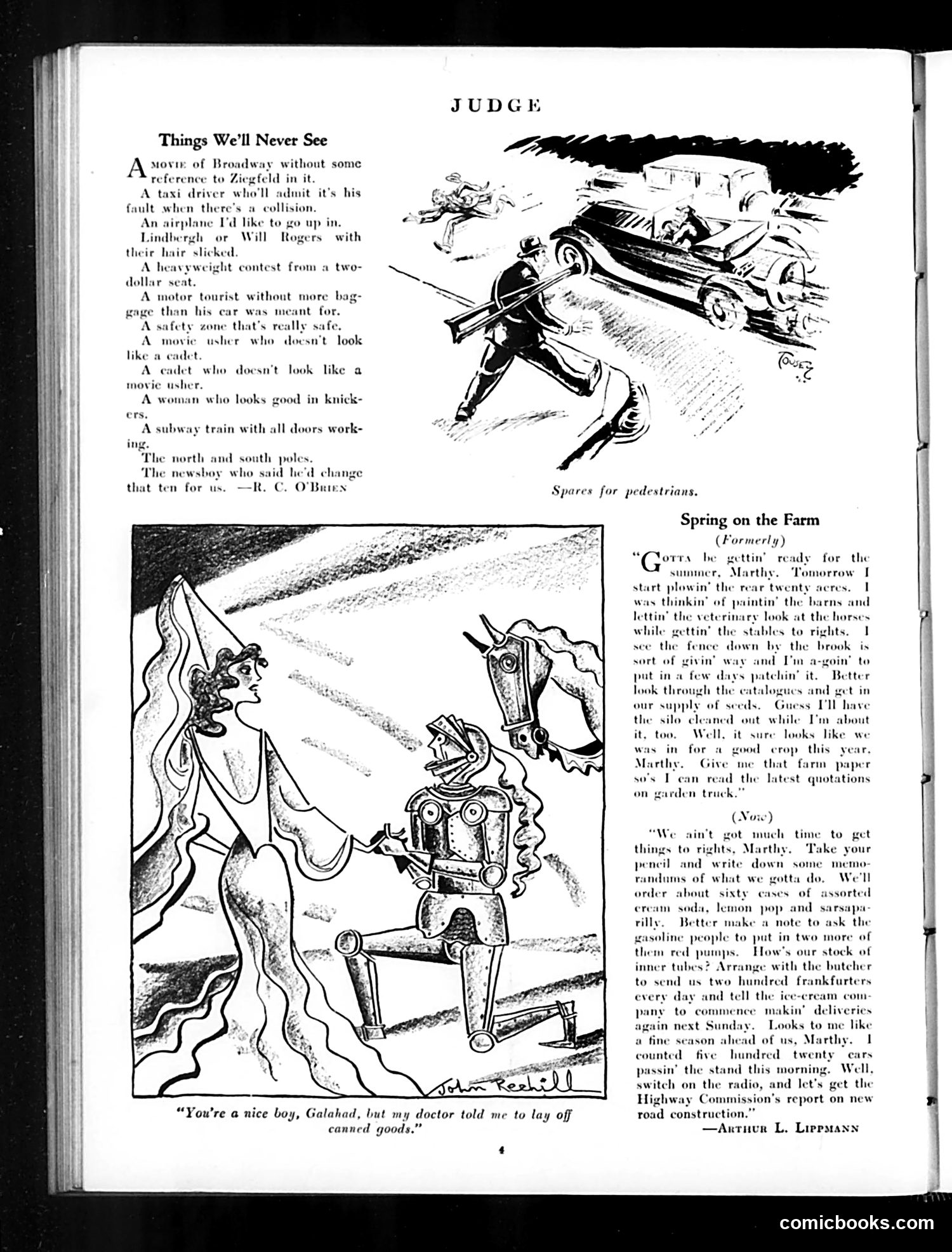
# Analysis of Judge Magazine Page The page contains two distinct sections: **"Things We'll Never See"** (left): A humorous list of impossibilities, including a taxi driver admitting fault, an airplane with messy passengers, and a "woman who looks good in knickers." This is light social satire about everyday frustrations. **"Spring on the Farm"** (right): A dialogue between a farm wife (Martha) and her husband about spring preparations—plowing, veterinary care, seed ordering, and farm supplies. The husband mentions listening to a Highway Commission radio report about road construction. **Lower cartoon**: Shows a woman and robot-like figure. The caption reads "You're a nice guy, Galahad, but my doctor told me to lay off canned goods"—a pun playing on "canned" (preserved food) and the robot's mechanical appearance. The page reflects 1920s-30s rural and domestic life, with gentle humor aimed at period audiences.
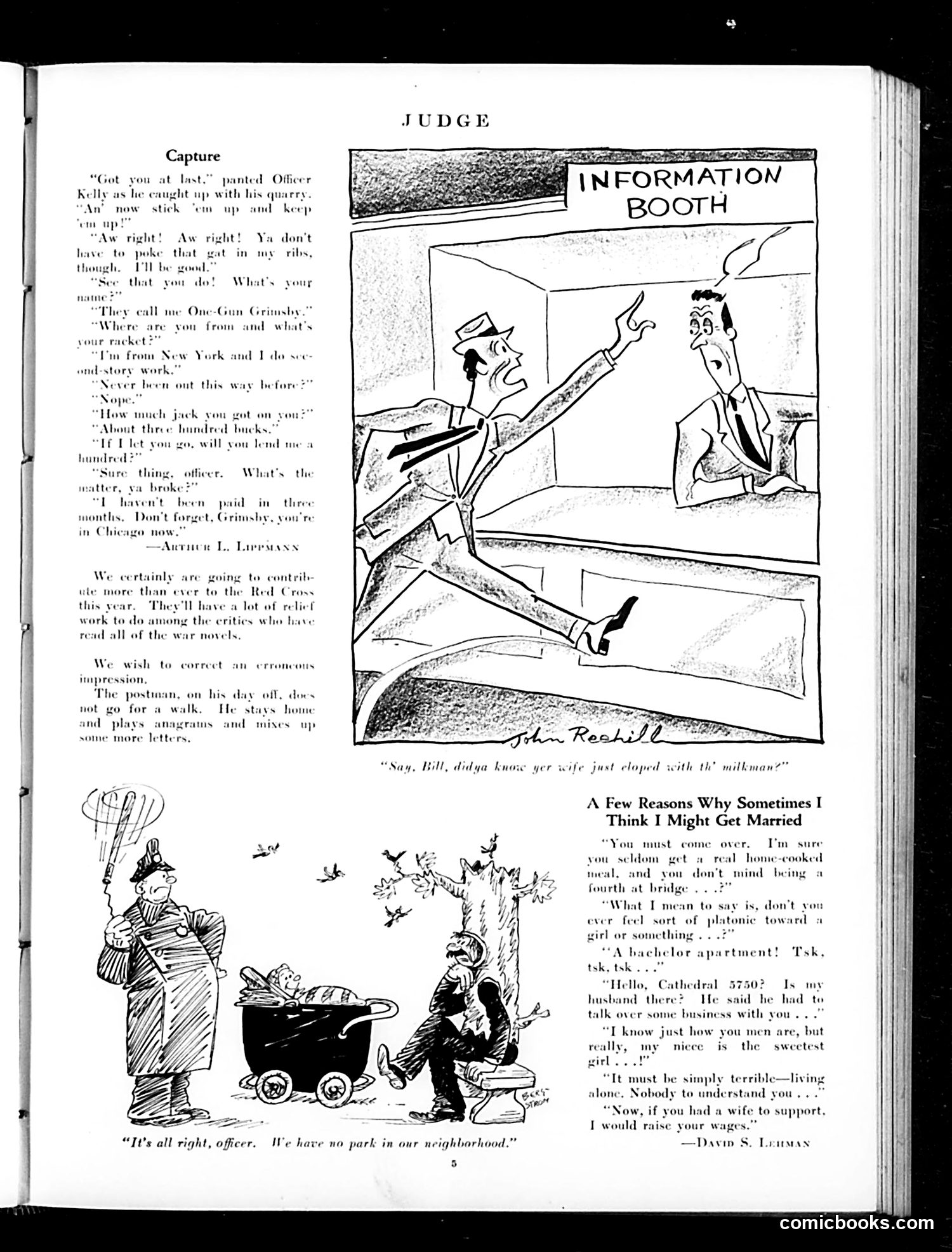
# Analysis of Judge Magazine Page This page contains two separate satirical pieces: **"Information Booth" (top):** A cartoon showing a man at an information booth gesturing expansively while speaking to an attendant. The dialogue reveals the man is "One-Gun Grimsby" from New York, a criminal boasting about his crimes ("About three hundred bucks"). The joke satirizes criminals' braggadocio and suggests they'd openly confess their exploits to anyone. **"A Few Reasons Why Sometimes I Think I Might Get Married" (bottom):** Humorous commentary listing bachelors' motivations for marriage—home-cooked meals, companionship, financial support. The accompanying cartoon shows a man with a baby carriage, humorously depicting the domestic responsibilities marriage entails. The satire mocks bachelors' superficial reasons for marriage while highlighting the practical demands of family life. Both pieces use humor to critique contemporary social attitudes toward crime and matrimony.
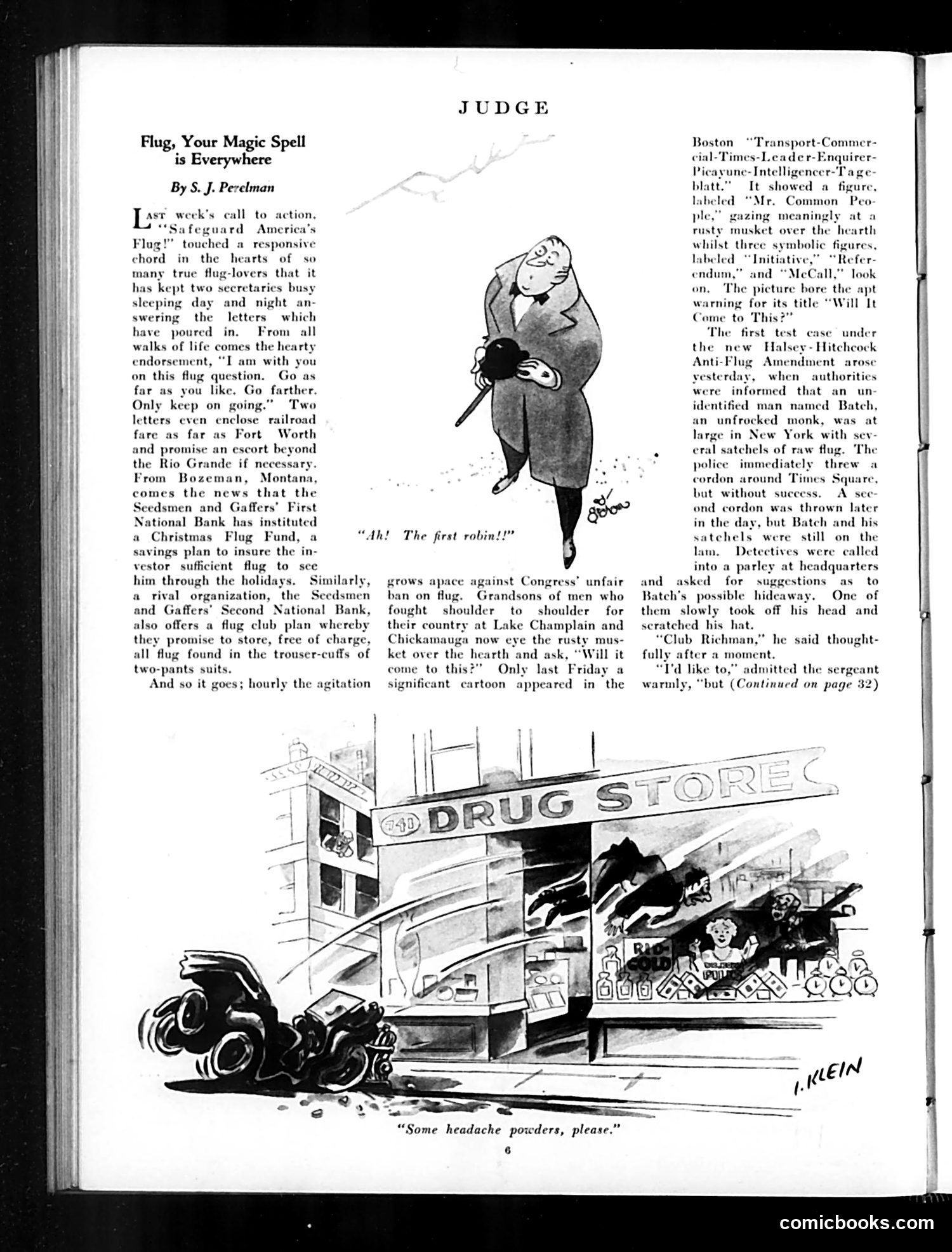
# Political Cartoon Analysis This page from *Judge* contains two satirical pieces about American patriotism and commerce during what appears to be a period of flag-related controversy. **Top cartoon ("Ah! The first robin!")**: Depicts a man holding a large flag with apparent satisfaction. The article references a "Safeguard America's Flag" campaign and mentions Congressional debate over flag regulations. The cartoon appears to mock excessive patriotic displays or commercialization of flag sentiment. **Bottom cartoon ("Some headache powders, please")**: Shows a car crash outside a drugstore. The satire likely comments on the chaos or unintended consequences of patriotic fervor—the "headache" being figurative (social disruption) made literal through the accident's comedic aftermath. Both pieces seem critical of how flag-related activism disrupts ordinary life.
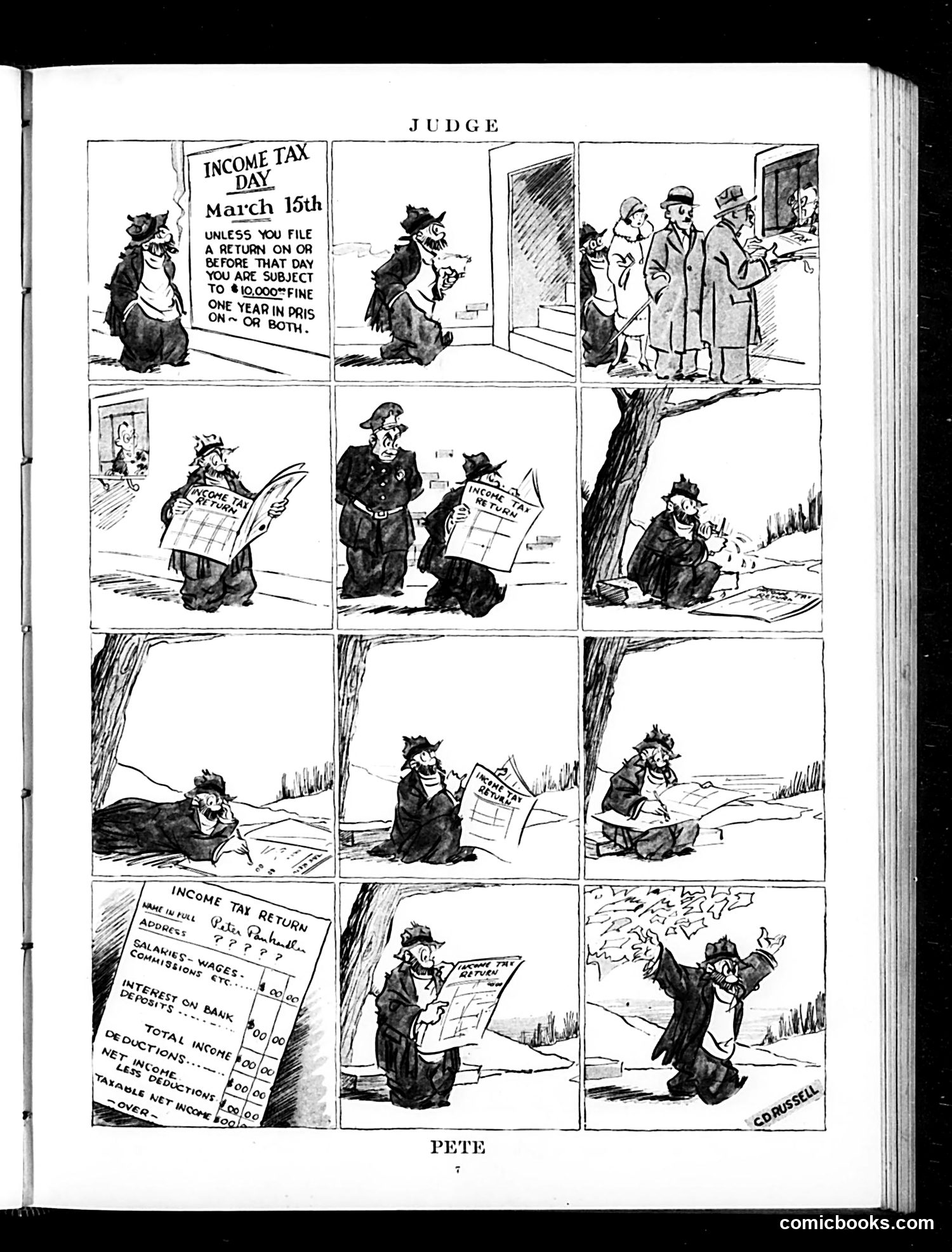
# Political Cartoon Analysis: "Judge" - Income Tax Day This is a sequential comic strip satirizing the stress of income tax filing, with March 15th as the deadline. The Devil character (representing the IRS or tax burden) menaces citizens throughout, warning of a $10,000 fine and imprisonment for non-compliance. The narrative follows an everyman taxpayer's mounting anxiety: he receives the threatening notice, attempts to complete his complex return (shown with detailed line items), grows increasingly distressed, and ultimately appears to lose his mind—ending in what looks like a breakdown or escape into nature. The satire mocks both the complexity of tax forms and the government's intimidating enforcement tactics. For modern readers, this reflects early-20th-century Americans' frustration with the relatively new federal income tax system and its Byzantine requirements—a frustration that remains culturally resonant today.
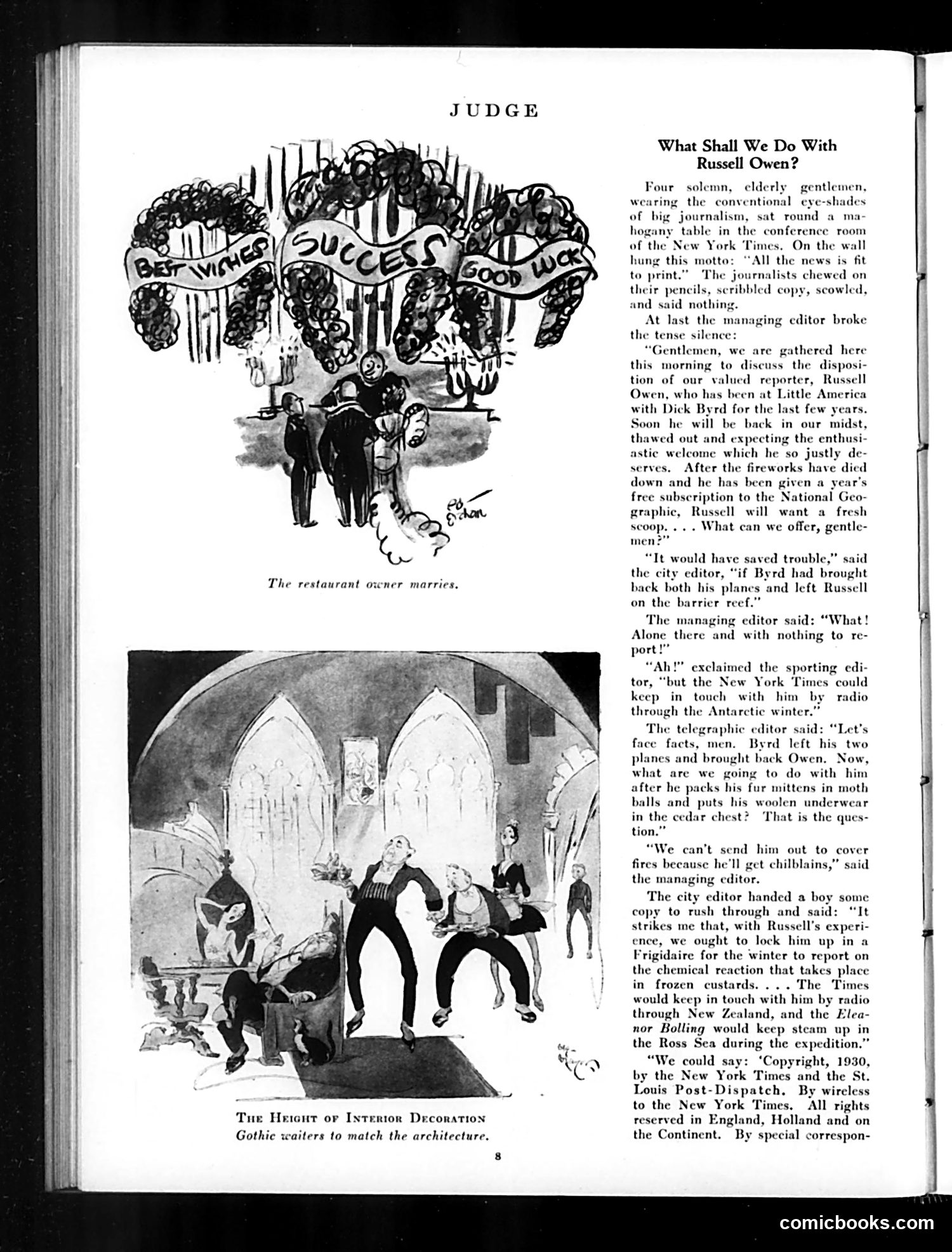
# What This Page Means This 1930 Judge satirical piece mocks the New York Times' obsession with sensationalizing reporter Russell Owen's return from Dick Byrd's Antarctic expedition. The cartoon depicts Times editors debating what assignment to give Owen after his famous polar expedition, joking that he's become a one-trick explorer unsuitable for normal reporting. The satire targets the era's yellow journalism: editors seriously propose locking Owen in a refrigerator to report on frozen custard reactions, or keeping him in constant radio contact with Antarctica—absurd ideas meant to squeeze more expedition-related content from him. The joke exposes how major newspapers exploited dramatic expeditions for circulation, and how little value they placed on actual investigative journalism once a reporter's exotic appeal faded. The motto "All the news is fit to print" hangs ironically overhead.
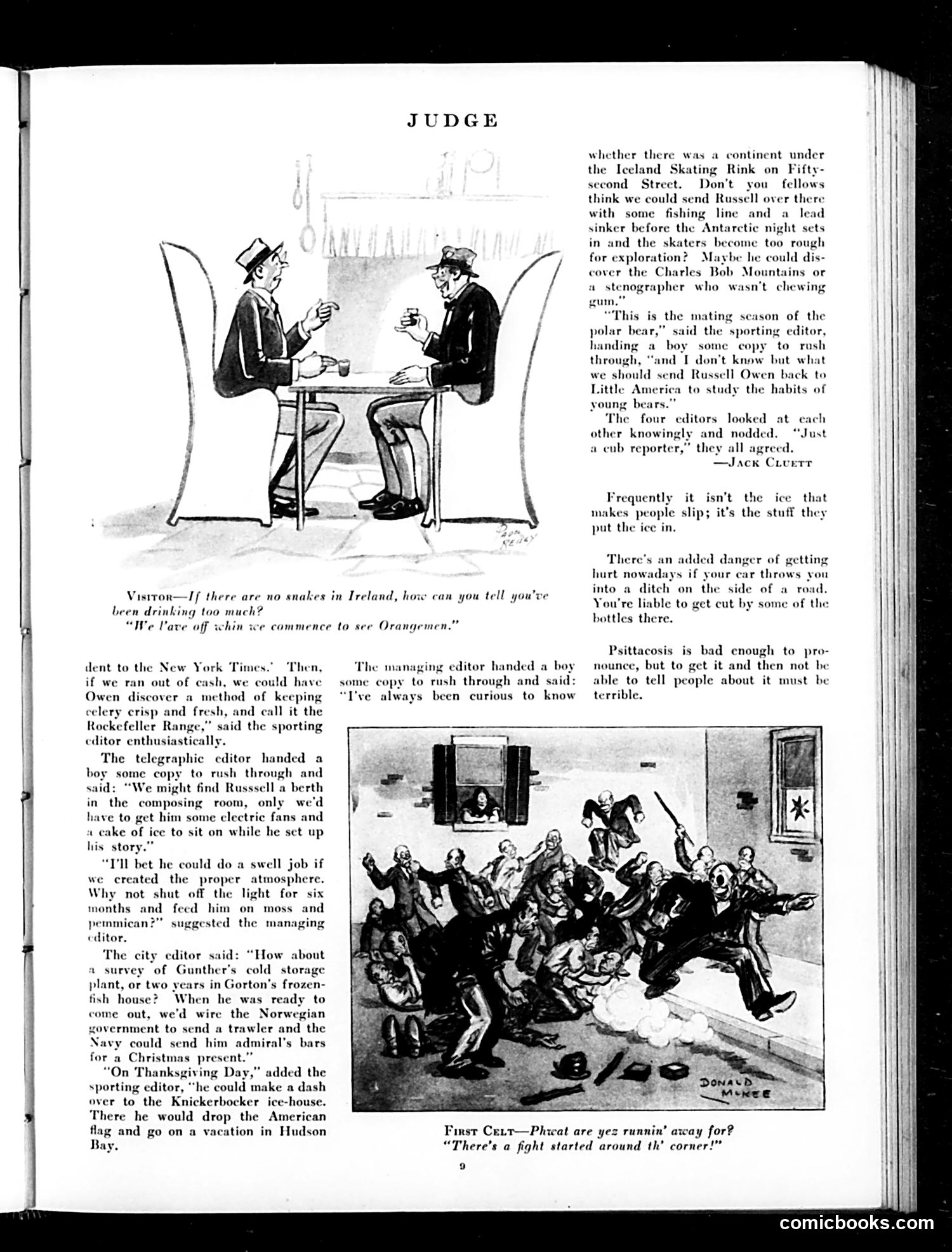
# Explanation for Modern Readers This page satirizes newspaper editors brainstorming absurd assignment ideas for an explorer named Russell Owen (a real polar explorer of the era). The top cartoon shows two men at a table in what appears to be an editorial meeting, with the visitor making an Irish drinking joke. The text presents four editors competing to propose the most ridiculous expeditions—sending Owen to explore under an ice rink, study polar bears during mating season, or spend years in cold storage plants. The joke is that they're treating these dangerous, impractical ideas as actual journalism assignments. The punchline ("Just a cub reporter") suggests Owen is inexperienced enough to actually accept such nonsense. The bottom cartoon shows tenement residents running from a street fight, unaware of danger. The sidebar jokes mock Prohibition-era drinking culture, dangerous driving, and a disease called psittacosis—typical satirical commentary on contemporary social problems.
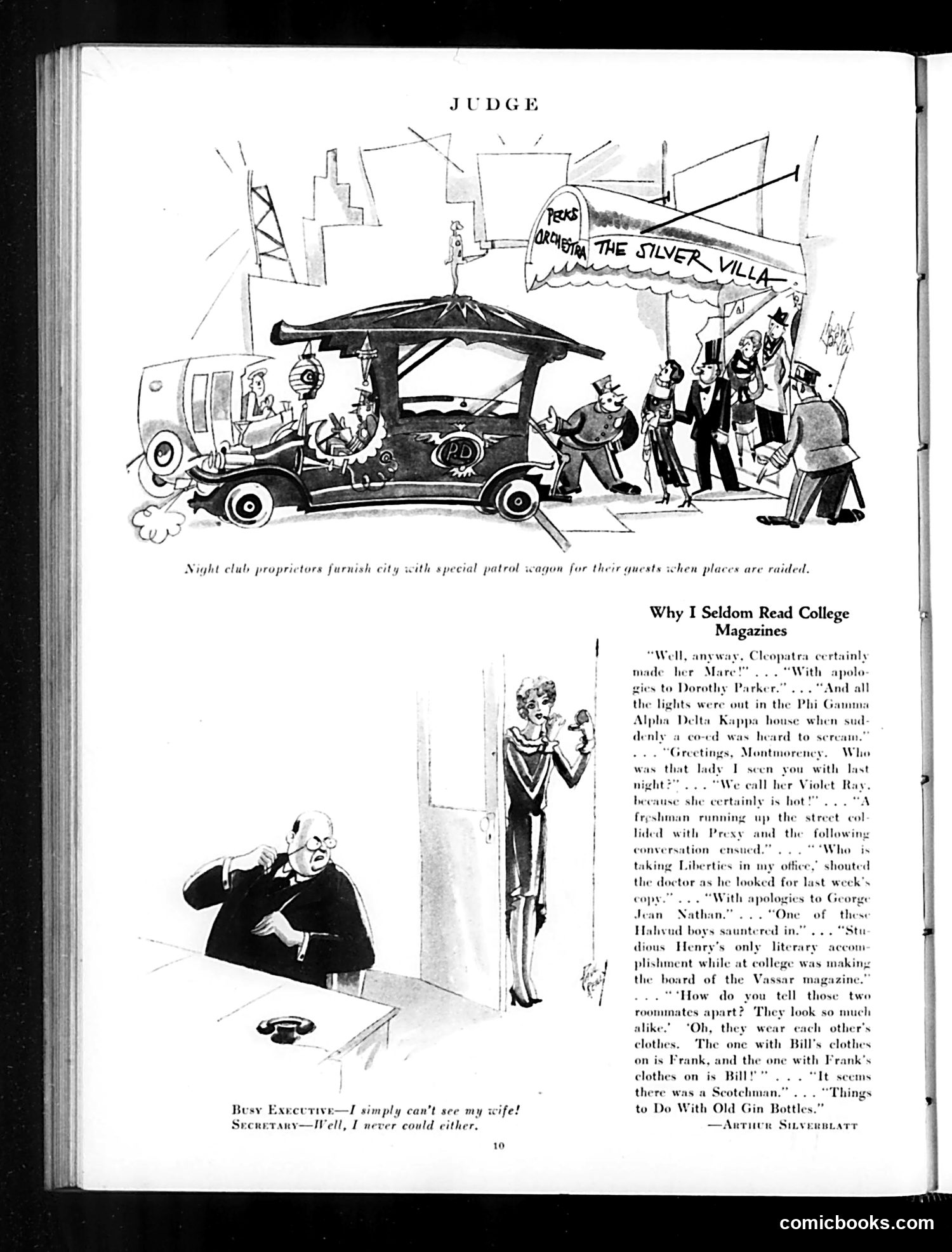
# Political Cartoon & Satire Analysis The top cartoon satirizes Prohibition-era nightclub raids. It depicts a luxurious vehicle labeled "The Silver Villa" (a nightclub) equipped with a canopy and serving drinks—functioning as a mobile speakeasy. The joke: nightclub owners provide their own "patrol wagon" to transport guests during police raids, allowing patrons to continue partying while evading arrest. This mocks both the brazen defiance of Prohibition laws and law enforcement's apparent inability to stop it. The lower section, "Why I Seldom Read College Magazines," parodies pretentious undergraduate literary efforts—forced references to famous authors (Dorothy Parker), melodramatic clichés ("lights were out"), and forced sophistication. The brief dialogue joke about indistinguishable twin roommates comments on collegiate conformity and homogeneity.