
Judge, 1930-03-15 · page 24 of 36
Judge — March 15, 1930 — page 24: what you’re looking at
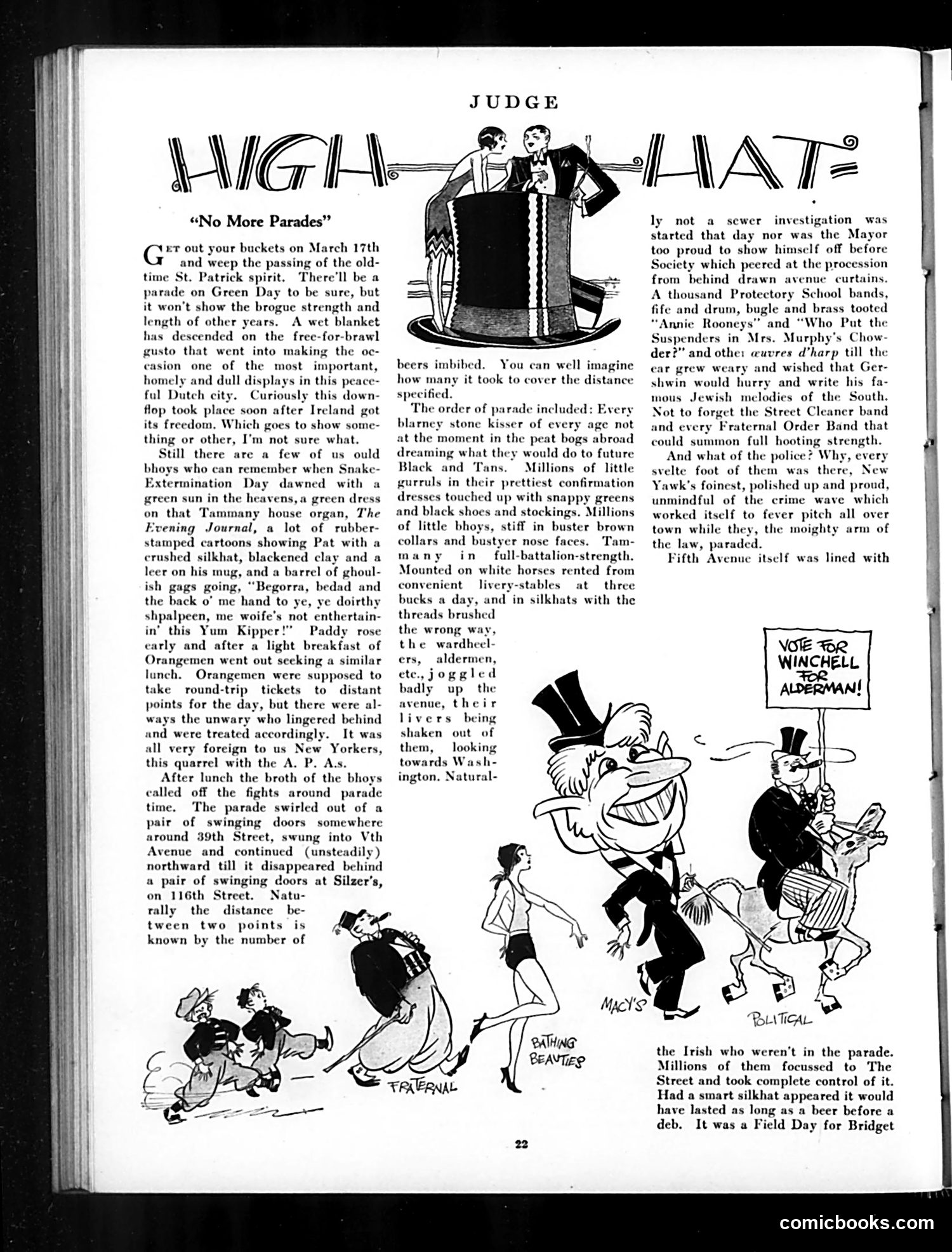
A restored page from Judge, 1930-03-15. Page through the whole issue in the reader above.
📄 Transcribed text from this page (OCR, searchable)
Machine-transcribed from the original scan — historical spelling and the odd misread are preserved.
WIG “No More Parades” eT out your buckets on March 17th and weep the passing of the old- time St. Patrick spirit. There'll be a Pp on Green Day to be sure, but it won't show the brogue strength and length of other years. A wet blanket has descended on the free-for-brawl gusto that went into making the oc- casion one of the most important, homely and dull displays in this peace- ful Dutch city. Curiously this down- flop took place soon after Ireland got its freedom. Which goes to show some- thing or other, I’m not sure what. Still there are a few of us ould bhoys who can remember when Extermination Day dawned w green sun in the heavens, a green dress on that Tammany house organ, The Evening Journal, a lot of rubber- stamped cartoons showing Pat with a crushed hat, blackened clay and a leer on his mug, and a barrel of ghoul- ish gags going, “Begorra, bedad and the back 0’ me hand to ye, ye doirthy shpalpeen, me fe’s not enthertain- in’ this Yum Kipper!” Paddy rose carly and after a light breakfast of Orangemen went out seeking a similar lunch. Orangemen were supposed to take round-trip tickets to distant points for the day, but there were al- ways the unwary who lingered behind and were treated accordingly. It was all very foreign to us New Yorkers, this quarrel with the A. P. A.s. After lunch the broth of the bhoys called off the fights around parade time. The parade swirled out of a pair of swinging doors somewhere around 39th Street, swung into Vth Avenue and continued (unsteadily) northward till it disappeared behind a pair of swinging doors at Silzer’s, on 116th Street. Natu- rally the distance be- tween two points is known by the number of beers imbibed. You can well imagine ny it took to cover the distance d. The order of parade included: Every blarney stone kisser of every age not at the moment in the peat bogs abroad dreaming what they would do to future Black and T: Millions of little gurruls in their prettiest confirmation dresses touched up with snappy greens and black shoes and stockings. Millions of little bhoys, stiff in buster brown collars and bustyer nose faces. Tam- many in full-battalion-strength. ed on white horses rented from convenient livery-stables at three bucks a day, and in silkhats with the threads brushed the wrong w the wardh ers, aldermen, ete, joggled badly up the avenue, their livers being shaken out of them, looking towards Wash- ington. Natural- [\ ly not a sewer started that day nor was the Mayor too proud to show himself off before Society which peered at the proces: from behind drawn avenue curtains. A thousand Protectory School bands, fife and drum, bugle and brass tooted “Annie Rooneys” and “Who Put the Suspenders in Mrs. Murphy's Chow- der?” and othe: wuvres d’harp till the var grew weary and wished that Ger- shwin would hurry and write his fa- mous Jewish melodies of the South. Not to forget the Street Cleaner band and every Fraternal Order Band that could summon full hooting strength And what of the polic . svelte foot of them there, N Yawk’s foinest, polished up and proud, unmindful of the crime wave which worked itself to fever pitch all over town while they, the moighty arm of the law, paraded. h Avenue itself was lined with NOE OR WINCHELL BLTICAL the Irish who weren't in the parade. Millions of them focussed to The Street and took complete control of it. Had a smart silkhat appeared it would have lasted as long as a beer before a deb. It was a Field Day for Bridget comicbooks.com