A complete issue · 36 pages · 1929
Judge — August 17, 1929
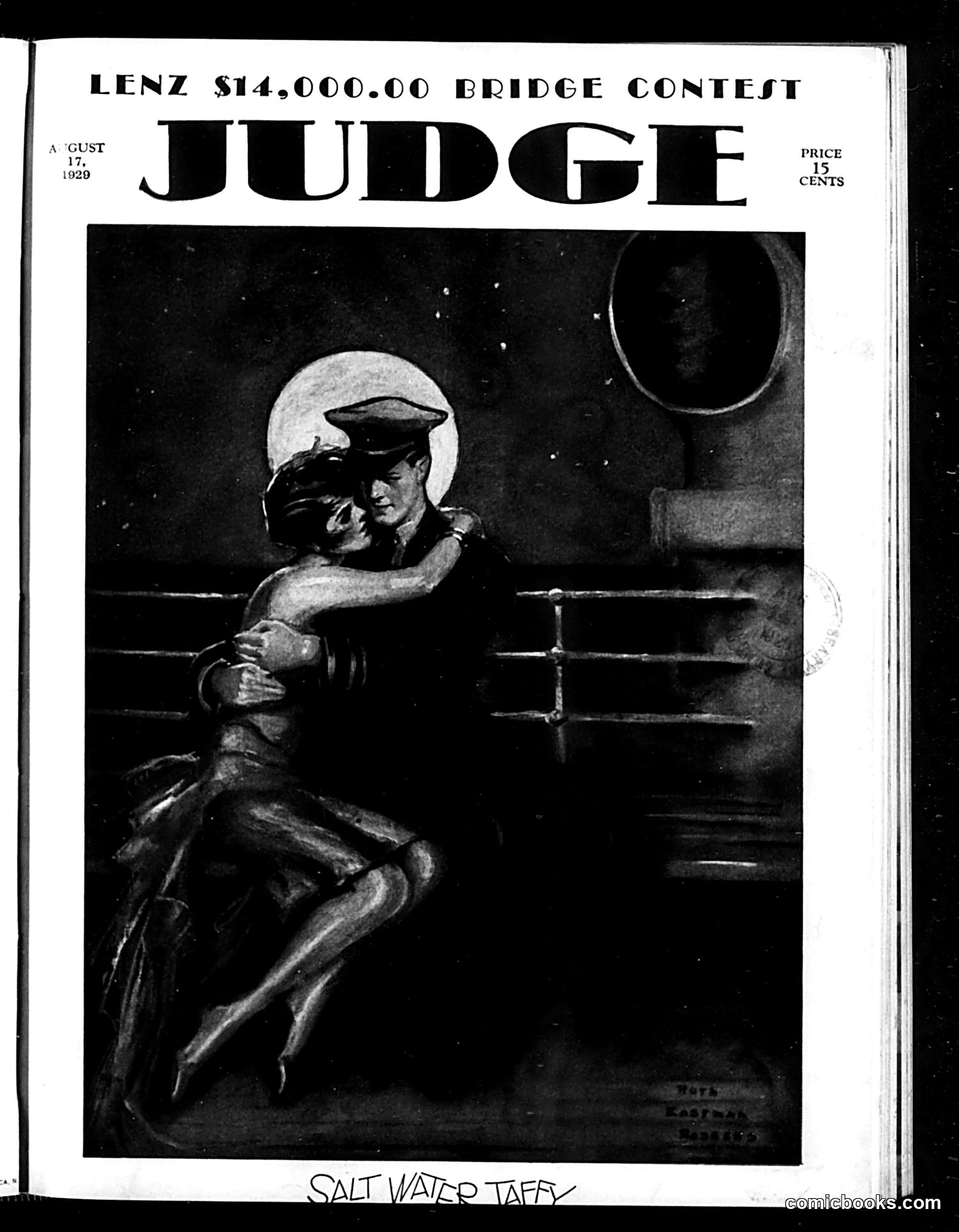
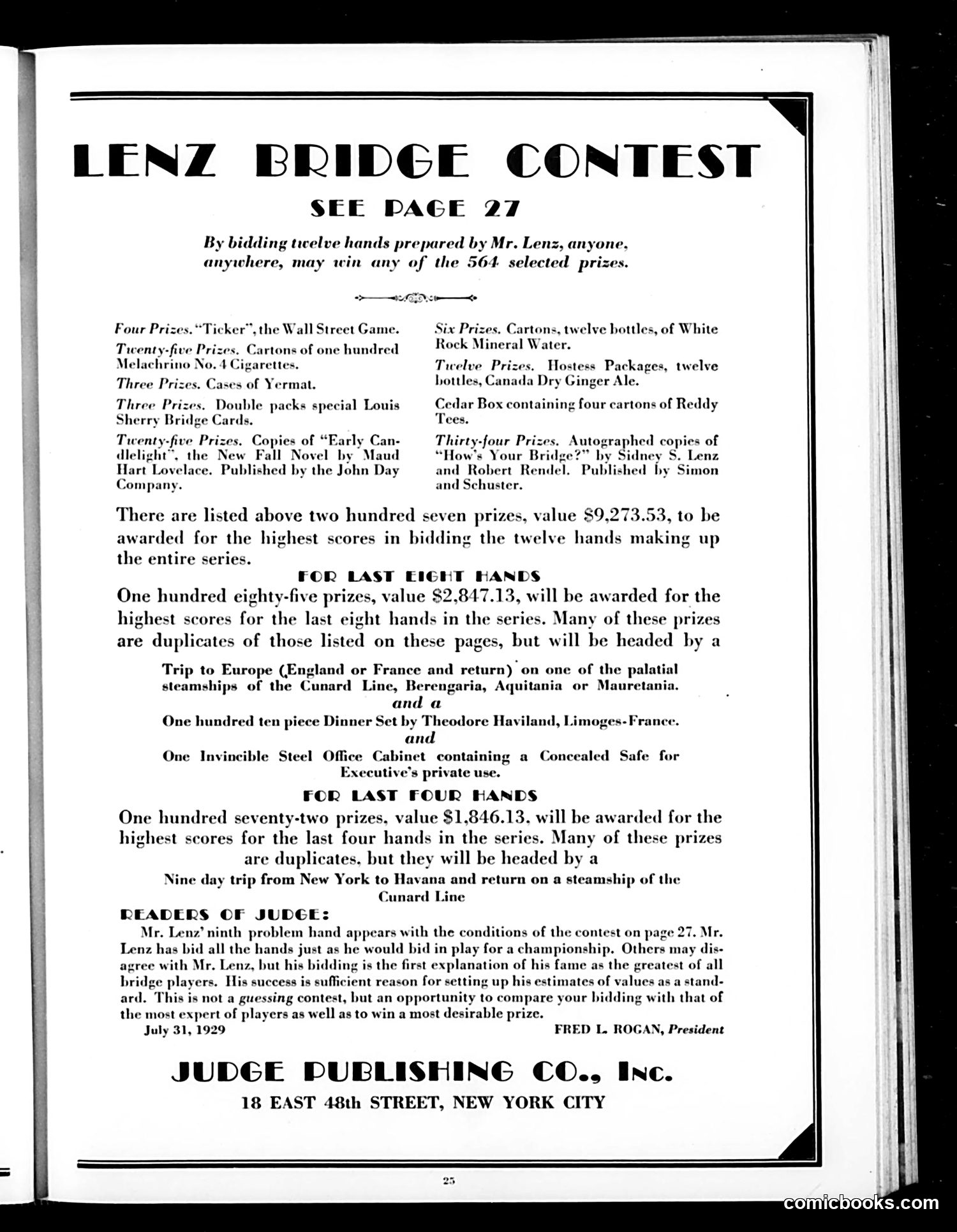
# Analysis of Judge Magazine Cover (August 17, 1929) This cover depicts a romantic scene labeled "Salt Water Taffy" — likely a double entendre referencing both the seaside candy and romantic encounters at the beach. A sailor and woman embrace by a ship's railing under moonlight, with a porthole visible above. The "Lenz $14,000.00 Bridge Contest" header references what appears to be a contemporary bridge tournament or competition, suggesting Judge was covering leisure activities and social events of the era. The imagery romanticizes naval life and seaside recreation, common themes in 1920s American popular culture. The cover's theatrical lighting and intimate composition reflect the sentimental aesthetic typical of Judge's satirical commentary on middle-class American romance and social conventions of this period.
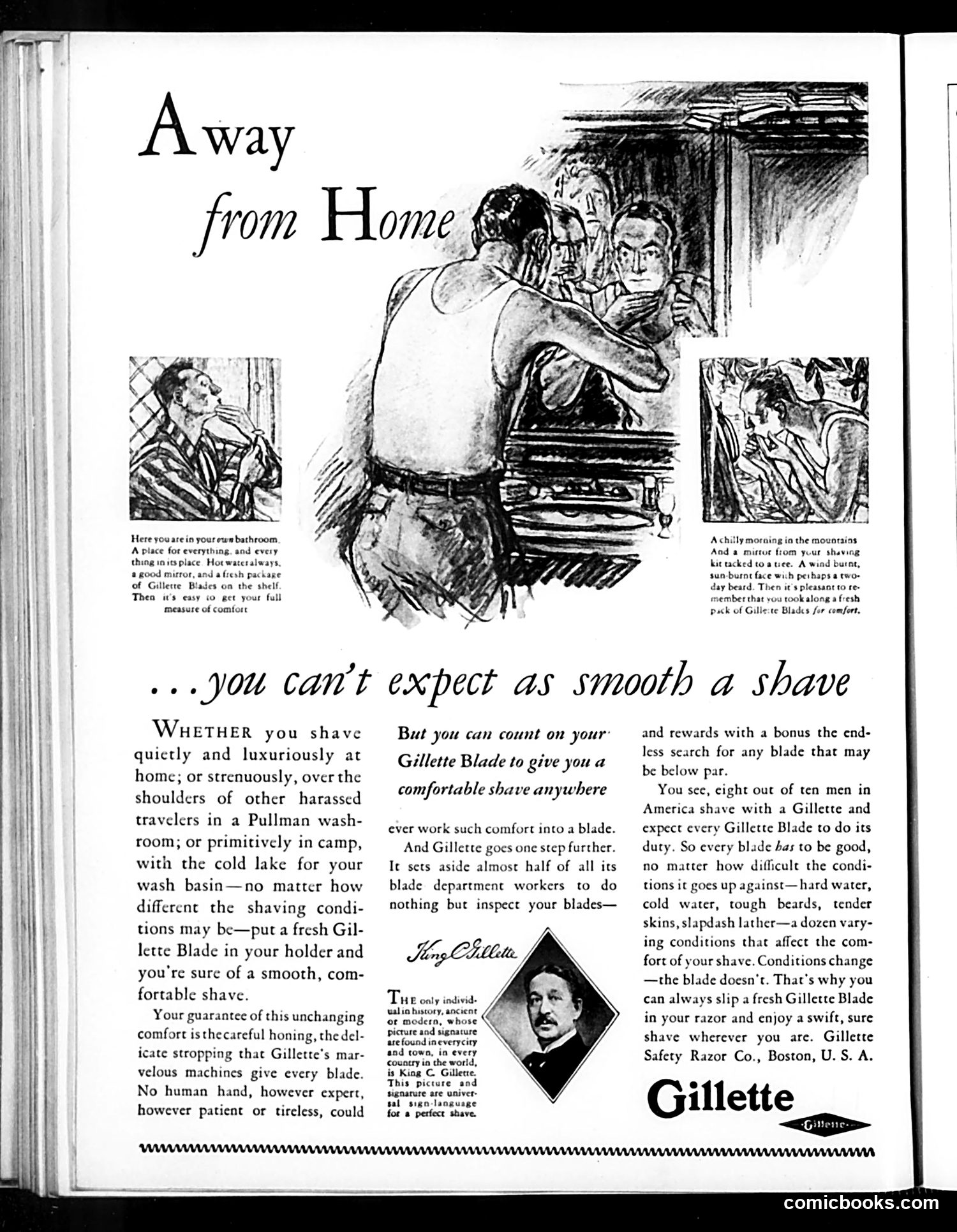
# Analysis This page is primarily a **Gillette razor advertisement**, not political satire. The headline "Away from Home" frames shaving as a practical concern for travelers—men in bathrooms, Pullman cars, camps, and mountains. The three sketched vignettes illustrate shaving scenarios: a man at home, another while traveling, and a third in mountainous terrain. These are lifestyle illustrations, not caricatures of political figures. The advertisement emphasizes Gillette's blade quality and consistency across different conditions. King C. Gillette's portrait appears in a diamond frame. The copy targets the male reader with promises of comfort and reliability wherever he might be. This reflects early 20th-century advertising's focus on modern convenience and masculinity, not political commentary.
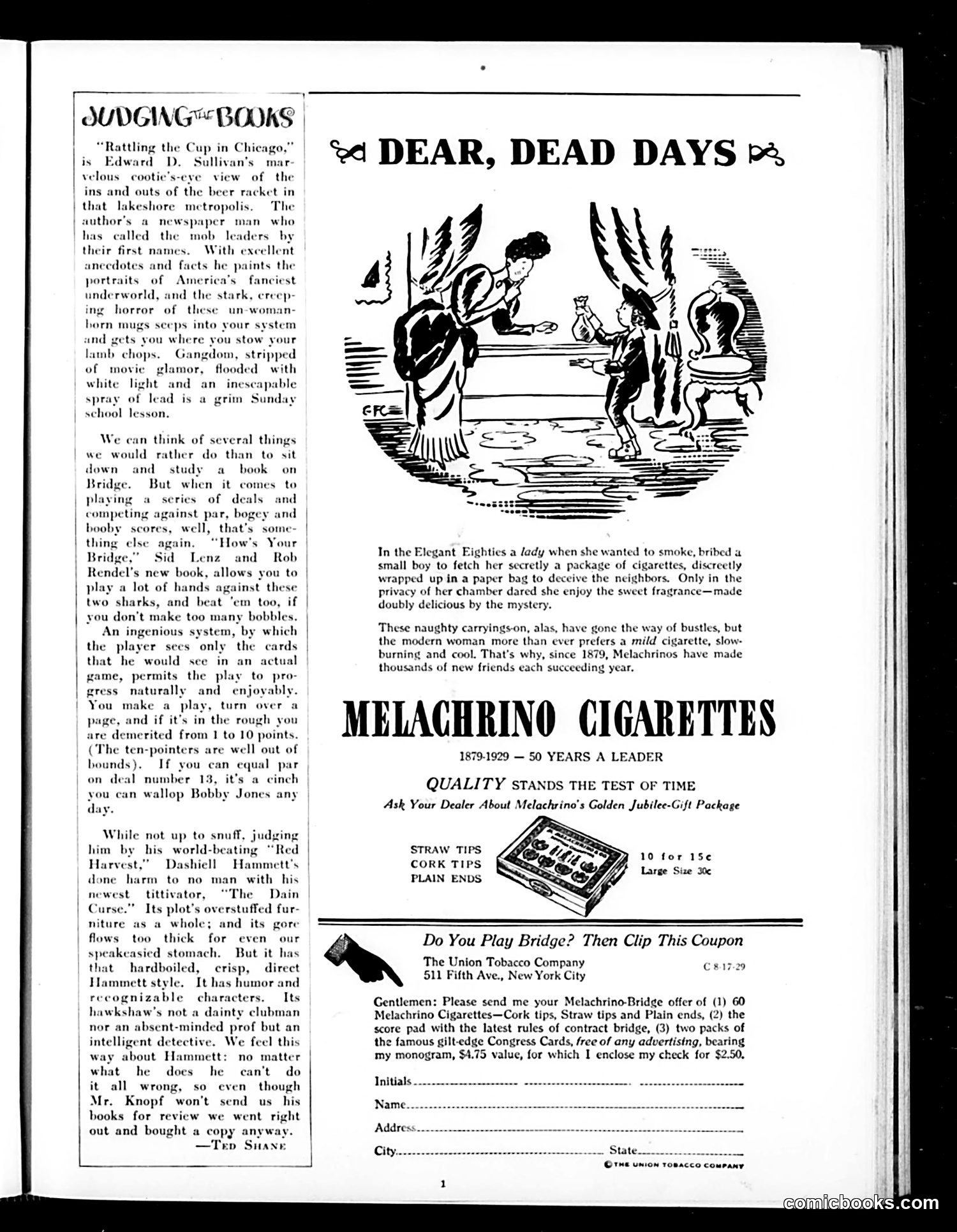
# "Dear, Dead Days" Cartoon Analysis This cartoon satirizes outdated social practices from the "Elegant Eighties" (1880s). It depicts a young woman bribing a boy to secretly fetch cigarettes for her, hidden in a paper bag to avoid detection by neighbors—illustrating how smoking by women was considered scandalous and required deception. The satire's point: these secretive behaviors have become quaint relics. The text notes that since 1879, Melachrino cigarettes have made "thousands of new friends each succeeding year," suggesting women's smoking is now normalized and open. The page is primarily a **Melachrino Cigarettes advertisement** (1929), using humor to market cigarettes by contrasting past social shame with present acceptability. It reflects early 20th-century marketing that normalized female smoking.
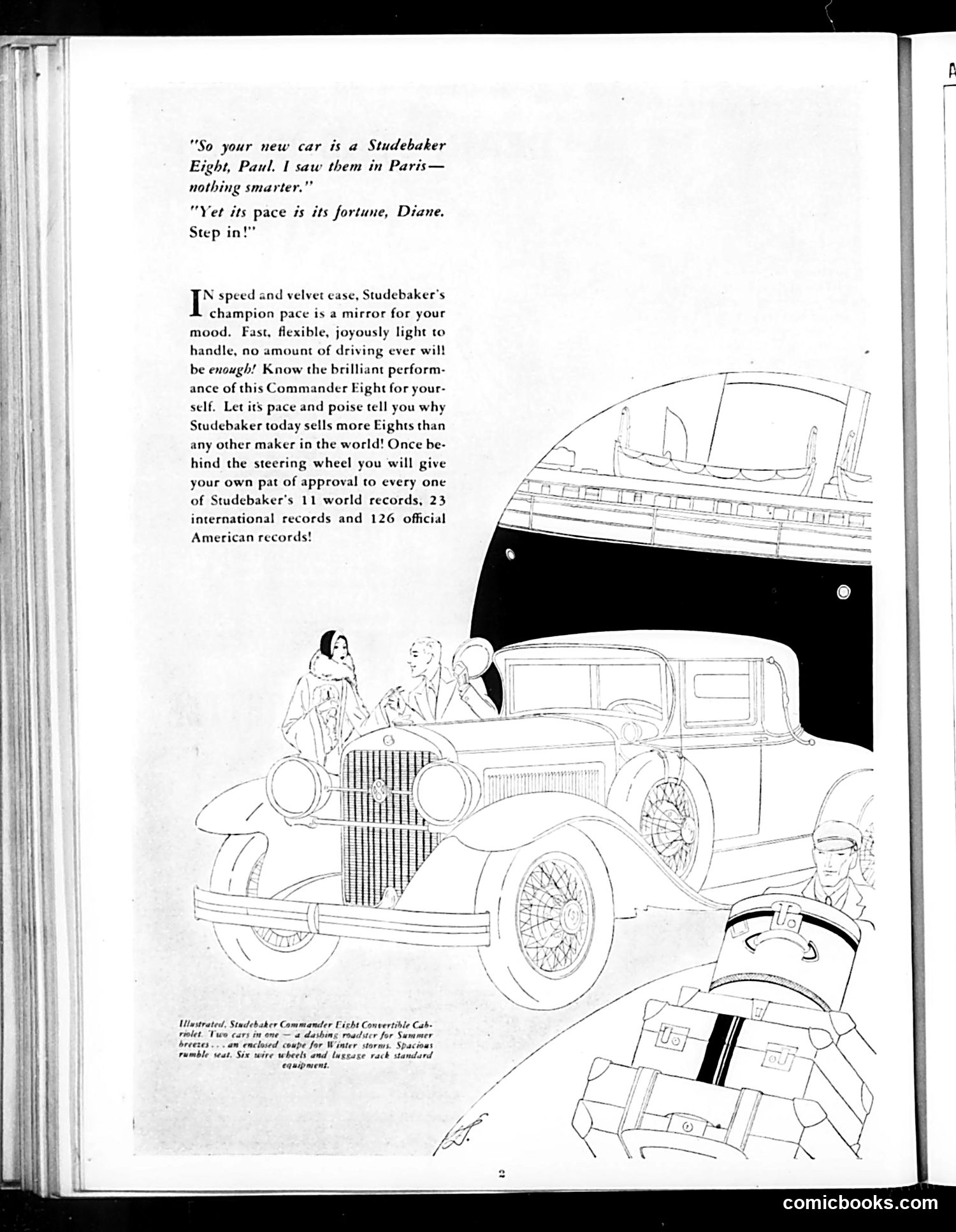
# Analysis This page is primarily **automobile advertising**, not political satire. It promotes the Studebaker Commander Eight automobile through a fictional dialogue between characters named Paul and Diane. The ad uses a common marketing strategy: Paul claims to have seen Studebaker Eights in Paris and praises their sophistication ("nothing smarter"), while Diane responds enthusiastically about their performance capabilities. The accompanying illustration shows the car with well-dressed figures admiring it. The text emphasizes Studebaker's sales dominance and racing records (11 world records, 126 American records) to establish prestige and reliability. This represents typical 1920s-30s advertising: associating consumer products with European elegance, social approval, and technological achievement to appeal to aspirational American readers.
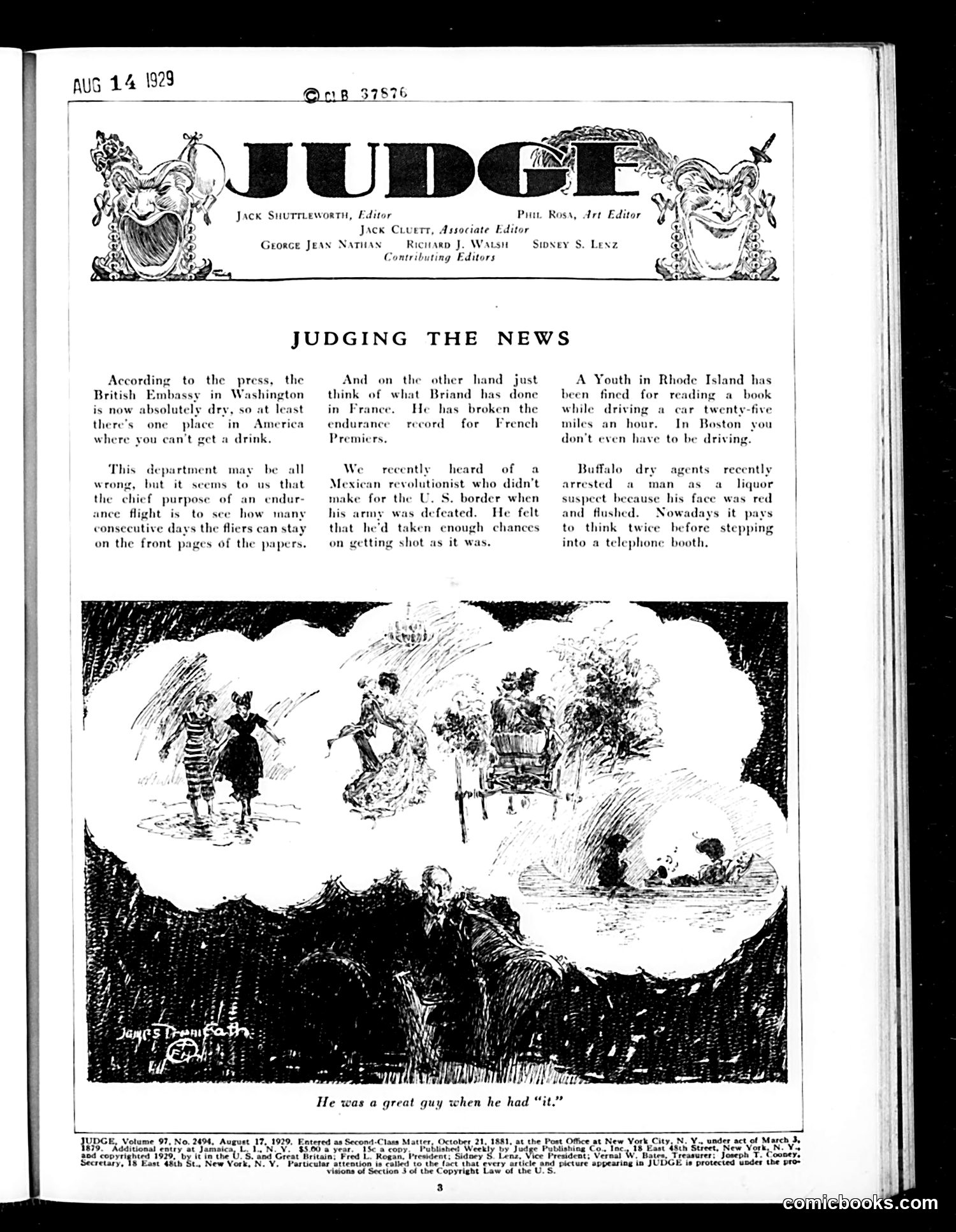
# Judge Magazine, August 14, 1929: "Judging the News" This page contains brief satirical commentary on contemporary news items rather than a single political cartoon. The main cartoon depicts a man daydreaming about better times—showing scenes of leisure, travel, and enjoyment. The caption reads "He was a great guy when he had 'it.'" The accompanying text satirizes various news stories: the British Embassy being a "dry" establishment during Prohibition; a French endurance record; a Rhode Island youth arrested for speeding; and a Mexican revolutionary who miscalculated his military prospects. The humor is light social commentary on contemporary absurdities—Prohibition enforcement inconsistencies, traffic safety concerns, and military misjudgments—typical of Judge's satirical approach to everyday news of 1929.
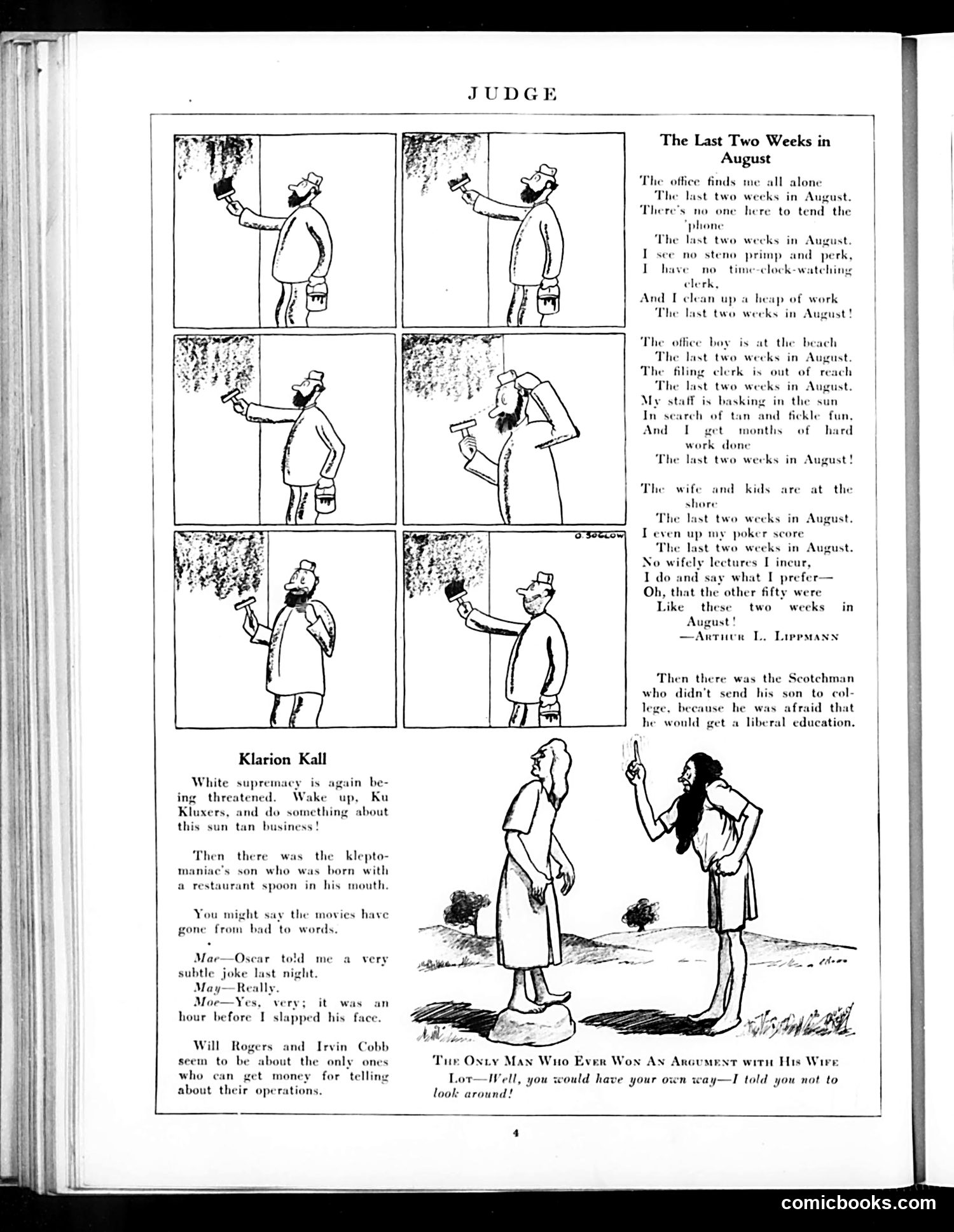
# Analysis of Judge Magazine Page **"The Last Two Weeks in August"** (comic strip): This satirical poem depicts an office worker's August vacation experience. The sequential panels show him attempting various tasks—painting, cleaning, yard work—while colleagues are away at the beach. The joke critiques the contrast between office life during summer months when staff are absent and the remaining employee struggles with accumulated work. It's relatable commentary on workplace dynamics during vacation season. **"Klarion Kall"** and the bottom cartoon address social anxieties of the era. References to "white supremacy," "Ku Kluxers," and ethnic concerns reflect 1920s-era political tensions. The caption about the "kleptomaniac's son" and the final illustration about a marital argument appear to be miscellaneous humorous anecdotes rather than connected satire.
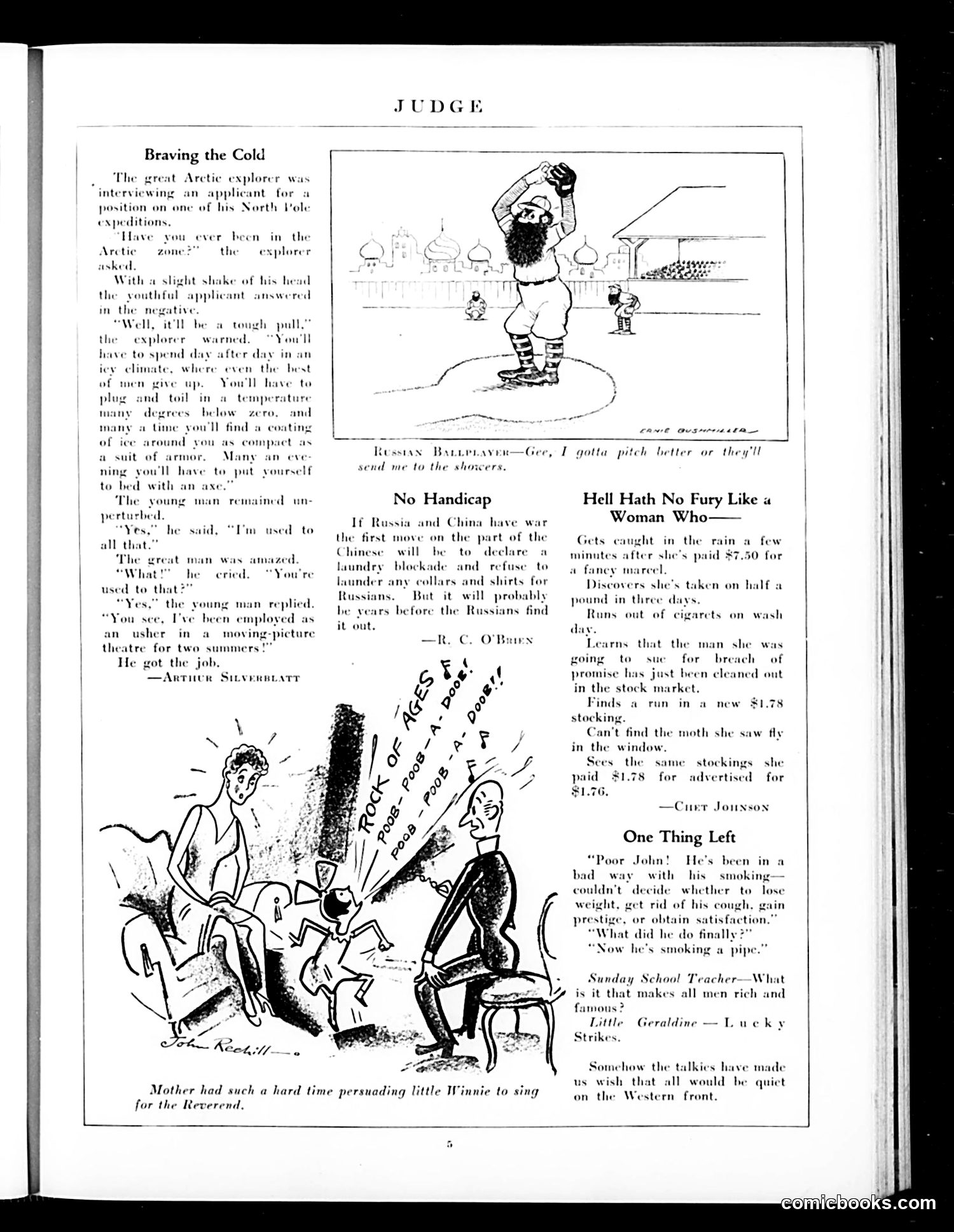
# Analysis of Judge Magazine Page The page contains three separate satirical pieces: 1. **"Braving the Cold"**: A dialogue between an Arctic explorer and a young man, mocking the explorer's warnings about polar hardship. The explorer describes extreme conditions; the young man dismissively replies he's "used to that" from working as a theater usher for two summers—absurdly equating mild discomfort with Arctic survival. 2. **"No Handicap"**: A brief piece joking that if Russia and China wage war, their first move will be declaring a laundry blockade against each other, satirizing perceived national stereotypes about laundry services. 3. **"Hell Hath No Fury Like a Woman Who—"**: Humorous anecdotes about women's petty frustrations (lost stockings, broken promises, etc.), emphasizing disproportionate female reactions to minor inconveniences—typical early-20th-century gender-based humor.
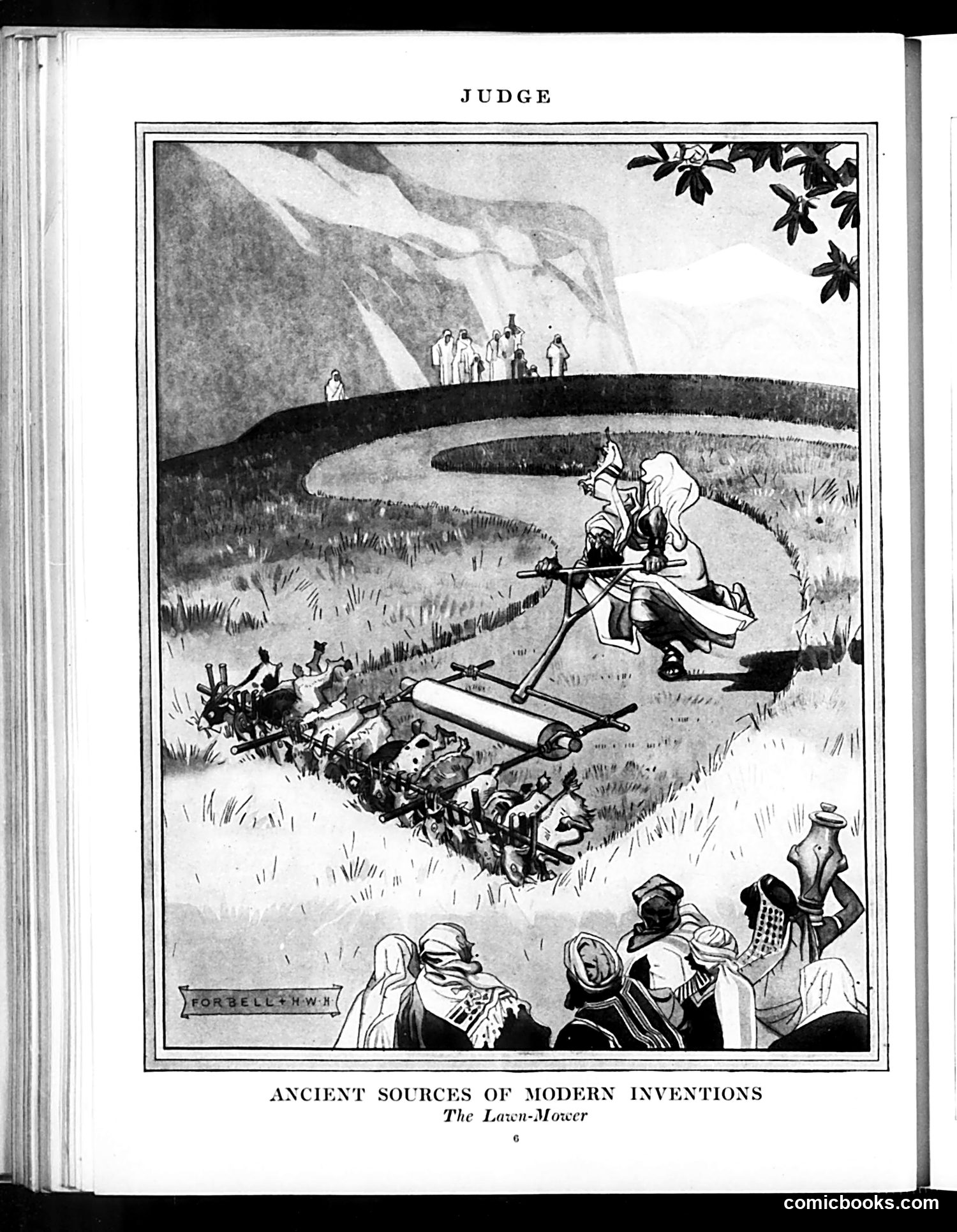
# Judge Magazine: "Ancient Sources of Modern Inventions - The Lawn-Mower" This satirical illustration presents the lawn-mower as having ancient origins. The cartoon depicts a Roman or classical-era figure operating an early mechanical device pulled by horses, while spectators observe from a hillside. The scene humorously suggests that modern inventions have historical precedents, framing the lawn-mower as derivative rather than genuinely novel. The satire likely mocks the contemporary obsession with technological "progress" and innovation by implying nothing is truly new—that ancient civilizations possessed similar devices. This fits Judge's tradition of social commentary through absurdist humor. The formal classical setting contrasts with the mundane domestic task of lawn-mowing, creating comic irony about what modern society considers revolutionary advancement.
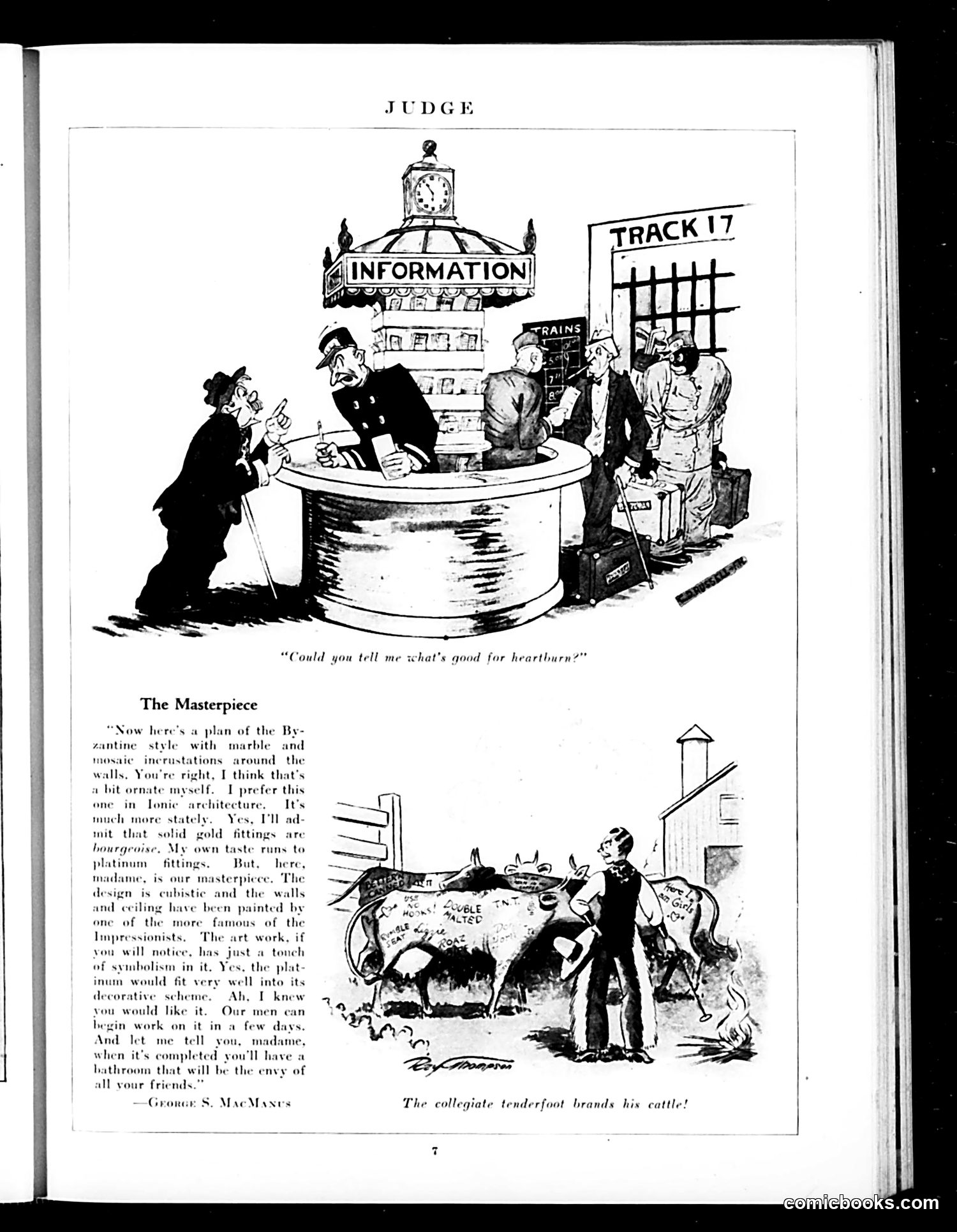
# Explanation for Modern Readers **Top Cartoon:** A man at an information booth asks a judge about heartburn relief—a pun on "heart-burn" (emotional distress). The judge sits in an elevated position of authority, suggesting the cartoon mocks people seeking legal or official guidance for personal problems. **Bottom Cartoon ("The Masterpiece"):** An architect pompously describes an extravagantly decorated bathroom to a wealthy woman, listing Byzantine, Ionic, cubistic, and Impressionist elements with platinum and gold fittings. The satire targets nouveau riche pretension—wealthy people displaying ostentatious taste by name-dropping artistic movements they don't understand. The caption "The collegiate tenderfoot brands his cattle" (bottom right) reinforces the joke: just as an inexperienced rancher crudely marks livestock, the pretentious wealthy clumsily apply high art to mundane objects like bathrooms to appear cultured.
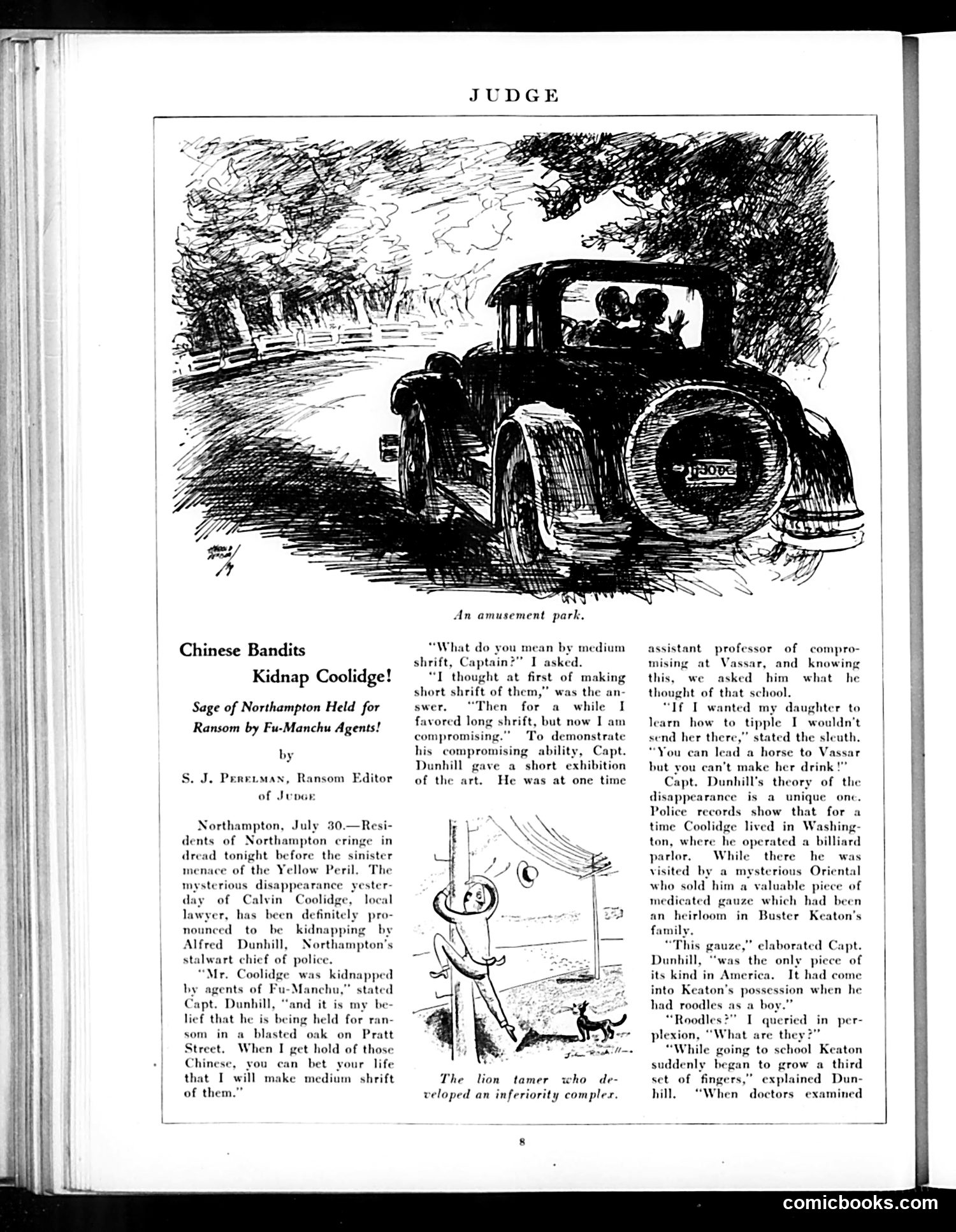
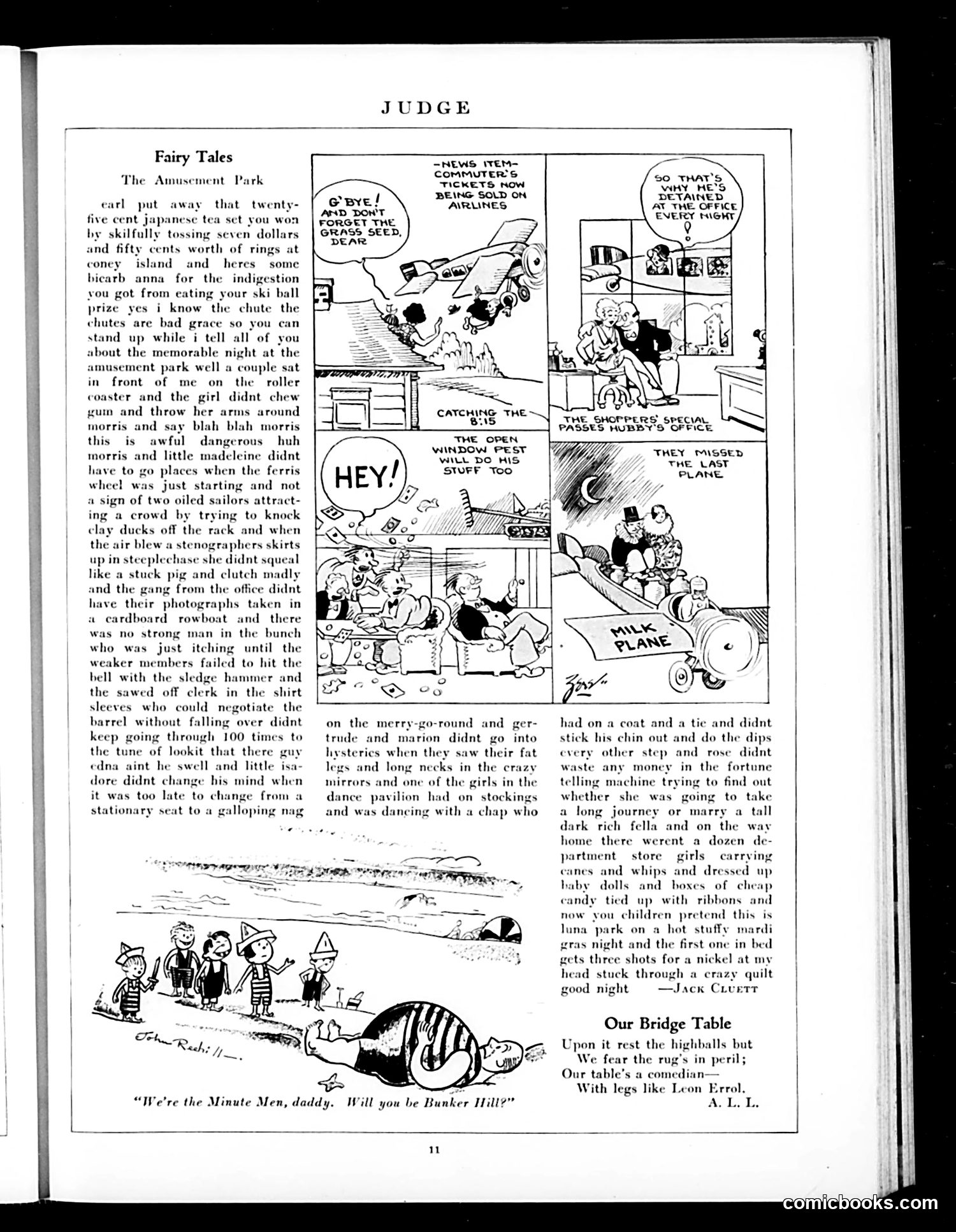
# Judge Magazine Satire Analysis This page satirizes President Calvin Coolidge through a farcical kidnapping narrative. The headline parodies sensational "Yellow Peril" fiction popular in the 1920s, invoking the fictional villain Fu-Manchu to mock fears of Oriental threats. The joke plays on Coolidge's actual identity as a Massachusetts lawyer-turned-politician before becoming president. Judge creates absurd scenarios—a police chief describing "medium shrift," Coolidge operating a billiard parlor in Washington, a mysterious Oriental visitor, and references to a lion tamer with "inferiority complex"—that mock Coolidge's background and character through nonsensical comedy. The cartoon illustrates the absurd amusement park scenario. This is primarily political humor targeting Coolidge, using exaggerated ethnic stereotypes and absurdist storytelling typical of Judge's satirical approach during the 1920s.
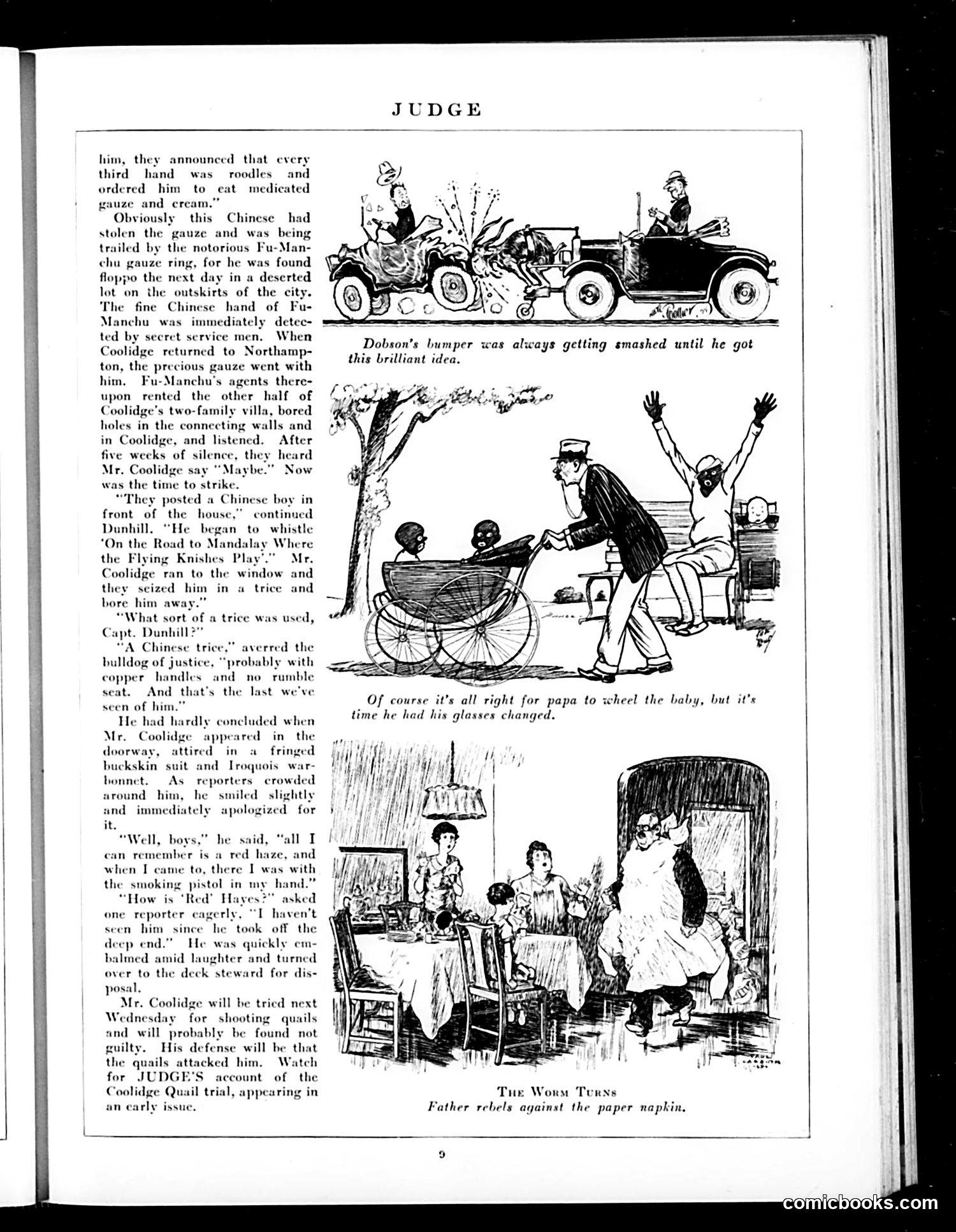
# Judge Magazine Page Analysis This page satirizes President Calvin Coolidge through absurdist humor typical of 1920s political satire. The main story parodies the popular "Fu Manchu" fictional villain—a Yellow Peril stereotype—by imagining Coolidge entangled with a Chinese criminal organization over stolen gauze. The joke mocks Coolidge's famously taciturn, emotionless personality; even when kidnapped and supposedly shot, he remains deadpan. The accompanying cartoons lampoon domestic life: "Dobson's bumper" shows a man repeatedly crashing cars until adopting bumpers (satirizing impractical solutions), while the lower cartoons joke about fathers changing babies' diapers and struggling with paper napkins—gentle humor about evolving gender roles. The Fu Manchu references reflect period anxieties about Asian immigration and stereotypical "Oriental" villainy—attitudes now recognized as racist. The satire's targets were Coolidge's wooden public persona and contemporary social customs.
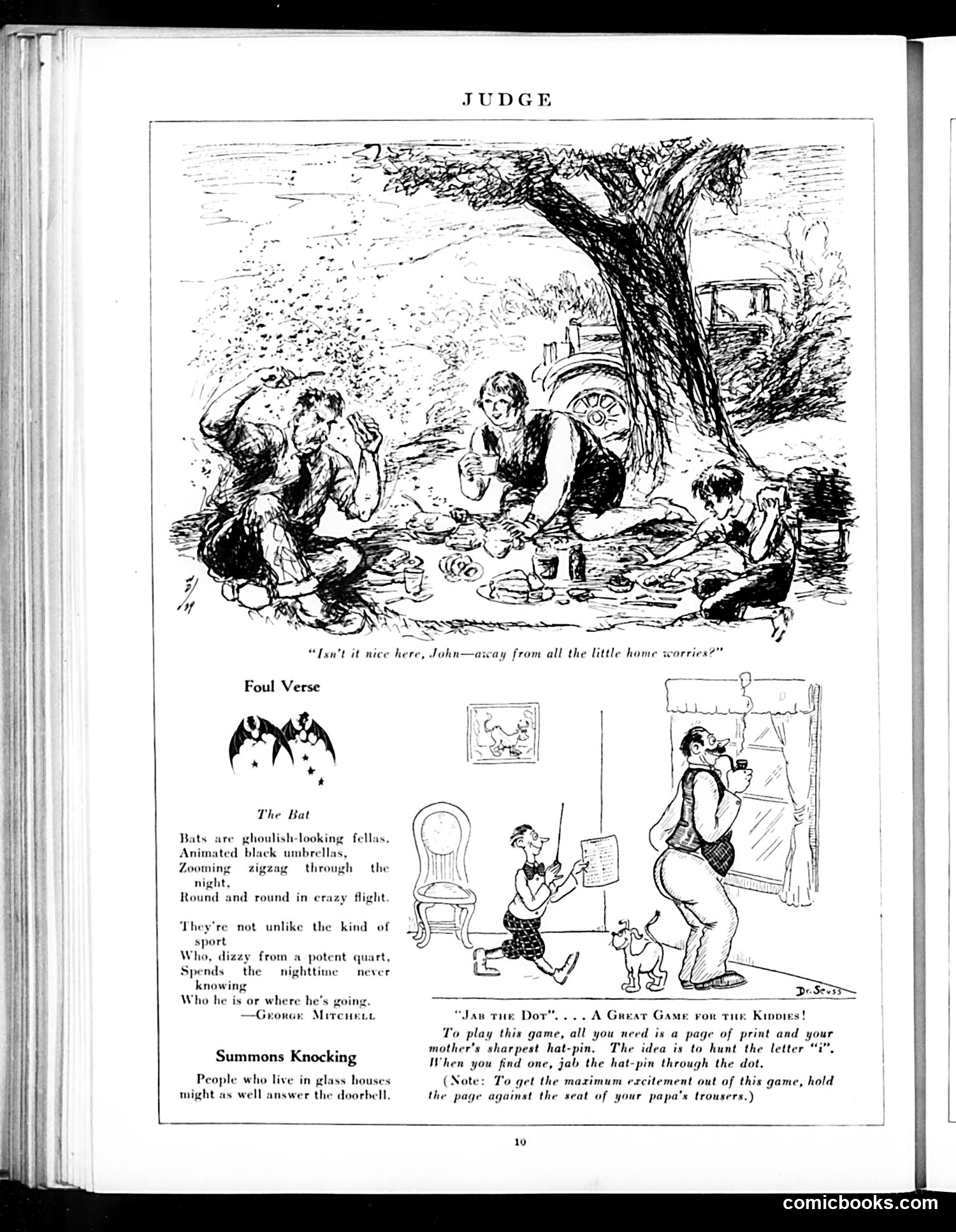
# Judge Magazine Page Analysis This page contains three distinct humor pieces: **"The Bat"** is a humorous poem by George Mitchell comparing bats to drunk men—both erratic, disoriented creatures moving unpredictably through the night. The joke equates the animal's chaotic flight with intoxication-induced behavior. **"Summons Knocking"** is a brief one-liner satirizing people who live in glass houses (metaphorically exposed or vulnerable) and must answer their doors—a reference to the proverb "people in glass houses shouldn't throw stones." **"Jan the Dot"** is a children's game where kids use a hat-pin to puncture the dots of letter "i"s in printed text. The humor comes from the final instruction suggesting parents hold the page against their trousers during the game—implying the child might accidentally jab the parent instead, creating slapstick comedy. This reflects early-20th-century humor that found amusement in mild physical mishaps. The main illustration depicts a family picnic scene with the caption about escaping "home worries," likely satirizing the period's middle-class leisure activities.