
A complete issue · 16 pages · 1900
Judge — September 22, 1900
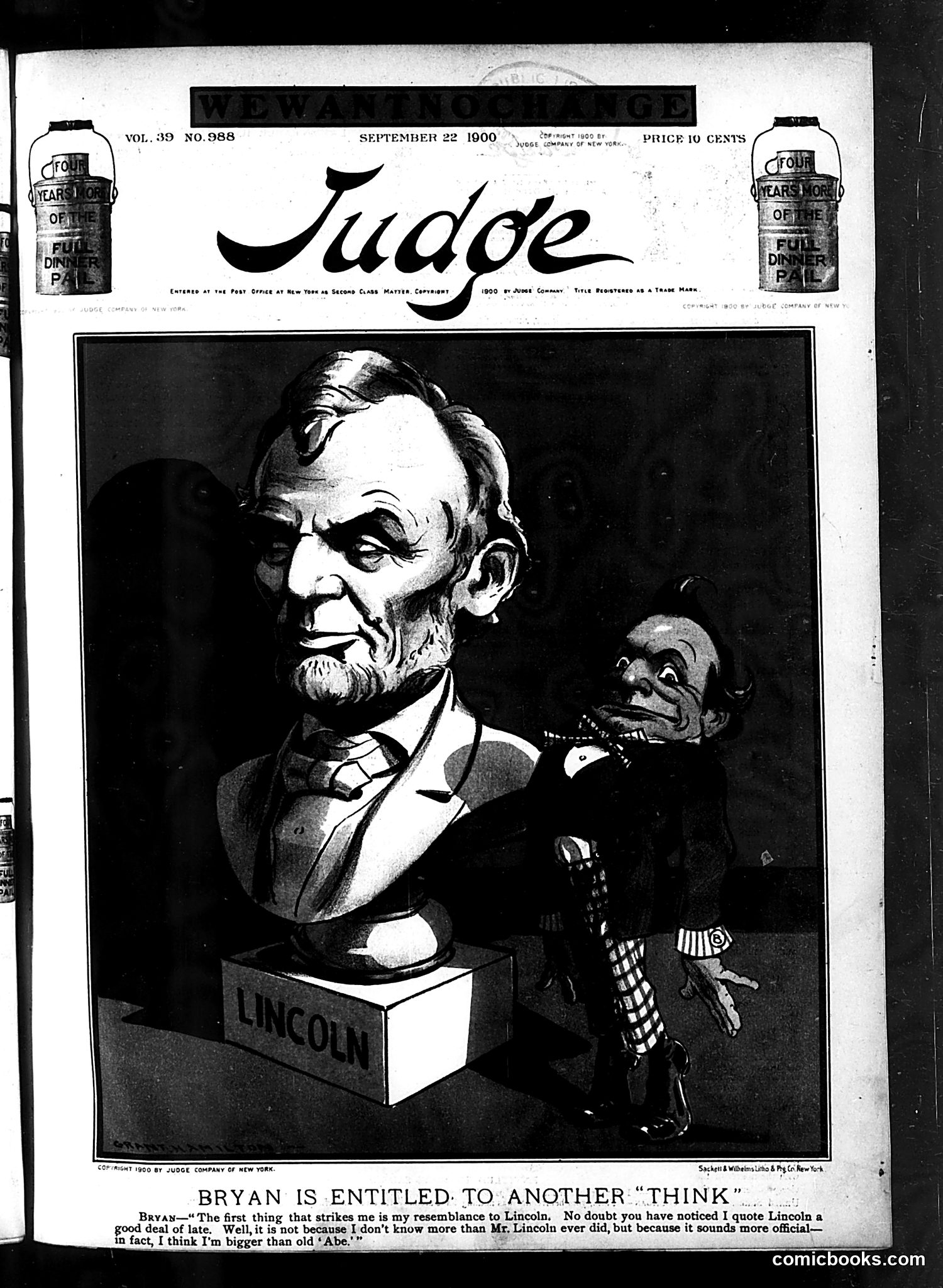
This political cartoon mocks William Jennings Bryan, the Democratic presidential candidate in the 1900 election, by comparing him to Abraham Lincoln. Bryan is depicted as a small, grotesque figure beside a large bust of Lincoln labeled "LINCOLN." The caption quotes Bryan claiming resemblance to Lincoln and boasting he's "bigger than old Abe," which the satire presents as absurd vanity. The cartoon ridicules Bryan's self-aggrandizement—his attempt to associate himself with Lincoln's stature while simultaneously claiming superiority. The grotesque caricature emphasizes what Judge's editors viewed as Bryan's pretentiousness and unfounded ego. This reflects Republican opposition to Bryan's 1900 campaign, positioning him as a delusional politician unworthy of the presidency or comparison to America's greatest leader.
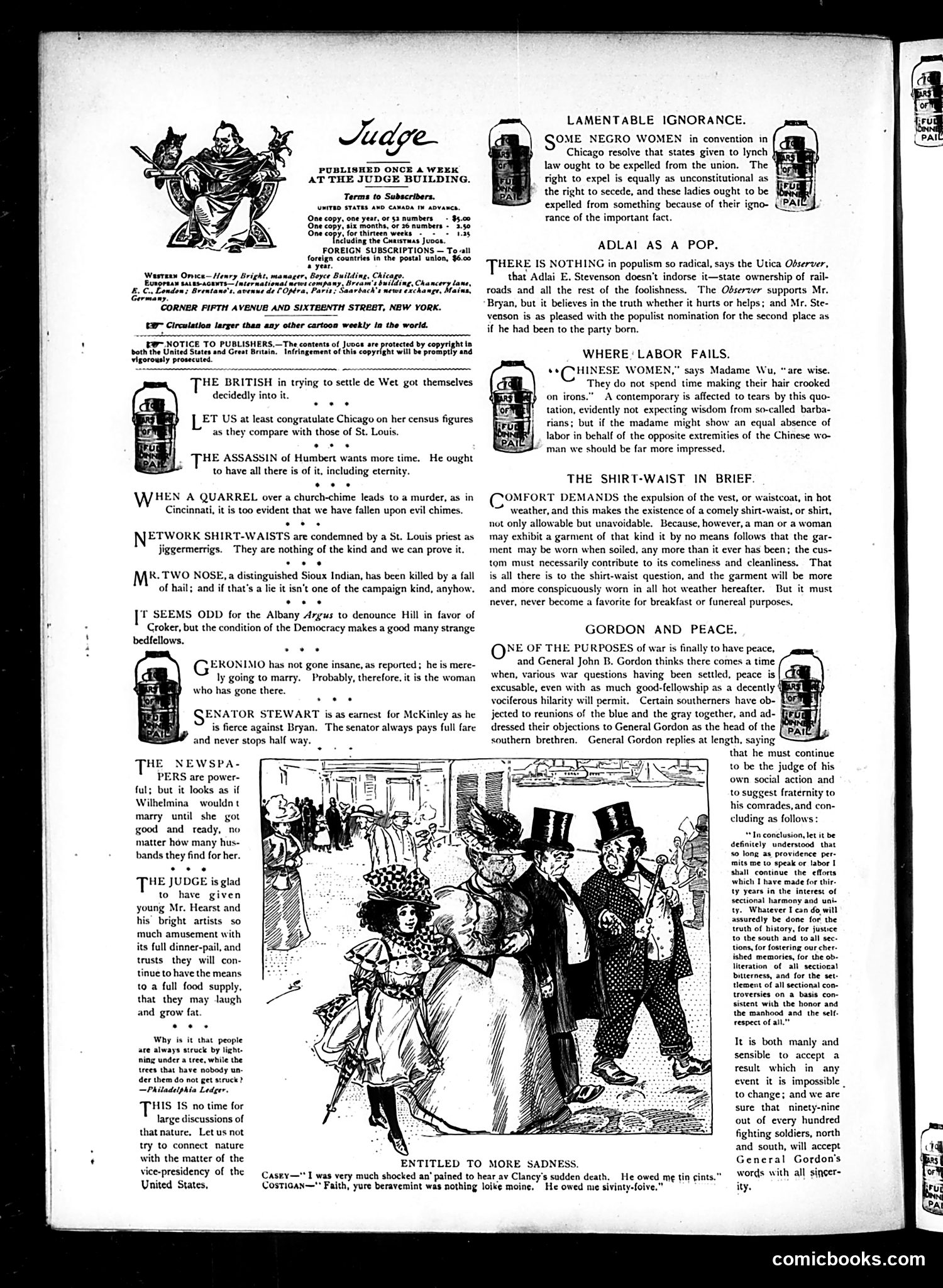
The central cartoon depicts a street scene with well-dressed figures in top hats encountering a woman in distress. The caption reads: "Casey—'I was very much shocked at parting to hear so Clancey's sudden death. He owed me tin cents.' Corrigan—'Faith, sure betterment was nothing but a noise moine. He owed me seventy-five.'" The satire mocks working-class Irish characters (suggested by names like Casey and Corrigan) whose primary grief over a death centers on unpaid debts rather than genuine mourning. It's a stereotype-based joke about Irish immigrants' financial circumstances and materialism, reflecting period prejudices common in American satirical publications. The humor depends on ethnic caricature.
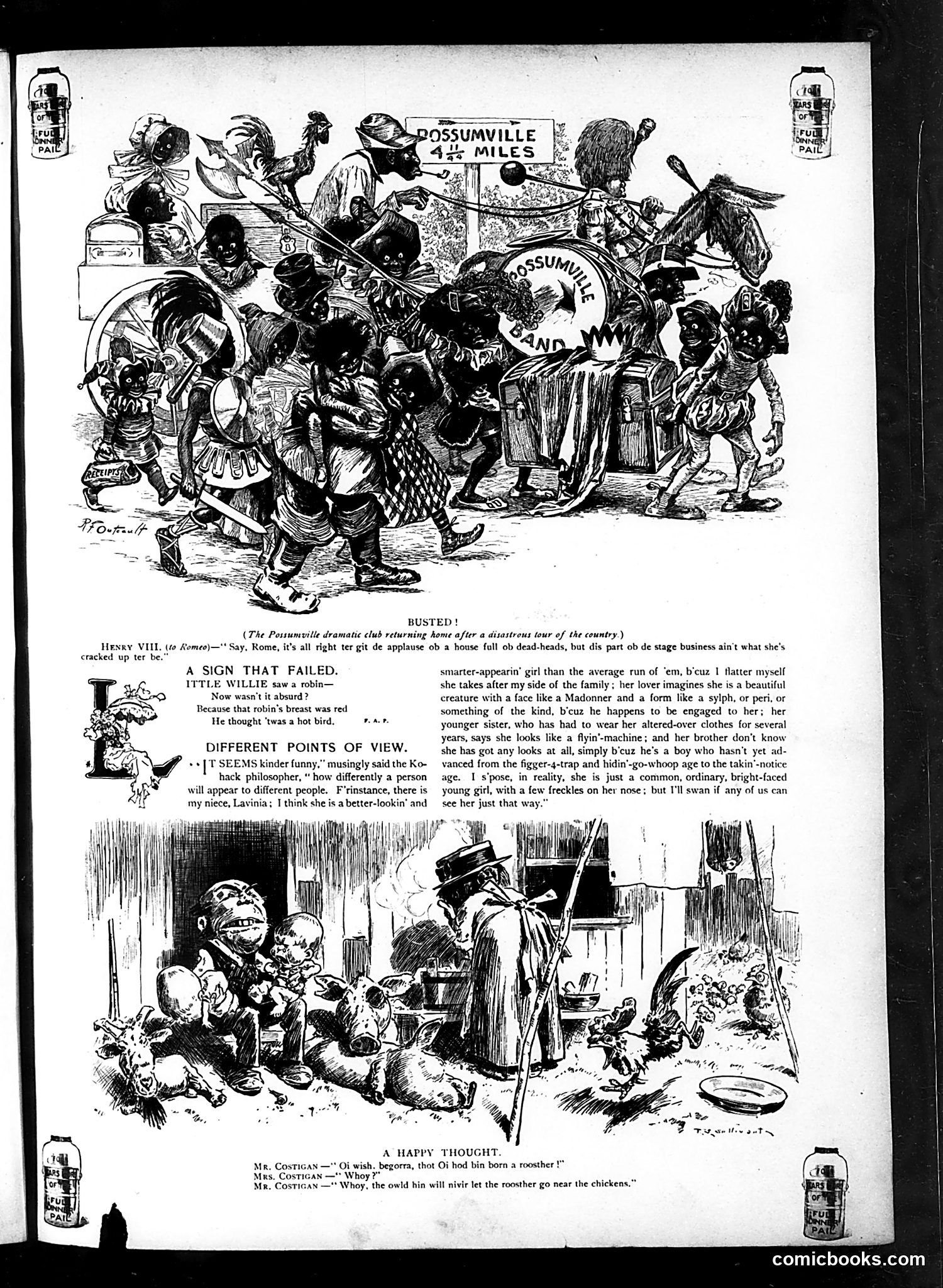
This page satirizes theatrical performance and social pretense through two cartoons. **Top cartoon** ("Busted!"): Depicts a dramatic club returning from "Possum ville" (4½ miles away). The crude, chaotic scene mocks amateur theatrical productions—suggesting the group's attempted "disastrous tour" failed spectacularly. The reference to "dead-heads" (non-paying audience members) and "stage business" ridicules both the performers' incompetence and their pretensions. **Bottom cartoon** ("A Happy Thought"): Shows domestic discord, with dialogue about a rooster's paternity. Mrs. Corrigan's quip—that the rooster "will never let the mothering go near the chickens"—uses animal behavior as metaphor for human marital conflict and jealousy. Both pieces mock affectation and expose uncomfortable social realities beneath genteel appearances.
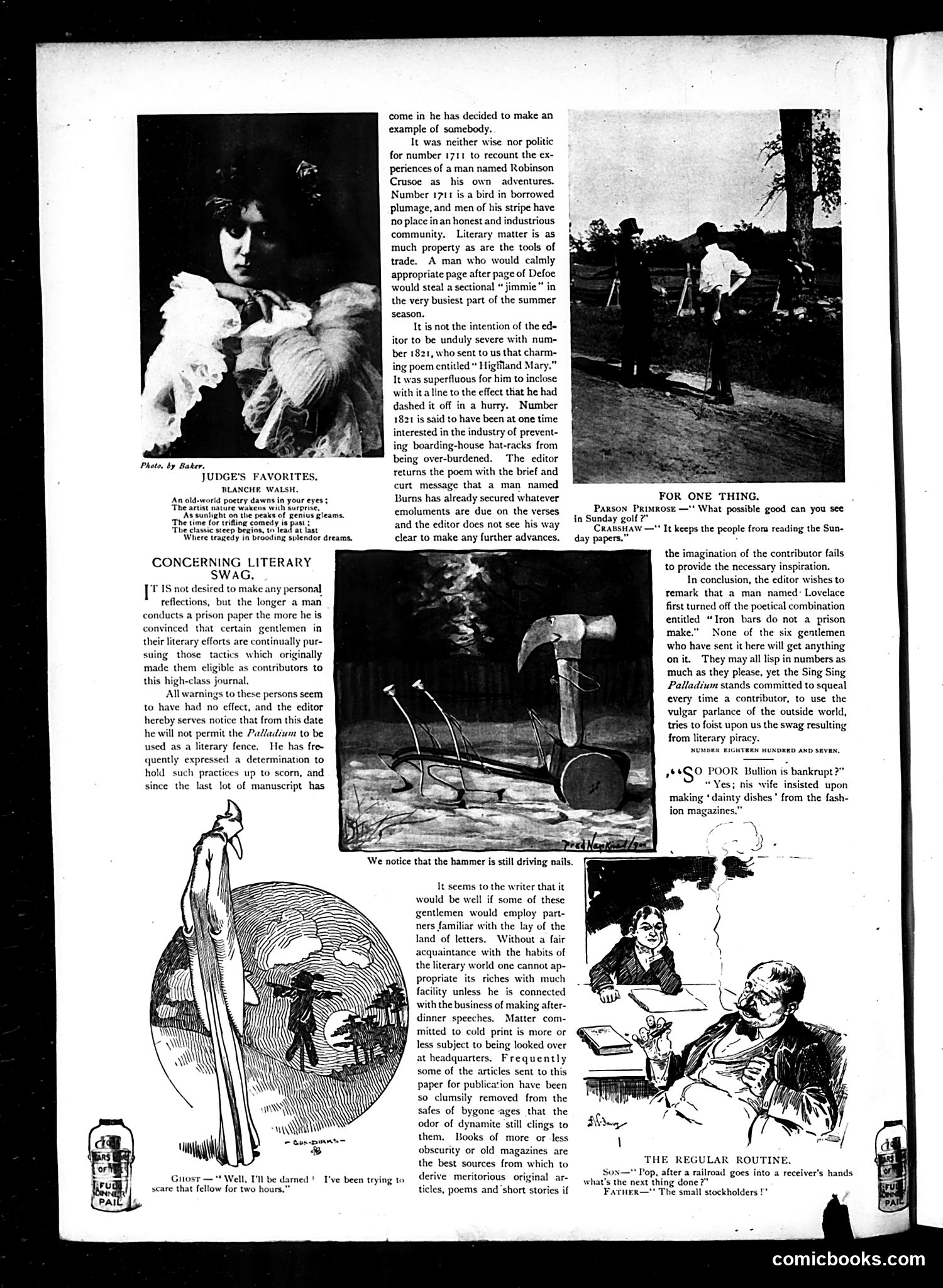
This page contains several editorial cartoons and humorous pieces about literary matters. The main article "Concerning Literary Swag" criticizes contributors who submit work to *Palladium* (the magazine) that appears to be recycled or plagiarized from other publications. The editor warns against using the magazine "as a literary fence" for previously published material. The cartoons illustrate related themes of literary dishonesty: one shows a figure attempting to pass off work to an editor, another depicts someone trying to appropriate another's writing. The page satirizes both the pretensions of amateur writers and the growing problem of literary theft in magazines of the era. The tone suggests frustration with contributors' ethical lapses.
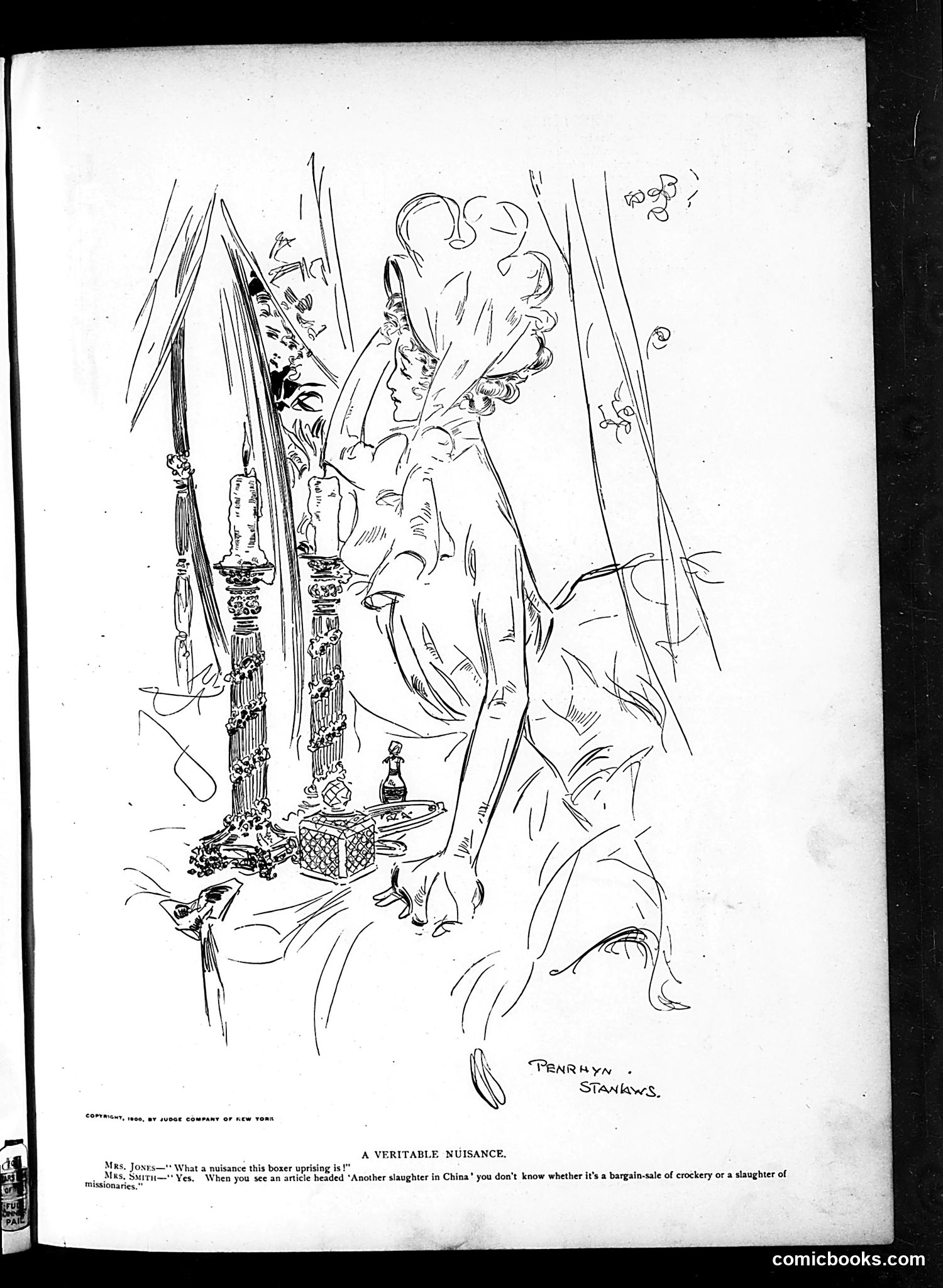
This cartoon satirizes sensationalist newspaper coverage of conflicts in China. The dialogue between Mrs. Jones and Mrs. Smith mocks how readers cannot distinguish between legitimate news ("slaughter of missionaries") and trivial stories ("bargain-sale of crockery") when both are presented under sensational headlines about "slaughter in China." The sketch shows a woman surrounded by draped fabric (suggesting Asian aesthetics) amid luxury goods and furnishings. The satire targets both newspapers for irresponsible sensationalism and readers for their gullible consumption of exaggerated headlines. The cartoon likely references early 20th-century coverage of Chinese conflicts (possibly Boxer Rebellion aftermath or other anti-foreign violence), when American papers frequently used inflammatory language. The joke exposes how clickbait-style headlines obscure actual news value.
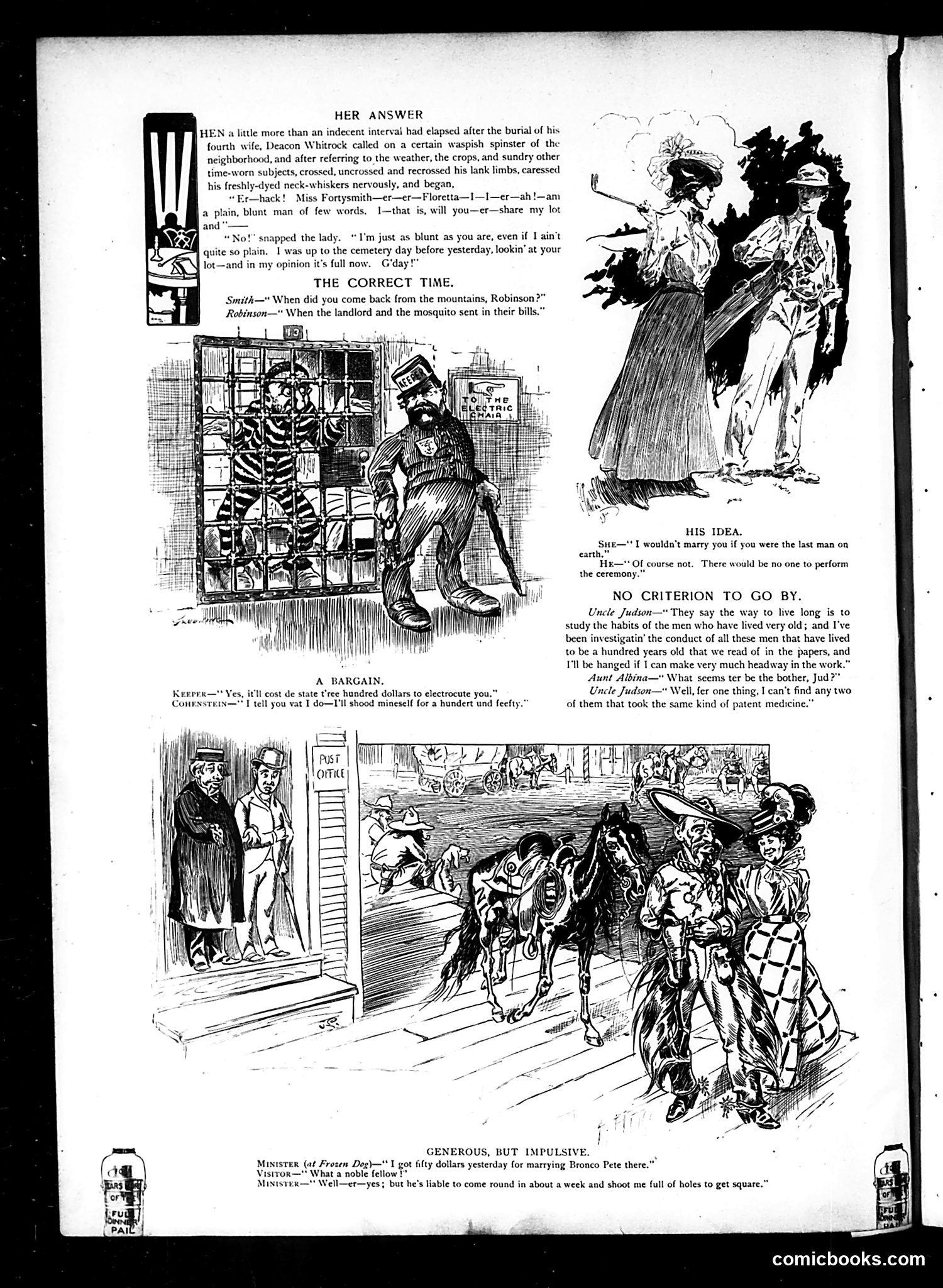
This page contains several short humorous sketches mocking courtship and marriage customs of the era. **"Her Answer"**: A widower (Deacon Whitrock) who has buried four wives proposes to a sharp-tongued spinster. She refuses bluntly, noting his cemetery lot is "full now"—a dark joke implying his wives died suspiciously or that he'll soon need more burial space. **"The Correct Time"** and **"His Idea"**: Brief joke exchanges about timing and logic in relationships. **"No Criterion to Go By"**: Uncle Judson complains that studying centenarians' habits yields no useful pattern—they all took *different* patent medicines, satirizing the era's widespread snake-oil remedies and folk medicine claims. **"Generous but Impulsive"**: A minister who married "Bronco Pete" for fifty dollars admits the groom plans to return shooting to "get square"—mocking both hasty frontier marriages and frontier justice. The overall tone ridicules rural courtship, mercenary clergy, quack medicine, and violent masculine honor codes.
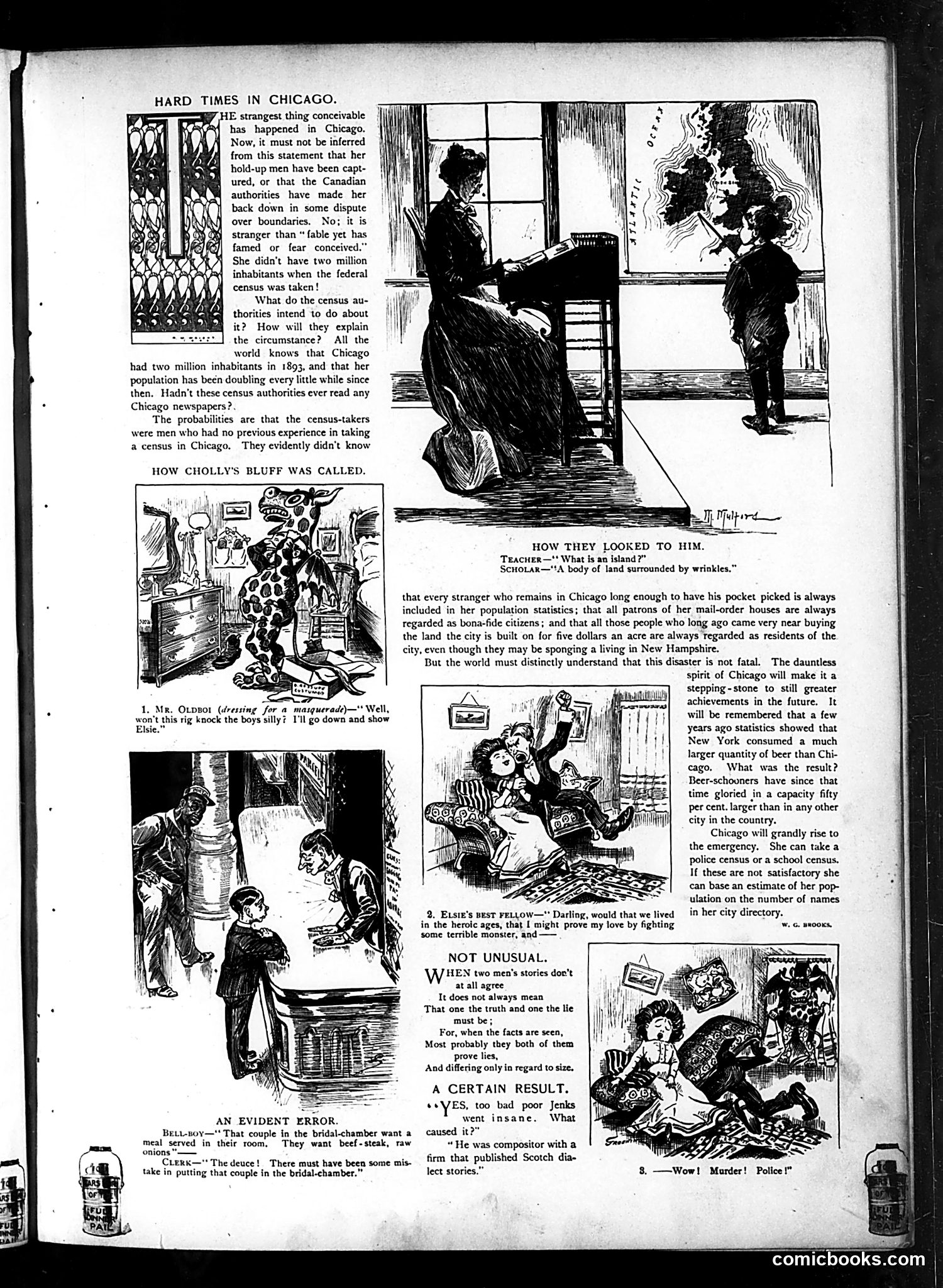
This page satirizes the **1900 federal census**, which reported Chicago's population had grown to only about 1.6 million—far below the city's own inflated claims of 2+ million inhabitants. Judge mocks Chicago's reputation for exaggeration, suggesting census-takers were naive about how the city counted residents. The satire argues Chicago's boosters counted: - Pocket-picking victims (crime was rampant) - Mail-order catalog customers nationwide - Speculators who'd nearly bought the land decades prior - Out-of-state residents (even those in New Hampshire) The cartoon suggests Chicago will recover by simply recounting using more generous methods—police census, school census, or city directories. The humor lies in exposing Chicago's chronic self-aggrandizement and the absurdity of population statistics in a city famous for hyperbole and criminality. Supporting cartoons about mistaken identity and linguistic confusion reinforce themes of confusion and unreliability.
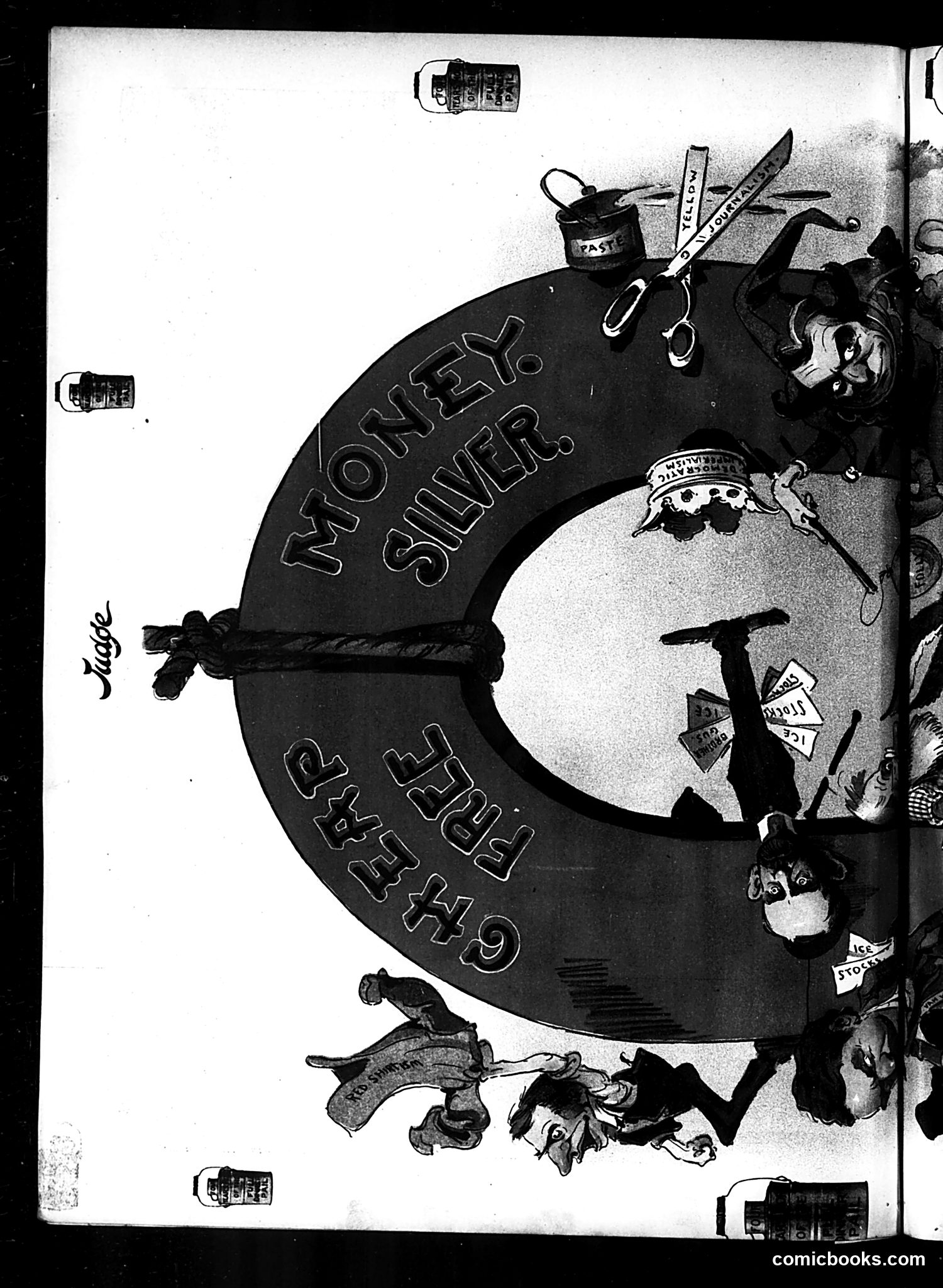
This appears to be a Judge magazine satirical cartoon, though the OCR text is largely unreadable. The image shows a large circular object labeled "MONKEY SILVER" with text reading "GET THE" (partially visible). Various caricatured figures surround it, some appearing distressed or engaged in conflict. The cartoon likely satirizes a financial scheme or commodity speculation from the early 20th century. The "monkey silver" reference suggests mockery of dubious investment schemes or market manipulation. The caricatures and their aggressive poses indicate competing interests fighting over resources. Without clearer text or caption visibility, I cannot definitively identify the specific political figures or precise historical event referenced, though the style and composition suggest commentary on financial corruption or market fraud common to Gilded Age American satire.
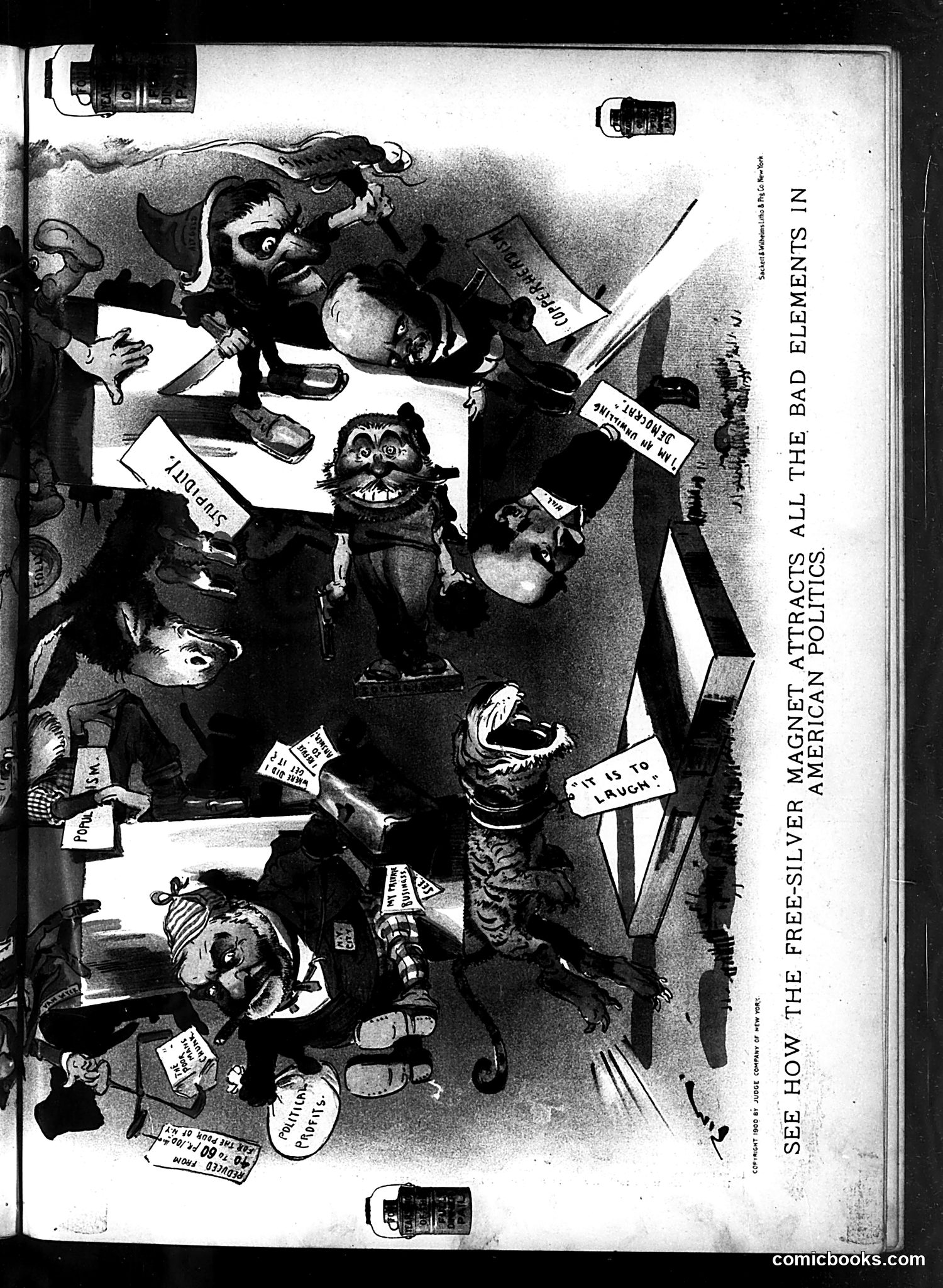
I cannot reliably read the OCR text as it appears reversed or corrupted. However, examining the image itself: this is a political cartoon showing various animal figures (appearing to be caricatures) labeled with tags and surrounded by papers with text. The composition suggests satire about American politics, with multiple figures engaged in some kind of chaotic scene or gathering. The style and format indicate this is from Judge magazine's satirical commentary tradition. Without legible text labels identifying specific figures or dates, I cannot confidently identify which politicians or political events are being satirized here. The imagery suggests commentary on corruption, political maneuvering, or scandal involving multiple actors, but I cannot specify the historical context with certainty.
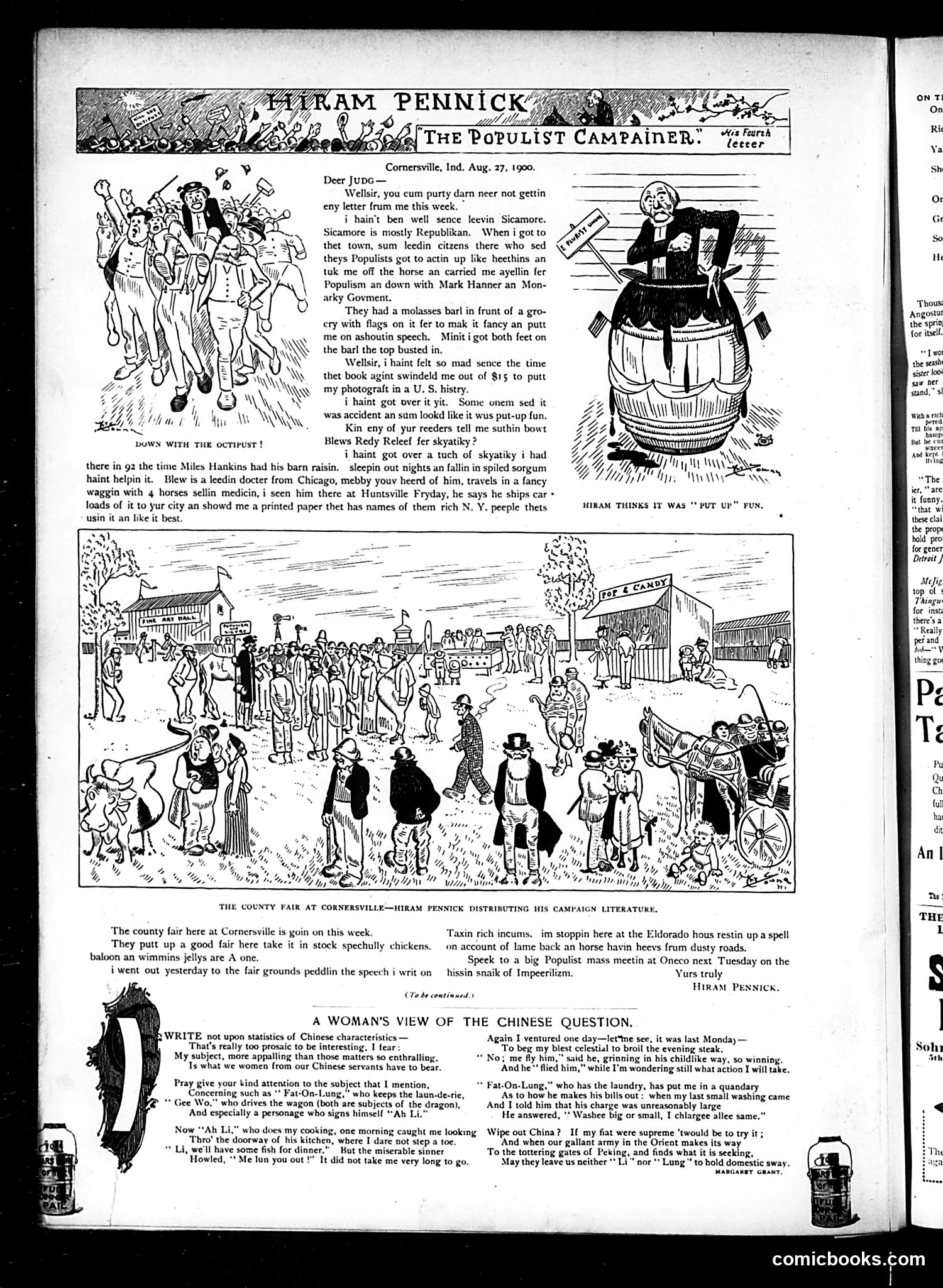
This page from *Judge* (August 27, 1900) presents satirical commentary on American politics and contemporary issues through two main pieces: **"Hiram Pennick" (top):** A fictional letter from a rural Indiana populist describing his campaign activities. Written in exaggerated dialect, it mocks both Populist Party activism and the era's traveling patent-medicine salesmen. The county fair scene shows Pennick distributing Populist campaign literature, satirizing grassroots political organizing. The humor targets rural political enthusiasm and the desperation of minor parties. **"A Woman's View of the Chinese Question" (bottom):** Written during the Boxer Rebellion period (1900), this satirizes both anti-Chinese sentiment and American military intervention in China ("our gallant army"). The female narrator complains about her Chinese servants' incompetence while supporting imperial aggression, embodying the hypocrisy *Judge* attributed to American expansionists. The piece mocks both xenophobia and imperialist adventures. Both pieces employ stereotyped dialect and exaggeration—common *Judge* techniques for ridicule.
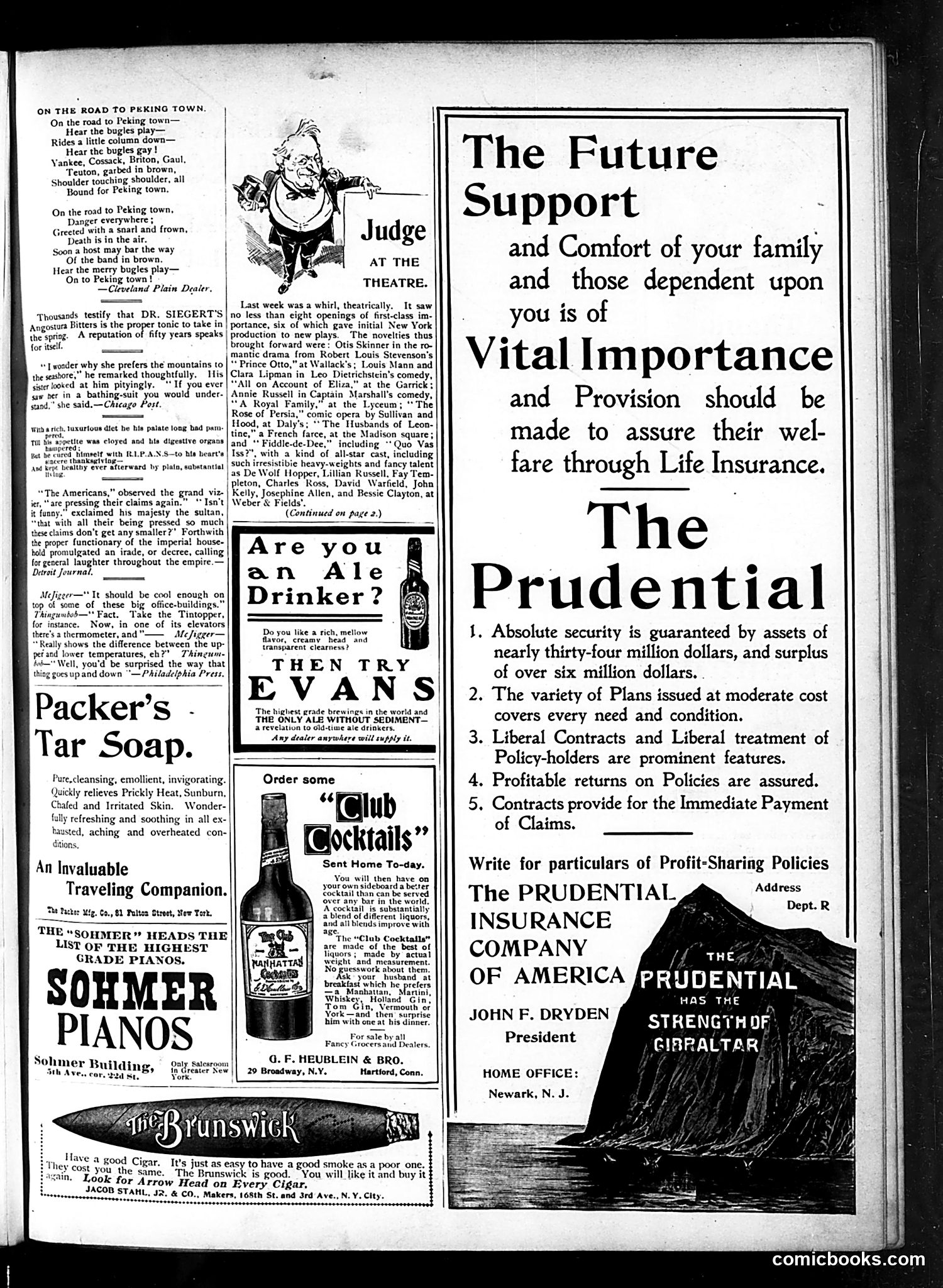
The poem and context reference the **Boxer Rebellion (1900)**, when Western powers and Japan militarily intervened in China. The "column" of soldiers represents the international coalition—American, Russian, British, French, and German forces—marching toward Peking (Beijing) to suppress the uprising and relieve foreign nationals. The satirical tone in *Judge* magazine captures contemporary American attitudes: the romanticized language ("Hear the bugles gay!") contrasts with the actual violence and danger ("Death is in the air"). The poem presents military intervention as heroic adventure while acknowledging the peril. The accompanying jokes and advertisements on this page are unrelated to the poem—typical of *Judge's* eclectic satirical format mixing commentary on current events with humor and commercial content. The page primarily uses the Boxer Rebellion poem to comment on imperial powers' foreign military ambitions circa 1900.
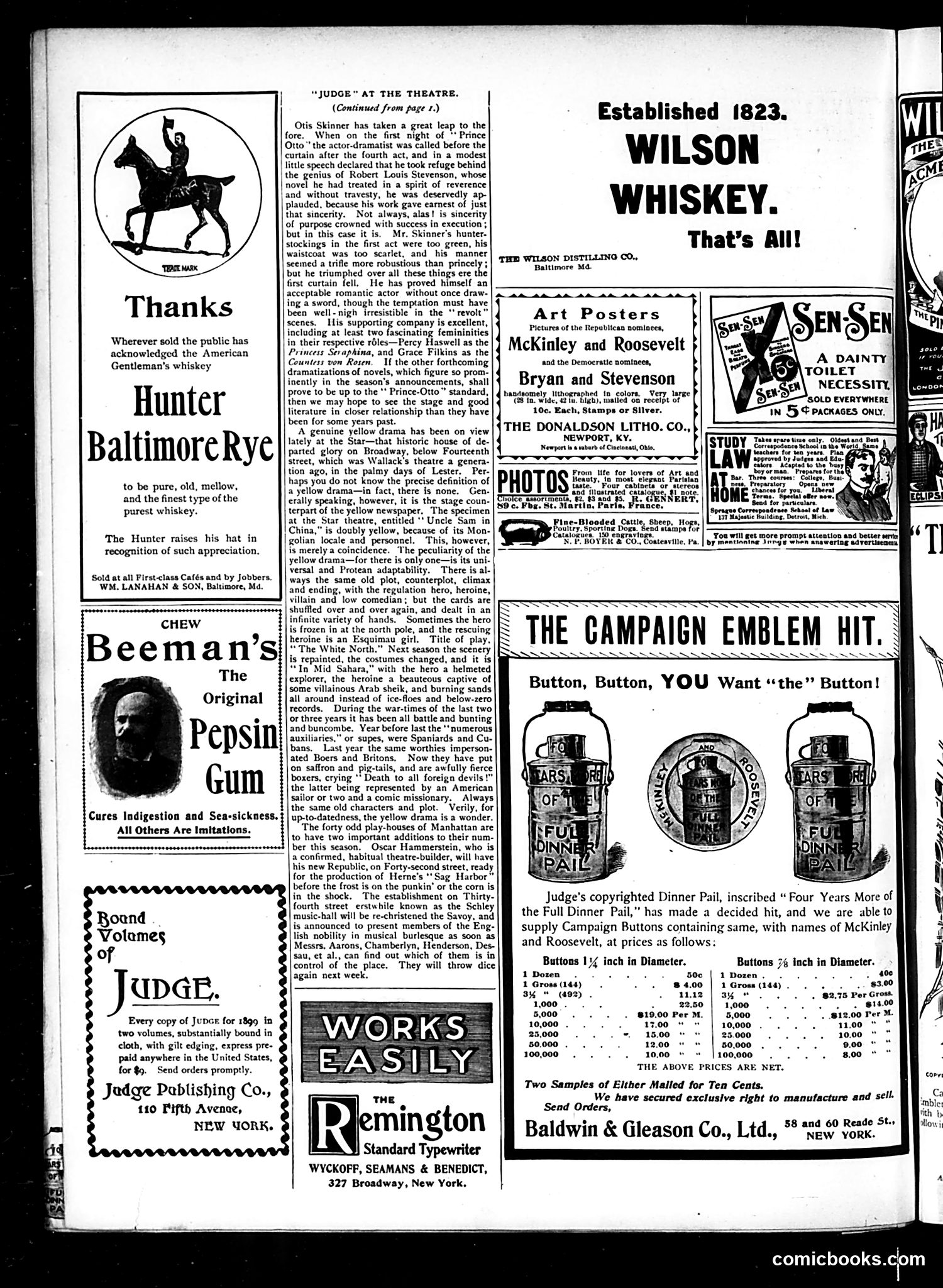
This page is primarily **advertising and commercial content**, not political satire. It contains: **Main advertisements:** - Hunter Baltimore Rye whiskey (top left) - Beeman's Pepsin Gum (left side) - Wilson Whiskey (top right) - Art Posters featuring McKinley and Roosevelt, plus Bryan and Stevenson - Campaign buttons for the 1900 election - Judge Publishing Company volumes - Remington typewriters **Editorial content:** The "Judge at the Theatre" article (top) reviews theatrical productions, notably Otis Skinner in "Prince Otto" (adapted from Robert Louis Stevenson) and criticizes "yellow dramas"—formulaic plays with interchangeable plots set in exotic locations. **Political reference:** The poster and button advertisements mention McKinley, Roosevelt, Bryan, and Stevenson, indicating this is from the **1900 presidential election period**. However, these appear as straightforward product advertisements rather than satirical commentary. The page reflects Judge's dual nature as both satirical magazine and commercial publication.
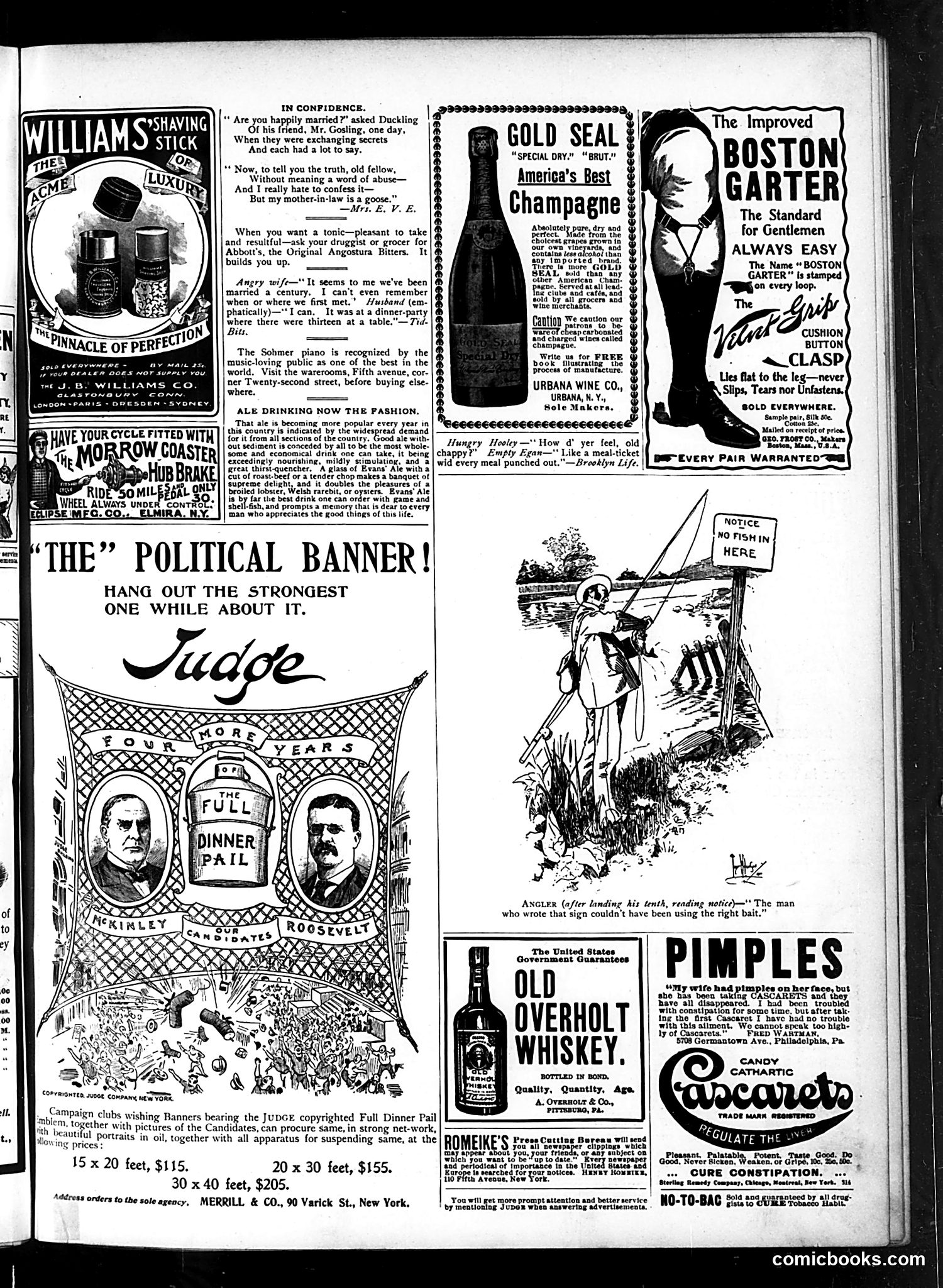
This page's main political cartoon depicts the 1904 presidential election. The banner shows three portraits: **McKinley** (left) and **Theodore Roosevelt** (right), with a "Full Dinner Pail" in the center—a Republican campaign slogan emphasizing prosperity and worker welfare. The caption "HANG OUT THE STRONGEST ONE WHILE ABOUT IT" is satirical: Judge is mocking Republicans for needing to display their strongest banner to win re-election, implying their position might be vulnerable despite claims of success. The "Jude" signature indicates this is political satire from the pro-Republican Judge magazine, yet it's gently ribbing GOP confidence. The chaotic imagery beneath the banner—crowds and activity—suggests the messy political process. The page is primarily **advertisements** (champagne, whiskey, pianos, patent medicines), typical of Judge's revenue model. The smaller cartoons are unrelated domestic humor.
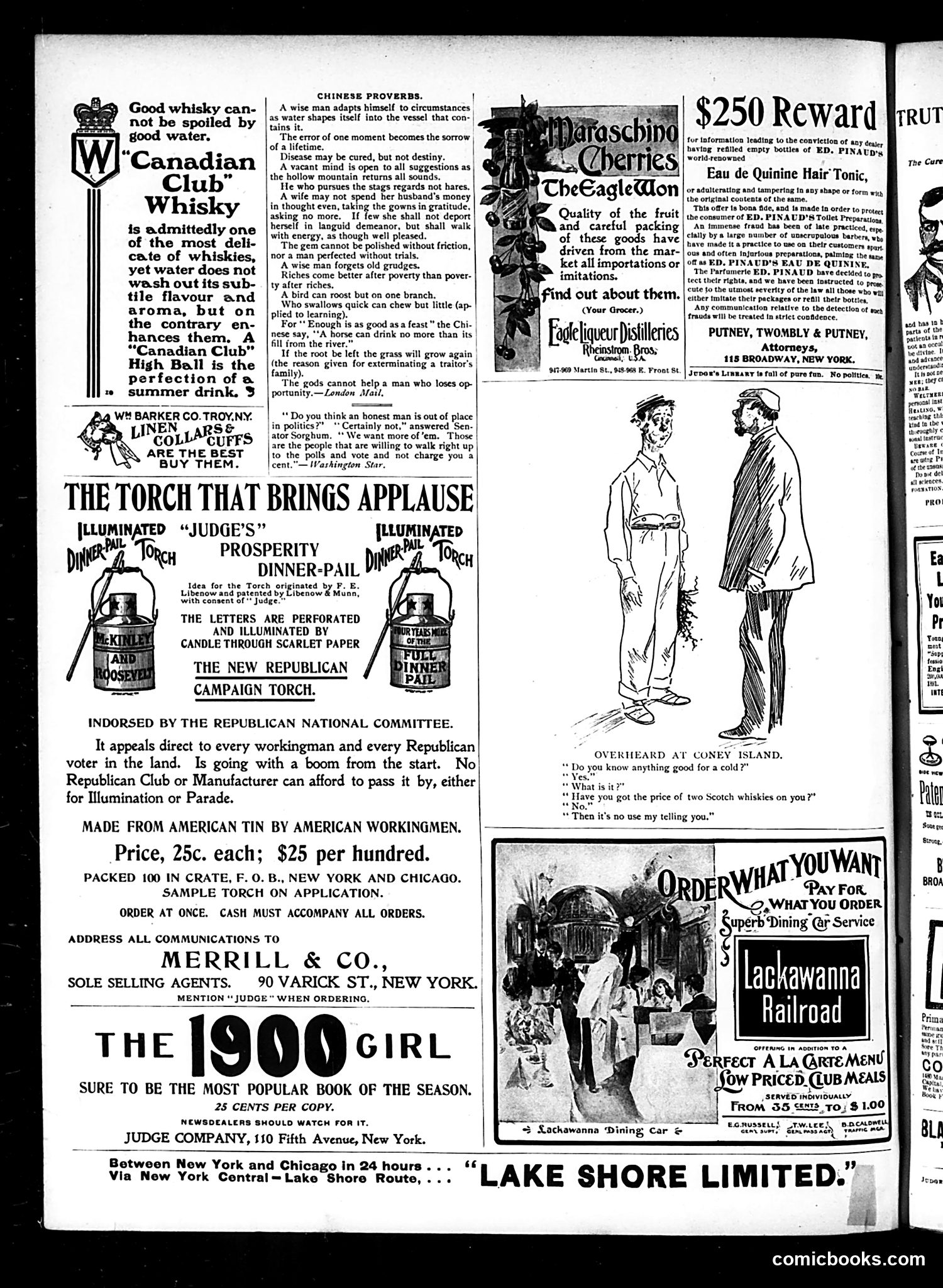
This page is primarily **advertising** from an early 1900s satirical magazine, with limited editorial content. ## Key Elements: **Political Satire**: The "Judge's Prosperity Dinner-Pail" campaign torch appears to be Republican campaign material—likely from the 1900 election. It's presented as patriotic ("made from American tin by American workingmen") and positioned to appeal to working-class voters through the symbolic "dinner pail" (prosperity). Judge magazine endorsed Republican candidates. **Chinese Proverbs Section**: A collection of aphorisms with one embedded political joke: a senator claims honest men belong in politics—they're useful because they'll vote without demanding payment, unlike corrupt politicians. This satirizes American political corruption. **The 1900 Girl Book Advertisement**: Promotes what appears to be a satirical or humorous book expected to be popular that season. **Commercial Ads**: Whisky, railroad dining cars, hair tonic reward notices—typical period advertising mixed with editorial content. **Cartoon**: Two figures conversing about whisky prices at Coney Island—a simple joke about Scottish imports. The page reflects Judge's role mixing Republican advocacy with genteel satire targeting urban corruption and follies.
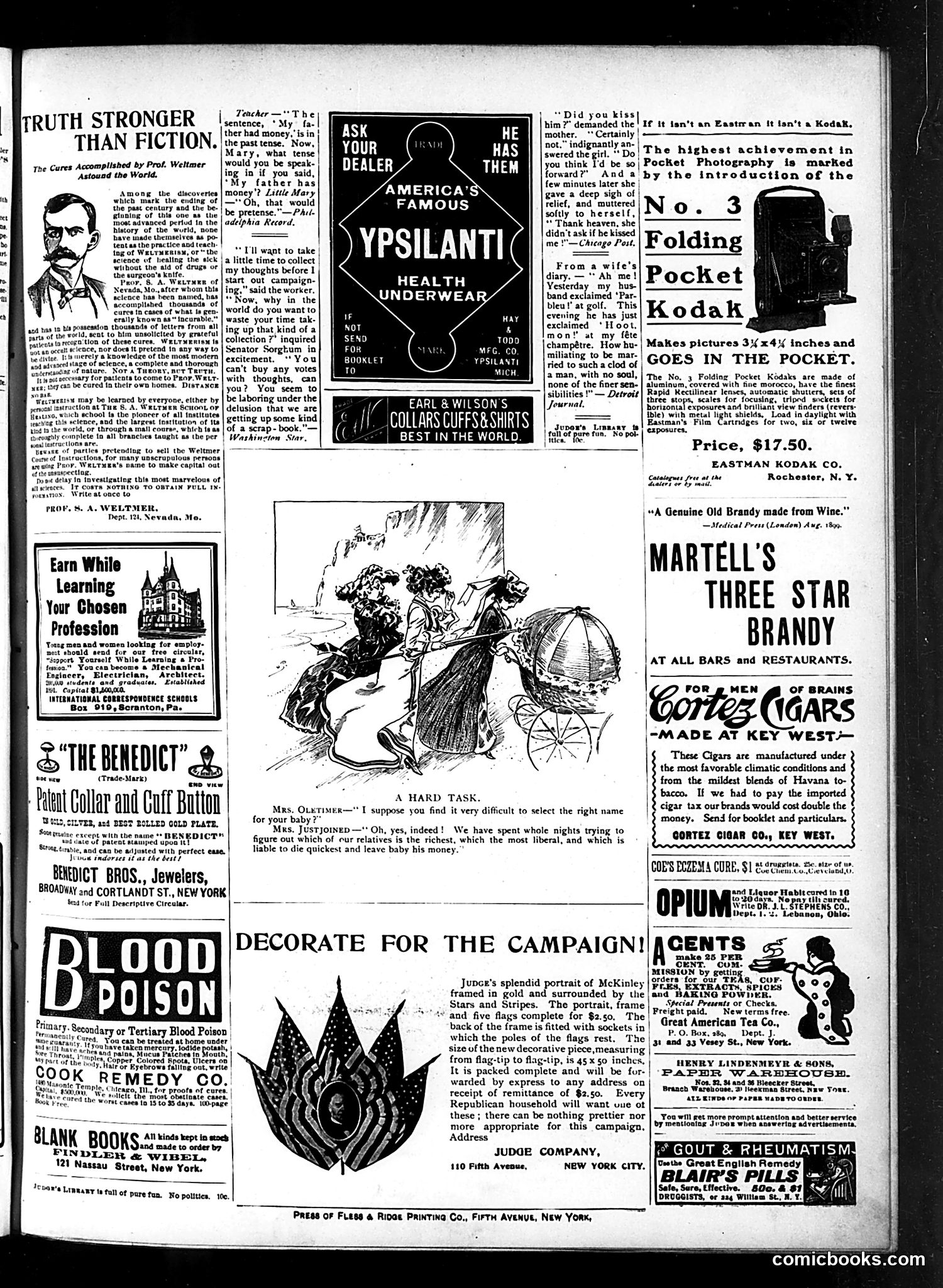
This cartoon depicts a couple naming their newborn baby, with the husband offering cynical advice: select a name based on which relative is richest, most generous, or most likely to die soon and leave money to the child. The satire targets **gilded-age American materialism and inheritance-seeking behavior**. The joke reflects anxiety about wealth concentration and suggests that even parenthood becomes transactional—babies are named strategically to maximize financial gain from relatives rather than for sentimental or familial reasons. The cartoon mocks both the husband's blunt mercenary attitude and implicitly the social conditions that made such calculations common among the struggling middle class. It's a dark commentary on how economic desperation could corrupt even intimate family decisions during this period of industrial capitalism.
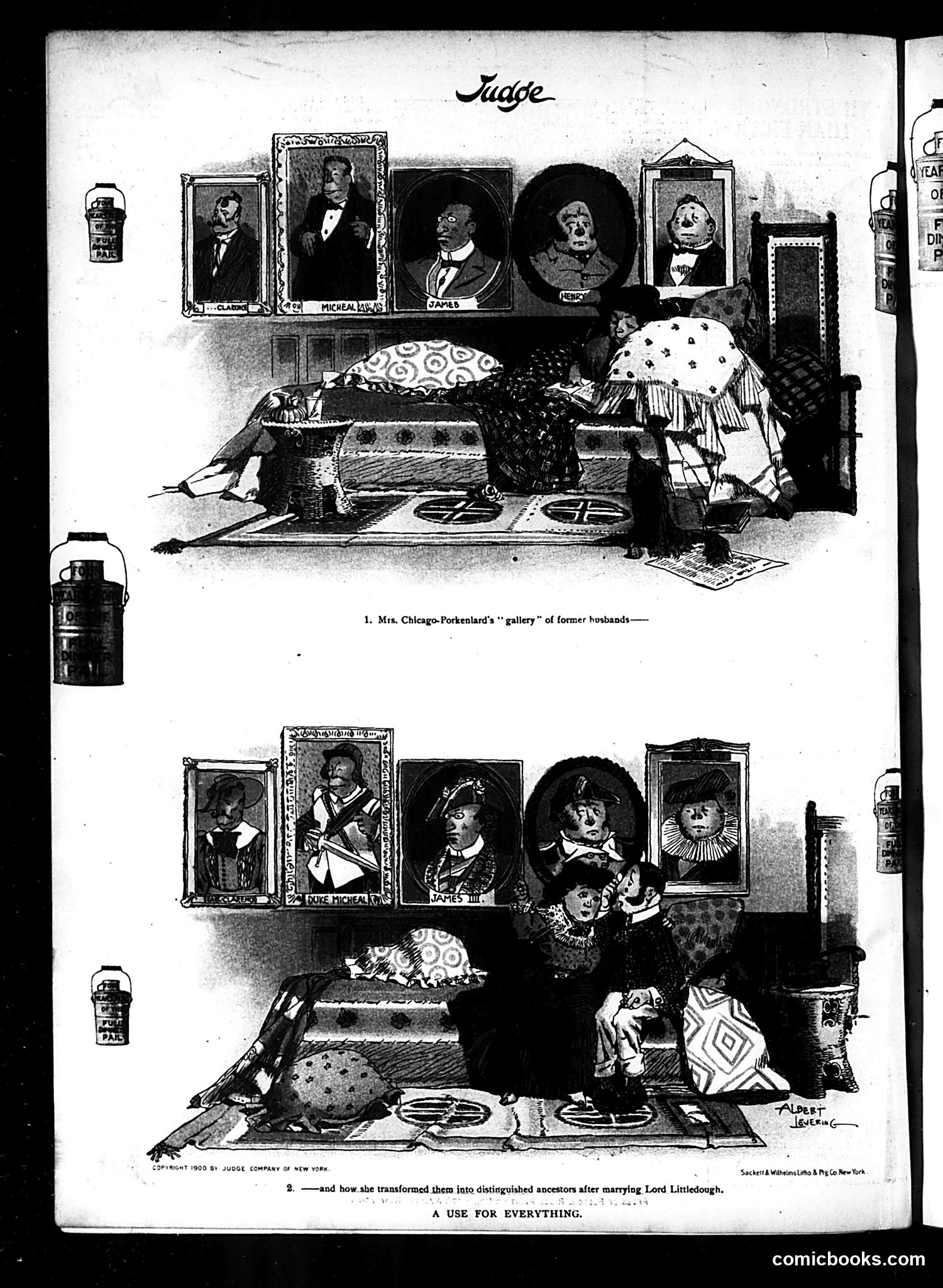
This two-panel satirical cartoon mocks wealthy American women who married into British nobility. Panel 1 shows "Mrs. Chicago-Porkenlard's" collection of portrait paintings depicting her former husbands—apparently unremarkable or unsavory men from her past. Panel 2reveals the joke: after marrying "Lord Littledough" (a British aristocrat), she has had these same portraits reframed and presented as "distinguished ancestors," transforming ordinary ex-husbands into fake noble lineage through artistic presentation and aristocratic marriage. The satire targets both social climbing (marrying for a title) and the pretentiousness of newly wealthy Americans purchasing instant respectability. The title "A Use for Everything" suggests even failed marriages have value—as props for social advancement. This reflects period anxieties about American heiresses marrying impoverished British peers for status.